How to Tightline for Crappie
Ah, the mighty crappie! These speckled beauties are a favorite among Georgia anglers, but let's be honest, they can be incredibly finicky. One day they're practically jumping into the boat, and the next, they're ghosts, refusing to even nibble. If you've found yourself frustrated by subtle taps that never turn into a hookset, or if you simply want to refine your approach to coaxing these delicate biters, then this guide on how to tightline for crappie is exactly what you need. We're going to dive deep into a technique that can make all the difference, helping you feel even the most minuscule of strikes and fill your cooler with those delicious panfish.
Understanding the Art of Tightlining for Crappie
When you're chasing crappie, especially when they're being shy or holding deep, a regular cast-and-retrieve method might not cut it. That's where tightlining comes in, transforming your approach from guesswork to a highly sensitive, direct connection with what's happening beneath the surface. It’s not just a technique; it’s a philosophy of angling that prioritizes feel and precision.
What Exactly is Tightlining?
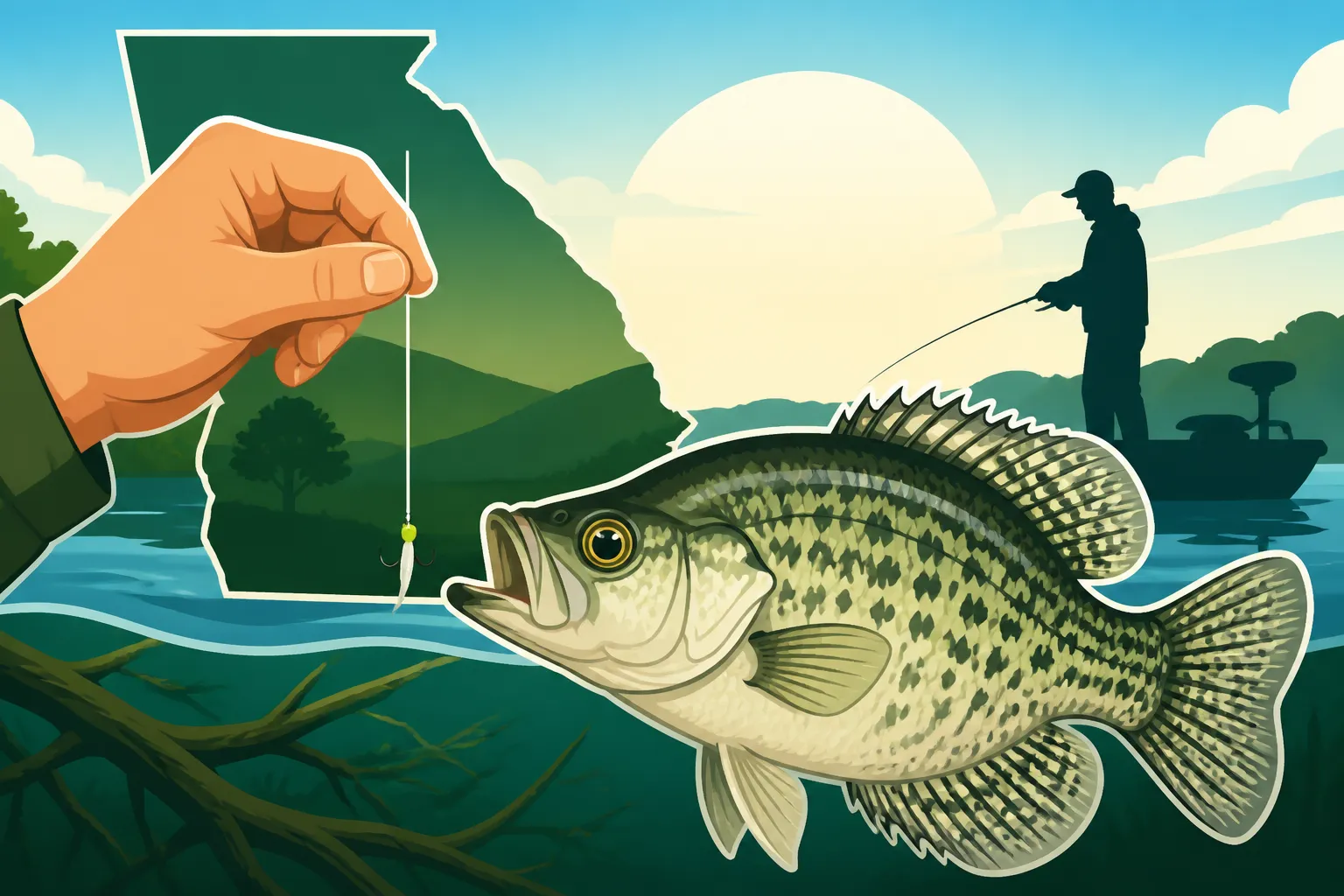
In its simplest form, tightlining for crappie means maintaining a direct, taut line between your rod tip and your jig or bait. Unlike traditional methods where you might have some slack in your line, tightlining eliminates that sag, giving you immediate feedback when a crappie breathes on your offering. It's all about feeling those incredibly subtle "ticks," "bumps," or even just a change in pressure that signifies a bite. Imagine trying to read a whisper from across a noisy room; that's the difference between fishing with slack and fishing tight. You're not waiting to see your line jump; you're feeling the story as it unfolds.
This isn't a power fishing technique where you're chucking big baits and covering vast amounts of water. Instead, it's a finesse game, often employed vertically or with very slow, controlled presentations. Think of it as having your fingertips directly on your bait, even if it's 20 feet below the surface. Many anglers compare it to a direct neural connection, allowing them to detect the lightest of mouthing from a crappie that might otherwise go completely unnoticed. It takes practice, absolutely, but once you get the hang of it, you'll wonder how you ever fished for crappie any other way.
Why Tightlining Excels for Crappie
Crappie, bless their hearts, are notorious for their light bites. Sometimes it's not even a "bite" in the traditional sense; they might just inhale the jig slightly, "mouth" it for a second, or simply swim off with it. With slack in your line, these fleeting moments are often missed. By tightlining, you eliminate the buffer, allowing you to instantly detect these incredibly subtle interactions. This increased sensitivity means more hooksets and, ultimately, more fish in the boat or on the bank. It's particularly effective when crappie are lethargic, perhaps due to cold fronts or post-spawn blues, or when they're suspended in deep water.
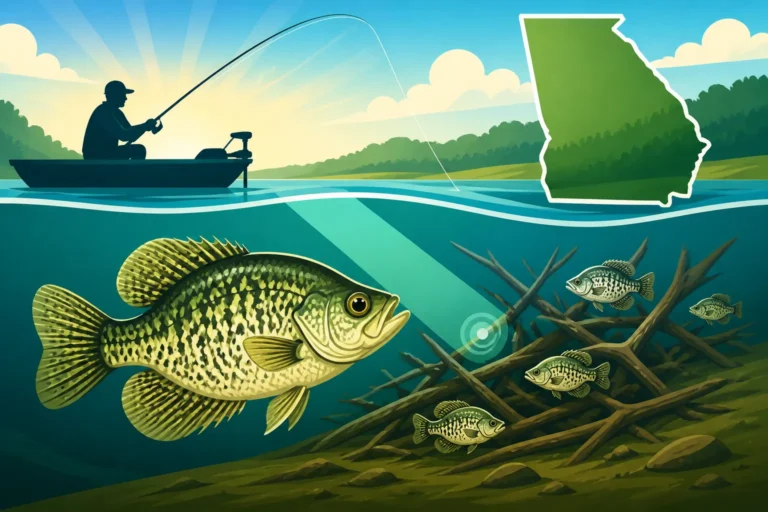
Furthermore, tightlining offers unparalleled control over your presentation. When you're fishing vertically, say over a brush pile or a submerged tree, that tight line lets you keep your jig precisely where you want it. You can hover it, make tiny jigging motions, or slowly lower it through the strike zone with surgical accuracy. This level of control is crucial for enticing hesitant crappie who might ignore a less controlled, free-falling bait. For more general jigging strategies, you might want to read our guide on how to jig for crappie, but remember that tightlining elevates that technique significantly.
When and Where to Employ This Technique
Tightlining shines in specific scenarios across Georgia's diverse waterways. It's particularly effective in clearer waters where crappie rely more on sight and delicate movements, or in deeper water where visibility is naturally limited and the feel of your line becomes paramount. Think about those crisp, still mornings on Lake Lanier or the deeper coves of Lake Oconee when the fish are holding tight to structure. This method also truly comes into its own during colder months, like winter, when crappie become less active and their bites are incredibly soft.
You'll find yourself reaching for a tightlining setup when you're targeting specific structures such as brush piles, standing timber, dock pilings, or bridge fenders. If you're fishing from a boat, you can position yourself directly over the structure and drop your jig straight down. For bank anglers, especially those on piers or docks, tightlining can be adapted by casting a short distance and slowly working the jig back, maintaining that crucial tension. It’s an excellent choice for when you’re scouting new areas, trying to pinpoint exactly where crappie are holding, or when other methods simply aren't yielding results. This technique is a must-have in your arsenal for Best Crappie Lakes in Georgia, especially when the bite gets tough.
Essential Gear for Successful Tightlining
Successful tightlining isn't just about technique; it's heavily reliant on having the right gear. Every component, from the rod to the jig, plays a critical role in transmitting those subtle sensations from the crappie to your hands. Skimping on quality here will only lead to frustration and missed fish.
Rods and Reels Designed for Sensitivity
When it comes to tightlining, your rod is your primary communication tool. You're looking for a rod that's specifically designed for sensitivity. This usually means a fast or extra-fast action rod, meaning the top third or less of the rod bends easily, while the backbone remains stiff. This allows for quick hooksets and excellent feel. Length is also important; rods ranging from 6 to 10 feet are common. Longer rods give you more leverage for fighting fish and keeping them away from structure, as well as providing a larger "sweep" for a hookset, which can be invaluable when crappie are suspended. Look for rods with a light power rating, often labeled as "light" or "ultralight," which will maximize sensitivity.
Some anglers even prefer specialty "jigging" or "dock shooting" rods, which are built with incredibly sensitive tips and lightweight blanks. Brands like BnM Poles or Ozark Rods are well-regarded in the crappie community for their purpose-built jigging rods. You can often find excellent options from these specialized brands or more mainstream ones on platforms like Amazon. For a deeper dive into rod selection, check out our guide on Best Rods for Crappie Fishing in Georgia. Pairing this sensitive rod with a small, lightweight spinning reel (500 to 1000 size) will complete your setup. The reel's job here isn't so much about brute strength as it is about smooth operation and holding enough line.
Line Choice Matters: The Invisible Connection
Your fishing line is the actual invisible connection, and its properties directly impact your ability to tightline effectively. Low-stretch lines are paramount here. Monofilament, while easy to handle and forgiving, has a good amount of stretch, which can deaden those subtle bites. Fluorocarbon or braided line are generally preferred for tightlining because of their minimal stretch.
- Fluorocarbon: Offers excellent sensitivity due to its low stretch, plus it's nearly invisible underwater, which can be a huge advantage in clear water or when crappie are wary. It also sinks, helping to get your jig down quicker and maintain contact. A 4 to 6-pound test fluorocarbon line is a popular choice for crappie tightlining.
- Braided Line: This is the most sensitive option with virtually no stretch. It transmits every bump and vibration directly to your hand. However, it is highly visible, so many anglers will tie a 4 to 8-foot leader of fluorocarbon (e.g., 4-pound test) to the end of their braided mainline. This gives you the best of both worlds: ultimate sensitivity from the braid and stealth from the fluorocarbon leader. A 6 to 10-pound braid with a fluorocarbon leader is a fantastic, versatile setup.
Choosing the right line weight is also crucial, balancing strength with stealth. Too heavy, and you lose sensitivity and might spook fish. Too light, and you risk break-offs, especially around heavy cover.
Jigs, Baits, and Weights: The Business End
The business end of your tightlining setup primarily consists of small jigs or hooks with live bait, along with a minimal weight to get them down. When it comes to jigs, crappie love small profiles. Think 1/32 to 1/16 ounce jigs, though you might go up to 1/8 ounce in deeper or faster-moving water. The jig head itself should be balanced, allowing for a natural fall. The color of your jig can make a huge difference, so having a variety on hand is key. Chartreuse, white, black, pink, and various combinations are all excellent crappie colors. For more guidance on color, check out Best Jig Colors for Crappie Fishing.
Soft plastic bodies that pair with these jig heads include tiny tube jigs, grubs, minnow imitations, and small curly-tail worms. Experiment with different sizes and tail actions to see what the crappie prefer on a given day. Sometimes, a subtle, straight tail is the ticket, other times, a vibrant curly tail is needed to get their attention.
When crappie are particularly finicky, live bait is often irresistible. Small minnows, often called "crappie minnows," are the go-to. You'll want to rig them on a small, sharp hook (size 4 or 6) with a split shot or a tiny bell sinker a foot or so above the hook to get them down. Always use fresh, lively minnows for the best results. If you're using minnows, our article on How to Rig a Minnow for Crappie offers some great tips. The key is using just enough weight to get your bait to the desired depth and maintain that tight line, but not so much that it interferes with the natural action of your bait or dulls your sensitivity.
Step-by-Step Guide to Tightlining for Crappie
Now that we've got our gear sorted, let's talk about the actual execution. Tightlining isn't overly complicated, but it requires patience and a delicate touch. It’s about becoming one with your rod and line.
Rigging Your Setup for Optimal Feel
First, let's get that rig set up. If you're using braided line, start by tying on your fluorocarbon leader. A simple double uni knot or an FG knot works well for connecting these two lines seamlessly. Next, tie on your jig. A loop knot (like a Rapala knot or a non-slip mono loop) is fantastic for jigs because it allows the jig to swing freely, giving it maximum action. If you're using live bait, tie on your small hook (a long-shank Aberdeen hook is popular for minnows) and then pinch on one or two small split shot weights about 12-18 inches above the hook. The goal is minimal weight to maintain maximum feel.
Before you even get on the water, take a moment to test your rod's sensitivity. With your jig tied on, gently tap the tip of your rod against something soft. Feel how that vibration travels through the rod. Do the same with a heavier jig, and then a lighter one. This brief exercise will help you calibrate your hands to the specific feel of your setup, which is crucial for discerning a crappie bite from just bumping a submerged branch. You want to be intimately familiar with how your line and lure feel with no fish involved, so any slight deviation immediately registers as a potential bite.
Mastering the Presentation and Retrieve
This is where the "tight" in tightlining really comes into play. If you're fishing vertically from a boat, position yourself directly over the structure you want to fish. Drop your jig straight down, letting out line slowly and keeping a slight bend in your rod tip. The goal is to always have some tension, never slack. If you see your line go slack, you're likely not feeling what's happening at the other end. Once your jig reaches the desired depth (often indicated by a depth finder), begin your presentation. This usually involves subtle lifts and drops, or simply holding the jig still.
If you're fishing from the bank or casting, make a short, accurate cast. As soon as your jig hits the water, close your bail and immediately begin a slow, steady retrieve, keeping that rod tip pointed towards the line and maintaining tension. You're not reeling fast; you're just taking up any slack as the jig slowly sinks or moves. Some anglers prefer to gently twitch the rod tip as they retrieve, giving the jig a tantalizing dance. The slower you go, the more time a crappie has to investigate and commit to the bite, and the more likely you are to feel that subtle strike. Remember, the goal is not to cover distance, but to thoroughly work a specific area.
Interpreting Those Subtle Bites
This is arguably the most challenging and rewarding part of tightlining. Crappie bites are rarely aggressive tugs like a bass might deliver. Instead, they can be incredibly delicate. Here’s what to look for and feel:
- A "tick" or "thump": This is the most common sensation. It feels like a very light, quick bump on your line. It might feel like your jig hit a tiny pebble, but it's a crappie.
- Weightlessness: Sometimes, the line might just feel suddenly lighter, as if your jig disappeared. This often means a crappie has inhaled the jig and is swimming upwards. This is a classic "crappie bite" and one of the hardest to detect with slack in your line.
- Increased pressure: The opposite of weightlessness, this is when your line suddenly feels heavier, like you've snagged a piece of moss. This is usually a crappie taking the jig and moving horizontally or downwards.
- Rod tip movement: Even with a tight line, your sensitive rod tip might suddenly twitch, dip, or straighten slightly. Any unnatural movement should be considered a bite.
The key is to set the hook on anything that feels different from the natural drift or movement of your jig. Don't wait for a huge pull. If you feel anything unusual, give a quick, firm, but not overpowering, hookset with a snap of your wrist. Since crappie have soft mouths, a gentle but immediate hookset is all that's needed. Overpowering the hookset can tear the hook right out of their mouth. Trust your instincts; they'll develop quickly with practice.
Advanced Tips and Troubleshooting for Georgia Anglers
Even with the right gear and basic technique, crappie can still be tricky. Here are some advanced tips and troubleshooting strategies to keep you tightlining successfully across Georgia.
Dealing with Different Water Conditions
Water conditions in Georgia's lakes and rivers can change rapidly, impacting how crappie behave and how you need to adjust your tightlining.
- Cold Water (Winter/Early Spring): This is prime tightlining season. Crappie are often lethargic, holding tight to deep structure, and their bites are incredibly soft. Slow down your presentation to an almost agonizing crawl. Use the lightest jigs possible (1/32 or even 1/64 ounce) and sometimes tiny minnows are the only thing they'll touch. Focus on vertical presentations, hovering your bait directly in their faces. This is when understanding How Water Temperature Affects Fish Behavior really pays off.
- Warm Water (Summer): Crappie are more active but often school up in deeper, cooler water or seek shade under docks and trees. You might be able to get away with slightly heavier jigs (1/16 to 1/8 ounce) and a slightly faster retrieve, but still maintain that tight line. Early mornings and late evenings are often best. Night fishing can also be incredibly productive for crappie in warmer months, especially around lighted docks. For tips, you might want to explore Do Crappie Bite Better at Night?.
- Turbid/Muddy Water: In stained or muddy water, crappie rely less on sight and more on their lateral line to detect vibrations. Use jigs with more vibration or scent. Consider brighter colors like chartreuse, orange, or white, which stand out better. You might need to use slightly heavier jigs to get them down quickly and keep them in the strike zone, but the tightline principle still applies.
- Clear Water: Crappie in clear water can be very spooky. Use lighter line (4-pound test fluorocarbon), natural-colored jigs (greens, browns, clear with flakes), or unweighted live minnows. Keep your distance if possible and make quiet presentations. Stealth is your friend.
Locating Crappie in Varied Habitats
Knowing where to tightline is just as important as how to tightline. Crappie are structure-oriented fish, and Georgia offers a wealth of habitats they love.
- Brush Piles & Standing Timber: These are classic crappie magnets. Use your fish finder to locate submerged brush piles or standing timber and then hover directly over them. Drop your tightline rig down, systematically working different depths around the structure. Remember that crappie will often suspend above or around the brush, not necessarily directly in it.
- Docks and Piers: Especially those with lights at night. Crappie love the shade and cover offered by docks. Drop your jig next to pilings, under pontoons, and slowly work it along the edges. If you're limited to bank fishing, knowing How to Catch Crappie From a Dock is a huge advantage.
- Bridge Pilings: Similar to dock pilings, bridge structures provide excellent current breaks and cover. Crappie will often stack up on the current-protected side.
- Deep Ledges & Drop-offs: In larger reservoirs like Lake Hartwell or Clarks Hill Lake, crappie will follow deep ledges and drop-offs, especially during seasonal transitions. Use your electronics to find these contours and then tightline vertically as you slowly drift or use your trolling motor to follow the break.
- Public Fishing Areas (PFAs): Georgia's PFAs are often stocked with crappie and have man-made structures specifically for fish. These are fantastic places to practice your tightlining skills. Our guide to Crappie Fishing Ponds and Streams Across Georgia has more location specifics.
Common Mistakes and How to Avoid Them
Even experienced anglers can fall into common traps when tightlining. Being aware of these can save you a lot of frustration.
- Using too much weight: This is a common one. While you need some weight to get down, excessive weight dulls sensitivity and makes your bait look unnatural. Use the lightest weight that allows you to maintain contact with the bottom or your desired depth. If you're struggling to feel bites, try reducing your weight.
- Fishing with slack in the line: This defeats the entire purpose of tightlining. Always, always maintain a slight bend in your rod tip and never let your line go completely slack. If you feel it slacken, reel up slowly until you regain tension.
- Too aggressive a hookset: Crappie have delicate mouths. A hard, sweeping hookset can tear the hook out, especially with lighter line. A sharp, wrist-flick hookset is usually all you need.
- Not moving enough (or moving too much): Crappie can be incredibly localized. If you've worked an area thoroughly with no bites, move to the next piece of structure. Conversely, don't move every five minutes. Give an area a good 10-15 minutes of thorough tightlining before deciding to move on.
- Ignoring subtle signs: As mentioned, crappie bites are often barely perceptible. Don't second-guess yourself. If it feels different, set the hook! The more you do it, the better you'll become at distinguishing a crappie bite from a snag or debris.
By honing your tightlining technique, choosing the right sensitive gear, and understanding crappie behavior in various conditions, you'll undoubtedly elevate your crappie fishing game. It's a method that rewards patience, precision, and an almost intuitive connection to the underwater world, and it will serve you well on all of Georgia's fantastic crappie waters.
Crappie Tightlining Line & Jig Weight Guide
Choosing the right line and jig weight is critical for effective tightlining. This table offers a quick reference based on typical Georgia fishing conditions.
| Condition | Recommended Line Type | Recommended Line Test (lb) | Recommended Jig Weight (oz) | Notes |
|---|---|---|---|---|
| Clear, Cold Water | Fluorocarbon or Braid w/FC Leader | 4-6 (FC), 6-8 (Braid) | 1/32 – 1/64 | Maximum stealth and sensitivity; very slow presentation. |
| Clear, Warm Water | Fluorocarbon or Braid w/FC Leader | 6-8 (FC), 8-10 (Braid) | 1/32 – 1/16 | Can be slightly more aggressive; focus on deeper, shaded areas. |
| Stained/Murky Water | Braid w/FC Leader | 8-10 (Braid), 6-8 (FC) | 1/16 – 1/8 | Increased vibration and visibility needed; brighter jig colors. |
| Deep Water (20'+) | Braid w/FC Leader | 8-10 (Braid), 6-8 (FC) | 1/16 – 1/8 | Quicker sink rate to reach fish; braid maximizes feel at depth. |
| Heavy Cover | Braid w/FC Leader | 10-15 (Braid), 8-10 (FC) | 1/16 – 1/8 | Stronger line for pulling fish out of snags; risk of break-offs. |
| Windy Conditions | Fluorocarbon or Braid | 6-8 (FC), 8-10 (Braid) | 1/16 – 1/8 | Heavier line/jig helps maintain contact; fluorocarbon sinks better. |
Disclaimer
Fishing regulations, license requirements, and local conditions can change. Always consult the Georgia Department of Natural Resources (DNR) website or local authorities for the most current rules and information before heading out on your fishing trip. Stay safe and enjoy your time on the water!