Where to Fish the Altamaha River
The Altamaha River in Georgia is a magnificent, sprawling waterway, but its sheer size and wild nature can make it feel incredibly daunting to new anglers or even seasoned pros unfamiliar with its unique quirks. Many folks find themselves staring at a map, wondering where to even begin, feeling a bit overwhelmed by the vastness. This comprehensive guide is here to cut through that confusion, offering practical advice on where to fish this incredible river, what to target, and how to maximize your chances of a successful day on the water.
Exploring the Altamaha River: Georgia's Untamed Gem
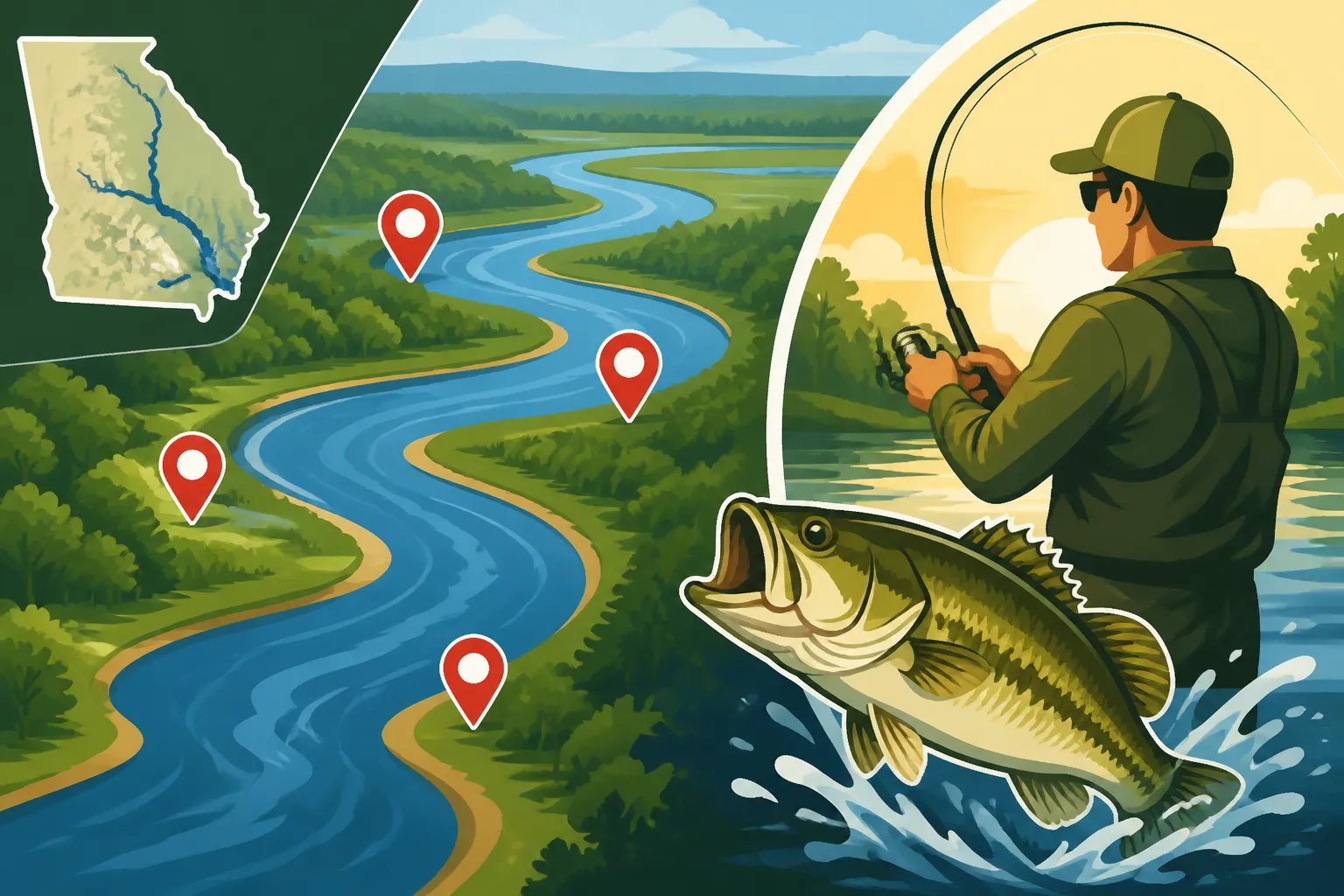
Often called "Georgia's Amazon," the Altamaha River is truly a natural wonder, forming from the confluence of the Ocmulgee and Oconee rivers near Lumber City and flowing unimpeded for 137 miles to the Atlantic Ocean. This isn't your average, manicured lake or gentle trout stream; the Altamaha is a wild, free-flowing river system, characterized by vast swamps, winding oxbow lakes, sandbars, and deep channels. Its untamed nature is precisely what makes it such a phenomenal fishing destination, offering a diverse array of habitats that support an incredibly rich fishery.
The "Giant" River System
When we talk about the Altamaha, we're not just talking about a single ribbon of water. It's a massive watershed that drains over 14,000 square miles of Georgia, making it one of the largest river systems on the East Coast. This enormous drainage means it carries a huge volume of water, especially after heavy rains, which can significantly impact fishing conditions. The river's width and depth vary dramatically along its course, from relatively narrow stretches in the upper reaches to broad, tidal-influenced waters closer to the coast. Its formidable presence can be intimidating, but understanding its different sections is key to unlocking its secrets. It truly stands out among the Best Rivers for Fishing in Georgia.
Unique Ecosystems and Challenges
The Altamaha is a mosaic of different ecosystems, each presenting its own fishing opportunities and challenges. You'll find blackwater swamps teeming with cypress and tupelo trees, providing incredible cover for bass and panfish. There are numerous oxbow lakes, cut off from the main current, which act as natural fish factories, often holding large populations of crappie and catfish. The main channel itself features deep holes, submerged timber, and swift currents, especially in the middle and upper sections. Closer to the coast, the river becomes tidally influenced, with fluctuating water levels and a mix of fresh and brackish water, opening up opportunities for saltwater species alongside the freshwater giants. Navigating these varied environments often requires local knowledge or a good GPS, as many areas can look similar to the untrained eye. For those who prefer to leave the navigation to the experts, services like FishingBooker can connect you with experienced local guides who specialize in these intricate waters.
Targeting the Altamaha's Abundant Fish Species
The Altamaha River is a true angler's paradise, boasting an incredible diversity of fish species. Whether you're chasing trophy-sized bottom dwellers or looking for fast-paced action with schooling fish, the Altamaha has something to offer. It's a living example of Georgia's diverse aquatic life, as detailed in our guide, Georgia Fish Species: A Complete Guide to What's Swimming in Your Lakes.
The Reign of Catfish: Blues, Channels, and Flatheads
Without a doubt, catfish are the undisputed kings of the Altamaha. This river is renowned for its monstrous blue catfish, with specimens weighing over 50 pounds not uncommon. Channel catfish are also plentiful and offer consistent action, while the elusive flathead catfish lurks in the deeper, wood-laden sections, always ready to ambush a live bait. Catfishing on the Altamaha is not just a pastime; it's a serious pursuit for many anglers who appreciate the sheer power and size these fish can attain. Understanding these magnificent creatures is crucial, and our Catfish Species Guide: Channel, Blue, and Flathead Catfish can provide deeper insights.
Largemouth Bass: Hunting in the Backwaters
While catfish often steal the spotlight, the Altamaha offers fantastic largemouth bass fishing, particularly in its countless oxbows, sloughs, and backwater areas. These calmer, vegetated stretches provide ideal habitat for bass to ambush prey. Anglers targeting largemouth can find excellent action, especially during the warmer months. These fish thrive in the river's abundant cover, making it a challenging but rewarding pursuit. If you're passionate about pursuing these green monsters, check out our Largemouth Bass Fishing in Georgia: The Complete Species Guide.
Panfish Paradise: Crappie, Bream, and More
For consistent action and family-friendly fun, the Altamaha's panfish population is hard to beat. Black crappie and white crappie are both present, often schooling around submerged timber and brush piles in the calmer waters. Redbreast sunfish, bluegill, and other bream species are abundant throughout the river system, providing endless entertainment for anglers of all skill levels. These smaller, feisty fish are perfect for introducing kids to fishing or for a relaxing day with light tackle. Our Crappie Fishing in Georgia: Black and White Crappie Guide offers more specific details on these popular panfish.
Seasonal Thrills: Striped Bass and Others
As you move closer to the coast, the Altamaha offers exciting opportunities for migratory striped bass, especially during their spring spawning runs. These powerful fish push far upriver from the sound, providing thrilling battles for anglers. While less common in the upper freshwater reaches, their presence in the lower river adds another exciting dimension to the Altamaha's fishery. In the brackish and saltwater transition zones, you might even encounter redfish and speckled trout. For more on these incredible anadromous fish, explore our guide on Striped Bass and Hybrid Striped Bass in Georgia Waters.
Here's a quick look at some of the Altamaha's prime species:
| Fish Species | Preferred Habitat | Common Baits/Lures | Best Seasons | Notes |
|---|---|---|---|---|
| Blue Catfish | Deep holes, main channels, eddy lines, structure | Cut bait (shad, mullet), live bream | Year-round | Can reach enormous sizes. Night fishing often best. |
| Flathead Catfish | Heavy cover (submerged logs, brush piles), deeper holes | Live bream, small live fish | Spring-Fall | Solitary, ambush predator. |
| Channel Catfish | Moderate currents, structure, tributary mouths | Cut bait, stink baits, worms | Year-round | Excellent eating, consistent action. |
| Largemouth Bass | Oxbows, sloughs, backwater coves, lily pads, hydrilla | Spinnerbaits, jigs, crankbaits, plastic worms | Spring-Fall | Target vegetation and woody cover. |
| Black Crappie | Submerged timber, brush piles, calm oxbows | Small jigs, live minnows | Spring, Fall, Winter | Schools congregate in structure. |
| White Crappie | Similar to black crappie, often in main river backwaters | Small jigs, live minnows | Spring, Fall | Can be less structure-dependent than black crappie. |
| Redbreast Sunfish | Around logs, rocks, vegetation in moderate current | Worms, crickets, small poppers | Spring-Fall | Abundant, great for light tackle. |
| Striped Bass | Main river channel, below dams (if present), tidal areas | Live bait (shad, mullet), large swimbaits | Spring | Migratory, strong fighters. |
Accessing the Altamaha: Boat Ramps and Shoreline Spots
Given the Altamaha's immense size, simply showing up without a plan can lead to frustration. The river offers different experiences depending on where you access it, from the narrower, fresher waters upstream to the wide, tidal expanse near the coast. Having a clear idea of your target area and the available access points is crucial for a productive trip. You'll find many public access points, often maintained by the Georgia Department of Natural Resources (DNR) or local municipalities. For a broader perspective on launching your vessel, check out our guide on Best Boat Ramps for Fishing in Georgia.
Upper River: The Fresher, Smaller Stretch
The upper Altamaha, roughly from the confluence down to Jesup, offers a more intimate river experience. Here, the current can be swifter, and the river is generally narrower than its lower sections.
- Hazlehurst/Lumber City Area: These areas mark the beginning of the Altamaha, where the Ocmulgee and Oconee merge. Public boat ramps like the one at the confluence (often referred to as the "Forks") or nearby towns provide good access. This section is excellent for largemouth bass, especially in the numerous sloughs and oxbows, and consistent channel and blue catfish action. Bank fishing opportunities can be found at some of the smaller community parks along these stretches, though they might be limited compared to the lower river.
- Key Spots: Focus on the entrances to smaller creeks and sloughs where they meet the main river. These areas often create current breaks and funnel baitfish, attracting predators. Pay attention to downed trees and logjams for bass and flatheads.
Mid-River: Navigating the Main Channel
As you move towards the mid-section, around Jesup and below, the river widens significantly, and the main channel becomes the dominant feature.
- Jesup Area: Jesup offers several access points, including public boat ramps that can handle larger vessels. This stretch is a prime spot for trophy blue catfish in the deeper holes and ledges of the main channel. The wider river also means more expansive sandbars and flats, which can hold good numbers of channel catfish.
- Darien/Lower River Boundary: As you get closer to Darien, the tidal influence begins to be noticeable, and the river broadens dramatically, forming expansive marsh systems. This transition zone is fantastic for larger blue catfish and also where you start seeing migratory striped bass, especially in spring.
- Key Spots: Look for significant bends in the river that create deep outside channels. These are classic spots for big blue catfish. Tributary mouths like the Penholoway Creek and Doctortown bridge area can be hotspots. Services like FishingBooker are excellent for finding guided trips in these expansive waters, as navigating and locating fish in such a large system can be challenging.
Lower River: Tidal Influence and Brackish Water
The lower Altamaha, from Darien to the Altamaha Sound, is a world unto itself. Here, the river is vast, influenced by the tides, and gradually transitions from freshwater to brackish and eventually saltwater.
- Darien/Coastal Area: This region offers numerous well-maintained boat ramps, including multiple facilities around Darien and towards the sound. While still excellent for large blue catfish, this section also provides opportunities for striped bass during their runs, and even redfish and speckled trout closer to the mouth.
- Key Spots: Fishing around the many islands, oyster beds (as salinity increases), and creek mouths in the tidal marsh system can be incredibly productive. The large expanses of the river here require covering a lot of water. If you prefer to fish from shore, finding Best Bank Fishing Spots in Georgia might be possible in some public parks near Darien, but a boat opens up vastly more opportunities.
Exploring Oxbows and Tributaries
Don't overlook the myriad of oxbow lakes, sloughs, and smaller tributaries that feed into the Altamaha. These often calmer waters are havens for many species.
- Oxbow Lakes: These U-shaped lakes, formed when a bend in the river is cut off from the main channel, are often shallower and rich in vegetation. They are phenomenal for largemouth bass, black crappie, and a variety of bream. Access to these can sometimes be via small boat ramps or even by dragging a kayak or canoe through connecting ditches during higher water.
- Tributaries: Smaller creeks and streams feeding the Altamaha offer localized fishing, often less affected by the main river's current. They can be great for panfish and smaller bass.
Mastering Altamaha Fishing Techniques for Success
Fishing the Altamaha requires adaptability and a willingness to try different tactics, depending on your target species, the river section, and the time of year. Knowing Georgia Fishing Seasons by Month will give you a significant advantage.
Catfish Strategies: Bottom Bouncing to Jugging
Catfishing on the Altamaha is where many anglers find their true calling.
- Bottom Fishing: This is the most common and effective method for all catfish species. Use a Carolina rig or a three-way swivel rig with heavy weights (2-6 ounces, depending on current) to keep your bait on the bottom. Cut bait (freshly caught shad, mullet, or even bream) is king for blue and channel catfish. For flatheads, live bream or sunfish are often irresistible. Look for deep holes, channel edges, and areas with submerged timber. Our guide on Best Bait for Blue Catfish in Georgia Rivers will give you even more specific tips. For specific gear recommendations, consider the Best Rod for Catfish Fishing on Georgia Rivers.
- Jug Fishing and Trotlines: These passive methods are popular for anglers looking to catch a large quantity of catfish. Jug fishing involves setting baited lines suspended from floating jugs, allowing them to drift with the current. Trotlines are long lines anchored across a section of the river with multiple baited hooks. Be sure to check Georgia DNR regulations for these methods before deployment.
- Drifting: In some stretches, slowly drifting a baited rig along the bottom can be incredibly effective, especially for locating active fish.
Bass Tactics: Lures and Live Bait for Cover
Largemouth bass in the Altamaha are often found in the calmer, cover-rich environments.
- Artificial Lures: Spinnerbaits, jigs (especially weedless jigs with soft plastic trailers), and crankbaits that mimic baitfish are highly effective. Focus your casts around lily pads, cypress knees, laydowns, and hydrilla beds. Topwater lures like frogs or poppers can provide explosive action during low light conditions or over thick vegetation.
- Soft Plastics: Texas-rigged worms, creature baits, and senkos are excellent for flipping and pitching into dense cover. Work these slowly, allowing them to penetrate the vegetation and entice bass lurking below.
- Live Bait: Live shiners or small bream can be irresistible to larger bass, especially when fished near heavy cover.
- Seasonality: Bass fishing can be great year-round, but spring and fall are typically peak seasons as fish are more active in shallower water. To optimize your tackle for the conditions, remember to consult guides on How to Choose the Right Bait and Lure for the Season.
Panfish Pursuits: Simple Rigs for Constant Action
Crappie, bluegill, and other sunfish offer consistent action and are great for anglers of all ages.
- Jigs and Minnows: For crappie, small jigs (1/32 to 1/8 ounce) tipped with a small minnow or scented soft plastic are deadly. Fish these around submerged brush piles, fallen trees, and bridge pilings in oxbows and calmer backwaters. A simple bobber rig can also be very effective.
- Worms and Crickets: For bluegill and other bream, a simple red worm or cricket under a bobber is often all you need. Focus on areas with moderate current breaks and vegetation, especially around cypress knees or undercut banks.
- Light Tackle: Panfish are best caught on ultralight or light spinning gear, which makes even a small fish feel like a trophy. This is an ideal way to practice Basic Fishing Techniques Every Beginner Should Know.
- Kayak Fishing: The Altamaha's oxbows and backwaters are fantastic for kayak fishing. A Best Kayak for Fishing Georgia Rivers can get you into secluded spots unreachable by larger boats.
Striper Secrets: Matching the Hatch and Trolling
Targeting striped bass in the Altamaha requires understanding their migratory patterns and preferred forage.
- Live Bait: Live shad or mullet are often the most effective baits for stripers, especially during their spawning runs. Fish these on a free-line or under a bobber in the main channel or at the mouths of tributaries.
- Artificial Lures: Large swimbaits, bucktail jigs, and lipless crankbaits can also draw strikes from aggressive stripers. Look for birds diving or baitfish schooling on the surface, indicating active fish.
- Trolling: In the wider sections of the lower river, trolling large crankbaits or umbrella rigs can be a productive way to cover water and locate schooling stripers.
Remember, the Altamaha is a dynamic river. Water levels, current speed, and clarity can change quickly after rain. Always check local conditions before heading out, and always prioritize safety on this powerful waterway. If you're looking to book a guided trip to maximize your chances, FishingBooker offers a great way to find experienced captains familiar with the Altamaha's moods and movements.
Disclaimer
Fishing involves inherent risks. Always prioritize safety, wear a U.S. Coast Guard-approved life jacket, and be aware of changing weather and river conditions. Familiarize yourself with all Georgia fishing regulations, including size and creel limits, before you go. This guide is for informational purposes only and does not endorse illegal or unsafe fishing practices.