Fishing license reciprocity between Georgia and neighboring states
It's a common dilemma for anglers, isn't it? You've got your gear ready, the sun's shining, and you're headed to a fantastic fishing spot that just happens to straddle a state line. Suddenly, that excitement is replaced by a nagging question: Do I need two fishing licenses? The confusion around fishing license reciprocity between Georgia and its neighboring states is very real, and nobody wants to inadvertently break the law or miss out on a great day on the water. This guide is here to clear up that murky water, making sure you understand exactly when your Georgia license is enough, and when you might need to grab another.
Understanding Fishing License Reciprocity and Its Importance
The concept of fishing license reciprocity often feels like a legal puzzle, especially when you're just trying to enjoy a peaceful day on the lake or river. It's not always straightforward, and making assumptions can lead to unwanted fines and headaches.
What is Reciprocity and Why Does it Matter?
At its heart, reciprocity means that two or more states agree to mutually recognize each other's fishing licenses, usually under specific conditions. For anglers, this is a huge convenience, as it means a single license can cover certain shared bodies of water, eliminating the need to buy multiple permits. Imagine casting a line in the middle of a vast lake, unsure if you're technically in Georgia or South Carolina. Without reciprocity, you'd potentially need a license for both, or risk getting caught in the wrong jurisdiction. The frustration comes from knowing that fish certainly don't care about state lines, but the wardens absolutely do.
The "why it matters" part boils down to legality, cost, and peace of mind. Without understanding these agreements, you could unknowingly be fishing illegally, which carries penalties. These penalties can range from hefty fines to the confiscation of your gear, and nobody wants that. It's far better to be informed and prepared than to face the consequences later. Plus, nobody wants to spend more money than necessary on licenses, so understanding where one license truly covers you can save some cash.
General Georgia Rules for Neighboring States
Generally speaking, if you're fishing exclusively within the geographic boundaries of Georgia, you'll need a valid Georgia fishing license. This applies whether you're a resident or a non-resident. If you're visiting from a neighboring state like Alabama or North Carolina and plan to fish anywhere within Georgia's interior, you absolutely need to secure a non-resident Georgia fishing license. It's not a free-for-all just because you're from a nearby state.
However, the real nuance comes into play on shared border waters. Georgia, like many states, has specific agreements for these unique locations. These agreements are not universal across all shared borders or all types of fishing. They are carefully delineated and usually apply only to particular lakes or river segments. This is why a simple "yes" or "no" answer often isn't enough; you need to dig into the specifics, which can be a pain when you just want to grab your rod and go. Always remember that the Georgia Department of Natural Resources (DNR) is the ultimate authority for Georgia's regulations, and their website should be your first stop for current information.
Specific Reciprocity Agreements with Georgia's Neighbors
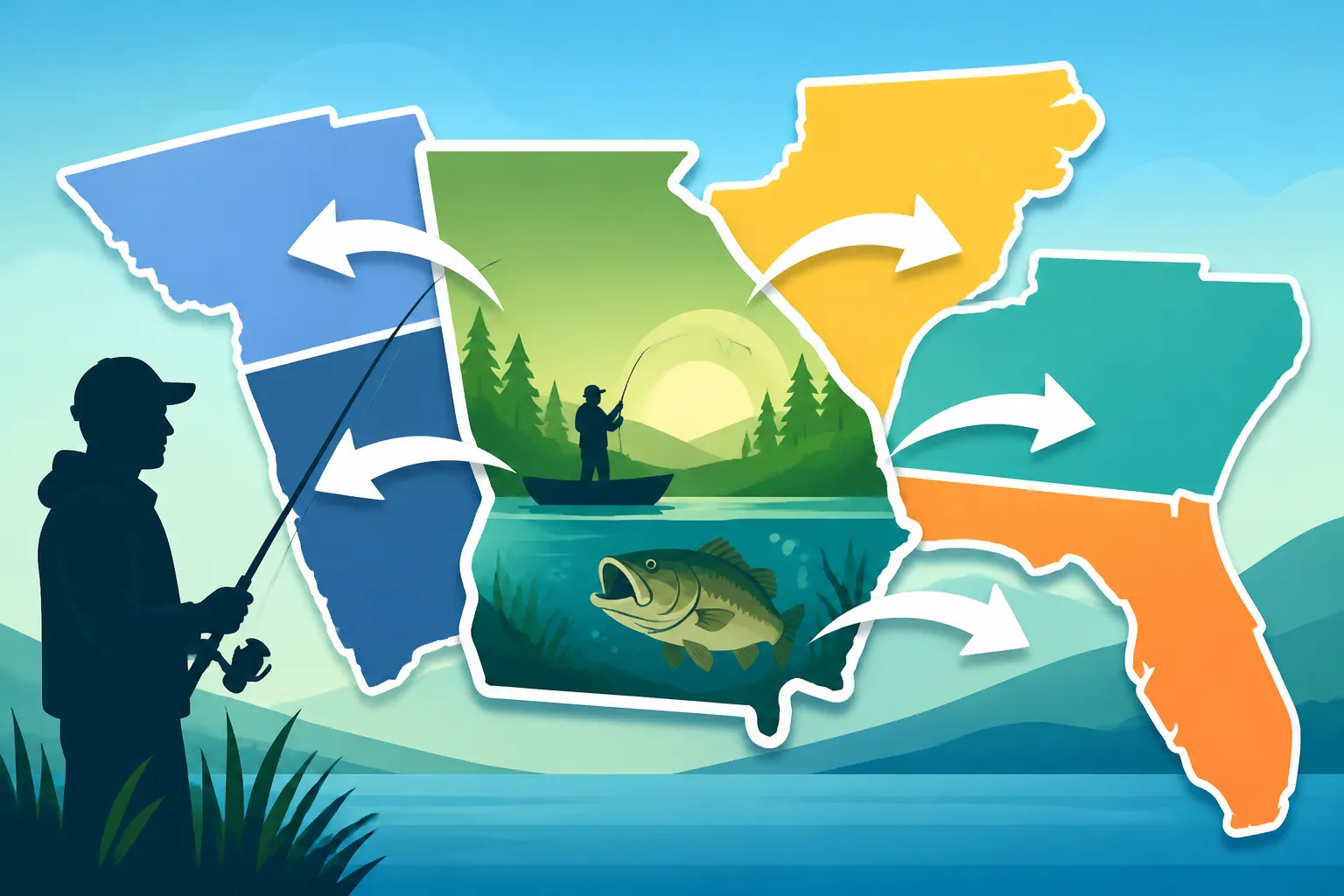
Now, let's dive into the specifics, because this is where the rubber meets the road for anglers trying to navigate state lines. Georgia shares borders with five states: Florida, Alabama, Tennessee, North Carolina, and South Carolina. Each border has its own set of rules, or lack thereof.
Georgia and South Carolina
The border waters between Georgia and South Carolina are perhaps the most well-known for their reciprocity agreements, particularly when it comes to the vast impoundments and shared rivers. The most prominent example is the Savannah River and its associated reservoirs.
Anglers with a valid fishing license from either Georgia or South Carolina are generally permitted to fish on the shared waters of the Savannah River, including the main stem and its impoundments like Lake Hartwell, Richard B. Russell Lake, and Clarks Hill Lake (also known as Lake Thurmond). This is a fantastic convenience, meaning if you live in Augusta, Georgia, you can fish the entire Clarks Hill Lake with your Georgia license, even if you drift into what would otherwise be South Carolina territory. Similarly, a South Carolina angler can fish the same lake with just their Palmetto State license. This agreement makes fishing these massive border lakes much more enjoyable and less stressful. If you're looking for great fishing on this border, our guide on Clarks Hill Lake Fishing Guide, Georgia can offer some excellent spots.
However, it's crucial to understand that this reciprocity typically applies only to the main body of water and not to the tributaries or creeks that feed into these lakes once they leave the main channel and enter a specific state's interior. So, if you venture up a creek that's clearly entirely within South Carolina, you'd better have a South Carolina license. Always clarify the exact boundaries of these reciprocal agreements to avoid any misunderstandings.
Georgia and Florida
Another significant reciprocity agreement Georgia holds is with Florida, specifically concerning the expansive Lake Seminole. This large reservoir, fed by the Flint and Chattahoochee rivers, straddles the Georgia-Florida line and is a fantastic fishery, particularly known for its bass.
For Lake Seminole, anglers possessing a valid Georgia fishing license or a valid Florida fishing license are permitted to fish the entire lake, regardless of which state's water they are currently in. This means you don't have to worry about whether you're over the imaginary line when you're chasing that trophy bass or a stringer of crappie. It's a true shared resource, and the reciprocity agreement reflects that spirit. Our detailed Lake Seminole Fishing Guide provides insights into this fantastic body of water.
Much like the South Carolina agreement, this reciprocity is generally specific to Lake Seminole itself. It doesn't mean your Georgia license is valid for fishing anywhere else in Florida, nor does a Florida license grant you access to all of Georgia's inland waters. If you're planning a trip to the Florida panhandle after fishing Seminole, you'll need a Florida license for those waters. Conversely, a Florida angler looking to fish Lake Lanier in Georgia would still need to purchase a non-resident Georgia license. It's a targeted agreement for a specific, shared resource.
Georgia, Alabama, Tennessee, and North Carolina
When it comes to Georgia's borders with Alabama, Tennessee, and North Carolina, the situation is generally less forgiving in terms of blanket reciprocity. Unlike the specific agreements for the Savannah River system and Lake Seminole, broad reciprocal fishing license agreements for shared waters are far less common, or in some cases, non-existent.
For example, while the Chattahoochee River forms part of the Georgia-Alabama border for a stretch, there isn't a widespread reciprocal agreement allowing you to fish anywhere along that border with just one state's license. If you launch your boat from the Alabama side and intend to fish Georgia waters, or vice-versa, you typically need the appropriate license for the state whose waters you are fishing in. This can get tricky, especially in river systems where the channel meanders and the state line isn't always obvious.
The same general rule applies to Tennessee and North Carolina. If you're from Tennessee and want to fish the trout streams in North Georgia, you absolutely need a Georgia fishing license, and likely a Georgia mountain trout add-on as well. There's no reciprocal agreement that lets your Tennessee or North Carolina license cover fishing in Georgia's interior or even on boundary waters in the same way Lake Seminole or the Savannah River system operate. For anglers from these states, understanding Nonresident Fishing License Prices in Georgia is critical, as you'll almost certainly need to purchase one. It's simply safest to assume you need a separate license for Georgia waters if you're not on one of the explicitly reciprocal bodies of water mentioned previously. Always refer to our Fishing License Requirements for Out-of-State Anglers for comprehensive details.
| State | Border Water Examples | Reciprocity Status | Notes |
|---|---|---|---|
| South Carolina | Savannah River (Lake Hartwell, Thurmond Lake, Russell Lake) | Yes (on shared main bodies of water) | Does not typically extend to tributaries fully within one state. |
| Florida | Lake Seminole | Yes (on the entire lake) | Specific to Lake Seminole; not valid for other waters in either state. |
| Alabama | Chattahoochee River (parts) | Generally No (no broad agreements) | Assume you need a license for the specific state's water you are fishing. |
| Tennessee | Limited shared water | No (no reciprocity for fishing licenses) | A Georgia non-resident license is required for Georgia waters. |
| North Carolina | Limited shared water | No (no reciprocity for fishing licenses) | A Georgia non-resident license is required for Georgia waters. |
Navigating the Nuances and Avoiding Penalties
Understanding the specifics of reciprocity is one thing, but practically applying it on the water and staying compliant can be another challenge entirely. The goal, of course, is to spend your time fishing, not worrying about legal boundaries or fines.
When in Doubt, Get Both Licenses
This might sound like the easy way out, and a bit costly, but for many seasoned anglers who frequently fish border waters, it's the simplest path to peace of mind. If you find yourself regularly straddling state lines, whether it's on the Savannah River system or you frequently visit areas near other borders, simply purchasing a non-resident license for the neighboring state (or a Georgia non-resident license if you're from out of state) can save you a lot of grief.
Think about it: the cost of a daily, 3-day, or even annual non-resident license is usually far less than a potential fine for fishing without one. Georgia offers several Georgia's Nonresident Short-Term License Options that can be incredibly convenient for visiting anglers or those fishing border areas occasionally. For instance, if you're only planning a weekend trip to a specific border lake, exploring options like the Cheapest short-term fishing license option for a week might make more sense than buying a full annual license. It removes all doubt and allows you to focus purely on the fishing, which is what we all want. You can easily buy these online, often within minutes, making it a quick transaction.
The Importance of Checking Current Regulations
Fishing regulations, including those concerning reciprocity, are not set in stone. They can change due to legislative action, conservation efforts, or new agreements between states. Relying on what you heard from a buddy five years ago could land you in hot water today.
It is absolutely vital to always check the most current regulations before you head out, especially if you haven't fished a particular border water in a while. The Georgia Department of Natural Resources (DNR) website is your go-to for Georgia's rules, and each neighboring state will have its own equivalent. A quick search on your phone before you leave, or even printing out a copy of the relevant sections, can be a lifesaver. You could even consider keeping a digital copy of the regulations on a small e-reader or tablet you might have ordered from Amazon, ensuring you always have the most recent information at your fingertips. Understanding Georgia Fishing Regulations Explained in general will give you a solid foundation, but always double-check the specifics. Ignoring current rules can lead to serious Penalties for Fishing Without a License in Georgia, which nobody wants to experience.
Gear and Licensing Considerations
While your fishing license itself is the most crucial piece of paper, how you carry and present it, along with other essential items, can also make your outing smoother. When a game warden approaches, they'll want to see your license, and possibly identification. Having everything organized and easily accessible is always a good practice.
Consider investing in a good quality waterproof pouch to keep your physical license, ID, and any relevant permits (like a trout add-on) safe and dry. You can find excellent options on Amazon. This not only protects your documents from water damage but also keeps them together, so you're not fumbling through your tackle box when asked. Many anglers also appreciate the convenience of being able to show their license digitally on their phone, which is often acceptable, but it's always wise to have a backup in case your phone dies. Remember to check out How to Print a Georgia Fishing License After Buying It Online if you prefer a physical copy after an online purchase. Having all your documentation in order is just another way to show respect for the regulations and ensure your time on the water is truly relaxing.
Disclaimer
Please be aware that fishing regulations and reciprocity agreements can change. While this guide provides comprehensive information based on current knowledge, it is always the angler's responsibility to verify the most up-to-date regulations with the Georgia Department of Natural Resources (DNR) and the equivalent agencies in neighboring states before fishing. This content is for informational purposes only and should not be considered legal advice.