Tournament Angler License Rules in Georgia
It can be incredibly frustrating to prepare for a fishing tournament in Georgia, meticulously planning your strategy, scouting your spots, and tuning your gear, only to be left wondering if you've got all your legal ducks in a row when it comes to licenses. Nobody wants to face a fine or, worse, disqualification from an event they've poured time and money into, all because of a misunderstanding about a specific permit. This comprehensive guide is here to untangle the complexities of tournament angler license rules in Georgia, ensuring you hit the water with confidence.
Understanding the Foundation: Basic Fishing License for Tournament Anglers
Before you even think about tournament-specific rules, the bedrock of all fishing in Georgia, competitive or casual, is a valid fishing license. This isn't just a suggestion; it's a legal requirement for almost every angler over a certain age. Getting this fundamental step right is non-negotiable, and it's the first thing any game warden will ask for.
General Fishing License – It's Your Starting Point
Every angler, regardless of whether they’re casting for fun on a lazy Saturday afternoon or battling for bragging rights and prize money in a high-stakes tournament, needs a general Georgia fishing license. Think of it as your passport to Georgia's incredible waterways. This license grants you the basic permission to fish for most freshwater and saltwater species. It's the bare minimum, and without it, you're not just risking a penalty; you're not legally allowed to participate in any fishing activity, including organized tournaments.
Many folks assume that because they're part of an official event, some special exemption might apply. That's a common misconception. Tournaments often have their own set of rules, but those rules supplement state regulations, they don't replace them. So, whether you're targeting largemouth bass on Lake Lanier or catfish on the Ocmulgee River, your standard license is a must-have. You can find all the details on how to get started in our Georgia Fishing License Guide.
Resident vs. Non-Resident Licenses and Their Implications
Georgia offers different types of fishing licenses based on your residency status, and this distinction is incredibly important for tournament anglers. If you've been a legal resident of Georgia for at least three months, you generally qualify for a resident license, which is typically more affordable. These licenses are available as annual options, which are often the most cost-effective if you plan to fish regularly or participate in multiple tournaments throughout the year.
For our friends visiting from out of state, the rules are a bit different. Non-resident licenses are required, and while they cost a bit more, Georgia does offer flexible options to accommodate visitors. You can purchase annual non-resident licenses, but for those who might only come for one or two specific tournaments, there are often short-term options, like 1-day, 3-day, or 7-day licenses. These can be a real lifesaver for transient anglers. It's crucial to understand these distinctions, especially if you're traveling across state lines for a competition, as unknowingly fishing with the wrong type of license could lead to problems. Details on pricing and options can be found in our comprehensive article on Nonresident Fishing License Prices in Georgia.
Age Exemptions and Special Considerations
Georgia, like many states, has age exemptions for fishing licenses, which is wonderful for encouraging new anglers. Generally, children under 16 years of age are not required to have a fishing license. This rule applies whether they're fishing recreationally or participating in a youth tournament. It’s a fantastic way to introduce kids to the sport without the added bureaucratic hurdle.
However, once a child turns 16, they are legally considered an adult angler in the eyes of the Georgia Department of Natural Resources (DNR) and must possess a valid license. For adult anglers who are also seniors, Georgia offers certain concessions. Residents born before July 1, 1952, for instance, are eligible for a free Senior Lifetime Sportsman’s License. Those born after this date, but who are 65 or older, can purchase a Senior Lifetime Sportsman’s License at a reduced rate or opt for an annual senior license. These exemptions are critical for tournament directors to communicate and for anglers to understand, as even in a tournament setting, these age-based rules hold firm. For more on this, check out Do Kids Need a Fishing License in Georgia?.
Beyond the Basics: Specific Endorsements for Tournament Fishing
While a general fishing license is your entry ticket, certain types of fishing or specific locations in Georgia might require additional endorsements or permits. For tournament anglers, this is where things can sometimes get a little tricky, especially if the competition takes you to specialized waters. It’s vital not to overlook these, as ignorance of these specific requirements is not an excuse.
The Mountain Trout License Add-On for Specific Tournaments
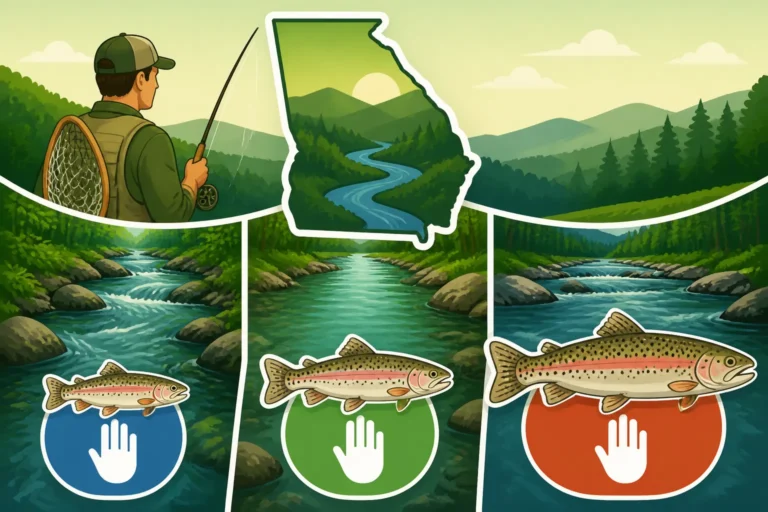
If your tournament is taking place in one of Georgia's beautiful mountain trout streams, you'll need more than just your basic fishing license. Anglers fishing for or possessing trout in designated trout waters must also have a valid "Mountain Trout License" add-on. This applies whether you're fly fishing in a pristine wilderness stream or spin fishing in a regularly stocked creek. Imagine showing up to a trout tournament on the Toccoa River, only to find out you can't even participate legally because you missed this crucial step.
The mountain trout license is essentially an endorsement added to your regular fishing license. It's not a standalone license, but rather an extra layer of permission specifically for trout fishing in these designated areas. Always double-check the tournament's rules and the location to see if this add-on is necessary. For a deeper dive into this specific requirement, take a look at our guide on the Mountain Trout License Add-On in Georgia.
Saltwater Information Permit (SIP) for Coastal Competitions
For those high-octane redfish or speckled trout tournaments along Georgia's stunning coast, there's another important "permit" to be aware of: the Saltwater Information Permit (SIP). Now, here's the kicker: the SIP itself is free. It's not a license you purchase, but rather a mandatory registration for anyone aged 16 or older fishing in Georgia's saltwater and who is not required to have a Georgia resident paid license (like those with certain lifetime licenses or seniors born before July 1, 1952). If you’re already holding a paid Georgia fishing license, you don’t need the separate SIP, as the information is collected when you purchase your license.
The purpose of the SIP is to help the Georgia DNR track saltwater fishing effort and harvest data, which is crucial for managing fish populations and ensuring sustainable fishing practices. While it doesn't cost you anything, failing to have one if you need it can still lead to a citation. So, if your tournament involves casting lines in coastal waters, make sure you've either got a paid Georgia fishing license or the free SIP. Our article Georgia Saltwater Information Permit Explained provides all the details you’ll need.
Tournament Angler-Specific Permits: Are They a Thing in Georgia?
Many tournament anglers often wonder if there's a special "tournament angler license" required in Georgia, distinct from general fishing licenses or endorsements. The short answer is: generally, no. Georgia does not typically require a separate, specific permit just for participating in a fishing tournament, beyond the standard recreational fishing licenses and any species- or location-specific endorsements (like the Mountain Trout License or the SIP) that would apply to any angler fishing in those circumstances.
Tournament organizers themselves, however, may have their own permitting requirements with local authorities for hosting the event, especially if it involves specific public access points, parks, or large gatherings. But these are usually permits obtained by the organizers, not individual anglers. Your responsibility as an angler is to ensure you meet all state-mandated licensing and endorsement requirements for the fish species and waters you intend to fish. Always read the fine print of any tournament you enter, as they might provide specific guidance, but the state's requirements remain paramount.
Navigating Complex Scenarios and Common Tournament Questions
Tournament fishing often introduces unique situations that can make license requirements seem even more convoluted. From crossing state lines on vast border lakes to understanding how catch-and-release rules impact your obligations, there are common questions that frequently pop up among competitive anglers.
Fishing Across State Lines in Border Waters
Georgia shares some incredible fishing opportunities with neighboring states, particularly on large reservoirs like Lake Hartwell (with South Carolina) or Lake Seminole (with Florida and Alabama). This is where the concept of "reciprocity agreements" comes into play, and it's a huge benefit for tournament anglers. A reciprocity agreement means that a valid fishing license from one state might be recognized in specific border waters by the adjacent state.
For example, if you have a valid Georgia fishing license, you can generally fish on Lake Hartwell up to the agreed-upon boundary line, even if parts of the lake are technically in South Carolina, and vice-versa for South Carolina licensed anglers. However, these agreements usually apply only to the shared border waters, not the entire state. If your tournament takes you beyond those agreed-upon reciprocal zones into the main body of the neighboring state's waters, you'll need that state's license. Always verify the specific reciprocity rules for the body of water where your tournament is held. It's better to carry both states' licenses if there's any doubt, especially in a competitive setting where penalties can be severe. Our article on Fishing License Reciprocity for Georgia Anglers delves deeper into this often-confusing topic.
Catch-and-Release vs. Weigh-In Formats and License Impact
Many bass tournaments, especially, operate under strict catch-and-release guidelines, with live weigh-ins or even photo-based measurements. This often leads anglers to wonder if the license requirements change since they aren't "harvesting" fish. The simple truth is: no, the format of the tournament does not change the fundamental requirement for a fishing license.
Whether you intend to keep your catch or immediately release it, the act of attempting to catch fish still falls under the purview of state fishing regulations. Your license grants you the legal right to engage in angling activities. The intent to release a fish, while commendable for conservation, does not exempt you from needing a valid license. Therefore, even if your tournament has a 100% catch-and-release policy, you still need to ensure your general fishing license and any necessary endorsements are current and valid.
Youth Tournaments and Junior Angler Rules
Youth tournaments are fantastic events that foster a love for fishing in the next generation. These events bring up specific questions about license requirements for younger participants. As mentioned earlier, in Georgia, children under 16 years of age do not need a fishing license. This rule holds true for youth tournaments as well. It simplifies participation for kids and keeps the focus on the fun and learning experience.
However, once an angler hits that magical 16th birthday, the exemption disappears, and they must have their own valid license to participate. Tournament organizers often have processes in place to verify the age of participants, especially those nearing the licensing threshold. It’s always a good idea for parents or guardians to double-check the age cutoffs and ensure compliance well before the tournament day to avoid any last-minute surprises or disappointments for their budding angler.
Ensuring Compliance and Avoiding Unwanted Penalties
Nobody wants to face a game warden with an expired license or a missing endorsement, especially not when you're in the middle of a tournament. Understanding how to stay compliant and what happens if you're not is crucial for every competitive angler.
Checking Your License Validity and Renewal Dates
It's astonishing how many anglers, even seasoned tournament veterans, accidentally let their licenses expire. Life gets busy, and it's easy to overlook a renewal notification. Before every tournament, make it a non-negotiable habit to check the validity of your Georgia fishing license. You can usually do this easily online through the Georgia DNR's licensing portal by entering your customer ID or personal information.
Georgia fishing licenses are typically valid for 365 days from the date of purchase, not necessarily on a calendar year basis. This means your license might expire mid-season, catching you off guard. Setting a reminder on your phone or marking your calendar immediately after purchase is a simple yet effective way to avoid this common pitfall. Many people purchase their licenses through third-party vendors or even online directly from the Georgia Wildlife Resources Division website. You can also renew your Georgia fishing license online or by phone. Staying on top of this ensures you're always legal and ready to fish.
Penalties for Fishing Without Proper Licensing in a Tournament
The consequences of fishing without a valid license or the required endorsements in Georgia can range from a citation and a fine to more severe penalties, especially if it's a repeat offense. In a tournament setting, the stakes are even higher. If you're caught fishing illegally, you could face immediate disqualification from the event, forfeiture of any prize money or points, and potentially a ban from future tournaments organized by that circuit or club.
Fines for fishing without a license in Georgia can vary, but they can be substantial, often hundreds of dollars, plus court costs. Beyond the financial impact, there's the embarrassment and the lost opportunity of the tournament itself. It's simply not worth the risk. Make it a part of your pre-tournament checklist: rods, reels, tackle, and always your current fishing license. Our detailed guide on Penalties for Fishing Without a License in Georgia offers a sobering look at what can happen.
Understanding Wildlife Resources Division (WRD) Enforcement
Game wardens with the Georgia Department of Natural Resources (DNR) are the primary enforcers of fishing regulations, and they are frequently present at major fishing tournaments, both openly and discreetly. Their job is to ensure fair play, safety, and compliance with all state laws. They have the authority to check licenses, inspect catches (for size and creel limits), and ensure boating safety regulations are being followed.
It’s crucial to remember that game wardens are highly trained professionals dedicated to protecting Georgia’s natural resources. When approached by a warden, always be courteous, cooperative, and provide any requested documentation promptly. Trying to evade or argue with a warden will only escalate the situation. Their presence at tournaments isn't to ruin anyone's day, but to maintain the integrity of the sport and the health of the fish populations. Knowing this, you can understand why proper licensing is so important, as it’s one of the first things they will verify. Check out Georgia Fishing Regulations Explained for a broader overview of what wardens are looking for.
Best Practices for Tournament Anglers Beyond Licensing
While having the correct licenses is paramount, being a responsible and successful tournament angler involves more than just paperwork. It's about preparedness, safety, and a commitment to conservation.
Essential Gear and Tackle Considerations
Tournament fishing pushes your gear to its limits, so having the right equipment is critical for both performance and reliability. You'll need sturdy rods and reels capable of handling powerful fish, especially if you're targeting species like largemouth bass, striped bass, or catfish that can put up a serious fight. Consider rods with the right power and action for your target species and preferred techniques, whether that's flipping heavy cover or throwing large swimbaits in open water.
Your tackle box should be organized and stocked with a variety of lures and baits that match the conditions and fish behavior on tournament day. Many anglers find great deals and a wide selection of specialized tournament gear, from high-performance fluorocarbon lines to precision scales and cull tags, on platforms like Amazon. Quality line, sharp hooks, and reliable electronics like fish finders are also invaluable. Don't forget basic tools like pliers, line cutters, and a net for safely landing fish. Being well-equipped not only increases your chances of success but also ensures you can handle fish responsibly.
Boat Registration, Safety, and Education Requirements
For most tournament anglers, a boat is an essential part of their arsenal. Just like your fishing license, your boat needs to be properly registered with the state of Georgia. This involves having valid registration numbers displayed, along with current decals. Beyond registration, safety is paramount. Make sure you have all required safety equipment on board, including Coast Guard-approved life jackets for every person, a fire extinguisher, a sound-producing device, and navigation lights if you'll be on the water during low light conditions.
Furthermore, Georgia has boater education requirements. Anyone born on or after January 1, 1998, who operates a motorboat on Georgia waters must possess a Georgia Boater Education Card. This applies to tournament anglers as well. Staying compliant with these boating regulations isn't just about avoiding fines; it's about ensuring your safety and the safety of others on the water. You can learn more about this in our guide to Georgia Boat Registration Requirements Explained and Georgia Boater Education Card Requirements.
Respecting Regulations and Promoting Conservation
At its heart, competitive fishing relies on healthy fish populations and accessible waterways. As tournament anglers, we have a unique responsibility to be ambassadors for conservation. This means adhering strictly to all size and creel limits, which are often even more stringent in a tournament setting than general regulations. For example, some tournaments may implement "slot limits" or minimum size requirements beyond state regulations to protect specific populations. Using proper catch-and-release techniques to minimize stress on fish, especially during weigh-ins, is also critical. Always ensure your livewell is properly aerated and maintained to keep fish healthy.
Participating in tournaments often means interacting with official organizers, game wardens, and fellow anglers. Maintaining a respectful attitude, practicing good sportsmanship, and leaving no trace behind (pack it in, pack it out) contribute positively to the fishing community and ensure that our favorite sport continues to thrive for generations to come. Your fishing license is more than just a piece of paper; it represents your commitment to these values.
Tournament Angler License Checklist
To help you keep track of all the essentials, here's a quick checklist for tournament anglers in Georgia:
| Requirement | Applies to (Age/Conditions) | Notes |
|---|---|---|
| General Georgia Fishing License | Ages 16 and older | Resident or Non-resident, annual or short-term |
| Mountain Trout License Add-on | All anglers fishing for trout in designated waters | Required in addition to general license |
| Saltwater Information Permit (SIP) | Ages 16 and older, fishing in saltwater (if no paid GA license) | Free permit, register online if you don't have a paid GA license |
| Valid Georgia Boat Registration | All motorboats | Display numbers and current decals |
| Georgia Boater Education Card | Born on or after January 1, 1998 (operating a motorboat) | Required for operators in this age group |
| Required Boating Safety Equipment | All boats | Life jackets, fire extinguisher, sound device, navigation lights etc. |
| Tournament-Specific Rules | All participants | Check organizer's rules for any additional requirements |
Remember, this table is a general guide. Always consult the official Georgia DNR website and the specific rules of your tournament for the most accurate and up-to-date information.
Disclaimer
Please note that the information provided in this guide is for general informational purposes only and does not constitute legal advice. Fishing regulations and license requirements are subject to change by the Georgia Department of Natural Resources (DNR) and other governing bodies. It is the sole responsibility of each angler to confirm and comply with all current state and local regulations before engaging in any fishing activity, including tournament participation. Always refer to the official Georgia DNR website or contact them directly for the most accurate and up-to-date information.