Largemouth Bass vs Spotted Bass: How to Tell Them Apart in Georgia
It's incredibly frustrating when you're out on the water in Georgia, you've just landed a beautiful bass, and you're left scratching your head, wondering, "Is this a largemouth or a spotted bass?" These two common species can look remarkably similar at first glance, leading to confusion about regulations, what lure to throw next, or even just what to tell your buddies. This guide is here to untangle that confusion, giving you clear, visual, and behavioral cues to confidently identify the largemouth bass from the spotted bass in Georgia's diverse waterways.
The Frustration of Misidentification: Why It Matters
Believe me, I've been there. You catch a solid bass, and you're 90% sure it's a largemouth, but then you second-guess yourself. Is that jawline really past the eye? Does it have a tongue patch? It feels like a pop quiz when all you want to do is enjoy your time fishing. But getting it right isn't just about showing off your fish ID skills; it actually has some significant practical implications for your fishing trip.
More Than Just a Name: Fishing Regulations and Management
The most immediate and critical reason to know your bass is due to Georgia's fishing regulations. While many of our lakes and rivers have general statewide bass limits, certain reservoirs and specific water bodies might have distinct size and creel limits for largemouth bass that differ from those for spotted bass. Imagine mistakenly keeping a spotted bass that's under a specific largemouth minimum length, or over-counting your daily limit because you didn't realize you had a mix of species. It's an honest mistake, but it can lead to penalties.
Fishery managers, too, rely on accurate identification to gauge the health and population dynamics of each species. Largemouth and spotted bass often occupy different niches, even within the same body of water. Understanding how many of each are being caught helps them make informed decisions about stocking programs, habitat improvements, and those crucial Georgia Fish Size and Creel Limits that keep our fisheries thriving. By correctly identifying your catch, whether you keep it or release it, you're playing a small but important role in the bigger picture of conservation.
Understanding Fish Behavior and Habitat
Beyond the rulebook, knowing which bass species you're dealing with can dramatically improve your fishing success. These two bass, despite their superficial similarities, have distinct preferences for habitat and exhibit different feeding behaviors. If you consistently fish for what you think is a largemouth in deep, rocky points, you might be missing out if that spot is actually prime spotted bass territory, requiring a different approach.
Think about it: a largemouth bass, known for its ambush predator style, loves to hide in thick cover like submerged timber, lily pads, or dense hydrilla. A spotted bass, on the other hand, often prefers clearer, deeper water, congregating around main lake points, bluff walls, and current breaks. Knowing which species is likely to be in a particular type of structure helps you choose the right lure, the right presentation, and ultimately, increases your chances of a hook-up. It's like bringing a steak to a vegetarian dinner – you might get a bite, but it's not ideal!
Largemouth Bass: The Classic Georgia Angler's Quarry
When most folks in Georgia think of bass fishing, they're picturing the largemouth. This iconic fish is our state fish and for good reason – it's found in almost every corner of Georgia, from farm ponds to vast reservoirs, and it grows to impressive sizes, making it a true trophy fish for many. It's the one that graces magazine covers and often dominates the weigh-ins at local tournaments.
Visual Cues and Distinctive Features
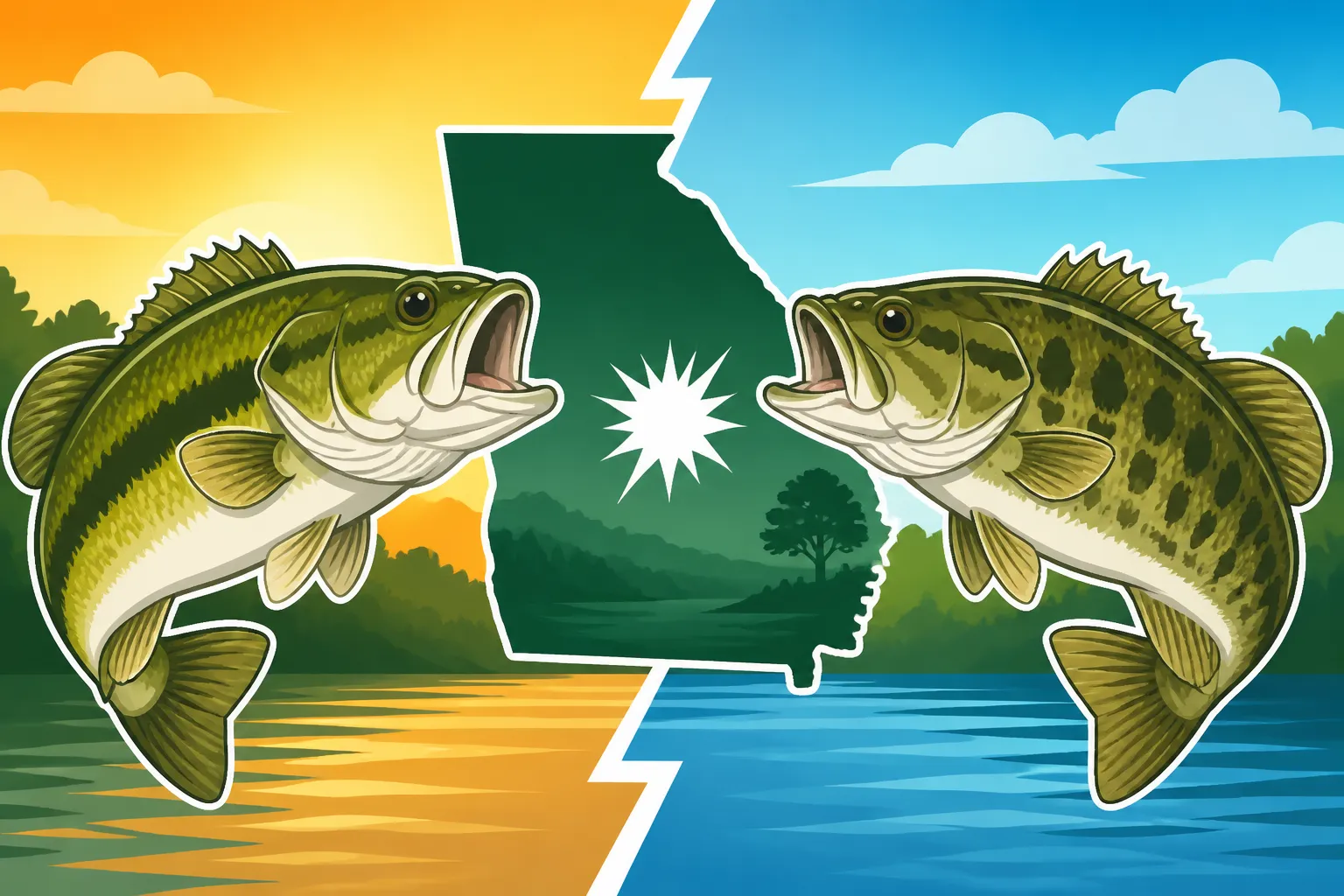
The largemouth bass has several key features that, once you know them, make identification much clearer. The most famous indicator is its mouth. If you gently close the fish's mouth, the upper jaw (or maxillary) on a largemouth will extend noticeably past the rear edge of its eye. This is often the first thing experienced anglers check.
Next, look at its dorsal fin – that's the one on its back. A largemouth typically has a very deep, almost complete notch between its spiny front dorsal fin and its soft-rayed rear dorsal fin. It looks like two distinct fins fused at the base. Its body is generally more elongated and robust compared to a spotted bass, especially as it grows larger. Coloration can vary wildly depending on the water clarity and vegetation, but typically, they have a prominent dark, often jagged, horizontal stripe running along their sides, which can sometimes break up into blotches. The belly is usually lighter, ranging from white to yellowish. If you're looking for a quick visual reference guide, you can often find excellent laminated fish identification cards on Amazon that you can keep right in your tackle box for those moments of doubt.
Preferred Habitats and Typical Behavior
Largemouth bass are masters of ambush. They thrive in warmer, often stained or murky water with an abundance of cover. Think shallow coves choked with hydrilla, dense stands of cattails, flooded timber, boat docks, brush piles, and fallen trees. They'll patiently wait, camouflaged within this structure, ready to dart out and engulf unsuspecting prey.
This preference for cover means that when you're fishing for largemouth, you're often pitching and flipping jigs or soft plastics into dense vegetation, or running crankbaits along weed lines. They're typically less inclined to school in large numbers out in open water compared to spotted bass, preferring to stake out individual territories or small groups within their chosen hideouts. Understanding these habits is crucial for finding them. If you're trying to figure out How to Identify a Largemouth Bass in its natural environment, observing its behavior is just as important as its looks.
Size and Growth Patterns in Georgia Waters
Largemouth bass are the big bruisers of the black bass family in Georgia. They generally grow larger and at a faster rate than spotted bass. While a 1-3 pound largemouth is a common catch, it's not unusual to land fish in the 5-8 pound range, especially in productive reservoirs. The thrill of a double-digit largemouth is what drives many Georgia anglers, and our state is famous for producing true giants. When you read about record-breaking bass catches or see photos of monster fish from places like Lake Lanier or Lake Oconee, chances are you're looking at a largemouth. They truly have the potential to be trophy fish, especially given Georgia's favorable climate and abundant forage. For more on this, check out Largemouth Bass Size and Growth in Georgia Lakes.
Spotted Bass: The Energetic River and Reservoir Dweller
The spotted bass, often affectionately called "spots" by anglers, is a feisty and abundant species in many Georgia waters. While they might not reach the sheer size of a largemouth, they make up for it with their aggressive fighting style and tendency to school, often providing fast-paced action. They've become increasingly popular targets, especially in our larger, clearer reservoirs and river systems.
Key Identification Markers
Distinguishing a spotted bass from a largemouth can be a bit trickier, but there are definite cues. The most reliable visual difference is the mouth: the upper jaw of a spotted bass will generally not extend past the rear edge of its eye. It will often stop directly under the eye or just slightly before it. This is a subtle but consistent difference.
Another crucial identifier, and one that often surprises beginners, is the presence of a patch of small, rough teeth on the tongue. If you can safely and gently feel the fish's tongue with your finger, a spotted bass will feel like sandpaper. A largemouth's tongue is smooth. Additionally, a spotted bass's dorsal fin usually has a less pronounced notch, appearing more like a continuous fin with just a slight dip. Their name comes from the rows of distinct, dark, often diamond-shaped spots or blotches below the lateral line, especially on their lower sides, which are much more defined than what you'd typically see on a largemouth. The body shape is often described as stockier and more football-like, particularly in younger fish. When you're fishing in Georgia, having a reliable identification guide – perhaps even one that clips to your vest from a retailer like Amazon – can be a real game-changer when trying to confirm a tricky ID.
Where to Find Them and How They Act
Spotted bass are homebodies in certain types of environments. They prefer clearer, deeper water with rock or gravel bottoms, prominent points, ledges, and areas with current. You'll find them in abundance in many of Georgia's major reservoirs, often suspending over deep water or hugging structure on the main lake and creek channels. They are less dependent on dense cover than largemouth bass.
Their behavior is also notably different. Spotted bass are much more prone to schooling, and when you find one, you often find many. They're aggressive feeders and will often chase down moving baits like crankbaits, spinnerbaits, and swimbaits, especially when retrieved quickly. When a school is active, you can experience incredible fishing, with multiple hook-ups in a short period. This schooling behavior is why Spotted Bass Fishing in Georgia Lakes and Rivers can be so rewarding.
Size and Growth Characteristics
While spotted bass are aggressive fighters, they don't reach the same trophy sizes as largemouth. A common spotted bass in Georgia might be anywhere from 1 to 3 pounds. A 4 or 5-pound spotted bass is considered an excellent catch, and anything larger is a true rarity and a testament to its age and good fortune. They grow slower than largemouth and have a more limited maximum size potential. However, don't let their smaller average size fool you; they are powerful, tenacious fighters pound-for-pound, often pulling harder than a largemouth of similar size.
Side-by-Side Comparison: Spotting the Differences
Okay, let's put it all together. When you've got a fish in hand and you're trying to make that definitive call, here are the crucial points to remember. It's often a combination of factors, not just one, that seals the deal.
The Jawline and Dorsal Fin Test
This is your go-to test, the first thing most veteran anglers look for.
- Jawline: Gently close the fish's mouth. For a largemouth, the end of the upper jaw will extend beyond the back edge of the eye. For a spotted bass, it will stop at or before the back edge of the eye. This is probably the most consistent physical difference.
- Dorsal Fin: Look at the fin on the fish's back. A largemouth will have a very deep, almost complete separation or "notch" between the spiny front section and the soft-rayed rear section of the dorsal fin. Think of it as almost two separate fins. A spotted bass will have a much shallower, more connected dorsal fin, with just a slight dip. The spine count can also differ, but the visual dip is generally easier to see quickly.
Tongue Patch and Lateral Spots
Once you've done the jaw and dorsal fin test, if you're still unsure, these next two are excellent tie-breakers.
- Tongue Patch: This is a definitive characteristic. Carefully open the fish's mouth and feel its tongue. If you feel a rough, sandpaper-like patch of teeth, it's a spotted bass. If the tongue is smooth, it's a largemouth. This feature alone is often enough to confirm your ID.
- Lateral Spots: Observe the area below the lateral line, particularly on the lower half of the fish's body. Spotted bass get their name from the distinct, often diamond-shaped or individual dark spots in this region. Largemouth bass might have some mottling or light blotches, but generally lack these well-defined individual spots. For a visual comparison, you might consult a specialized field guide or even an app on your phone that you downloaded from Amazon before your trip.
Habitat and Behavioral Distinctions
Even before you land a fish, you can make an educated guess about what you might catch based on where you're fishing and how the fish are biting.
- Habitat: If you're pitching into thick hydrilla beds or under a dock in a shallow cove, you're overwhelmingly likely targeting a largemouth. If you're dragging a jig along a deep, rocky point on the main lake, or seeing schools of fish chasing bait in open water, there's a good chance you're interacting with spotted bass. Where Spotted Bass Live in Rivers and Lakes is very different from preferred largemouth territory.
- Behavior: Largemouth are often solitary ambush predators, whereas spotted bass are more prone to schooling and actively chasing down prey, especially in current. If you catch one and immediately catch another from the same spot, it's more indicative of schooling spotted bass.
Here's a quick comparison table to help you keep these distinctions straight:
| Feature | Largemouth Bass | Spotted Bass |
|---|---|---|
| Upper Jawline | Extends past the rear edge of the eye | Does not extend past the rear edge of the eye |
| Dorsal Fin | Deep, almost complete notch; appears as two fins | Shallow, less defined notch; appears continuous |
| Tongue | Smooth | Has a rough patch of teeth |
| Lateral Spots | May have a dark, horizontal stripe/blotches | Distinct, dark spots below the lateral line |
| Body Shape | More elongated, generally larger overall | Stockier, more "football" shaped, smaller overall |
| Preferred Habitat | Shallow, weedy cover, submerged timber, docks | Deeper, rocky structure, main lake points, current |
| Behavior | Ambush predator, often solitary | More prone to schooling, aggressive chasers |
Why Accurate Identification Enhances Your Fishing Experience
Knowing your fish is more than just a party trick; it genuinely makes you a better, more thoughtful angler. It turns fishing into an engaging puzzle rather than just a random casting exercise.
Targeting the Right Species for Better Success
Once you understand the subtle differences between largemouth and spotted bass, you can tailor your approach to maximize your chances of success. For example, if you're fishing a weedy lake and want to specifically target largemouth, you'll be throwing topwater frogs over matted grass or pitching heavy jigs into dense cover. You might refer to a guide like Best Lures for Georgia Largemouth Bass to perfect your setup.
However, if you're on a deep, clear reservoir like Lake Lanier and specifically want to fill your livewell with aggressive spots, you'd likely be using faster retrieves with deep-diving crankbaits, jigging spoons, or drop shots on main lake points. You'd consult resources like Best Bait for Spotted Bass to refine your choices. The ability to switch gears based on the species you're encountering or targeting is a hallmark of an advanced angler. Even simple things like line choice—perhaps a braided line for heavy cover largemouth fishing, or a fluorocarbon for finicky spotted bass in clear water—can be optimized when you know your target. You can find a fantastic selection of specialized fishing lines on Amazon to suit either approach.
Contributing to Conservation Efforts
Every time you correctly identify a fish, you're contributing to better data collection, whether directly through creel surveys or indirectly by sharing accurate information with fellow anglers. This accurate information helps state wildlife agencies manage fish populations more effectively. Misidentifying fish can skew data, leading to misguided management decisions.
For example, if anglers consistently misidentify smaller largemouth as spotted bass, the perceived population health of largemouth might look lower than it actually is, potentially triggering unnecessary stocking programs or changes to regulations. Conversely, if spotted bass are frequently mistaken for largemouth, their population might be overfished in certain areas due to less restrictive largemouth limits. Being mindful of these differences and practicing responsible catch and release, similar to how we might handle How to Catch and Release Trout Properly, ensures a sustainable future for Georgia's diverse fish populations.
The Satisfaction of True Angling Knowledge
There's a deep satisfaction that comes with truly understanding the fish you pursue. It's not just about the tug on the line, but the knowledge that you've outsmarted a particular species by understanding its habits, its preferred food, and its unique physical characteristics. When you can confidently say, "That's a beautiful spotted bass!" or "Definitely a largemouth!" you've elevated your angling experience beyond just catching fish. It's about becoming a student of the water, and that knowledge enriches every moment you spend outdoors.
Common Misconceptions and Tricky Situations
Even with all the guidelines, nature sometimes throws a curveball. It's important to acknowledge that fishing isn't always black and white, and occasionally, you might encounter situations that make identification a little more challenging.
Hybridization and Anomalies
While not extremely common, there can occasionally be some hybridization between black bass species, particularly in areas where their ranges overlap significantly, or through stocking programs in certain situations. These hybrids might exhibit a confusing mix of characteristics from both parent species, making a definitive ID difficult. However, for the vast majority of your catches in Georgia, a clear identification based on the features discussed is usually possible. Don't let the rare anomaly deter you from learning the common distinctions.
Environmental Factors Affecting Appearance
The appearance of any fish can be influenced by its environment. Fish living in clearer water might have more vibrant or distinct markings, while those from murky or tannic water might appear duller or darker. Diet can also play a role, influencing overall body condition and sometimes even subtle coloration. A bass that's been gorging on shad might look different from one that's primarily eating crawfish. These variations, however, usually affect general color and robustness, not the fundamental anatomical features like jaw extension, dorsal fin separation, or the presence of a tongue patch. So, while a fish's specific hue might vary, its underlying structure remains the key to identification. To ensure you're always prepared, keeping a small, waterproof field guide (many are available on Amazon) can be incredibly helpful for on-the-spot verification, especially when you're dealing with varying water conditions.
Practice Makes Perfect: Observing and Learning
The best way to become proficient at distinguishing largemouth from spotted bass is to simply spend more time on the water, observing every fish you catch. Don't just unhook and release; take a moment to look closely at its features. Feel its tongue (carefully!). Take photos from different angles to review later. Talk to experienced anglers at the boat ramp or tackle shop. Most importantly, don't be afraid to make a mistake; it's part of the learning process! Every fish you identify correctly, or even struggle to identify, adds to your growing knowledge and makes you a more skilled and confident angler. It's all part of the journey to truly understand Georgia's incredible fisheries.
Disclaimer
This article is for general informational purposes only and does not constitute professional advice. Laws, prices and regulations vary by location and change over time. Consult a qualified professional for guidance on your specific situation.