How to Work a Spinnerbait for Bass
Navigating the overwhelming world of bass fishing lures can feel like trying to solve a complicated puzzle, especially when you're staring at a wall of shiny spinnerbaits, wondering which one to pick and, more importantly, how to even use it. Many anglers, even seasoned ones, find themselves frustrated by this versatile yet sometimes misunderstood lure. But don't you worry, because this comprehensive guide is going to break down everything you need to know about effectively working a spinnerbait to catch more bass in Georgia's diverse waters.
The Anatomy of a Bass-Catching Machine: What Makes a Spinnerbait Tick?
Before we dive into how to fish a spinnerbait, let's get a good look at what makes this lure so special. A spinnerbait isn't just a random collection of metal and silicone; each component plays a crucial role in attracting bass. Understanding these parts is the first step to truly mastering this incredible bait.
Deconstructing the Spinnerbait's Components
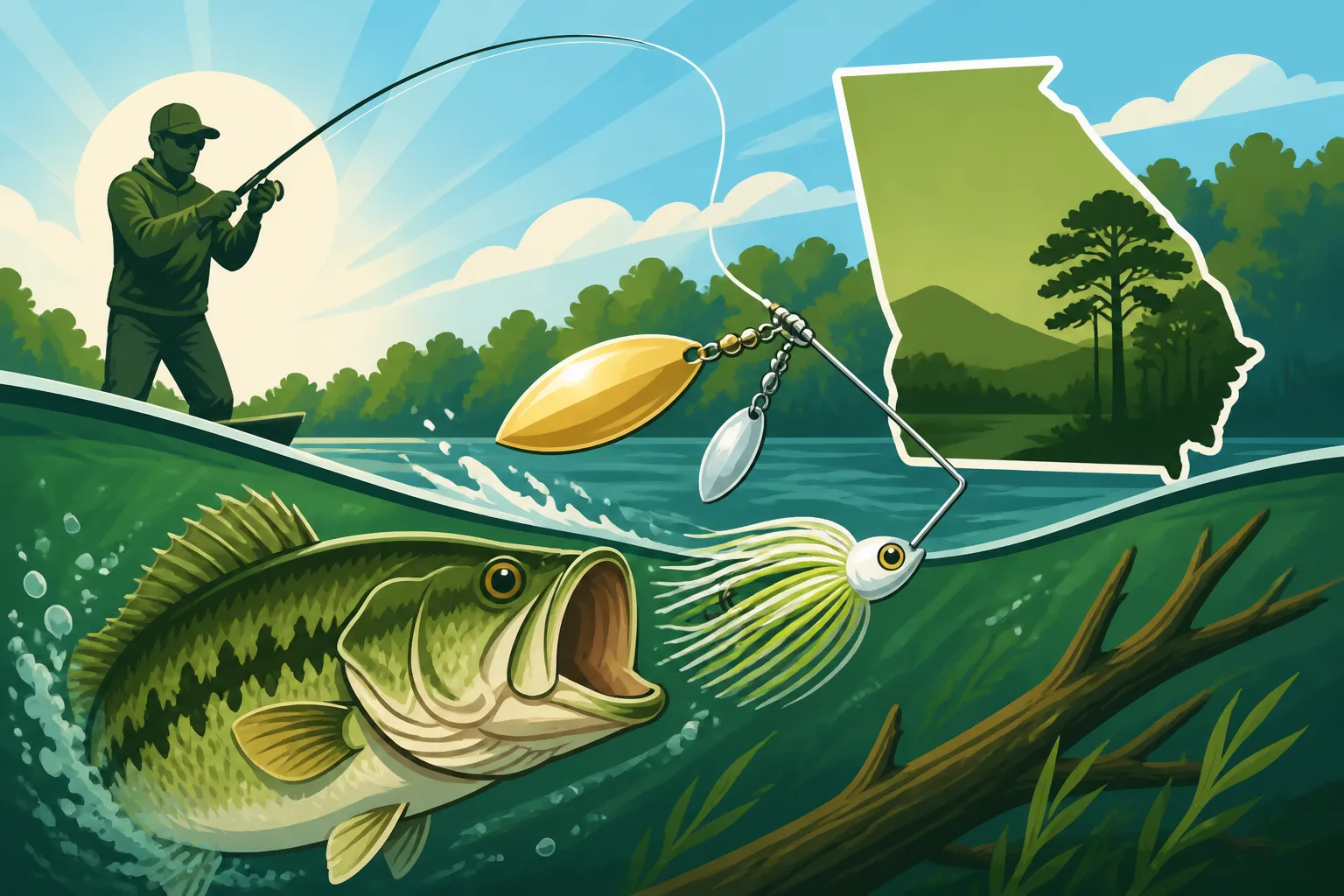
At its core, a spinnerbait is built around a wire frame, often stainless steel, bent into an open 'V' or 'R' shape. On one arm of this wire, you'll find one or more spinner blades, attached by swivels that allow them to rotate freely. These blades are the heart of the spinnerbait's appeal, creating flash and vibration in the water. The other arm typically holds a lead head, molded onto a hook, which is then usually dressed with a soft plastic skirt. Sometimes, you'll even see a small, secondary trailer hook added for those short-striking fish. The combination of these elements mimics various prey, from baitfish to crawfish, making it incredibly enticing to hungry bass. This design allows it to navigate through cover where other lures might snag, which is a huge advantage when you're fishing Georgia's stump-filled lakes or brushy river banks.
Why Spinnerbaits are Irresistible to Bass
Spinnerbaits tap into a bass's predatory instincts in multiple ways. First, the rotating blades create an intense flash, especially effective in murky water or low light conditions. Think about those early morning or late evening bites; that flash acts like a beacon. Second, those same spinning blades produce vibration, which bass detect through their lateral lines. This is crucial when visibility is poor, allowing bass to pinpoint the lure even if they can't see it clearly. It's like a dinner bell ringing underwater! Finally, the skirt and often an added soft plastic trailer create a bulkier profile and lifelike movement, mimicking fleeing baitfish like shad or herring, common prey throughout many of Georgia's lakes and rivers. This multi-sensory attack makes it a standout lure in almost any condition.
Matching the Hatch (and the Mood): Choosing Your Spinnerbait in Georgia
Choosing the right spinnerbait isn't just about grabbing the prettiest one off the shelf. It's about understanding how different features interact with the water and the fish's mood. Just like you wouldn't use a heavy jig in shallow water, you need to select your spinnerbait strategically based on the conditions you're facing.
Blade Types and Their Impact
The blades are perhaps the most critical component of a spinnerbait, dictating its action and appeal. There are three main types you'll encounter, each with its own unique characteristics:
- Colorado Blades: These are round, cupped blades that create maximum vibration and flash at slower retrieve speeds. They "thump" loudly in the water, making them excellent for stained or muddy conditions, low light, or deep water where bass rely more on their lateral line than sight. If you're fishing a murky lake like parts of Lake Seminole or after a heavy rain on the Flint River, a Colorado blade is often your best bet. They also tend to pull more, meaning you can feel them working more distinctly on your rod.
- Willowleaf Blades: Long, thin, and resembling a willow leaf, these blades produce less vibration but offer a lot of flash, especially at faster retrieve speeds. They cut through the water cleanly, making them ideal for clear water, bright conditions, or when you want to "burn" a bait back to the boat to trigger a reaction strike. Many anglers favor willowleaf blades on clearer lakes like Lake Lanier or Lake Hartwell when bass are actively chasing bait.
- Indiana Blades: A hybrid between Colorado and willowleaf, Indiana blades offer a good balance of flash and vibration. They're a solid all-around choice for many conditions, providing a moderate thumping action with decent flash. If you're unsure which blade type to start with, an Indiana blade is a versatile option that can cover a lot of ground.
Sometimes, you'll find spinnerbaits with a combination of blade types, like a small Colorado blade paired with a larger willowleaf. This "tandem" setup gives you the best of both worlds – some thumping vibration combined with maximum flash.
Color Selection and Skirt Design
Spinnerbait colors aren't just for show; they're critical for attracting bass under varying conditions. A good rule of thumb is to match the hatch. If bass are feeding on shad, choose white, chartreuse, or silver skirts. If they're targeting crawfish, opt for skirts with browns, oranges, or greens. In general:
- Clear Water/Bright Skies: Natural colors like white, silver, or light chartreuse work well. You want the lure to look as natural as possible.
- Stained/Murky Water/Overcast Skies: Brighter, bolder colors like chartreuse, white, or firetiger are excellent for increasing visibility. The flash from the blades combined with a bright skirt can make all the difference in low visibility.
- Low Light/Night Fishing: Black or dark blue skirts can create a strong silhouette against the lighter sky, making them visible to bass from below.
The skirt material, usually silicone or rubber, also influences movement. A fuller skirt will push more water and create a larger profile, while a sparse skirt might have more subtle, lifelike action. Some anglers even add a soft plastic trailer, like a grub or a swimbait, to the hook to enhance the profile, add more action, or provide a different color contrast. These trailers can be absolute game-changers, especially when bass are finicky. Many great options for both spinnerbaits and trailers can be found on Amazon.
Weight and Depth Considerations
The weight of your spinnerbait dictates how deep it will run and how fast it sinks. Generally, lighter spinnerbaits (1/4 oz to 3/8 oz) are perfect for shallow water, fishing over submerged grass beds, or when you want a slower fall rate. Heavier spinnerbaits (1/2 oz to 1 oz or more) are designed for deeper water, fishing faster currents, or when you need to cover water quickly. If you're fishing the Chattahoochee River Headwaters, you might use a lighter bait to drift through shallower runs, while targeting deep structure on Lake Sinclair could call for a heavier option. The depth you're targeting and the current you're fighting will heavily influence your weight choice.
Basic Spinnerbait Retrieves: Mastering the Presentation
Now that you've got your spinnerbait picked out, it's time to learn how to make it dance. The beauty of a spinnerbait is its versatility in retrieve, allowing you to adapt to whatever the bass are telling you. Forget about just reeling it straight back in; there are nuances that can dramatically improve your success.
The Steady Retrieve
This is the bread and butter, the most straightforward way to work a spinnerbait, and often incredibly effective. As the name suggests, you simply cast your spinnerbait out and reel it back in at a consistent speed. The key here is consistency. You want the blades to be constantly turning, creating that enticing flash and vibration.
- Application: This retrieve works wonders when bass are actively feeding and widely dispersed, or when you're trying to cover a lot of water quickly to locate fish. It's fantastic for prospecting along shorelines, over submerged humps, or through open water where you suspect baitfish are schooling. On a big lake like Clarks Hill Lake, a steady retrieve can help you find active fish in expansive areas.
- Varying Speed: While "steady" implies one speed, don't be afraid to experiment. Sometimes a super-fast retrieve, known as "burning," can trigger aggressive reaction strikes, especially in warmer water. Other times, a slow, methodical retrieve is what's needed, particularly in cooler water or when fish are lethargic. You'll want to adjust your retrieve speed until you find what the bass are responding to that day.
- Feeling the Thump: Pay close attention to your rod tip. You should be able to feel the blades thumping and vibrating as they spin. If you don't feel it, your retrieve might be too slow, or there could be a weed on your blade, preventing it from rotating. This tactile feedback is essential for maintaining proper presentation.
Stop-and-Go and Yo-Yo Retrieves
These retrieves introduce pauses and changes in depth, adding another dimension of realism to your presentation. Bass are opportunistic predators, and a lure that acts like a struggling or wounded baitfish is often too good to pass up.
- Stop-and-Go: Cast your spinnerbait out and begin a steady retrieve. After a few cranks, stop reeling for a second or two, allowing the spinnerbait to fall slightly. Then, start reeling again. This creates an erratic, darting action that can mimic a startled baitfish. Often, strikes will occur right as the lure begins to fall or just as you restart the retrieve. This is especially effective around structure like docks, laydowns, or rock piles where bass might be ambushing prey.
- Yo-Yo Retrieve: This technique is best for targeting deeper structure or ledges. Cast your spinnerbait and let it sink to your desired depth (or to the bottom). Then, rapidly lift your rod tip, reeling in slack as you do, before dropping the rod tip back down and letting the lure fall again on a semi-slack line. This up-and-down motion, much like a yo-yo, can be incredibly effective for enticing fish holding tight to bottom contours or suspended bait. This is a great tactic for fishing areas like the deeper creek channels on Lake Oconee.
Bumping and Deflecting Off Cover
One of the greatest advantages of a spinnerbait is its weedless design. The wire frame and upward-facing hook mean it can be fished through heavy cover that would snag other lures. This isn't just a convenience; it's a powerful technique.
- Targeting Structure: Actively seek out cover like submerged timber, rock piles, brush, grass lines, or dock pilings. Cast your spinnerbait so it either lands directly on the cover or runs right into it.
- The Deflection: As the spinnerbait hits the cover, give your rod a slight twitch or pause. This often causes the lure to deflect off the obstacle in an erratic, natural-looking way. This sudden, unpredictable movement is a huge trigger for bass, making them think an easy meal is trying to escape. Many times, the strike will happen the instant the bait "kicks" off the cover. This is a prime strategy for fishing thick vegetation or blowdowns on West Point Lake. Don't be afraid to crash it into things!
Beyond the Basics: Advanced Spinnerbait Tactics for Tricky Situations
Once you've got the foundational retrieves down, it's time to add a few more specialized techniques to your arsenal. Bass can be finicky, and sometimes, you need a unique presentation to coax them into biting.
Slow-Rolling in Deep Water
When bass are lethargic, perhaps due to a cold front or extreme heat, a slow-rolled spinnerbait can be deadly. This technique involves using a heavier spinnerbait and retrieving it just fast enough to keep the blades turning, often along the bottom in deeper water.
- Execution: Use a 1/2 ounce or heavier spinnerbait with Colorado blades (for maximum thumping at slow speeds). Cast it out and let it sink all the way to the bottom. Once it's down, begin a very slow, steady retrieve, just barely turning the reel handle. You want the spinnerbait to tick off the bottom occasionally, stirring up puffs of sediment.
- Ideal Conditions: This is perfect for cooler water temperatures, after a sudden weather change, or when bass are holding tight to deep structure like humps, ledges, or channel swings. It's a fantastic way to target those bigger, less active bass that aren't willing to chase a fast-moving bait. Imagine slow-rolling a spinnerbait along the deeper rock formations on Lake Russell; it can pull out some giants.
- Feeling the Bites: Because the retrieve is so slow, bites can sometimes feel like a slight "mushy" feeling or just added weight on your line. You won't always get a violent strike, so be attentive to any change in line tension or feel.
Burning and Helicoperting for Reaction Strikes
Sometimes, bass don't want to think; they just want to react. That's where burning and helicoptering come into play.
- Burning: This is the opposite of slow-rolling. Cast your spinnerbait (often with willowleaf blades for less drag) and reel it back as fast as you possibly can. The goal is to make the bait streak through the water, creating a blur of flash and vibration that triggers an aggressive chase and strike.
- When to Use: Ideal for active bass in warm water, especially during feeding frenzies or when you see baitfish scattering on the surface. It's also great for covering vast amounts of water quickly to find those aggressive fish. Many anglers find success burning spinnerbaits over grass flats on Lake Guntersville (a border lake with Georgia).
- Helicoptering (or Free Falling): After making a cast, instead of immediately starting your retrieve, leave your bail open and let the spinnerbait helicopter down on a slack line. The blades will continue to spin as it falls, creating a unique, fluttering presentation.
- When to Use: This is particularly effective around vertical cover like bridge pilings, steep bluff walls, or standing timber. Bass often suspend around such structures, and a slowly falling, fluttering spinnerbait can be an irresistible target. It’s also great for getting into tight spots under docks.
The Importance of a Trailer Hook
Have you ever had a bass swipe at your spinnerbait only to miss the main hook? It's a common frustration! That's where a trailer hook comes in. A small, secondary hook attached to the main hook with a piece of surgical tubing or a spring, a trailer hook drastically increases your hook-up ratio, especially with short-striking fish.
- When to Use: Always consider adding a trailer hook when you notice bass are "nipping" at the bait, or if you're getting strikes but failing to connect. It's a simple addition that can turn missed opportunities into landed fish. You can buy these separately and add them to most spinnerbaits.
- Placement: Ensure the trailer hook points upward, aligned with the main hook, and doesn't impede the action of the skirt or trailer. The point should extend just past the skirt.
Adapting to Weather and Water Conditions
Spinnerbaits truly shine when you learn to adapt them to the ever-changing conditions in Georgia. For instance, after a heavy rain, when the water turns murky, the loud thumping of a Colorado blade in chartreuse or white becomes incredibly effective. If the sun is blazing on a clear lake, a silver willowleaf blade retrieved quickly might be the ticket. Consider how water temperature affects fish behavior; in colder water, a slow-rolled retrieve with heavier bait will often be more productive, while in warmer water, a burned retrieve might draw more strikes. For more insights on how these changes affect the bite, you might find our guide on How Water Temperature Affects Fish Behavior incredibly useful. Don't be afraid to experiment with your retrieves, colors, and blade combinations throughout the day.
| Blade Type | Shape | Vibration | Flash | Ideal Speed | Best Conditions |
|---|---|---|---|---|---|
| Colorado | Round, Cupped | High | Moderate | Slow | Murky water, low light, deep water, colder water |
| Willowleaf | Long, Thin | Low | High | Fast | Clear water, bright sun, active fish |
| Indiana | Oval | Moderate | Moderate | Medium | All-around versatile, changing conditions |
| Tandem | Combo | Moderate-High | High | Medium-Fast | Versatile, good balance of flash and thump |
The spinnerbait is a powerhouse lure that no serious bass angler in Georgia should overlook. From its flash and vibration to its ability to navigate heavy cover, it’s a tool that can unlock incredible fishing opportunities. By understanding its components, choosing the right combination for the conditions, and mastering a variety of retrieves, you'll be well on your way to consistent success. So next time you're heading out to the lake, grab a few spinnerbaits, experiment with these techniques, and get ready to feel that satisfying thump of a Georgia bass. You might even find yourself reaching for this lure more often than you thought. For more tips on catching the main event, check out our Largemouth Bass Fishing in Georgia: The Complete Species Guide. Remember, practice makes perfect, and every cast is a chance to learn something new about working this incredible lure. You can often find a good selection of quality spinnerbaits, like those from Strike King or Booyah, on Amazon, ready to ship right to your door before your next fishing trip. If you're looking for other ways to entice these fish, our resource on Best Lures for Georgia Largemouth Bass is another excellent read. Learning to adapt your approach to the different Seasonal Bass Fishing Patterns in Georgia will further elevate your game. And if you're keen on finding those prime locations, a look at some of the Best Fishing Spots in Georgia could point you in the right direction. For the specifics on where to find different kinds of bass, our guide on Spotted Bass Fishing in Georgia Lakes and Rivers is invaluable.
Disclaimer
Please remember that fishing regulations, including creel limits and size restrictions, can change. Always consult the latest Georgia Department of Natural Resources (DNR) guidelines before heading out on the water. This information is intended for educational purposes and is not a substitute for official regulations or professional guidance.