How to Fish a Texas Rig for Bass
Ever found yourself staring at a prime-looking piece of bass cover – maybe a dense brush pile, a thick bed of lily pads, or some gnarly submerged timber – knowing that a trophy largemouth is probably hunkered down in there, but feeling a pang of dread about snagging your favorite lure? It’s a common frustration, believe me. We’ve all been there, losing good baits to the underwater jungle. But what if I told you there’s a rig that can not only navigate these treacherous waters with ease but also present your bait right where the big bass live, without getting hung up constantly?
That, my friends, is the magic of the Texas Rig. This guide is going to walk you through everything you need to know about setting up and effectively fishing a Texas Rig for bass right here in Georgia’s incredible lakes and rivers. We'll dive deep into the gear, the rigging process, and the techniques that will have you pulling bass out of places you once thought un-fishable.
What Exactly is a Texas Rig and Why It's a Bass Angler's Secret Weapon
The Texas Rig is arguably one of the most popular and effective presentations for bass fishing, especially when you're targeting fish in heavy cover. It's a simple, yet ingenious, setup designed to make your soft plastic bait virtually weedless, allowing it to slip through thick vegetation, brush, and rocks without snagging. If you're tired of losing lures to the underwater jungle, this rig is about to become your new best friend.
Understanding the Core Components
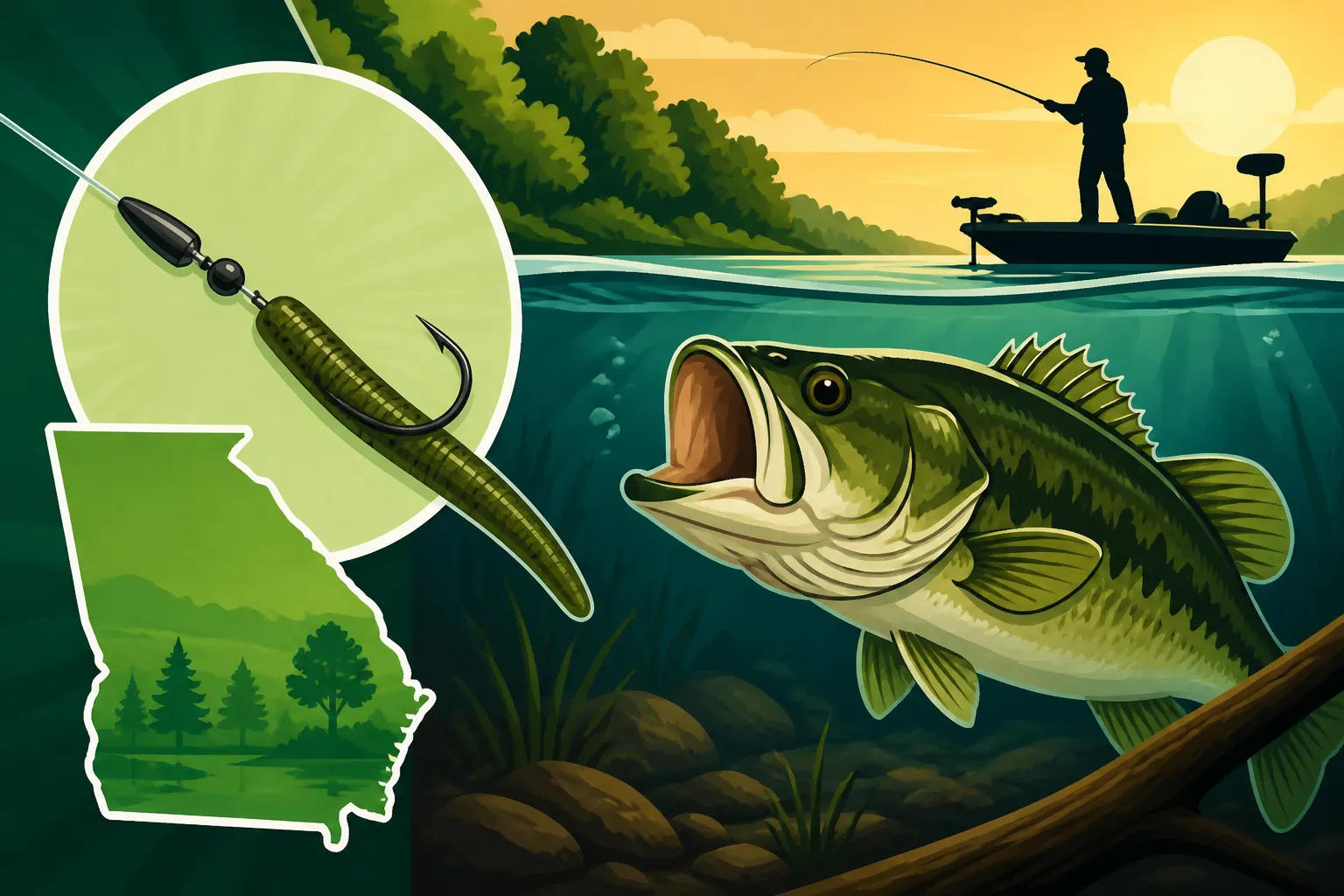
At its heart, a Texas Rig is incredibly straightforward. It typically consists of just three main components: a soft plastic bait, an offset worm hook, and a bullet-shaped weight. That's it! The beauty is in how these pieces work together. The bullet weight slides freely on your line, positioned above the hook, and the hook itself is threaded through the soft plastic in such a way that the hook point is buried back into the plastic body. This creates a streamlined, weedless profile that's a dream to cast into the gnarliest cover. The versatility of this rig means you can use it with a huge array of soft plastics, from long worms to creature baits and even senkos.
Why This Rig Dominates in Heavy Cover
The primary reason the Texas Rig is a game-changer is its exceptional weedless nature. When rigged correctly, the hook point is completely shielded by the soft plastic. This means it glides over and through obstructions that would instantly snag other lure presentations. Imagine pitching your bait into a dense hydrilla mat on Lake Seminole or a brush pile on Lake Oconee. With a jig or an exposed hook, you'd be hung up in seconds. With a Texas Rig, your bait slips right through, getting down to where those bass are hiding. It’s a fantastic way to target those shy, cover-oriented bass that other anglers simply can't reach. Plus, the bullet weight helps the bait penetrate thick cover, ensuring it reaches the fish even in the densest environments.
Gathering Your Gear: What You'll Need for a Perfect Texas Rig
Before you can start slinging Texas Rigs, you'll need to make sure you have the right tools for the job. While the rig itself is simple, having the correct rod, reel, line, and terminal tackle will make all the difference in your success, especially when you're trying to wrestle a big Georgia largemouth out of heavy cover.
Rod, Reel, and Line Choices for Power and Sensitivity
For Texas Rig fishing, you generally want a setup that offers a good balance of power for hooksets and sensitivity to feel those subtle bites.
- Rods: A medium-heavy to heavy power casting rod, typically between 6'6" and 7'6" in length, is ideal. The medium-heavy power provides enough backbone to drive that hook through the plastic and into a bass's jaw, while also offering the leverage needed to pull fish away from cover. A fast or extra-fast action tip will give you the sensitivity to detect light bites and the quick responsiveness for a solid hookset. For those really thick mats, a heavy power rod is your best bet. If you're looking for recommendations, many anglers swear by rods from brands like St. Croix or Ugly Stik, available on Amazon, for their durability and feel.
- Reels: A baitcasting reel with a gear ratio in the 6.1:1 to 7.3:1 range is perfect. A faster retrieve ratio (like 7.1:1 or higher) is excellent for quickly taking up slack line after a cast or for rapidly repositioning your bait. A good quality baitcaster will also allow for precise casting into tight spots, which is crucial when you're targeting specific pieces of cover.
- Line: This is where you don't want to skimp. You need a line that can withstand abrasion, offer good sensitivity, and handle the fight.
- Fluorocarbon: My personal favorite for most Texas Rig applications. It's nearly invisible underwater, extremely sensitive, and has low stretch, which translates to better feel and more powerful hooksets. A 15-20 lb test fluorocarbon line is a solid choice for general Texas Rig fishing, bumping up to 25 lb test for extremely heavy cover.
- Braided Line: When you're fishing the absolute thickest stuff – think dense lily pads or matted grass – braid is king. Its zero-stretch quality provides unparalleled sensitivity and incredible power, making it easier to cut through vegetation and horse big bass out of cover. Use 30-65 lb test braid, and if water clarity is a concern, tie on a fluorocarbon leader of 18-25 lb test.
Hooks, Weights, and the Perfect Soft Plastic Baits
These are the business end of your Texas Rig, and choosing them wisely will greatly impact your success.
- Hooks: The most common hook type for a Texas Rig is an Extra Wide Gap (EWG) offset worm hook. The wide gap provides plenty of room for the plastic to collapse and the hook point to penetrate the fish's mouth. Sizes typically range from 3/0 to 5/0, depending on the size of your soft plastic bait. You might also encounter straight shank hooks, favored by some for better hook penetration, but EWG hooks are generally more forgiving for beginners.
- Weights: The classic Texas Rig weight is a bullet weight. These come in lead or tungsten.
- Lead Weights: More affordable and readily available, but less dense.
- Tungsten Weights: More expensive, but much denser and harder. This means they are smaller for their weight, creating a more compact profile that slips through cover better. Their hardness also transmits vibrations more effectively up your line, giving you superior feel for bites and bottom composition. Most serious anglers opt for tungsten, and you can find a good selection on Amazon. Weights typically range from 1/8 oz for lighter applications to 1 oz or more for punching through heavy mats.
- Soft Plastic Baits: This is where you can really get creative! The Texas Rig works with a vast array of soft plastics.
- Plastic Worms: Classic choices like the Zoom Trick Worm or the Berkley PowerBait worm are incredibly effective. The length and tail action can vary, offering different presentations.
- Creature Baits: Baits like the Strike King Rage Craw or the Zoom Brush Hog mimic crawfish or other aquatic critters, making them excellent choices, especially around rocky cover or during the spring when bass are feasting on craws.
- Senkos/Stick Baits: While often fished weightless, a Texas Rigged Senko can be deadly around sparse cover or docks. The subtle shimmy on the fall is irresistible to bass.
- Flipping Baits: Bulkier, more compact soft plastics designed to be "pitched" or "flipped" into dense cover with heavier weights. These typically have appendages that create a lot of vibration.
| Soft Plastic Type | Ideal Weight Range | Typical Hook Size | Best for |
|---|---|---|---|
| Long Worms (7"+) | 1/8 oz – 3/8 oz | 4/0 – 5/0 EWG | Open water, sparse cover, ledges |
| Creature Baits | 1/4 oz – 1/2 oz | 3/0 – 4/0 EWG | Wood, rocks, brush piles, mats |
| Senkos/Stick Baits | 1/16 oz – 1/4 oz | 3/0 – 4/0 EWG | Docks, sparse grass, open water |
| Flipping Baits | 1/2 oz – 1.5 oz+ | 4/0 – 6/0 EWG | Dense mats, heavy cover punching |
Tying and Rigging Your Lure: Step-by-Step for Success
Now that you have all your components, let's get down to actually putting this rig together. Proper rigging is essential for both the weedless nature and the effectiveness of the Texas Rig. Don't rush this part – a poorly rigged bait can lead to snags and missed fish.
Preparing Your Line and Hook with Confidence
First things first, you need to securely attach your hook to your fishing line. Since you're often fishing around abrasive cover and targeting strong bass, a reliable knot is paramount. My go-to knots for this are the Palomar knot or the Improved Clinch knot. Both are strong and relatively easy to tie, even with fluorocarbon line. Practice them a few times at home until you can tie them quickly and correctly. When using fluorocarbon, make sure to lubricate the knot with a little saliva before tightening it down completely to prevent line damage from friction. A strong knot means you won't be snapping off when you finally hook that monster bass that was hiding in the thick stuff.
Attaching the Weight and Soft Plastic for a Truly Weedless Setup
This is where the Texas Rig truly comes to life as a weedless wonder.
- Thread the Weight: Start by sliding your bullet weight onto your main line, narrow end first. The weight will be free to slide up and down the line. Some anglers use a small bobber stop or a piece of toothpic stuck in the weight to "peg" the weight, keeping it close to the hook for better penetration in heavy cover or for a more compact presentation. For general purposes, letting it slide freely is perfectly fine.
- Insert the Hook Point: Take your soft plastic bait and insert the hook point of your EWG hook directly into the very nose of the bait, just about 1/4 to 1/2 inch deep. Push the hook point all the way through until it exits the top of the bait.
- Slide and Rotate: Slide the soft plastic up the shank of the hook until it reaches the eye of the hook. Rotate the hook 180 degrees so the hook point is now facing the body of the plastic bait. This creates the "offset" that gives the EWG its name and allows for proper rigging.
- Measure and Bury: Lay the hook alongside the body of the soft plastic to determine where the hook bend will naturally sit. This is where you'll re-insert the hook point. The goal is for the soft plastic to hang straight and natural, without bunching up or being stretched.
- Re-insert the Hook Point: Push the hook point into the body of the soft plastic at the spot you measured. For a truly weedless presentation, bury the hook point completely within the plastic. This is called "skin-hooking" or "Texposing" the bait. The hook point should be just under the surface, ready to pop out with a strong hookset. Make sure the bait isn't twisted or bent – it should be perfectly straight. A straight bait gives you the most natural presentation and helps prevent line twist.
Mastering the Cast and Retrieve: Techniques for Georgia Bass
Once your Texas Rig is tied and ready, it's time to put it to work. Fishing a Texas Rig isn't about fancy retrieves or constant movement; it's often about subtle presentations and knowing how to read the water and feel the bite. This rig excels at probing cover and enticing reaction strikes from bass that might be hesitant to chase a faster moving bait.
Pitching and Flipping into Tight Cover
These two techniques are absolutely essential for Texas Rig fishing, especially on lakes like Lake Lanier or West Point Lake where bass love to hide in dense cover.
- Flipping: This is a short-range, accurate presentation for targeting specific, dense cover like thick brush piles, lily pads, or matted grass. You hold the lure in one hand, open the bail, and swing the rod to pitch the lure forward with a pendulum motion. The goal is to drop the bait gently and precisely into a small opening in the cover. This minimizes splash and spooking potential, getting your bait right into the fish's living room. Once it's in, let it sink, jiggle it slightly, and retrieve it for another flip if no bite occurs.
- Pitching: Similar to flipping but for slightly longer distances. You'll typically swing the lure forward with an underhand motion, using your thumb to control the spool for a soft, controlled entry into the water. This is great for hitting targets a bit further away, such as isolated stumps or the shady side of a dock. Both techniques demand accuracy and stealth, getting your bait to those high-percentage spots where bass are ambushing prey.
Dragging and Hopping the Bottom: Feeling for the Bite
While pitching and flipping are about precision, sometimes you need to cover more ground or target bass that are holding tight to the bottom in slightly less dense areas. This is where dragging and hopping come in.
- Dragging: After casting your Texas Rig, let it sink to the bottom. Keep your rod tip low and slowly drag the bait across the bottom using your reel. Pay close attention to how the bait feels. You'll feel it bump over rocks, drag through silt, and tick off wood. This methodical retrieve is excellent for imitating a crawfish scurrying along the bottom or a worm rooting around. It's a fantastic way to cover contours and ledges, often triggering bites from bass that are actively feeding on bottom-dwelling prey.
- Hopping: This retrieve involves lifting your rod tip from a low position to about the 10 or 11 o'clock position, then letting the bait fall back to the bottom on a semi-slack line. Reel in the slack as the bait falls. This creates a "hop" motion, mimicking a crawfish jumping or a startled baitfish. This can be more aggressive than dragging and is particularly effective when bass are active and willing to chase. Both dragging and hopping require patience and focus, as many bites will feel like a subtle "tick," extra weight, or even just the line jumping.
Feeling the Bite and Setting the Hook: The Critical Moment
This is often the most challenging part for new Texas Rig anglers. Unlike crankbaits or spinnerbaits where bites are often violent, Texas Rig bites can be incredibly subtle.
- Feeling the Bite: You might feel a distinct "thump," a sudden slack in your line, or simply an unusual heaviness when you try to move your bait. Sometimes, it's just your line moving sideways inexplicably. Trust your instincts! If something feels even slightly off, assume it's a bite. This is where the sensitivity of fluorocarbon or braided line, combined with a sensitive rod, truly shines. Keep a keen eye on your line where it enters the water for any sudden twitches or movements.
- Setting the Hook: When you feel a bite, resist the urge to immediately reel. Instead, drop your rod tip slightly towards the fish to create a bit of slack, then reel down firmly until you feel tension. Then, execute a powerful, sweeping hookset by lifting your rod tip high and to the side, driving the hook home. You need to pull hard to ensure the hook penetrates the plastic and the tough mouth of the bass. There’s no such thing as too hard a hookset with a Texas Rig! This aggressive hookset is critical for success with this rig, especially since the hook point is often buried.
Common Mistakes and How to Avoid Them
Even seasoned anglers sometimes make mistakes with the Texas Rig, but for beginners, these common pitfalls can be especially frustrating. Knowing what to watch out for can save you a lot of headaches and help you land more fish.
Using the Wrong Gear for the Job
One of the quickest ways to get frustrated with Texas Rig fishing is to use gear that isn't up to the task.
- Too Light a Rod: Trying to fish a Texas Rig with a medium-light or even medium action spinning rod is a recipe for disaster. You won't have the backbone to drive that hook through the plastic and into a bass's jaw, especially if you're using a heavy-gauge hook. You'll also struggle to pull a stubborn bass out of heavy cover, likely leading to lost fish or snapped lines. Always opt for that medium-heavy to heavy casting rod.
- Too Small a Hook: Using a hook that's too small for your soft plastic bait will significantly hinder your hook-up ratio. The plastic won't collapse properly, and the hook point won't have enough gap to grab hold of the fish's mouth. Conversely, a hook that's too large can make your bait look unnatural and impact its action. Match your hook size (e.g., 3/0, 4/0, 5/0 EWG) to the size and bulk of your chosen soft plastic.
- Wrong Line Choice: Using monofilament line that's too light (e.g., 10 lb test) or too stretchy will rob you of sensitivity and power. While mono has its place, it's generally not ideal for Texas Rigging in cover. Stick with fluorocarbon for its low visibility and sensitivity, or braid for extreme power in the nastiest stuff. If you're using braid, and the water is super clear on a reservoir like Clarks Hill Lake, definitely remember to use a fluorocarbon leader to avoid spooking the fish. Learning about Georgia Fishing Regulations Explained can also help you understand how different environments might influence your gear choices.
Improper Rigging Leading to Snags and Missed Bites
Even with the right gear, a poorly rigged soft plastic can undermine all the advantages of a Texas Rig.
- Not Truly Weedless: If you don't bury that hook point back into the plastic (skin-hooking), it will snag on every piece of cover imaginable. The whole point of the Texas Rig is its weedless nature, so take the extra second to ensure the hook point is completely concealed.
- Bunching or Twisting the Bait: When you thread the hook through the plastic, make sure the bait lays perfectly straight. If it's bunched up or twisted, it won't have a natural action in the water. Bass are smart; they'll often ignore a bait that looks unnatural. It also makes for a less efficient hookset.
- Poor Hook Penetration: Sometimes, anglers don't allow enough of the hook bend to be exposed when the plastic collapses, leading to poor hook penetration into the fish's mouth. Ensure you're using an EWG (Extra Wide Gap) hook to maximize the gap available for a solid hookset. Also, check your plastic periodically for tears around the hook point; a torn plastic can hinder weedless properties and hooksets.
Weak or Untimely Hooksets: The Ultimate Disappointment
You've done everything right: found the cover, pitched your rig perfectly, and felt that subtle thump. But then, you miss the fish. This is often due to a weak or mistimed hookset.
- Not Waiting for the Fish to Commit: Many anglers set the hook too quickly on the first tap. Sometimes, a bass will "mouth" the bait or swim off with it gently before fully inhaling it. Give the fish a second to really get the bait in its mouth. When you feel that solid thump or steady pressure, that's your cue.
- Weak Hooksets: Remember, you have to drive that hook through the plastic bait and into the tough, bony mouth of a bass. A gentle wrist flick isn't going to cut it. You need a powerful, sweeping motion with your entire body, pulling hard and setting the hook at the 10 or 11 o'clock position. Don't be afraid to put some muscle into it! If you're consistently missing fish, try waiting just a half-second longer and setting the hook harder. Practicing your "Bass Fishing Techniques for Pre-Spawn and Post-Spawn Patterns" can also refine your hooksetting timing depending on how aggressive the fish are feeding.
The Texas Rig truly is a powerhouse for bass anglers, especially here in Georgia where we have so much incredible cover for bass to call home. By understanding its components, rigging it properly, and mastering the presentation, you'll open up a whole new world of fishing possibilities. Remember, patience and practice are key, but with this rig in your arsenal, you'll be well on your way to catching more big bass out of those hard-to-reach places. You might even find some of the "Best Bass Fishing Lakes in Georgia" are even more productive with this technique.
Disclaimer
Fishing involves inherent risks, including but not limited to injuries from hooks, sharp objects, slippery surfaces, and wildlife. Always prioritize safety, wear appropriate personal flotation devices when on the water, and be aware of your surroundings. Regulations regarding fishing licenses, catch limits, and boating laws in Georgia are subject to change. Always consult the latest rules and guidelines from the Georgia Department of Natural Resources (GDNR) before heading out. This guide is for informational purposes only and does not constitute professional advice.