Does Night Fishing Work for Bass?
Many anglers in Georgia find themselves wondering if putting in the extra effort to fish for bass after the sun goes down is really worth it. The truth is, the thought of navigating dark waters, dealing with different conditions, and trying new techniques can feel a little daunting. This comprehensive guide will tackle that very question head-on, exploring the distinct advantages, optimal conditions, essential techniques, and crucial gear you'll need to successfully target bass long after twilight fades in the Peach State.
Why Night Fishing for Bass is a Game Changer in Georgia
Let's face it, fishing during the scorching Georgia summer can be brutal. The sun beats down, the lakes are packed with pleasure boaters, and the bass often get deep and finicky. But when the sun dips below the horizon, a whole new world opens up, and bass become more active and less pressured. Night fishing isn't just a quirky alternative; it's often a superior strategy for consistent bass action, especially when the mercury soars.
Escaping the Heat and Crowds
During the day, particularly from late spring through early fall, Georgia's lakes and reservoirs can become a real hot tub. Warm surface temperatures push bass into deeper, cooler water, making them harder to find and entice. Add to that the constant roar of jet skis and ski boats, and you've got a recipe for stressed-out fish and frustrated anglers. Night fishing offers a blissful escape from these daytime struggles.
Imagine the tranquility: cooler air, calmer waters, and significantly fewer boats disturbing the peace. This reduction in noise and activity allows bass to move more freely into shallower areas where they might feed more aggressively. It's a prime opportunity for anglers to access spots that are usually too pressured or hot during daylight hours, without having to compete with recreational boaters or endure the oppressive heat. Plus, for those with busy schedules, it opens up a valuable window for fishing when the daytime hours are often dedicated to work or family obligations.
Predatory Advantage Under the Cover of Darkness
Bass are ambush predators, and they thrive in low-light conditions. While they certainly feed during the day, the darkness provides a distinct advantage for them. Their eyesight is well-adapted to dim light, allowing them to spot prey more easily than their forage fish can spot them. This means they often become bolder and more aggressive hunters once night falls.
Many of their prey species, like shad and bream, become disoriented or less active in the dark, making them easier targets for a hungry bass. You'll often find bass moving up from deeper sanctuaries to patrol shallower flats, points, and cover where they know baitfish will gather. This nocturnal feeding spree is what makes night fishing so productive. The fish are less wary of your presence, allowing for closer approaches and more natural presentations that might spook them during daylight hours.
Ideal Conditions and Prime Times for Night Bass Fishing
Just like with daytime fishing, not all nights are created equal. Understanding the subtle nuances of nocturnal conditions can dramatically increase your chances of success. It's not just about "darkness"; it's about the right kind of dark, with the right kind of weather, and even the right kind of moon.
Lunar Phases and Their Influence
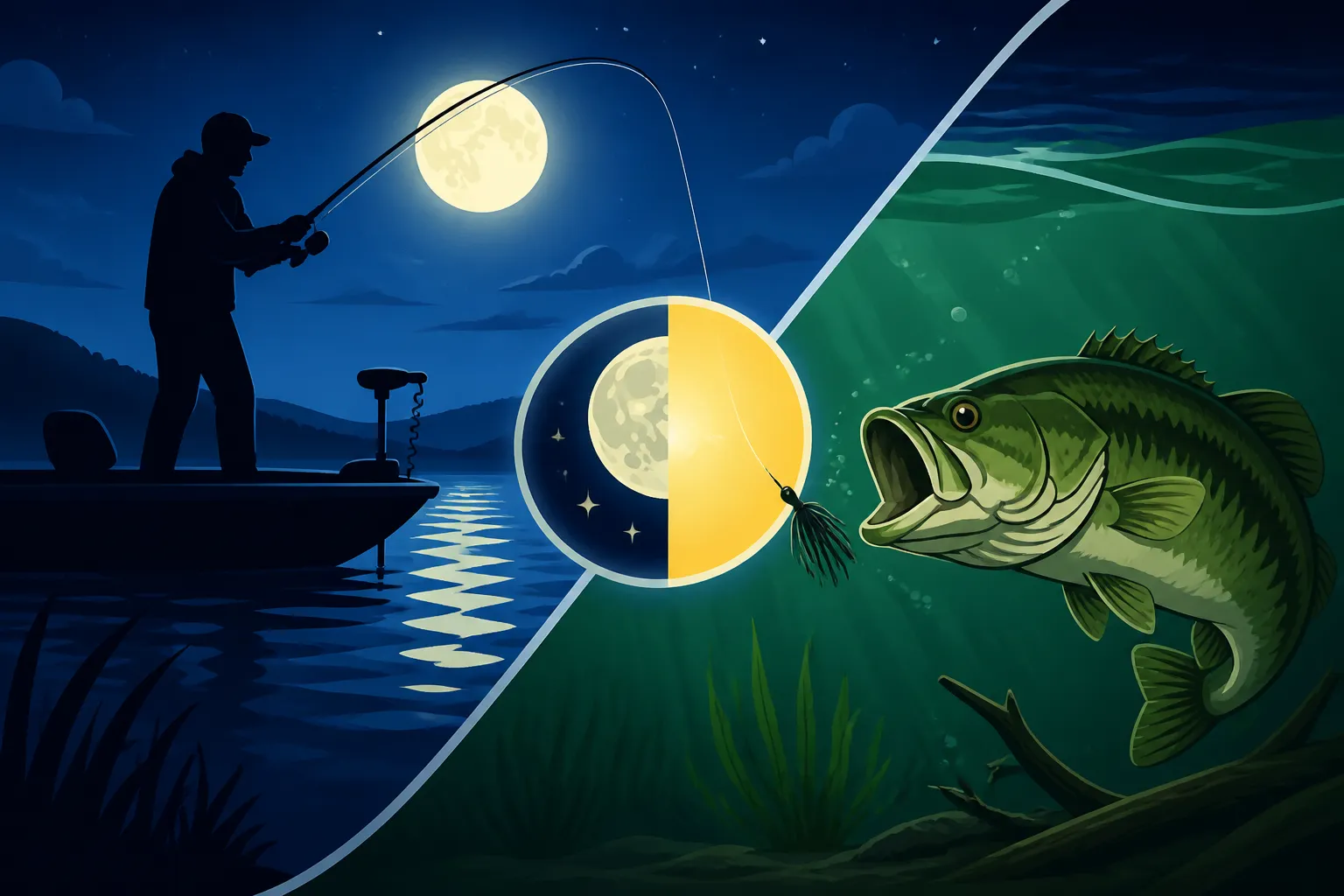
Many experienced night anglers swear by the moon phase, and for good reason. A full moon, or at least a bright moon phase, can cast enough light to make a significant difference. While some might think a bright moon would make bass more wary, it often enhances their feeding activity. The extra ambient light can help bass locate prey more effectively, leading to more aggressive strikes. It can also help you, the angler, see a bit better, improving casting accuracy and bait presentation.
Conversely, a new moon, or extremely dark nights, can still be productive, but the bass tend to rely more heavily on their other senses – lateral lines for vibration and smell. On these darker nights, you might find success by working noisier or scented baits more slowly. The key is to pay attention to the conditions on a particular night and adjust your approach accordingly. Some anglers even find that the bite can be strongest in the hours just before and after moonrise or moonset, regardless of the overall phase.
Water Temperature and Clarity at Night
Water temperature is always a critical factor in bass behavior, and night fishing is no exception. During hot Georgia summers, the water surface can reach uncomfortable temperatures for bass, sending them deep. As the night progresses, the surface water cools down, often by several degrees. This temperature drop can trigger bass to move shallower and become more active. Look for areas where cooler water might be present, such as around creek channels, springs, or areas with current.
Water clarity also plays a significant role. Clearer water on a moonlit night can be fantastic, as bass can use their enhanced low-light vision to ambush prey. However, in murkier water or on extremely dark nights, bass will rely more on vibration and scent. This is where a noisier lure or a bait infused with a strong scent can really shine. Consider the impact of recent rains; if the water is very stained, you'll need to adapt your lure choices and retrieve speeds. You can learn more about How Water Temperature Affects Fish Behavior for a deeper dive into this topic.
Essential Techniques and Lures for Night Bass Success
Fishing at night demands a shift in strategy. What works flawlessly during the day might fail to get a strike when the sun is gone. The key is to appeal to a bass's other senses and to present your bait in a way that allows them to find and react to it in the dark.
Slow and Steady Retrieves
One of the biggest mistakes night anglers make is fishing too fast. In the absence of bright light, bass rely on vibrations and their lateral lines to detect prey. A fast-moving lure can be difficult for them to track and intercept. Slowing down your retrieve is paramount. This gives the bass more time to hone in on your bait and commit to a strike.
Think about how a bass would ambush prey in the dark: they're not chasing down fast-moving targets across open water. Instead, they're often lurking near cover, waiting for a meal to stumble by. A slow, methodical retrieve mimics this natural prey behavior. For jigs, worms, or slow-rolling spinnerbaits, let them sink, crawl them along the bottom, or twitch them subtly. Even with topwater lures, a longer pause between twitches can be the difference between a missed opportunity and an explosive strike. Don't be afraid to count to five, or even ten, during those pauses.
Topwater Thrills and Subsurface Stealth
Night fishing offers some of the most exhilarating topwater action you'll ever experience. The explosive strike of a bass on a surface lure in the dark is truly unforgettable. Large, noisy topwater baits like buzzbaits, Jitterbugs, or prop baits create a commotion that bass can easily locate. The silhouette of a topwater lure against the night sky is also a potent visual trigger. For subsurface presentations, dark-colored jigs, worms, and spinnerbaits are often the ticket.
For topwater, focus on working your lure slowly, letting the noise and disturbance do the attracting. Sometimes, just a slight twitch or gurgle is enough to call them in. When fishing submerged cover or deeper edges, a slow-crawled jig with a large profile or a hefty worm rigged on a Texas or Carolina rig can be incredibly effective. Consider using a black or dark blue jig and trailer. These colors create a strong silhouette against the moonlit surface, making them easier for bass to see from below. You might also want to explore How to Fish Topwater Lures for Bass for more detailed tips.
Using Scent and Sound to Attract Bass
With reduced visibility, scent and sound become critical tools in your night fishing arsenal. Bass have a highly developed sense of smell and a keen ability to detect vibrations through their lateral line. Utilizing these senses can give you a significant edge.
Adding scent to your soft plastics, jigs, or even hard baits can drastically improve your hook-up ratio. There are many commercially available scents that can be applied directly to your lures. Alternatively, choosing soft plastics that are pre-infused with scent can save you a step. When it comes to sound, focus on lures that create a distinct vibration or noise. Buzzbaits, spinnerbaits with large thumping blades, and rattling crankbaits are excellent choices. Even a jig with a loud rattle can be a difference-maker. The key is to generate enough disturbance for a curious bass to find your offering in the dark. Remember, it's not about being loud constantly, but rather creating intermittent sounds that mimic struggling prey.
Must-Have Gear for a Safe and Productive Night Out
Heading out on the water after dark requires more than just your usual daytime tackle. Safety is paramount, and having the right equipment will not only keep you safe but also make your night fishing experience much more enjoyable and successful. Don't skimp on these essentials.
Lighting and Navigation Safety
This might seem obvious, but proper lighting is non-negotiable. A good quality headlamp with both a white light and a red light setting is indispensable. The white light is for tying knots, rigging baits, or navigating on shore, while the red light preserves your night vision and is less likely to spook fish. Always carry spare batteries! Beyond personal lighting, if you're on a boat, ensure your navigation lights are functioning correctly and that you have a spotlight or handheld floodlight for identifying hazards or approaching docks.
Navigating in the dark can be tricky, even on familiar waters. Have a reliable GPS unit or a chartplotter on your boat, and know how to use it. Pre-mark any hazardous areas, stumps, or shallow spots during the day. Consider taking a friend along, especially if you're new to night fishing. Having an extra set of eyes and hands is always a good idea. A reliable compass, whistle, and fully charged phone are also crucial safety items.
Rods, Reels, and Line Choices for Low Light
Your rod and reel setup might not change drastically, but there are some considerations. Many anglers prefer a slightly longer rod (7' to 7'6") for casting distance, especially with topwater baits, and to better manage line in the dark. Sensitivity is key for feeling subtle bites, so a good quality graphite rod is a smart choice.
When it comes to line, fluorocarbon is a popular choice for its low visibility and sensitivity, but on extremely dark nights, you might get away with monofilament, which has a bit more stretch and can be easier to tie in the dark. Braided line is excellent for sensitivity and strength, but you'll likely want to use a fluorocarbon leader. Think about your retrieve speed and what you're trying to achieve; you can find a wide array of options for lines and leaders on Amazon, ensuring you have the right strength and diameter for your target bass. For more detailed gear advice, check out our guide on Best Rod and Reel Combo for Largemouth Bass in Georgia.
The Right Lures for the Dark
As discussed, darker colors are often preferred for night fishing. Black, dark blue, junebug, and sometimes even purple are excellent choices for soft plastics and jigs. For hard baits, black, dark blue, or even a solid white (especially on bright moonlit nights) can be very effective. Lures that emit sound or vibration are also crucial.
| Lure Type | Best Night Fishing Colors | Key Features for Night | Retrieve Speed Recommendation |
|---|---|---|---|
| Buzzbaits | Black, Chartreuse, White | Loud squealing/gurgling | Slow, steady |
| Jitterbugs/Poppers | Black, Dark Green, White | Distinct plop, surface disturbance | Erratic, long pauses |
| Spinnerbaits | Black/Blue, Black/Red, Junebug | Large thumping blades (Colorado) | Slow-rolled, bottom contact |
| Jigs | Black/Blue, Junebug, Black/Red | Large profile, rattle optional | Crawl, hop, subtle bounces |
| Worms/Creatures | Black, Junebug, Dark Blue | Scent-infused, large profile | Drag, twitch, long pauses |
| Crankbaits | Dark Blue, Black, Chrome (rattle) | Rattle chambers, deep divers | Slow-to-medium, bottom deflections |
Always have a selection of dark-colored soft plastics, jigs, and some noisy topwater lures. Consider having some scented options on hand, or a bottle of liquid scent to apply. You can easily stock up on these specialized night fishing lures on Amazon before your next trip. This diverse array ensures you're prepared for varying conditions and bass preferences. When in doubt, a slow presentation of a dark, noisy lure is a great starting point for targeting bass in the dark.
Disclaimer
This article is for general informational purposes only and does not constitute professional advice. Laws, prices and regulations vary by location and change over time. Consult a qualified professional for guidance on your specific situation.