Where to Catch Bluegill in Georgia Ponds
It’s a common frustration for many new anglers, especially those with little ones in tow: you want to go fishing, but where do you start when you're just looking for some easy, reliable action, maybe for a quick hour or two? You're not looking for trophy bass or elusive trout; you just want to feel that tug on the line. Well, if bluegill are your target, Georgia's countless ponds offer some of the most consistent and accessible fishing experiences, and this guide will show you exactly where to find those feisty panfish and how to maximize your chances in these often overlooked hotspots.
Why Ponds Are Bluegill Central in Georgia
When you think about fishing in Georgia, often the first images that come to mind are vast reservoirs like Lake Lanier, the roaring currents of the Chattahoochee, or the serene, cold mountain streams. But for bluegill, the real action is often found in humble ponds. These smaller, often overlooked bodies of water are, in many ways, the perfect nurseries and feeding grounds for bluegill. They provide a stable, nutrient-rich environment where bluegill can thrive, grow, and reproduce with remarkable success.
Ponds, whether they're public fishing areas, private farm ponds, or even those tucked away in state parks, typically have a higher concentration of the things bluegill love: submerged vegetation for cover, abundant insect life, and generally shallower, warmer water compared to larger lakes or rivers. This means bluegill can be found in robust numbers, making them an ideal target for beginners, families, or anyone just looking for a relaxing day with plenty of bites. You don't need a fancy boat or expensive electronics to find them; often, a simple walk around the bank with keen eyes will reveal their haunts. This accessibility is a huge part of their appeal, turning a simple outing into a genuine fishing adventure, especially for kids who might be experiencing the thrill of a catch for the very first time.
Decoding Bluegill Habits in Pond Environments
Understanding how bluegill behave in a pond is your first step to consistent success. These aren't complicated fish, but they do have distinct preferences that, once you learn them, become incredibly predictable. They are opportunistic feeders and social creatures, often schooling together, which means where you find one bluegill, you're likely to find many more. This schooling behavior is fantastic for anglers, as it often leads to rapid-fire action once you've located a productive spot.
They love structure, plain and simple. Think about any feature that offers them protection from predators (like bigger bass or even birds of prey) and a ready supply of food. This includes everything from lily pads and cattails along the shoreline to submerged logs, brush piles, or even old tires and concrete blocks that might have been tossed in years ago. These areas not only provide refuge but also serve as magnets for the aquatic insects and larvae that make up a large portion of a bluegill's diet. Water temperature also plays a significant role; bluegill are warm-water fish, and they become more active as the water warms up, generally preferring temperatures in the 70s Fahrenheit. However, they'll still be present and catchable in cooler water, just perhaps a bit deeper and less aggressive in their feeding. Knowing these preferences helps you narrow down your search, transforming a vast pond into a series of identifiable bluegill hotspots.
Preferred Pond Features for Bluegill
When you’re staring at a pond, trying to decide where to cast, think like a bluegill. What makes them feel safe and well-fed? First and foremost, look for any kind of vegetation. This could be lily pads, cattails, submerged grasses, or even fallen branches and trees along the bank. These "weedy" areas are essentially apartment complexes for bluegill – they offer shade, hiding spots from larger predators, and a smorgasbord of insects and other small critters to snack on. A cast right up to the edge of a lily pad field, or even into a small opening within it, can often yield immediate results.
Another key feature is structure, man-made or natural, that extends into the water. Old docks, pier pilings, culverts, or rock piles create vertical habitats that bluegill love to congregate around. The shady side of a dock, especially one that sees little boat traffic, can be a goldmine. Deeper pockets or drop-offs, even subtle ones, where the bottom contour changes significantly, also attract bluegill. They'll often school up just above these changes, waiting for food to drift by. Consider the banks too; steeper banks might mean deeper water closer to shore, while gently sloping banks often mean shallower, warmer water with more vegetation. The best ponds often offer a mix of these features, creating a diverse habitat that supports a healthy population of panfish.
Seasonal Movements of Bluegill in Ponds
Bluegill, like most fish, adjust their behavior and location based on the seasons, primarily driven by water temperature and their spawning cycle. Understanding these movements can make a huge difference in your success, allowing you to adapt your approach throughout the year.
- Spring: This is often prime time for bluegill in Georgia ponds. As water temperatures begin to rise, usually in April and May, bluegill move into the shallower, warmer areas to spawn. They'll create circular "beds" by fanning out depressions in the bottom, often in colonies. These beds are typically found in 1-3 feet of water, near protective cover like weeds or submerged brush. This is when they are most aggressive and easily caught. Look for visible beds, often appearing as light-colored circles on the bottom.
- Summer: As the scorching Georgia summer arrives, bluegill will retreat from the super-shallow spawning beds but still remain relatively accessible. They'll seek out slightly deeper, cooler water, often gravitating towards the shade of docks, overhanging trees, or denser submerged vegetation. They might also move to deeper holes or channels within the pond during the hottest parts of the day, moving back to the shallows during dawn and dusk. Night fishing can even be productive for bluegill during summer!
- Fall: As temperatures cool down again, bluegill activity picks up, reminiscent of spring, but without the intense spawning drive. They'll feed aggressively to fatten up for winter, often found along the edges of weed lines, around submerged timber, and in areas where baitfish (their preferred fall snack) are abundant. This can be a fantastic time for consistent catches as they become less finicky.
- Winter: Bluegill become less active in colder water. They'll typically move to the deepest parts of the pond where the water temperature is most stable. While you won't find them schooling in massive numbers in the shallows, they can still be caught by fishing slowly and deeply, often with tiny baits. Think small jigs or bits of worm presented very subtly right on the bottom.
Public Fishing Areas (PFAs) and State Parks: Accessible Bluegill Havens
For many Georgia anglers, especially those just starting out or looking for convenient family outings, Public Fishing Areas (PFAs) and State Parks are absolute gems. These locations are specifically managed by the state's wildlife resources division to provide excellent recreational fishing opportunities. They are designed with the angler in mind, often featuring well-maintained facilities, easy access, and, most importantly, healthy fish populations, including plenty of eager bluegill.
One of the biggest advantages of PFAs and State Parks is their accessibility. You'll often find paved parking lots, boat ramps (for kayaks or small jon boats, as gas motors might be restricted), fishing piers, and even bank access points that are clear and safe for walking. They often have clear signage regarding regulations and species found, taking much of the guesswork out of your trip. The ponds in these areas are regularly monitored and stocked, ensuring a consistent and productive fishing experience. For a fun, easy day with the family where the chances of catching something are high, these public spots are tough to beat. You can find detailed information on many of Georgia's outstanding public fishing areas through resources like Georgia State Park Fishing Spots or by checking guides like Best Beginner Fishing Spots for Bluegill in Georgia.
Top PFAs for Bluegill in Georgia
Georgia boasts a fantastic network of Public Fishing Areas (PFAs), each with its unique charm, but many share one common trait: they're brimming with bluegill. These are often smaller impoundments, specifically managed for panfish and smaller bass, making them ideal bluegill destinations. You won't find the massive, sprawling waters of a major reservoir here, which is precisely why they're so good for bluegill. The management often includes things like habitat enhancements – sinking brush piles, creating submerged structures – all of which are bluegill magnets.
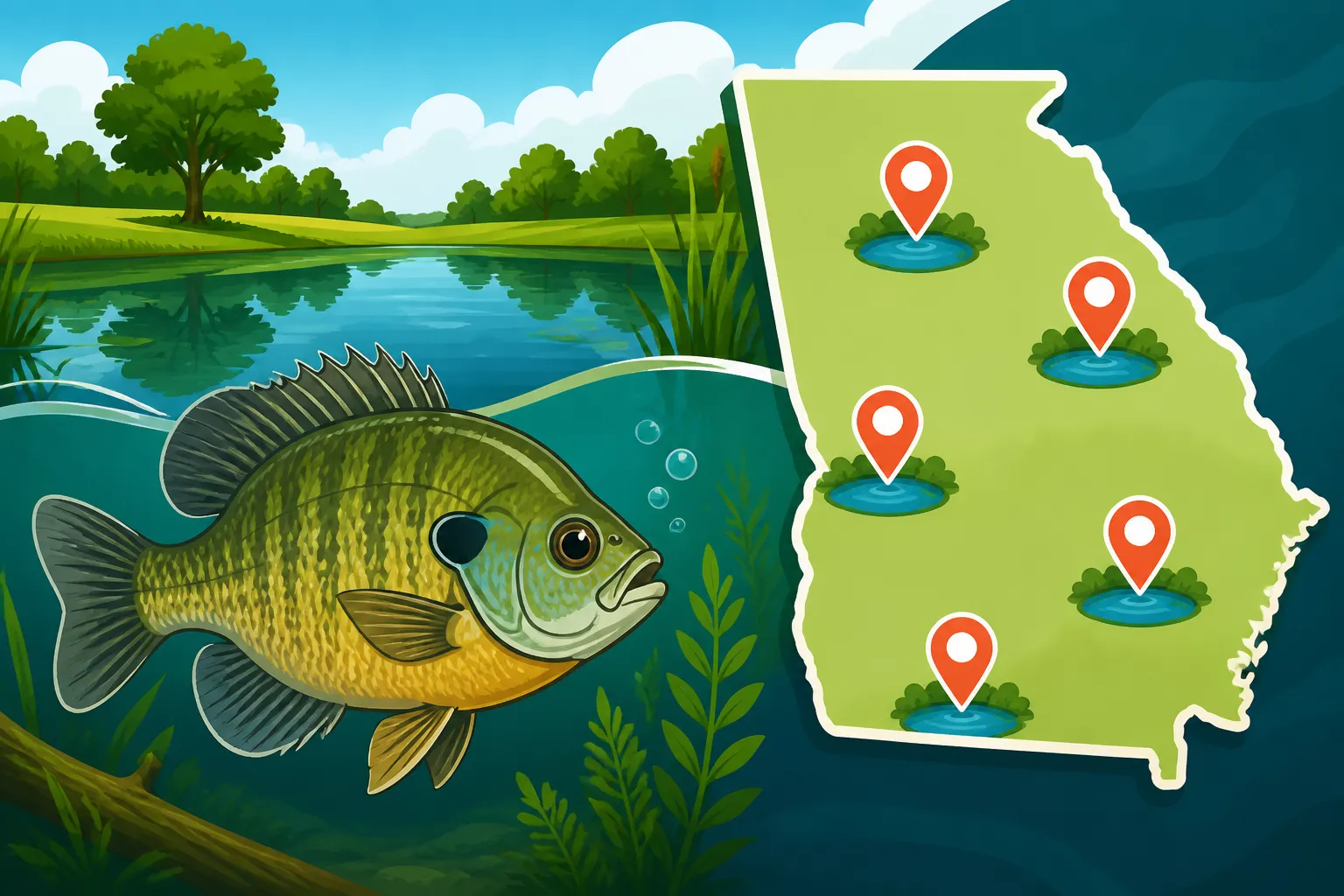
Some standout examples that consistently deliver for bluegill anglers include Paradise PFA near Tifton, offering numerous ponds that are regularly stocked and managed. Big Lazer Creek PFA near Talbotton is another favorite, known for its strong panfish populations. Marben Farm PFA, part of the Charlie Elliott Wildlife Center, is a sprawling complex of ponds and lakes, many of which are specifically managed for panfish and provide excellent bank access. You'll find well-maintained fishing piers and plenty of shoreline to explore. Just remember to always check the specific regulations for each PFA, as creel limits or equipment restrictions can vary. These places are designed for success, and a simple worm under a bobber can often lead to a cooler full of bluegill.
| PFA Name | Location (Near) | Notable Features for Bluegill | Ideal for |
|---|---|---|---|
| Paradise PFA | Tifton | Multiple managed ponds, abundant vegetation, regular stocking | Families, bank anglers, canoe/kayak |
| Big Lazer Creek PFA | Talbotton | Well-established panfish populations, good habitat, easy access | Beginners, shore fishing |
| Marben Farm PFA | Mansfield (Charlie Elliott Wildlife Center) | Diverse ponds, piers, extensive bank access, habitat management | All skill levels, multi-day trips |
| McDuffie PFA | Dearing | Several ponds, good structure, often less crowded | Quiet fishing, exploring different ponds |
| Dodge County PFA | Eastman | Good for panfish, often stocked, well-maintained banks | Casual fishing, quick trips |
State Parks with Excellent Bluegill Ponds
Beyond the dedicated PFAs, many of Georgia's beautiful State Parks also offer fantastic bluegill fishing opportunities. These parks provide the added benefit of recreational amenities like hiking trails, picnic areas, and sometimes even cabins or camping, making them perfect for a full-day family outing or a weekend getaway. The ponds and smaller lakes within State Parks are often smaller and more intimate, providing a relaxed fishing experience away from the hustle and bustle of larger waters.
For instance, Indian Springs State Park has a lovely lake that's great for bluegill and other panfish, with easy bank access. High Falls State Park's lake, while popular for bass, also holds plenty of bluegill around its abundant structure. Hard Labor Creek State Park near Rutledge features two lakes, both offering good bluegill potential, especially around submerged brush and shoreline vegetation. Fishing in a State Park combines the joy of fishing with the beauty of Georgia's natural landscapes, often allowing for easy catches for kids. Many parks even have specific fishing areas or piers that are perfect for younger anglers. When planning your trip, be sure to check the individual park's website for any specific fishing regulations or boat restrictions, as some might prohibit gas motors. For more ideas, you can check out Top Fishing Spots Inside Georgia State Parks.
The Allure of Private Farm Ponds
While public access points are fantastic, there's a certain magic to fishing a private farm pond. These often-secluded waters, typically found on private property, can be absolute bluegill factories. They are often less pressured than public waters, meaning the fish might be less wary and more aggressive. A well-managed private pond can offer some of the fastest action and biggest bluegill you'll ever encounter in Georgia.
However, accessing these ponds comes with its own set of challenges. It's crucial to remember that private property means you must obtain permission from the landowner before casting a line. Fishing without permission is trespassing and can lead to serious legal issues. But if you can build a relationship with a friendly landowner, perhaps offering to help with chores or sharing some of your catch, a private pond can become your personal bluegill paradise. These ponds often have incredibly healthy ecosystems, with ample food and cover, allowing bluegill to grow to impressive sizes, sometimes earning them the nickname "dinner plates" among appreciative anglers. The peace and quiet of a private pond, combined with the potential for exceptional fishing, is a truly special experience.
How to Gain Access to Private Ponds
Gaining access to private farm ponds can feel like trying to find a hidden treasure map, but with a respectful approach and a bit of persistence, it's absolutely achievable. The golden rule is always to ask for permission, well in advance of showing up with your fishing gear. Never assume. A good starting point is simply driving around rural areas and looking for ponds. When you spot one that looks promising, identify the nearby property and politely approach the landowner.
A friendly, open conversation can go a long way. Introduce yourself, explain your interest in fishing for bluegill (mentioning you practice catch and release or will share your catch can be a nice touch), and assure them you'll respect their property, pick up any trash, and close all gates. Sometimes, a shared connection, like a mutual friend or acquaintance, can open doors. If you're a member of a local fishing club or even a church group, you might find that other members have connections to landowners. Don't be discouraged if you get a "no" – just move on to the next one. Building a reputation as a trustworthy and respectful angler can lead to long-term access and some truly memorable fishing experiences. Patience and politeness are your best baits here.
Bluegill Management in Private Ponds
Many private pond owners are keen on maintaining a healthy fishery, and this often involves some level of management that benefits bluegill. Unlike large public lakes where natural cycles play a larger role, private ponds can be more intentionally managed for specific species. This often means creating optimal habitat, which directly translates to great bluegill fishing.
Pond owners might actively manage vegetation, controlling excessive weeds while encouraging beneficial types. They might also periodically add structure, such as sinking old Christmas trees or building brush piles, specifically to give bluegill places to hide, spawn, and ambush food. Some owners even stock their ponds with fathead minnows or other forage fish to provide an abundant food source, leading to faster growth rates for bluegill. In some cases, owners might hire fisheries biologists for advice, ensuring a balanced ecosystem. This proactive management often results in ponds that produce not just high numbers of bluegill, but also significantly larger fish than you might find in heavily pressured public waters. If you're lucky enough to fish a well-managed private pond, you'll quickly realize why they are so highly sought after by savvy anglers.
Essential Tips for Pond Bluegill Success
Okay, so you've found your bluegill pond, whether it's a bustling PFA, a tranquil State Park lake, or a secret private honey hole. Now comes the fun part: catching them! Bluegill are generally cooperative, but a few key techniques and gear choices will dramatically increase your success, especially if you're fishing with kids or aiming for a consistent bite. You don't need a tackle box full of expensive gadgets; simplicity is often the key with these eager panfish.
The beauty of bluegill fishing is that it's accessible to everyone. From a seasoned angler introducing the sport to a grandchild, to someone simply looking for an afternoon of relaxation, bluegill deliver. The fight they put up on light tackle is surprisingly spirited, and their vibrant colors make them a joy to catch. Mastering these basic tips will set you up for success and help you create lasting memories on the water. For more specific advice, consider checking out resources like How to Catch Bluegill as a Beginner or Easiest Fish for Kids to Catch.
Recommended Gear for Bluegill Fishing
When it comes to bluegill, you can practically grab any rod and reel combo and have a good time. However, a few specific gear choices can make your experience even better, particularly if you want to feel every nibble and maximize the fight.
- Rod and Reel: A light to ultralight spinning rod, typically 5 to 6 feet long, paired with a small spinning reel (size 1000 or 2000) spooled with 4-6 pound test monofilament line is perfect. This setup allows for delicate presentations and makes even a small bluegill feel like a trophy. Brands like Ugly Stik or Shakespeare offer affordable and durable options that are perfect for this kind of fishing.
- Bobbers: A small, sensitive bobber (sometimes called a "slip bobber" or "spring float") is crucial. It lets you know precisely when a bluegill takes the bait, and its buoyancy helps keep your bait at the desired depth. Look for those classic red-and-white round bobbers or clear, pencil-shaped ones.
- Hooks: Tiny hooks are key for bluegill's small mouths. Size 8 or 10 Aberdeen or J-hooks are ideal. These are thin-wire hooks, which are less likely to injure the fish if you're practicing catch and release, and their small size is perfect for baits like worms or crickets.
- Sinkers: Small split shot sinkers, usually one or two, placed a few inches above the hook, help cast your light bait and keep it at depth. Don't use anything too heavy, as you want your bait to drift naturally.
- Pliers/Forceps: While not strictly gear for catching them, a small pair of needle-nose pliers or fishing forceps (many can be found on Amazon) is incredibly useful for removing hooks, especially from smaller fish. It protects both your fingers and the fish.
Having a small tackle box or bag to keep these essentials organized makes your pond adventures much smoother. Remember, you don't need to break the bank to have a fantastic time bluegill fishing.
Best Baits and Lures for Bluegill
Bluegill are famously unfussy eaters, which is one of the reasons they're such a joy to target. They'll readily strike a variety of natural baits and small lures, making it easy to find something that works.
-
Natural Baits:
- Worms: Hands down, the most consistent bluegill bait. Red wigglers, earthworms, or even small pieces of nightcrawlers are irresistible. Just thread a small piece onto your tiny hook.
- Crickets: Another classic. Their natural buoyancy and movement in the water make them highly effective, especially when fishing under a bobber.
- Mealworms/Waxworms: These are excellent choices, particularly for smaller bluegill or when they're a bit pickier. They stay on the hook well and have a strong scent.
- Corn: Believe it or not, a few kernels of canned corn can be surprisingly effective, especially in ponds where bluegill are accustomed to being fed.
- Bread: Small balls of white bread, gently squeezed onto a tiny hook, can also work in a pinch.
-
Artificial Lures:
- Small Jigs: Tiny crappie jigs, often 1/64 to 1/16 ounce, in bright colors like chartreuse, white, or pink, can be incredibly effective. Tip them with a small piece of worm for added appeal.
- Spinners: Micro spinners, like those from Panther Martin or Rooster Tail (also available on Amazon), with small blades and dressed hooks, are great for casting and retrieving. Their flash and vibration attract bluegill from a distance.
- Flies: For fly fishing enthusiasts, small poppers, wet flies, or nymphs can be deadly on bluegill, especially during warmer months.
When choosing bait, consider what's natural in the pond. If there are a lot of insects, crickets or worms will probably do the trick. If you're fishing a pond where people feed the fish, corn or bread might be surprisingly effective. The key is to experiment and see what the bluegill are biting on that particular day. For more on this topic, check out Best Bait for Bluegill Fishing and Best Bait for Bream Fishing.
Simple Techniques for Catching Bluegill
Bluegill fishing techniques are wonderfully straightforward, making them perfect for beginners and seasoned anglers alike. You don't need complex rigs or fancy maneuvers; the simpler, the better.
-
Bobber Fishing: This is the classic, go-to method. Attach a small bobber to your line, usually 12-24 inches above your hook. Crimp one or two small split shot sinkers about 6 inches above the hook. Bait your hook with a worm, cricket, or other natural bait. Cast your rig near structure, weed lines, or other bluegill hiding spots. Watch the bobber closely; when it dips, dances, or disappears, set the hook with a gentle upward sweep of your rod. This method is incredibly visual and exciting, especially for kids. It's the most common way to How to Catch Bluegill From the Bank effectively.
-
Bottom Fishing: Sometimes, bluegill are holding a bit deeper. For this, you can fish without a bobber. Use a slightly heavier split shot or a small sliding sinker above your hook, with a swivel to prevent line twist. Cast out and let your bait sink to the bottom. Keep a slight tension on your line and watch your rod tip for subtle taps or bends, indicating a bite. This works well in deeper holes or during colder months when fish are less active.
-
Light Tackle Lure Presentation: If you're using small jigs or spinners, a simple cast and retrieve often works wonders. For jigs, cast near cover and use a slow, steady retrieve with occasional subtle twitches of the rod tip. For spinners, a consistent, moderate retrieve is usually all it takes to get the blade spinning and attract attention. Experiment with retrieve speeds until you find what the fish prefer.
The most important thing is to be patient, observe your surroundings, and pay attention to what the bluegill are telling you. They are often eager biters, and once you find a school, you can often catch them one after another, creating a truly memorable fishing experience.
Disclaimer
This article is for general informational purposes only and does not constitute professional advice. Laws, prices and regulations vary by location and change over time. Consult a qualified professional for guidance on your specific situation.