Striped Bass vs Hybrid Striped Bass: What’s the Difference?
It's incredibly common for anglers, even seasoned ones, to get a little mixed up when they reel in a powerful fighting fish in Georgia's waters. Is it a Striped Bass or one of those hard-hitting Hybrid Stripers? Knowing the difference isn't just about bragging rights; it can actually impact your fishing strategy, what gear you use, and even what regulations you need to follow. This guide is here to clear up the confusion once and for all, helping you confidently identify your catch and improve your chances on the water.
The Core Differences: Striped Bass vs. Hybrid Striped Bass
Let's dive right into what makes these two popular game fish distinct. While they share a family resemblance and a propensity for strong fights, their origins, appearance, and even some behaviors set them apart. It's like comparing a purebred champion racehorse to a crossbred workhorse – both impressive, but with different traits.
Genetic Lineage and Origins
Understanding where these fish come from is the first step in differentiating them. It really tells a story about why they're in our lakes and rivers in the first place.
Purebred Striped Bass ( Morone saxatilis )
The Striped Bass, often just called a Striper, is a native species to the Atlantic Ocean coastline and its major river systems. Historically, they are anadromous, meaning they spend most of their lives in saltwater but migrate into freshwater rivers to spawn. Think of them like salmon, but for the Atlantic coast. In Georgia, we actually have both native populations that run up coastal rivers like the Savannah and Altamaha, and landlocked populations that thrive in our large reservoirs. These landlocked fish, found in giants like Lake Lanier or Lake Hartwell, are primarily sustained by stocking programs, as they often can't complete their full reproductive cycle in a closed system. They are pure, unadulterated Stripers, evolved over millennia to be powerful, migratory predators.
Hybrid Striped Bass ( Morone saxatilis x Morone chrysops )
Now, the Hybrid Striper is a different story entirely. These aren't naturally occurring fish you'd find in the wild; they are a man-made crossbreed. They are produced by cross-breeding a female Striped Bass with a male White Bass ( Morone chrysops ). The result is a fish that combines the best traits of both parents: the fighting spirit and size potential of the Striper, with the hardiness and faster growth rate of the White Bass. The first successful cross was in the late 1960s, and they were quickly recognized for their angling potential. They are sterile, meaning they cannot reproduce on their own, so their populations are entirely dependent on continuous stocking efforts by fisheries departments. They're basically purpose-built sport fish, designed to thrive in our impoundments where purebred Stripers might struggle to reproduce naturally.
Physical Appearance: Telling Them Apart
This is often where the rubber meets the road for anglers on the water. You've got a fish on the line, and you're trying to figure out what it is before you even net it. While both fish have prominent dark stripes running down their sides, there are subtle but crucial differences in their markings and body shape.
Striped Bass Characteristics:
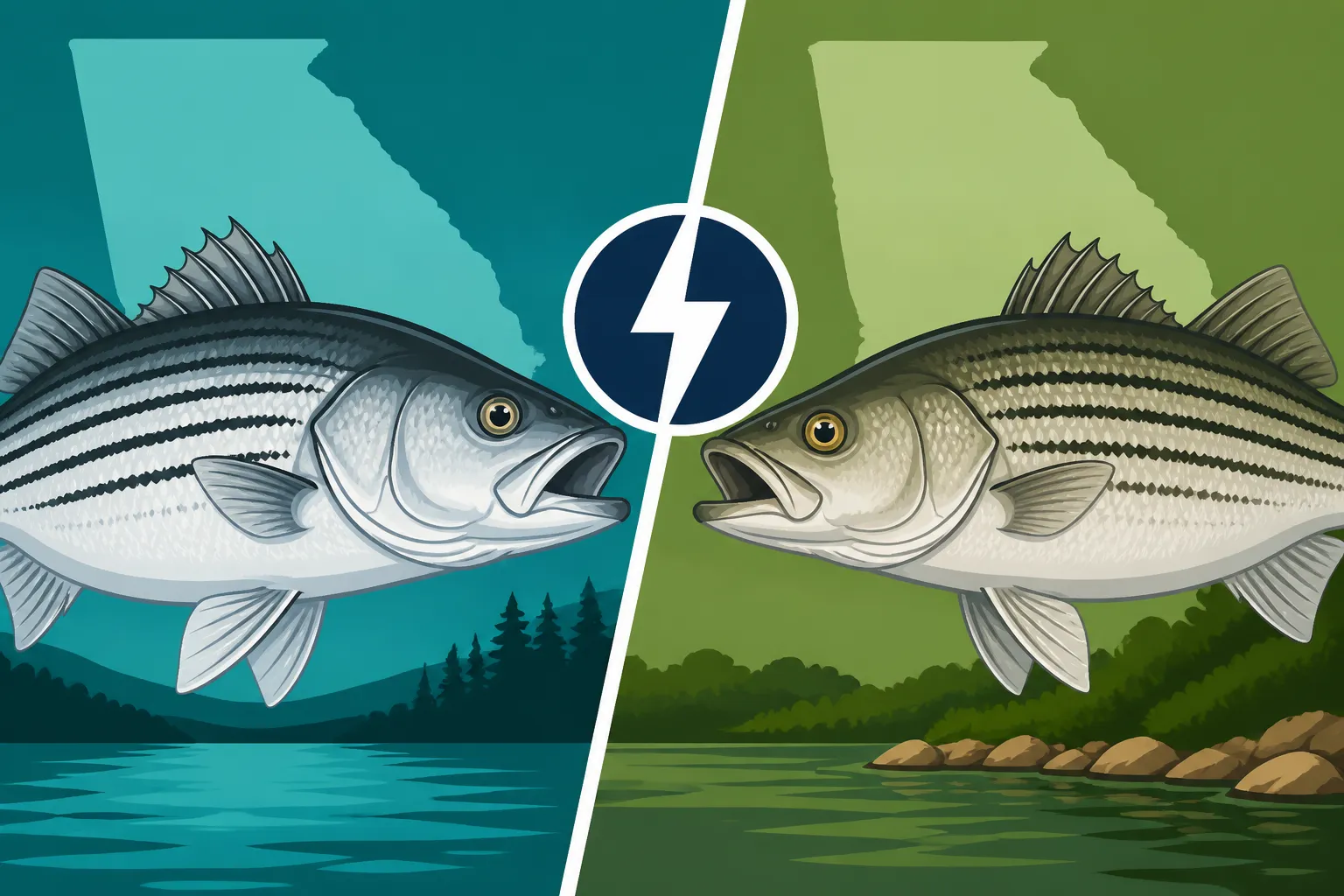
A pure Striped Bass typically has a more streamlined, elongated body shape. They look a bit like a torpedo, built for speed and long migrations. The most defining characteristic, however, lies in their stripes. On a Striper, the horizontal dark stripes running from gills to tail are usually solid and unbroken. While there might be some slight fading or interruption, generally, you'll see clean, continuous lines. Their head is also often a bit longer and more pointed in proportion to their body. The overall impression is one of sleek power.
Hybrid Striped Bass Characteristics:
Hybrids, on the other hand, tend to be a bit more "stocky" or "football-shaped" compared to their purebred cousins. They often have a deeper body profile, giving them a more robust appearance. When you look at their stripes, this is your biggest clue. The dark horizontal stripes on a Hybrid Striped Bass are almost always broken, irregular, or disjointed. You might see some lines that zig-zag, others that are interrupted, and some that don't quite connect. It's like someone drew the lines with a shaky hand. This "broken line" pattern is the dead giveaway for a Hybrid. Their head might also appear a bit more blunt or smaller in comparison to their body depth.
Here's a quick reference table to help you compare:
| Feature | Striped Bass (Purebred) | Hybrid Striped Bass (Crossbreed) |
|---|---|---|
| Origin | Native species (anadromous, stocked landlocked populations) | Man-made crossbreed (female Striper x male White Bass) |
| Body Shape | More elongated, streamlined, torpedo-like | More stout, deeper body, football-shaped |
| Stripes | Generally solid, continuous, unbroken lines | Often broken, irregular, or disjointed lines |
| Head Shape | Proportionally longer, more pointed | Can appear more blunt or smaller in comparison to body depth |
| Reproduction | Can reproduce naturally (where conditions allow) | Sterile, cannot reproduce naturally, entirely hatchery-dependent |
| Growth Rate | Slower growth rate to larger sizes | Faster growth rate, especially in early years |
Habitat and Behavior
While both species are powerful predators that love open water and schooling, their preferred habitats and typical behaviors can vary due to their genetic makeup and how they're managed in our Georgia lakes.
Striped Bass Behavior and Habitat:
Purebred Stripers in Georgia's landlocked reservoirs like Lake Lanier or Lake Hartwell are often found in deep, open water, particularly during the warmer months. They prefer cooler water temperatures and will seek out thermal refuges when the surface heats up. They are constantly on the move, chasing large schools of baitfish like herring or threadfin shad. Their schooling behavior is legendary, often forming massive groups that can be located with good electronics. When they come to the surface in a "boil" chasing bait, it's an incredible sight. In our coastal rivers, they might be found making their ancestral runs during cooler months, presenting a different kind of challenge for anglers. Where to Catch Striped Bass on Georgia Lakes provides more insight into specific locations.
Hybrid Striped Bass Behavior and Habitat:
Hybrids are incredibly adaptable and often thrive in conditions that might be less ideal for pure Stripers. They're known for tolerating warmer water temperatures better, which is why you'll often find them stocked in lakes that might heat up more, or those with power generation facilities like Lake Oconee or Lake Sinclair. These power plants often create current and warmer water discharges that Hybrids absolutely love. They are aggressive feeders, often exhibiting even more ferocious surface activity than pure Stripers. Hybrids are also strong schoolers and will relentlessly pursue baitfish. Their robust nature means they can sustain themselves well in varied conditions, making them a fantastic sport fish for many of Georgia's reservoirs.
Striped Bass in Georgia: The Mighty Purebreds
Catching a purebred Striped Bass in Georgia is a real thrill. These fish are powerful, unpredictable, and demand respect. From their historical significance in our rivers to their current role in our reservoir fisheries, they represent a true challenge for any angler.
Where to Find Georgia's Stripers
When you're targeting pure Stripers, you're looking for specific conditions and locations. They aren't just everywhere.
In Georgia, the major landlocked reservoirs are where most anglers encounter Striped Bass. Lakes like Lake Lanier Fishing Guide, Georgia, Lake Hartwell, and Lake Allatoona are prime destinations. These lakes are deep, have ample forage (often stocked with herring or shad to support the Stripers), and offer the cooler, oxygenated water that purebreds prefer, especially in summer. You'll typically find them in the main lake basins, around deep humps, points, and river channels. They follow the bait, so if you can locate large schools of baitfish, you're usually in the right zone for Stripers.
Our coastal river systems, particularly the Savannah River and Altamaha River, also hold populations of Striped Bass that are either remnant native fish or stocked to supplement natural runs. These river-run Stripers offer a completely different fishing experience, often targeting them in moving water with different techniques. Understanding these nuances can significantly increase your success.
Fishing Techniques and Gear for Stripers
Targeting Stripers effectively often requires specialized gear and techniques, especially when you're going after the bigger ones in deep water. These fish are strong, and they'll test your tackle.
Many anglers find success using live bait, particularly large gizzard shad or blueback herring. These baits can be fished on a free-line, under a balloon, or weighted down to specific depths to match where the Stripers are feeding. Trolling is another highly effective method, using large swimbaits, bucktail jigs, or umbrella rigs to cover vast expanses of water and locate scattered schools. When Stripers are on the surface, casting topwater plugs or large spoons into the "boil" can lead to explosive strikes.
For tackle, you'll want a medium-heavy to heavy action rod, usually 7 to 8 feet long, paired with a stout conventional or spinning reel spooled with strong braided line (often 30-65 lb test). A good quality leader, typically fluorocarbon, is also essential. Trying to land a 20+ pound Striper on light tackle is a recipe for heartbreak and a lost fish, not to mention potential harm to the fish. Make sure your drags are smooth and set correctly. You can find more detailed information on Best Gear for Striped Bass Fishing.
Hybrid Striped Bass in Georgia: The Powerhouse Crossbreeds
If you're looking for a fish that hits like a freight train and fights until it's in the net, the Hybrid Striper is your ticket. These crossbreeds are celebrated for their aggressive nature and are a favorite target for many Georgia anglers.
Key Hybrid Habitats in Georgia
Hybrids are a bit more widespread in Georgia than pure Stripers, largely due to their hardiness and the stocking efforts. They thrive in many of our major impoundments.
Lakes like Lake Oconee, Lake Sinclair, West Point Lake, and Clarks Hill Lake (also known as Lake Thurmond) are absolutely legendary for their Hybrid Striped Bass fisheries. These lakes often have power generation facilities, which means fluctuating water levels and current, along with warmer water discharges that Hybrids love. The current often positions baitfish in predictable areas, making it easier for Hybrids to ambush them. These fish are voracious predators and will patrol vast areas in search of threadfin shad, gizzard shad, and other forage fish. They grow quickly and provide an excellent fishery for anglers who enjoy a fast-paced, aggressive bite. You can learn more about a specific Hybrid hotspot in Hybrid Striped Bass at Lake Oconee.
Effective Hybrid Fishing Strategies
Hybrids are known for their willingness to chase, and their aggressive feeding habits mean they can be caught using a variety of techniques. They're often seen as a bit more forgiving for anglers than pure Stripers, though they still demand good technique.
One of the most exciting ways to catch Hybrids is during a surface "boil" or "topwater blitz." When these fish herd baitfish to the surface, casting a topwater plug, spoon, or jig into the commotion can result in immediate, violent strikes. Subsurface techniques include casting crankbaits, swimbaits, or even simple bucktail jigs. Live bait, especially shad or shiners, fished on a downline or free-line, is also incredibly effective, particularly when fish are holding deeper. Many anglers use fish finders to locate schools of Hybrids and baitfish, then drop their offerings directly into the feeding zone. They're not particularly shy when they're hungry! For optimal results, check out Best Bait for Hybrid Striped Bass.
You'll want a medium to medium-heavy spinning or baitcasting outfit for Hybrids, spooled with 15-30 lb braided line. While they don't always reach the gargantuan sizes of pure Stripers, a big Hybrid will absolutely test your gear, so don't skimp on quality. Many anglers find reliable gear on sites like Amazon for their Hybrid fishing expeditions, ensuring they have robust rods, reels, and lines that can handle the intense fights these fish deliver.
Why Does It Matter Which One You Catch?
Beyond just satisfying your curiosity, knowing whether you've landed a Striped Bass or a Hybrid Striped Bass is important for several practical reasons that can impact your fishing trip and your compliance with local rules.
Regulations and Creel Limits
This is perhaps the most critical reason to be able to tell the difference. Georgia, like many states, often has specific regulations regarding different fish species, and Striped Bass and Hybrid Striped Bass are no exception. These regulations can include differences in:
- Size Limits: Minimum or maximum lengths that fish must meet to be legally kept.
- Creel Limits: The number of fish of a specific species you are allowed to keep per day.
- Seasonal Closures: Certain times of the year when fishing for a species might be restricted or prohibited.
Imagine you've had a fantastic day on the water and filled your cooler. If you can't accurately distinguish between a pure Striper and a Hybrid, you might accidentally exceed the limit for one species, or keep an undersized fish of another. This isn't just a minor oversight; it can lead to hefty fines and penalties. Always, always check the current Georgia fishing regulations before you head out. These rules are put in place to manage fish populations and ensure healthy fisheries for future generations. Don't risk a ticket – take the time to learn the differences and understand the rules. For a complete overview, see Georgia Fishing Regulations Explained.
Fishing Experience and Fight
While both species offer an exhilarating fight, there are subtle differences in their fighting style that seasoned anglers can appreciate and anticipate. Knowing what you've hooked can help you adjust your technique on the fly.
The Striped Bass Fight:
Purebred Striped Bass are often described as having long, powerful runs. They'll strip line off your reel with incredible speed and strength, making blistering sprints across the lake. Their fight is characterized by endurance and raw power. They may make several deep dives and try to head for cover, and you'll often feel their incredible head shakes throughout the fight. Landing a large Striper is a true test of an angler's patience and strength.
The Hybrid Striper Fight:
Hybrid Striped Bass, while perhaps not always having the sustained, long runs of a pure Striper, make up for it with sheer aggression and bulldog tenacity. They hit harder, fight dirtier, and have incredible short bursts of power. They'll often try to stay deep, pulling and twisting, making sharp, violent turns. Their fight is often described as more explosive and frantic. They'll fight all the way to the boat, giving you no quarter. For many anglers, the aggressive, non-stop action of a Hybrid is exactly what they're looking for. Knowing you've got a Hybrid on the line might mean you need to crank down your drag just a touch more and prepare for a more violent tug-of-war.
Understanding these subtle differences in their fight can make you a more prepared and ultimately more successful angler. It also adds another layer of appreciation for the incredible diversity of fish we have swimming in Georgia's waters.
Disclaimer
This article is for general informational purposes only and does not constitute professional advice. Laws, prices and regulations vary by location and change over time. Consult a qualified professional for guidance on your specific situation.