How to Identify a Striped Bass
There's nothing quite like the thrill of feeling a powerful strike on your line in Georgia's abundant waters. But as your catch breaks the surface, have you ever paused, rod bent, wondering exactly what species you've landed? It's a common moment of confusion for many anglers, especially when dealing with fish that share similar characteristics. This guide is here to unravel that mystery, focusing specifically on how to confidently identify a striped bass, a truly magnificent game fish found throughout our state.
The Allure of the Striped Bass in Georgia Waters
Striped bass, often affectionately called "stripers," hold a special place in the hearts of many Georgia anglers. Their power, size, and aggressive nature make them an incredibly exciting target, whether you're battling one in a sprawling reservoir or a rushing river. But beyond the fight, understanding what makes a striped bass unique is key to appreciating this species and ensuring you're following proper regulations.
Why Stripers Are a Prized Catch
Imagine reeling in a fish that can easily top 20 or even 30 pounds, pulling drag with an impressive force that tests your tackle and your resolve. That's the experience many dream of when targeting stripers. They're built for speed and strength, making every encounter memorable. Their sheer size and reputation for hard fighting put them in a league of their own. For those who love the challenge of big game fishing, stripers offer an accessible thrill right here in Georgia.
Beyond the fight, they're also known for their schooling behavior, meaning when you find one, you often find many. This can lead to incredible action-packed days on the water. Many anglers also appreciate their culinary qualities, often described as having a firm, white flesh that is excellent baked, grilled, or fried. It’s a rewarding fish from the strike to the dinner plate.
Understanding Their Native and Stocked Presence
It's fascinating to realize that Georgia's striped bass population isn't just one story; it's a mix of historical presence and dedicated stocking efforts. Originally, striped bass were native to our coastal rivers, migrating from the Atlantic Ocean to spawn in freshwater stretches. They’ve always been a part of Georgia’s natural aquatic heritage, particularly in our tidal rivers that connect to the ocean.
However, many of the impressive striper fisheries we enjoy today in our landlocked reservoirs, like Lake Lanier or Lake Oconee, exist thanks to extensive stocking programs. These are often referred to as "landlocked stripers" and thrive in these large impoundments, providing incredible angling opportunities far from the coast. The Georgia Department of Natural Resources works hard to maintain these populations, ensuring we have healthy fisheries for years to come. This dual presence means you might encounter them in various habitats, from brackish river mouths to deep, clear reservoir waters. You can learn more about this by checking out Native vs Stocked Striped Bass in Georgia Waters.
Key Physical Characteristics to Look For
When that fish comes to the boat or you pull it onto the bank, the first few seconds are critical for identification. Knowing exactly what to scrutinize will save you from confusion and ensure you're compliant with any specific regulations for the species.
The Distinctive Striped Pattern
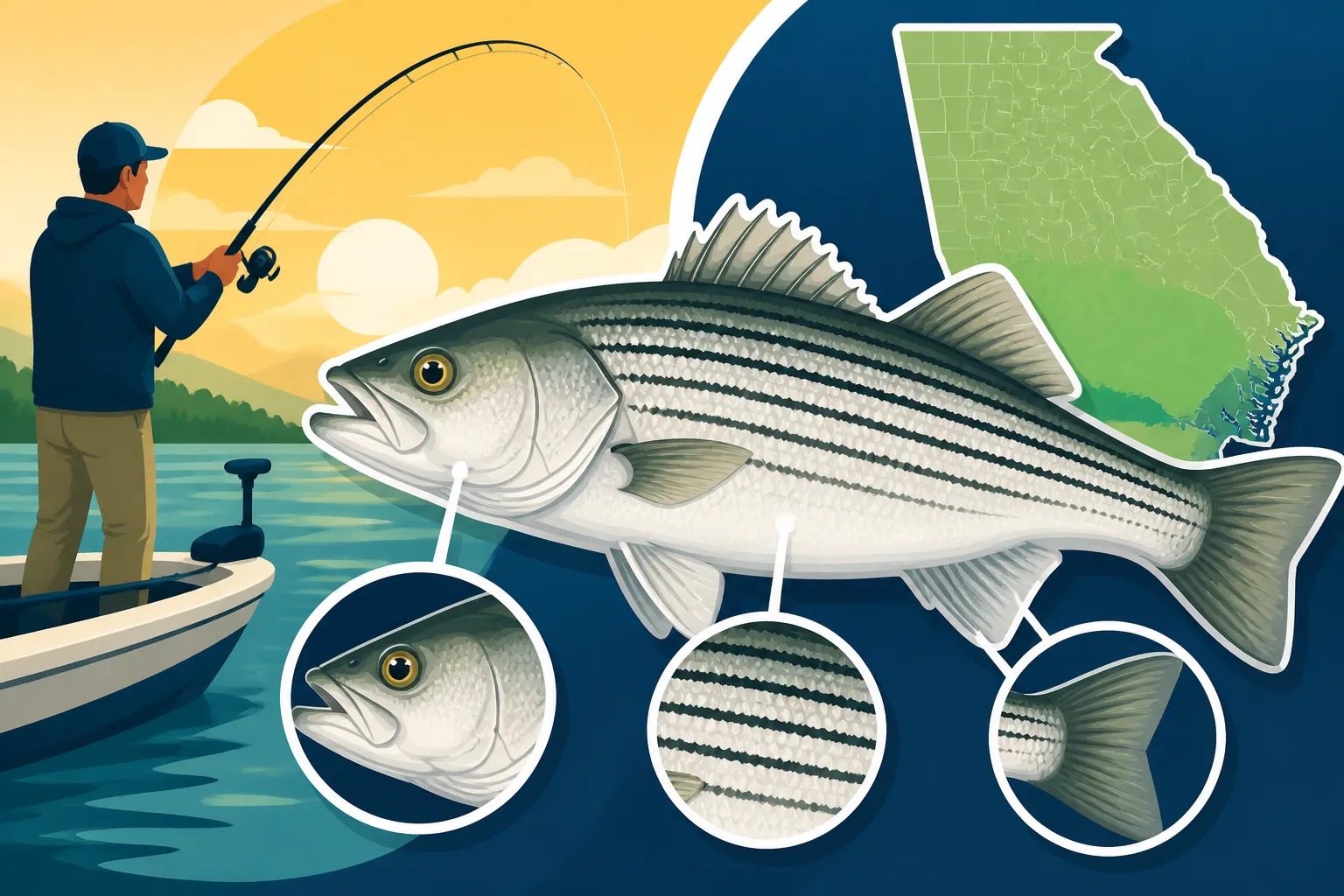
The most obvious and namesake feature of a striped bass is, of course, its stripes! These aren't just faint markings; they're typically dark, prominent, unbroken horizontal lines running from just behind the gill plate all the way to the tail. Most striped bass will have 7 or 8 of these distinct, dark stripes. This is your primary visual cue.
It’s important to note how clear and continuous these lines are. Unlike some similar species where the lines might be broken, faded, or stop abruptly, on a true striped bass, they usually remain solid and strong across the length of the body. You'll often notice a few of these stripes will extend all the way to the base of the tail, which is a key differentiator when comparing them to other striped fish.
Body Shape and Fin Structure
Beyond the stripes, take a good look at the overall shape of the fish. Striped bass tend to have a long, slender, and powerful body that's built for cruising and bursts of speed. Think torpedo-shaped, but somewhat compressed from side to side rather than perfectly round. This streamlined design helps them chase down prey in open water.
Their dorsal fins are another tell-tale sign. They possess two distinct dorsal fins: a spiny dorsal fin followed by a soft-rayed dorsal fin. These two fins are usually completely separate, not connected by a membrane. The anal fin typically has three spines, followed by a series of soft rays. Pay attention to the texture and placement of these fins, as they can sometimes feel quite rigid, especially the spiny dorsal.
Mouth and Jaw Configuration
The mouth of a striped bass is another critical identification feature. It's relatively large, and when you look at the lower jaw, it typically protrudes noticeably beyond the upper jaw, giving them a slightly "underbite" appearance. This large mouth is perfectly adapted for engulfing baitfish whole.
Take a moment to carefully examine the tongue as well. A unique feature of the striped bass (and a couple of its close relatives) is the presence of two distinct patches of teeth on the tongue. You might need to gently pry the mouth open to get a clear view, but these tooth patches are a solid, definitive characteristic that really helps confirm you’ve got a striper. This is a very reliable feature that can often seal the deal on identification.
Differentiating Striped Bass from Similar Species
Here's where it gets tricky for many anglers. Georgia waters are home to other "striped" or "bass" species that can easily be mistaken for a true striped bass. Knowing the subtle differences is paramount, not just for bragging rights, but for adhering to length and creel limits that often vary by species. You might find a good, detailed guide on Amazon to help you with visual comparisons on the water.
Striped Bass vs. Hybrid Striped Bass
This is perhaps the most common point of confusion. Hybrid striped bass (often called "wipers" or "hybrids") are a cross between a striped bass and a white bass. They are also stocked in many Georgia lakes and offer a similar hard fight. The key is in the stripes. While stripers usually have clear, unbroken lines, hybrid striped bass often have stripes that are broken or somewhat disjointed, especially below the lateral line. Think of it as a series of dashes and dots rather than continuous lines.
Another less reliable but often observed difference is body shape: hybrids tend to be a bit deeper-bodied or "chunkier" for their length compared to the more streamlined pure striped bass. However, the most definitive characteristic, if you can get a clear look, is the presence of two distinct tooth patches on the tongue of a true striped bass, whereas a hybrid will typically have one, sometimes two, but often less prominent or fused patches. You can dive deeper into this comparison with Striped Bass vs Hybrid Striped Bass: What's the Difference?.
Striped Bass vs. White Bass
White bass are much smaller than striped bass, rarely exceeding a few pounds, but they share the same general body shape and, crucially, the striped pattern. The main difference here is size: if it's a small fish (under, say, 10-12 inches), it's far more likely to be a white bass or a small hybrid.
Beyond size, white bass typically have only one stripe that extends all the way to the tail, whereas striped bass will have several. The other stripes on a white bass are generally fainter and often less organized, sometimes forming a series of broken lines or blotches. Their body is also often deeper and more compressed than a striper's, giving them a taller, flatter profile for their length. The head of a white bass is typically smaller and more rounded in proportion to its body compared to the more pointed snout of a striped bass.
Striped Bass vs. Largemouth Bass
While they both share the "bass" moniker, true striped bass and largemouth bass are quite distinct, though beginner anglers might sometimes mix them up due to general dark markings. Largemouth bass are green-to-dark-olive in color, with a prominent dark, often irregular, horizontal band running along their side, not distinct parallel stripes.
The most obvious difference, apart from coloration, is the mouth. A largemouth bass has a significantly larger mouth, with the jaw extending well past the eye. Striped bass, while having a decent-sized mouth, generally have a jaw that ends roughly in line with the middle of the eye. Their body shapes are also quite different; largemouth are typically deeper-bodied and rounder, while stripers are more slender and streamlined. You can learn more about our state's primary black bass species by reading Largemouth Bass Fishing in Georgia: The Complete Species Guide.
To make things a bit clearer, here's a quick comparison table:
| Feature | Striped Bass | Hybrid Striped Bass | White Bass |
|---|---|---|---|
| Body Stripes | 7-8 prominent, unbroken, continuous lines | Often broken or disjointed, especially lower lines | Faint, often broken; only 1-2 extend to tail |
| Body Shape | Long, slender, powerful; streamlined | Deeper-bodied, "chunkier" for its length | Deeper and more compressed than striper; smaller |
| Lower Jaw | Protrudes beyond upper jaw (underbite) | Protrudes beyond upper jaw (underbite) | Does not protrude significantly |
| Tongue Teeth | Two distinct patches of teeth | One, sometimes two, often less prominent/fused | One small, single patch |
| Dorsal Fins | Two distinct, completely separate fins | Two distinct, completely separate fins | Two distinct fins, often slightly connected |
| Typical Size | Large (5-50+ lbs) | Medium (2-15 lbs) | Small (0.5-3 lbs) |
Habitat and Behavioral Clues
Beyond what you see on the fish itself, where and how a fish behaves can give you strong clues about its identity. Understanding the typical haunts and patterns of a striped bass can help you anticipate what you've hooked before it even reaches your hands.
Where to Find Striped Bass in Georgia
Striped bass are found in a variety of Georgia's freshwater systems. In our coastal regions, you might encounter them in tidal rivers and estuaries as they make their way upstream from the Atlantic. However, for most inland anglers, the action happens in our large impoundments. Lakes like Lanier, Hartwell, Clarks Hill (Strom Thurmond), Oconee, and Seminole are prime striper territory. They thrive in these deep, open waters, often preferring the main lake basins, deep channels, and areas around submerged structures or points.
They also show a preference for cooler water, which is why in warmer months, you'll often find them suspended in deeper thermoclines. During cooler seasons, they might move into shallower coves or river arms. Knowing the general layout of a lake and where deep, oxygenated water can be found is a huge step in locating these fish. Where to Catch Striped Bass in Georgia River Basins offers a great overview of specific spots.
Schooling Behavior and Feeding Habits
Striped bass are highly social fish and are almost always found in schools. This schooling behavior is a key survival and feeding strategy. When you hook one, there are often many more nearby! They are aggressive predators, actively chasing down baitfish like shad, herring, or even smaller sunfish. You'll often see them crashing bait on the surface, creating what's known as a "striper boil" – an exhilarating sight where the water churns with feeding fish. This is a very characteristic feeding behavior.
They can also be found in deep-water schools, marked by your fish finder, patiently waiting for bait to pass by. Their predatory nature means they're constantly on the move, searching for their next meal. This behavior dictates many of the fishing techniques used to catch them, often involving trolling, casting large artificial lures, or using live bait presentations. If you're encountering schools of large, fast-moving fish on your sonar, especially in open water, there's a good chance you're looking at stripers. Understanding Deep Water Techniques for Striped Bass can help you interpret these signs.
Practical Tips for Anglers on the Water
Even with all this knowledge, identifying fish on the fly, especially when they're flopping around, can be a challenge. Having a few practical tools and habits can make all the difference.
Quick Identification Checklist
To make on-the-water identification easier, I always recommend having a mental (or even physical) checklist. When you land a fish that looks like a striper, quickly run through these points:
- Stripes: Are they distinct, dark, and unbroken? Do at least a few extend to the tail?
- Body Shape: Is it long, slender, and powerful?
- Lower Jaw: Does it clearly protrude beyond the upper jaw?
- Tongue Teeth: Can you gently check for two distinct patches on the tongue? This is the most reliable one!
- Dorsal Fins: Are the two dorsal fins completely separate?
If you can confidently answer yes to most of these, especially the tongue teeth, you're likely holding a striped bass. Many anglers keep a small waterproof fish ID card, easily purchased on Amazon, right in their tackle box for quick reference.
The Importance of Proper Identification for Regulations
Beyond just knowing what you caught, accurate identification is crucial for adhering to Georgia's fishing regulations. Different species have different size limits, creel limits (how many you can keep per day), and sometimes even specific season dates. For instance, the limits for pure striped bass might differ from those for hybrid striped bass or white bass. Misidentifying a fish could inadvertently lead to you keeping an undersized fish or exceeding your daily limit, which can result in penalties.
Always consult the latest Georgia fishing regulations booklet before heading out. It's available online through the Georgia Department of Natural Resources (DNR) or at most license vendors. Some regulations might even be specific to certain lakes or rivers, so always check the specific body of water you're fishing. Having a sturdy, clear fish ID ruler, available on Amazon, can be a great help for quick measurements and identification, ensuring you release fish that aren't legal to keep. Remember, being a responsible angler means knowing your fish and knowing the rules.
Disclaimer
This article is for general informational purposes only and does not constitute professional advice. Laws, prices and regulations vary by location and change over time. Consult a qualified professional for guidance on your specific situation.