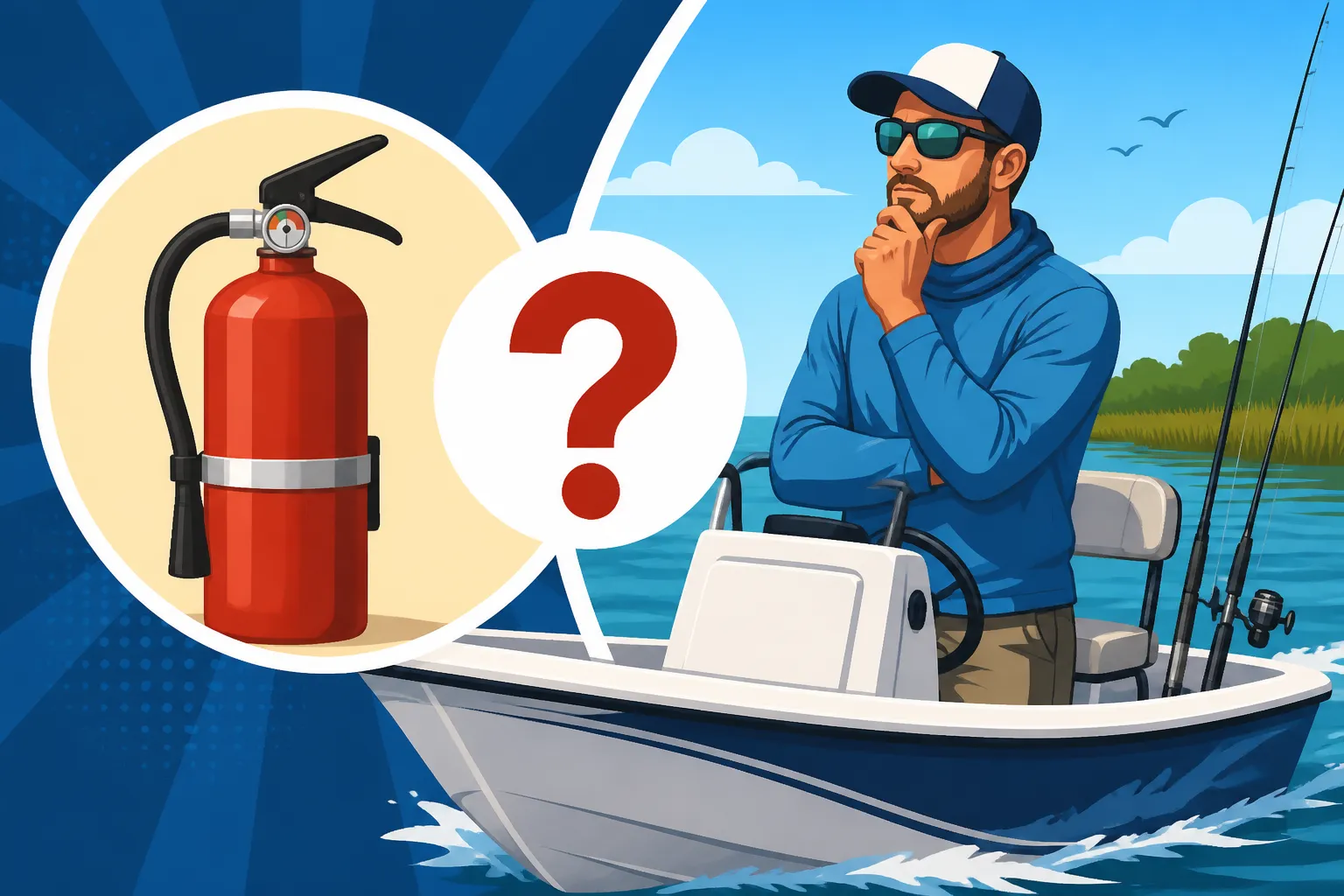
Is a Fire Extinguisher Required on a Small Fishing Boat?
It's a question that often crosses our minds, especially when we're meticulously packing our tackle boxes and prepping our lines for a great day out on Georgia's beautiful waters. We're thinking about bait, lures, maybe even that special lucky hat, but do we really need a fire extinguisher on our small fishing boat? The regulations can feel like a tangled mess of lines, and the last thing any angler wants is to run afoul of the law or, worse, face a real emergency unprepared. This guide is here to untangle those rules, specifically addressing the requirements for fire extinguishers on small fishing boats in Georgia, and helping you understand what you need to do to stay safe and compliant.
Understanding Georgia's Boating Safety Regulations
Navigating Georgia's waterways is a privilege, and with that comes the responsibility of adhering to safety regulations. These aren't just arbitrary rules; they're in place to protect you, your passengers, and everyone else enjoying our lakes and rivers. It's easy to assume that because your boat is "small" – maybe it's just a jon boat or a smaller bass rig – you're exempt from some of the more serious safety equipment requirements. Unfortunately, that's often not the case, and a little bit of knowledge can go a long way in preventing headaches and ensuring peace of mind.
The Importance of Safety Gear Beyond Just Fire Extinguishers
While we're diving deep into fire extinguishers today, it's crucial to remember that they are just one piece of a larger safety puzzle. Georgia, like all states, has a comprehensive set of rules regarding required safety equipment. This includes everything from proper lighting for night operations to sound-producing devices, visual distress signals, and, most critically, personal flotation devices. Many an angler has been surprised during a routine safety check by a DNR officer when they realize they're missing something seemingly minor, like a working horn or enough life jackets for everyone on board. It’s all interconnected, and a proactive approach to safety can make your time on the water much more enjoyable and significantly safer. If you're looking for a general overview, check out our guide on What Safety Equipment Is Required on a Georgia Boat.
Consider a scenario: You're out on Lake Lanier, enjoying a peaceful afternoon of bass fishing. Suddenly, a Georgia Department of Natural Resources (DNR) patrol boat pulls alongside for a routine safety inspection. They're not just looking for your fishing license; they're checking everything from your registration to your life jackets. If you've overlooked a critical piece of safety gear, like a properly charged fire extinguisher, that peaceful afternoon can quickly turn into a frustrating one, possibly involving a citation. It's a small detail that can have a big impact on your day, and even on your wallet.
Who Enforces These Rules?
In Georgia, boating safety regulations are primarily enforced by the Georgia Department of Natural Resources (DNR), Wildlife Resources Division. These are the folks you'll see patrolling our lakes, rivers, and coastal waters, ensuring that everyone is operating safely and within the law. Additionally, the U.S. Coast Guard has jurisdiction over certain navigable waters in Georgia, and their regulations often overlap or even set the baseline for state laws. This means that if you're boating on a larger body of water, like the Savannah River or coastal areas, you might encounter either agency.
These officers are highly trained professionals, and their primary goal isn't to ruin your fishing trip but to keep everyone safe. They conduct vessel safety checks to educate boaters and ensure compliance. While nobody wants a ticket, remember that these checks are also an opportunity to confirm that your boat is truly ready for any eventuality. Being prepared not only means avoiding fines but, more importantly, being able to respond effectively if an emergency arises. It’s also worth noting that just as you need to be aware of regulations, they also need to be aware of current guidelines, so everyone is on the same page. You can always refer to resources like our Georgia Fishing Regulations Explained for general rules.
Fire Extinguisher Requirements by Boat Size and Type
Now, let's get down to the nitty-gritty: fire extinguishers. The key factor here isn't just the overall size of your boat, but more specifically, its construction and propulsion type. Many small fishing boats, even those under 26 feet, are indeed required to carry a fire extinguisher. The rule of thumb generally comes down to whether your boat has certain features that could increase the risk of a fire.
Boats Under 26 Feet (Including Most Small Fishing Boats)
For most recreational boats under 26 feet, which certainly includes the vast majority of small fishing boats like bass boats, jon boats with motors, and smaller center consoles, a fire extinguisher is required if any of the following conditions apply:
- Closed Compartments: If you have an enclosed engine compartment (which is common on many bass boats or larger fishing vessels) or any permanently installed fuel tanks.
- Double Bottoms (Not Open to Air): If your boat has closed living spaces or closed compartments where flammable or combustible materials are stored.
- Electrical Systems: If your boat has a permanently installed electrical system, which most motorized fishing boats do for things like bilge pumps, lights, or livewells.
- Enclosed Fuel Tank Storage: Even if your fuel tank is portable, if it's stored in an enclosed area within the boat, an extinguisher might be required.
Think about your specific vessel. Do you have a small console bass boat with an outboard, a built-in fuel tank under the deck, and a battery compartment? Then yes, you absolutely need a fire extinguisher. What about a simple 14-foot jon boat with a small outboard and a portable gas tank sitting openly in the stern? In that scenario, if there are no enclosed compartments where flammable liquids could accumulate or an enclosed engine space, you might be technically exempt from the requirement. However, even if not legally mandated, having one is always the smartest choice. Safety should always come before strict adherence to the bare minimum legal requirements.
Exemptions and Specific Scenarios
As mentioned, there are some specific scenarios where a fire extinguisher might not be legally required for smaller vessels. Generally, this applies to:
- Open Boats with Portable Fuel Tanks: If your boat is entirely open (no enclosed spaces, no double bottoms not open to the atmosphere) and uses portable fuel tanks that are not stored in an enclosed compartment, you might be exempt. This often describes very simple canoes, kayaks, or smaller jon boats that are truly "open air."
- Boats Without Motors: Manually propelled vessels like paddleboards, kayaks, and canoes (without motors) typically do not require fire extinguishers.
However, even with these exemptions, the common wisdom among seasoned Georgia anglers is to always carry one. Why? Because accidents happen. A spilled gas can, an electrical short in an old wiring harness, or an overheating engine can all quickly turn a great day into a dangerous situation. A small, inexpensive marine-rated fire extinguisher can be the difference between a minor incident and a catastrophic fire that destroys your boat and potentially endangers lives. When you're out on the water, far from emergency services, self-reliance is key. Many anglers pick up their safety gear, including fire extinguishers, from stores like Bass Pro Shops or online retailers like Amazon, ensuring they have what they need for a safe trip. Consider adding other essential items from a Safety Gear Checklist for a Day on Lake Lanier to your boat as well.
Here’s a simplified breakdown to help clarify the requirements:
| Boat Type/Feature | Fire Extinguisher Required? (Under 26 ft) | Notes |
|---|---|---|
| Open Boat (no enclosed compartments) | No (unless other conditions apply) | Applies to truly open vessels like small jon boats with exposed portable fuel tanks. Still highly recommended. |
| Enclosed Engine Compartment | Yes | Common on many bass boats, larger runabouts. |
| Permanently Installed Fuel Tanks | Yes | Many modern fishing boats, even smaller ones, have these. |
| Enclosed Storage of Portable Fuel Tanks | Yes | If your portable tank is stowed in a locker or under a seat where fumes could accumulate. |
| Permanently Installed Electrical Systems | Yes | Lights, bilge pumps, depth finders, livewells – common on almost all motorized fishing boats. |
| Double Bottoms Not Open to the Atmosphere | Yes | Refers to hull construction where air doesn't freely circulate to all areas, allowing vapor accumulation. |
| Closed Living Spaces | Yes | For boats with small cabins or cuddy cabins. (Less common on small pure fishing boats, but good to know). |
| Boats with Propane/CNG Appliances | Yes | Boats with stoves, heaters, etc. (Very rare on small fishing boats, more common on cruisers). |
Choosing the Right Fire Extinguisher for Your Boat
Okay, so you've determined your small fishing boat needs a fire extinguisher. Great! But not just any old extinguisher from your kitchen will do. Marine fire extinguishers are specifically designed to handle the types of fires most likely to occur on a boat, and they are rated by the U.S. Coast Guard for marine use.
Types of Marine Fire Extinguishers (B-I, B-II)
When you're shopping for a marine fire extinguisher, you'll typically see designations like "Type B-I" or "Type B-II." Let's break down what that means:
- Type B: This letter indicates the class of fire the extinguisher is designed to combat. "B" refers to fires involving flammable liquids and greases, which are the most common types of fires on boats (think gasoline, oil, or even electrical fires that lead to burning insulation). You might also see "A" (ordinary combustibles like wood, paper) or "C" (electrical fires), but "B" is the primary rating you need for marine use.
- Roman Numeral (I or II): This indicates the size and capacity of the extinguisher.
- Type B-I: This is the smallest marine-rated extinguisher. It's typically what's required for most small recreational boats under 26 feet that need an extinguisher. These are usually 2.5 lb dry chemical extinguishers.
- Type B-II: This is a larger extinguisher, often 10 lbs or more, and typically required for larger vessels or as an additional unit on boats already carrying a B-I.
Most small fishing boats will only require one Type B-I extinguisher. However, having a second one, especially if your boat is on the larger end of the "small" spectrum or you frequently carry extra fuel, is a smart move. You can find excellent Coast Guard-approved options at your local Bass Pro Shops or by browsing online retailers like Amazon. Remember, the peace of mind knowing you have adequate protection is priceless. Knowing what Best Fire Extinguisher for a Small Fishing Boat to get is a critical step in being prepared.
Placement and Maintenance Tips
Having the right extinguisher is only half the battle; it also needs to be accessible and functional. Imagine a fire breaking out while you're scrambling to dig through a pile of fishing gear to find the extinguisher. Not ideal, right?
- Placement: The extinguisher must be readily accessible. This means it should be mounted in a visible spot, not buried in a locker under a mountain of tackle. Common locations include near the helm, within easy reach of the engine compartment, or in a console storage area that can be quickly opened. If you have a larger boat with multiple areas, you might need more than one extinguisher placed strategically. Think about where a fire is most likely to start (engine, fuel area, electrical panel) and ensure an extinguisher is close by.
- Maintenance: Fire extinguishers aren't a "set it and forget it" item. They require periodic checks to ensure they're ready for action.
- Pressure Gauge: Most dry chemical extinguishers have a pressure gauge. Make sure the needle is in the green "charged" zone.
- Seals and Pin: Check that the safety seal is intact and the pin is in place. This prevents accidental discharge.
- Physical Condition: Look for any signs of corrosion, damage, or clogging in the nozzle.
- Hydrostatic Testing/Expiration: While small, disposable marine extinguishers don't require hydrostatic testing, they do have an expiration date, usually stamped on the cylinder. Replace expired units immediately. For larger, rechargeable units, professional inspection and recharging are necessary.
Making these quick checks a part of your pre-trip routine, much like checking your boat's oil or fuel levels, ensures that your safety gear is always in prime condition. It’s a small investment of time that could literally save your boat and your life.
Don't Get Caught Unprepared: Enforcement and Best Practices
When you're out enjoying Georgia's beautiful fishing spots, the last thing you want is a run-in with law enforcement over a preventable safety oversight. DNR officers are diligent in their patrols, and a vessel safety check is a common occurrence. Being unprepared can lead to more than just a ruined day; it can have significant consequences.
Fines and Safety Risks
Getting caught without the required safety equipment, including a fire extinguisher, can result in a citation and a fine. While the exact amount can vary depending on the jurisdiction and the officer's discretion, it's typically a monetary penalty that could easily have paid for several brand-new extinguishers. More importantly than the financial hit, however, is the very real safety risk.
Imagine your engine catches fire miles from the nearest boat ramp or marina. Without a working fire extinguisher, you're left with limited options. A small spark can quickly escalate into a raging inferno, threatening your vessel and putting everyone on board in grave danger. Marine fires are particularly dangerous because they often involve flammable fuels and can spread rapidly. Being able to quickly douse a fire in its nascent stages is paramount to containing the situation and preventing disaster. It’s a stark reminder that safety regulations aren't just bureaucratic hurdles; they are critical safeguards for life and property. Just like neglecting to get your Georgia Fishing License Guide can lead to penalties, so can neglecting critical safety gear.
Unexpected Inspections
One of the most common ways anglers encounter these regulations is through an unexpected vessel safety inspection. DNR officers have the authority to pull over boats for routine checks to ensure compliance with state and federal boating laws. These inspections are not typically initiated because you've done something wrong; rather, they are a proactive measure to promote boating safety.
During an inspection, an officer will typically ask to see your registration, check for sufficient life jackets (especially for children under 13, who have specific Georgia Life Jacket Laws for Boaters and Kids), verify your sound-producing device, and, yes, check for a marine-rated fire extinguisher if your boat requires one. They'll look at its gauge, seal, and expiration date. Being able to present all required documentation and equipment quickly and in good working order demonstrates responsible boating and makes the interaction smooth and brief. It shows you take safety seriously, which is something every officer appreciates. While you might be focusing on catching fish at the Best Fishing Spots in Georgia, always remember that safety comes first. Being prepared also means understanding things like Georgia Boater Education Card Requirements and other regulations that keep everyone safe on the water.
This article is for general informational purposes only and does not constitute professional advice. Laws, prices and regulations vary by location and change over time. Consult a qualified professional for guidance on your specific situation.