Shore Fishing Access Points in Georgia
It's incredibly frustrating, isn't it? You've got that itch to cast a line, but you don't own a boat, or maybe you just prefer the simplicity of fishing from solid ground. The thought of finding a good, accessible spot in Georgia without driving for hours only to be met with "Private Property" signs can be daunting. But don't you worry, because this comprehensive guide is here to shed light on some of the best and often overlooked shore fishing access points across our beautiful state, making your next outing much less of a headache.
The Frustration of Finding Good Shore Fishing Spots in Georgia
For many anglers, the dream involves a boat, navigating open waters to secret coves and brush piles. But for countless others, that's just not a reality. Whether it's budget constraints, lack of storage, or simply a preference for the tranquility of bank fishing, finding a reliable, productive spot can feel like searching for a needle in a haystack.
Why Bank Fishing Can Be So Challenging
One of the biggest hurdles for shore anglers in Georgia is the sheer amount of private property that borders our most popular lakes and rivers. You might see a promising stretch of water on a map, only to find it fenced off or inaccessible by car. Then there's the issue of safety – you want a spot that's well-maintained, free from hazards, and ideally, where you're not constantly tangling with other anglers or dodging recreational boaters. It's not just about finding any access, but finding quality access that offers a real chance at catching fish. The lack of clear signage or up-to-date information on public access points can add to the difficulty, leaving many to stick to the same overcrowded spots or give up altogether.
The Hidden Gems You're Missing
What many folks don't realize is that Georgia actually has a fantastic network of public access points, from dedicated Public Fishing Areas (PFAs) to state parks, city parks, and even undeveloped stretches along major rivers that welcome bank anglers. The key is knowing where to look and what to expect when you get there. These hidden gems often offer well-maintained banks, fishing piers, ADA-accessible platforms, and even fish attractors placed specifically for shore-bound anglers. They provide opportunities to catch everything from panfish and catfish to impressive largemouth bass and even trout, all without ever stepping foot in a boat. This guide will help you uncover those spots, giving you a renewed sense of excitement for your next fishing adventure.
Georgia's Public Fishing Areas PFAs Designed for Anglers
If you're serious about shore fishing in Georgia, the Public Fishing Areas (PFAs) managed by the Georgia Department of Natural Resources (DNR) are your absolute best bet. These aren't just random ponds; they are meticulously managed lakes and ponds, often stocked with various fish species and designed with the bank angler in mind. Think of them as curated fishing experiences where accessibility and fish populations are prioritized.
North Georgia PFAs for Diverse Fishing
Up in North Georgia, where the mountains meet rolling hills, you'll find PFAs that offer a fantastic mix of fishing opportunities. Take Rocky Mountain PFA near Rome, for example. It boasts two large lakes, Antioch and Heath, covering hundreds of acres. Antioch Lake, in particular, is known for its excellent largemouth bass, crappie, and bream fishing. You'll find plenty of cleared bank access, fishing piers, and even some smaller designated fishing jetties. It’s a favorite among locals who appreciate the consistent stocking and well-maintained facilities. Another great option is the Allatoona Creek PFA, which, while smaller, provides good access to its various ponds for bass and panfish. These northern PFAs are often nestled in beautiful, serene settings, making them perfect for a peaceful day out. Many even offer amenities like restrooms and picnic areas, making it easy to spend a full day on the water.
Central and South Georgia PFA Havens
As you move into Central and South Georgia, the PFAs become even more plentiful and often larger, reflecting the region's expansive lakes and warmer climate. Paradise PFA near Tifton is a prime example, offering multiple lakes and ponds across hundreds of acres. It's a fantastic spot for catching bass, crappie, catfish, and various sunfish from the bank. The DNR has installed numerous fishing piers, casting pads, and extensive bank clearing to ensure easy access for everyone. Another standout is Big Lazer Creek PFA near Talbotton, known for its trophy bass potential and excellent crappie fishery. These southern PFAs are often less crowded than some of the major reservoirs and provide fantastic opportunities for anglers of all skill levels. They're often surrounded by wildlife management areas, offering a chance to enjoy nature beyond just fishing. If you're looking for Where to Catch Catfish in Georgia, many PFAs are regularly stocked with channel catfish, providing excellent bank fishing opportunities for the whole family.
Understanding PFA Facilities and Rules
Before heading to a PFA, it's wise to check the Georgia DNR website for specific rules and regulations. Each PFA might have unique creel and size limits, especially for species like bass or crappie, to ensure sustainable populations. Generally, PFAs are open from dawn to dusk, and some may require a Wildlife Management Area (WMA) stamp in addition to your standard Georgia Fishing License Guide. Most PFAs offer paved parking, accessible facilities, and well-marked trails to various fishing spots. You'll often find fish attractors, like submerged brush piles, marked with buoys, which are excellent targets for shore anglers. It's crucial to respect the property, pack out what you pack in, and be mindful of other anglers. These areas are truly treasures for shore fishing, providing a safe, productive, and enjoyable environment.
State Parks and Recreation Areas: Family-Friendly Access
Georgia's State Parks aren't just for hiking and camping; many of them offer fantastic and often underutilized shore fishing opportunities. These parks typically provide excellent amenities, well-maintained grounds, and diverse aquatic habitats, making them ideal for family outings or a quiet day of solo fishing.
Lakeside Parks with Extensive Shoreline
Many of Georgia's state parks are situated on the shores of major lakes, offering miles of accessible shoreline and dedicated fishing areas. Consider Fort Yargo State Park in Winder, which boasts a beautiful lake with ample bank access, a fishing pier, and even boat rentals if you decide to venture out further. It's a prime spot for bass, crappie, and catfish. Similarly, High Falls State Park near Jackson offers bank access to the Towaliga River and High Falls Lake, renowned for its excellent hybrid striped bass and catfish. These parks usually have well-maintained trails that hug the waterline, allowing anglers to explore different coves and points. They're often equipped with picnic areas, playgrounds, and restrooms, making them perfect for a full day out with the kids. It’s a great way to introduce youngsters to fishing in a safe and clean environment. For general tips on how to fish a lake without a boat, these park settings are fantastic for practicing and refining those skills.
River Access and Pier Fishing in Parks
Beyond lakes, several state parks provide direct access to Georgia's productive rivers. Reed Bingham State Park in Adel, for instance, sits on the Little River and boasts fishing piers that extend into the water, offering a chance to catch diverse species like largemouth bass, bream, and channel catfish. Further north, Cloudland Canyon State Park might be famous for its breathtaking views, but its smaller streams and ponds within the park boundaries can offer surprising fishing opportunities, especially for panfish. Pier fishing is particularly convenient as it allows anglers to reach deeper water without a boat and often provides overhead cover for fish. These park piers are frequently equipped with benches and sometimes even cleaning stations, making the experience even more enjoyable. For those interested in Best Public Fishing Piers on Lake Lanier, some state parks on larger reservoirs offer similar structures that greatly enhance shore access.
Amenities That Make Park Fishing Easy
The true beauty of fishing in Georgia State Parks lies in the amenities. You're not just getting a fishing spot; you're getting a whole day's worth of comfort and convenience. Most parks have ample parking, clean restroom facilities, and often general stores where you can pick up forgotten snacks or basic bait. For families, the playgrounds and hiking trails mean that if the fish aren't biting, there are plenty of other activities to keep everyone entertained. Some parks even host ranger-led fishing programs or loaner tackle programs, making it incredibly easy for beginners or those just looking to try it out. It's a stress-free way to enjoy the outdoors and get some lines wet, ensuring a positive experience for all.
| Park Name | Location | Primary Water Body | Key Species | Shore Access Features | Amenities for Anglers |
|---|---|---|---|---|---|
| Fort Yargo State Park | Winder | Fort Yargo Lake | Bass, Crappie, Catfish | Bank access, fishing pier | Restrooms, picnic areas, boat rental, camping |
| High Falls State Park | Jackson | High Falls Lake, Towaliga River | Hybrid Striper, Catfish, Bass | Bank access, fishing pier | Restrooms, picnic areas, camping, boat ramp |
| Reed Bingham State Park | Adel | Little River | Bass, Bream, Catfish | Fishing pier, bank access | Restrooms, picnic areas, boat rental, camping |
| Hard Labor Creek State Park | Rutledge | Lake Rutledge | Bass, Crappie, Bream | Bank access, fishing pier | Restrooms, picnic areas, boat rental, camping, golf |
| George L. Smith State Park | Twin City | Lake George L. Smith | Bass, Bream, Catfish | Bank access, fishing pier | Restrooms, picnic areas, boat rental, camping |
Major Lakes and Reservoirs: Unexpected Bank Opportunities
When you think of fishing Georgia's major lakes like Lanier or Oconee, a boat often comes to mind. But don't count out these massive bodies of water for fantastic shore fishing. While finding extensive bank access can be trickier than at a dedicated PFA, many reservoirs offer surprisingly good public spots, especially in parks, recreation areas, and near dams.
Shore Fishing on North Georgia's Big Lakes
North Georgia is home to some of the state's most iconic reservoirs, and while private docks dot much of their shoreline, there are still excellent public access points. Lake Lanier, for instance, has numerous county and state parks, such as Laurel Ridge, Don Carter State Park, and Mary Alice Park, all offering public swimming beaches that transition into fishable banks, picnic areas, and sometimes even dedicated fishing piers. You can often find decent spots for Where to Catch Striped Bass on Lake Lanier, Georgia from these public access points, especially if you arrive early or late in the day. These areas are fantastic for targeting bass, crappie, and sunfish. You might not have the mobility of a boat, but by focusing on structure near public access points – like rocky points, fallen trees, or transition areas – you can have a very productive day. For more details, explore the various Lake Lanier Shore Fishing Access Points.
Central Georgia Reservoir Access
Central Georgia's reservoirs like Lake Oconee and Lake Sinclair are renowned for their bass and crappie fisheries. While much of their shorelines are developed, specific areas are set aside for public use. On Lake Oconee, for example, the Wallace Dam area provides excellent bank access, particularly below the dam where the water can be highly productive for various species, including striped bass and catfish. Around Lake Sinclair, you'll find parks and public boat ramps that offer limited but viable bank fishing. The key is to look for areas with less development, often near bridge crossings or public recreation sites. These spots might require a bit more exploration, but the rewards can be substantial. Sometimes, a quick search on a platform like FishingBooker can reveal local guides who know prime bank fishing spots, even on heavily developed lakes.
Southern Reservoirs and Public Lands
Further south, reservoirs like Walter F. George Reservoir (also known as Lake Eufaula) and Lake Seminole offer some of the most extensive public shore access, thanks to their significant portions bordering national forests and wildlife refuges. These lakes are giants, known for their trophy largemouth bass and excellent crappie and catfish populations. Along Walter F. George, areas managed by the Army Corps of Engineers provide numerous recreation sites with cleared banks, fishing piers, and camping. Lake Seminole, straddling the Florida border, is known for its incredibly diverse fishery, and its numerous public access points within the Chattahoochee National Forest and other areas offer ample bank fishing opportunities. These large, publicly managed areas are truly a bank angler's paradise, often providing a more secluded and wild fishing experience. When visiting, always check for specific regulations, as these large lakes can sometimes have unique rules.
Rivers and Smaller Waterways: The Underrated Bank Fisheries
While lakes get a lot of attention, Georgia's rivers and smaller waterways offer some of the most rewarding and often overlooked shore fishing experiences. From urban stretches to remote mountain streams, these flowing waters provide diverse habitats and species for the patient angler.
Chattahoochee River: Urban and Wilderness Access
The Chattahoochee River is a lifeline through Georgia, offering an incredible variety of shore fishing opportunities. From its headwaters in the North Georgia mountains to its journey through the heart of Atlanta, you can find access points catering to different preferences. In the urban stretch through Atlanta, the Chattahoochee River National Recreation Area provides numerous parks and access points like Cochran Shoals, Powers Island, and Morgan Falls Dam, all offering excellent bank fishing. Below Buford Dam, this section is a renowned trout fishery, and anglers can often catch rainbow and brown trout from shore using artificial lures or bait. It's truly unique to be able to fish for trout just minutes from a major metropolitan area. For those seeking Chattahoochee River Fishing Spots Near Atlanta, Georgia, these parks are indispensable. Further north, the Chattahoochee's upper reaches offer more wilderness-style access, often requiring a bit of a hike, but rewarding anglers with solitude and wilder fish.
Flint and Altamaha Rivers: Diverse Species from Shore
Moving south, rivers like the Flint River and the Altamaha River are teeming with diverse fish species, and public access points along their banks provide excellent opportunities. The Flint River is famous for its shoal bass, a hard-fighting native species. Numerous public boat ramps and undeveloped river access areas, particularly in Southwest Georgia, allow anglers to walk the banks and target these unique fish. You'll also find excellent catfishing, especially for flatheads and blues, as well as robust populations of bream and largemouth bass. The Altamaha River, known as Georgia's "Giant," offers a vast network of sloughs, oxbows, and main river channels accessible from various public landings and state-owned areas. Anglers can expect to catch a wide array of species, including bass, crappie, catfish, and even some saltwater species as you get closer to the coast. These rivers provide a more rugged, natural fishing experience compared to many lakes. Remember to check Georgia Fishing Regulations Explained before heading out, as river rules can sometimes differ from lake regulations.
Trout Streams: Walk-In Access in the Mountains
For those who crave the cool waters and challenging pursuit of trout, North Georgia's mountain streams offer extensive walk-in access. Many of these streams flow through national forests and state wildlife management areas, providing miles of public water for anglers. The Toccoa River and its tributaries, as well as numerous other smaller creeks like Cooper Creek, are prime examples. While some areas are designated "Delayed Harvest" streams with specific catch-and-release rules during certain seasons, others are general regulation waters where you can keep a limit of trout. You'll often find parking areas along forest service roads that lead to well-worn paths down to the water. Fly fishing and spin fishing are both popular from the bank in these streams. It’s a truly immersive experience, surrounded by the beauty of the Appalachian foothills. For a deep dive, check out the Best Trout Streams in Georgia or Trout license requirements for north Georgia mountain streams.
Coastal Georgia: Saltwater Shore Fishing Adventures
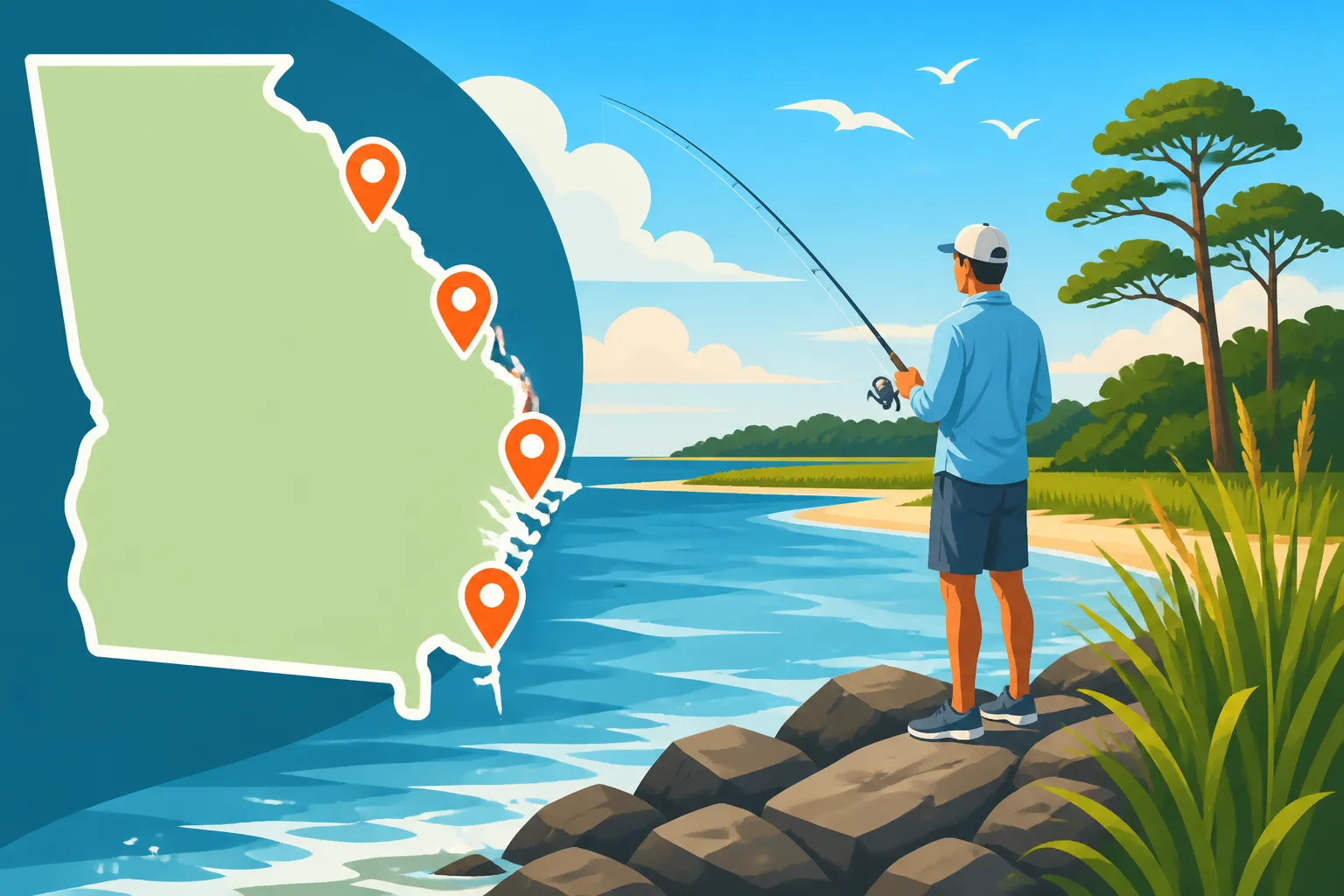
Georgia's coastline might be relatively short, but it offers fantastic opportunities for saltwater shore fishing. From bustling piers to serene marsh edges, the diverse habitats along the Atlantic provide a different kind of thrill for anglers. Just remember that saltwater fishing often requires a Georgia fishing license with a saltwater information permit, even if it's free.
Piers, Docks, and Beaches for Coastal Anglers
The most straightforward way to access saltwater fishing from shore in Georgia is via public piers and docks. Destinations like Tybee Island Pier, the St. Simons Island Pier, and the Jekyll Island Pier are incredibly popular and for good reason. These structures extend far into the sounds and estuaries, allowing anglers to reach deeper water and target species like red drum (redfish), spotted sea trout, flounder, whiting, and even sharks. They often have amenities like restrooms, bait shops, and cleaning stations, making them very convenient. Beyond piers, many public beaches offer opportunities for surf fishing, especially during cooler months. Try fishing the troughs and sloughs just beyond the breaking waves for whiting, drum, and occasional pompano. Just be mindful of swimmers and beachgoers, especially during peak season. For more localized advice, consider looking up St. Simons Island Redfish Fishing Spots.
Tidal Creeks and Marsh Edges
For a more secluded and authentic coastal experience, exploring Georgia's vast network of tidal creeks and marsh edges can be incredibly rewarding. Many public boat ramps and undeveloped causeways offer limited but effective bank access to these productive waters. Look for areas where a road crosses a creek or where public land extends to the marsh. Here, you can cast for redfish, flounder, and trout as they forage along the grassy edges. The key to success in these areas is understanding the tides; fish often move in and out with the ebb and flow, congregating in deeper channels or feeding actively on flooded flats. A good pair of wading boots can extend your reach in these shallow, muddy environments. Sometimes, securing a local guide through platforms like FishingBooker can unveil those secret, hard-to-find creek spots that are otherwise inaccessible.
Regulations and Best Practices for Saltwater Shore Fishing
Saltwater fishing comes with its own set of rules and best practices. First and foremost, you'll need a valid Georgia fishing license with a free Saltwater Information Permit (SIP). This permit helps the DNR track angler effort and catch data, which is crucial for managing fish populations. Check the current Georgia Fishing Regulations for specific size and creel limits for each species, as these can change annually. For example, red drum often have slot limits, meaning you can only keep fish within a certain size range. When fishing piers or popular beaches, be considerate of others. Don't cast over other lines, and keep your area clean. When fishing marsh edges, be aware of the tides to avoid getting stranded, and always respect private property. The Georgia Coast is a unique and fragile ecosystem, so practicing "leave no trace" is more important than ever.
Essential Tips for Maximizing Your Shore Fishing Success
Fishing from the bank, while accessible, does require a slightly different approach than fishing from a boat. A few key strategies can significantly increase your chances of success and make your outing more enjoyable.
Gear Up Smart for Bank Fishing
You don't need a ton of fancy gear for shore fishing, but having the right gear makes a huge difference. A good all-around spinning rod and reel combo, typically 6 to 7 feet long with medium action, is perfect for most Georgia species. It allows for decent casting distance and versatility. Keep your tackle box compact but comprehensive: a selection of hooks (various sizes), sinkers (split shot and sliding egg sinkers), bobbers, and a few basic lures (small crankbaits, spinnerbaits, soft plastics, and jigs) will cover most situations. Don't forget essentials like pliers for hook removal, a tape measure, and a cooler for your catch. A comfortable backpack is essential for carrying your gear, especially if you plan to walk to your spot. For specific recommendations, check out Best Rod for Shore Fishing Without a Boat.
Timing and Technique from the Bank
Timing is everything when you're limited to the shore. Early mornings and late evenings, often referred to as "prime time," are usually the most productive, regardless of the species you're targeting. Fish tend to be more active and closer to the bank during these cooler, lower-light periods. Overcast days can also extend these productive windows. When it comes to technique, focus on casting parallel to the shore, especially if there's structure like submerged trees, rocks, or weed lines. Fan casting – casting in a wide arc to cover as much water as possible – is also very effective. Experiment with different depths by adjusting your bobber or the weight of your sinker. For panfish and catfish, bottom fishing with natural baits like worms, crickets, or cut bait is often highly effective. For bass, try casting jigs or soft plastics near cover. You can learn a lot from the guide on Basic Fishing Techniques Every Beginner Should Know.
Safety and Etiquette for Shore Anglers
Safety should always be your top priority. Let someone know where you're going and when you expect to return, especially if you're venturing into more secluded areas. Be aware of your surroundings: slippery banks, submerged obstacles, and fast currents in rivers can pose risks. Always wear appropriate footwear, and if you're fishing near heavy boat traffic, consider wearing a bright-colored shirt or even a personal flotation device, especially if you're not a strong swimmer. When it comes to etiquette, be respectful of other anglers. Give them space, avoid loud noises, and never leave trash behind. Pack out everything you brought in, including fishing line and bait containers. By practicing good sportsmanship and being a responsible steward of our natural resources, you help ensure that Georgia's fantastic shore fishing opportunities remain available for everyone to enjoy for years to come.
Disclaimer
Please remember that fishing regulations, access points, and conditions can change. Always consult the latest Georgia Department of Natural Resources (DNR) guidelines and local signage before heading out. Be aware of private property boundaries and obtain proper permissions where necessary. Fishing carries inherent risks; please exercise caution and prioritize your safety at all times.