How to Troll for Striped Bass
If you've ever felt the sheer frustration of watching other boats pull in fish after fish while you're left scratching your head, especially when those elusive striped bass seem to be playing hide-and-seek, you're not alone. Striped bass, or "stripers" as many of us lovingly call them, can be a real challenge to pin down, particularly when they're scattered or holding deep. But what if there was a way to systematically cover water, present baits naturally, and actively seek out those schooling fish? That's where trolling comes into its own. This guide is all about demystifying the art of trolling for striped bass in Georgia, helping you understand the gear, the techniques, and the strategy to turn those head-scratching moments into triumphant catches.
Understanding Striped Bass Behavior for Effective Trolling
Trolling isn't just about putting lures in the water and driving around; it's a strategic method built on understanding the fish you're targeting. Striped bass are incredibly dynamic predators, constantly on the move, and their behavior changes significantly with the seasons and water conditions. Knowing their habits is your first step to successful trolling.
Seasonal Movements and Forage
Striped bass in Georgia's reservoirs and rivers are constantly following their food source and seeking comfortable water temperatures. In the cooler months, like late fall and winter, you'll often find them congregating in deeper, more stable water, sometimes even suspending over old creek channels or timber. This is when they might be a bit more lethargic, but still willing to strike a slow-moving bait. As spring approaches, they start to move shallower, following baitfish that are themselves moving into coves and flats to spawn. This pre-spawn period can be fantastic for trolling, as stripers are actively feeding to bulk up.
During the scorching Georgia summer, stripers will often retreat to deeper, cooler, oxygenated waters. This thermocline, or temperature break, becomes a critical zone for trolling. Finding that sweet spot where the cooler water meets abundant baitfish is key. Think about how many times you've heard anglers talk about the "deep water bite" in July – that's precisely what we're talking about. Conversely, in the fall, as water temperatures begin to drop, stripers become highly active again, chasing baitfish in open water and near the surface, often leading to exciting topwater boils. Understanding these broader seasonal patterns will dictate your trolling depth, speed, and even the type of lure you choose.
Locating Stripers with Electronics
Before you even think about dropping a line, your boat's electronics are your best friends. Modern fish finders and chartplotters are incredibly powerful tools for locating striped bass and their forage. Start by looking for schools of baitfish – often appearing as dense clouds or arches on your sonar screen – in open water, along creek channels, or near submerged structure like old roadbeds or timber lines. Where there's bait, stripers are usually not far behind.
You'll also want to pay close attention to depth and water temperature. Stripers are temperature-sensitive, and finding that optimal temperature zone, especially in summer, is crucial. If your fish finder has a water temperature gauge, monitor it closely as you move across different depths. Sometimes, a subtle one or two-degree temperature change can hold a significant concentration of fish. Using your GPS to mark waypoints when you find concentrations of fish or bait, or when you get a strike, allows you to re-troll those productive areas repeatedly. This precision fishing, guided by your electronics, is what separates random trolling from effective, targeted trolling. For those looking to upgrade their setup, online retailers like Amazon offer a wide range of advanced fish finders and GPS units that can make a huge difference.
Essential Gear for Trolling Striped Bass
Trolling for striped bass isn't a "one-size-fits-all" endeavor when it comes to gear. The setup you use will largely depend on the depth you're targeting, the size of the fish you expect, and the techniques you prefer. Getting your gear right is paramount to consistent success.
Rods, Reels, and Line
When you're constantly moving and putting pressure on your gear, durability and reliability are key. For rods, you'll want something with a moderate to fast action and a strong backbone, typically in the medium-heavy to heavy power range. A rod between 7 to 8 feet long is generally ideal, offering enough length to spread lines and absorb the shock of a strike without being overly cumbersome. Fiberglass or composite rods are often preferred for their parabolic bend, which helps keep fish hooked during the fight.
For reels, stout baitcasting reels are the standard. Look for models with a strong drag system, a high line capacity, and durable internal components. Many anglers prefer reels with a line counter, which is incredibly helpful for repeating specific depths, especially when you're employing Deep Water Techniques for Striped Bass. As for line, braided line is a popular choice for its sensitivity and strength-to-diameter ratio, allowing for more line on the spool and better feel for subtle bites. A main line of 30 to 50 lb braid is common, often paired with a fluorocarbon leader (20-40 lb test) for abrasion resistance and invisibility. Alternatively, if you're using lead core line for depth, you'll need specific setups for that. For those starting out or looking for reliable options, a quick search on Amazon for "striped bass trolling rods" will show you many suitable combos.
Lures, Baits, and Terminal Tackle
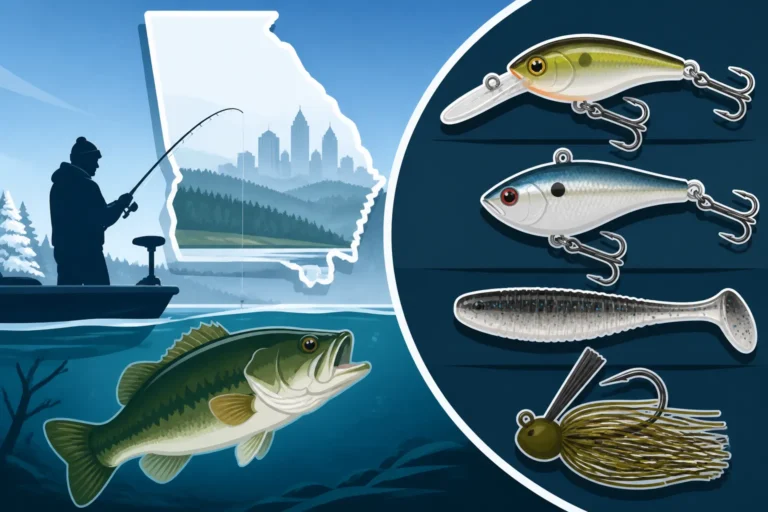
The world of striped bass lures is vast and exciting. When trolling, spoons, bucktail jigs, umbrella rigs, and deep-diving crankbaits are perennial favorites.
- Spoons: Large, heavy spoons like the venerable Tony Accetta Pet Spoon or the Drone Spoon are fantastic for imitating baitfish. They flutter and flash erratically, especially when trolled at varying speeds.
- Bucktail Jigs: Trolled individually or as part of an umbrella rig, bucktails can be incredibly effective, especially when tipped with a soft plastic trailer or a piece of cut bait.
- Umbrella Rigs: These multi-lure setups mimic a school of baitfish and can be deadly. They typically feature four or more arms with teasers and a larger "chase bait" in the center. They create a big profile in the water, attracting aggressive stripers.
- Deep-Diving Crankbaits: Brands like Rapala, Bomber, and Strike King make crankbaits designed to reach significant depths, often without additional weight. Their wobbling action is irresistible to hungry stripers.
Live bait is also a powerhouse when trolling. Small to medium-sized shad, herring, or even large shiners can be rigged on a variety of Live Bait Rigs for Striped Bass and trolled for incredibly natural presentations. Remember, presenting live bait effectively often requires slower speeds and careful attention to depth. For terminal tackle, always carry a selection of heavy-duty swivels, snap swivels, and leader material. When building your tackle box, think about the different Best Tackle for Georgia Striped Bass Fishing that covers various conditions and depths.
Depth Control Systems
Controlling the depth of your lures is arguably the most critical aspect of effective trolling. Striped bass often hold in very specific depth zones, and hitting that zone consistently is key.
Downriggers
Downriggers are mechanical devices that use a heavy cannonball weight to carry your fishing line down to a precise depth. Your fishing line is clipped to a release clip on the downrigger cable, and when a fish strikes, the line pops free from the clip, allowing you to fight the fish directly. Downriggers are indispensable for targeting very specific depths in deeper water, allowing you to fish large lures or even live bait exactly where the fish are holding. They give you unparalleled control and precision.
Planer Boards
Planer boards are designed to take your lures out to the sides of the boat, away from the prop wash and boat noise. This allows you to cover a wider swath of water and present baits to fish that might be spooked by the boat. Inline planer boards attach directly to your fishing line, while mast-and-tether systems allow you to run multiple lines off a single main line. Planer boards are particularly effective when stripers are spread out or when they are shallower, often used in conjunction with longer rods to maximize the spread.
Lead Core Line and Sinking Baits
Lead core line is a specialized fishing line with a lead core wrapped in a braided sheath. It's designed to sink at a consistent rate per color (typically 10 yards per color), allowing you to estimate your depth by the number of colors deployed. For example, if you know your lure runs at 5 feet and your lead core sinks at 5 feet per color, deploying 5 colors gets your lure down around 30 feet. This method requires a specific Best Rod for Striped Bass Fishing in Georgia and Best Reel for Trolling Striped Bass due to the line's diameter and weight. Similarly, some lures are designed to sink on their own, like heavy spoons or deep-diving crankbaits, reaching significant depths without extra help.
Here’s a comparison of common depth control methods for trolling:
| Depth Control Method | Primary Use Case | Advantages | Disadvantages |
|---|---|---|---|
| Downrigger | Precise deep water (20-100+ ft) | Highly accurate depth control, less line resistance, allows lighter tackle for fighting fish. | Requires specialized equipment, more complex setup, limits number of lines. |
| Planer Board | Spreading lines, shallow/mid-depths | Covers wide area, gets lures away from boat, presents natural spread. | Can be cumbersome to deploy/retrieve, susceptible to wind, can tangle. |
| Lead Core Line | Consistent depth in mid-range (10-50 ft) | No extra equipment on the boat, simple to use once learned. | Requires heavy rods/reels, difficult to change depth quickly, can be less precise. |
| Deep Diving Crankbait | Mid to deep depths (10-30 ft) | Simple, no extra equipment, effective wobbling action. | Depth is fixed by lure design, can be less accurate for very specific depths. |
| Snap Weights/Diving Planes | Variable depths (0-50 ft) | Flexible, simple to add/remove weight, relatively inexpensive. | Adds resistance to line, less precise than downriggers, can interfere with lure action. |
Mastering Trolling Techniques and Strategies
Once you have your gear in order, it's time to put it to work. Trolling is a dynamic process, and successful anglers are constantly adjusting their techniques based on fish behavior, water conditions, and bait presence.
Trolling Speed and Direction
The speed at which you troll can make a massive difference. For most lures like spoons and crankbaits, a speed between 2.0 to 4.0 mph is a good starting point, but it's crucial to experiment. Sometimes, a slight increase or decrease in speed can trigger bites. Observe your rod tips: your lures should have a natural, enticing action. If your spoons aren't fluttering or your crankbaits aren't wobbling correctly, adjust your speed. When using Best Live Bait for Striped Bass Fishing, a slower speed (1.0-2.5 mph) is often more effective to keep the bait swimming naturally.
Trolling direction relative to current or wind is also critical. If there's a strong current, trolling into it will generally make your lures run deeper and have less action, while trolling with it will make them run shallower and often have more action. Trolling across current can be a good compromise. Don't be afraid to make S-turns or wide turns. These changes in direction cause your lures on the inside of the turn to slow down and sink, while those on the outside speed up and rise, often triggering strikes from following fish. A lot of experienced striper anglers swear by making these subtle changes.
Depth and Lure Spacing
As mentioned, depth control is everything. Start by targeting the depth where you're seeing baitfish or fish arches on your electronics. If you're not getting bites, systematically try different depths. You might have one lure running at 25 feet, another at 35, and a third at 45, until you find the productive zone. This is where a downrigger or lead core line really shines.
Lure spacing is equally important, especially if you're running multiple lines. The goal is to avoid tangles while covering a wide area. Use a combination of rod lengths, lead core vs. downrigger setups, and planer boards to create a spread that prevents lines from crossing. For instance, you might run a downrigger bait directly behind the boat at 40 feet, a deep-diving crankbait off a long rod running out to the side at 25 feet, and a planer board setup with a shallow-running spoon even further out. Consider How to Rig Herring for Striped Bass for trolling differs from rigging a spoon in terms of line length behind the boat. A well-designed spread allows you to present multiple options to the fish simultaneously, increasing your chances of finding what they want.
Troubleshooting and Adjustments
Trolling isn't always instant success. There will be days when the fish are finicky, and you'll need to make adjustments.
- No Bites? First, recheck your electronics. Are the fish still there? Has the bait moved? If so, follow them. If not, consider changing depths, even by just a few feet. Sometimes the productive zone is razor-thin.
- Change Lures/Colors: Stripers can be surprisingly picky. If your current lures aren't working, try a different size, shape, or color. Natural baitfish colors (silver, white, blue/silver) are always a good starting point, but sometimes a chartreuse or fire tiger pattern can provoke a reaction strike.
- Adjust Speed: Even a 0.5 mph change can make a difference. Experiment with faster speeds for aggressive fish or slower speeds for lethargic ones.
- Consider Time of Day/Weather: Early mornings and late evenings are often prime times, but overcast days can extend the bite. After a cold front, fish might go deeper and be less active, requiring slower presentations. Many of these adjustments are similar to what you'd consider in How Striper Fishing Techniques Differ From Bass Fishing, highlighting the adaptive nature of angling.
Remember, trolling for striped bass is a continuous learning process. Every day on the water brings new insights, and the more you observe, adjust, and experiment, the more successful you'll become. Whether you're targeting big lake stripers or smaller river fish, mastering these techniques will put you in a much better position to catch these powerful and exciting game fish. For those seeking specific locations, exploring resources on Where to Catch Striped Bass on Georgia Lakes can give you an excellent head start, providing insights into prime trolling grounds.
Disclaimer
This article is for general informational purposes only and does not constitute professional advice. Laws, prices and regulations vary by location and change over time. Consult a qualified professional for guidance on your specific situation.