How to Downline for Striped Bass
There's nothing quite as exhilarating as feeling that powerful tug on your line when a Georgia striped bass decides to strike, but sometimes, those hard-fighting fish can be incredibly elusive, holding deep in the water column where traditional casting methods just can't reach them. If you've ever felt the frustration of seeing stripers on your sonar screen but failing to get a bite, this guide is for you. We're going to dive deep into the art and science of downlining for striped bass, a proven technique that puts your bait right in front of those deepwater giants.
Understanding Downlining for Georgia Stripers
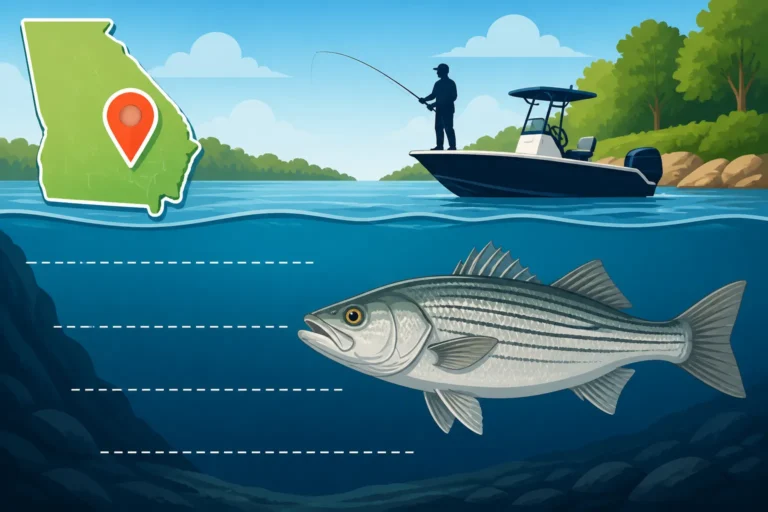
Imagine dropping a perfect, frisky live bait right into a school of hungry striped bass holding fifty feet down. That's the essence of downlining. It’s a precision technique specifically designed to target fish suspended at particular depths, which is a common scenario when you're fishing for striped bass in Georgia's vast reservoirs. These powerful predators often school up around thermoclines, humps, or submerged timber, making them inaccessible to many other fishing methods.
What Exactly is Downlining?
At its core, downlining is a live bait presentation method where you use a heavy weight to rapidly descend a live baitfish to a precise depth. Unlike trolling, where you drag baits behind a moving boat to cover water, downlining often involves parking over a specific spot or drifting slowly with the current. The goal isn't just to get the bait down; it's to present it naturally at the exact depth where the fish are holding, often in dense schools.
The beauty of downlining lies in its simplicity and effectiveness. You're not relying on complex lure actions or retrieves; instead, you're leveraging the irresistible appeal of live bait. This technique is especially effective when the striped bass are schooled tightly and relatively inactive, or when they're feeding on abundant baitfish that are themselves holding deep. It’s a method that requires a keen eye on your electronics and a patient hand, but the rewards can be truly spectacular.
Why Downlining Excels for Deepwater Stripers
Georgia's reservoirs, like Lake Lanier or Lake Oconee, are massive, deep bodies of water. During much of the year, especially in warmer months, striped bass retreat to cooler, deeper waters, often congregating in large schools. They're typically chasing baitfish like threadfin shad or blueback herring, which also seek refuge in these cooler depths. This is where downlining becomes not just an option, but often the most effective option.
Striped bass are notorious for their strong schooling instincts. When you find one, you often find many. Your sonar can light up with arcs of fish, indicating a bustling underwater community. However, if those fish are 40, 60, or even 80 feet down, a cast-and-retrieve lure simply won't get there fast enough, or stay there long enough, to be effective. Downlining cuts through that challenge, allowing you to bypass the upper water column and deliver your bait directly into the strike zone. It's about precision targeting, making sure your offering is unavoidable to those deep-dwelling stripers. If you're looking for more Deep Water Techniques for Striped Bass, downlining is definitely a cornerstone.
Essential Gear for a Successful Downlining Setup
When it comes to downlining, having the right equipment isn't just about comfort; it's about efficiency and success. You're dealing with powerful fish, heavy weights, and often deep water, so your gear needs to be up to the task. Skimping here can lead to lost fish, broken lines, and a lot of frustration.
Rods, Reels, and Line: The Foundation
For downlining, you'll want a rod that can handle the weight of your sinker and the powerful runs of a striper, while still being sensitive enough to detect subtle bites. A medium-heavy to heavy action rod, typically 6'6" to 7'6" in length, is ideal. Look for a fast or extra-fast tip that allows for quick hook sets, but with enough backbone to really put the pressure on a big fish. Many anglers prefer rods designed for saltwater bottom fishing or catfish, as these often have the necessary power. If you're searching for options, you can find a wide array of suitable rods on retailers like Amazon.
Paired with your rod, a sturdy baitcasting reel or a robust spinning reel is essential. For baitcasters, look for models with a high line capacity and a smooth, powerful drag system. A gear ratio around 5.1:1 to 6.4:1 offers a good balance of power and retrieve speed. Spinning reels should be in the 4000 to 6000 series size, also prioritizing drag quality and line capacity.
When it comes to line, a good quality monofilament line in the 15-25 lb test range is a popular choice for its shock absorption and knot strength. However, many experienced downliners are now opting for braided line in the 30-50 lb test. Braid offers superior sensitivity, minimal stretch, and incredible strength for its diameter, which is a huge advantage when fishing deep. If you go with braid, consider adding a fluorocarbon leader (20-30 lb test, 3-6 feet long) to provide some invisibility and abrasion resistance at the business end. For a deeper dive, check out guides on Best Rod for Striped Bass Fishing in Georgia.
Choosing the Right Weight and Hook
The sinker is a crucial component of your downlining rig. Its primary job is to get your bait down to the desired depth quickly and keep it there, even in current or wind. Most anglers use bell sinkers, egg sinkers, or bank sinkers, ranging from 1 to 4 ounces, sometimes even heavier depending on depth and conditions. A good rule of thumb is to use the lightest weight possible that still allows you to maintain contact with your bait and feel the bottom or structure. Having a variety of weights on hand is always a good idea.
For hooks, circle hooks are overwhelmingly favored by striped bass anglers, and for good reason. They significantly reduce gut-hooking, leading to healthier release rates for fish you don't intend to keep. Sizes typically range from 3/0 to 7/0, depending on the size of your baitfish and the target stripers. A 5/0 or 6/0 circle hook is a versatile starting point for most live bait situations. Offset circle hooks are also popular, as they can sometimes improve hook-up ratios without sacrificing the fish-friendly benefits.
Live Bait is Key
While you can technically downline with artificial lures, the technique truly shines with live bait. Striped bass are visual and opportunistic predators, and a struggling, natural baitfish is almost impossible for them to resist. The most common and effective live baits for Georgia stripers include:
- Blueback Herring: These are often the natural forage for stripers in many Georgia lakes and are a top choice.
- Threadfin Shad: Another excellent choice, readily available in many lakes.
- Gizzard Shad: Can be effective, but their larger size might require larger hooks and heavier tackle.
- Shiners: Golden shiners are a good alternative if herring or shad are hard to come by.
Keeping your live bait healthy is paramount. A good livewell with a strong aerator or an insulated bait bucket with a portable aerator (many options available on Amazon) is essential. Healthy, active bait is more enticing to stripers. You'll want to learn How to Rig Herring for Striped Bass or other baits effectively for downlining.
Table: Common Live Bait Options for Downlining in Georgia
| Baitfish Type | Typical Size | Availability | Effectiveness | Considerations |
|---|---|---|---|---|
| Blueback Herring | 3-6 inches | Excellent (stocked/native) | High | Prized by stripers, can be fragile to keep alive. |
| Threadfin Shad | 2-4 inches | Excellent (native) | High | Smaller, good for numbers, easier to keep lively. |
| Gizzard Shad | 4-8+ inches | Good (native) | Moderate | Larger, better for trophy fish, harder to keep alive. |
| Golden Shiners | 3-5 inches | Good (bait shops) | Good | Hardy, readily available, a reliable alternative. |
| Small Bream/Perch | 2-4 inches | Catch them yourself | Good | Very hardy, can be excellent for larger stripers. |
Rigging and Executing the Downline Technique
Once you have your gear sorted, understanding how to rig and deploy your downline is the next crucial step. This is where precision and finesse meet the raw power of a striper. It’s not just about dropping a line; it’s about presenting an irresistible meal.
Step-by-Step Rigging Guide
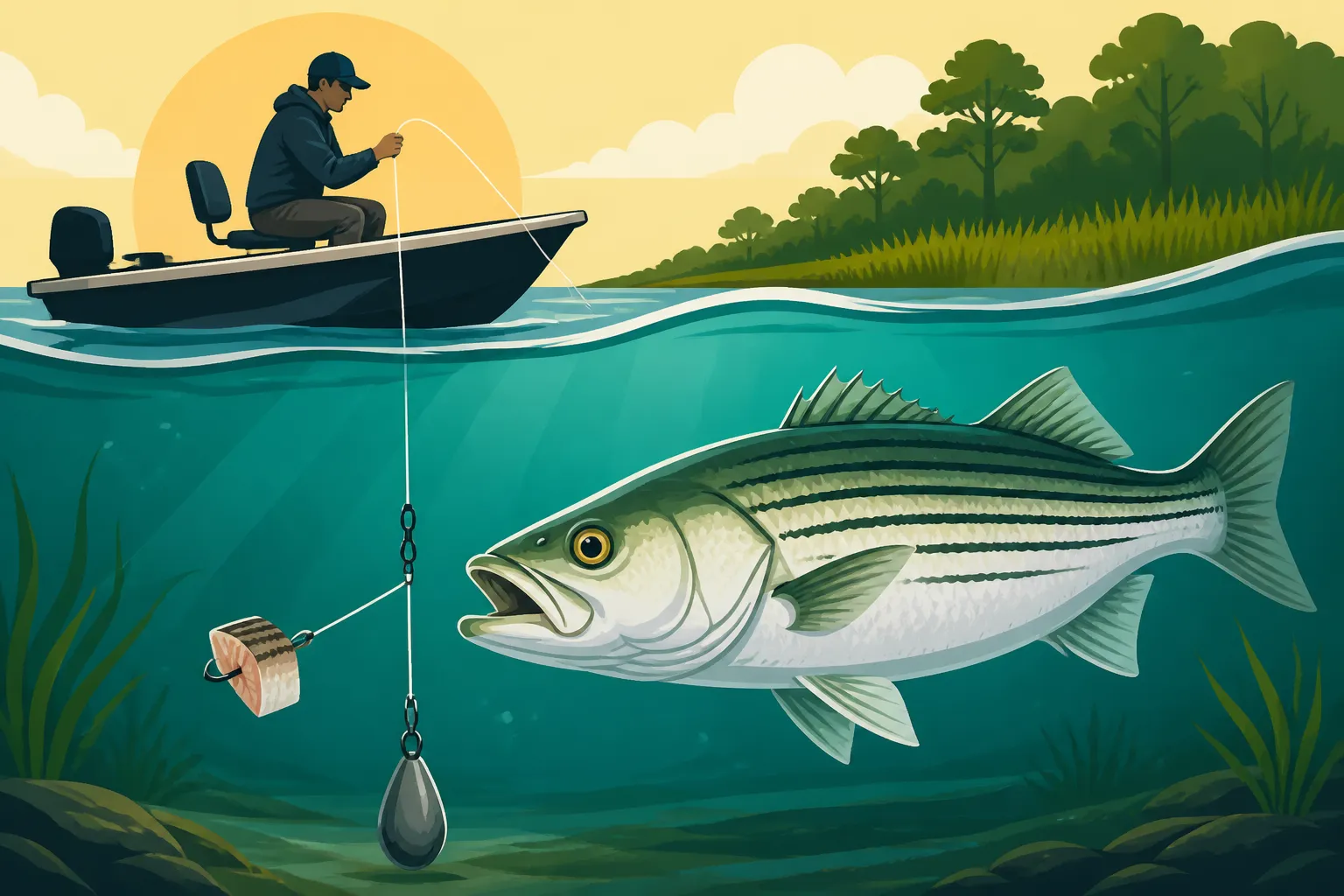
A standard downlining rig is quite simple, which is part of its appeal. Here’s how to set it up:
- Main Line: Start with your main line (braid or mono) from your reel.
- Sinker Slide (Optional but Recommended): Thread a sinker slide onto your main line. This allows the weight to slide freely, making it harder for the fish to feel the resistance of the sinker when it bites.
- Swivel: Tie a high-quality barrel swivel or a three-way swivel to the end of your main line. A good knot like a Palomar or improved clinch knot is essential here. If using a sinker slide, the swivel acts as a stopper for the slide.
- Leader Line: From the other end of the swivel, tie a length of fluorocarbon leader. A good starting point is 2-4 feet, but you can adjust this based on water clarity and fish activity. Lighter leader (e.g., 20 lb) is good for clear water, heavier (30 lb) for structure or bigger fish.
- Hook: Tie your circle hook to the end of your leader.
- Sinker: If you used a sinker slide, attach your chosen sinker to the snap on the slide. If not using a slide, you can tie your sinker directly to a shorter dropper line (6-12 inches) off the bottom eye of a three-way swivel, with your leader tied to the middle eye.
Remember, knot strength is critical. Take the time to tie strong, reliable knots. You can find excellent leader material and swivels readily on sites like Amazon, ensuring you're using quality components for your Live Bait Rigs for Striped Bass.
Locating Striped Bass with Electronics
Modern fish finders are your best friend when downlining. You're not just casting and hoping; you're actively hunting for fish. Before you even drop a line, you need to find the stripers. Look for:
- Schools of Baitfish: Stripers follow their food. If you see dense clouds of bait, stripers are likely nearby, either in or around them.
- Large Arcs/Marks: These indicate individual fish or tight schools of larger fish. Pay attention to the depth at which they're holding.
- Structure: Humps, points, creek channels, submerged timber, and deep ledges are all prime areas where stripers will congregate.
Your fish finder will tell you not only if fish are there, but at what depth they are. This precision is what makes downlining so effective. Once you identify a school, carefully position your boat directly over or slightly upwind/upcurrent from them. Keep an eye on the screen as you drift or slowly motor, adjusting your bait depth to match the fish you see. Understanding What Depth Striped Bass Hold At is critical for success.
Presentation and Boat Control
The key to presentation in downlining is to get your bait down quickly and efficiently, then keep it at the target depth. Drop your rig straight down, letting out line steadily until your sinker hits the desired depth or the bottom. If you're targeting fish suspended at, say, 50 feet, drop the sinker to 50 feet and then retrieve a foot or two to lift the bait slightly above the sinker. The natural movements of the live bait will do the rest, attracting attention.
Boat control is crucial, especially when fishing current or wind. If drifting, use a drift sock or a trolling motor to control your speed and direction. If using a spot-lock trolling motor, it can hold you directly over a school, allowing for multiple vertical presentations. Watch your rod tip closely. Stripers often hit with a solid thud, but sometimes it can be a subtle "thump" or a sudden increase in rod bend. Resist the urge to yank the rod to set the hook; instead, simply reel tight until the rod loads up, letting the circle hook do its job.
Advanced Tips and Seasonal Considerations for Georgia
Downlining isn't a one-size-fits-all technique; adapting to conditions and understanding striper behavior will significantly increase your success. Georgia's waters present varied challenges and opportunities throughout the year, making flexibility key.
Adjusting for Depth and Current
The depth you fish and the amount of weight you use will constantly change based on where the stripers are and what the water is doing. On windy days or in areas with strong currents, you'll need heavier sinkers (3-4 ounces or more) to keep your bait vertical and at the target depth. In calmer conditions or shallower water, you can often get away with lighter weights (1-2 ounces), which can result in a more natural bait presentation.
Always err on the side of having too many sinker options. If your line is dragging too far behind the boat, or you're having trouble maintaining depth, it's time to go heavier. Conversely, if you're constantly snagging the bottom or feel like your bait isn't swimming freely, try a lighter weight. This constant adjustment is part of the finesse of downlining. Pay attention to your fish finder; if your bait mark isn't appearing near the fish marks, you need to adjust your weight or drift.
Reading the Water and Striped Bass Behavior
Striped bass behavior changes with the seasons, water temperature, and forage availability. Knowing when and where to downline is as important as knowing how.
- Spring: As water temperatures rise, stripers become more active and will move shallower to feed. They'll still hold around structure, but might be found in 20-40 feet of water. This is an active feeding period where downlining can be incredibly productive as fish transition.
- Summer: This is prime downlining season. Stripers retreat to the cooler, oxygenated waters of the thermocline, often 40-80 feet deep in Georgia's big lakes. They'll school tightly in these depths, making them perfect targets for a precise downline presentation. Look for them over deep humps, creek channels, and the main lake basin.
- Fall: As water temperatures cool, stripers become more widespread and aggressive. While they may still hold deep, they'll also move to shallower flats and points to chase bait. Downlining can still be effective, especially on slower days or when fish are holding deeper during bluebird skies.
- Winter: Stripers often remain deep in winter, especially in the warmest parts of the lake. They might be less active, but a well-presented live bait can still entice a strike. Focus on deep channels and warm water discharges if available.
Understanding the Best Time of Year for Striped Bass Fishing in Georgia will help you immensely. Observing surface activity, like schooling bait or diving birds, can also give clues to deeper fish, as stripers often push bait to the surface before retreating back down.
Common Pitfalls and How to Avoid Them
Even seasoned anglers encounter challenges. Here are a few common downlining pitfalls and how to steer clear:
- Poor Bait Care: Dead or lethargic bait won't get bites. Ensure your livewell is circulating fresh, cool water and that it's not overcrowded. Avoid handling bait excessively.
- Wrong Depth: The most common mistake. Constantly monitor your fish finder and adjust your bait depth. Being even 5-10 feet off can make all the difference. Remember, fish often look up, so present your bait slightly above the main school.
- Too Much Line Out: If you're drifting too fast or using too light a sinker, your line will be at a severe angle, making it hard to feel bites and keep your bait at the correct depth. Always try to keep your line as vertical as possible.
- Setting the Hook Too Hard: With circle hooks, a hard hook set is unnecessary and often results in missing the fish. Instead, apply steady pressure by slowly reeling and raising the rod tip until the fish is on.
- Tangles: Fishing multiple downlines can lead to tangles, especially when drifting. Stagger your depths slightly (e.g., one at 45 ft, one at 50 ft) to help minimize this, and pay attention to line angles.
By paying attention to these details and continuously learning from your time on the water, you'll soon master the art of downlining for striped bass in Georgia. It’s a rewarding technique that opens up a whole new world of deepwater fishing opportunities.
Disclaimer
This article is for general informational purposes only and does not constitute professional advice. Laws, prices and regulations vary by location and change over time. Consult a qualified professional for guidance on your specific situation.