Best Bait for Flathead Catfish
Trying to figure out the best bait for flathead catfish can feel like a real puzzle, especially if you're used to catching other types of catfish with traditional baits. Unlike their scavenger cousins, flatheads are pure predators, and they demand a different approach. This guide is here to untangle the mystery, showing you exactly what baits flatheads can't resist and how to present them effectively for a successful day on Georgia's waters.
Why Flathead Catfish Are Different
When you first start fishing for catfish, you quickly learn that most of them are pretty opportunistic eaters. Channel cats and blue cats, for instance, aren't shy about gobbling up a smelly piece of cut bait or a potent dip bait. But then you encounter the flathead, and suddenly, everything you thought you knew about catfish bait goes right out the window. Many anglers get frustrated because the baits that work wonders for other species get absolutely ignored by a flathead, and it’s not because they aren't there. It’s because flatheads have a completely different menu in mind.
The Predator's Palate
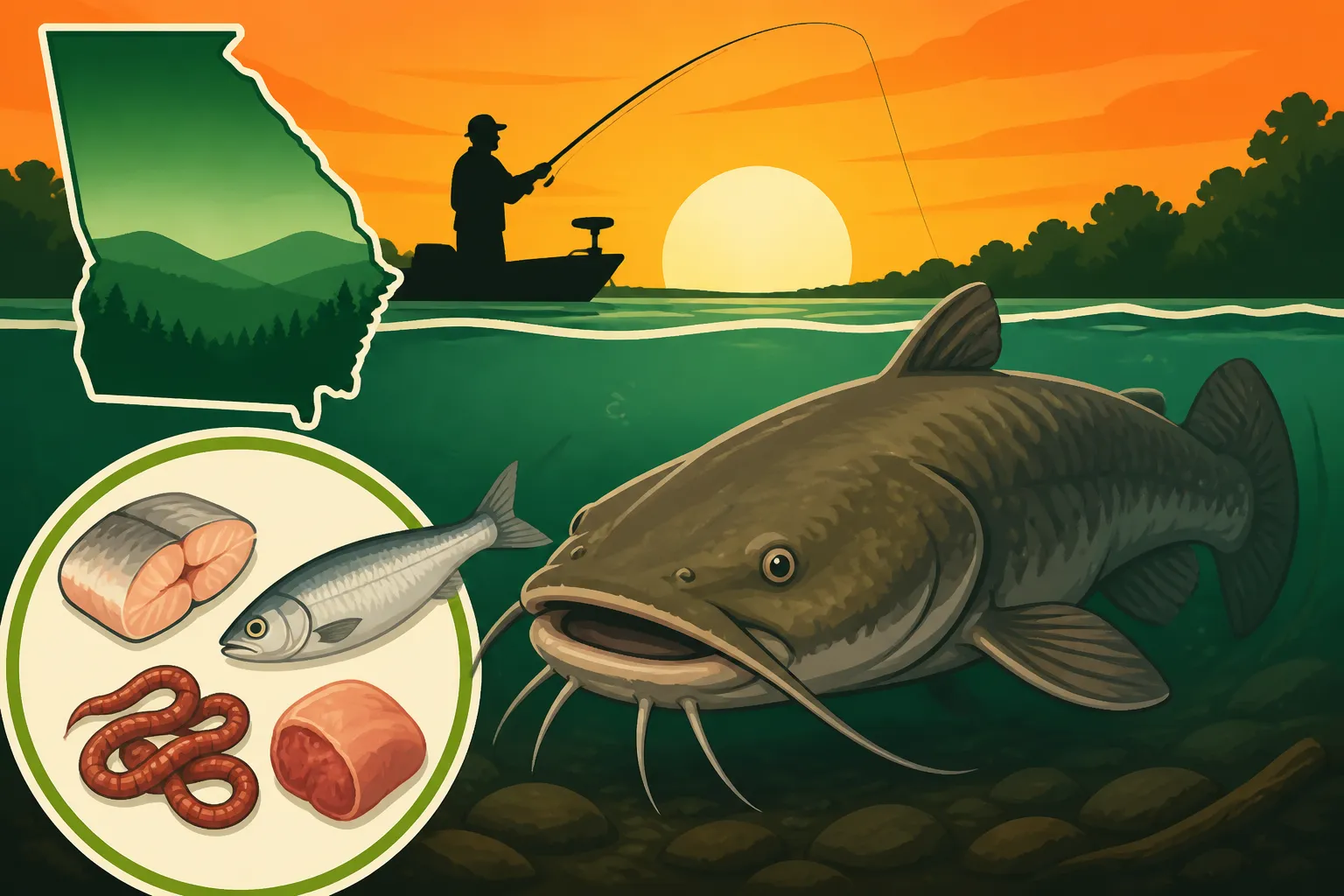
Flatheads are ambush predators, pure and simple. They're built for hunting live prey, and their diet primarily consists of other fish. Think about it: their mouths are wide, perfect for swallowing whole fish, and they don't have the same highly developed chemoreceptors for scent that channel or blue catfish possess. They rely heavily on their lateral line to detect vibrations from struggling prey and their eyesight to pinpoint a meal, especially in murky waters or at night. This isn't a fish that's going to casually cruise by and suck up a piece of decaying chicken liver. They want a struggle, a flash, a fight. They want something alive and kicking, something that screams "easy meal!" from its movements.
This predatory nature also means they prefer cleaner, more natural baits. While other catfish might flock to something with an overpowering aroma, a flathead often perceives that as unnatural or even a threat. They're keyed into the subtle signals of a live fish in distress, not a pungent, manufactured scent. Understanding this fundamental difference is the first, and most crucial, step, in figuring out what bait will actually get their attention. It's why so many traditional "catfish baits" fail when targeting this elusive species.
Why Live Bait Reigns Supreme
Given their predatory instincts, it should come as no surprise that live bait is hands down the most effective choice for flathead catfish. It appeals to all their hunting senses: the visual stimulus of a moving fish, the vibrations it sends through the water, and the natural scent that signals a potential meal. A live baitfish, properly presented, looks, feels, and smells exactly like what a flathead is programmed to eat. It's an offering they simply can't ignore if they're in a feeding mood.
Consider the alternative: a dead bait, even fresh cut bait. While it might still release some scent, it lacks the movement and life signals that truly trigger a flathead's predatory response. A flathead isn't going to spend time scavenging; it wants to conserve energy and strike at an easy target. A lively baitfish struggling on the hook is exactly that. For this reason, many experienced flathead anglers will tell you that if you're not fishing with live bait, you're severely limiting your chances of success. It's not just a preference; it's a fundamental requirement for consistent flathead fishing.
Top Live Baits for Flathead Catfish
Now that we've established the undisputed king of flathead bait, let's dive into the specifics of which live baits work best. The key here is often matching the hatch – using baitfish that are naturally found in the waters you're fishing. However, some species are universally excellent choices due to their hardiness, flash, and ability to attract big flatheads. Keeping your bait lively and healthy is paramount, so investing in a good aerated bait bucket or a livewell is crucial, especially during those warm Georgia summers.
Sunfish and Bream
Sunfish, often generically called bream in Georgia, are arguably the number one choice for flathead bait. This includes species like bluegill, green sunfish, and redear sunfish. There's a good reason for their popularity: they are abundant in almost all freshwater systems where flatheads live, making them a natural food source. They're also incredibly tough and can stay alive on a hook for a long time, even in challenging conditions. A lively bream fluttering around is like a dinner bell for a flathead.
When choosing sunfish for bait, look for ones in the 3-6 inch range. Too small, and you might attract smaller flatheads or other species. Too large, and it might be harder for the flathead to swallow. You can catch them easily with small hooks, worms, or crickets, or with cast nets in shallower areas. Hook them through the back, just in front of the dorsal fin, being careful not to hit the spine, or through both lips. This allows them maximum movement while securely on the hook. For more on catching these smaller fish, you might find our guide on Bream and Bluegill Fishing for Beginners helpful. Remember, a healthy, energetic sunfish is your best advertisement for a hungry flathead, so keeping them robust in your livewell or bait bucket, perhaps with a portable aerator you can find on Amazon, is key.
Shad and Herring
In many larger Georgia reservoirs and rivers, shad (threadfin and gizzard) and herring are prevalent forage fish, making them excellent, natural choices for flathead bait. Flatheads are accustomed to ambushing these fast-moving baitfish. Shad, in particular, have a silvery flash that can really grab a flathead's attention, especially in stained water or low light conditions. The challenge with shad and herring is often keeping them alive, as they are notoriously fragile compared to sunfish.
These baits are usually caught with a cast net, often requiring some skill to locate and throw the net effectively. Once caught, they need immediate transfer to a well-oxygenated livewell with a good filtration system to keep them healthy. Hooking shad or herring through the nose or just behind the dorsal fin allows them to swim naturally and present an enticing target. While they might not last as long as a tough bream, their natural appeal in waters where they are abundant can be irresistible to flatheads. For specific information on what other species prefer these baits, check out our piece on Best Bait for Blue Catfish in Georgia Rivers, as blue cats also favor them.
Creek Chubs and Suckers
For those fishing in rivers and larger creek systems, creek chubs and various species of suckers can be fantastic flathead baits. These fish are generally hardy, much like sunfish, and can withstand being on a hook for extended periods. They're often found in the same environments as flatheads, making them a natural food source that flatheads are already accustomed to hunting. Their sometimes sluggish movements can also make them seem like an easy meal to a flathead lying in wait.
Acquiring creek chubs and suckers often involves smaller cast nets, seines, or even trapping them in minnow traps in smaller streams and creeks. They vary in size, so again, aim for that 4-7 inch range for optimal flathead appeal. Hooking them through the back, similar to sunfish, is generally the most effective method to ensure maximum movement and longevity. Their natural ability to survive in current also makes them ideal for river fishing, where bait presentation can be tricky. You might find some of these specific baitfish more readily available at your local bait shops, or perhaps even online from reputable sources on platforms like Amazon if you're looking for specialized bait traps.
Presenting Your Flathead Catfish Bait for Success
Having the best live bait is only half the battle; knowing how to present it effectively is just as crucial. Flathead catfish are ambush predators, meaning they often position themselves in strategic locations to surprise their prey. Your presentation needs to put that struggling live bait right in their strike zone, in a way that looks as natural and enticing as possible. This isn't a game of simply casting and waiting; it's about precision and understanding the fish's habits. For more on the species itself, be sure to read our detailed guide on Flathead Catfish Identification and Habits.
Essential Rigs for Live Bait
When it comes to flathead fishing with live bait, simplicity and strength are key. You're dealing with powerful fish, potentially in heavy cover, so your tackle needs to be robust.
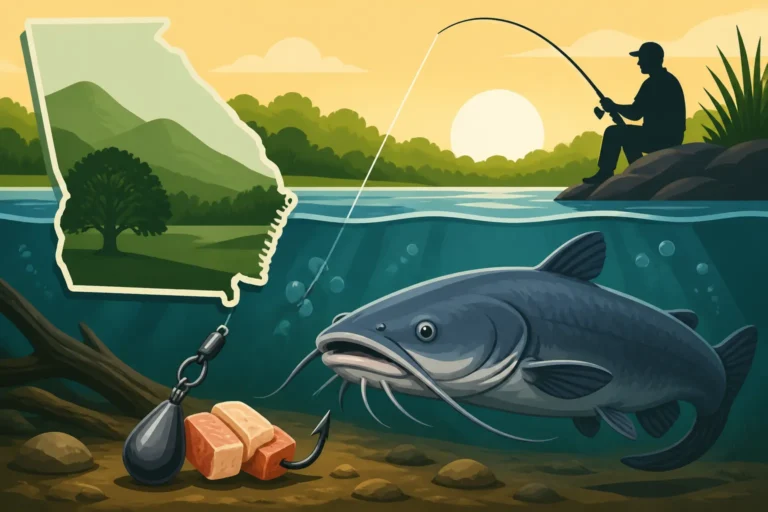
- Carolina Rig (or Slip Sinker Rig): This is the go-to rig for many flathead anglers. It consists of a heavy sinker (usually 1-3 ounces, depending on current and depth) that slides freely on your main line, followed by a bead (to protect the knot), a swivel, and then a strong leader (20-50 lb test fluorocarbon or monofilament, typically 1-3 feet long) tied to a large, stout hook. Circle hooks (5/0 to 10/0) are highly recommended, as they tend to hook the fish in the corner of the mouth, making for easier release and protecting the fish. The slip sinker allows the bait to swim somewhat freely, presenting a natural appearance, while keeping it anchored in the strike zone. If you want to learn more about specific setups, our article on How to Rig a Slip Sinker for Catfish is an excellent resource.
- Trotlines and Jug Lines: For serious flathead anglers, especially those targeting multiple fish or fishing larger areas, trotlines and jug lines can be incredibly effective. These methods allow you to set out numerous baits at various depths and locations. Trotlines involve a main line stretched across a body of water or suspended from bank to bank, with snelled hooks dropped at intervals. Jug lines use individual floats, each with a single baited hook. Both methods require careful planning and adherence to local regulations regarding their use. Setting these up can be a bit of an art, and you can find comprehensive advice in our guides on How to Set a Trotline for Catfish and How to Jug Fish for Catfish. These methods are great for covering water, especially in expansive areas of Georgia's larger rivers and reservoirs.
Strategic Placement
Flatheads are often found near structure where they can ambush prey. This means placing your bait precisely is critical. Look for:
- Deep Holes and River Bends: Flatheads love to hang out in the deepest parts of rivers and in the slower water on the inside bends where currents deposit food. A live bait presented on the edge of a deep hole or in a current seam can be irresistible.
- Submerged Timber and Rock Piles: Wood and rock provide excellent ambush points. Fallen trees, stump fields, and large rock formations offer cover for flatheads to hide and wait for passing prey. Getting your bait close to these areas, without getting immediately snagged, is often where the big ones lie. You might need to use a sturdy Best Rod for Catfish Fishing on Georgia Rivers for this kind of heavy cover.
- Bridge Pilings and Ledges: Man-made structures also attract flatheads. Bridge pilings create current breaks and offer vertical cover, while underwater ledges provide changes in depth where flatheads can stage.
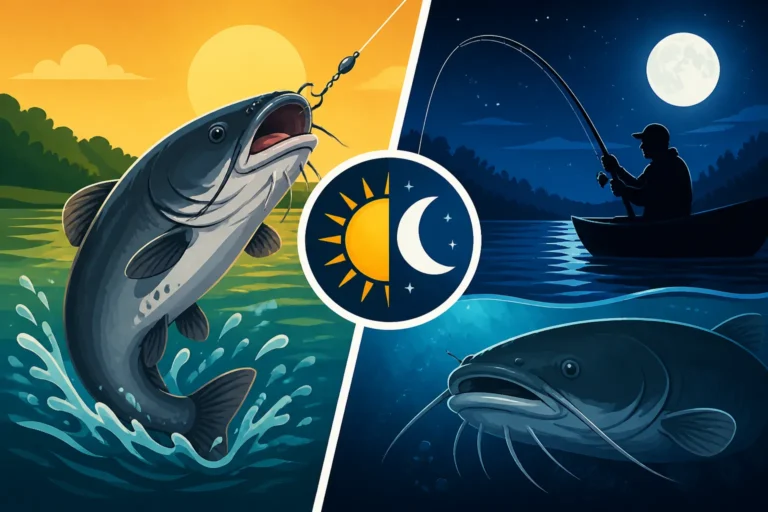
- Night Fishing: While they hunt during the day, flatheads are particularly active nocturnal feeders. Often, they move into shallower areas to hunt at night, so don't be afraid to cast closer to the banks or into shallower flats adjacent to deep water after dark. Our article on How to Catch Catfish at Night provides more insights into this exciting technique.
The Waiting Game
Once your bait is deployed in a prime flathead location, patience becomes your most important tool. Unlike channel or blue catfish that might nibble or tap, a flathead strike is usually decisive and powerful. They often engulf the bait and then move off, so you'll see your rod bend sharply and continuously. Avoid the urge to immediately set the hook. With circle hooks, a steady retrieve is usually all that's needed once the fish takes the bait and starts to swim away. The design of the hook does the work, ensuring a solid hookset in the corner of the fish's mouth. Giving the fish a few seconds to fully commit to the bait before engaging is often crucial for a successful hookup. Remember, fishing for flatheads is often a slower, more deliberate pursuit, so pack your patience and enjoy the quiet anticipation.
Beyond Live Bait: When Other Options Might Work (Rarely!)
While live bait is overwhelmingly the best choice for flathead catfish, it's natural for anglers to wonder if there are any other viable options, perhaps when live bait is hard to come by or when you're targeting multiple species. The short answer is: don't get your hopes up. Flatheads are particular, and straying from live bait significantly reduces your odds. However, there are some nuances worth understanding, even if just to manage your expectations.
Cut Bait for Flatheads? Manage Expectations
Occasionally, if a live baitfish dies or if you're desperate, a fresh piece of cut bait might entice a flathead. But let's be crystal clear: "fresh" is the operative word here. It needs to be a very recent cut from a baitfish that would otherwise be a live flathead meal, like a shad or a bream. The key is that the scent is still natural and strong, and ideally, it's only been dead for a very short time.
The problem is that without the movement of live bait, cut bait for flatheads relies almost entirely on scent, and a flathead's sense of smell isn't as finely tuned for scavenged food as a channel or blue catfish. They are not typically scavengers. So, while a fresh piece of cut bait might catch an opportunistic or particularly hungry flathead, it's rarely going to be your most effective strategy. You're much more likely to attract channel cats or blue cats with cut bait, especially when you compare Catfish Species Compared: Channel vs Blue vs Flathead. If you're specifically targeting flatheads, stick to the living, wiggling stuff. Anything else is a gamble with very low odds of paying off.
The Truth About Stink Baits
Let's not mince words here: stink baits, dough baits, and other highly processed, scent-driven commercial catfish baits are almost completely useless for flathead catfish. Flatheads simply do not respond to these artificial, pungent concoctions. Their predatory instincts are geared towards natural prey, not an overpowering chemical smell. Many anglers, especially beginners, make the mistake of assuming "catfish bait" means all catfish bait, leading to frustrating days and empty stringers when targeting flatheads.
If you're using stink bait, you're almost exclusively targeting channel catfish, and occasionally blue catfish in certain scenarios. You might pick up a small channel cat on a night crawler, but a true flathead, especially a large one, is going to ignore it. Save your money and your time when it comes to flatheads; those tubs of prepared bait are simply not designed for their unique palate. Your best bet is always to invest in the time and effort to acquire and maintain good live bait.
Here’s a quick overview of bait choices for different catfish species:
| Bait Type | Best For | Effectiveness for Flatheads | Notes |
|---|---|---|---|
| Live Sunfish/Bream | Flathead, Blue Catfish | Excellent | The #1 choice, natural movement and scent. Hardy and long-lasting on hook. |
| Live Shad/Herring | Flathead, Blue Catfish, Striped Bass | Excellent | Great flash and natural forage, but more fragile to keep alive. |
| Live Creek Chubs/Suckers | Flathead, Blue Catfish | Excellent | Hardy river fish, natural prey in many flathead habitats. |
| Fresh Cut Bait (Shad/Bream) | Blue Catfish, Channel Catfish | Poor to Fair | Relies on natural scent; lacks movement. Only use if very fresh and no live bait. |
| Chicken Liver | Channel Catfish | Very Poor | Primarily a scavenger bait, no appeal to flatheads. |
| Stink Baits/Dough Baits | Channel Catfish | None | No appeal to flatheads whatsoever. Focuses on scent, not natural prey. |
| Nightcrawlers/Worms | Channel Catfish, Panfish | Very Poor | Will catch small channel cats and other species, but rarely flatheads. |
When you're out on the water in Georgia, chasing those magnificent flathead catfish, remember their predatory nature is key. Don't be tempted by the convenience of prepared baits or the broad appeal of cut bait. Invest in quality live bait – sunfish, shad, or creek chubs – and present them strategically in the flathead's ambush zones. It takes a little more effort, but the reward of a powerful flathead on the end of your line is absolutely worth it. So, grab your aerator, fill that bait bucket with some feisty live fish, and get ready for a truly exciting fishing adventure!
Disclaimer
This article is for general informational purposes only and does not constitute professional advice. Laws, prices and regulations vary by location and change over time. Consult a qualified professional for guidance on your specific situation.