How to Set a Trotline for Catfish
Trotline fishing for catfish in Georgia sounds like something straight out of an old Southern tale, and while it's a traditional, highly effective method, getting started can feel a little intimidating. Between understanding the specific regulations, gathering the right gear, and knowing how to set it up properly, it’s easy to get overwhelmed. But don't you fret! This comprehensive guide is here to walk you through every single step, ensuring you’re well-equipped and confident to legally and successfully set your own trotline for some fantastic Georgia catfishing.
Understanding Georgia's Trotline Regulations
Before you even think about buying a single hook, it is absolutely crucial to understand the rules and regulations surrounding trotline fishing in Georgia. Ignorance of the law is no excuse, and the Georgia Department of Natural Resources (DNR) takes these rules seriously. Nobody wants a hefty fine or confiscated gear, right? This isn't just about legality; it's about ethical fishing and preserving our waterways for everyone. You'll always need a valid Georgia fishing license, of course, so make sure you've got that squared away first. If you need a refresher, check out our Georgia Fishing License Guide or dive into the broader Georgia Fishing Regulations Explained for general rules.
Legal Lengths and Hook Limits
Georgia has very specific rules regarding the construction and size of your trotline. You can’t just string up an endless line with a hundred hooks; there are limits for a reason.
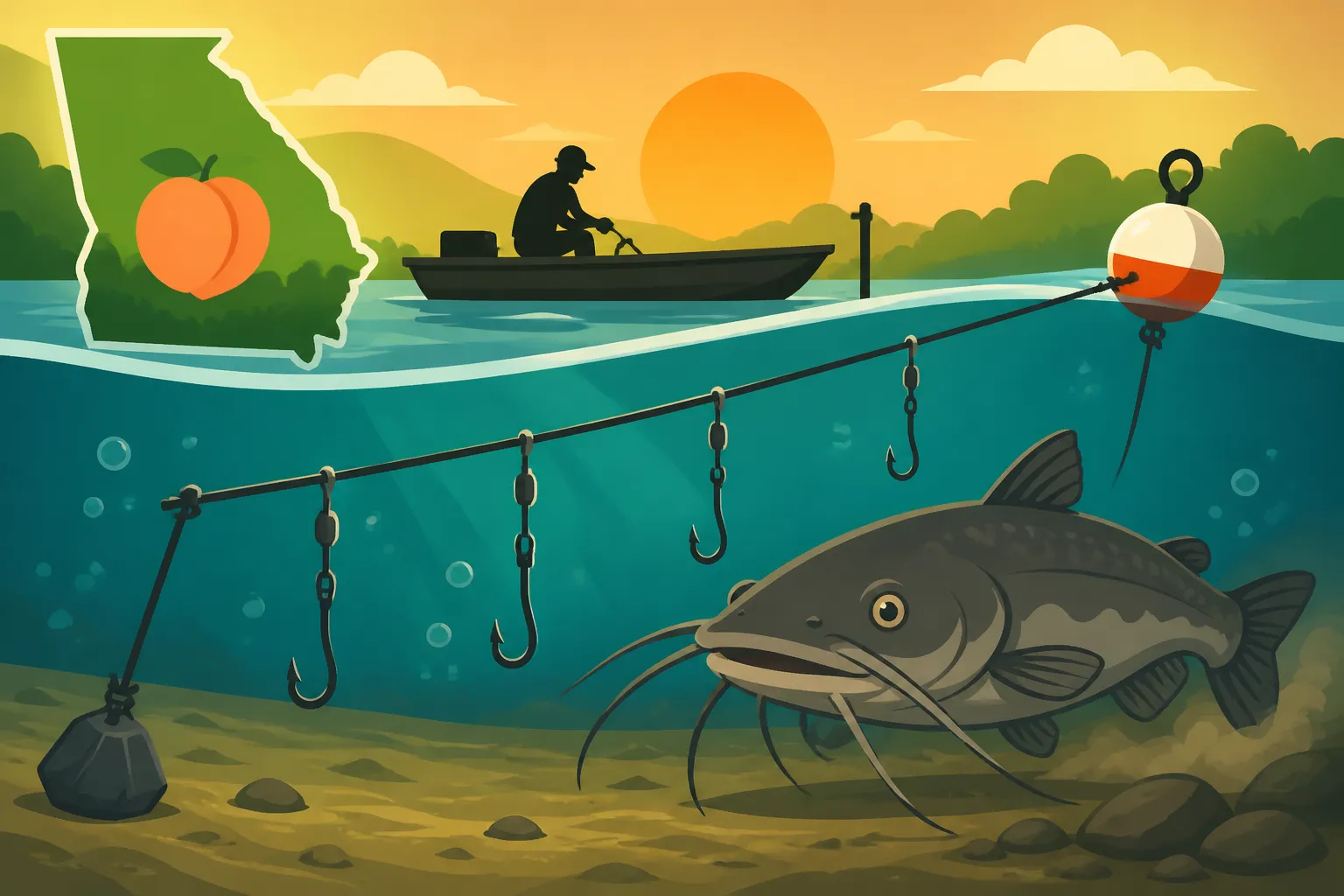
- Length: A trotline cannot exceed 150 feet in length. This is a hard limit, so measure your line carefully before deploying it. Imagine trying to retrieve a monstrously long line in a swift current – it would be a nightmare, not to mention illegal.
- Hooks: Each trotline is limited to a maximum of 50 hooks. That's a lot of chances to catch a whiskered monster, but still, don't overdo it. Fifty hooks are more than enough to be highly effective. The hooks must also be spaced at least two feet apart. This spacing is important to prevent tangles and give each fish ample room, and it's a key regulation to remember.
These limits are in place to ensure fair chase, prevent overfishing, and make sure that other anglers and boaters can still enjoy the waterways without encountering illegally long lines. It also prevents one person from dominating an entire stretch of water with excessive gear.
Tagging Requirements
This is a step that often gets overlooked by new trotline enthusiasts, but it's critically important. Every single trotline you deploy in Georgia waters must be tagged. Think of it like a license plate for your fishing gear.
- Information Required: Your tag needs to clearly display your name and address, or your Georgia customer identification number. This ID number is usually found on your fishing license. It needs to be legible, durable, and attached securely to one end of the trotline.
- Why it Matters: This tagging allows game wardens to identify who owns the gear, ensuring accountability. If a line is improperly set, abandoned, or causing a hazard, they can trace it back to the owner. It also helps prevent disputes if multiple anglers are using trotlines in the same area. A simple, waterproof plastic tag with your information written in permanent marker works perfectly. You can often find these tags ready-made, or even craft your own with a bit of PVC and a label maker.
Placement Restrictions
Not every body of water in Georgia is open to trotline fishing. There are certain areas where it's either prohibited entirely or subject to additional restrictions.
- Prohibited Areas: You cannot set a trotline in public fishing areas, state parks, or on designated trout streams. These areas are typically managed for different types of fishing, often focusing on rod-and-reel angling or special youth programs. For those interested in trout, remember you generally need a specific add-on license for trout fishing, and trotlines are definitely not the method for them!
- Near Dams/Navigation Channels: While not always strictly prohibited, setting trotlines too close to dams, boat ramps, or in busy navigation channels is generally a bad idea and can be dangerous or interfere with other water users. Always use common sense and courtesy.
- Private Property: If you’re fishing on or near private property, always ensure you have permission. Respecting landowners is key to maintaining good relationships and access to fishing spots. When considering where to set your line, checking out our guide to Best Catfish Fishing Spots in Georgia might give you some great ideas for legal and productive locations.
Gathering Your Trotline Gear and Supplies
Now that you're well-versed in the regulations, let's talk about getting all the bits and pieces you'll need. Think of it as assembling your fishing arsenal. Having the right gear not only makes the process smoother but also increases your chances of success and ensures your trotline is durable enough to handle some big Georgia catfish. If you're looking for a general overview of what tackle to use, our Best Catfish Gear for Georgia Rivers and Lakes article has some great insights.
Choosing the Right Trotline Material
The main line is the backbone of your trotline, so you want something strong, durable, and resistant to abrasion.
- Nylon or Polypropylene Rope: These are popular choices. Nylon is strong and has a bit of stretch, which can help absorb shock from a fighting fish. Polypropylene is lighter and floats, which can be a pro or con depending on your setup. You'll want a diameter of at least 1/8 inch, but many anglers prefer 3/16 inch or even 1/4 inch for added strength and easier handling. You can often find pre-made trotline kits on Amazon, which take some of the guesswork out of material selection, or buy bulk rope and construct your own.
- Braided vs. Twisted: Braided lines tend to be more abrasion-resistant and easier on the hands, while twisted lines are often more economical. For trotlines, heavy-duty braided nylon is a fantastic choice, especially if you anticipate catching larger blue or flathead catfish.
- Color: While not critical, a darker color might be less visible to potential poachers, though this is less of a concern than pure strength.
- Length: Remember the 150-foot maximum! You'll need enough line for your desired length, plus extra for anchoring to trees, stumps, or bankside structures.
Essential Hardware: Hooks, Swivels, and Weights
These are the business end of your trotline – the parts that entice and hold the fish. Don't skimp on quality here!
- Hooks: For catfish, you'll generally want circle hooks. They are fantastic because they are designed to hook fish in the corner of the mouth, leading to fewer gut-hooked fish (which are harder to release and often don't survive). Sizes typically range from 4/0 to 8/0, depending on the average size of catfish in your target water. For monster blue cats or flatheads, some anglers go even larger. Make sure they are sharp and sturdy. You can buy these in bulk on Amazon for a good price.
- Gangions (Snoods): These are the shorter lines that connect your main trotline to the hooks. They should be slightly lighter test than your main line (e.g., 50-80 lb test monofilament or braided line) so that if a hook snags heavily, the gangion breaks before your entire main line does. Gangions are usually 12-18 inches long.
- Swivels: Crucial! Barrel swivels or three-way swivels are used to attach the gangions to the main line. Swivels prevent your line from twisting, especially when a fish is thrashing, and help keep your bait presented naturally. Use heavy-duty, corrosion-resistant swivels.
- Weights: You’ll need weights to sink the main line to the desired depth. Heavy rocks, bricks, or specialized trotline weights (often made of lead or concrete) work well. The amount of weight depends on the current and how deep you want your line to lie. For most situations, a few pounds at each end and perhaps a few lighter weights along the middle can do the trick.
Selecting the Best Bait for Georgia Catfish
The right bait is half the battle when it comes to trotline fishing. Catfish are opportunistic feeders, but different species have their preferences, and what’s effective can vary by season and water body. If you're targeting specific species, diving into our Catfish Species Guide: Channel, Blue, and Flathead Catfish can help you pick the best bait.
- Cut Bait: This is a universal catfish killer. Fresh cut bait from oily fish like shad, mullet, or even bream (if legally caught and used) works exceptionally well for blue catfish and channel catfish. The scent trail it puts out is irresistible. Make sure your cut bait is fresh; rotten bait is usually less effective. You can learn more in our Best Bait for Blue Catfish and Best Bait for Channel Catfish guides.
- Chicken Livers: A classic for channel catfish. They're bloody, smelly, and catfish love them. The downside is they can be soft and easily stolen by smaller fish or fall off the hook. Many anglers will "toughen" them up by letting them sit in the sun for a bit or mixing them with cornmeal.
- Live Bait: For flathead catfish, live bait is often the ticket. Small sunfish (bluegill, bream) or minnows are prime choices. Flatheads are predators and prefer live, struggling prey. Just make sure your live bait is legal to use and caught according to regulations. Our Best Bait for Flathead Catfish article has more details.
- Prepared Stink Baits/Soap: There are many commercially prepared "stink baits" that work well, especially for channel catfish. Some old-timers swear by bars of soap (like Ivory or Zote) cut into chunks – the oils and scent can be surprisingly effective!
- Variety is Key: When setting a trotline, it's often a good strategy to use a variety of baits on different hooks. This helps you figure out what the catfish are biting on that particular day and what species are most active.
Step-by-Step: Setting and Baiting Your Trotline
Alright, you've got your gear, you know the rules, and you're itching to get those lines in the water. Setting a trotline requires a bit of planning and muscle, but it’s straightforward once you get the hang of it. Safety first, always! Especially if you’re doing this from a boat, wear your life jacket, and let someone know where you’re going and when you expect to return. Many people find success by checking their trotlines at night, so being prepared for low-light conditions is key; a good headlamp purchased from Amazon can be invaluable.
Finding the Ideal Location
Location, location, location! Just like real estate, where you put your trotline makes all the difference. Catfish are generally bottom dwellers, preferring deeper channels, areas with structure, and places where current brings them food.
- River and Creek Channels: These are prime locations. Catfish often patrol these deeper areas, especially where there's a good current to wash food their way. Look for bends in the river or creek where debris might collect, indicating a natural funnel for baitfish and food.
- Submerged Structure: Catfish love cover. Think submerged timber, rock piles, old bridge pilings, or even ledges and drop-offs. These provide ambush points and a sense of security. Use a depth finder if you have one to locate these hidden gems.
- Confluences and Inflows: Where a smaller creek flows into a larger river or lake, it often creates a feeding zone. The incoming water brings nutrients and baitfish, attracting hungry catfish.
- Avoid High Traffic Areas: For safety and courtesy, steer clear of heavily used boat lanes, swimming areas, or private docks. Not only can your line be a hazard, but it can also be easily disturbed or damaged.
Anchoring Your Trotline Effectively
A properly anchored trotline is a successful trotline. You want it secure enough to stay put, but not so taut that it snaps under pressure.
- Anchor Points: You’ll need a sturdy anchor point at each end of your line. For river banks, this could be a large, deeply rooted tree, a strong stump, or a secure heavy-duty stake driven into the bank. For open water, heavy weights like large bricks, concrete blocks, or specialized trotline anchors are necessary.
- Setting from a Boat: This is often the easiest way.
- Start by securing one end of your trotline to your first anchor point (a tree on the bank or a heavy weight dropped to the bottom).
- Slowly motor away, letting the main line play out. As you go, you’ll attach your gangions and bait (we'll cover this next). Keep the line relatively straight.
- Once you’ve reached your desired length (remember, max 150 feet), secure the other end of the trotline to your second anchor point.
- Tension: The line should be reasonably taut but have a slight sag, allowing it to conform to the bottom contours. Too much tension, and a strong current or a large fish could snap it. Too little, and it might get tangled or drift too much. If using weights, make sure they are heavy enough to hold the line firmly against the current.
Attaching Hooks and Baiting Up
This is where the magic happens! Attaching your baited hooks correctly ensures they present enticingly to the catfish.
- Gangion Attachment: As you deploy the main line, attach your gangions (the short lines with hooks) to the main line using strong swivels. Space them at least two feet apart, as per Georgia regulations. A good technique is to use a simple loop knot on the main line where you want a hook, then attach the swivel of the gangion to that loop.
- Baiting the Hooks:
- Cut Bait: Thread the cut bait onto the circle hook, ensuring the point and barb are exposed. You want enough bait to give off scent but not so much that it completely obscures the hook.
- Chicken Livers: Bunch a good-sized piece of liver onto the hook, wrapping it around several times if needed to help it stay on.
- Live Bait: Hook live baitfish through the back, just behind the dorsal fin, being careful not to hit the spine. This allows the baitfish to swim naturally and stay alive longer, attracting those predatory flatheads.
- Positioning: Ensure your baited hooks are dangling freely just above the bottom, where catfish will be foraging. The swivels should allow the bait to move naturally with the current, creating an attractive presentation.
Checking, Retrieving, and Maintaining Your Trotline
You’ve set your line, baited it up, and now comes the anticipation! But trotline fishing isn't a "set it and forget it" endeavor. Regular checks are vital for ethical fishing, maximizing your catch, and complying with regulations. This also ties into the nocturnal habits of many catfish species, as exploring How to Catch Catfish at Night can be very productive.
Regular Checks and Safety Tips
This is arguably the most important part of responsible trotline fishing.
- Frequency: Georgia regulations require that all set lines, including trotlines, be checked at least once every 24 hours. This isn't just a rule; it's a humane practice. You don't want fish to suffer unnecessarily, and you want to ensure your catch is as fresh as possible. Many experienced anglers check their lines more frequently, often in the early morning and late evening, to capitalize on peak feeding times.
- Safety First: When checking your trotline, especially from a boat, always be mindful of your surroundings. Currents can be strong, and hooks are sharp.
- Wear a life jacket, even if you’re a strong swimmer. Accidents happen quickly on the water.
- Bring a pair of heavy-duty gloves to protect your hands from hooks, fish fins, and rough line.
- Carry a de-hooking tool to safely remove hooks from fish, especially if they’ve swallowed it deeper.
- Have a sturdy cooler or livewell ready to store your catch.
- If checking at night, a powerful headlamp (easily found on Amazon) is essential for visibility.
- Approaching the Line: Approach your trotline slowly and carefully. Begin at one anchor point and work your way down the line. As you lift the line, check each hook for fish. Be prepared for a strong tug if you've hooked a big one!
Retrieving Your Line Properly
When you’re done fishing, or if you need to move your line, retrieving it correctly prevents tangles and damage.
- Unhooking Fish: For any fish you plan to keep, quickly and humanely dispatch them. For fish you intend to release, handle them gently, especially if using circle hooks, which usually make for easy mouth-corner releases.
- Rebaiting or Removing: As you retrieve, decide whether to re-bait each hook for another cycle or remove the gangion entirely if you’re pulling the line out of the water for good.
- Dealing with Snags: Trotlines can get snagged on submerged debris. If a snag occurs, try to work the line free gently. If a gangion snags irrecoverably, it's better to break that individual gangion than to lose your entire main line. This is why having a lighter test line for gangions is a good strategy.
- Coiling the Line: As you pull the main line in, coil it neatly into a bucket or a dedicated line storage device. This prevents knots and tangles, making your next deployment much easier. Remove all hooks from the water and secure them safely before heading back to shore.
Cleaning and Storing for Longevity
Proper care of your trotline gear will extend its life and save you money in the long run.
- Rinse Thoroughly: After each use, especially in murky or brackish water, rinse your entire trotline, hooks, swivels, and weights with fresh water. This removes mud, slime, and any corrosive elements.
- Inspect and Repair: Take the time to inspect all components. Check for frayed lines, bent or rusted hooks, and stiff swivels. Replace any damaged hooks or gangions. A little proactive maintenance goes a long way.
- Dry Completely: Hang your trotline to air dry completely before storing. Storing a wet line, especially nylon or natural fiber ropes, can lead to mildew, rot, and weakened material.
- Organized Storage: Once dry, neatly coil your line and store it in a cool, dry place, away from direct sunlight. A dedicated bucket or tote can keep everything organized and prevent hooks from snagging other gear. This also prevents you from showing up for your next trip to find a tangled mess.
| Catfish Species | Preferred Bait for Trotlines | Key Characteristics | Daily Creel Limit (General) |
|---|---|---|---|
| Channel Catfish | Cut bait, Chicken Livers, Prepared Stink Baits | Forked tail, often spotted, omnivorous feeder | 50 (aggregate) |
| Blue Catfish | Oily cut bait (shad, mullet), whole small fish | Deeply forked tail, distinct hump behind head, large size | 50 (aggregate) |
| Flathead Catfish | Live bait (bream, sunfish, shiners) | Flat, broad head, shovel-like mouth, mottled brown/yellow | 50 (aggregate) |
Note: Always double-check current Georgia DNR regulations for specific creel limits, which can vary by water body or be subject to change. The aggregate limit means the total number of all catfish species combined.
By following these guidelines, you'll not only be fishing legally but also employing an effective and time-honored method for catching catfish across Georgia's abundant waterways. Happy catfishing!
Disclaimer
The information provided in this guide is for general informational purposes only and is not intended as legal advice. Fishing regulations in Georgia are subject to change. Always consult the most current Georgia Department of Natural Resources (DNR) fishing regulations and licensing requirements before engaging in any fishing activities. Adherence to all local, state, and federal laws is the sole responsibility of the angler.