Flathead Catfish Identification and Habits
There's nothing quite like the thrill of hooking into a truly monstrous catfish, but sometimes, the biggest challenge isn't just landing one – it's knowing exactly what kind of whiskered behemoth you've got on the end of your line. Georgia's waters are home to several formidable catfish species, and distinguishing a flathead from its cousins, or understanding its elusive habits, can be a real head-scratcher. This guide is here to untangle the mystery, giving you all the details on how to identify a flathead catfish and decipher its unique behaviors in our local rivers and lakes.
The Distinctive Look of a Georgia Flathead Catfish
Flathead catfish are truly unique among their whiskered brethren. While you might encounter channel cats or blue cats, flatheads stand apart with several key characteristics that, once you know them, make identification much easier. It's not just about size; it's about subtle, yet significant, anatomical differences that speak volumes about their lifestyle.
Head Shape and Mouth: The Namesake Features
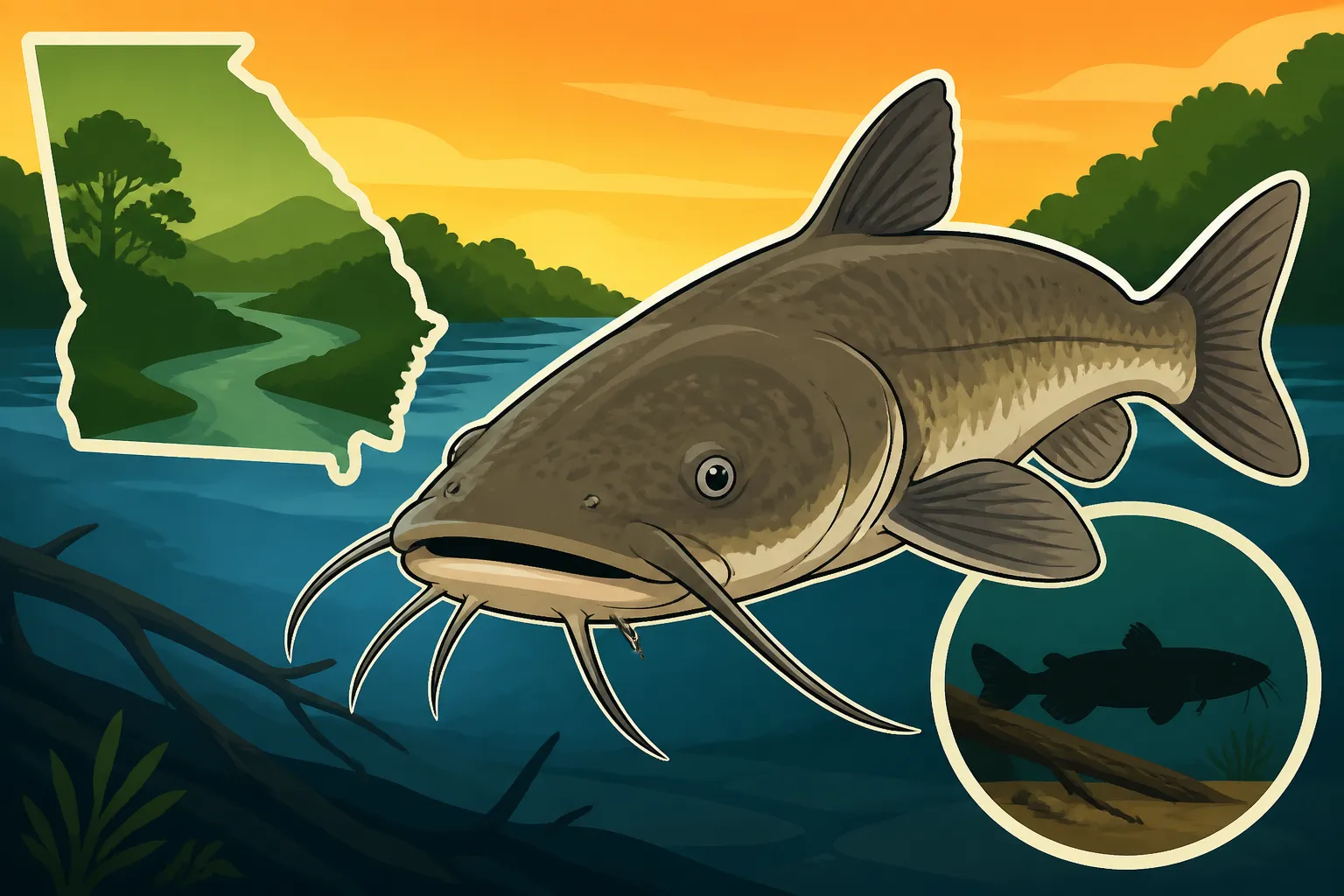
The most obvious distinguishing feature, and the one that gives the flathead its name, is right there at the top: its head. Unlike the more rounded or slightly humped heads of channel and blue catfish, the flathead's head is notably flattened and broad, almost duck-like in profile. Imagine looking down at it from above – it's wide and somewhat depressed.
But it's not just the shape of the head; pay close attention to the mouth. A flathead's lower jaw protrudes noticeably beyond its upper jaw, giving it an almost permanent scowl. This isn't just for looks; it's perfectly designed for its ambush predator lifestyle, allowing it to gulp down prey from below. This distinctive underbite is a dead giveaway, even for a quick glance. Compare this to the channel cat's more even jaws or the blue cat's slightly overhanging upper jaw, and you'll quickly see the difference.
Body Coloration and Patterns: Nature's Camouflage
When you pull a flathead from the murky depths of a Georgia river, you'll likely notice its unique coloration. They typically sport a mottled, olive-brown to yellow-brown body, often with dark brown or black splotches and streaks that create a blotchy, almost camouflaged appearance. This isn't a uniform, silvery-blue like a blue cat, nor is it peppered with distinct dark spots like a channel cat.
The belly of a flathead is usually a pale yellow or creamy white, sharply contrasting with its darker back and sides. This mottled pattern helps them blend seamlessly with the snags, fallen timber, and rocky bottoms where they prefer to lie in wait for their next meal. It's a testament to nature's design, helping them disappear into the shadows of their preferred ambush points.
Unique Fin Features: A Squarish Tail and Spotless Fins
While all catfish have whiskers and soft-rayed fins, the flathead has some fin features that further set it apart. Perhaps the easiest to spot is its tail, or caudal fin. Unlike the deeply forked tail of a channel or blue catfish, the flathead's tail is notably square or only slightly notched. It's a broad, powerful paddle designed for short, explosive bursts of speed needed to snatch unsuspecting prey.
Furthermore, take a look at their fins in general. You won't find the dark spots that are so characteristic of a channel catfish on a flathead's fins. Their fins tend to be darker, often matching the mottled coloration of their body, without any distinct spotting. They also possess an adipose fin, a small, fleshy fin located between the dorsal and caudal fins, which is a common trait among catfish but worth noting as part of their overall profile.
Whisker Differences: Shorter and Thicker
All catfish are defined by their barbels, or "whiskers," which are crucial sensory organs. However, even here, flatheads differ slightly. Their barbels tend to be shorter and thicker than those of a channel or blue catfish. While still highly sensitive for detecting prey in low-light conditions and murky water, they often appear more robust and less delicate than the long, slender barbels of other species.
Here's a quick comparison table to help you keep these magnificent whiskered fish straight:
| Feature | Flathead Catfish | Channel Catfish | Blue Catfish |
|---|---|---|---|
| Head Shape | Flattened, broad, duck-like profile | Rounded, slightly humped | Prominent hump on older fish, less flattened |
| Lower Jaw | Protrudes beyond upper jaw (underbite) | Even or slightly protruding upper jaw | Upper jaw protrudes slightly beyond lower jaw |
| Body Color | Mottled olive-brown to yellow-brown, blotchy | Olive-brown to gray, often with distinct spots | Silvery-blue to slate gray, no spots |
| Belly | Pale yellow or creamy white | White or silvery-white | White or silvery-white |
| Tail Shape | Square or only slightly notched | Deeply forked | Deeply forked |
| Fin Spots | No distinct dark spots on fins | Distinct dark spots on body and sometimes fins | No spots |
| Barbels | Shorter, thicker | Slender, medium length | Slender, long |
Understanding these distinctions is your first step to becoming a true flathead connoisseur. If you're ever in doubt, remember the flat head, the underbite, and the square tail – those are your golden tickets! For more on differentiating catfish, check out Catfish Species Compared: Channel vs Blue vs Flathead.
Understanding Flathead Catfish Habits in Georgia Waters
Identifying a flathead is one thing; knowing where to find them and how they behave in Georgia's diverse waterways is another challenge entirely. These fish aren't just big; they're smart, solitary, and incredibly efficient predators. Their habits are largely dictated by their predatory nature and their preference for specific types of cover.
Preferred Habitat and Structure: The Ambush Predator's Lair
Flathead catfish are creatures of structure, preferring habitats that allow them to lie in wait, concealed, before ambushing their prey. In Georgia, this means you'll often find them in deep, slow-moving sections of rivers, particularly where there's an abundance of woody cover. Think fallen trees, submerged logs, brush piles, and root wads – these are prime flathead real estate. They love to wedge themselves into these tight spaces, perfectly hidden from both current and unsuspecting fish.
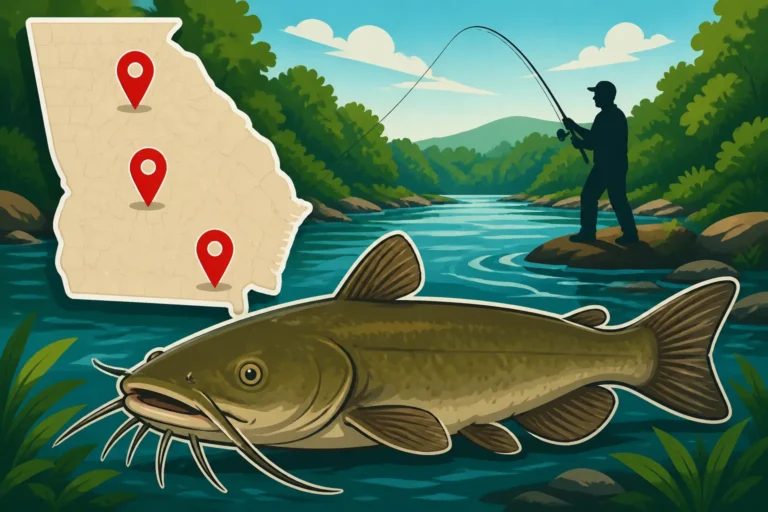
Beyond woody debris, flatheads are also drawn to rocky bottoms, ledges, and deep holes or scour marks created by strong currents. They aren't generally open-water cruisers like some blue cats might be; they prefer to hug the bottom and stay close to cover. Major rivers like the Altamaha, Ocmulgee, and Flint River are classic flathead strongholds in Georgia, offering exactly the kind of diverse, deep-water structure these fish crave. You'll find them nestled against cut banks, under overhangs, or at the downstream side of submerged obstacles where they can capitalize on the current delivering food right to their doorstep. Flint River Fishing Guide, Georgia provides excellent insights into one of their prime hunting grounds.
Diet and Feeding Strategies: The Live Bait Enthusiast
This is where flatheads truly distinguish themselves from other catfish species. While channel and blue catfish are often opportunistic scavengers, happily gobbling up anything from cut bait to stink baits, the flathead is a true piscivore – a fish-eater – with a strong preference for live prey. They are incredibly efficient predators, ambushing live fish, crayfish, and even other smaller catfish.
In Georgia, their diet includes a wide array of live offerings: bluegill, sunfish, shad, suckers, and even smaller carp. This preference is so pronounced that serious flathead anglers almost exclusively use live bait. They won't usually bother with smelly concoctions; they want something wiggling and swimming, signaling a fresh meal. This dictates specific fishing techniques and bait choices, making them a unique target. For a deep dive into bait choices, look into Live Bream vs Cut Bait for Flathead Catfish.
Seasonal Movements and Activity: Following the Food and the Thermocline
Like most fish, flathead catfish behavior is influenced by the seasons and water temperature.
- Spring: As waters warm in spring, flatheads become more active, moving out of their deeper winter haunts. This is a prime time as they prepare for the spawn, feeding heavily. They might be found in slightly shallower areas adjacent to their deep-water cover.
- Summer: During the heat of summer, flatheads are largely nocturnal. They'll spend the daylight hours hunkered down in their deep, shaded cover. As the sun sets, they emerge to hunt, often patrolling the edges of their structured homes or moving into shallower feeding flats during the darkest hours. This makes How to Catch Catfish at Night an essential read for summer flathead fishing.
- Fall: As temperatures begin to drop in the fall, flatheads enter a period of intense feeding to pack on weight for winter. They can be very active during this time, and you might find them feeding more aggressively throughout the day, particularly on overcast days or during low light.
- Winter: During the coldest months, flatheads generally become lethargic. They retreat to the deepest holes and slack water areas, often congregating in large groups to conserve energy. While you can still catch them, their metabolism slows significantly, and they may not feed as aggressively.
Nocturnal Nature and Solitary Lifestyle: The Lone Hunter of the Night
One of the most defining habits of a flathead catfish is its nocturnal nature, especially during warmer months. While they might occasionally feed during the day in low-light conditions or after a storm, their primary hunting hours are from dusk till dawn. This is when they leave the safety of their deep cover to actively stalk and ambush prey.
Another important aspect of their behavior is their solitary nature. Unlike channel cats or blue cats, which can often be found in large schools, flatheads are typically loners. You might find a few in a general area if the habitat is exceptional, but they don't form tight aggregations. Each large flathead usually claims its own prime piece of structure, fiercely defending it from rivals. This means that if you catch one big flathead from a specific log jam, you might not catch another from that exact spot on the same night, though the general area might hold others.
Why Flatheads are a Unique Challenge for Anglers
Targeting flathead catfish isn't for the faint of heart or the casually equipped. Their size, strength, and predatory instincts demand a different approach compared to fishing for other common species. They present a thrilling challenge that rewards patience, persistence, and the right gear.
The Live Bait Advantage: Wiggle Wins Every Time
As we touched on, flatheads overwhelmingly prefer live bait. This isn't just a suggestion; it's often a requirement for consistent success. You can forget about the pungent dough balls or chicken livers that work so well for channel cats. A flathead wants a struggling bluegill, a lively shad, or a plump creek chub. These live offerings mimic their natural diet and trigger their predatory instincts.
Anglers often catch their own bait, such as bream (bluegill and sunfish) or small suckers, and keep them alive in bait tanks. Presentation is key: you want your bait to be alive and kicking near their suspected ambush points. This commitment to live bait adds an extra layer of planning and effort to flathead fishing, but the payoff of hooking into a truly massive fish is well worth it. It’s why topics like Live Bream vs Cut Bait for Flathead Catfish are so vital for flathead enthusiasts.
Gear for Taming a Flathead: Bringing Out the Big Guns
When you're dealing with a fish that can easily tip the scales into the 30, 40, 50-pound range, and sometimes much larger, you need heavy-duty tackle. Flatheads are incredibly powerful, and they know how to use cover to their advantage. A light rod or flimsy line will quickly lead to heartbreak.
- Rods: Look for heavy or extra-heavy action casting rods, typically 7 to 9 feet long. These rods need backbone to turn a large fish away from snags and absorb powerful runs. Brands offer many suitable options, and you can find a wide selection of robust rods on platforms like Amazon.
- Reels: Large, robust baitcasting reels with a strong drag system are essential. They need to hold a significant amount of heavy line and handle the brute force of a big flathead. Look for reels designed for big game or heavy catfish.
- Line: Monofilament lines in the 30-50 lb test range are common, or heavy braided lines in the 50-80 lb test range for maximum strength and sensitivity. A strong leader is also crucial, often 50-80 lb fluorocarbon or heavy mono, to withstand abrasive cover and the flathead's sandpaper-like mouth.
- Hooks: Stout, sharp hooks are a must. Circle hooks are highly recommended, not only for their effectiveness in hooking fish in the corner of the mouth (which is safer for the fish if you plan to release it) but also because they tend to be incredibly strong and won't bend under pressure. Sizes from 5/0 to 10/0 are common, depending on bait size.
Investing in reliable gear means you're prepared when that once-in-a-lifetime fish decides to bite. For more guidance on setting up your tackle, check out Best Catfish Gear for Georgia Rivers and Lakes and Best Rod for Catfish Fishing on Georgia Rivers.
Strategic Fishing Locations: Deep Within the Structure
Finding flatheads isn't about casting aimlessly; it's about precision and understanding their habitat preferences. You need to target areas that scream "ambush point."
- Submerged Timber: Focus on log jams, fallen trees, and underwater brush piles. Fish directly into or along the edges of these structures.
- River Bends and Deep Holes: Flatheads love the deep scour holes on the outside bends of rivers where currents create perfect holding spots with overhead cover.
- Rock Piles and Ledges: Any significant change in bottom contour or structure that provides concealment can hold a flathead.
- Bridge Pilings: The shaded, current-breaking areas around bridge pilings, especially those with debris collected around them, can be hotspots.
Fishing these spots often means getting your bait right into the thick of the cover, which can lead to snags. That's part of the flathead game. Heavy tackle helps pull them out, but sometimes you'll lose a rig. Patience and persistence are key. Deploying your bait with precision, whether through careful casting or by slowly drifting, will increase your chances significantly. Understanding How to Bottom Fish for Catfish effectively in these tricky spots is a skill every flathead angler needs to master.
Targeting flathead catfish is a journey into the wilder side of Georgia fishing. It demands respect for their power, an understanding of their unique behaviors, and the willingness to invest in the right approach. But for those who embrace the challenge, the reward of battling one of these magnificent, hard-fighting fish is an experience you won't soon forget.
Disclaimer
This article is for general informational purposes only and does not constitute professional advice. Laws, prices and regulations vary by location and change over time. Consult a qualified professional for guidance on your specific situation.