Best Anchor for Fishing Georgia Reservoirs
There's nothing more frustrating than finally finding that perfect fishing spot on a Georgia reservoir – the one where the bite is hot, the sun is just right, and then, poof, a rogue breeze or current pulls you right off it. We've all been there, wrestling with an inadequate anchor or struggling to stay put. Choosing the right anchor for Georgia's diverse reservoir environments isn't just about keeping your boat still; it's about maximizing your time on the water, reducing frustration, and ultimately, catching more fish. This guide is going to dive deep into everything you need to know about selecting, using, and maintaining the best anchor for your fishing adventures on Georgia's many beautiful lakes.
Understanding the Different Types of Anchors for Reservoir Fishing
When you walk into a marine supply store or browse online at a place like Bass Pro Shops or Amazon, you're hit with a dizzying array of anchor designs. Each one is engineered with specific conditions in mind, and what works wonders on a sandy ocean floor might be completely useless digging into Georgia's red clay lakebeds. Let's break down the most common types you'll encounter and where they shine (or sink!).
Fluke (Danforth) Anchors: The Versatile All-Rounder
The fluke anchor, often referred to as a Danforth, is probably one of the most recognizable anchors out there. It features two large, flat flukes that pivot, digging deep into soft bottoms when tension is applied. If you're frequently fishing on the vast, open expanses of lakes like Lanier or Oconee where the bottom is predominantly sand or soft mud, a fluke anchor can be incredibly effective. It's relatively lightweight for its holding power and stores fairly flat, which is a bonus for smaller boats or those with limited deck space.
However, don't expect miracles if you try to use it in heavy rock or thick weed beds. The flukes need to penetrate the bottom to set, and dense cover can prevent that, leading to frustrating drags. For many general reservoir fishing situations, especially for bass and crappie anglers targeting softer bottom contours, this anchor is a solid, economical choice. Just make sure you pair it with enough chain to help it set properly – we'll get into that critical detail a bit later.
Plow (Delta/CQR) Anchors: The Reliable Heavy Hitter
Plow anchors, including designs like the Delta or CQR, are renowned for their incredible holding power across a wider range of bottom types. Instead of flat flukes, they have a single, heavy, scoop-like fluke that's designed to dig in and bury itself, even as the boat shifts with wind or current. This design makes them particularly effective on mixed bottoms, where you might encounter patches of mud, sand, or even broken rock. If you're fishing on a larger reservoir with varying bottom compositions, like Clarks Hill Lake Fishing Guide, Georgia or Georgia's Lake Hartwell Fishing Spots, a plow anchor offers superior reliability.
The downside? They are heavier and bulkier than fluke anchors, requiring more robust tackle and space for storage on your boat. But for those serious about staying put, especially in rougher conditions or with a larger vessel, the confidence a plow anchor provides is well worth the trade-off. They also tend to reset themselves if pulled loose, which is a huge advantage if your boat swings around with a tide or current shift.
Grapnel Anchors: For Rocky and Kayak Adventures
A grapnel anchor looks a bit like a medieval grappling hook, with four or more prongs that can fold in or out. These anchors are not designed to dig into the bottom; instead, they grab onto structure. This makes them ideal for rocky bottoms, submerged timber, or heavy weed beds where other anchors would simply drag or get fouled. If you're Kayak Fishing Gear Guide for Beginners or targeting species that prefer structure, like catfish or crappie around brush piles, a grapnel can be your best friend.
They're particularly popular with kayak anglers because of their compact, foldable design, making them easy to store and deploy from a small craft. However, they have very poor holding power on soft, flat bottoms and can easily get permanently snagged if you're not careful. Always rig a grapnel with a retrieve system that allows you to pull it out backward if it gets stuck, such as by tying the anchor line to the crown and securing it with a zip tie to the shank.
River Anchors (Mushroom/Navy Style): Best for Current Control
Often called mushroom anchors or sometimes a navy style (though true navy anchors are different), these anchors feature a bell or mushroom-shaped head designed to scoop into soft sediment and resist current. They are excellent for small boats on slower-moving rivers or in areas of Georgia's reservoirs that have consistent, gentle flow. They provide a decent hold in mud or silt and are often a more affordable option.
However, their holding power is significantly diminished in windy conditions or on firmer bottoms. They rely more on their weight and shape to embed themselves, rather than aggressive flukes. If you're trying to hold still on a large, windy lake like Lake Lanier Fishing Guide, Georgia, a mushroom anchor will likely drag. They are generally best suited for specific applications, such as securing a small jon boat in a quiet cove or on a calm river section for some relaxing bream fishing.
Crucial Factors to Consider When Choosing Your Anchor
Selecting the "best" anchor isn't a one-size-fits-all situation; it's a careful balance of your boat, the fishing conditions, and the specific Georgia reservoir you're tackling. Ignoring these factors can lead to endless frustration and lost fishing time.
Understanding Georgia's Diverse Bottom Compositions
This is perhaps the most critical factor. Georgia's reservoirs aren't uniform. Lake Allatoona, for instance, often features a lot of red clay and rock, while some sections of Lake Seminole or the lower reaches of the Flint River might have softer, sandier, or muddier bottoms.
- Soft Mud and Sand: If your primary fishing grounds are characterized by soft mud or sand, a fluke (Danforth) anchor will excel. Its design allows the flukes to dig deep and get a strong bite.
- Mixed Bottoms (Clay, Gravel, Light Rock): For these varied conditions, which are common across many Georgia reservoirs, a plow (Delta) anchor is often the top performer. Its single, aggressive fluke can penetrate and hold in a range of substrates.
- Heavy Rock and Submerged Timber: Here's where it gets tricky. If you're intentionally anchoring near heavy cover for Best Crappie Lakes in Georgia or Best Catfish Fishing Spots in Georgia, a grapnel anchor is best for grabbing onto structure. However, be prepared for potential snags. Some anglers even use inexpensive sash weights or cinder blocks with a simple retrieve system (like a weaker line for the main anchor, and a stronger line from the crown that can be pulled to free it) in these high-snag areas, considering them somewhat disposable.
Understanding the typical bottom you'll encounter at your favorite Best Fishing Spots in Georgia will guide your choice immensely.
Matching Anchor Size and Weight to Your Boat and Conditions
It might seem obvious, but a tiny anchor for a large boat is like trying to stop a freight train with a bicycle brake. Conversely, an oversized anchor on a kayak is just unnecessary weight.
- Boat Size and Weight: Anchor manufacturers provide charts that recommend anchor sizes based on boat length and weight. Always consult these. A heavier boat will require a heavier anchor and often a more aggressive design to provide sufficient holding power. Remember, these recommendations are usually for average conditions.
- Current and Wind Conditions: Georgia reservoirs can experience significant currents, especially near dam discharge areas or in river channels. Wind can also whip up quickly, turning a calm morning into a choppy afternoon. On large, open bodies of water like Lake Lanier or Lake Hartwell, wind can create substantial drag on your boat. If you frequently fish in areas with strong currents or high winds, you'll want to size up your anchor or choose a design known for superior holding in challenging conditions. Don't underestimate the power of wind and water; it's better to be slightly over-anchored than under-anchored. This is especially true for boats that might have a higher profile and catch more wind.
Considering Your Fishing Style and Deployment Preferences
How you fish also dictates your anchoring needs.
- Static Fishing (Sitting Still): If you're primarily still-fishing for catfish or crappie, or soaking baits for striper, you need an anchor that will keep you absolutely locked in place for extended periods. This calls for maximum holding power relative to your boat size and conditions.
- Slow Drifting/Positioning: Some anglers prefer to slow their drift rather than completely stop, perhaps for targeting specific ledges or brush piles. This is where a box anchor, sometimes called a digging anchor, shines. It's designed to dig in just enough to slow a boat's movement significantly without completely stopping it, making it ideal for controlled drifts. You can often find these at specialty fishing stores or on Amazon.
- Kayak and Shallow Water Fishing: For kayaks, paddleboards, or shallow water situations (like flats fishing along the coast), a stake-out pole is a fantastic, silent, and easy-to-deploy option. It's a solid pole that you simply push into the bottom to pin your craft in place. However, it's limited to very shallow water with soft enough bottoms to penetrate. For deeper water, smaller grapnel anchors are often the go-to. If you're interested in How to Rig a Kayak for Fishing, an appropriate anchor is a key piece of gear.
| Anchor Type | Ideal Bottom | Boat Size | Pros | Cons |
|---|---|---|---|---|
| Fluke (Danforth) | Mud, Sand | Small-Med | Lightweight, good holding in soft bottoms | Poor in rock/heavy weeds, can drag in strong winds |
| Plow (Delta/CQR) | Varied (Clay, Sand, Light Rock) | Med-Large | Excellent holding, resets easily | Heavier, can be bulky, more expensive |
| Grapnel | Rock, Weeds, Structure | Kayak/Small | Folds for storage, grabs well in structure | Poor in soft bottoms, can get stuck easily |
| River (Mushroom) | Soft, Mud, Slow Current | Small-Med | Good for slow currents, cheap | Poor holding in wind, not for firm bottoms |
| Box (Digging) | Varied/Slow Current | Med-Large | Excellent for slow drifts, easy retrieval | Can be bulky, not for strong currents/winds |
| Stake-Out Pole | Shallow Sand/Mud | Kayak/SUP | Silent, quick deployment, no rope needed | Only for shallow water, limited holding, not for deep |
Mastering Anchor Setup and Usage Tips for Georgia Waters
Having the right anchor is only half the battle. Knowing how to properly set and retrieve it can make all the difference between a secure hold and a frustrating drift. This involves more than just tossing it overboard; it's about understanding the mechanics and physics of anchoring.
The Power of the Rode: Rope, Chain, and Scope
The "rode" is your entire anchoring line, typically consisting of both chain and rope (or sometimes all chain for larger vessels). This combination is crucial for effective anchoring in Georgia's reservoirs:
- The Chain Link: Don't skip the chain! A short length of galvanized chain (at least 6-10 feet, often more for larger boats) attached directly to the anchor is non-negotiable. The chain does several critical things:
- Weight: It adds weight to the anchor, helping it lie flat on the bottom and dig in.
- Angle: It creates a shallower pull angle on the anchor, allowing it to dig horizontally into the bottom rather than being pulled upwards.
- Abrasion Resistance: It protects the first few feet of your rope from chafing on the bottom, which is especially important in rocky or shell-filled areas. You can find pre-assembled anchor rode kits at places like Bass Pro Shops that include both rope and chain, or you can buy them separately.
- The Rope: The rope (often nylon for its stretch and shock absorption) connects the chain to your boat. The length of this rope, relative to the water's depth, is what we call "scope."
- Understanding Scope: This is perhaps the most overlooked aspect of anchoring. Scope is the ratio of the length of your anchor rode (rope + chain) to the vertical distance from your anchor's attachment point on the bow to the bottom. A general rule of thumb for effective anchoring in mild conditions is a 7:1 scope ratio. This means if you're in 10 feet of water, you should have approximately 70 feet of rode out. For windier conditions, stronger currents, or less-than-ideal bottom types, you might need to increase this to 10:1 or even higher. A longer scope ensures that your anchor pulls along the bottom, allowing its flukes to dig in properly, rather than lifting it off the bottom. Without sufficient scope, even the best anchor will simply drag.
Proper Deployment and Retrieval Techniques
There's a right way and a wrong way to drop anchor, and doing it correctly minimizes snags and maximizes holding power.
- Deployment: Approach your desired spot against the wind or current. When you're directly over the spot you want to end up, drop the anchor. As your boat drifts backward with the wind/current, slowly feed out your anchor rode, allowing the chain and anchor to sink straight down and settle on the bottom without piling up. Continue paying out rode until you've achieved your desired scope. Once you've paid out enough, cleat off the line and let the boat tension the anchor, allowing it to "set." You should feel a distinct tug when it bites. Never just heave the entire coil of rope and anchor over the side at once – it can tangle and be dangerous.
- Retrieval: The worst thing is getting your anchor hopelessly stuck. To retrieve, motor slowly towards your anchor, picking up the slack in the rode as you go. When you are directly over the anchor, pull straight up with steady pressure. This vertical pull helps dislodge most anchors. For grapnel anchors, if you rigged a retrieve system, pull from the crown. If your anchor is stubborn, you might need to motor a short distance past it, pulling it out backward. An anchor buoy can be a great investment; you attach it to the rode, drop the anchor, and then tie your boat to the buoy. This can help with retrieval by having a clear marker for your anchor's position. Remember to always clear any weeds, mud, or debris off your anchor before stowing it.
Anchor Management and Safety
Keeping your anchoring system organized and safe is paramount.
- Cleats: Ensure your boat has strong, properly mounted cleats to secure your anchor rode. Always use a proper cleat hitch; don't just wrap the rope around once.
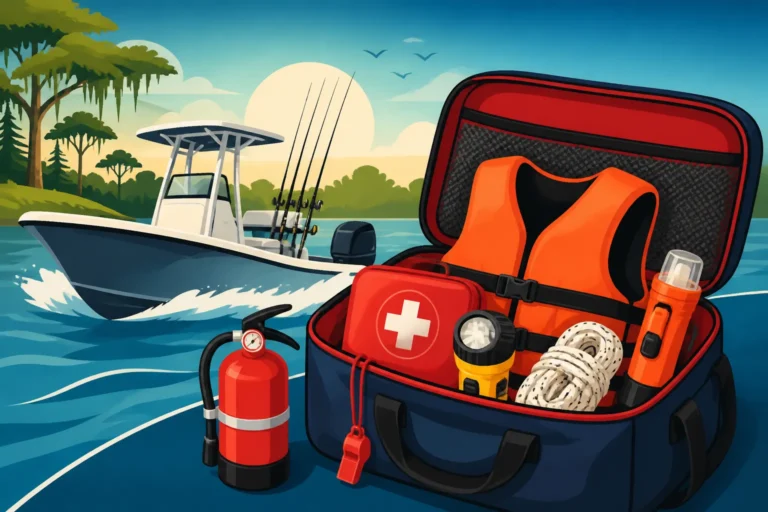
- Quick-Release Systems: For certain situations, especially if you're fishing in high-traffic areas or need to move quickly, a quick-release system can be invaluable. This allows you to rapidly detach your anchor rode from your boat in an emergency, though you'll lose your anchor in the process. Always consider Safety Gear Checklist for a Day on Lake Lanier and ensure all passengers know how to operate any safety equipment.
- Anchor Rode Storage: Keep your anchor rode neatly coiled or flaked in an anchor locker or bucket. This prevents tangles, especially when you need to deploy quickly, and prolongs the life of your rope.
Maintenance, Safety, and Environmental Considerations
Just like your fishing rods and reels, your anchoring system needs a little love to ensure it performs when you need it most. Neglecting your anchor can lead to equipment failure, frustration, or even dangerous situations.
Regular Inspection and Cleaning
Your anchor system works hard, dragging across various lake bottoms, enduring sun, water, and sometimes even oil and debris.
- Rope Inspection: Regularly check your anchor rope for fraying, cuts, or weak spots, especially where it connects to the chain and where it typically rests on your boat's cleats. Nylon rope can degrade over time from UV exposure. If you see significant damage, it's time to replace it. A compromised rope is a safety hazard.
- Chain Check: Inspect the chain for rust, bent links, or signs of wear. Galvanized chain is designed to resist rust, but the coating can wear off over time, especially with frequent use on abrasive bottoms. Rust weakens the chain and can stain your boat.
- Anchor Itself: Examine the anchor flukes, shank, and pivot points (if applicable) for bends, cracks, or excessive wear. A bent fluke will not set correctly, and a cracked shank is a serious failure point.
- Cleaning: After each outing, especially if you've anchored in muddy or silty areas, rinse your anchor and chain thoroughly with fresh water. This removes corrosive sediment and prevents the build-up of algae or mildew on your rope. Let everything dry completely before stowing to prevent mold and rot, which can significantly shorten the life of your rope. You can purchase cleaning solutions from marine retailers or through Amazon if you're dealing with stubborn grime or odor.
Planning for Emergency Situations
Anchors are primarily for holding your boat in place, but they can also be crucial in an emergency.
- Engine Failure: If your engine quits in windy conditions or a strong current, deploying your anchor promptly can prevent you from drifting into hazardous areas like submerged stumps, navigational hazards, or even other boats. Always have your anchor readily accessible and your rode untangled.
- Grounding: If you accidentally run aground, sometimes deploying an anchor away from your boat and using your winch (if you have one) or pulling on the line can help you pivot or pull your boat free.
- When to Cut Loose: In extremely rare and dangerous situations, if your anchor is hopelessly fouled and putting your boat or crew at risk (e.g., being pulled onto rocks in heavy seas), you might need to cut the anchor rode. This is a last resort, but it's why having a sturdy knife easily accessible on board is part of What Safety Equipment Is Required on a Georgia Boat and a critical safety measure. You can always buy a new anchor, but you can't replace your life or your boat.
Being a Responsible Angler: Environmental Considerations
Anchoring safely also means anchoring responsibly.
- Avoid Sensitive Areas: Be mindful of where you drop your anchor. Avoid deploying it directly into active fish beds, fragile vegetation, or sensitive habitats. On some Georgia reservoirs, there are designated areas where anchoring might be discouraged to protect the ecosystem.
- Prevent Bottom Damage: While anchors are designed to dig in, try to minimize unnecessary dragging. Using proper scope and setting techniques reduces the chance of your anchor carving long furrows across the lakebed or damaging submerged structures more than necessary. For example, if you're targeting trout in a specific stream, like on the Toccoa River Trout Fishing in Georgia, be extra careful not to damage the delicate riverbed.
- Leave No Trace: Ensure no part of your anchoring system breaks off and becomes marine debris. Lost anchors and chains can continue to damage the environment and pose hazards to other boaters. If an anchor is completely stuck, consider notifying the local authorities or lake management if it poses a significant hazard.
By choosing the right anchor, learning how to use it effectively, and maintaining it properly, you'll ensure your Georgia fishing adventures are safer, more productive, and much more enjoyable. No more drifting off that perfect spot!
Disclaimer
This article is for general informational purposes only and does not constitute professional advice. Laws, prices and regulations vary by location and change over time. Consult a qualified professional for guidance on your specific situation.