How to Rig a Kayak for Fishing
Kayaking has opened up a whole new world for anglers, offering unparalleled access to quiet coves, skinny water, and pristine shorelines that bigger boats just can't reach. But let's be honest, transforming a basic recreational kayak into a functional fishing machine can feel like a daunting task, leaving many folks wondering where to even begin with all the gear. This guide is here to walk you through the process, helping you rig your kayak efficiently, safely, and tailored to your specific fishing adventures, whether you're targeting bass on Lake Lanier or redfish along the coast.
Understanding Your Kayak and Your Fishing Style
Before you even think about drilling holes or attaching mounts, it's crucial to take a moment and assess both your kayak and your personal fishing habits. Not all kayaks are created equal, and neither are all anglers! What works for a fly-fishing enthusiast might be totally impractical for someone who prefers trolling for stripers.
Assessing Your Kayak's Features
Think about the basic design of your kayak. Is it a sit-on-top or a sit-in? Sit-on-tops, like those from popular brands you might find at Bass Pro Shops, are generally favored for fishing because they offer more open deck space for gear, are easier to get in and out of, and allow for quick recovery from a capsize. Sit-ins, while often faster and better for colder weather, can be more challenging to rig for quick access to tackle and may require more creative storage solutions.
Consider the stability of your kayak. Wider, more stable kayaks might allow you to stand and fish, which opens up possibilities for sight fishing or more aggressive casting. Slimmer, faster kayaks are great for covering water but might limit your rigging to things that keep a lower profile. Also, look for existing features: paddle parks, scupper holes, deck lines, and molded-in rod holders are all points you can leverage or adapt for your rigging plan.
Finally, think about space. How much usable deck space do you actually have? Are there tankwells, dry storage hatches, or areas under the seat that can be utilized? Understanding these foundational elements of your kayak will prevent you from buying incompatible gear or attempting modifications that compromise its performance or safety.
Matching Rigging to Your Fishing Approach
Your fishing style dictates a lot about your rigging needs. Are you a minimalist, paddling to a quiet spot with just a rod and a small tackle box? Or are you a tech-savvy angler who wants a fish finder, GPS, multiple rods, and live bait? Someone fishing the shallow rivers for shoal bass might need a completely different setup than someone chasing crappie in deep reservoirs.
Consider the species you primarily target. Bass anglers often need multiple rod holders for different techniques (jigging, cranking, topwater), while trout anglers on a mountain stream might only need one fly rod easily accessible. Saltwater anglers, who often deal with larger fish and harsher conditions, might prioritize robust rod holders and secure, waterproof storage. How to Rig a Kayak for Fishing becomes a very personal endeavor, evolving with your experience and fishing goals.
Think about the conditions you typically fish in. Do you primarily fish calm lakes, or do you brave strong currents in rivers or coastal tides? This will influence choices like anchor systems, paddle leashes, and even the type of safety gear you carry. Knowing your typical "mission profile" will guide you in selecting and placing the right accessories.
Essential Gear & Where It Goes
Once you've got a clear picture of your kayak and your fishing aspirations, it's time to dive into the essential rigging that will make your kayak truly fishable. These are the items that almost every kayak angler will benefit from.
Rod Holders: Keeping Your Sticks Accessible
Rod holders are arguably the first thing most kayak anglers consider. They come in various styles, but the most popular for kayaks are flush-mount and surface-mount (or rail-mount) adjustable holders. Flush-mounts provide a clean, low-profile look, often installed behind the seat for trolling or as a place to store rods when paddling. However, they require drilling a permanent hole and are not adjustable for angle.
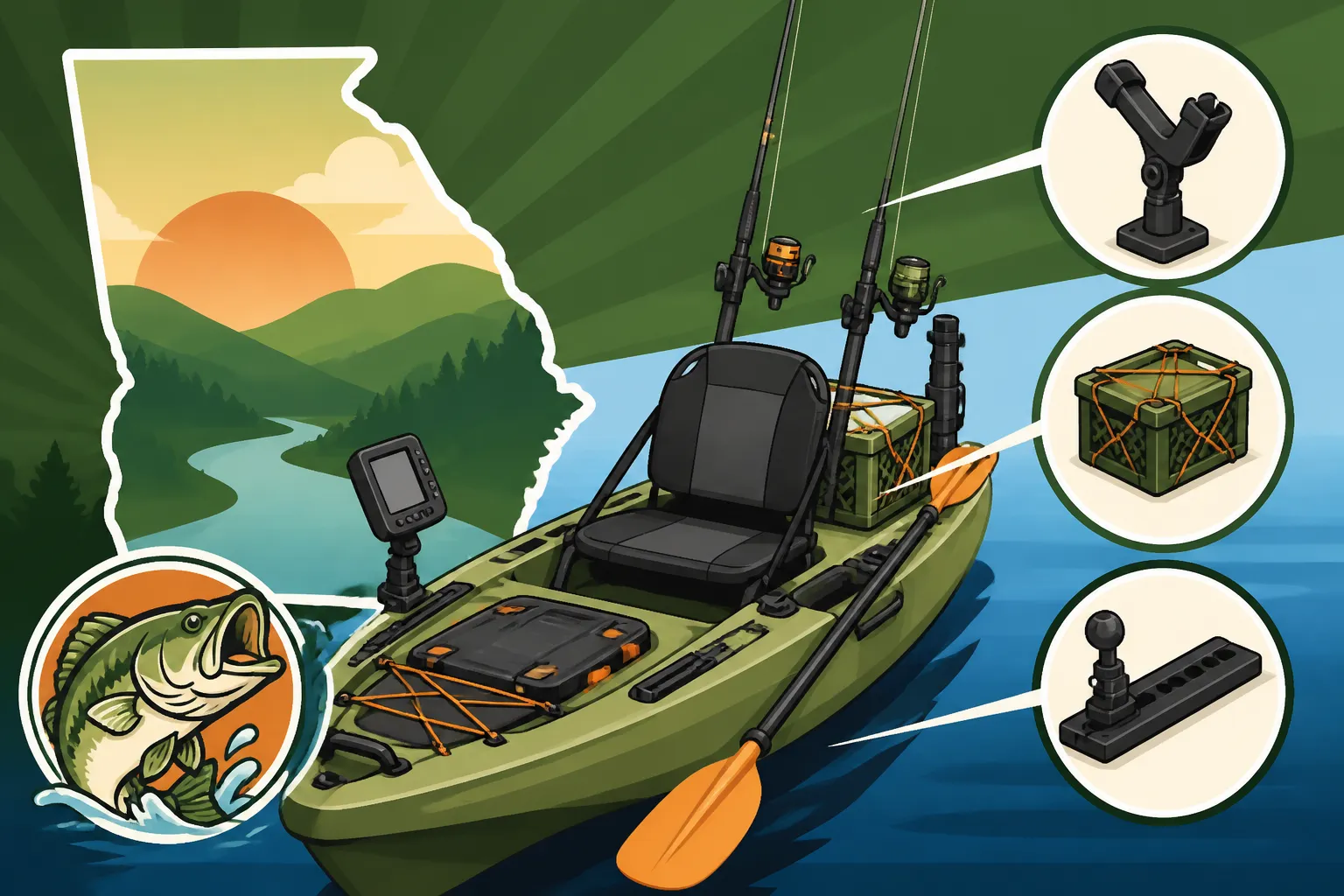
Adjustable, surface-mount rod holders are incredibly versatile. Brands like Scotty and Ram Mounts offer robust options that can be installed on tracks or directly mounted to the deck. These allow you to adjust the rod's angle for trolling, keep it out of the way while paddling, or secure it when you're netting a fish. Many anglers opt for one or two adjustable holders up front for active fishing and a couple of flush mounts behind the seat for storage or secondary lines. Always position them where your rod tips won't interfere with your paddle stroke, but where they are still within easy reach.
Consider also a simple vertical rod storage solution. Some kayaks come with bungees in the rear tankwell, perfect for securing extra rods. If not, a simple plastic tube mounted vertically can serve as a great holder for spare rods, keeping them upright and accessible but out of the immediate casting zone. This helps prevent frustrating tangles or accidental drops when you're busy with a fish. Best Rods and Reels for Georgia Largemouth Bass talks about the gear, but you need places to put it!
Anchor Systems: Staying Put When It Matters
Unless you enjoy a constant workout against currents or wind, an anchor system is an absolute game-changer. For kayaks, lightweight grappling anchors (often 1.5 to 3 lbs) are popular for holding in various bottoms. A simple anchor trolley system is the gold standard for deployment. This allows you to run your anchor line from bow to stern via a ring, letting you position your anchor pull point at either end of the kayak without having to reach awkwardly or dangerously.
Installing an anchor trolley typically involves mounting two small pulleys (one near the bow, one near the stern) and running a continuous line between them, with a ring that the anchor line clips to. This setup means you can easily adjust your kayak's orientation to the wind or current, optimizing your casting angles or keeping your line clear of snags. Best Kayak Anchor for Georgia Rivers can help you select the right anchor for your needs.
Remember to always use a quick-release knot or system for your anchor line, especially in moving water. Should your anchor get snagged or you need to move quickly for safety, you want to be able to ditch it instantly. While a cheap anchor from Amazon might work, investing in a proper trolley system and a reliable anchor will pay dividends in safety and convenience.
Storage Solutions: Keeping Gear Organized and Dry
Kayak fishing often means limited space, so smart storage is key. A milk crate or dedicated kayak fishing crate placed in the stern tankwell is a classic solution. These can be customized with PVC pipe rod holders, tool caddies, and lure boxes. Secure it with bungee cords to prevent it from washing overboard.
For smaller, essential items like your phone, wallet, or keys, a dry bag is non-negotiable. Best Dry Bag for Kayak Fishing Trips can guide your choice. Many kayaks have dry hatches, but an extra dry bag provides an added layer of protection. Tackle boxes should be compact and fit easily within your accessible storage. Front-mounted storage, like a small bag or tray, can be handy for quick lure changes, but ensure it doesn't impede your paddle stroke or visibility.
Consider soft-sided cooler bags that fit snugly into your tankwell for keeping drinks, snacks, or your catch cool. These are often more flexible and lighter than hard coolers. Also, paddle leashes are a must! Even a momentary lapse can send your paddle floating away, leaving you stranded. A simple leash tethered to your kayak and clipped to your paddle means you'll never lose your primary means of propulsion.
Advanced Rigging for the Serious Angler
Once you've mastered the basics, you might find yourself craving more technology and specialized modifications. These advanced rigging options can significantly enhance your fishing experience, especially for those longer days or more ambitious trips.
Electronics: Fish Finders and GPS
For many anglers, a fish finder is an indispensable tool, especially when exploring new waters or targeting specific depths. Modern fish finders are incredibly compact and powerful, offering CHIRP sonar, down imaging, and side imaging capabilities. Mounting one on a kayak requires a few key components: a transducer mount, a display mount, and a power source.
Transducers are typically mounted either through a scupper hole (using a specialized mount) or on a movable arm that dips into the water. The display can be mounted on a track system or directly to the deck using a sturdy RAM Mount, ensuring it's visible but out of the way of your paddling. Power usually comes from a small, sealed lead-acid (SLA) or lithium-ion battery, stored in a dry box within the hull or a dedicated battery bag on deck. Managing the cables neatly is essential to prevent snags and damage.
GPS functionality, often integrated into fish finders or available as standalone units, is invaluable for marking productive spots, navigating large bodies of water like Lake Oconee, or simply finding your way back to the launch point. Knowing your location, tracking your drift, and revisiting those honey holes makes for much more efficient fishing.
Propulsion Upgrades: Pedals and Motors
While paddling is the classic kayak experience, hands-free propulsion has revolutionized kayak fishing for many. Pedal drives, offered by brands like Hobie and Old Town, allow you to propel your kayak using your legs, leaving your hands free for casting, reeling, or managing tackle. They're incredibly efficient and can cover impressive distances, especially in windy conditions.
Electric trolling motors are another popular upgrade, especially for those who want to cover larger areas or fight strong currents without exhaustion. These small motors can be mounted on the stern, side, or even as a bow-mount, depending on your kayak's design. Power comes from larger marine batteries, which require careful consideration for placement to maintain balance and avoid water exposure.
Both pedal drives and electric motors require a significant investment and can add considerable weight to your kayak. However, the ability to maintain position against wind or current, or to rapidly move between spots, can be a game-changer for serious anglers, allowing for longer, more productive days on the water. Just be sure to check Georgia Boat Registration Requirements Explained for any new rules if adding a motor!
Comfort and Ergonomics: Stay on the Water Longer
Comfort might not seem like a "rigging" item, but staying comfortable directly impacts how long and how effectively you can fish. After all, a sore back or numb legs will cut any trip short. Upgraded seats are one of the most common and beneficial modifications. Many stock kayak seats are basic, but aftermarket options offer much better back support, cushioning, and even elevated seating positions for improved visibility and casting.
Foot pegs or rudder pedals should be properly adjusted to your leg length to provide a stable base for paddling and casting. If your kayak doesn't have a rudder, consider adding one, especially for longer kayaks or those frequently exposed to wind and current. A rudder significantly improves tracking and steering, reducing fatigue on long paddles.
Finally, think about small details that add up to big comfort. A cup holder (for that morning coffee!), a small cutting board for bait prep, or even a padded floor mat for standing can make a huge difference over a full day of fishing. Even small accessories found readily on Amazon can make your time on the water more enjoyable.
Safety First: Don't Forget the Essentials
No matter how advanced your rigging becomes, safety should always be your top priority. Kayak fishing, by its very nature, carries inherent risks, and being prepared can make all the difference.
Personal Flotation Devices PFDs
This is non-negotiable. You MUST wear a Coast Guard-approved Personal Flotation Device (PFD) at all times while kayak fishing. Even strong swimmers can be quickly incapacitated by cold water, unexpected capsizes, or injuries. Modern fishing PFDs are designed with kayak anglers in mind, featuring large pockets for tackle, tool attachment points, and a comfortable fit that doesn't restrict casting or paddling.
Don't just have it in the kayak; wear it. An unfastened PFD is useless in an emergency. It’s also important to ensure it fits properly and is in good condition. Regularly check for tears, broken buckles, or faded fabric. Best Life Jacket for Kayak Fishing offers guidance on selecting the right one, and remember, Georgia Life Jacket Laws for Boaters and Kids are there for a reason.
Signaling and Emergency Gear
In addition to your PFD, always carry essential signaling and emergency equipment. A whistle, easily accessible on your PFD, is a simple yet effective way to alert others to your presence or call for help. Visual signals like a bright flag or a signaling mirror can be crucial, especially if you venture into busy waterways or open water. Do You Need a Whistle on a Kayak in Georgia? outlines some basic requirements.
A small first-aid kit, stored in a waterproof bag, should be part of your essential gear. Include basics for cuts, scrapes, insect bites, and pain relief. A multi-tool or knife is also incredibly useful for cutting line, making quick repairs, or even preparing your catch. Finally, consider a bright, submersible light for low-light conditions, ensuring you're visible to other watercraft.
Communication and Weather Awareness
A fully charged cell phone in a waterproof case is a good idea for communication, but understand its limitations, especially in remote areas or if conditions prevent easy access. For more serious outings, a VHF radio can provide a more reliable means of communication with other boaters and emergency services.
Always check the weather forecast before heading out, and be prepared for sudden changes. Georgia weather can be unpredictable. High winds, thunderstorms, or rapidly dropping temperatures can turn a pleasant day into a dangerous situation quickly. Know your limits, and when in doubt, stay on shore. Your kayak's rigging is only as effective as your preparedness.
| Item Type | Essential Rigging | Advanced Rigging |
|---|---|---|
| Rod Holders | 1-2 Adjustable Surface Mount, 1-2 Flush Mount for storage | Multiple adjustable holders, specialized fly rod holders |
| Anchoring | 1.5-3 lb Grappling Anchor, Anchor Trolley System | Power-Pole or shallow water anchor, heavier anchor for deep water |
| Storage | Milk Crate/Kayak Crate, Dry Bag, Compact Tackle Boxes | Integrated tackle management systems, large cooler |
| Propulsion | Paddle Leash | Pedal Drive System, Electric Trolling Motor |
| Electronics | – | Fish Finder/GPS Combo, Marine Battery |
| Safety Gear | PFD (worn!), Whistle, Basic First Aid, Knife/Multi-tool | VHF Radio, Signaling Flag/Mirror, Headlamp, Drogue/Drift Sock |
| Comfort | Adjustable Foot Pegs, Padded Seat | Upgraded Ergonomic Seat, Rudder System, Padded Decking |
Conclusion: Making Your Kayak Your Own
Rigging your kayak for fishing is an ongoing journey, not a one-time project. As you gain more experience, try new techniques, or explore different waters, your needs will evolve, and so will your kayak setup. Start with the essentials, focus on safety, and then gradually add components that enhance your fishing experience. Remember, the goal is to create a functional, comfortable, and safe platform that allows you to fully enjoy the peace and excitement of kayak fishing in Georgia's beautiful waters. Don't be afraid to experiment, customize, and truly make your kayak an extension of your angling passion.
Disclaimer
This article is for general informational purposes only and does not constitute professional advice. Laws, prices and regulations vary by location and change over time. Consult a qualified professional for guidance on your specific situation.