Best Life Jackets for Kids Boating in Georgia
As parents, grandparents, or guardians, one of our biggest worries when we take kids out on the water in Georgia is keeping them safe. Whether you're planning a fun day of fishing on Lake Lanier, paddling a canoe on a quiet river, or just enjoying a pontoon boat ride on Lake Oconee, ensuring our little ones are protected is paramount. This guide is all about helping you navigate the sometimes-confusing world of children's life jackets, making sure you pick the absolute best one for their safety and comfort, specifically for our Georgia waters.
Understanding Georgia's Life Jacket Laws for Children
Let's be real, nobody wants to get a ticket, but more importantly, no one wants a preventable accident. Georgia has specific laws in place for a reason: to keep kids safe. Knowing these rules isn't just about compliance; it's about giving you peace of mind.
Who Needs to Wear a Life Jacket and When?
In Georgia, the law is pretty straightforward when it comes to kids and life jackets. If you have a child under the age of 13 on board any vessel – and that includes anything from a motorized fishing boat to a canoe, kayak, or even a paddleboard – they must wear a US Coast Guard-approved life jacket while the vessel is underway. "Underway" simply means the boat isn't moored, anchored, or aground. It's moving, or drifting, or even just floating freely. This isn't a suggestion; it's a hard and fast rule designed to save lives. Imagine you're cruising on the Chattahoochee River or fishing a quiet cove on Lake Sinclair. Even if the water seems calm, an unexpected wake or a sudden turn could send a child overboard. A properly worn life jacket is their immediate lifeline.
This requirement holds true whether you're in freshwater rivers like the Flint or saltwater estuaries off the Golden Isles. It's a blanket rule across the state. Think about it: a small child can fall silently, and even if they know how to swim, the shock of cold water, a bump to the head, or disorientation can quickly turn a fun outing into a tragedy. The life jacket acts as an immediate flotation device, keeping their head above water until you can reach them. It's truly non-negotiable. For a deeper dive into the specific legal requirements, check out our guide on Georgia Life Jacket Laws for Boaters and Kids.
The Importance of US Coast Guard Approval
When you're shopping for a life jacket, you'll see a lot of labels, but the most crucial one for any PFD (Personal Flotation Device) in Georgia, especially for children, is the "US Coast Guard Approved" stamp. This isn't just a marketing slogan; it means the life jacket has been rigorously tested and certified to meet strict safety and performance standards set by the U.S. Coast Guard.
Why does this matter so much? A USCG-approved life jacket is designed to provide a specific amount of buoyancy and, depending on its type, to turn an unconscious person face-up in the water. Without this approval, you have no guarantee of its effectiveness. You might find cheaper flotation aids out there, but they simply don't offer the same level of protection. They might not have enough buoyancy, they might use substandard materials that degrade quickly, or they might not be designed to keep a person's head out of the water. When it comes to your child's safety, this is not the place to cut corners. Always look for that USCG approval label clearly printed on the vest itself. For a comprehensive look at the different approved types, you can consult Coast Guard-Approved Life Jackets for Georgia Boaters.
Types of Life Jackets and Their Best Use Cases for Kids
Not all life jackets are created equal, and understanding the different types can help you choose the best one for your child's specific activity and comfort level on Georgia's diverse waterways.
Type I, II, and III PFDs for Children
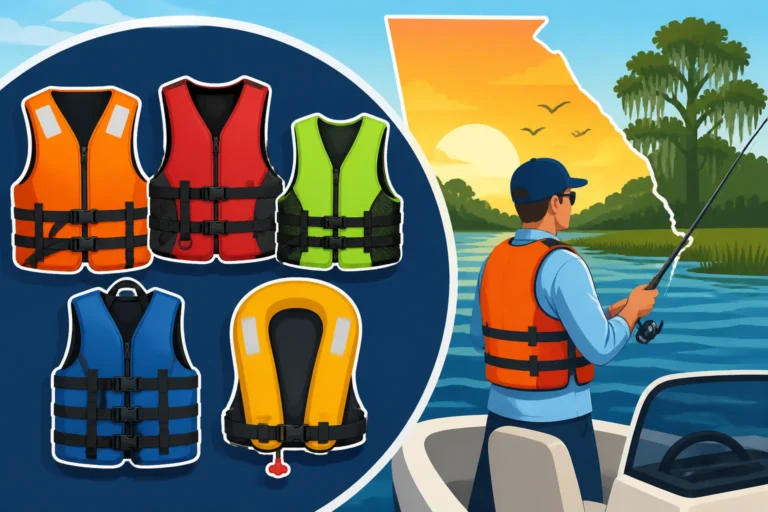
The US Coast Guard classifies life jackets into different types, each designed for varying conditions and activities. For children, you'll primarily be looking at Type I, Type II, and Type III.
- Type I: Offshore Life Jackets. These are designed for rough, open, or remote waters where rescue might be delayed. They offer the most buoyancy and are excellent at turning an unconscious person face-up in the water. While they offer maximum protection, they can be bulky and less comfortable for active kids, often making them less practical for a typical day on a Georgia lake. You might see these more on large commercial vessels or in very extreme conditions.
- Type II: Near-Shore Buoyancy Vests. These are the workhorses for many recreational boaters. They're designed for calm, inland waters or where there's a good chance of a quick rescue. They're less bulky than Type I but still designed to turn most unconscious wearers face-up. For many young children, especially those who aren't strong swimmers, a Type II is a fantastic choice for typical boating on lakes like Lake Hartwell or rivers like the Savannah. They offer solid safety without being overly restrictive for little ones.
- Type III: Flotation Aids. This is probably the most common type you'll see for kids (and adults!) on recreational boats. Type III PFDs are good for calm, inland waters where quick rescue is likely. They offer good freedom of movement and are generally the most comfortable, making them popular for active sports like waterskiing, tubing, or just playing on the boat. However, they are not designed to turn an unconscious person face-up. The wearer usually has to tilt their head back to stay above water. For children who are strong swimmers and are actively participating in water sports, a Type III can be a great option, but for toddlers or very young children, or those who might struggle, a Type II might be a safer bet.
When selecting, think about where you'll be and what your child will be doing. A child fishing from a quiet dock on a Kid-Friendly Fishing Ponds in Georgia might be fine with a Type III if an adult is actively supervising, but a child on a fast-moving boat on a busy reservoir might benefit from the added turning capability of a Type II.
Inflatable vs. Inherently Buoyant Life Jackets for Kids
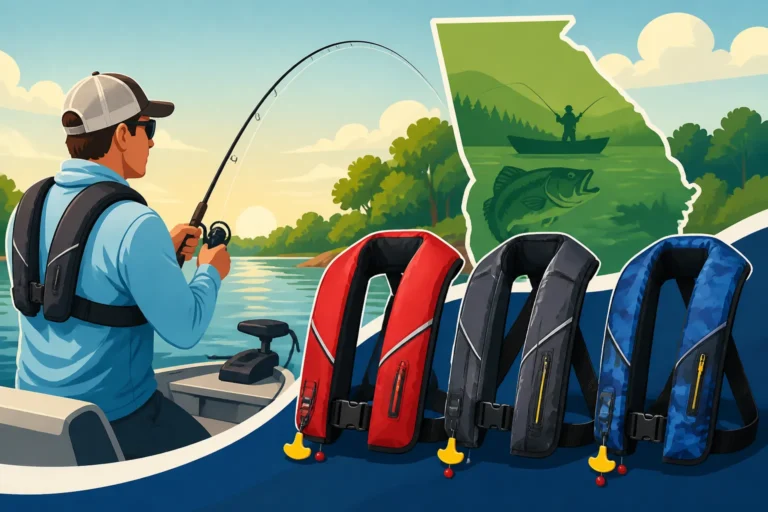
You might have seen those sleek, low-profile inflatable life jackets that look so much more comfortable than the bulky foam ones. While these are fantastic for adults in many situations, they are generally not recommended for children under 16 years old. Here's why:
- Inflatable PFDs rely on a CO2 cartridge to inflate, either automatically when submerged or manually by pulling a cord. For a child, this introduces several points of failure: the CO2 cartridge might not deploy correctly, they might not remember or be able to pull the cord in an emergency, or they might panic. Furthermore, they require regular maintenance, like checking the CO2 cartridge and ensuring it's properly armed. This kind of responsibility is too much to put on a child, or even to expect a busy parent to keep up with for every outing.
- Inherently Buoyant Life Jackets, on the other hand, are filled with foam or other buoyant material, meaning they float all the time. There's no inflation mechanism to fail, no cartridge to check. They offer constant, reliable flotation. For children, this is the gold standard. They simply put it on, buckle it up, and it's working. These are the vests you typically find at sporting goods stores like Bass Pro Shops. They're durable, require minimal maintenance, and provide immediate flotation, which is exactly what you need for a child who might accidentally fall into the water.
In short, for kids, always opt for an inherently buoyant, foam-filled life jacket. Leave the inflatables for the adults who are experienced swimmers and can handle the nuances of their operation.
Key Features to Look For in a Child's Life Jacket
Choosing the right life jacket goes beyond just legal requirements and types. It's about finding one that truly fits, provides comfort, and includes essential safety features that could make all the difference.
Proper Fit is Paramount
This is hands down the most critical aspect when selecting a child's life jacket. A life jacket that doesn't fit properly is almost as bad as no life jacket at all. It can ride up around their ears, hinder their movement, or even slip off entirely in the water.
- Weight-Based Sizing: Children's life jackets are primarily sized by weight, not just age. You'll see ranges like "Infant (under 30 lbs)," "Child (30-50 lbs)," or "Youth (50-90 lbs)." Make sure your child's current weight falls within the specified range for the jacket. Never try to "buy a size up" for them to grow into. A jacket that's too big will not work safely.
- How to Check the Fit: Once your child has the life jacket on and all straps are tightened (including the crotch strap, which we'll discuss next), lift them by the shoulders of the life jacket. If the jacket slides up past their chin or ears, it's too big. It should feel snug but not restrictive. You should be able to slide your fingers comfortably under the shoulder straps, but not much more. Trying on life jackets in person, perhaps at a local retailer, is incredibly important for this reason. You'll find a good selection at places like Bass Pro Shops, where staff can often help with fitting.
- Crotch Straps: For infants, toddlers, and smaller children, a crotch strap (or leg strap) is absolutely essential. This strap goes between the legs and connects to the front or back of the jacket. It prevents the life jacket from riding up over their head when they're in the water, which can be a common and dangerous problem with ill-fitting or poorly designed vests. Make sure it's snug enough to keep the jacket in place without chafing.
Remember, a perfectly sized life jacket distributes buoyancy correctly, keeping their head well above water and preventing them from slipping out.
Comfort and Durability for All-Day Wear
Let's face it, if a life jacket isn't comfortable, kids will complain, try to take it off, or simply resist wearing it. And if it's not durable, it won't last more than a season or two.
- Materials:
- Nylon: This is a common and affordable material. It's durable, quick-drying, and generally performs well. The downside can be that it's a bit stiffer than neoprene and might feel bulkier.
- Neoprene: Often found in higher-end life jackets, neoprene is softer, more flexible, and fits more snugly, leading to greater comfort and less chafing. It also tends to be warmer, which can be a pro in cooler weather but a con on hot Georgia summer days. Many active-wear vests are made of neoprene.
- Foam: The internal flotation material. Look for soft, flexible foam that allows for good movement. Segmented foam designs, where the foam is cut into panels, can greatly increase comfort and flexibility compared to a single, rigid block of foam.
- Neck Support for Infants: Infant life jackets (for children under 30 lbs) often have a large, padded collar or headrest. This is crucial as it provides extra support for the baby's head and neck, helping to keep their airway clear and their face out of the water, especially if they are too young to hold their head up reliably or if they become unconscious.
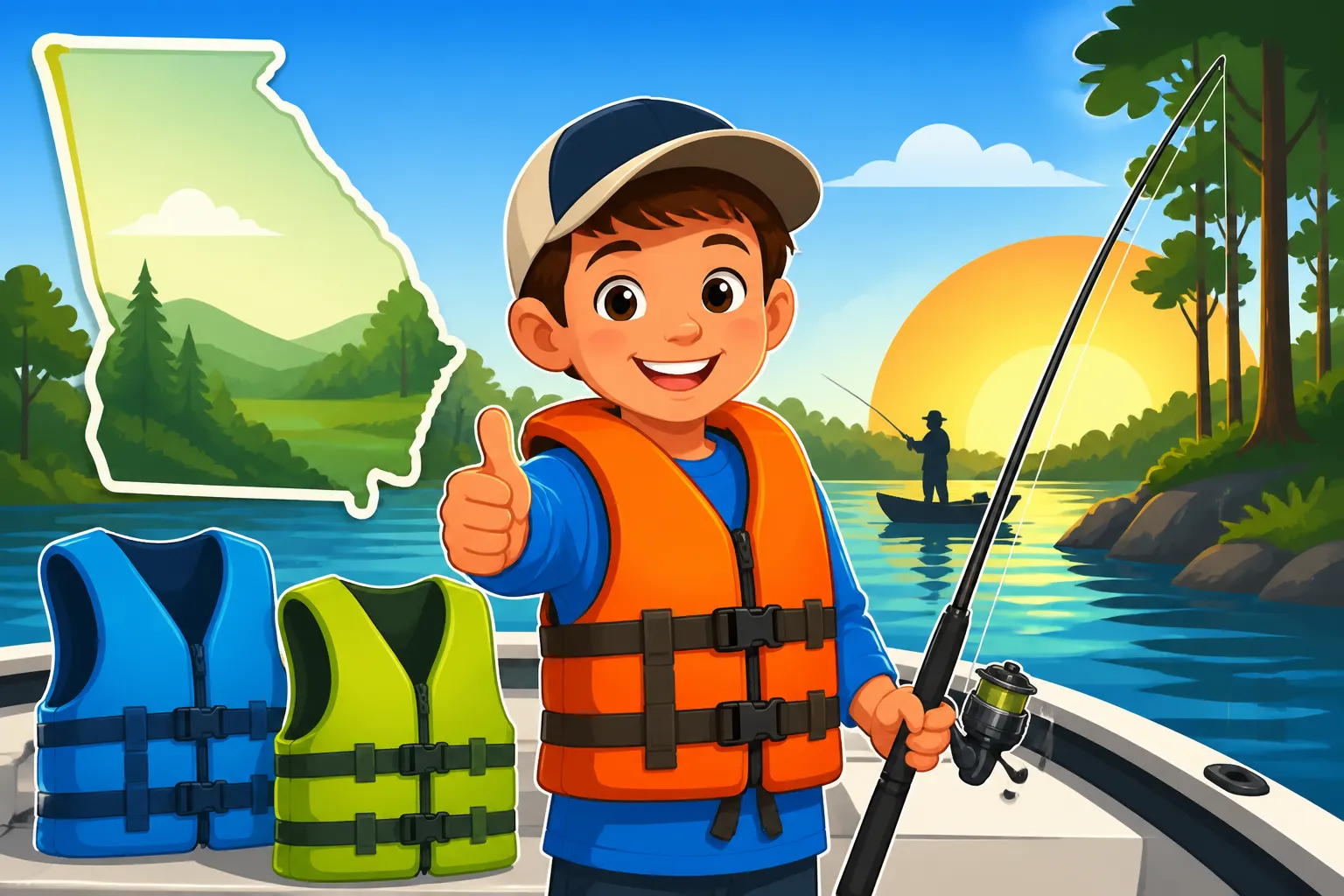
- Vibrant Colors: While not directly a safety feature in terms of flotation, brightly colored life jackets (think neon green, orange, or yellow) significantly increase visibility on the water. In an emergency, a child in a brightly colored vest is much easier to spot, especially in choppy water or low light conditions. This is a small detail that can make a huge difference in a rescue scenario. You might even find yourself on a busy spot like Lake Lanier, and a bright jacket is just another layer of protection.
Additional Safety Features
Beyond fit and basic comfort, some extra features can add another layer of safety and convenience:
- Whistles: Many children's life jackets come with a small, attached whistle. This is a simple but incredibly effective tool. If a child goes overboard or gets separated from the boat, a whistle can alert nearby boaters or rescuers to their presence, especially if they are too far away to hear shouts. It's a key piece of safety equipment, often overlooked. Did you know that a whistle is a required piece of What Safety Equipment Is Required on a Georgia Boat?
- Reflective Tape: For those times when you might be on the water around dusk or dawn, or if an emergency extends into the night, reflective tape on a life jacket can make a child visible in the beam of a flashlight or spotlight. This significantly aids search and rescue efforts.
- Grab Handles: Some infant and child life jackets include a sturdy grab handle on the back, usually near the collar. This handle provides a secure point for an adult to quickly pull a child out of the water, which can be invaluable in an emergency.
- Pockets: While not a safety feature per se, a small pocket can be handy for stashing a whistle if it's not attached, or a small snack wrapper. Just be sure it doesn't add unnecessary bulk.
Here's a quick comparison of common USCG-approved child life jacket types:
| Feature | Type II (Near-Shore) | Type III (Flotation Aid) | Infant/Child-Specific Features (often on Type II) |
|---|---|---|---|
| Primary Use | Calm, inland waters; quick rescue likely | Calm, inland waters; quick rescue likely; active water sports | Infants (under 30 lbs), children (30-50 lbs) |
| Buoyancy Level | Good, designed to turn unconscious wearer face-up | Good, not designed to turn unconscious wearer face-up | High buoyancy for size; head support crucial |
| Comfort/Mobility | Moderate; slightly bulkier than Type III | High; designed for maximum mobility | Can be bulky due to head support and crotch strap |
| Common Materials | Nylon, some neoprene | Nylon, neoprene (more common) | Nylon, neoprene |
| Key Safety Features | USCG Approved, bright colors, crotch strap (for kids) | USCG Approved, bright colors, crotch strap (for kids) | USCG Approved, head flotation pad, grab handle, crotch strap |
| Ideal for Children Who | Are not strong swimmers, younger children, general boating | Are strong swimmers, older children, active water sports | Cannot hold head up reliably, smallest children |
Where to Find the Best Kids' Life Jackets in Georgia (and online)
Once you know what you're looking for, the next step is finding it. You have a few great options, each with its own advantages.
Shopping Local: Benefits of Trying Before Buying
There's truly no substitute for trying on a life jacket in person, especially for a child. Kids come in all shapes and sizes, and what looks good on paper might not fit well on your particular little angler.
- Hands-On Fitting: Stores like Bass Pro Shops or other local sporting goods stores across Georgia offer the chance for your child to try on different sizes and types. You can test the fit, tighten the straps, and perform the "lift test" to ensure it won't ride up over their head. This hands-on approach is invaluable for ensuring proper safety and comfort. Plus, the staff at these stores are often knowledgeable and can help guide you through the options, especially regarding Life Jacket Requirements for Kids Under 13 in Georgia.
- Expert Advice: Speaking with an experienced sales associate can provide insights you might not get online. They can offer advice on specific brands, materials, and features that might be best suited for your family's particular boating activities, whether it's fishing for bass on West Point Lake or kayaking the Toccoa River.
- Immediate Gratification: No waiting for shipping! You can buy the life jacket and be ready to hit the water that same day, perhaps heading to one of the Best Family-Friendly Fishing Spots in Georgia.
Online Options and Reading Reviews
While trying on in person is ideal, online shopping offers unparalleled selection and convenience, especially if you know exactly what you're looking for.
- Wider Selection: Websites like Amazon offer a massive range of brands, styles, and sizes that might not be available in your local store. This is great if you're looking for a very specific type of jacket or a particular aesthetic. You can often find popular brands in a variety of colors and patterns that appeal to kids.
- Detailed Product Information: Online listings often include extensive descriptions, sizing charts, and a plethora of customer reviews and photos. Always, always check the sizing charts carefully, and don't just rely on the general "child" or "youth" label. Measure your child if possible and compare it to the brand's specific chart.
- Customer Reviews: Other parents' experiences are gold! Reading reviews can give you real-world insights into how a particular life jacket fits, its durability, how comfortable it is for kids, and any quirks it might have. Look for reviews that mention similar-sized children and their activities. Pay attention to comments about the crotch strap, head support, and how well it holds up to regular use. While convenient, make sure you're still prioritizing safety above all else, remembering that a proper fit is key. For more on how many life jackets you need on your vessel, see How Many Life Jackets Do You Need on a Boat in Georgia.
No matter where you choose to buy, remember that the best life jacket for your child is the one they will wear, and wear correctly. It should be USCG-approved, fit perfectly, and be comfortable enough for them to enjoy their time on the water safely.
Disclaimer
This article is for general informational purposes only and does not constitute professional advice. Laws, prices and regulations vary by location and change over time. Consult a qualified professional for guidance on your specific situation.