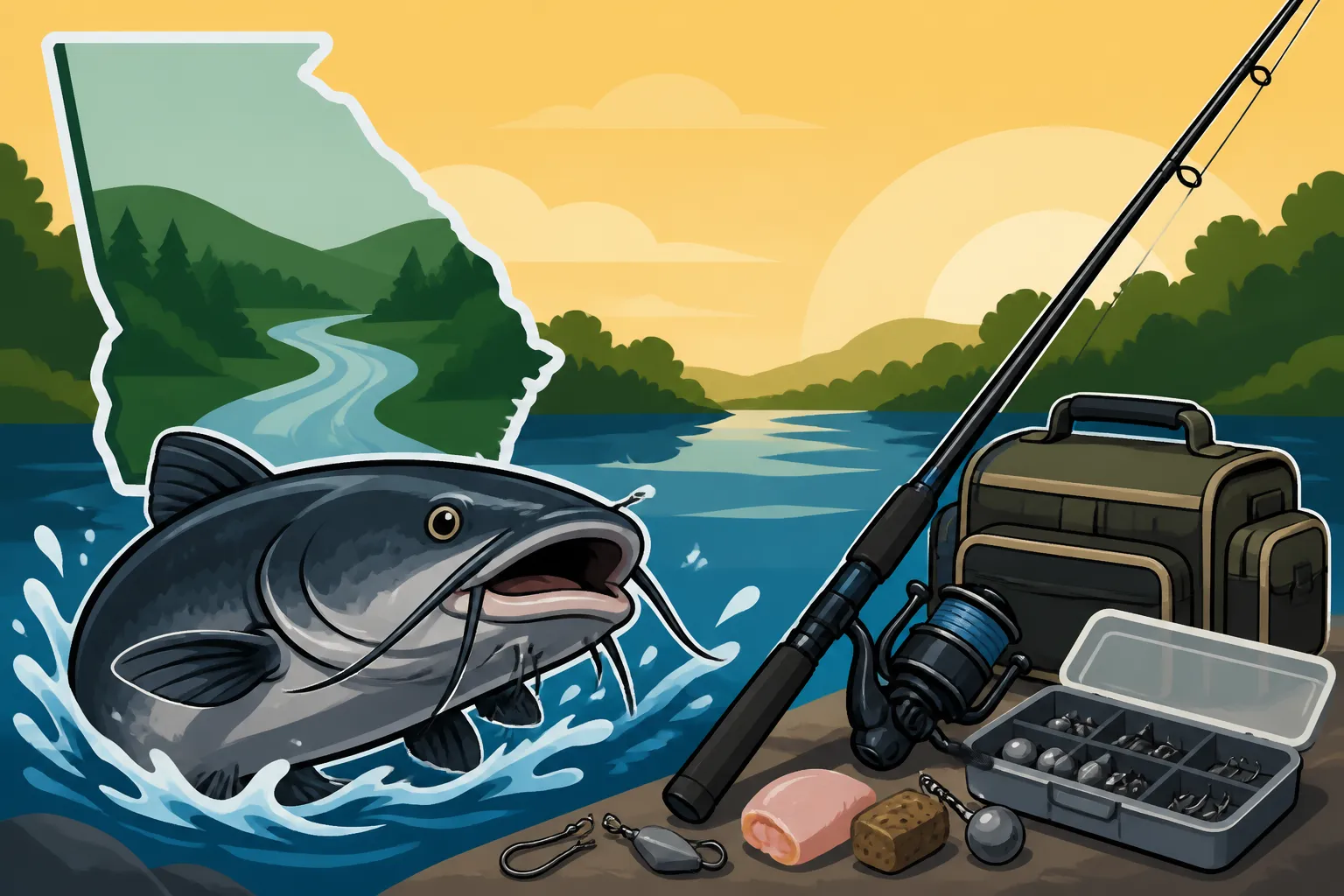
Best Catfish Gear for Georgia Rivers and Lakes
If you've ever spent a frustrating day on a beautiful Georgia river or lake, casting out line after line only to come up empty-handed while hearing tales of monster catfish, you know the feeling of doubt creep in. Sometimes it's not about the fish being absent, but about whether you've got the right tools for the job. This guide is here to equip you, whether you're targeting a feisty channel cat in a local pond or dreaming of wrestling a massive blue cat from the depths of a sprawling reservoir, by breaking down the essential gear you'll need to succeed in Georgia's diverse waters.
Rods and Reels: Your Primary Connection to the Fight
Choosing the right rod and reel setup for catfishing is paramount. Unlike bass or trout fishing where finesse often rules, catfishing frequently demands power, durability, and a forgiving action to handle the strong runs and headshakes of these bottom-dwelling brutes. Georgia's rivers and lakes hold a variety of catfish, from the smaller but abundant channel cats to the truly enormous blue and flathead catfish, and each might call for a slightly different approach.
Heavy Duty Combos for Big Blues and Flatheads
When you're chasing after those legendary blue cats and flatheads that can easily weigh 30, 40, or even over 100 pounds in Georgia's larger river systems like the Altamaha or the Savannah River, you absolutely need a heavy-duty setup. Think about a rod rated for heavy or extra-heavy action, typically in the 7 to 10-foot range. These rods have the backbone to horse a big fish out of heavy current or thick cover, protecting your line from breaking against submerged timber or rocky ledges. A good quality fiberglass or composite rod offers excellent durability and a forgiving bend, which is crucial when a giant cat makes a sudden surge.
Pair this robust rod with a conventional (baitcasting) reel, often referred to as a "level wind" reel, designed for heavy line and big fish. These reels offer superior cranking power and a more direct connection to the fish, which can be a game-changer when fighting a stubborn flathead. Brands like Penn, Daiwa, or Abu Garcia are often favorites among serious catfishermen. Look for models with a strong drag system that can be smoothly adjusted, preventing sudden jerks that can snap your line. Spooling it up with a heavy mono or braided line, which we'll discuss in more detail later, completes this formidable package ready for those trophy-sized encounters.
Medium-Heavy Setups for Channels and Smaller Cats
While the giants get all the glory, the truth is, most anglers in Georgia will spend more time targeting the incredibly popular channel catfish, especially in local lakes, ponds, and smaller rivers. For these situations, a heavy-duty setup might be overkill and take some of the fun out of the fight. A medium-heavy action rod, usually 6 to 7.5 feet long, offers a fantastic balance. It's sensitive enough to detect the lighter bites of smaller cats but still has enough power to handle a 5-10 pound channel cat, or even an unexpected blue cat in the 20-pound range.
Spinning reels are perfectly suited for this style of fishing, especially if you're casting from the bank or using lighter baits. A good quality spinning reel in the 4000 to 6000 size range, paired with a medium-heavy rod, will give you excellent casting distance and smooth retrieval. These setups are versatile, allowing you to present a variety of baits from cut bait to stink bait, and are much easier for beginners or casual anglers to manage than a conventional reel. This is often the go-to combo for a relaxed afternoon fishing on Lake Sinclair or one of Georgia's Public Fishing Areas, where channel cats are abundant and eager to bite.
Understanding Rod Action and Power
When you're standing in a sporting goods store, perhaps at a Bass Pro Shops, looking at all the rods, you'll see terms like "medium," "heavy," "fast action," and "moderate action." Understanding these terms is key to selecting the right catfish rod. "Power" refers to how much weight it takes to bend the rod, ranging from ultra-light to extra-heavy. As we've discussed, heavy to extra-heavy is for monster cats, while medium-heavy is great for channels.
"Action" refers to where the rod bends. A "fast action" rod bends mostly at the tip, offering high sensitivity and quick hook sets, which can be useful for detecting subtle bites from finicky flatheads. A "moderate action" rod bends further down, providing more give throughout the blank. This extra flexibility acts like a shock absorber, helping to prevent hooks from pulling out and absorbing the powerful surges of big fish. For catfishing, especially with circle hooks (which we'll get to), a moderate to moderate-fast action rod is often preferred, as it allows the fish to take the bait and turn, setting the hook properly without the angler needing to "strike" aggressively.
Line and Rigging: The Unseen Connection
Your line and rigging setup are the crucial, often overlooked, link between you and that catfish. Even the best rod and reel are useless without a reliable line, appropriate hooks, and a well-constructed rig that can present your bait effectively and stand up to the fight. Georgia's diverse waterways, from swift rivers to deep lakes, demand different considerations for your line and terminal tackle.
Choosing the Right Line Type and Test
When it comes to line, you essentially have three main choices for catfishing: monofilament, fluorocarbon, and braided line. Each has its pros and cons. Monofilament (mono) is often the most budget-friendly option and is very popular for general catfishing. It has a good amount of stretch, which acts as a shock absorber during violent headshakes and surges, preventing hooks from tearing out. It also handles abrasion reasonably well against rough bottoms or timber. For channel cats, a 15-25 pound test mono is usually sufficient. For bigger blue and flathead catfish, consider 30-50 pound test, or even heavier if fishing in snaggy areas.
Braided line, made of multiple strands of synthetic fibers, offers incredible strength for its diameter, virtually no stretch, and excellent abrasion resistance. The lack of stretch means you'll feel every bump and bite, even in deep water or strong current, and you'll get more powerful hook sets. This is a huge advantage when fishing for flatheads that can be notoriously light biters. For serious big cat anglers, 50-80 pound test braid is common. The main drawback is its visibility (though catfish aren't typically line-shy), and it can be more expensive. You might also want a leader of fluorocarbon or heavy mono with braid, as braid can be tough on rod guides if not properly spooled. Fluorocarbon is less commonly used as a main line for catfishing due to its stiffness and cost, but it makes an excellent, nearly invisible leader material, especially in clearer waters.
Essential Hooks and Sinkers
Catfish hooks come in various shapes and sizes, but two types dominate the catfishing scene: J-hooks and circle hooks. Traditional J-hooks (like kahle hooks or treble hooks for some baits) require a strong hook set from the angler. They are effective but carry a higher risk of gut-hooking fish, which can be problematic if you intend to release them. For this reason, many states, including Georgia, encourage the use of circle hooks, especially in certain areas or for specific species.
Circle hooks are designed to hook fish in the corner of the mouth, minimizing deep hooking and making catch-and-release much safer for the fish. The key with a circle hook is not to set the hook aggressively. Instead, let the fish take the bait, and as it swims away, simply begin reeling slowly until the rod loads up and the hook sets itself. Sizes vary greatly, from a 2/0 or 3/0 for smaller channel cats to a massive 8/0 or 10/0 for trophy blue or flathead catfish. Pair your hook choice with the right sinker to get your bait down and keep it there. Egg sinkers, no-roll sinkers, and pyramid sinkers are common. The weight depends on current and depth; you might need anywhere from a 1/2 ounce to several ounces of lead or steel to hold bottom in a strong river current or a deep lake. Remember, the goal is to use just enough weight to hold your bait in place. You can find a huge selection of hooks and sinkers at most fishing retailers or conveniently online through Amazon.
Popular Catfish Rigs for Georgia Waters
There are countless ways to rig for catfish, but a few stand out as tried and true for Georgia anglers. The most fundamental is the Carolina rig, also known as a sliding sinker rig. It's incredibly simple and effective. You thread an egg sinker onto your main line, followed by a bead (to protect your knot), then tie on a barrel swivel. To the other end of the swivel, tie a leader (typically 12-24 inches of fluorocarbon or heavy mono) and then your hook. This setup allows the fish to pick up the bait and swim off without feeling the weight of the sinker, making it ideal for wary fish. This rig works well for bottom fishing in lakes and slower river sections, whether you're using cut bait or live bait like shad. For more details, check out How to Rig a Slip Sinker for Catfish.
Another popular option is the three-way swivel rig, especially in current. You tie your main line to one eye of the three-way swivel, a short leader (6-12 inches) with a sinker to the second eye, and a longer leader (12-36 inches) with your hook to the third eye. This keeps your bait elevated off the bottom, out of snags, and allows it to drift naturally in the current. It's a fantastic rig for targeting flatheads in areas with a lot of debris on the bottom. Lastly, for still water or when targeting fish suspended off the bottom, a simple float rig can be effective. This involves a slip float, a weight to get the bait down, and a hook, allowing you to present bait at a specific depth.
| Catfish Species | Recommended Rod Power | Typical Line Test | Recommended Hook Size | Preferred Rig(s) |
|---|---|---|---|---|
| Channel Catfish | Medium-Heavy | 15-30 lb Mono/Braid | 2/0 – 5/0 Circle | Carolina Rig, Slip Float |
| Blue Catfish | Heavy – Extra Heavy | 30-80 lb Mono/Braid | 6/0 – 10/0 Circle | Carolina Rig, 3-Way Swivel |
| Flathead Catfish | Heavy – Extra Heavy | 40-100 lb Braid | 7/0 – 10/0 Circle/J | Carolina Rig, 3-Way Swivel |
Bait and Scents: Tempting the Whiskered Wonders
No matter how fancy your rod and reel, or how perfectly tied your rig, you won't catch catfish without the right bait. Catfish are opportunistic feeders with an incredible sense of smell, making them highly susceptible to strong, natural, or pungent offerings. Georgia's diverse catfish populations mean you'll need a diverse bait arsenal. For a deeper dive into specific species, you might find Catfish Species Compared: Channel vs Blue vs Flathead insightful.
Natural Baits: The Tried and True
When it comes to catfish, Mother Nature often provides the best lures. Cut bait is arguably the king, especially for blue and flathead catfish. Shad, bream, and even smaller carp cut into chunks release oils and scent that catfish can detect from a remarkable distance. Freshness is key, so catching your own bait or getting it from a bait shop the day of your trip is always best. For example, if you're fishing the middle Chattahoochee River, fresh-caught gizzard shad or threadfin shad make exceptional cut bait for big blue cats. Just remember to check Georgia Fish Size and Creel Limits for baitfish regulations.
Live bait is another phenomenal option, particularly for flathead catfish. Flatheads are predatory ambush hunters and prefer live, struggling baitfish. Small bream, sunfish, or even legal-sized minnows are excellent choices. Presenting them on a Carolina rig or a three-way swivel rig, allowing them to swim naturally, can be irresistible to a lurking flathead. Worms, like nightcrawlers or red wigglers, are universally appealing and work great for channel catfish, especially for smaller ones or when fishing with kids. They're easy to find and use, making them a staple for any catfishing trip to a public fishing area or small pond. You can learn more about specific bait recommendations by reading Best Bait for Channel Catfish or Best Bait for Blue Catfish and Best Bait for Flathead Catfish.
Prepared Baits and Dough Balls
Sometimes, convenience and a potent aroma are what you need, and that's where prepared baits shine. "Stink baits" or "dip baits" are commercially produced concoctions designed to emit a powerful odor that catfish adore. These are typically applied to a sponge or tube jig head, which holds the bait in place while slowly releasing its scent. While they can catch all species, stink baits are particularly effective for channel catfish and are a favorite for bank anglers and those looking for consistent action.
Dough balls, often made from cornmeal, flour, and various secret ingredients (including cheese, garlic, or even Kool-Aid powder), are another popular option, especially for channel catfish. They're simple to make at home or can be purchased ready-made. These baits dissolve slowly in the water, creating a scent cloud that attracts curious cats. While not as effective for large blues or flatheads, they can be incredibly productive for a fun day catching smaller pan-sized catfish.
Scent Enhancers and Attractants
Even with great bait, sometimes a little extra something can make all the difference. Scent enhancers and attractants come in gels, sprays, or liquids and can be applied directly to your bait or lure. These often contain concentrated fish oils, amino acids, or pheromones that mimic natural prey and further stimulate a catfish's keen sense of smell. If you're using cut bait that's been frozen, or if your prepared bait seems to be losing its punch, a quick spray or dip in an attractant can rejuvenate its appeal.
For live bait, some anglers will inject attractants directly into the baitfish to maximize the scent trail. While perhaps not essential for every trip, especially when the bite is hot, carrying a bottle of your favorite catfish attractant can sometimes turn a slow day into a successful one. It's just another tool in your arsenal, giving you an edge when the fish are a bit finicky or when you're trying to out-compete other food sources in the water.
Essential Accessories: Beyond Rods and Reels
Catfishing isn't just about the rod, reel, and bait. A successful and enjoyable trip, especially when targeting larger specimens or spending extended time on the water, requires a collection of essential accessories. These items range from practical tools to safety gear and comfort aids, all designed to make your time chasing whiskered giants more productive and pleasant.
Keeping Your Catch: Coolers and Livewells
If you plan on keeping your catch – and fried catfish is a Georgia tradition! – then proper storage is non-negotiable. A sturdy cooler filled with ice is vital for keeping your fish fresh, especially during the warm Georgia summers. Ensure it's large enough for the fish you expect to catch. For example, a 10-pound channel cat takes up a fair bit of space, and if you're aiming for larger blues, you'll need a substantial cooler.
For those who prefer to keep their fish alive until they're ready to clean them, a livewell or a large mesh basket (often called a fish basket or stringer) is essential. If you're fishing from a boat, a built-in livewell with an aerator is ideal. Bank anglers might use a collapsible mesh basket submerged in the water to keep fish fresh and lively. Remember, quick cooling after the catch helps preserve the quality of the meat, so having that cooler ready to go with plenty of ice is a smart move.
Safety and Comfort Gear
Spending hours on the water or riverbank means being prepared for various conditions. Sun protection is critical in Georgia. A wide-brimmed hat, sunglasses (polarized ones will also help you see submerged structure), and sunscreen are a must. Insects, especially mosquitoes, can be a nuisance near water, so pack insect repellent. A comfortable folding chair or bucket for sitting, especially if bank fishing, makes a huge difference in your endurance and enjoyment.
Safety-wise, always have a first-aid kit readily accessible for minor cuts, scrapes, or hook punctures. A good pair of pliers or a hook remover is invaluable for safely unhooking fish, especially if they've swallowed the hook deep or if you're dealing with a feisty flathead. If you're on a boat, ensure you have all the required safety equipment, including life jackets for everyone aboard, as per Georgia Life Jacket Laws for Boaters and Kids. A reliable light source, like a headlamp or a lantern, is indispensable if you're planning any night fishing, which is often the best time to target larger catfish.
Specialized Tools for Catfishing
Beyond the basics, a few specialized tools can make your catfishing experience much smoother. A heavy-duty fishing scale is a must for bragging rights, especially when you land a truly impressive fish. Many digital scales can measure up to 100 or even 200 pounds, perfect for those record-breaking blues. A large net, specifically designed for catfishing, with a wide hoop and strong mesh, is crucial for landing big fish safely. Trying to lift a 30-pound cat by the line is a recipe for disaster.
Gloves, particularly heavy-duty fish handling gloves, are highly recommended. Catfish, especially flatheads, have sharp pectoral and dorsal fins that can deliver a painful poke. Plus, blue cats have coarse skin that can abrade your hands. Wearing gloves not only protects your hands but also provides a better grip on a slippery fish. Finally, a pair of heavy-duty line clippers or scissors capable of cutting through thick mono or braided line efficiently will save you frustration.
Boat vs. Bank Fishing: Tailoring Your Gear
Georgia offers incredible catfishing opportunities from both boat and bank, but each approach comes with its own set of gear considerations. What works perfectly from a decked-out bass boat might be cumbersome or impractical from a riverbank, and vice-versa. Adapting your gear to your access point is key to a successful outing.
Gear for Bank Anglers
Bank fishing is the most accessible way to target catfish for many anglers in Georgia. You don't need a boat, launch ramps, or complex electronics. However, you do need to optimize your gear for portability and efficiency from shore. Since you're often limited to casting distance, longer rods (7-10 feet) can be a huge asset, helping you reach deeper channels or submerged structure further out. Spin casting reels or larger spinning reels are preferred for their ease of use and casting ability from a stationary position. You can explore many great spots by checking out Shore Fishing Access Points in Georgia.
Having a comfortable seat, like a portable folding chair or a 5-gallon bucket, is essential for those long waits between bites. A sturdy rod holder, like a sand spike or a bank stick, keeps your rod secure and pointing towards the water while you relax or tend to other rods. You'll often be using multiple rods when bank fishing, so having three or four rod holders spread out can increase your chances. A backpack or tackle bag that can consolidate all your baits, tools, and personal items into one easy-to-carry unit is invaluable. Remember, everything you bring, you have to carry, so keeping it compact and organized is a priority.
Gear for Boat Anglers
Fishing from a boat opens up a world of possibilities, allowing you to access deeper water, navigate rivers, and target specific underwater structures that are out of reach from the bank. Boat anglers often have the luxury of heavier gear and more specialized equipment. Shorter rods (6-7.5 feet) are often preferred for boat fishing, as they are easier to maneuver in tight spaces and provide more leverage when fighting a fish directly under the boat. Conventional reels truly shine here, offering maximum cranking power and line capacity for deep water and heavy currents.
Electronics, such as fish finders and GPS units, become incredibly useful tools. A good fish finder can help you locate schools of baitfish, identify submerged humps or ledges where catfish might be holding, and even spot individual fish. GPS helps you mark productive spots and navigate safely, especially on large reservoirs like Lake Lanier or Clarks Hill Lake. You'll also need a reliable anchor system to stay put over promising spots, and robust rod holders mounted to your boat for a hands-free setup while waiting for a bite or while using multiple lines. A powerful trolling motor can also be a game-changer for precise positioning or drifting. You can find excellent gear for boat fishing at a Bass Pro Shops or Cabela's store, where you can speak with knowledgeable staff about what's best for your specific boat and fishing style.
Navigating Different Water Types
Georgia's catfishing landscape includes vast reservoirs, winding rivers, and countless smaller ponds and lakes, each presenting unique challenges and opportunities. On large, deep reservoirs, gear for boat anglers becomes crucial. You'll often be targeting blues in open water or deep channels, requiring heavy lines, powerful reels, and the aid of electronics. For example, on Lake Oconee, you might be drift fishing for hybrid striped bass or blue catfish over deep structure, which requires heavier sinkers and robust trolling setups.
Conversely, fishing smaller rivers like sections of the Flint or Ocmulgee, often involves navigating shallower water, snags, and current. Here, a strong, moderate-action rod is vital for controlling fish and keeping them out of timber. Kayak fishing for catfish is also increasingly popular on smaller rivers, demanding compact but powerful gear and careful consideration of safety. On tranquil ponds and smaller lakes, lighter gear might be appropriate, focusing on channel cats and offering a more relaxed experience with simple bobber rigs or light bottom fishing setups. Understanding the specific characteristics of the water you're fishing will directly influence your gear choices, from line test to sinker weight to bait presentation. For those fishing the Flint River, specifically, you'll find that Shoal Bass Size Limit Rules, Georgia also exist, demonstrating the specific regulations for certain river segments.
Seasonal Gear Adjustments: Adapting to the Calendar
Just like any other species, catfish behavior changes with the seasons, and so too should your gear. What works wonders in the heat of summer might be completely ineffective in the cold depths of winter. Understanding these seasonal shifts and adjusting your tackle accordingly will significantly increase your success rates in Georgia. You can find more specific seasonal advice in articles like Best Time of Year for Catfishing on Georgia's Lake Sinclair.
Spring and Summer Catfishing Gear
Spring is prime time for many catfish species in Georgia, as they become more active with warming water temperatures and move into shallower areas to spawn. During this period, especially for channel catfish, lighter tackle can be very effective. A medium-heavy spinning combo spooled with 15-20 pound test monofilament is often ideal. Catfish are actively feeding, so a wide variety of baits, from worms and prepared stink baits to fresh cut bait, will work. In late spring and early summer, targeting shallower flats, creek mouths, and even flooded timber can be very productive.
As summer heats up, catfish, particularly larger blue and flathead cats, often move to deeper, cooler water. This is when your heavy-duty boat fishing gear truly shines. Employing your fish finder to locate deep channels, humps, or thermal breaks on large reservoirs becomes critical. Heavier sinkers (1-4 ounces) are often necessary to get your bait down to these depths and hold it against any current. Live or fresh cut bait, such as shad or bream, are often the most productive for these deeper-water summer giants. Night fishing also becomes incredibly popular and effective in the summer, making good lighting gear and insect repellent essential. If you plan to be out after dark, refer to How to Catch Catfish at Night for specialized tips.
Fall and Winter Catfishing Gear
Fall brings cooler water temperatures and renewed feeding frenzies for catfish as they fatten up for winter. While they might not be as shallow as in spring, they can often be found in transitional areas between shallow and deep water, especially around baitfish concentrations. Your medium-heavy to heavy setups will serve you well. Cut bait often remains a top choice, but some anglers find success drifting live baits in deeper channels. The key is often to locate the baitfish, as the catfish will be close behind.
Winter can be challenging, but it's far from impossible to catch catfish in Georgia. In fact, some of the biggest blue catfish are caught during the colder months on deep reservoirs. Catfish become sluggish, and their metabolism slows, so presentations need to be slower and often more subtle. Heavy action rods and reels with braided line are excellent for detecting those light "thumps" of a cold-water bite. Target very deep channels, ledges, and humps where fish will congregate. Lake Sinclair, with its warmer discharge areas, can be particularly productive in winter for large catfish. Use large, fresh cut bait and be patient. The bites might be fewer and farther between, but the fish you do catch can be truly monumental.
Adjusting for Water Conditions
Beyond seasonal changes, everyday water conditions—like clarity, current, and temperature—should also influence your gear choices. In murky or muddy water, which is common after heavy rains in some Georgia rivers, strong-smelling baits become even more crucial. Visibility is low, so catfish rely almost entirely on their sense of smell. You might also want to increase your line test a bit, as fish can be less line-shy in stained water, and you might encounter more snags washed down by the rain.
In clear water, on the other hand, you might opt for a fluorocarbon leader with your braided mainline to minimize visibility. Lighter weights and more natural presentations can also be more effective for wary fish. Strong currents, whether in a river or from generation on a dam-fed lake, demand heavier sinkers and more stable rigs, such as the three-way swivel rig, to keep your bait in the strike zone. Conversely, in slack water, you can often get away with lighter weights and more subtle bait presentations. Always observe the conditions on the day you're fishing and be prepared to make small adjustments to your gear to maximize your chances.
Disclaimer
This article is for general informational purposes only and does not constitute professional advice. Laws, prices and regulations vary by location and change over time. Consult a qualified professional for guidance on your specific situation.