How to Identify a Brook Trout
It's incredibly frustrating when you're out on a beautiful North Georgia trout stream, you reel in a gorgeous fish, and then you're left scratching your head, wondering exactly what kind of trout you've just caught. With rainbows, browns, and our very own native brookies swimming in the same waters, it can feel like a real guessing game. This guide is here to take the mystery out of it, helping you confidently identify that vibrant, stream-dwelling brook trout.
The Unique Charm of Georgia's Brook Trout
Brook trout hold a special place in the hearts of many Georgia anglers, and for good reason. They are absolutely stunning creatures, painted with a palette of colors that can rival any sunset. But beyond their beauty, there's a deeper connection: they are Georgia's only native trout species. Understanding their unique features is not just about bragging rights; it's essential for respecting creel limits, protecting these precious fish, and truly appreciating the wild beauty of our mountain streams.
Why Brook Trout Stand Out in Georgia
When we talk about brook trout in Georgia, we're often talking about the fish that have been here for millennia, quietly thriving in the coldest, purest headwaters of our mountain streams. Unlike the rainbow and brown trout, which were introduced from other regions, brook trout are the original inhabitants. This heritage imbues them with a certain mystique. They tend to be smaller than their introduced cousins, often topping out at under a foot in length in our streams, though what they lack in size, they more than make up for in vibrant coloration. Their backs are typically a mosaic of dark, worm-like markings, and their flanks glow with shades of olive, orange, and red, adorned with distinctive spots. This striking appearance, combined with their wild nature, makes catching a native Georgia brook trout a truly unforgettable experience. You'll often find them tucked away in the most pristine and remote corners of our wilderness areas, making the journey to catch one as rewarding as the catch itself. If you're curious about their place in the state's ecosystem, you might enjoy reading more in Brook Trout: Georgia's Native Trout Species.
The Challenge of Identification in Mixed Waters
While brook trout are distinct, identifying them can sometimes be a bit of a challenge, especially if you're fishing in streams where rainbow trout and brown trout also exist. Many of Georgia's popular trout streams are stocked with rainbows and browns, and sometimes even brook trout are stocked, which can lead to confusion. A heavily stocked rainbow might have faded colors, or a juvenile brown trout might not yet display its full range of distinctive spots. This is where knowing the key physical characteristics really comes into play. You can't always rely on a quick glance, and sometimes you'll need to look for a combination of features to be certain. It's a common frustration, especially for new anglers or those visiting our mountain regions for the first time. However, with a little practice and the right knowledge, you'll soon be able to tell the difference with confidence, whether you're targeting Rainbow Trout Fishing in North Georgia Streams or seeking out Georgia's wild brookies.
Key Physical Characteristics of a Brook Trout
When you're holding a potential brook trout, there are a few tell-tale signs that will help you confirm its identity. These features are generally consistent, even if the overall intensity of colors can vary slightly based on the fish's diet, habitat, and age.
Distinctive Coloration and Markings
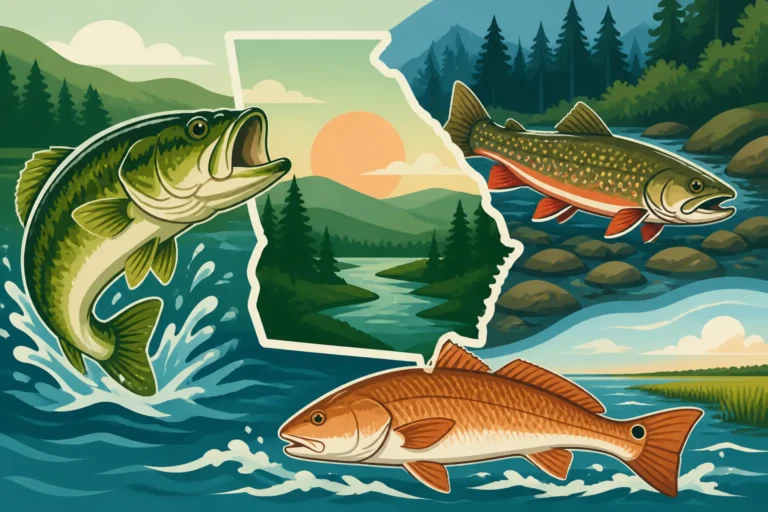
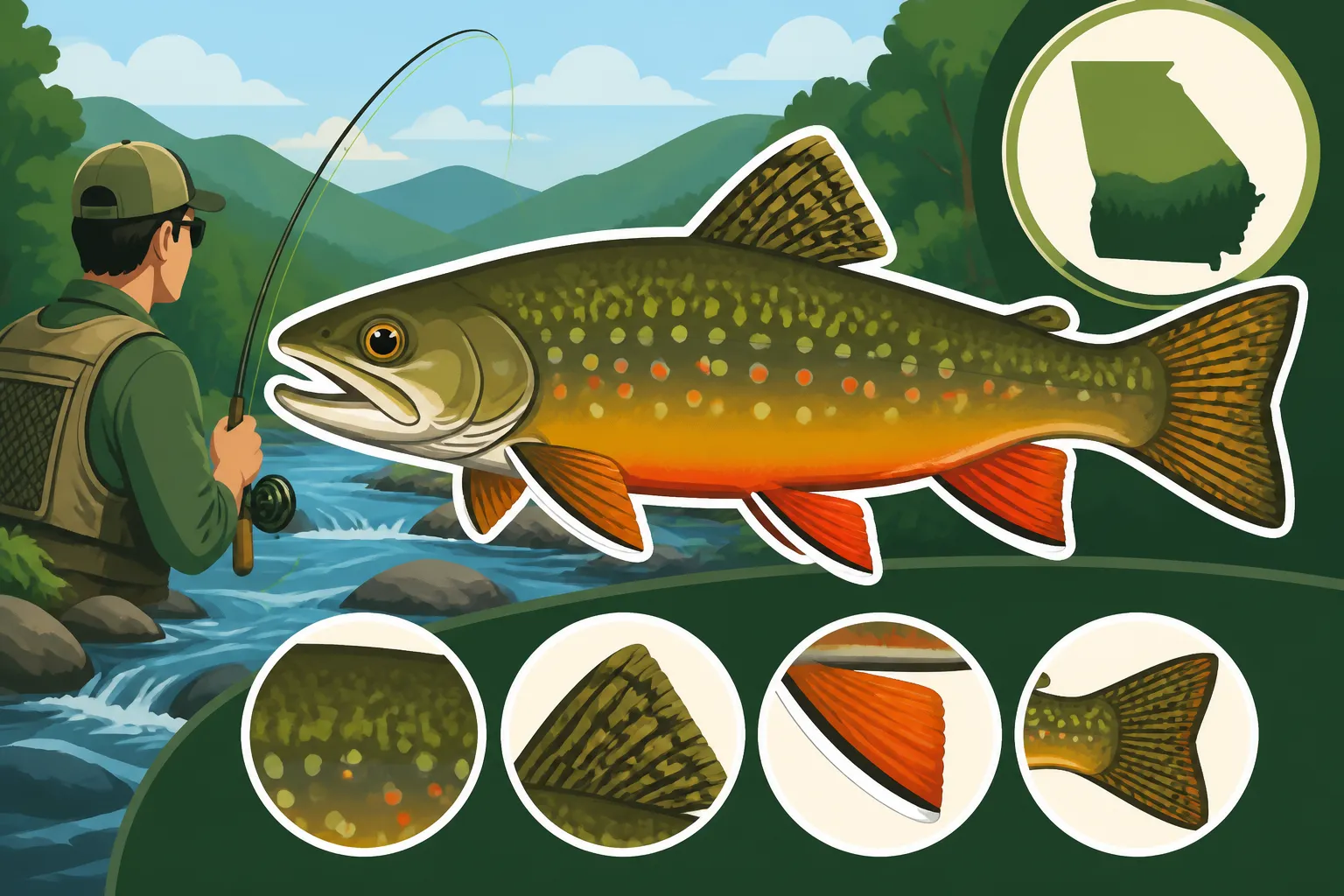
One of the most striking features of a brook trout is its intricate coloration. Their backs are usually a dark olive or almost black, covered in what anglers often call "vermiculation"—a network of wavy, worm-like patterns that extend down their sides. This mottled pattern provides excellent camouflage in the dappled light of shallow, rocky streams. Moving down their flanks, you'll notice a transition to lighter shades of olive, sometimes yellow, orange, or even deep red. This vibrant mid-section is dotted with small, circular red spots, each uniquely encircled by a halo of brilliant blue. These "blue halos" are a strong identifier. Rainbow trout, for example, typically have black spots, and while brown trout have red and orange spots, they usually lack the distinct blue halo. The belly of a brook trout can range from white to a creamy yellow, often transitioning to a reddish or orange hue as you approach the anal fin, especially during spawning season. The intensity of these colors, particularly the reds and oranges, can be incredibly vivid, making them truly a sight to behold.
Fin Features and Coloration
The fins of a brook trout provide some of the most reliable identification markers. Pay close attention to the pectoral (front pair), pelvic (lower pair), and anal (single fin behind the vent) fins. These lower fins typically have a distinct white leading edge, followed by a narrow, stark black or dark line, and then the rest of the fin is often reddish-orange. This white-black-red/orange pattern on the lower fins is a classic brook trout signature. It's almost like they're wearing white socks! Rainbow trout and brown trout generally lack this prominent white leading edge. Their dorsal (top) fin and caudal (tail) fin will also often show some degree of the vermiculation patterns found on their back, though less pronounced than on the body. The tail fin itself is typically only slightly forked or nearly square. These fin characteristics are often the quickest and most definitive way to confirm you have a brook trout.
Body Shape and Size
Compared to rainbow and brown trout, brook trout in Georgia tend to have a more torpedo-like, streamlined body shape. They are typically smaller fish, especially the native populations found in our headwater streams. While stocked brook trout might grow a bit larger, wild brookies are often in the 6-10 inch range, with anything over 12 inches considered a trophy in many of their native habitats. Their heads are usually relatively small in proportion to their bodies, and their mouths are not as large as those of a brown trout. This smaller size and sleek profile are adaptations for living in fast-moving, smaller mountain streams where they need to navigate tight spaces and feed on smaller insects. Don't be fooled by their modest size; these fish are tough, beautiful, and incredibly fun to catch on light tackle. When you're out trying to catch Brook Trout Size in Georgia Mountain Streams, remember that even a small one is a significant accomplishment.
Distinguishing Brook Trout from Rainbow and Brown Trout
Getting a clear look at a fish can be tough, especially when they're darting around in the current. But once you know what to look for, telling Georgia's three main trout species apart becomes much easier. It's really about focusing on a few key differences rather than trying to remember every single detail.
Brook Trout vs. Rainbow Trout
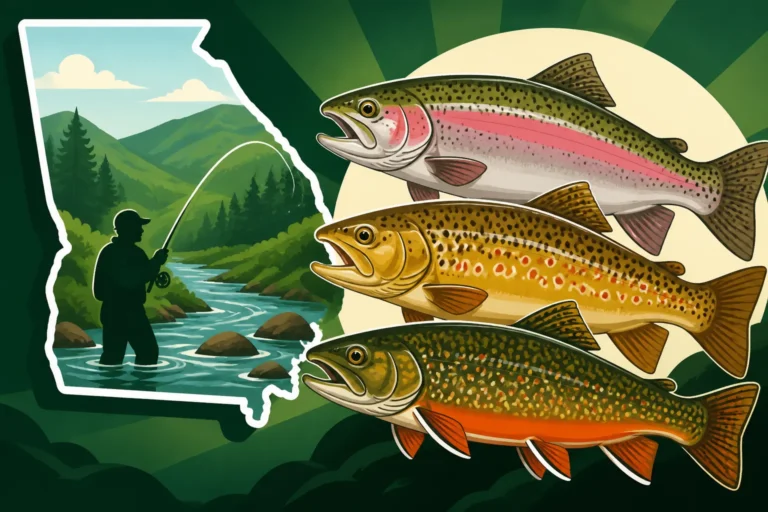
Rainbow trout are probably the most commonly stocked trout in Georgia, so you'll encounter them frequently. The biggest difference between a brook trout and a rainbow trout lies in their spots and fin coloration. Rainbows get their name from the iridescent, pinkish-red stripe that often runs down their sides, though this can be faded or absent depending on the fish. Critically, rainbow trout are covered in black spots – small, distinct spots on their body, dorsal fin, and tail. They do not have the worm-like markings (vermiculation) on their back, nor do they have red spots with blue halos. And remember those "white socks" on the brook trout's lower fins? Rainbows don't have them. Their lower fins are generally plain, without the stark white leading edge followed by a dark line. The tail of a rainbow trout is also typically more deeply forked than a brook trout's. If you want to learn more about the specifics, check out Trout Species Compared: Rainbow vs Brown vs Brook in Georgia.
Here's a quick comparison:
| Feature | Brook Trout | Rainbow Trout |
|---|---|---|
| Back Markings | Distinctive worm-like (vermiculation) | Generally clear, sometimes fine spots |
| Body Spots | Red spots with blue halos (highly characteristic) | Mostly black spots |
| Lateral Stripe | None | Often a pinkish-red iridescent stripe |
| Lower Fins | White leading edge, dark line, reddish | Plain, no distinct white edge or dark line |
| Tail Fin | Square to slightly forked, vermiculation | Moderately forked, black spots |
Brook Trout vs. Brown Trout
Brown trout are known for their resilience and often grow to larger sizes in Georgia's waters. When comparing them to brook trout, focus on the spots and tail. Brown trout are identifiable by a combination of dark brown/black spots and reddish-orange spots, often with pale halos, but not the distinct blue halos of a brook trout. Crucially, brown trout also typically lack the worm-like vermiculation on their back, which is a hallmark of the brook trout. While they can have some mottling, it's not the intricate network you'd see on a brookie. Another significant difference is the tail fin: a brown trout's tail is usually slightly forked to square, similar to a brook trout, but it will not have the vermiculation pattern that you might see on a brook trout's tail. Brown trout also lack the white leading edge on their lower fins. Their overall coloration can be more golden or brownish, blending in well with stream bottoms, as you can read about in Brown Trout Fishing on the Chattahoochee River.
Habitat and Behavior Clues
Beyond their physical appearance, understanding where brook trout live and how they behave can also give you strong hints about what you've caught. They are creatures of very specific environments, and their behavior is perfectly adapted to those conditions.
Preferred Habitats in Georgia
Brook trout are true cold-water specialists. In Georgia, this means you'll almost exclusively find them in the very headwaters of mountain streams—those pristine, often remote trickles and small creeks high up in the Appalachian foothills. They require exceptionally clean, cold, and highly oxygenated water, typically with temperatures that rarely exceed 68°F, even in the summer. These streams are usually characterized by dense forest canopy that provides shade, rocky bottoms with plenty of cover like fallen logs and undercut banks, and minimal human impact. You won't typically find large populations of wild brook trout in the big, warm reservoirs or lower, slower sections of rivers. If you're fishing in a small, crystal-clear creek that feels like you've hiked for miles to reach, chances are good that any trout you catch will be a brook trout. These are the kinds of spots covered in Where to Catch Native Brook Trout in Georgia and Best Small Streams for Brook Trout in North Georgia. They thrive in environments where the water sources are often springs or high-elevation runoff, providing that consistent, chilly flow they depend on.
Behavioral Traits That Help Identify Them
Brook trout, especially wild populations, tend to be quite shy and wary. They are often found tucked away under cover – beneath undercut banks, behind large rocks, or in the shadows of submerged logs. They're not usually out in the open, cruising broad sections of a stream. When startled, they'll dart quickly back to cover. Their feeding behavior is often opportunistic; they'll ambush small insects, larvae, or tiny baitfish that drift by. This means they are often found in seams and pockets of water where current brings food to them. While not a definitive identification method on its own, if you're consistently finding fish in very small, secluded, and difficult-to-access pockets of extremely cold water, and they exhibit a quick, evasive nature, it strongly points towards them being brook trout. They are also highly sensitive to water quality and temperature fluctuations, making them excellent indicators of a healthy, pristine stream ecosystem. Knowing these habits can really help you narrow down your search for these beautiful native fish, and enhance your overall understanding of Georgia Trout Fishing: Rainbow, Brown, and Brook Trout Explained.
Identifying a brook trout in Georgia is a truly rewarding part of the fishing experience. By paying close attention to their distinctive worm-like markings, the red spots with blue halos, and those tell-tale white-edged lower fins, you'll soon become an expert. Knowing the subtle differences from rainbow and brown trout, and understanding their preferred habitat in our pristine mountain headwaters, will not only boost your confidence but also deepen your appreciation for these magnificent native fish. Happy fishing, and tight lines!
Disclaimer
This article is for general informational purposes only and does not constitute professional advice. Laws, prices and regulations vary by location and change over time. Consult a qualified professional for guidance on your specific situation.