Georgia Freshwater Fishing Rules
Let's be real, navigating the ins and outs of fishing regulations can feel like trying to untangle a particularly stubborn bird's nest of fishing line – frustrating, confusing, and sometimes, you just want to throw your hands up! Georgia's freshwater fishing rules, while designed to protect our precious natural resources and ensure everyone has a fair shot at a great catch, can certainly present a learning curve for even seasoned anglers. This comprehensive guide is here to untangle that mess for you, breaking down everything you need to know to fish legally, ethically, and most importantly, with total peace of mind in Georgia's beautiful freshwater environments.
Understanding Your Georgia Fishing License Requirements
Before you even think about casting a line into any of Georgia's incredible lakes, rivers, or ponds, the very first thing you absolutely must have sorted is your fishing license. It's not just a piece of paper; it's your legal ticket to enjoy the sport, and it directly contributes to the conservation efforts that keep our waters healthy and stocked. Trust me, the last thing you want is a run-in with a game warden when you're just trying to relax.
Who Needs a License and Who Gets a Pass
The general rule of thumb in Georgia is pretty straightforward: if you're 16 years old or older, and you're fishing in public waters, you need a valid fishing license. This applies whether you're a long-time resident or just visiting our great state. However, there are a few important exceptions that can save you some hassle and money, and it’s always worth checking if you qualify.
For instance, children under 16 years of age are exempt from needing a license. This is fantastic news for families, making it super easy to introduce the next generation to the joys of fishing without an extra hurdle. Imagine taking your little ones to a local pond for the first time, seeing their eyes light up when they feel that first tug on the line – and not having to worry about paperwork for them! It truly encourages participation, which is something we all appreciate. Additionally, some specific private ponds, especially those that are entirely enclosed on private land and don't have public access, might not require a state license, but you'd need to confirm with the property owner. It’s always best to err on the side of caution and assume a license is needed unless explicitly told otherwise. You can find more detailed information on if your child needs a fishing license in Georgia to clarify any lingering doubts.
Resident vs. Non-Resident Licenses
Georgia offers different license structures depending on whether you call the Peach State home or you're visiting from out of state. This is a common practice across the country, and it makes sense when you consider that residents often contribute to the state's tax base that supports these resources.
For Georgia residents, the options typically include annual licenses, which are usually the most cost-effective if you plan to fish more than a few times a year. We're talking about a fantastic value that unlocks a full year of angling adventures. Then there are lifetime licenses for those truly dedicated anglers, especially seniors who might qualify for special rates, like the Senior Lifetime Sportsman's License in Georgia. These can be a significant upfront investment but pay dividends over decades, removing the need for annual renewals.
Now, for our friends visiting from out of state, the options are a bit more varied to cater to different trip lengths. Non-resident licenses come in annual, as well as short-term options like 1-day, 3-day, or 7-day permits. These short-term licenses are perfect if you're just here for a long weekend trip or a quick vacation. Say you're visiting family near Lake Lanier for a few days; picking up a short-term license means you can enjoy some incredible fishing without committing to a full year permit. It's important to remember that non-resident licenses generally cost more than resident ones, but the short-term options provide flexibility. If you're wondering about the exact costs, a quick search for "Georgia nonresident annual fishing license cost" or "Georgia's $20 Nonresident 3-Day License Explained" can give you the current figures. Make sure to have your identification handy when purchasing, whether you do it online, by phone, or at a local license agent. Speaking of purchasing, learning How to Buy a Fishing License Online in Georgia is super convenient, especially if you're planning a trip last minute.
Specific Add-ons for Mountain Trout and Saltwater
Georgia offers such diverse fishing opportunities, from pristine mountain streams to expansive coastal waters. Because these different environments host unique ecosystems and species, there are a couple of specific "add-on" permits you might need depending on where and what you plan to fish.
If your heart yearns for the cool, clear waters of North Georgia's trout streams, you'll need to purchase a Mountain Trout License in addition to your regular freshwater fishing license. This isn't just an arbitrary fee; these funds directly support Georgia's robust trout stocking program, ensuring healthy populations of rainbow, brown, and brook trout are available for anglers. Imagine planning a serene weekend trip to the Toccoa River; you'll need your basic license and that trout add-on to legally pursue those beautiful, cold-water fish. Many anglers forget this crucial step, so it's a good one to highlight. The cost of a "Mountain trout license cost on top of a Georgia fishing license" is usually minimal but vital. You can often purchase these add-ons when you get your main license, making it a seamless process.
While this article focuses on freshwater, it's worth a quick mention that if you ever venture to Georgia's stunning coastline for some inshore or offshore angling, you'll need a Georgia Saltwater Information Permit. Interestingly, this one is often free but still required for data collection purposes, which helps manage marine resources. It’s always good to be aware of all requirements, even if it's not your primary target.
| License Type | Age Requirement | Residency | Key Features | Cost Range (Approx.) |
|---|---|---|---|---|
| Annual Fishing License | 16+ | Resident | Good for 1 year from purchase date | Low |
| Lifetime Fishing License | All | Resident | Valid for life, often special rates for seniors | High (one-time) |
| Non-Resident Annual License | 16+ | Non-Res | Good for 1 year from purchase date | Moderate |
| Non-Resident 1-Day License | 16+ | Non-Res | Great for short visits, flexible | Very Low |
| Non-Resident 3-Day License | 16+ | Non-Res | Popular for weekend trips | Low |
| Mountain Trout Add-on | 16+ | Resident/Non-Res | Required for trout fishing in designated waters | Very Low |
| Saltwater Information Permit | 16+ | Resident/Non-Res | Required for saltwater fishing (often free) | Free (but required) |
Note: This table provides general information and approximate cost ranges. Actual prices can vary and are subject to change. Always check the official Georgia Department of Natural Resources (DNR) website for the most current information.
General Statewide Freshwater Fishing Regulations
Okay, so you've got your license squared away – congratulations! That's a huge step. But merely having a license isn't enough. Georgia has a robust set of general statewide regulations that apply to most freshwater bodies, governing everything from how many fish you can keep to what size they need to be. These rules are in place for good reason: to prevent overfishing, protect spawning populations, and ensure healthy fish stocks for everyone to enjoy for generations to come. Ignoring them can lead to hefty fines and a spoiled day, so let’s dive into the specifics.
Daily Creel Limits and Possession Limits Explained
One of the most fundamental rules you'll encounter is the daily creel limit. This simply refers to the maximum number of fish of a particular species or group of species that an individual angler is allowed to catch and keep in a single day. Think of it like a daily quota. For example, the statewide daily creel limit for black bass (which includes Largemouth, Spotted, and Shoal Bass) is typically 10 fish in total. This means you can keep up to 10 bass, regardless of the species mix, in one day.
It's super important to understand that once you’ve reached your daily limit for a species, you must stop fishing for that species for the remainder of the day, even if you’re still out on the water. You can continue to fish for other species for which you haven't yet reached the limit, but not the one you've maxed out on. This can be tricky when you're on a hot bite, but it's a critical conservation measure.
The possession limit is also something you need to be aware of, although for most recreational anglers, it's the same as the daily creel limit. A possession limit refers to the maximum number of fish you can have in your possession at any given time, whether they're in your livewell, cooler, or freezer at home. For freshwater species, this is typically one daily creel limit. However, if you're on a multi-day trip and have legally accumulated fish over several days (e.g., if you caught your limit on Monday and Tuesday, but you only keep Monday's catch at your cabin and fish again on Tuesday), you need to be careful. The general rule is you can only possess one daily limit on the water. If you're going to keep fish from multiple days, make sure they are clearly marked as such or stored appropriately off the water. Always check the latest Georgia fishing regulations explained for the most current and specific details, as these limits can occasionally change.
Understanding Minimum and Maximum Size Limits
Beyond how many fish you can keep, there's often a rule about how big or small a fish needs to be. These are known as size limits, and they come in two main flavors: minimum size limits and slot limits.
A minimum size limit means a fish must be at least a certain length to be legally harvested. This is incredibly important for protecting juvenile fish, allowing them to grow to maturity and reproduce at least once before being caught. For example, many popular game fish in Georgia will have a minimum length. If you catch a fish that is shorter than the minimum, you must release it immediately, gently, and in a manner that maximizes its chances of survival. Measuring devices, which you can easily find on Amazon, are essential gear for any angler to ensure compliance.
A slot limit is a bit more nuanced. It means you can only keep fish that fall between a minimum and maximum length. Any fish shorter than the minimum or longer than the maximum must be released. These limits are designed to protect both juvenile fish and the larger, more prolific breeding fish, while allowing anglers to harvest fish from the middle "slot" that are often prime eating size. Lake Lindsay Grace, for instance, has a special bass slot limit designed to manage its trophy fishery, where you might be required to release fish both under and over a certain size range. This is a targeted approach to enhance the quality of the fishery. Understanding Georgia Fish Size and Creel Limits is paramount to being a responsible angler.
Remember, fish measurements are typically taken from the tip of the jaw (mouth closed) to the tip of the tail (tail compressed). Always be gentle when handling fish, especially those you intend to release, to minimize stress and injury.
Permitted Fishing Methods and Gear Restrictions
When it comes to how you can fish, Georgia also has rules in place to ensure fair chase, prevent illegal practices, and protect fish populations. Most recreational fishing falls under standard rod-and-reel methods, which are generally fine, but there are nuances.
Legal Methods: The vast majority of anglers will use a rod and reel, which is universally permitted. Fly fishing, spin fishing, and baitcasting are all perfectly acceptable methods. You're typically allowed to use up to two fishing rods at a time while fishing in freshwater. This means you could have one rod set up for bass and another for catfish, or two rods targeting the same species to increase your chances. This gives anglers flexibility without allowing for excessive gear that could lead to unfair harvests.
Prohibited Methods and Gear: Certain methods are strictly forbidden because they are either unsustainable, inhumane, or too effective at mass harvesting. These include:
- Seining or netting game fish: While some non-game fish (like baitfish) can be netted, using large seines or nets to catch sport fish is illegal for recreational anglers.
- Dynamiting or poisoning waters: This goes without saying, but any method that involves explosives or chemicals to stun or kill fish is highly illegal, incredibly destructive to the ecosystem, and carries severe penalties.
- Electronic shocking: Using electrical devices to stun fish is also prohibited for recreational purposes.
- Snagging: Intentionally hooking a fish anywhere other than its mouth is generally illegal. While fish can sometimes be accidentally snagged, continuous or intentional snagging can lead to trouble.
- Trotlines and Jug Lines: While these are permitted for catching non-game fish like catfish in some waters, they often come with specific regulations regarding marking, number of hooks, and placement. You absolutely must check the local rules for the specific body of water you're fishing. They are generally not permitted for game fish. For catfish anglers, Trotline Fishing Explained and Jug Fishing for Catfish offer deeper dives into these techniques and their specific regulations, which vary significantly.
Beyond methods, specific gear restrictions might apply in certain areas. For example, some heavily managed trout streams might have "single hook, artificial lure only" regulations to promote catch and release and minimize harm to fish. Always consult the specific regulations for the body of water you plan to fish, especially if it's a known trophy or managed area. Knowing these rules helps everyone enjoy the sport responsibly.
Navigating Species-Specific Rules in Georgia
Georgia's waters are teeming with a fantastic variety of fish, and what makes fishing here so interesting is that many species have their own set of rules. It’s not a one-size-fits-all situation, and understanding these nuances is key to a successful and compliant fishing trip. Each species has different biological needs, growth rates, and reproductive cycles, which is why the Georgia Department of Natural Resources (DNR) tailors regulations to ensure their long-term health.
Largemouth, Spotted, and Shoal Bass Regulations
Georgia is a paradise for bass anglers, boasting three main black bass species: Largemouth, Spotted, and Shoal Bass. While they often fall under the general "black bass" category for creel limits, there are important distinctions, especially concerning size.
- Largemouth Bass: The king of Georgia's freshwater scene, largely found in lakes, ponds, and slower-moving river sections. The statewide daily creel limit for black bass (which includes largemouth) is usually 10, but specific reservoirs often have their own minimum size limits. For instance, many of our larger reservoirs like Lake Lanier, Lake Oconee, West Point Lake, Walter F. George Reservoir, and Lake Blackshear enforce a 14-inch minimum length for largemouth bass. This means any largemouth shorter than 14 inches must be immediately released. This is a critical rule designed to protect juvenile bass and allow them to reach a more mature size, enhancing the quality of the fishery. If you're wondering which specific reservoirs have a 14-inch bass minimum in Georgia, it's worth double-checking the DNR's latest guide. Knowing these hyper-local rules prevents you from inadvertently keeping an undersized fish.
- Spotted Bass: Often found alongside largemouth, especially in clearer, rockier waters and flowing rivers. They generally grow smaller than largemouth bass but are known for their feisty fight. Statewide regulations for spotted bass typically mirror those of largemouth, falling under the 10-fish black bass aggregate limit. However, some areas might have specific rules if spotted bass populations are being intensively managed. Their identification can sometimes be tricky, so make sure you know your Largemouth Bass vs Spotted Bass: How to Tell Them Apart in Georgia before you keep one.
- Shoal Bass: This is a truly special, river-dwelling black bass species, primarily found in central and southwest Georgia's rivers, most notably the Flint River. Shoal bass are prized for their powerful fights in current. Due to their more restricted habitat and native status, they often have more conservative regulations. For example, on the Flint River, there might be a stricter size limit (e.g., 12 inches minimum) and potentially a lower daily creel limit within the overall 10-bass aggregate. This is to ensure the preservation of this unique species. Always consult Shoal Bass Size Limit Rules, Georgia if you're targeting these incredible fish, as their specific rules can vary even along different stretches of the same river, like below Warwick Dam.
Trout Fishing Rules for Georgia's Mountain Streams
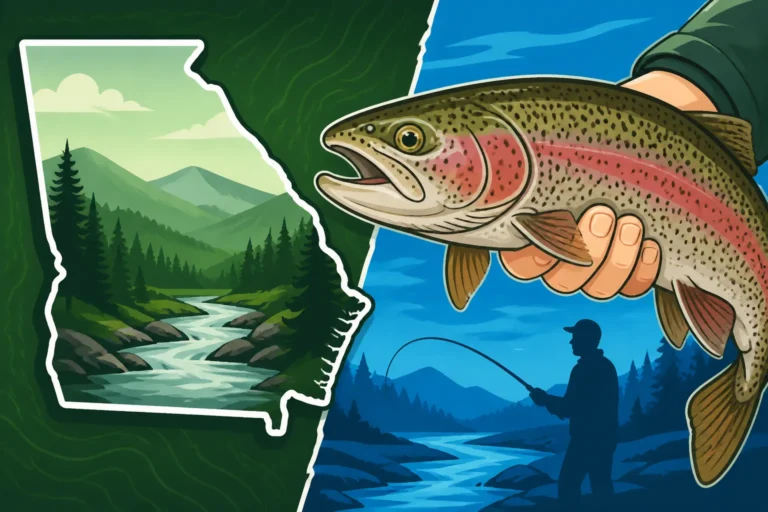
North Georgia's mountains offer some of the most picturesque and rewarding trout fishing experiences. The state manages three main species: Rainbow, Brown, and our native Brook Trout. Trout fishing regulations are particularly nuanced, varying not just by species but often by the specific stream or section of a stream, and even by season. Remember, you'll need that Mountain Trout License Add-On in Georgia to fish for trout in designated waters.
- General Regulation Waters: Many streams fall under general trout regulations, which typically allow a daily creel limit of 8 trout, with no minimum size limit. These are often waters that are heavily stocked by the state, providing ample opportunities for harvest.
- Special Regulation Waters: This is where it gets interesting! Georgia has numerous streams designated as "special regulation" waters. These can include:
- Delayed Harvest Streams: These are catch-and-release only during a specific season (typically November 1st to May 14th). During this period, only artificial lures with a single barbless hook are permitted. The idea is to stock these streams heavily in the fall, allowing anglers to enjoy excellent catch-and-release fishing through the winter and spring. After May 14th, these streams revert to general regulations. Understanding What is delayed harvest trout fishing in Georgia? is essential if you plan to fish these popular areas.
- Trophy Trout Streams: Some streams are managed to produce larger fish, often with higher minimum size limits (e.g., 16 or 18 inches) and lower creel limits (e.g., 1 or 2 fish). Waters Creek in the Blue Ridge WMA is an excellent example, with specific size rules like Waters Creek brook trout minimum length designed to protect its trophy-sized brook trout.
- Artificial Lure/Fly Only Waters: Some streams restrict bait use to artificial lures or flies only, regardless of the season. This is often to reduce mortality rates for released fish, as bait can be swallowed more deeply.
- Native Brook Trout Streams: These small, headwater streams often have the most restrictive rules, sometimes being catch-and-release only with artificial lures, to protect the delicate populations of Georgia's only native trout. Noontootla Creek Trout Minimum Length is another example where specific local rules apply.
Always, always consult the current Georgia Sport Fishing Regulations Guide before heading out to trout country. Stream-specific rules are often posted at access points, but it's best to know before you go. You can also keep an eye on the Georgia Trout Stocking Schedule to know when and where the fishing might be hot!
Crappie, Catfish, and Panfish Guidelines
While bass and trout often get the spotlight, Georgia's crappie, catfish, and various panfish (like bluegill and shellcracker) offer fantastic fishing opportunities for anglers of all skill levels, often with more generous regulations.
- Crappie (Black and White): These tasty panfish are incredibly popular in Georgia, especially during the spring spawn. The statewide daily creel limit for crappie is generally 30 fish. There's usually no minimum size limit, which makes them a great target for beginners and those looking to fill a cooler. Lakes like Sinclair and Oconee are renowned for their crappie fishing. The Best Crappie Lakes in Georgia are often those with plenty of submerged brush piles and standing timber.
- Catfish (Channel, Blue, and Flathead): Catfish are abundant in nearly all of Georgia's freshwater systems, from small ponds to large rivers and reservoirs. They offer great sport and excellent table fare. The regulations for catfish are quite liberal:
- Channel Catfish: Generally, no creel limit and no size limit. This makes them a perfect target if you're looking to catch a lot of fish for a family fish fry.
- Blue Catfish: Similar to Channel Catfish, typically no creel limit and no size limit. Blue catfish can grow to immense sizes in Georgia's larger rivers and reservoirs.
- Flathead Catfish: Again, usually no creel limit and no size limit. Flatheads are predatory and can also reach very large sizes.
These generous limits reflect the healthy populations and the fact that catfish often play an important role in the ecosystem as scavengers. However, specific methods like trotlines and jug lines for catfish still have their own rules, as mentioned earlier.
- Bream (Bluegill, Redear Sunfish/Shellcracker, etc.): Often grouped as "panfish" or "bream," these species are incredibly common, easy to catch, and provide endless fun, especially for kids. The statewide daily creel limit for bream is a very generous 50 fish, with no minimum size limit. This makes them an ideal species for introducing youngsters to fishing, as success is almost guaranteed. You can use simple tactics with crickets or worms under a bobber to catch a cooler full of these feisty little fighters. Many local ponds and public fishing areas are stocked with bream. Learning Bream and Bluegill Fishing for Beginners can quickly lead to a full stringer.
Special Regulations for Specific Lakes and Rivers
While statewide regulations provide a baseline, many of Georgia's premier fishing destinations have unique, localized rules. These special regulations are often implemented by the Georgia DNR to manage fisheries for specific goals, such as producing trophy-sized fish, protecting vulnerable populations, or enhancing angling experiences in popular spots. Ignoring these can be a common pitfall for anglers who assume general rules apply everywhere.
Reservoir-Specific Bass Limits
Some of Georgia's most popular reservoirs are managed intensively to maintain world-class bass fisheries. This often means more restrictive bass size limits than the statewide average. It’s not uncommon for these lakes to have a 14-inch minimum length limit for largemouth bass, meaning any bass under that size must be immediately released.
- Lake Lanier: A prime example. Known for its excellent largemouth and spotted bass fishery, Lake Lanier enforces a 14-inch minimum for largemouth bass. This regulation has been crucial in developing the lake's reputation for producing quality fish. If you're fishing Lanier, you absolutely need to have a measuring board on hand. You can pick up a reliable, floating measuring board from Amazon to ensure you're compliant.
- Lake Oconee and Lake Sinclair: These sister lakes in central Georgia also have specific bass regulations. While they are known for their hybrid striped bass, their largemouth populations are also carefully managed. Lake Oconee, for instance, has similar regulations to Lanier concerning bass minimum lengths.
- West Point Lake, Walter F. George Reservoir, and Lake Blackshear: These large impoundments on Georgia's western and southwestern borders are also often subject to specific bass size and creel limits. These might be part of interstate agreements with Alabama, or simply tailored management plans. For instance, West Point Reservoir bass minimum length regulations are in place to bolster the fishery.
The rationale behind these specific limits is usually to allow bass to grow to a larger, more reproductively mature size. By protecting the younger fish, the DNR ensures that there are enough adults to sustain the population naturally, leading to better fishing for everyone in the long run. Always check the official DNR regulations guide for the specific lake you intend to fish, as these can occasionally be updated.
Delayed Harvest Trout Stream Rules
We touched on this briefly, but it's worth reiterating and expanding on the unique nature of Delayed Harvest (DH) trout streams. These are truly special places in North Georgia, offering incredible catch-and-release opportunities during the cooler months.
- The Concept: The Georgia DNR heavily stocks these streams with trout, usually in the fall. During the "delayed harvest season," which typically runs from November 1st to May 14th, these streams become strictly catch-and-release. Furthermore, during this period, you can only use artificial lures with a single barbless hook. This specific rule helps minimize damage to the fish, increasing their survival rate after release. It's a fantastic way to enjoy consistent action, practice your fly-fishing or spin-fishing techniques, and ensure the fish are there for others to enjoy.
- The Transition: Once May 15th rolls around, the rules change. These streams then revert to general statewide trout regulations, meaning you can harvest trout (up to the daily creel limit, typically 8 fish) and use natural baits, and barbed hooks are permitted. This allows anglers to take home some fish after the primary catch-and-release season. Knowing these dates is crucial. Many anglers plan their trips around the opening of Georgia's Delayed Harvest Catch-and-Release Season Explained because the fishing can be exceptional during that time.
- Popular DH Streams: Georgia boasts several popular DH streams, including sections of the Toccoa River (below Blue Ridge Dam), Amicalola Creek, and Chattooga River (a portion of which is managed by both GA and SC). These areas are often well-marked, but it’s your responsibility to know the boundaries of the DH section.
Fishing a DH stream requires a different mindset and gear than a general regulation stream, emphasizing careful handling and responsible angling practices.
Public Fishing Area (PFA) Specific Regulations
Georgia's Public Fishing Areas (PFAs) are true gems – managed ponds and small lakes that offer fantastic, accessible fishing opportunities, often specifically tailored for family outings and beginner anglers. Because these areas are intensively managed, they often have their own unique set of rules that might differ from statewide norms.
- Intensive Management: PFAs are regularly stocked with popular species like channel catfish, largemouth bass, bluegill, and crappie. The DNR employs specific habitat management techniques, such as adding fish attractors (like brush piles) and maintaining facilities like fishing piers and boat ramps.
- Special Rules: To maximize the angling experience and ensure sustainable populations in these smaller, more controlled environments, PFAs often have:
- Different Size and Creel Limits: You might find specific slot limits for bass or slightly altered creel limits for panfish, designed to optimize the PFA's unique ecosystem. For example, some PFAs might have a 12-inch minimum for bass, while others might have a slot limit to encourage the harvest of mid-sized fish and protect larger ones.
- Gear Restrictions: Some PFAs might restrict motorboat use (allowing only electric trolling motors or no motors at all) to maintain a peaceful environment and prevent excessive disturbance.
- Hours of Operation: Unlike many public waters, PFAs often have specific opening and closing hours, sometimes requiring anglers to be off the water by dusk.
- Permitted Baits: While rare, some PFAs might have specific bait restrictions.
Always check the signs posted at the entrance to any PFA you visit, or better yet, look up the specific PFA on the Georgia DNR website before you go. Places like Paradise PFA or Marben PFA are fantastic resources, but knowing their specific rules is key to enjoying them to the fullest. They are some of the Best Fishing Spots for Kids and Families in Georgia precisely because they are so well-managed and accessible.
Protecting Georgia's Waters: Conservation and Prohibited Acts
Fishing isn't just a hobby; it's a connection to nature, and with that connection comes a responsibility to protect our precious waterways and the fish that call them home. Georgia's freshwater fishing rules aren't just about what you can do, but also what you must not do to ensure sustainable resources for future generations. Responsible angling includes active conservation, which means being aware of both obvious and subtle threats to the ecosystem.
Preventing Invasive Species and Disease Spread
One of the biggest threats to Georgia's native fish populations and aquatic ecosystems comes from invasive species and the spread of diseases. These non-native organisms can outcompete native species, destroy habitats, and introduce pathogens that devastate fish stocks. As anglers, we play a crucial role in preventing their spread.
- "Clean, Drain, Dry" Principle: This mantra is absolutely critical, especially if you move your boat, kayak, or even just your waders and gear between different bodies of water.
- Clean: Remove all visible mud, plants, fish, and animals from your boat, trailer, waders, and fishing gear before leaving the access area. This includes scrubbing down your boat hull and checking your anchor and ropes.
- Drain: Pull your drain plug and drain all water from your boat (livewell, bilge, transom wells), kayak, and gear before leaving the ramp. Never transport water from one lake to another. This is especially important for microscopic organisms and fish eggs.
- Dry: Allow all your gear to thoroughly dry for at least 5 days, or longer if possible, before using it in another body of water. This kills many aquatic invasive species that can survive in damp conditions. If you can't dry for that long, consider high-pressure washing with hot water.
- Bait Buckets: Never release unused baitfish from one body of water into another. Bait shops often source fish from various locations, and introducing non-native species or diseased individuals into a new ecosystem can be disastrous. Dispose of unused bait in the trash.
- Aquarium Dumping: This might seem obvious, but never dump aquarium contents (fish, plants, water) into natural waterways. Many popular aquarium species are invasive and can quickly establish populations that harm native species.
By being diligent with these practices, you become a frontline defender of Georgia's aquatic health. The health of our fishing spots, from the quiet streams of the Chattahoochee River Headwaters to the vast expanses of Lake Seminole, depends on it.
Illegal Fishing Practices to Avoid
Some fishing practices are not only unethical but explicitly illegal, carrying significant penalties. These prohibitions are in place to ensure fair access, protect fish, and maintain the integrity of the sport.
- Fishing Without a License or Required Permits: As discussed, this is the most common infraction. If you're caught fishing without a valid Georgia fishing license, or without the necessary add-ons (like the Mountain Trout License), you're facing fines, confiscation of gear, and potential court appearances. The Penalties for Fishing Without a License in Georgia are serious and far outweigh the cost of a license. It's simply not worth the risk.
- Exceeding Creel or Size Limits: Keeping more fish than legally allowed, or keeping fish that are too small or too large (in a slot limit), is a violation. Game wardens regularly check stringers and coolers. This practice directly harms fish populations by removing too many individuals, especially those vital for reproduction.
- Trespassing: Fishing on private property without permission is illegal. Always be aware of property lines and respect "No Trespassing" signs. Public access points are provided for a reason; stick to them unless you have explicit permission from a landowner. This also includes disturbing private docks or property.
- Wasteful Taking: While not always a specific law, it is generally illegal to catch fish and then wastefully abandon them without intent to consume or use them. Ethical angling means only harvesting what you will use.
- Interfering with Lawful Anglers: Harassing or intentionally interfering with other anglers who are fishing legally is also unacceptable and can lead to legal issues. Everyone deserves to enjoy their time on the water.
Knowing these prohibited acts isn't just about avoiding trouble; it's about upholding the integrity of the sport and showing respect for the environment and fellow anglers.
Catch and Release Best Practices
For many anglers, especially when targeting certain species or fishing in special regulation waters, catch and release is a fundamental part of the experience. Doing it correctly is just as important as the catch itself to ensure the fish survives to be caught another day.
- Minimize Fight Time: The longer a fish fights, the more exhausted it becomes, reducing its chances of survival after release. Use appropriately sized tackle for the fish you're targeting to bring it in relatively quickly.
- Handle with Care:
- Wet Hands: Always wet your hands before touching a fish. Dry hands can remove the protective slime coat, making the fish vulnerable to disease and infection.
- Support the Body: Support the fish's entire body, especially if it's a larger fish, to avoid damaging its internal organs or spine. Never hold a fish by just its jaw if it's heavy, as this can dislocate its jaw.
- Keep it in Water: Keep the fish in the water as much as possible, especially during hook removal and photos. Every second out of water is stressful.
- Quick Hook Removal:
- Barbless Hooks: Consider using barbless hooks or crimping down the barbs on your hooks. They make removal much easier and cause less damage. You can find specialized tools for this on Amazon.
- Tools: Use needle-nose pliers or a hemostat to quickly and cleanly remove hooks. If a fish is deeply hooked, it's often better to cut the line as close to the hook as possible rather than tearing the fish's gills or gut trying to retrieve it.
- Revival:
- Facing Upstream: Gently hold the fish in the water, facing it into a slow current (if applicable) or moving it back and forth to force water over its gills.
- Release When Ready: Release the fish only when it can swim away under its own power. Don't just toss it back; ensure it's revived and ready to go.
By following these catch and release best practices, you contribute directly to the health of our fisheries and uphold the ethical standards of responsible angling. This is particularly crucial for species like trout in Delayed Harvest Trout Streams in Georgia where the entire purpose is to provide repeated angling opportunities.
How to Stay Informed and Where to Find Official Resources
The world of fishing regulations isn't static. Rules can change from year to year, or even within a season, due to biological monitoring, new management strategies, or environmental factors. As an angler, it's your responsibility to stay current. Luckily, Georgia provides excellent resources to help you do just that.
Official Georgia Department of Natural Resources (DNR) Resources
The Georgia Department of Natural Resources (DNR) is the authoritative source for all fishing and boating regulations in the state. They work tirelessly to manage our natural resources, and their publications are your best friend for staying informed.
- Annual Sport Fishing Regulations Guide: This is your Bible for Georgia fishing. The DNR publishes a new guide every year, usually available online as a PDF and in print at most license vendors, sporting goods stores (like Bass Pro Shops or Academy Sports + Outdoors), and DNR offices. This guide contains comprehensive details on:
- License requirements and costs
- Statewide creel and size limits for all species
- Special regulations for specific lakes, rivers, and Public Fishing Areas (PFAs)
- Trout fishing regulations, including Delayed Harvest streams
- Boating safety laws and navigation rules
- Prohibited acts and penalties
It's an absolute must-have. Before any significant fishing trip, especially to a new body of water or for a new species, always consult the most recent guide. You can even find these laminated or in digital format to download to your phone through retailers like Amazon.
- DNR Website: The official Georgia DNR website (www.gooutdoorsgeorgia.com and the main DNR site) is an invaluable, up-to-date resource. You can purchase licenses, find the digital version of the regulations guide, check trout stocking schedules, and get news updates on specific fisheries. They often have maps and specific details about PFAs, boat ramps, and fishing forecasts.
- DNR Social Media and News Releases: Follow the Georgia DNR on their social media channels or sign up for their email newsletters. They often post timely updates on regulation changes, stocking events, and important conservation alerts. This is a great way to get real-time information.
Digital Tools and Apps for Anglers
In our modern age, technology can be a fantastic tool for anglers trying to keep up with regulations and improve their fishing success.
- Go Outdoors Georgia App: The official app, available for both iOS and Android, is a game-changer. It allows you to:
- Purchase and display your fishing license digitally (no more worrying about losing your paper copy!).
- Access the current regulations guide directly from your phone.
- Report harvests (for certain species if required) or wildlife observations.
- Find local license agents and check-in stations.
Having your license and the rulebook literally in your pocket makes compliance so much easier and stress-free.
- Fishing Forecast Apps: While not directly for regulations, many popular fishing forecast apps (e.g., Fishbrain, Fishing Points) can offer community-sourced information on specific spots, and sometimes even highlight local rules or provide links to official regulations. Always cross-reference this with official DNR information, but they can be a good starting point for discovery.
- GPS and Mapping Apps: Using mapping apps (like Google Maps or specialized fishing GPS units) with satellite imagery can help you identify public access points, recognize property boundaries, and navigate complex waterways, ensuring you stay in legal fishing zones.
Leveraging these digital tools can significantly enhance your fishing experience and help you stay on the right side of the law.
Local Knowledge and Fishing Communities
While official resources are paramount, don't underestimate the value of local knowledge and connecting with fellow anglers. The fishing community in Georgia is vibrant and generally very welcoming.
- Local Bait and Tackle Shops: These aren't just places to buy worms; they are hubs of local fishing intelligence. The folks who run these shops (and often the customers hanging out) live and breathe local fishing. They can give you real-time tips on what's biting, current water conditions, and often have the inside scoop on recent regulation changes or temporary closures for specific areas. They are usually the first to know if a specific creek has a new trout limit or if a lake's bass pattern has shifted.
- Fishing Clubs and Forums: Joining a local fishing club or participating in online fishing forums specific to Georgia can connect you with experienced anglers. You can ask questions, share experiences, and learn about the nuances of specific fisheries that might not be explicitly written in a guide. Just remember to always verify critical regulatory information with the DNR.
- Guides and Charters: If you're new to an area or targeting a challenging species, hiring a local fishing guide is an excellent investment. Not only will they put you on fish, but they are typically experts on local regulations and ethical fishing practices. They can teach you the ropes and ensure you understand the specific rules for the waters you're fishing.
Combining official DNR resources with the collective wisdom of the local fishing community is the best approach to staying informed and enjoying everything Georgia's freshwater fishing has to offer.
Common Misconceptions and FAQs
Even with all the resources available, certain questions and misunderstandings pop up repeatedly. It's totally normal to feel a bit lost sometimes because the rules can be nuanced! Let's clear up some of those common confusions so you can fish with unwavering confidence.
Kids' License Requirements Clarified
This is one of the most frequently asked questions, especially by parents and grandparents eager to introduce little ones to fishing. The rule in Georgia is quite clear and very family-friendly:
- Under 16 Years Old: Children under the age of 16 do not need a fishing license to fish in Georgia's freshwaters. This means you can take your 5-year-old, your 10-year-old, or your 15-year-old out fishing without needing to buy them a separate license. This thoughtful regulation makes it incredibly easy and affordable for families to get out on the water and make lasting memories.
- Why the Confusion? The confusion often comes from different states having different age requirements. Some states might require licenses for children as young as 12 or 10. But rest assured, in Georgia, if they're under 16, they're good to go.
- Adult Supervision: While the kids don't need a license, any accompanying adult who is 16 or older and actively participating in fishing (e.g., baiting hooks, casting for the child, or fishing their own line) does need a valid license. It's a common scenario for an adult to be helping a child, so make sure your own paperwork is in order! You can always reference Do Kids Need a Fishing License in Georgia? for a quick refresher.
Reciprocity with Bordering States
Another common question revolves around whether a Georgia fishing license is valid in waters that border other states. It would be super convenient if one license covered everything, but unfortunately, it's rarely that simple.
- General Rule: No Reciprocity: In most cases, a Georgia freshwater fishing license is only valid for fishing within the boundaries of Georgia. It typically does not grant you the right to fish in neighboring state waters, even if those waters are directly adjacent or part of the same lake.
- Bordering Waters & Agreements: However, there are exceptions due to specific reciprocal agreements between states for certain bodies of water. For example, some states that share large border lakes or rivers might have agreements in place allowing residents of either state to fish certain shared waters with their home state's license.
- Lake Hartwell (GA/SC): This is a prime example where a reciprocal agreement exists. Anglers with a valid Georgia fishing license can typically fish the Georgia and South Carolina portions of Lake Hartwell, and vice versa.
- Walter F. George Reservoir (GA/AL): Similar agreements often exist for other shared bodies of water like Walter F. George Reservoir on the Alabama border.
- Always Check: These agreements can be very specific, sometimes only applying to certain parts of the water body or requiring residents of one state to also possess a specific permit from the other state. It is absolutely critical that you check the latest regulations for both states involved, specifically for the body of water you plan to fish. Never assume! Fishing License Reciprocity for Georgia Anglers dives deeper into this complex topic.
What Happens if Your License Expires
Life gets busy, and sometimes things like license renewals can slip through the cracks. It's a common mistake, but an expired fishing license is treated the same as not having a license at all.
- No Grace Period: There is generally no grace period for an expired fishing license in Georgia. If your license has expired, it is no longer valid, and you are technically fishing illegally.
- Penalties: If a game warden checks your license and it's expired, you will likely face the same Fine for fishing without a license in Georgia as someone who never bought one. These penalties can range from substantial fines to court appearances, and in some cases, even confiscation of your gear. It's a frustrating situation because you had a license, but neglecting to renew it is still a violation.
- Renewal Process: Thankfully, renewing your Georgia fishing license is incredibly easy. You can do it online through the Go Outdoors Georgia website, over the phone, or in person at a licensed vendor. Many anglers opt for the annual license and set a reminder on their phone or calendar for a month before it expires, giving them plenty of time to renew. A Georgia fishing license is valid for 365 days from the date of purchase, so it doesn't always align with a calendar year, making personal reminders even more important. You can find detailed instructions on How to Renew a Georgia Fishing License to make sure you're always covered.
Ensuring a Safe and Ethical Fishing Experience
Beyond licenses and specific fish rules, a truly responsible angler also considers the broader aspects of safety and ethics on the water. Fishing is about enjoying nature, but that enjoyment comes with a duty to protect yourself, others, and the environment.
Boating Safety and Life Jacket Laws
If you're heading out on Georgia's freshwater in a boat, canoe, or kayak, understanding boating safety and life jacket laws is non-negotiable. These laws are designed to prevent accidents and save lives.
- Life Jacket Requirements:
- Children Under 13: Any child under 13 years of age aboard any vessel (including kayaks and canoes) must wear a U.S. Coast Guard-approved life jacket at all times while the vessel is underway. This is a strict rule, and game wardens absolutely enforce it. It's crucial for their safety, even if they're strong swimmers. You can find excellent Best Life Jackets for Kids Boating in Georgia designed for comfort and safety on Amazon.
- All Persons: There must be at least one readily accessible, U.S. Coast Guard-approved life jacket for every person on board, regardless of age. While adults aren't always required to wear them, they must be easily reachable in an emergency.
- PFAs: Public Fishing Areas often have specific PFD (Personal Flotation Device) rules that may be more stringent, so always check local signage.
- Boater Education Card: If you were born on or after January 1, 1998, you are generally required to complete a boater education course and carry a Georgia Boater Education Card when operating a motorized vessel. There are some exceptions, so check Who Needs a Boater Education Card in Georgia for details. This course covers vital safety information and rules of the road on the water.
- Boating Under the Influence (BUI): Just like driving a car, operating a boat while impaired by alcohol or drugs is illegal and incredibly dangerous. Georgia has strict BUI laws with serious penalties. Georgia BUI Laws and Blood Alcohol Limits are in place to ensure everyone's safety on our lakes and rivers.
Always file a float plan with someone on shore, check the weather forecast, and carry essential safety equipment like a whistle, fire extinguisher (if required for your vessel size), and throwable flotation device.
Respecting Private Property and Public Access
Georgia has a mix of public and private lands surrounding its waterways. Knowing the difference and respecting boundaries is a fundamental part of ethical angling.
- Public Access: Many lakes and rivers have designated public access points, including boat ramps, fishing piers, and bank fishing areas, often managed by the DNR, local governments, or the Army Corps of Engineers. These are your guaranteed spots to fish legally. Examples include numerous Shore Fishing Access Points in Georgia at various lakes and rivers.
- Private Property: Many sections of rivers and lakefronts are privately owned. You do not have the right to trespass on private land, even if you are accessing the water. This means:
- No bank fishing from private land without permission: Even if the water is public, the land beneath your feet might not be. Always seek explicit permission from the landowner before stepping onto private property.
- Respect private docks and structures: Do not tie up to private docks, fish directly off them without permission, or disturb private property along the shoreline.
- Navigable Waters: In many states, the water itself is considered public property up to the high-water mark if it's deemed "navigable." However, accessing that public water often requires crossing private land. Understand that even if you're in a boat on public water, pulling ashore or wading onto private land without permission is trespassing.
When in doubt, stick to clearly marked public access points. A simple rule: if there's no clear public path or sign indicating public access, assume it's private and seek clarification or another spot.
Leave No Trace Principles
The beauty of Georgia's freshwater environments is one of its greatest assets. It's up to every angler to keep it that way by adhering to "Leave No Trace" principles.
- Pack It In, Pack It Out: Whatever you bring with you – food wrappers, bait containers, empty drink bottles, old fishing line – must leave with you. Never litter. This includes micro-trash like cigarette butts or small pieces of plastic.
- Dispose of Waste Properly: If you're cleaning fish on the water, dispose of carcasses ethically (e.g., in deep water away from swimming areas, or bag and trash them) and certainly not on the bank or at a public access point where they can attract pests and create an unpleasant smell for others.
- Minimize Campfire Impacts: If you're camping or building a fire, use existing fire rings, keep fires small, and ensure they are completely out before leaving. Be mindful of burn bans, especially during dry seasons.
- Respect Wildlife: Observe wildlife from a distance and never feed wild animals. Store food securely to prevent attracting critters.
- Be Considerate of Other Users: Share the water and access points courteously. Keep noise levels down, especially in quiet areas. If someone is fishing a spot, give them plenty of room.
By embracing these conservation and ethical practices, you're not just following rules; you're becoming a steward of Georgia's incredible natural heritage, ensuring that the joy of freshwater fishing can be experienced by generations to come.
Disclaimer
Please remember that this guide provides general information about Georgia's freshwater fishing rules. Regulations are subject to change, and specific situations may vary. It is always your responsibility to consult the most current official Georgia Department of Natural Resources (DNR) Sport Fishing Regulations Guide and website for the precise and up-to-date rules before engaging in any fishing activity. This content is for informational purposes only and does not constitute legal advice.