Georgia’s Delayed Harvest Catch-and-Release Season Explained
You drive up to a North Georgia trout stream in December, see fat rainbows finning in a pool, and then notice a sign that says catch and release, artificial lures only. Maybe you came with a cooler and a tub of corn, and now you are not sure whether you can even fish. That is Georgia’s delayed harvest program in a nutshell: great fishing that confuses a lot of people. This guide explains what delayed harvest means, where the streams are, which rules apply, and how to catch more fish while you are there.
What Delayed Harvest Means in Georgia
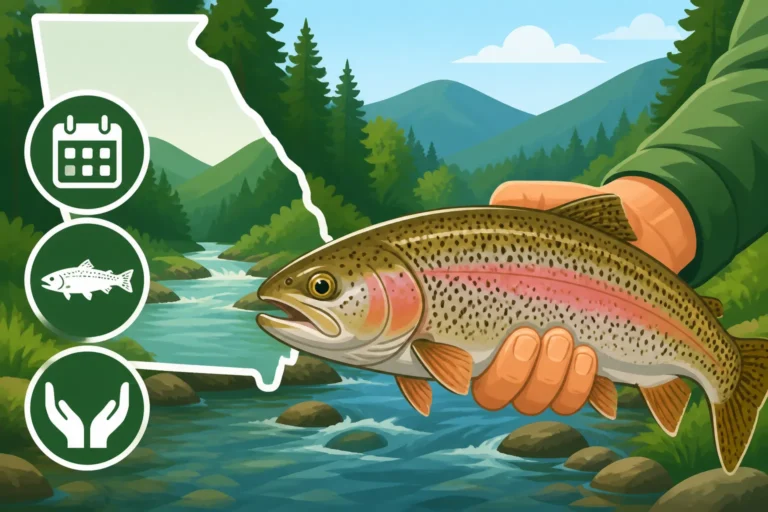
Delayed harvest is a special trout management program that runs on a handful of Georgia streams. The idea is simple. Instead of stocking trout in the warm months and letting them be caught and kept within days, the Wildlife Resources Division of the Georgia Department of Natural Resources stocks these streams during the cooler months and requires anglers to release everything they catch. Harvest is delayed until late spring, when the water starts to warm and the fish would not survive the summer anyway.
The result is a stream full of trout that get caught again and again through the winter and early spring. For anglers, that means more fish in the water, better odds of a bent rod, and a chance to fish good water during the time of year when many general regulation streams have been picked over.
If you want the quick background before diving in, our overview What is delayed harvest trout fishing in Georgia? covers the basics in a few minutes.
The Season Dates
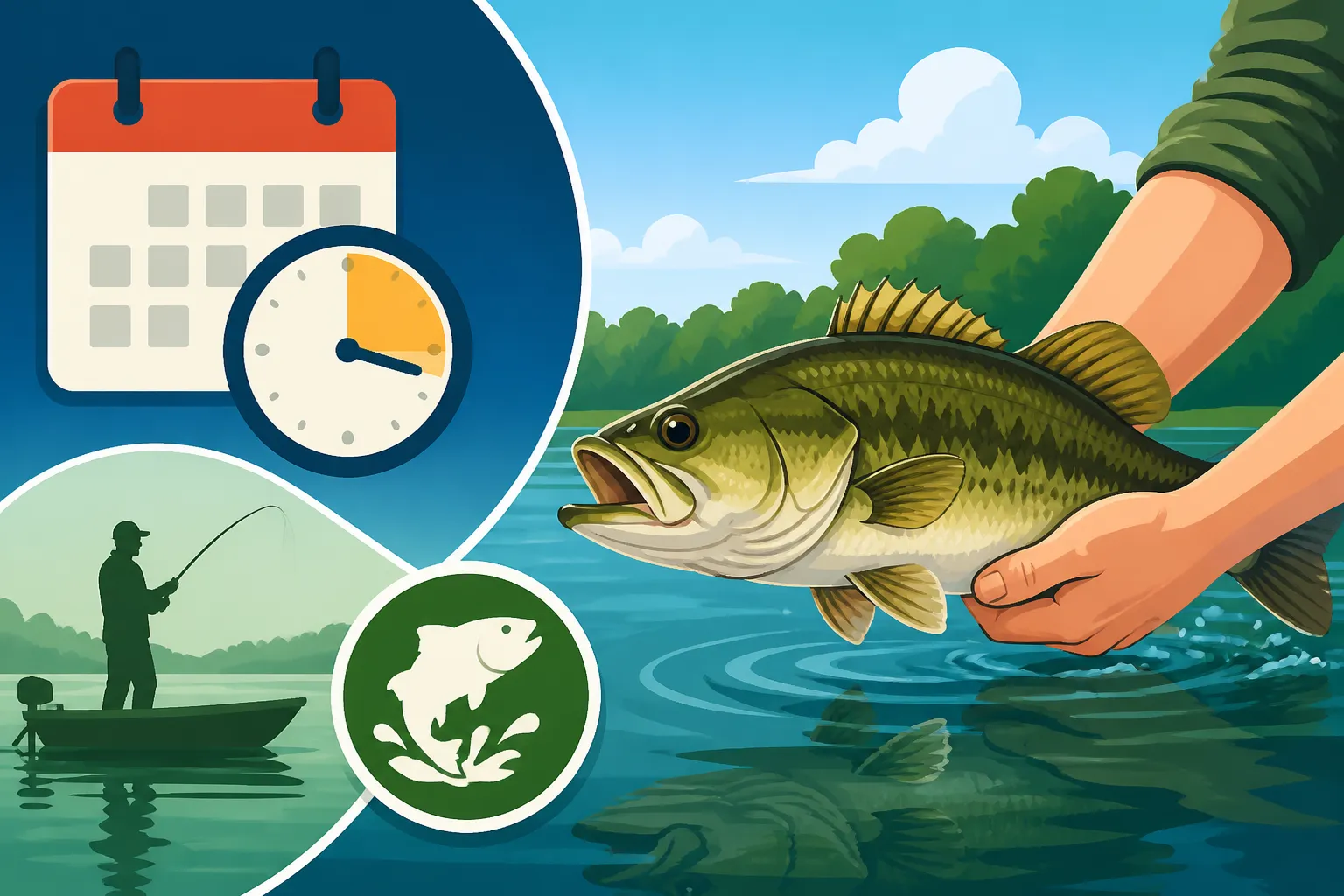
Georgia’s delayed harvest season runs from November 1 through May 14 each year. During that window, special regulations apply on the designated stream sections. Starting May 15, those sections return to general trout regulations, which means anglers can keep trout within the statewide limits.
For a deeper breakdown of the calendar, including what changes on each date, see Delayed harvest season dates for Georgia trout streams.
| Period | Rules on Delayed Harvest Sections |
|---|---|
| November 1 through May 14 | Catch and release only, artificial lures with a single hook only |
| May 15 through October 31 | General trout regulations apply, including statewide creel and size limits |
Why Georgia Uses Delayed Harvest
There are a few reasons the program exists.
Warm summer water. Many Georgia trout streams, especially at lower elevations, get too warm for trout by mid summer. Stocked fish that are not caught often die. Delayed harvest uses the cool months, when the water is ideal for trout.
More fishing opportunity. Catch and release means each stocked fish can be caught many times. That stretches the value of every trout stocked and gives more anglers a chance at success.
Education and access. Delayed harvest streams are often near population centers or easy to reach, making them a good place for beginners to learn and for experienced anglers to fish in the off season.
Harvest at the end. Once the water warms in late spring, anglers can keep fish that would otherwise not survive the summer.
Put together, those reasons explain why delayed harvest streams fish so well compared with the same water under general rules. On a general regulation stream, a load of stocked trout might be mostly gone within a week of a popular stocking. On a delayed harvest section, the fish from the November stocking are still there in January, joined by the fish from the December and January stockings. That stacking effect is what makes a March day on these streams so productive.
How Stocking Works on Delayed Harvest Streams
The Wildlife Resources Division stocks the delayed harvest streams on a regular schedule through the season, usually monthly, from November through spring. Volunteer groups, especially local Trout Unlimited chapters, often help with float stocking to spread fish throughout the section instead of dumping them all at a bridge.
Stocked fish are typically rainbow trout, with brown trout and sometimes brook trout mixed in. Most fish are in the 10 to 12-inch range, with some larger fish stocked from time to time. Because the fish are released, they accumulate through the season. By March or April, a good delayed harvest stream can hold a lot of fish.
The Georgia Trout Stocking Schedule covers stocking on general regulation streams too, which is useful if you want to fish both types of water in the same trip.
Georgia’s Delayed Harvest Streams
Georgia has a short list of delayed harvest streams, each with its own character. Here is a look at each one.
Toccoa River
The delayed harvest section of the Toccoa River lies on national forest land upstream of Lake Blue Ridge in Fannin County, in the area around the Sandy Bottom canoe access and Shallowford Bridge. This is a larger river than most Georgia trout streams, with long runs, deep pools and good wading access when the water is at normal levels.
The Toccoa is a favorite of fly anglers, who can fish nymphs through the deep runs or swing streamers in the pools. It is also big enough for float trips in a canoe or kayak when the water is up. For more detail, see the Toccoa River Trout Fishing Guide.
What to know:
- Wading can be tricky when the river is high. Check gauge levels before you go.
- The section includes some private property. Respect posted land and access only from public areas.
- Spring can bring heavy rain and fast water.
A typical winter day on the Toccoa looks like this: frost on the truck windshield at the parking area, steam rising off the water, and not much happening until the sun clears the ridge. By late morning, fish start sliding into the tailouts of the bigger pools, and a nymph rig drifted along the seam between fast and slow water starts producing. Anglers who leave at 10 a.m. because they are cold often miss the best two hours of the day.
Amicalola Creek
The delayed harvest section of Amicalola Creek runs through Dawson Forest Wildlife Management Area, from Steele Bridge Road downstream to Highway 53. This is a rugged, rocky stream with big boulders, deep pools and fast runs.
Amicalola is a beautiful place to fish, but it demands careful wading. The rocks are slippery, and the creek can rise quickly after rain. It is also popular with paddlers, so expect to share the water on warm spring weekends.
What to know:
- Wear wading boots with good traction, ideally felt or studded rubber.
- Parking is limited near the access points. Arrive early on weekends.
- The Edge of the World rapid is a well known landmark. Use caution near it.
Amicalola rewards anglers who are willing to walk. The pools closest to the Steele Bridge Road access get the most pressure, while water a half mile downstream often holds fish that have seen far fewer flies. Plan your route, carry a wading staff, and leave yourself enough daylight for the hike back out.
Smith Creek
Smith Creek flows through Unicoi State Park near Helen, downstream of Unicoi Lake. It is a small, easy to access stream, which makes it a great place for beginners and families.
Because it is small and close to Helen, Smith Creek gets a lot of pressure. The fish can become very selective by late season, so bring small flies and light tippet.
What to know:
- You will need to pay the state park parking fee in addition to your license.
- The stream is small, so stealth matters. Approach pools slowly.
- It is a great place for kids learning to fish with spinners or small flies.
Smith Creek also pairs well with a family weekend in Helen. One parent can fish the morning hatch while the rest of the group explores town, and short attention spans are easy to manage when the car is never far away. The trade-off is that you will rarely have a pool to yourself on a sunny Saturday in March.
Chattahoochee River
The delayed harvest section of the Chattahoochee River runs within the Chattahoochee River National Recreation Area in metro Atlanta, from Sope Creek downstream to the Highway 41 bridge. This is a unique fishery: a cold tailwater flowing through a major city.
The Chattahoochee is a big river, and water levels change with releases from upstream dams. Wading is only safe at low water, and anglers need to watch for rising water. Many anglers fish this section from kayaks or drift boats.
What to know:
- Check the release schedule before you go. Rising water can be dangerous.
- The river is cold year round, so dress in layers and wear waders.
- The section is close to Atlanta, so it gets heavy pressure on weekends.
For many city anglers, this stretch is the easiest trout fishing in the state. It is entirely possible to fish for an hour before work on a weekday morning, which is something no other Georgia delayed harvest stream offers. Just make a habit of checking flows every time, and pick a wading spot where you can reach the bank quickly if the river starts to come up.
For more on the brown trout side of this river, see Brown Trout Fishing on the Chattahoochee River.
Chattooga River
The Chattooga River forms part of the border between Georgia and South Carolina, and its delayed harvest section is near the Highway 28 bridge. The Chattooga is a wild, remote river with spectacular scenery.
Because it is a border river, Georgia and South Carolina honor each other’s licenses on the Chattooga. That means anglers with either state’s license can fish the river, but check current rules before you go.
What to know:
- The Chattooga is remote. Bring everything you need.
- Wading is challenging, with big rocks and fast water.
- The river is popular with paddlers in spring.
The Chattooga is the stream to pick when you want solitude more than numbers. The fishing can be excellent after stocking, but the bigger draw is the setting: hemlocks, granite ledges and the sound of whitewater. Bring a lunch, plan for a full day, and let someone know where you are going, because cell service is spotty.
Comparing the Streams
| Stream | Size | Access | Wading Difficulty | Best For |
|---|---|---|---|---|
| Toccoa River | Large | Good from public land | Moderate, harder at high water | Fly anglers, floaters |
| Amicalola Creek | Medium | Moderate, limited parking | Difficult, slippery rocks | Experienced waders |
| Smith Creek | Small | Easy, state park | Easy | Beginners and families |
| Chattahoochee River | Large | Easy, urban access points | Moderate, dangerous during releases | Atlanta anglers, kayakers |
| Chattooga River | Medium to large | Remote | Difficult | Adventurous anglers |
Our Delayed Harvest Trout Streams in Georgia page goes into each section in more depth if you are trying to choose between them.
Rules You Need to Follow
The rules on delayed harvest streams are simple, but they are strictly enforced. Here is what you need to know.
Licenses
You need a Georgia fishing license and a trout license to fish delayed harvest streams if you are 16 or older. See Georgia Trout Fishing License Requirements for the details.
Visitors often forget the trout privilege. A basic license alone does not cover trout fishing in Georgia, and the fact that you plan to release every fish does not change that. Buy both before you leave home, and keep proof on your phone or in a waterproof pouch in your wader pocket.
Tackle Restrictions
During the delayed harvest season, from November 1 through May 14:
- Artificial lures only. No live bait, dead bait, corn, cheese, worms or prepared baits like dough balls.
- Single hook only. Lures must have a single hook. That rules out many spinners and crankbaits with treble hooks unless you replace the trebles with single hooks.
- All trout must be released immediately. You cannot keep any trout during the delayed harvest season.
What counts as an artificial lure? Flies, spinners, spoons, jigs and soft plastics are all fine as long as they have a single hook. Scented baits and soft plastics infused with scent are a gray area, so avoid them unless you are sure they are allowed.
After May 15
Starting May 15, the delayed harvest sections switch to general regulations. You can use bait and keep trout within the statewide limits. See Daily Creel Limits for Trout in Georgia for those numbers.
The first weekend after the switch can be crowded, as anglers who prefer bait and a fish fry arrive to take home a limit. If you prefer quiet water, the last two weeks of the catch-and-release season are often the sweet spot: fish are plentiful, water is still cool, and the crowds have not yet shown up. By June, the lower elevation sections warm quickly, and the remaining fish get harder to find.
Penalties
Fishing with bait or keeping fish on a delayed harvest stream during the season can lead to a citation and fine. Rangers patrol these streams regularly, especially on weekends.
A question that comes up every year: what if a fish is badly hooked and dies? The rule does not change. During the season, every trout goes back in the water. That is one more reason to fish single barbless hooks, set the hook quickly so fish are not swallowing flies, and keep handling time short.
Common Questions About the Rules
Can I fish a general regulation stream with bait and then drive to a delayed harvest stream the same day? Yes. Just make sure no bait or treble hooked lures are rigged up when you fish the delayed harvest section.
Do the rules apply to the whole stream? No. Only the marked delayed harvest section is covered. Water above and below it may be under general regulations, so read the signs at each access point.
Can I use a two-fly rig? Two-fly nymph rigs are a common sight on these streams, but read the wording of the current regulations guide yourself, or ask a ranger, before you tie one on. When in doubt, a single fly keeps you clearly within the rules.
How to Catch Fish on Delayed Harvest Streams
Now for the fun part. Here is how to catch more fish on Georgia’s delayed harvest streams.
Fly Fishing
Fly fishing is the most popular method on delayed harvest water. A few patterns that work well:
- Nymphs. Pheasant tails, hare’s ears, prince nymphs and egg patterns.
- Streamers. Woolly buggers in black, olive and white.
- Dry flies. Blue winged olives, caddis and midges when fish are rising.
- Junk flies. Squirmy worms, mop flies and egg patterns are very effective on stocked fish.
For more on getting started, see How to Fly Fish for Trout as a Beginner.
A 9-foot 5-weight rod is ideal for most delayed harvest streams. On small streams like Smith Creek, a shorter rod is easier to handle.
The most reliable rig on Georgia delayed harvest water is a simple indicator setup: a small strike indicator, a split shot, a bright egg or worm pattern as the first fly, and a small natural nymph trailing 18 inches behind. Adjust the depth until you feel the split shot ticking the bottom now and then. When the indicator hesitates or dips, set the hook. It is not fancy, but it catches fish from November through May.
Spin Fishing
Spinning gear is also effective. Good options include:
- Small inline spinners with single hooks.
- Small spoons with single hooks.
- Small jigs and soft plastics.
- Small crankbaits with single hooks.
You can buy single hook spinners or convert treble hook spinners by replacing the hooks. Replacement single hooks are sold at most tackle shops and on Amazon.
Cast spinners across and slightly upstream, then reel just fast enough to keep the blade turning as it swings through the pool. In cold water, slow down and let the lure sink before starting the retrieve. A light 4 to 6-pound line on an ultralight rod lets you cast small lures a long way and makes even a 10-inch stocker feel like a real fight. See How to Use a Spinner for Trout for more.
Seasonal Tactics
| Time of Season | Water Temperature | Tactics |
|---|---|---|
| November and December | Cooling | Fresh stockers, aggressive feeders. Streamers and bright flies work well. |
| January and February | Cold | Fish slow and deep. Nymphs and small jigs. Fish midday when water warms. |
| March and April | Warming | Hatches begin. Dry flies and nymphs. Best fishing of the season. |
| Early May | Warm | Fish feed actively. Last weeks before harvest season. |
Stocking days matter too. Freshly stocked trout tend to pod up near where they were released and will hit almost anything bright for a day or two. After a week or so, they spread out, settle into feeding lanes and start behaving more like wild fish. If you hit a stream a few days after a stocking and the obvious pools are empty, work the pocket water and the shallow riffles at the head of each run, where scattered fish often hold.
Handling and Releasing Fish
Because every fish must be released, proper handling is important. Here are the basics:
- Use a rubber net. Rubber nets are easier on fish than knotted nylon nets.
- Keep fish in the water. Minimize the time fish spend out of the water.
- Wet your hands. Dry hands remove the protective slime on trout.
- Use forceps. Forceps make hook removal quick and easy.
- Consider barbless hooks. Pinch down the barbs with pliers to make releases easier.
- Revive the fish. Hold the fish facing upstream until it swims off on its own.
For more, see How to Catch and Release Trout Properly.
Planning Your First Delayed Harvest Trip
- Pick a stream that matches your skill. Smith Creek or the Chattahoochee at low water for beginners; Amicalola or the Chattooga for experienced waders.
- Buy your fishing and trout licenses. Do it before you lose cell service in the mountains.
- Check the weather and water levels. Skip big rivers after heavy rain or during dam releases.
- Rig for the rules. Pack only artificial lures and single hooks.
- Dress for cold water. Layers under waders, a warm hat and spare gloves.
- Arrive mid morning in winter. Water warms through the day, and fish feed more actively after the sun hits the stream.
- Fish slowly and move often. If a pool does not produce after a dozen good drifts, move to the next one.
Stream Etiquette
Delayed harvest streams are popular, so courtesy matters. Do not wade into a pool someone else is fishing. Walk around anglers on the bank rather than through the water in front of them. If someone is fishing a run, ask before stepping in below them. And pack out every bit of trash, including tippet scraps and spent split shot packaging.
Rubber nets, forceps and barbless hooks are sold at fly shops across North Georgia and on Amazon.
Gear Checklist
- Fly rod or spinning rod
- Waders and wading boots
- Rubber net
- Forceps
- Flies or single hook lures
- Polarized sunglasses
- Warm layers
- License and trout license
- Wading staff for rocky streams
- A small first aid kit and a fully charged phone
Waders, wading boots and wading staffs are the big-ticket items. Fly shops in Helen, Blue Ridge and the Atlanta area can help with fit, and Amazon is handy for smaller items such as tippet, split shot and spare forceps.
Georgia’s delayed harvest season is one of the best trout fishing opportunities in the Southeast. With the right rules, the right gear and a little patience, you can catch a lot of trout through the winter and spring.
Disclaimer
This article is for general informational purposes only and does not constitute professional advice. Laws, prices and regulations vary by location and change over time. Consult a qualified professional for guidance on your specific situation.