Flathead Catfish Guide for Georgia Anglers
For Georgia anglers, few freshwater fish offer the raw power and challenge of the flathead catfish. While their cousins, the channel and blue catfish, are often sought after, the flathead holds a special mystique, partly because of their solitary nature and aggressive predatory habits. Many folks, especially those new to catfish fishing or those used to smaller species, find themselves frustrated by the elusive nature of these river monsters. They're not just bigger; they're different, and approaching them with the wrong mindset or gear can lead to a lot of wasted time and effort. This guide is here to unravel the secrets of Georgia's flathead catfish, helping you understand their behavior, master the techniques, and ultimately, put more of these impressive fish on your line.
Understanding Georgia's Flathead Catfish
Before you can hope to catch a flathead, you need to know what you're up against. These aren't your typical scavenging catfish; they are apex predators of the river bottom, and their entire physiology is built for that role. Recognizing a flathead, understanding their unique characteristics, and knowing their preferred hangouts in Georgia's diverse waterways is the first step toward successful angling.
Identifying the Flathead: What Makes Them Unique
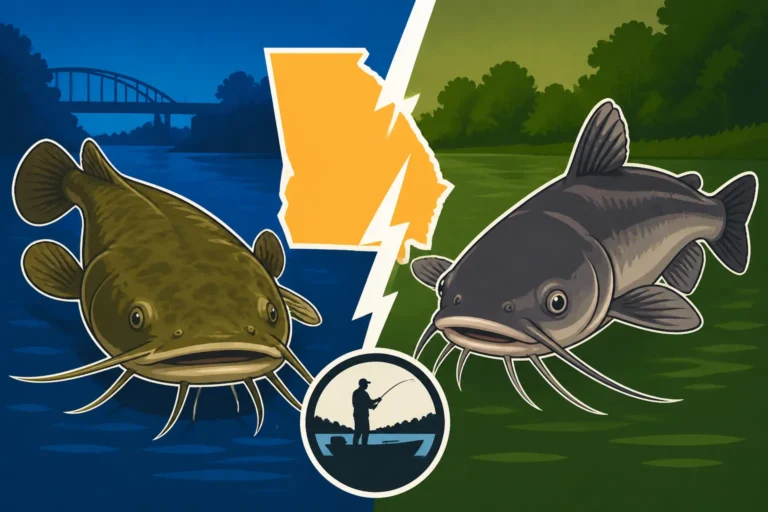
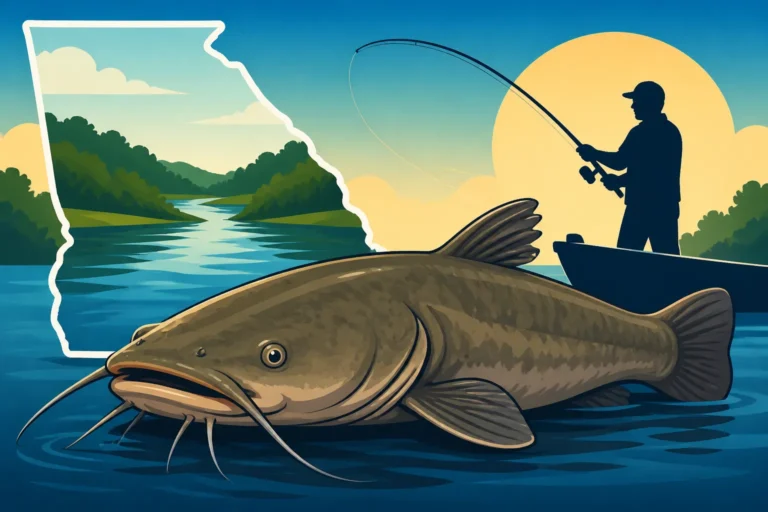
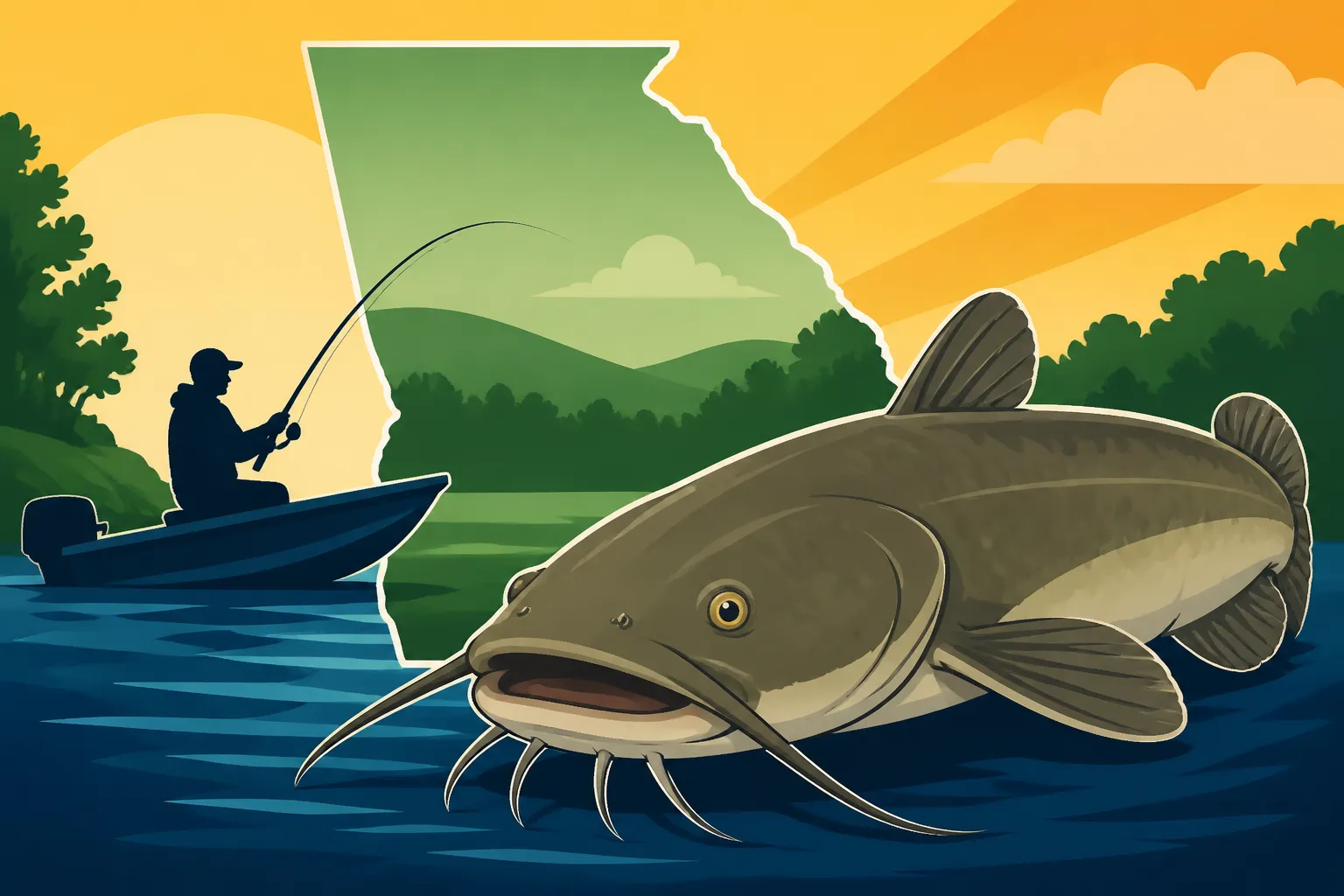
When you pull a big catfish out of the water, it’s not always immediately obvious which species it is, especially for newer anglers. But the flathead catfish (scientific name Pylodictis olivaris) has some very distinct features that set it apart from the more common channel and blue catfish found in Georgia. The most obvious clue, as its name suggests, is its head. It’s noticeably wider and flatter than other catfish, almost shovel-like, with small, beady eyes set high on its head. This flat profile allows them to hug the bottom and ambush prey with incredible efficiency.
Another key identifier is their coloration. Flatheads typically have a mottled, brownish-yellow or olive body, often with dark brown or black spots and streaks, which provides excellent camouflage against rocky or muddy river bottoms. This isn't the uniform slate gray of a blue catfish or the speckled silver of a channel cat. Their belly, however, is usually a creamy white or pale yellow. Perhaps the most definitive characteristic, and one that often trips up beginners, is their tail fin. Unlike the deeply forked tail of a channel catfish or the moderately forked tail of a blue catfish, the flathead's tail is only slightly notched or almost straight, giving it a somewhat rounded appearance. Their lower jaw also protrudes slightly, another adaptation for their predatory feeding style. Knowing these specific traits will not only help you identify your catch but also ensure you're adhering to any species-specific regulations. If you're struggling to tell them apart, our guide Catfish Species Compared: Channel vs Blue vs Flathead can provide more detailed comparisons.
Where Flatheads Call Home in Georgia Waters
Flathead catfish are not as widespread in every type of water body across Georgia as channel catfish might be. They are primarily a riverine species, preferring slow to moderate currents in larger rivers and their tributaries. They absolutely thrive in environments with plenty of submerged cover: think fallen trees, log jams, rock piles, and deep scour holes. These structures provide them with perfect ambush points and protection from strong currents. You'll often find them lurking in the deepest part of a bend in a river or upstream of a bridge pilings where currents create deep eddies and pockets.
While rivers are their undisputed domain, flatheads have also successfully established populations in many of Georgia's larger reservoirs, particularly those with significant riverine characteristics or strong inflows from major river systems. In these lakes, they'll still gravitate towards areas that mimic their river habitat – the submerged river channels, deep creek beds, standing timber, and underwater points or humps that offer both depth and structure. They are quite particular about their environment, preferring turbid, slow-moving waters where they can effectively hide and ambush their prey. You won't typically find them in shallow, clear, open water. Instead, focus your efforts on those darker, debris-laden sections of water where other fish might shy away. For more on where to target these behemoths, check out Best Catfish Fishing Spots in Georgia.
The Hunt for Flathead Catfish: Prime Seasons and Times
Timing is everything when it comes to fishing, and flathead catfish are no exception. These powerful predators have distinct seasonal and daily patterns that dictate their feeding behavior and, consequently, your chances of success. Understanding when and why they move can dramatically increase your hook-up rate and prevent countless hours of unproductive casting.
Seasonal Patterns: When Flatheads Are Most Active
Flathead catfish activity is heavily influenced by water temperature, making certain seasons more productive than others. As the water warms in late spring and early summer, flatheads really kick into high gear. This is often considered the peak season for targeting them. They become far more active as their metabolism increases, and they begin to feed heavily to prepare for spawning. During this time, they’ll often move into shallower areas adjacent to their deep-water haunts, especially at night, in search of an easy meal. This pre-spawn and spawn period is when many of the largest flatheads are caught.
As summer progresses, especially during the dog days, flatheads will often retreat to deeper, cooler waters during the day. However, their nocturnal feeding habits intensify. Warm summer nights, particularly after a long, hot day, can be incredibly productive as flatheads emerge from their cover to hunt. Don't discount fall either, particularly early fall. As water temperatures begin to drop, flatheads go on another feeding frenzy, bulking up for the colder months ahead. This can be a fantastic time to catch some giants as they become very aggressive. During winter, their activity slows considerably. They become lethargic, often holding in very deep holes or tight to heavy cover, and feed much less frequently. While they can still be caught, it requires a much slower presentation and a lot of patience.
Best Time of Day: Capitalizing on the Flathead's Nature
While flatheads can be caught at any time of day, they are predominantly nocturnal predators, especially the larger, more experienced fish. This means your best chances for success often come after the sun dips below the horizon. As dusk approaches and into the darkest hours of the night, flatheads abandon their daytime cover to actively patrol shallower feeding flats, log jams, and river bends. They rely on their acute sense of smell and lateral line system to detect prey in the darkness, giving them a distinct advantage. Setting up your lines just before sunset and fishing through the night until dawn can be incredibly rewarding.
That's not to say daytime fishing is impossible. During periods of overcast skies, or immediately after a rain shower that adds turbidity to the water, flatheads might be more willing to feed during daylight hours. They also tend to be more active during the day in the cooler seasons of spring and fall. However, even then, they'll likely remain tighter to heavy cover and in deeper water, only venturing out for quick ambushes. If you're fishing during the day, focus on getting your bait right into their lairs – under log jams, within thick submerged brush, or at the bottom of deep holes. But if you're serious about landing a trophy flathead, embrace the night!
Mastering Flathead Catfish Techniques and Gear
Flatheads are powerful fish that demand serious gear and a strategic approach. You can't just throw out a worm on a lightweight spinning rod and expect to land a twenty-pounder. These fish are built for battle, and you need to be prepared. From the rod in your hand to the bait on your hook, every component of your setup needs to be up to the task.
Essential Gear: Rods, Reels, and Line for Flatheads
When it comes to flathead fishing, think heavy-duty. These fish have incredible pulling power, and they'll try to use any available structure to break your line. A heavy to extra-heavy action rod, typically 7 to 9 feet in length, is essential. Look for rods with a strong backbone that can handle large weights and powerful fish, but also a sensitive tip to detect subtle bites. Many anglers prefer specialized catfish rods designed for this kind of abuse.
Pair that rod with a sturdy baitcasting reel that has a smooth drag system and high line capacity. Conventional reels known for saltwater fishing are often adopted by serious flathead anglers for their durability and power. A good reel will allow you to lay down serious drag pressure without locking up, which is crucial when a big flathead decides to bolt for a log jam. When considering what to buy, you'll find plenty of robust options on platforms like Amazon. For your main line, monofilament or braided line in the 30 to 80-pound test range is standard. Braided line offers superior strength, less stretch, and greater sensitivity, which can be a huge advantage when fishing in heavy cover or detecting light bites in deep water. Monofilament, while having more stretch, can be more forgiving and is generally more abrasion-resistant, which is important when fishing around rocks and wood. Our guide on Best Rod for Catfish Fishing on Georgia Rivers has more specific recommendations.
Live Bait is King: Preferred Flathead Baits
Unlike channel and blue catfish, which will readily strike cut bait or stink bait, flathead catfish are almost exclusively predators that prefer live bait. This is perhaps the most critical difference in flathead fishing strategy. They want a living, struggling meal. The best live baits are typically species that naturally inhabit the flathead's environment. Sunfish (like bluegill or green sunfish), small suckers, shad, and even smaller bullheads are all excellent choices. The size of your bait should match the size of the flathead you're targeting – generally, baits from 4 to 8 inches are ideal, but don't be afraid to go even larger if you're hunting true trophies.
The key is to keep your live bait active and healthy on the hook. This often means rigging them so they can swim naturally and attract attention. You'll want to avoid baits that are sluggish or appear dead, as flatheads are very discerning predators. Having a good bait bucket with an aerator is crucial for keeping your bait lively throughout your fishing trip. Experiment with different local baitfish to see what the flatheads in your specific fishing spot prefer. Sometimes, what works in one river might not be as effective in another, so always be willing to adapt.
Setting Up Your Rig: Strategies for Success
Setting up the right rig is paramount for flathead fishing, as it needs to present your live bait naturally while being strong enough to withstand a powerful fight. The most popular and effective rig for flathead catfish is a slip-sinker rig (also known as a Carolina rig). This setup consists of your main line, a heavy lead sinker (often a flat no-roll sinker or an egg sinker, anywhere from 2 to 8 ounces depending on current), a bead, a barrel swivel, and a leader line (often heavy monofilament or fluorocarbon, 50-80 lb test, about 18-36 inches long). At the end of the leader, you'll tie on a large, strong hook.
For hooks, circle hooks in sizes 5/0 to 10/0 are highly recommended. They are incredibly effective for flatheads, as they are designed to hook in the corner of the fish's mouth, minimizing gut hooks and making catch-and-release much easier. When presenting your live bait, hook it through the back (above the lateral line) or through both lips, ensuring it can swim freely. Position your bait near significant cover, like submerged logs or deep holes. If you're fishing in strong current, consider a three-way swivel rig to keep your bait closer to the bottom without rolling. Always check your knots and leader for fraying, especially after a fish, as flatheads can be incredibly abrasive. Remember, you're targeting tough fish in tough places, so robustness is key. You can find all the necessary components for these rigs, from sinkers to swivels, on Amazon. Our Catfish Bottom Fishing Basics article dives deeper into these rig configurations.
Finding Your Trophy: Top Flathead Fishing Spots in Georgia
Georgia is blessed with an abundance of waterways, and many of them hold respectable populations of flathead catfish. Knowing where to concentrate your efforts, beyond just "a river," can make all the difference between a frustrating blank and a memorable catch. Flatheads are creatures of habit and structure, so pinpointing their preferred lies is crucial.
River Systems: Hotbeds for Giant Flatheads
When it comes to targeting large flathead catfish in Georgia, the major river systems are your best bet. Rivers like the Altamaha River, the Flint River, and sections of the Chattahoochee River are legendary for their big flatheads. These rivers offer the deep channels, abundant snags, and strong currents that flatheads love. On the Altamaha, look for the deep bends, oxbow lakes, and tributary mouths where water flows in, bringing baitfish with it. The numerous log jams and submerged timber in this expansive river system provide endless ambush points.
The Flint River is another fantastic flathead fishery, especially in its middle to lower sections. Here, you'll find plenty of deep scour holes around rocky outcrops and bridge pilings. Don't overlook the areas downstream from dams, as the turbulent water often creates deep pockets and concentrates baitfish, which in turn attracts flatheads. On the Chattahoochee, focus on the sections below major impoundments, where the river maintains its natural flow and offers ample structure. These are not places for the faint of heart; navigating these rivers, especially at night, requires caution and familiarity with the water. Always prioritize safety and know the river before you go.
Reservoir Giants: Locating Flatheads in Lakes
While rivers are prime flathead territory, many of Georgia's large reservoirs also hold impressive numbers of these fish. Lakes such as Lake Seminole, Lake Eufaula (officially Walter F. George Reservoir), and even parts of Lake Sinclair can be very productive. In these impoundments, flatheads will still gravitate toward areas that resemble their riverine origins. The old river channels that wind through the lake bottoms are prime hunting grounds. Use your sonar to identify these submerged channels, especially where they intersect with deep creek beds or have standing timber.
Look for areas with significant underwater structure. Submerged roadbeds, old bridge foundations, and large humps or points that drop off into deep water are all excellent spots. Flatheads will often lie in wait in these deep, dark areas, emerging to feed when conditions are right. Night fishing is particularly effective in reservoirs, as flatheads will move shallower to hunt for baitfish that are also moving up in the water column. Understanding the lake's topography, especially the remnants of the original river system, is key to consistently finding flatheads in these larger impoundments. If you're looking for more general spots, our guide to Best Fishing Spots in Georgia can offer some additional inspiration.
Handling Your Catch: From Hook to Table
Once you've managed to wrestle a feisty flathead to the boat or bank, the job isn't quite done. Proper handling is crucial, whether you plan to release the fish or take it home for a meal. Flatheads are powerful, often slimy, and can deliver a nasty barb, so a little preparation goes a long way to ensure safety for both you and the fish.
Responsible Catch and Release Practices
Many anglers target flathead catfish for their sporting challenge, choosing to release these big fish to fight another day. If you're going the catch-and-release route, minimizing stress and injury to the fish is paramount. First, use appropriate gear, as discussed earlier, so you can land the fish quickly without exhausting it excessively. When handling a flathead, be aware of their sharp pectoral and dorsal fins; these can inflict painful wounds. A pair of heavy-duty gloves can protect your hands.
Try to keep the fish in the water as much as possible. If you must remove it for a quick photo, support its entire body weight horizontally. Avoid holding large flatheads vertically by the jaw, as this can damage their internal organs and spine. Use pliers or a de-hooking tool to quickly remove the hook, especially if you're using circle hooks, which usually grab the lip. If the fish is deeply hooked and the hook cannot be easily removed, it's often best to cut the line as close to the hook as possible. Once released, hold the fish gently in the water, facing into the current, until it regains its strength and can swim away on its own. Observing these practices ensures the flathead population remains healthy for future generations of anglers.
Cleaning and Cooking Flathead Catfish
If you decide to keep a flathead for the dinner table, you're in for a treat! Flathead catfish are highly prized for their firm, white, flaky meat and mild flavor, often considered superior to other catfish species. The key to good-tasting flathead is proper cleaning and preparation. The first step is to humanely dispatch the fish. Then, you'll need a sharp fillet knife. Unlike channel cats, flatheads don't have the typical "skinning zipper." Many anglers opt to fillet them by cutting along the backbone, then working the knife along the rib cage to remove the fillet. The tough skin can then be peeled off the fillet.
Once filleted, you can cut the meat into manageable portions. For larger fish, you might find some darker, fattier meat along the lateral line; trimming this off can further enhance the flavor. Many people enjoy flathead catfish simply fried, battered with cornmeal or seasoned flour until golden brown. Their firm texture also holds up well to grilling, baking, or even smoking. A fresh flathead fillet, lightly seasoned and cooked just right, is a true delicacy and a well-deserved reward for the effort involved in catching one of these magnificent fish.
Georgia's Flathead Catfish Regulations You Need to Know
Fishing responsibly in Georgia means understanding and adhering to the state's regulations. These rules are in place to ensure the sustainability of our fisheries and provide fair opportunities for all anglers. Flathead catfish, like all species, are subject to specific guidelines regarding licenses, size, and creel limits.
Size and Creel Limits: Staying Legal
When it comes to flathead catfish, Georgia generally has quite liberal regulations compared to other game fish, largely because they are a non-native species in many of the state's river systems, and their predatory nature can impact native fish populations. However, it's absolutely crucial to always check the most current Georgia Department of Natural Resources (DNR) regulations before you head out, as rules can change and sometimes vary by specific water body. Generally, there are no statewide minimum size limits for flathead catfish in Georgia, meaning you can keep any legal-sized fish you catch.
Similarly, daily creel (possession) limits for flathead catfish are often very generous, or even nonexistent, again reflecting their status as a predatory, often introduced species. However, just because you can keep many doesn't mean you should. Practicing selective harvest, especially releasing the largest breeding females, is a good conservation practice. Always verify these details for your chosen fishing location, as some specific public fishing areas or unique waters might have special regulations. Ignorance of the law is never an excuse, and penalties for violations can be stiff. Our guide on Georgia Fishing Regulations Explained provides a broader overview of the state's rules.
General Fishing License Requirements
No matter what species you're targeting in Georgia, if you're 16 years of age or older, you must possess a valid Georgia fishing license. This applies to both residents and non-residents. There are various types of licenses available, from annual licenses to short-term options for visitors, and even lifetime licenses for seniors and specific categories of individuals. Make sure you purchase the appropriate license for your situation.
In addition to a basic fishing license, if you plan to fish for trout in designated trout waters, you'll also need a Georgia Mountain Trout License add-on, regardless of whether you're specifically targeting trout or not. While flatheads aren't typically found in prime trout streams, it's good to be aware of all potential requirements depending on where you cast your line. You can purchase licenses easily online through the Georgia DNR website, by phone, or from authorized license agents across the state. Always carry your license with you while fishing, as game wardens frequently check. For comprehensive information on how to get started, our Georgia Fishing License Guide is an excellent resource.
| Catfish Species | Tail Fin | Head Shape | Body Coloration | Primary Diet |
|---|---|---|---|---|
| Flathead Catfish | Slightly notched/Rounded | Wide and Flat | Mottled brown/yellow, dark spots | Live fish, crayfish |
| Channel Catfish | Deeply forked | Narrower, rounded | Silver/grey, often with spots (juveniles) | Omnivorous (cut bait, prepared bait, insects) |
| Blue Catfish | Moderately forked | Narrower, rounded | Slate blue/grey | Fish, mussels, crayfish |
How to Get a Fishing License in Georgia
Best Bait for Flathead Catfish
Flathead Catfish Identification and Habits
Flathead Catfish vs Channel Catfish: What Sets Them Apart
Flathead Catfish Size in Georgia Waters
Best Catfish Gear for Georgia Rivers and Lakes
Georgia Fishing License Costs and Types
How to Buy a Fishing License Online in Georgia
Disclaimer
This article is for general informational purposes only and does not constitute professional advice. Laws, prices and regulations vary by location and change over time. Consult a qualified professional for guidance on your specific situation.