Best Rain Gear and Layers for Boat Fishing
Oh, the joy of a perfect Georgia fishing day… until those ominous clouds roll in, seemingly out of nowhere! We've all been there: a sudden downpour, and suddenly, your peaceful outing turns into a soggy, shivering ordeal. It's not just uncomfortable; it can genuinely cut your trip short or even become a safety concern on the water. This guide is all about making sure you stay dry, warm, and utterly focused on reeling in that next big catch, no matter what Mother Nature throws your way. We're going to dive deep into the best rain gear and layering strategies specifically designed for boat fishing in Georgia's wonderfully unpredictable climate.
Why Quality Rain Gear is Non-Negotiable in Georgia
Let's face it, Georgia weather is a beautiful but often bewildering beast. One minute it's glorious sunshine, the next you're in the middle of a torrential downpour, especially during those long, humid summer afternoons or chilly spring mornings. As anglers, we spend hours exposed to the elements, and being unprepared can quickly ruin what should be a fantastic day on the water. This isn't just about avoiding a little dampness; it's about comfort, safety, and extending your time fishing effectively.
The Unpredictable Nature of Georgia Weather
Anyone who's lived or fished in Georgia for any length of time knows exactly what I'm talking about. You can check the forecast religiously, and still, that pop-up thunderstorm will materialize seemingly out of thin air. Especially in the mountains or over our larger reservoirs like Lake Lanier Fishing Guide, Georgia or Clarks Hill Lake Fishing Guide, Georgia, conditions can shift dramatically with little warning. A clear morning can give way to a blustery, rainy afternoon faster than you can say "fish on!" Without proper rain gear, you're not just getting wet; you're often getting cold, which can lead to a rapid decrease in enjoyment and focus. Imagine being miles from the ramp on a vast lake when a squall hits – you need gear you can trust.
Health and Safety Benefits of Staying Dry
Beyond the obvious discomfort, getting thoroughly soaked on a boat can lead to a few serious issues. Hypothermia, while often associated with extreme cold, can actually set in even in moderately cool temperatures if you're wet and exposed to wind. Your body loses heat much faster when wet, and being on an open boat amplifies this effect. Furthermore, being cold and shivering impairs your motor skills and judgment, which is absolutely the last thing you want when you're navigating waterways, casting lines, or handling sharp hooks. Quality rain gear acts as your personal microclimate, keeping your core temperature stable and allowing you to remain alert and effective. It's a critical part of your Safety Gear Checklist for Georgia Boaters.
Understanding the Layers System for Anglers
Think of your fishing attire not as a single garment, but as a system working together to regulate your body temperature and protect you. This "layering system" is the secret sauce for staying comfortable in fluctuating weather, allowing you to add or shed pieces as conditions change. It's especially vital for boat fishing where you're often moving between periods of high activity (casting, fighting a fish) and periods of relative stillness.
The Base Layer: Managing Moisture and Warmth
The base layer is what sits directly against your skin, and its primary job is moisture management. When you're actively fishing, you're going to sweat, even in cooler temperatures. A good base layer wicks that sweat away from your skin, preventing that clammy, cold feeling. Materials like merino wool or synthetic fabrics (polyester, polypropylene) are excellent choices. Cotton, while comfortable in dry conditions, is generally a no-go for base layers on the water because it absorbs moisture and holds it against your skin, making you feel colder. In Georgia's humid climate, finding a base layer that breathes well but still provides warmth when needed is key. Many reputable brands offer excellent options, which you can often find at a Bass Pro Shops or on Amazon.
The Mid Layer: Insulation for Core Comfort
The mid layer is your insulating layer. Its job is to trap warm air close to your body, providing the bulk of your warmth. Depending on the season and expected temperatures, this could be anything from a lightweight fleece vest or jacket to a heavier insulated puff jacket. The beauty of a mid-layer is its versatility; you can easily add or remove it as the day warms up or cools down, or if you're transitioning from high-energy casting to slower trolling. When selecting a mid-layer, consider packability – you want something that can be easily stowed away in a dry bag or boat compartment if not needed. For those chilly early mornings targeting Best Crappie Lakes in Georgia or Best Trout Streams in Georgia, a solid mid-layer can make all the difference.
The Outer Layer: Your Waterproof Shield
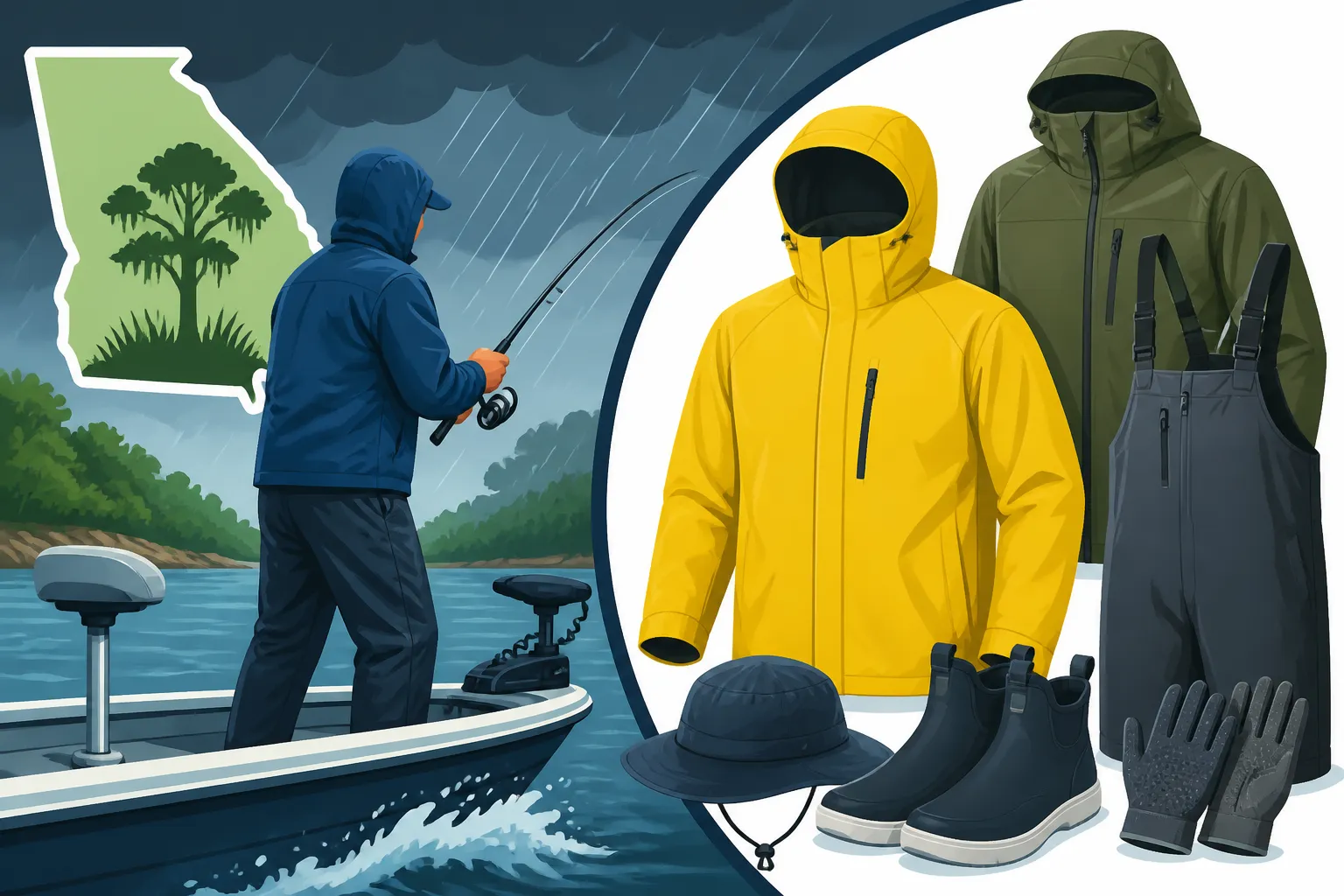
This is where your rain gear comes in – the mighty outer layer. Its mission is two-fold: to be completely waterproof, keeping rain and spray out, and to be breathable, allowing the moisture wicked away by your base layer to escape. Without breathability, you'd just be cooking in your own sweat, defeating the purpose. This outer shell is your first line of defense against wind and water. We're talking jackets and bibs (or pants) made from high-performance waterproof/breathable membranes. This layer needs to be robust enough to handle the rigors of boat fishing, from leaning against rough surfaces to repetitive casting motions.
What Makes Good Rain Gear for Boating?
Not all rain gear is created equal, especially when it comes to the specific demands of boat fishing. You need more than just something that will keep you dry walking from your car to the house; you need armor that can withstand constant spray, driving rain, and the wear and tear of being on a boat deck.
Material Matters: From PVC to Gore-Tex
The material of your rain gear is paramount. Here's a quick rundown of common types:
| Material Type | Pros | Cons | Best Use Case |
|---|---|---|---|
| PVC/Rubber (old school) | Completely waterproof, highly durable, relatively inexpensive | Not breathable, hot and sweaty inside, stiff, heavy | Short, intense downpours; very cold, inactive fishing |
| Coated Nylon/Polyester | Water-resistant to waterproof, lightweight, more affordable | Less breathable, coating can wear off over time, not fully waterproof | Light rain, occasional use, budget-friendly |
| Laminate (e.g., Gore-Tex, eVent, proprietary brands) | Highly waterproof, highly breathable, durable, lightweight | More expensive, requires specific care, can be less abrasion-resistant | Extended exposure, active fishing, all-weather performance |
| Softshell | Water-resistant, breathable, flexible, warm | Not fully waterproof (good for showers, not downpours) | Mild, misty weather; active pursuit |
For serious boat fishing in Georgia, you're almost always going to want a laminate material. These modern fabrics use a membrane that has pores too small for water droplets to enter but large enough for water vapor (sweat) to escape. This is the magic formula for staying dry and comfortable. Proprietary membranes from fishing-specific brands are often excellent alternatives to more widely known names like Gore-Tex, and they're specifically designed with anglers in mind.
Key Features to Look For: Zippers, Cuffs, and Hoods
It's not just the fabric; the details can make or break your rain gear experience.
- Waterproof Zippers: Look for YKK AquaGuard or similar waterproof/water-resistant zippers. A regular zipper, even with a storm flap, can let water seep through in a steady rain.
- Adjustable Cuffs: Cuffs with Velcro or elastic that cinch tightly around your wrists are crucial. This prevents water from running down your sleeves when you're casting, fighting a fish, or reaching into the water.
- Adjustable Hood: A good hood is designed to turn with your head, providing full visibility, and features multiple adjustment points (drawstrings, toggles) to keep it securely in place, even in windy conditions. A stiff brim is a bonus to keep rain out of your eyes.
- Sealed Seams: All seams should be factory-sealed or taped. Even the best waterproof fabric will leak if the stitching holes aren't sealed.
- Storm Flaps and Drip Guards: Extra fabric flaps over zippers and pockets provide an additional layer of protection.
- Pockets: Strategically placed, waterproof pockets are incredibly useful for stashing small essentials like your phone, pliers, or a snack, keeping them dry and easily accessible.
Jacket and Bibs/Pants: The Essential Combo
For boat fishing, a good rain jacket is only half the battle. You absolutely need matching rain bibs or pants. Why bibs? They provide an extra layer of protection around your torso, preventing water from seeping in where your jacket and pants meet, especially when sitting, bending, or kneeling. They also typically feature reinforced knees and seat areas, which is fantastic for durability on boat decks. When you're launching the boat early in the morning, getting soaked by dew or spray, or catching a heavy shower, having full coverage means you stay completely dry. You'll find a wide range of these combos from trusted brands, both online and at physical locations like Bass Pro Shops.
Specialized Considerations for Boat Fishing
While general outdoor rain gear can work in a pinch, dedicated boat fishing rain gear has specific design elements that make a huge difference. These considerations are about maximizing your performance and comfort on the water.
Durability and Abrasion Resistance for Boat Decks
Boat decks, particularly non-skid surfaces, can be incredibly abrasive. Your rain gear will inevitably rub against consoles, seats, gunwales, and the deck itself. Generic hiking rain gear, often designed to be ultralight, might not hold up to this kind of wear and tear. Fishing rain gear, especially bibs, often features reinforced panels in high-wear areas like the knees and seat, sometimes with Cordura or similar tough materials. This added durability ensures your investment lasts more than just a season or two. This is particularly important for those who frequent busy areas like the Best Boat Ramps on Lake Lanier or similar high-traffic spots, where you might be constantly moving around your vessel.
Movement and Flexibility for Casting and Reeling
Fishing isn't a static activity. You're constantly casting, reeling, setting the hook, and battling fish. Your rain gear needs to move with you, not restrict you. Stiff, bulky materials or poor cuts can hinder your range of motion, making casting awkward or fighting a big bass a struggle. Look for rain gear with an articulated fit, meaning the arms and knees are pre-bent to follow your body's natural movements. Stretch panels in key areas can also greatly improve comfort and flexibility. This applies whether you're fly fishing for trout in the Toccoa River Trout Fishing in Georgia or aggressively jigging for Best Spots for Bass Fishing on Lake Lanier.
Storage and Packability on a Boat
Space on a boat is often at a premium, especially on smaller vessels. While you want robust rain gear, it also needs to be reasonably packable. Many high-quality fishing rain suits are designed to compress down, fitting into a dry bag or a boat's storage compartment without taking up excessive space. Look for designs that aren't overly bulky or rigid when folded. Having a designated dry bag or storage solution on your boat for your rain gear, spare layers, and a towel is always a smart move. Consider items like the Best Dry Bag for Kayak Fishing Trips for compact storage.
Caring for Your Rain Gear to Ensure Longevity
Investing in good rain gear is just the first step. Proper care is essential to maintain its waterproof and breathable properties, ensuring it protects you for many seasons to come. Neglecting your gear can quickly lead to its performance degrading.
Proper Cleaning and Drying Techniques
After a day on the water, especially saltwater, your rain gear will likely be exposed to grime, salt, fish slime, and bug spray.
- Rinse Immediately: If fishing in saltwater, rinse your gear thoroughly with fresh water as soon as possible to remove salt crystals, which can degrade fabrics and zippers.
- Gentle Washing: When it's time for a deeper clean, avoid harsh detergents, fabric softeners, and bleach. These can clog the pores of breathable membranes and strip away water-repellent coatings. Use a technical wash designed for waterproof/breathable fabrics (like Nikwax or Granger's), or a very mild, non-detergent soap. Wash in cold or lukewarm water on a gentle cycle.
- Air Dry: Always air dry your rain gear. High heat from a dryer can damage the waterproof membrane and seam tape. Hang it in a well-ventilated area, away from direct sunlight, until completely dry. Make sure the zippers are open to allow air circulation inside.
Re-Waterproofing and Maintenance Tips
Over time, the Durable Water Repellent (DWR) coating on the outer fabric of your rain gear will wear off. This coating causes water to bead up and roll off; when it's gone, the fabric will "wet out" (absorb water), even if the internal membrane is still waterproof. This makes the garment feel heavy, reduces breathability, and makes you feel colder.
- DWR Reapplication: You'll know your DWR needs reapplying when water no longer beads up, but rather soaks into the fabric. You can restore the DWR by tumble drying your clean gear on low heat for about 20 minutes (if the garment care tag allows it), or by using a spray-on or wash-in DWR treatment. Brands like Nikwax and Granger's offer effective products that are easy to use.
- Zipper Care: Regularly clean and lubricate your waterproof zippers with a silicone-based zipper lubricant. This keeps them running smoothly and prevents corrosion, which is vital for maintaining the integrity of your Best Rain Gear and Layers for Boat Fishing.
- Storage: Store your clean, dry rain gear in a cool, dry place, ideally hanging it up rather than wadding it into a ball, which can stress seams and coatings.
By taking these steps, your quality rain gear will continue to be your faithful companion on countless Georgia fishing adventures, keeping you comfortable and ready for whatever the weather decides to do.
Disclaimer
This article is for general informational purposes only and does not constitute professional advice. Laws, prices and regulations vary by location and change over time. Consult a qualified professional for guidance on your specific situation.