Best Time of Year to Catch Bass at Lake Sinclair, Georgia
Figuring out the absolute best time to chase bass on any lake can feel like solving a complex puzzle, and Lake Sinclair, with its unique characteristics, is no exception. Many anglers get frustrated trying to pinpoint peak seasons, especially when the fish seem to vanish or change their patterns overnight. This comprehensive guide is here to untangle that mystery, offering a detailed, season-by-season breakdown of when and how to maximize your bass fishing success on Georgia's beloved Lake Sinclair.
Understanding Lake Sinclair's Unique Bass Fishery
Lake Sinclair isn't just another body of water in Georgia; it's a dynamic system with specific features that heavily influence how bass behave throughout the year. If you've fished other reservoirs and found Sinclair to be a bit different, you're not imagining things. Its interconnectedness with Georgia Power's Plant Scherer plays a massive role in its seasonal patterns.
The Impact of Warm Water Discharge on Seasonal Patterns
One of the biggest game-changers on Lake Sinclair is the warm water discharge from Plant Scherer, located near Juliette. This thermal plant releases heated water back into the lake, particularly into the colder months. What does this mean for bass fishing? Well, it essentially creates a year-round warm zone. While other Georgia lakes might experience a significant drop in water temperature that pushes bass into extreme lethargy, Sinclair often maintains pockets of warmer water. This means bass remain more active, feed more consistently, and can even prolong their spawning activities or trigger false "mini-spawns" in areas closer to the discharge.
This warm water influence really shines in late fall and winter. When most anglers are putting their boats away or resigning themselves to slow, deep-water fishing on other lakes, Lake Sinclair can still offer fantastic action. The bass here don't necessarily "shut down" in the same way they might elsewhere, which is a huge bonus for dedicated cold-weather anglers. It creates a diverse fishery where you can find fish in a wider range of depths and activity levels than you might expect for the season.
Key Bass Species in Lake Sinclair
When you're out on Lake Sinclair, you'll primarily be targeting two main species of black bass: Largemouth Bass and Spotted Bass. Each has its own habits and preferences, and understanding them will greatly improve your chances.
Largemouth bass are, of course, the kings of cover. They love to hang around submerged timber, docks, brush piles, and any kind of structure that offers ambush points. In Sinclair, with its abundance of docks and shoreline cover, you'll find plenty of opportunities to target them. They tend to be more sensitive to temperature fluctuations and will seek out comfortable water. During the cooler months, the warm water discharge zones become particularly attractive to them. For more on these popular game fish, check out our guide on Largemouth Bass Fishing in Georgia: The Complete Species Guide.
Spotted bass, on the other hand, often prefer deeper, clearer water and rocky structures, though they'll certainly mix with largemouth. They are known for their aggressive nature and their tendency to school up. You'll often find them chasing baitfish in open water or around humps and ledges. Their presence means you might need to adjust your techniques, sometimes switching to smaller baits or those that mimic shad, especially when they're feeding on schools of bait. On Lake Sinclair, both species thrive, offering a fantastic challenge and variety to your day on the water.
Seasonal Breakdown for Bass Fishing Success on Lake Sinclair
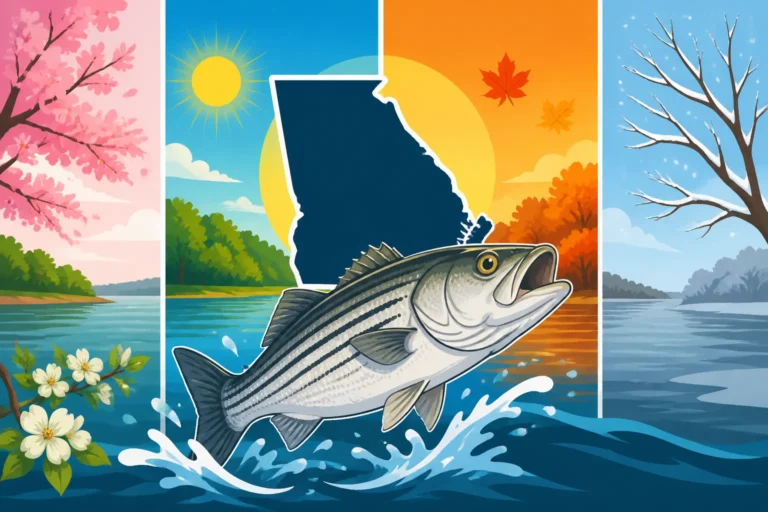
Understanding how the bass behave throughout the year on Lake Sinclair is the key to consistent success. Each season presents its own opportunities and challenges, and adapting your approach is crucial.
Spring: The Pre-Spawn and Spawn Frenzy (March-May)
Ah, spring! This is arguably the most anticipated time for bass anglers on Lake Sinclair, just like on most other Georgia lakes. As the water temperatures begin their steady climb from the mid-50s into the low 70s, the bass start their annual migration from their deeper winter haunts towards the shallower spawning grounds.
In early spring (March), you'll often find bass in their pre-spawn phase. They're staging on secondary points, creek channel bends, and transitions near deeper water, feeding heavily to build energy for the upcoming spawn. This is a fantastic time for throwing lipless crankbaits, spinnerbaits, and medium-diving crankbaits to cover water and find active fish. Later in March and into April, as temperatures consistently hit the low to mid-60s, the spawn begins in earnest. Look for bass on beds in protected coves, around docks, and shallow flats. Pitching jigs, Texas-rigged worms, and creature baits to visible beds can be incredibly effective, though sight fishing requires patience and a delicate touch. Even if you're not sight fishing, targeting those shallow, protected areas is key. The water clarity can vary, but generally, the northern end of the lake tends to be clearer, while the southern end near the dam might be a bit murkier, influencing your lure choices. Remember to also read our detailed guide on Spring Bass Fishing Patterns on Georgia's Reservoirs for broader context.
As May rolls around, you'll encounter a mix of spawning, post-spawn, and even some pre-spawn bass, as the spawn can be staggered. Post-spawn fish might be a bit lethargic immediately after spawning, but they quickly move to recuperate and feed. They often hang around nearby cover, like docks or brush piles, just outside the spawning flats. Topwater baits can become dynamite during this transition, especially during early morning or late evening.
Summer: Deep Water and Night Fishing Strategies (June-August)
When the scorching Georgia summer truly kicks in, Lake Sinclair's bass tend to follow the baitfish and cooler temperatures into deeper waters. This is when many anglers get frustrated, as the shallow bite often dwindles, and the fish seem to disappear. But don't despair; they're still there, just in different places and with different appetites.
During the daytime, focus your efforts on offshore structures: ledges, humps, deep points, and submerged timber in 15-30 feet of water. Big crankbaits that dive to these depths, Carolina rigs, and football jigs are excellent choices for probing these areas. Electronics become your best friend here, helping you locate schools of baitfish and the bass lurking nearby. Early mornings and late evenings can still offer a brief shallow topwater bite, especially around shaded docks or isolated grass patches. A good topwater frog or a walking bait can draw explosive strikes as bass look for an easy meal before retreating to cooler depths.
However, summer on Lake Sinclair truly shines for night fishing. Once the sun sets and the surface water cools, bass often move shallower to feed under the cover of darkness. This is also a prime time for other species, as detailed in our article Night Fishing for Catfish on Lake Sinclair. For bass, try throwing dark-colored spinnerbaits, worms, or jigs around docks with lights, or pitching soft plastics to shallow cover. The cooler night air is also a lot more comfortable for anglers, making it a popular choice.
Fall: Following the Baitfish (September-November)
As the crisp air of autumn descends upon Georgia, Lake Sinclair's bass respond to the cooling water temperatures by becoming incredibly active. This is often considered another peak season by many local anglers, offering a fantastic blend of consistent bites and comfortable fishing conditions.
In early fall (September), you'll start to see water temperatures slowly drop from the high 80s into the 70s. Bass, along with the baitfish they feed on (primarily threadfin and gizzard shad), begin to move from the deepest summer haunts back towards shallower and mid-depth areas. This is when the "fall feeding frenzy" truly kicks off. Look for schooling activity, especially in the mornings and evenings, where bass are actively chasing bait on the surface or just below. Fast-moving baits like topwaters, jerkbaits, and chrome-colored lipless crankbaits can be incredibly effective when bass are busting bait. Our general guide on Fall Bass Fishing Patterns on Georgia's Lakes offers more insight into this seasonal shift.
As late fall (October-November) progresses, water temperatures continue to drop into the 60s. Bass will often position themselves on points, humps, and around any remaining green grass. Jigs, spinnerbaits, and crankbaits that imitate shad are excellent choices. The key is often finding the baitfish – where the bait goes, the bass will follow. Keep an eye on your fish finder for schools of shad, and you'll likely find hungry bass nearby. Docks and boat houses, which provide both cover and shade, also remain productive targets throughout the fall.
Winter: The Power Plant Advantage (December-February)
This is where Lake Sinclair truly stands out from many other Georgia reservoirs. While other lakes might see a significant slowdown in bass activity during the winter months, Sinclair's unique warm water discharge from Plant Scherer keeps things surprisingly lively. For a deeper dive into why Sinclair excels in the cold, read our article Why Lake Sinclair Fishes Better in Winter Than Other Georgia Lakes.
In early winter (December), as water temperatures dip into the 50s and low 60s, bass will migrate towards the warmer water zones. The areas around the power plant discharge are prime real estate for bass during this time. Look for them holding on ledges, humps, and deep timber near these warmer currents. Deep-diving crankbaits, heavy jigs, and spoons are excellent tools for targeting these fish. Don't be afraid to try vertical jigging a spoon or a Damiki rig in deeper water, especially if you mark fish on your electronics.
Mid to late winter (January-February) can still produce some incredible catches. The bass in the warmer areas of Sinclair often remain more active than those in truly cold water. They might not be as aggressive as in spring or fall, but they will eat. Slow-rolling spinnerbaits, suspending jerkbaits, and football jigs can be highly effective. Pay close attention to water temperature readings – even a few degrees can make a significant difference in bass activity. When the rest of the state's lakes are slow, Lake Sinclair offers a fantastic opportunity, making it a true winter fishing haven. This exceptional winter fishing is precisely why we've also highlighted it in Winter Fishing at Lake Sinclair While Other Georgia Lakes Slow Down.
Top Techniques and Lures for Lake Sinclair Bass
To truly maximize your time on Lake Sinclair, it's not enough to know when to go; you also need to know what to throw and how to fish it. The right lure in the right place can make all the difference.
Lures by Season and Target Depth
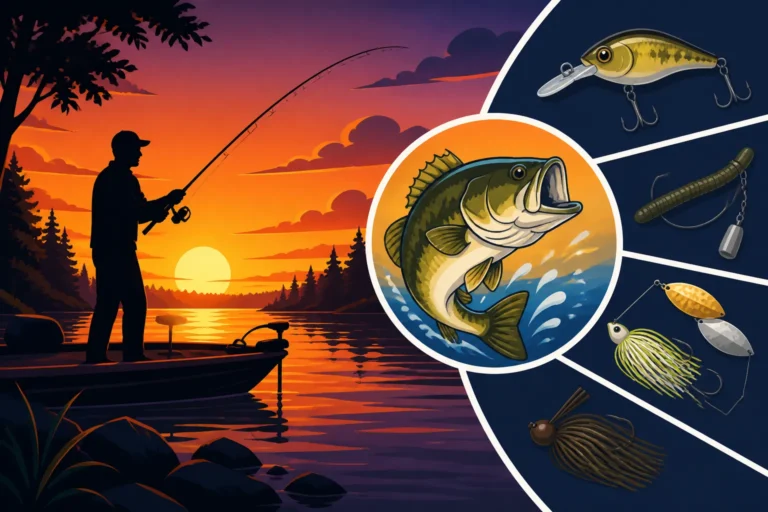
Choosing the right lure for the conditions is paramount. Here's a breakdown of some go-to options for bass on Lake Sinclair, categorized by season and typical depth:
-
Spring (Pre-Spawn/Spawn):
- Shallow Crankbaits: For covering flats and points in 2-8 feet of water. Colors like chartreuse/black or shad patterns work well.
- Spinnerbaits: Especially 3/8 to 1/2 oz, in white or chartreuse/white, for working through sparse cover or over emerging grass.
- Jigs: Flipping and pitching jigs (1/4 to 1/2 oz) in black/blue or green pumpkin for docks, brush, and visible beds.
- Texas-Rigged Worms/Creature Baits: Green pumpkin, junebug, or black/blue are versatile colors for pitching to cover or sight fishing.
- Lipless Crankbaits: Chrome or shad patterns for aggressive fish on points and main lake humps.
- Consider grabbing a variety of these proven baits from Amazon before your trip to ensure you're ready for any spring scenario.
-
Summer (Deep Water/Night Fishing):
- Deep-Diving Crankbaits: For targeting ledges and humps in 15-25+ feet. Shad, bluegill, or crawfish patterns. Look for those that can reach depths of 20 feet or more.
- Carolina Rigs: With a 1-ounce weight and a plastic lizard, worm, or fluke, for dragging across deep structure.
- Football Jigs: In brown or green pumpkin, 1/2 to 3/4 oz, for working rocky bottoms and humps.
- Drop Shot Rigs: Finesse worms or small flukes in natural colors for suspended fish or when the bite is tough.
- Topwater Lures: Walk-the-dog baits or poppers for early morning/late evening bites around docks.
- Dark-Colored Worms/Jigs: For night fishing around lighted docks or shallow cover. A bulk pack of dark worms from Amazon can be very useful here.
- For more on selecting the right bait for any given time of year, check out Choosing Lures by Season.
-
Fall (Baitfish Migration):
- Topwater Lures: Walking baits, poppers, and smaller prop baits when bass are schooling on the surface.
- Jerkbaits: Suspending jerkbaits in shad or translucent colors for mimicking dying baitfish around points and coves.
- Lipless Crankbaits: Chrome or shad patterns, retrieved quickly over points and flats.
- Spinnerbaits/Chatterbaits: For covering water and appealing to actively feeding fish.
- Swimbaits: Paddle tail swimbaits rigged on a jig head for imitating larger shad.
-
Winter (Warm Water Zones):
- Deep-Diving Crankbaits: Again, focusing on ledges and humps near the power plant discharge.
- Jigs: Football jigs or a slow-dragged rubber skirted jig in black/blue or brown.
- Spoons: Heavy jigging spoons (1/2 to 3/4 oz) for vertical jigging over deep fish.
- Suspending Jerkbaits: Especially on sunny days when bass are higher in the water column but still lethargic.
- A-Rigs (Umbrella Rigs): For suspended schooling fish, often with small swimbaits attached. This can be a highly effective, if somewhat specialized, winter technique.
Essential Gear for Lake Sinclair
Having the right rod, reel, and line can significantly impact your fishing experience. For Lake Sinclair bass, versatility is key, as you'll be switching between various techniques.
A good all-around bass setup might consist of a 7-foot medium-heavy fast-action casting rod, paired with a reliable baitcasting reel spooled with 15-20 lb fluorocarbon or braided line with a fluorocarbon leader. This combination is great for throwing jigs, Texas rigs, spinnerbaits, and medium crankbaits. For lighter presentations or finesse techniques like a drop shot, a 7-foot medium-light to medium spinning rod with a matching spinning reel and 8-10 lb fluorocarbon or braided line with a leader is ideal. Our article on Best Rod and Reel Combo for Largemouth Bass in Georgia provides excellent options.
Don't forget the little things! A good pair of polarized sunglasses will help you spot shallow fish and structure. Pliers or forceps are essential for hook removal. A high-quality fish finder with GPS and mapping capabilities will be invaluable for locating those offshore structures and baitfish schools, especially in summer and winter. While local tackle shops are fantastic, you can find a vast selection of these essential items, from rods and reels to all sorts of lures, on Amazon, often with quick delivery to get you ready for your next trip.
Maximizing Your Chances on Lake Sinclair
Beyond knowing the seasonal patterns and preferred lures, a few other considerations can significantly tip the scales in your favor when fishing Lake Sinclair.
Understanding Water Levels and Clarity
Like any reservoir, Lake Sinclair's bass fishing can be influenced by water levels and clarity. The lake is generally managed for power generation, which means levels can fluctuate, sometimes quite dramatically.
- High Water Levels: Can push bass further into flooded cover, making them harder to reach but potentially opening up new fishing grounds in submerged vegetation or brush.
- Low Water Levels: Concentrate fish into smaller areas, often exposing docks or stumps that were previously submerged. This can make them easier to find but also more pressured. Pay attention to how the water level impacts the docks, as bass often relate closely to the pilings.
Water clarity also plays a crucial role. After heavy rains, parts of the lake, especially the creek arms, can become stained or muddy. In these conditions, brighter colored baits (chartreuse, white) and those that create more vibration (spinnerbaits, lipless crankbaits) tend to be more effective. In clearer water, more natural colors (green pumpkin, shad patterns) and finesse techniques often shine. Always observe the water conditions when you arrive and adjust your strategy accordingly.
Locating Prime Bass Habitat
Lake Sinclair offers a diverse range of habitats that bass love.
- Docks and Boathouses: Sinclair is loaded with docks, and they are perennial hotspots. Bass use them for shade, cover, and ambush points year-round. Pitching jigs, Texas rigs, or skipping worms under docks are highly effective strategies. Consider how the sun hits the docks throughout the day; bass will often be on the shaded side.
- Brush Piles and Submerged Timber: Locals often sink brush piles to create fish habitat. These are goldmines for both bass and crappie. Learning to read your electronics to find these submerged structures is key. Flipping jigs or dragging a Carolina rig through and over them can be very productive. For similar strategies on other lakes, our article on Best Crappie Spots on Lake Sinclair highlights the importance of these structures.
- Humps and Ledges: Especially in the main lake and larger creek arms, humps and ledges provide excellent offshore structure where bass will gather, particularly during summer and winter. These are ideal for deep-diving crankbaits, football jigs, and spoons. Understanding how bass position themselves on these contours, often on the deepest edge or the highest point, is vital.
- Creek Channel Bends and Points: These are natural highways for bass as they move between shallow and deep water. Targeting these transition areas, especially in spring and fall, can lead to consistent bites. For broader advice on finding promising structures, you might find tips in Best Bass Fishing Coves on Lake Oconee, as many structural principles apply across reservoirs.
- Riprap and Rocky Banks: These areas, often found around bridges or causeways, attract baitfish and crawfish, making them excellent places for bass. Crankbaits, jigs, and spinnerbaits worked parallel to riprap can be very effective.
Hiring a Local Guide or Consulting Resources
While this guide provides a solid foundation, there's no substitute for local, on-the-water knowledge. If you're new to Lake Sinclair or struggling to crack the code, consider hiring a local fishing guide for a day. They can teach you specific patterns, boat ramps, and techniques that are working right now. A guide can shave years off your learning curve and introduce you to the nuances that make Sinclair such a rewarding fishery.
Additionally, stay connected with local fishing forums, social media groups, and tackle shop reports. These resources can provide real-time updates on water temperatures, clarity, and what baits are currently producing. The Georgia Department of Natural Resources (GDNR) also offers valuable stocking schedules and fishing reports, which can often highlight key areas or species activity. Combining this community knowledge with your own on-the-water experience will lead to sustained success.
Best Time of Year for Bass Fishing on Lake Sinclair Summary
Here’s a quick overview of the prime times and techniques for bass fishing on Lake Sinclair:
| Season | Key Bass Pattern | Recommended Lures & Techniques | Notes |
|---|---|---|---|
| Spring | Pre-spawn staging, actively spawning, post-spawn recovery | Lipless/medium crankbaits, spinnerbaits, jigs, Texas rigs, topwater | Excellent shallow action, sight fishing opportunities, fish very aggressive. |
| Summer | Move deep offshore, active at night, early/late shallow | Deep crankbaits, Carolina rigs, football jigs, dark worms (night), topwater (dawn/dusk) | Tough daytime shallow bite, electronics crucial for deep fish, fantastic night fishing. |
| Fall | Following baitfish, shallow migration, schooling activity | Topwater, jerkbaits, lipless crankbaits, swimbaits, spinnerbaits | High activity, strong bites, fish spread out but chasing bait. |
| Winter | Concentrated in warm water discharge zones, deeper structure | Deep crankbaits, heavy jigs, spoons, suspending jerkbaits, A-rigs | Unique warm water advantage, better than most Georgia lakes, slow-paced retrieves. |
Disclaimer
Please remember that fishing conditions can change rapidly due to weather, water levels, and fish behavior. Always check current Georgia fishing regulations before heading out, as rules for size and creel limits can vary by species and body of water. Stay safe and have fun on the water!