Seasonal Bass Fishing Patterns in Georgia
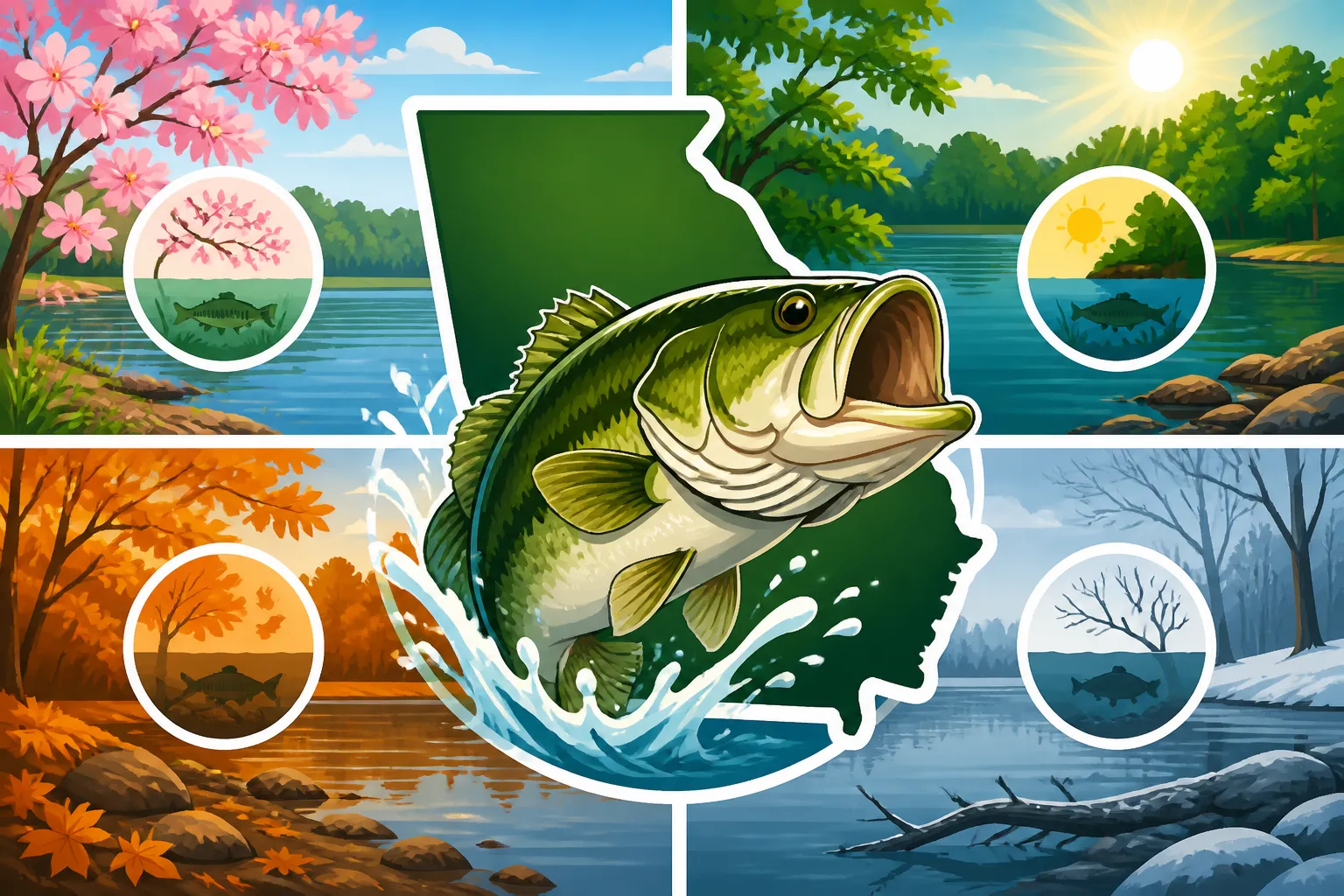
Trying to consistently catch bass in Georgia can feel like chasing a ghost if you don't understand how their behavior shifts with the seasons. Just when you think you've got them figured out, the weather changes, and suddenly your go-to spots and lures stop producing. This comprehensive guide will walk you through the seasonal bass fishing patterns in Georgia, helping you unlock consistent success throughout the year.
The Core Principle: Water Temperature and Bass Metabolism
The absolute bedrock of understanding bass behavior in Georgia, or anywhere for that matter, is water temperature. It's the master key that unlocks their activity levels, feeding habits, and even where they choose to hang out. Ignore it, and you'll always be scratching your head.
How Temperature Dictates Bass Behavior
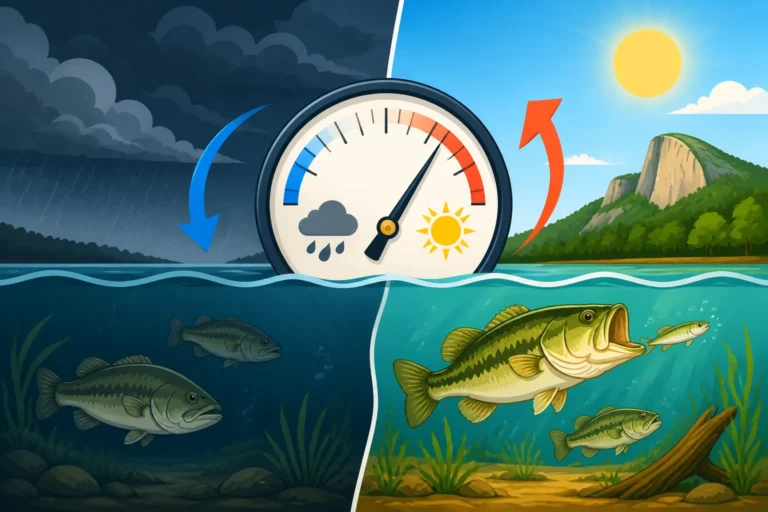
Think of bass like us: we have comfort zones. When the water is too cold, their metabolism slows down dramatically. They become lethargic, need less food, and aren't going to chase a fast-moving bait. They'll hug tight cover or hold deep where temperatures are more stable. On the flip side, when the water gets too warm, especially during those scorching Georgia summers, their metabolism revs up too much, leading to stress. They'll seek cooler, oxygenated water, often going deep or hiding in thick shade. There’s a sweet spot, generally between 55-75 degrees Fahrenheit, where bass are most active and aggressive, feeding regularly and expending energy. This comfort range is what drives their movements and, consequently, your fishing strategy.
Understanding this fundamental relationship is crucial for deciphering How Water Temperature Affects Fish Behavior This isn't just about surface temperature, either; it's about understanding the entire water column. A slight change of a few degrees can completely change a bass's mood and location, even in the same lake. For instance, a cold front might drop surface temps a few degrees, sending bass deeper to find that more stable, warmer water they were in just hours before. Knowing this allows you to anticipate their moves rather than react to them.
Understanding the Thermocline
During warmer months, Georgia's deeper lakes and reservoirs often develop a distinct thermocline. This is a layer within the water column where the temperature changes rapidly with depth. Above the thermocline, the water is warmer and well-oxygenated. Below it, the water is much colder but often lacks sufficient oxygen to support active bass for long periods. The thermocline essentially creates a "ceiling" for bass, concentrating them and their prey in a specific depth range.
Imagine you're out on Lake Lanier during July. If you have a good fish finder, you might see a distinct line or band where fish activity is concentrated. That's often the thermocline. Bass will cruise along this layer, using it as a highway to hunt baitfish like shad, which are also often congregating there. If you're fishing above or below this crucial layer, you might be casting into empty water. Learning to identify and target the thermocline, typically with your electronics, can be a game-changer for summer and early fall fishing. Many seasoned anglers on places like Lake Oconee will tell you that finding this layer is as important as finding the fish themselves.
Georgia's Unique Thermal Challenges
Georgia's diverse geography, from the cool, spring-fed mountain streams in the north to the sprawling, warmer reservoirs of the central and southern regions, presents unique thermal challenges for bass anglers. Lakes like Lake Allatoona and Lake Lanier, being deeper and often fed by colder tributary waters, might stratify differently than shallower, more uniform lakes further south. These thermal variations mean that "spring" or "summer" bass patterns might not hit every lake simultaneously.
For example, bass on a southern Georgia reservoir like Lake Seminole might start their spawn weeks, even a month, earlier than bass on a northern lake fed by cooler mountain runoff. This means you can often extend your "prime" fishing seasons by traveling between regions, chasing the ideal water temperatures. Moreover, Georgia's often humid and intense summers can push water temperatures well into the 80s, forcing bass into specific thermal refuges like deep timber, offshore humps, or areas with current. Understanding these local nuances is key to consistent success, rather than applying a blanket "seasonal rule" to the entire state.
Spring: The Season of Renewal and the Spawn
Spring in Georgia is arguably the most exciting time for bass fishing. It's when the lakes come alive, and the bass, after a winter of slow activity, start to move, feed, and eventually reproduce. This period is a progression, not a single event, and understanding each phase is vital.
Early Spring: Pre-Spawn Aggression
As winter's chill loosens its grip and water temperatures begin to climb into the high 40s and low 50s, bass shake off their lethargy. This is the pre-spawn phase, a time when their metabolic rates increase, and they start to move from their deep winter haunts toward shallower, warmer coves and pockets. They’re driven by an instinct to feed heavily, packing on calories in preparation for the energy-intensive spawning process.
During early spring, you’ll often find bass staging in transition areas – places where they can easily move between deep and shallow water. Think points, secondary points, submerged humps, channel swings, and the edges of creek channels. These areas offer quick access to both foraging grounds and deeper water for retreat if a cold front pushes through. Baits that mimic shad or crawfish, like lipless crankbaits, jerkbaits, and spinnerbaits, can be incredibly effective now. These bass are hungry and often aggressive, making them excellent targets for anglers looking for those strong, initial bites of the season. They're often grouped up, so if you catch one, there are likely more nearby.
Mid-Spring: The Spawning Frenzy
Once water temperatures consistently reach the mid-50s to low 60s, the bass move into the shallowest parts of the lake to spawn. This is the heart of spring bass fishing, and it’s what many anglers live for. Bass will seek out protected, hard-bottomed areas in coves, on flats, or around submerged cover like stumps and docks, where they can fan out circular beds. The males arrive first, cleaning the beds, then females move in to lay eggs.
During the actual spawn, bass can be surprisingly difficult to catch if you're not targeting them correctly. While some will still feed, many become highly territorial, guarding their nests. Sight fishing becomes popular in clear water lakes where you can actually see the bass on their beds. Soft plastic baits like lizards, tubes, and wacky-rigged worms pitched right onto the bed can trigger a protective strike. However, ethical anglers often practice catch and release with spawning fish to ensure the continuation of healthy populations. Many anglers will head to prime spots on Lake Lanier Fishing Guide, Georgia. The specific timing for When Largemouth Bass Spawn on Georgia's Lakes can vary, but generally, late March through April is peak season for much of the state.
Late Spring: Post-Spawn Recovery and Transition
After the arduous spawning process, both male and female bass need a period of recovery. Water temperatures typically range from the mid-60s to low 70s. Females, having expended a tremendous amount of energy, will often retreat to slightly deeper water near the spawning flats to recuperate and feed. Males, on the other hand, may stay on the beds for a short time to guard the fry before also moving off.
The post-spawn can be a tricky time, as bass are often scattered and less predictable. Some may be schooling up on offshore structure, while others are still lingering around shallow cover. Look for them along the first significant drop-offs outside spawning pockets, on main lake points, or around submerged brush piles. Topwater lures can be incredibly effective during this time, especially in the early mornings and late evenings, as bass are willing to chase an easy meal near the surface. Spinnerbaits, swim jigs, and shaky head worms are also good choices. This phase is about finding those transitioning fish as they move towards their summer patterns.
Summer: Deep Water and Early Morning Bites
Georgia summers are hot, and the bass know it. As water temperatures climb into the 80s and beyond, bass behavior shifts dramatically. The key to summer success is understanding how bass cope with heat and finding the cooler, more oxygenated water they seek.
Dog Days: Finding Oxygen and Cooler Water
When the scorching "dog days" of summer hit, especially from late June through August, bass seek refuge. They're not just looking for cooler water; they're looking for water that also holds sufficient oxygen. This typically means going deep, often below the thermocline (if one has formed), or finding areas with consistent current or shade. Main lake points, ledges, deep humps, brush piles, and standing timber become prime real estate.
On many Georgia lakes, like Clarks Hill Lake, bass will congregate in 15-30 feet of water, or even deeper, suspending over structure or relating tightly to the bottom. During this time, vertical presentations like drop shots, shaky heads, Carolina rigs, and deep-diving crankbaits are highly effective. You're trying to put your bait right in front of a less active, but still opportunistic, fish. It's not about provoking a chase; it's about making an easy meal readily available. For those exploring Best Fishing Spots in Georgia, understanding these deep-water summer havens is essential.
Early Morning and Evening Rushes
Despite the deep-water preference during the heat of the day, summer bass in Georgia will still make forays into shallower water, particularly during the low-light periods of dawn and dusk. The surface water cools slightly overnight, and baitfish often move up into shallower coves and flats to feed. This creates brief but explosive feeding windows for bass.
Imagine an early July morning on Lake Oconee. As the sun barely peeks over the horizon, you might see bass busting shad on the surface in a shallow cove. This is prime time for topwater lures like poppers, walking baits, and buzzbaits. The action can be fast and furious, but it's often short-lived as the sun climbs higher and drives the bass back to deeper water. The same can happen in the evening as the sun sets, offering another opportunity for a shallow-water feeding frenzy. Targeting these specific windows is crucial for consistent success during the summer.
Night Fishing for Summertime Bass
When the daytime temperatures become unbearable, many savvy Georgia anglers turn to night fishing for bass. The cooler night air brings down the surface water temperature, and bass become much more active, often moving into shallower feeding areas they wouldn't dare visit during the day. This isn't just for crappie or catfish; bass respond incredibly well to the darkness.
Large dark-colored spinnerbaits, bladed jigs, and topwater lures that create a strong commotion (like a Jitterbug or a buzzbait) are excellent choices for night fishing. Bass rely more on their lateral line and hearing in the dark, so baits that displace a lot of water or vibrate strongly are key. Focus on familiar areas like points, shallow humps, and the edges of weed lines or docks. The peace and quiet of a summer night on the water, combined with the thrill of a big bass strike, makes night fishing a unique and highly effective strategy for beating the heat and catching bigger fish.
Fall: The Feeding Frenzy Before Winter
Fall in Georgia is a beautiful time to be on the water, and for bass anglers, it's often a period of high activity. As water temperatures begin to drop and days shorten, bass sense the approaching winter and begin a major feeding push to fatten up.
Early Fall: Following the Baitfish
As summer fades into early fall, usually September and October, water temperatures start to drop into the 70s and then 60s. This cooling trend, often triggered by passing cold fronts, signals a major shift in bass behavior. The thermocline may begin to break up, and baitfish like shad become more active and start to school up in open water. Bass, ever the opportunists, will follow these schools of baitfish.
This "chase" can be highly visible, with bass pushing schools of shad to the surface, creating explosive topwater action. Look for birds diving, or actual surface activity, often called "runs." Main lake points, humps, and creek channel bends are prime areas where baitfish will congregate, and consequently, where bass will be found. Fast-moving baits such as chrome or white lipless crankbaits, spinnerbaits, and topwater lures are deadly during this period. Covering water and locating the schools of baitfish is your primary goal. This is a fantastic time for Fall Bass Fishing Patterns on Georgia's Lakes, as the bass are aggressive and often willing to chase.
Mid-Fall: Schooling Bass Action
By mid-fall, typically late October through November, water temperatures are usually in the low to mid-60s, and baitfish populations are often at their peak. Bass will form large schools, often roaming main lake basins and chasing bait. This is a prime time for finding "mega schools" of bass, especially on larger reservoirs like Lake Hartwell or Lake Seminole.
Once you locate a school of feeding bass, whether through your electronics or by observing surface activity, the fishing can be incredible. Vertical jigging spoons, Alabama rigs, and swimbaits are excellent choices for targeting these schooling fish. Sometimes, a dropshot or a jig can pick off the less aggressive bass that are hanging just beneath the active school. Pay close attention to subtle signs like changes in depth on your fish finder or small dimples on the surface, as these can indicate an impending feeding spree. This period offers some of the most consistent and exciting bass fishing of the year.
Late Fall: Preparing for Colder Waters
As late fall progresses into early December, water temperatures continue to drop into the 50s. The aggressive schooling action might slow down as baitfish thin out or move to deeper, more stable environments. Bass will start to transition away from the open water chase and begin to settle into deeper, more predictable wintering areas.
During this phase, you'll often find bass holding tightly to structure in deeper water. Look for rock piles, submerged timber, bridge pilings, and deep creek channel bends. Baits that work well now are slower presentations, like jigging spoons, football jigs, or slow-rolled spinnerbaits. The bass are still feeding, but they're not expending as much energy chasing. They want an easy meal. This is a crucial time to find those winter sanctuaries, which often remain productive even after the coldest temperatures set in. For anglers looking to find those big, fat bass, understanding these late fall transitions is key.
Winter: Slow and Steady Wins the Race
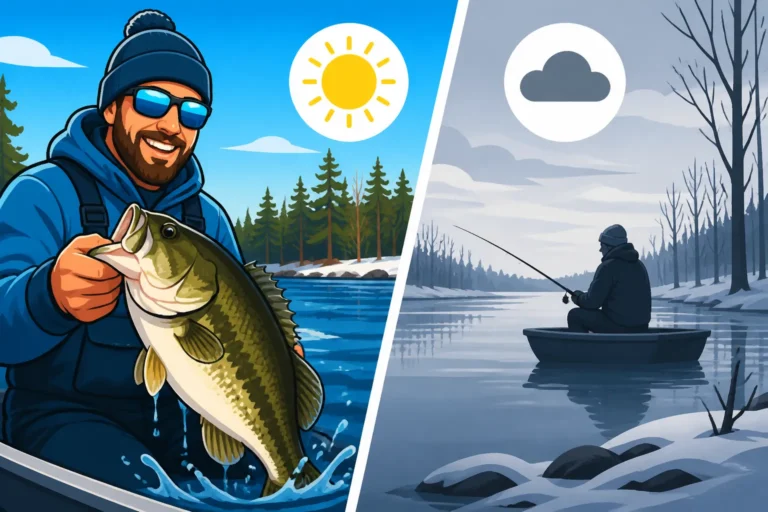
Winter bass fishing in Georgia can be challenging, but it can also be incredibly rewarding for those patient enough to understand the patterns. When water temperatures dip into the 40s and low 50s, bass metabolism slows significantly, requiring a more subtle approach.
Deep Water Haunts and Subtle Bites
During the coldest months, typically December through February, bass on most Georgia lakes will retreat to their deepest, most stable wintering areas. They'll seek out major creek channels, deep main lake points, sharp ledges, and areas with significant vertical structure like bluffs or standing timber. These deep zones offer consistent temperatures and often harbor concentrations of dormant baitfish.
The bites during winter are often very subtle – a slight tap, a feeling of weight, or simply a slack line. You need to use slow, deliberate presentations. Jigs, finesse worms on shaky heads, spoons, and small, slow-moving crankbaits are prime choices. The key is to keep your bait in the strike zone for as long as possible. Pay meticulous attention to your electronics, looking for isolated fish or small groups clustered tightly to structure. This is where patience truly pays off, and a few well-placed casts can lead to a trophy catch. Sometimes, the fish are practically glued to the bottom, requiring a nearly vertical presentation.
Warm Water Discharges and Power Plants
One of the most reliable winter patterns in Georgia, especially on large reservoirs like Lake Sinclair, Lake Oconee, and Lake Bowen, involves fishing near warm water discharges from power plants. These plants release warmer water into the lake, creating localized thermal sanctuaries that attract both baitfish and bass. These areas can be absolute hotspots when the rest of the lake is frozen or lethargic.
The constant flow of warmer water keeps bass more active than usual, and they can be found at various depths, from shallow riprap banks to deeper channels. Spinnerbaits, crankbaits, and even some faster moving baits can be effective here, as the fish are more willing to chase due to their elevated metabolism. Don't be surprised to find larger bass taking advantage of these unique conditions. This is a specific instance where Why Lake Sinclair Fishes Better in Winter Than Other Georgia Lakes because of the consistent warm water influx. It's an exception to the general rule of slow winter fishing and can offer some incredible action.
Targeting Staging Areas and Transitions
Even in winter, bass will make short, opportunistic moves if conditions allow. On warmer, sunny days, especially after a prolonged cold spell, some bass might move from the deepest channels up to the tops of adjacent humps or points to "sunbathe" or ambush any passing baitfish. These are often referred to as staging areas, places where bass will hold before moving to shallower feeding grounds or retreating to deeper cover.
Look for these transition zones where deep water quickly gives way to shallower structure. A deep-diving crankbait or a football jig slowly dragged over these contours can draw strikes. While you won't find the aggressive, wide-ranging movements of spring or fall, understanding these subtle winter transitions can greatly increase your chances. It’s about precision and targeting those specific areas where bass feel secure but are still within striking distance of a meal.
| Season | Typical Water Temp | Bass Behavior | Recommended Depth | Key Lures/Techniques |
|---|---|---|---|---|
| Early Spring | 48-55°F | Pre-spawn feeding, staging in transition areas | 10-25 ft | Lipless crankbaits, jerkbaits, spinnerbaits, jigs |
| Mid-Spring | 55-65°F | Spawning, territorial, protecting beds | 1-8 ft | Soft plastics (lizards, worms), shallow crankbaits |
| Late Spring | 65-72°F | Post-spawn recovery, scattered feeding | 5-15 ft | Topwater, swim jigs, shaky heads, spinnerbaits |
| Early Summer | 72-80°F | Moving deep, targeting thermocline | 15-30 ft+ | Deep crankbaits, Carolina rigs, shaky heads, jigs |
| Mid-Summer | 80°F+ | Seeking cool, oxygenated water, nocturnal | 20-40 ft+, current | Drop shots, jigs, spoons, night topwater/spinnerbaits |
| Early Fall | 65-75°F | Following baitfish, aggressive surface activity | 5-25 ft | Topwater, lipless crankbaits, spinnerbaits, swimbaits |
| Mid-Fall | 55-65°F | Schooling, chasing bait in open water | 10-30 ft | Alabama rigs, spoons, swimbaits, deep crankbaits |
| Late Fall | 48-55°F | Transitioning to winter haunts, slower feeding | 15-35 ft | Football jigs, slow-rolled spinnerbaits, jigging spoons |
| Winter | 40-48°F | Deep, lethargic, tight to structure | 25-50 ft+ | Finesse jigs, dropshots, jigging spoons, small crankbaits |
Essential Gear and Techniques for Each Season
Just as bass change their habits, so too should your tackle and techniques. What works wonders in spring might get you skunked in winter. Having the right tools and knowing how to use them is paramount to success. Many of these items can be found conveniently on platforms like Amazon.
Seasonal Lure and Bait Selection
Your tackle box shouldn't be a static collection; it should evolve with the seasons. In spring, when bass are aggressive and feeding up for the spawn, you'll want to lean into reaction baits. Lipless crankbaits like a Bill Lewis Rat-L-Trap or a Strike King Red Eye Shad are phenomenal for covering water and triggering strikes in cooler pre-spawn conditions. As the spawn approaches, soft plastics like Zoom Lizards or a wacky-rigged Senko become indispensable for targeting bedding fish. Don't forget to check out Best Lures for Early Spring Fishing
Come summer, when bass head deep, your lure selection should follow suit. Deep-diving crankbaits that can reach depths of 20 feet or more are essential for working ledges and humps. Carolina rigs with lizard or worm baits are also extremely effective for methodically covering deep structure. For those low-light feeding windows, a reliable topwater popper or walking bait can create explosive strikes. In fall, the baitfish chase means more reaction baits – chrome or white lipless crankbaits, shad-pattern swimbaits, and even Alabama rigs for schooling fish. Winter demands finesse. Small jigs, dropshot worms, and jigging spoons are key. You're trying to tempt a sluggish fish, not provoke a chase.
Rod and Reel Setups for Changing Conditions
Having the right rod and reel combinations can make a significant difference in how effectively you present your lures and how many fish you land. For early spring reaction baits like spinnerbaits and crankbaits, a medium-heavy power, moderate-fast action rod (around 7 feet) paired with a baitcasting reel with a medium gear ratio (6.3:1) is a great all-around choice. This setup allows for good casting distance and enough backbone to handle larger fish, while the moderate action helps prevent baits from pulling free.
As you move into the spawning and post-spawn phases, a lighter, more sensitive spinning setup or a longer baitcasting rod for pitching soft plastics might be preferred. A 7-foot medium power, fast action spinning rod with a 2500-3000 series reel spooled with fluorocarbon or braided line is perfect for dropshotting or shaky head presentations. For deep-water summer and winter fishing, sensitivity is paramount. A 7'3" heavy power, fast action rod with a high-speed baitcasting reel (7.1:1 or higher) excels at working deep jigs or spoons, allowing you to quickly take up slack line and feel the most subtle bites. For heavy cover or thick vegetation, a stout flipping stick (7'6" or longer, heavy power) is a must. Many anglers get their specialized gear from reputable online retailers.
Understanding Electronics for Seasonal Success
In today's bass fishing world, especially on Georgia's large reservoirs, ignoring electronics is like trying to navigate without a map. A quality fish finder and GPS unit are not just luxuries; they are fundamental tools for understanding seasonal bass patterns. They help you identify changes in depth, locate submerged structure, pinpoint schools of baitfish, and most importantly, mark the bass themselves.
During summer and winter, when bass are often holding deep, your electronics become your eyes underwater. Side-imaging and down-imaging capabilities on units from brands like Humminbird or Garmin allow you to scan vast areas quickly, revealing brush piles, rock formations, and even individual fish. The ability to mark the thermocline (as mentioned earlier) is also a game-changer for summer. In spring and fall, GPS mapping helps you navigate to specific points, humps, or creek channel bends where bass are likely to stage or chase bait. Learning to interpret what your fish finder is telling you about bottom composition, baitfish presence, and bass location will dramatically improve your success rate across all seasons. Many great units are available on Amazon.
Georgia's Top Bass Lakes: Seasonal Hotspots
Georgia is blessed with an abundance of fantastic bass fishing opportunities, each lake offering unique characteristics that influence seasonal patterns. Knowing where to go and what to expect from each body of water can significantly boost your angling success.
Lake Lanier: Striper and Bass Dynamics
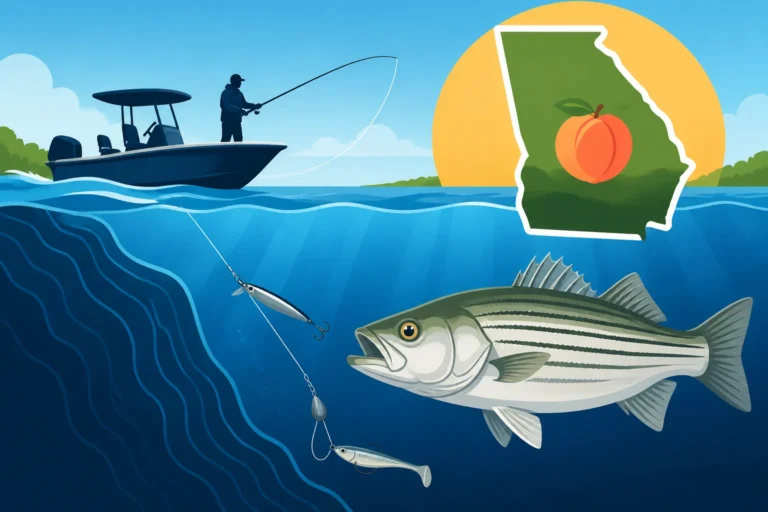
Lake Lanier, nestled in North Georgia, is a legendary fishery known for both its trophy spotted bass and its powerful striped bass. Its deep, clear waters and abundant humps, points, and submerged timber offer excellent year-round opportunities. However, the seasonal patterns here are heavily influenced by the lake's thermal characteristics and the presence of both species. For a deeper dive into this fishery, check out Lake Lanier Fishing Guide, Georgia.
In spring, Lanier's spotted bass move shallow to spawn, often in protected coves. Target them with shaky heads, swimbaits, and topwater lures around rocky points and docks. Summer sees the spots, and especially the striped bass, moving deep. This is when downlining live bait or jigging spoons for Deep Water Techniques for Striped Bass becomes crucial on main lake humps and channels. Fall on Lanier can be explosive, with both spots and stripers schooling and chasing bait on the surface, especially in the major creek arms. Winter finds bass holding deep on offshore structure, making dropshotting and jigging spoons effective. Understanding Best Time of Year to Catch Bass at Lake Lanier, Georgia is key to maximizing your trips here.
Lake Oconee and Sinclair: Warm Water Advantages
Lakes Oconee and Sinclair, located in central Georgia, are unique because they are cooling lakes for power plants, giving them a distinct warm water advantage, especially in cooler months. This keeps the water temperatures elevated, often extending the productive fishing seasons.
On Lake Oconee, the hybrid striped bass fishery is phenomenal, but the largemouth and spotted bass also thrive. Spring brings bass into shallow coves and rocky banks for the spawn, with spinnerbaits and jigs being productive. During summer, while other lakes might see bass go extremely deep, Oconee's warmer waters can keep bass more active in slightly shallower, current-rich areas, particularly near the power plant discharge. Fall is a prime time for schooling bass chasing bait on Oconee, making topwater and lipless crankbaits effective. Winter, as mentioned, sees these lakes shine. Bass remain active, especially near the warmer water. For Best Time of Year to Catch Bass at Lake Oconee, Georgia, these warm water advantages play a huge role.
Other Productive Lakes: West Point, Walter F. George, and Clarks Hill
Beyond Lanier, Oconee, and Sinclair, Georgia boasts several other incredible bass fishing lakes, each with its own seasonal nuances.
- West Point Lake: Located on the Georgia-Alabama border, West Point is a productive Army Corps of Engineers reservoir known for its excellent largemouth bass fishing. Spring is fantastic with spinnerbaits and shallow crankbaits around abundant timber and shallow grass. Summer sees bass move to main lake points and humps, often chasing shad. Fall is a schooling frenzy, particularly in the river arms. Winter fishing here means slow-rolling jigs or spoons in deep creek channels.
- Walter F. George Reservoir (Lake Eufaula): Another border lake, this one with Alabama, is a renowned big bass factory. Its vast cypress trees and abundant shallow cover make spring flipping and pitching a dream. Summer bass hold in deep timber and channel swings, often requiring heavy tackle. Fall sees a strong topwater bite as bass chase bait. Winter can be tough, but big fish are still caught slowly fishing jigs and spoons in deep areas.
- Clarks Hill Lake (Lake Strom Thurmond): Sharing its waters with South Carolina, Clarks Hill is one of the largest lakes in the Southeast. Its abundant standing timber, rock piles, and deep channels offer diverse seasonal opportunities. Spring is excellent for pre-spawn bass around points and spawning flats. Summer requires anglers to find bass on deep ledges and humps. Fall is a classic schooling lake, especially in the large creeks. Winter means slow presentations in deep timber and channel bends. All of these lakes are considered some of the Best Bass Fishing Lakes in Georgia, offering consistent action if you understand their seasonal rhythms.
Disclaimer
Fishing conditions and regulations in Georgia can change. Always consult the latest Georgia Department of Natural Resources (GA DNR) guidelines and regulations before heading out. This guide is for informational purposes only and does not constitute professional advice. Fish responsibly and safely.