Best Rope and Dock Lines for a Fishing Boat
There's nothing quite like the feeling of easing your boat into a quiet cove on Lake Lanier or tying up at a bustling marina on the Georgia coast after a fantastic day of fishing. But that feeling of accomplishment can quickly turn into a headache if your ropes are tangled, frayed, or simply not up to the task. Flimsy, unreliable dock lines aren't just an annoyance; they're a real safety concern that can lead to damage to your boat, the dock, or even injuries. This guide is here to help you cut through the confusion and choose the best rope and dock lines for your fishing boat, ensuring peace of mind and secure moorings wherever your Georgia adventures take you.
Understanding Your Boat's Needs: More Than Just Rope
When we talk about "ropes" for your boat, it's easy to think of just one type. But trust me, as a seasoned angler who's seen it all from the calm waters of the Ocmulgee to the choppier expanses of Lake Allatoona, not all ropes are created equal, and not every rope serves the same purpose. Your boat has specific needs depending on its size, where you're docking, and even the weather conditions you expect to encounter.
Different Types of Dock Lines for Different Situations
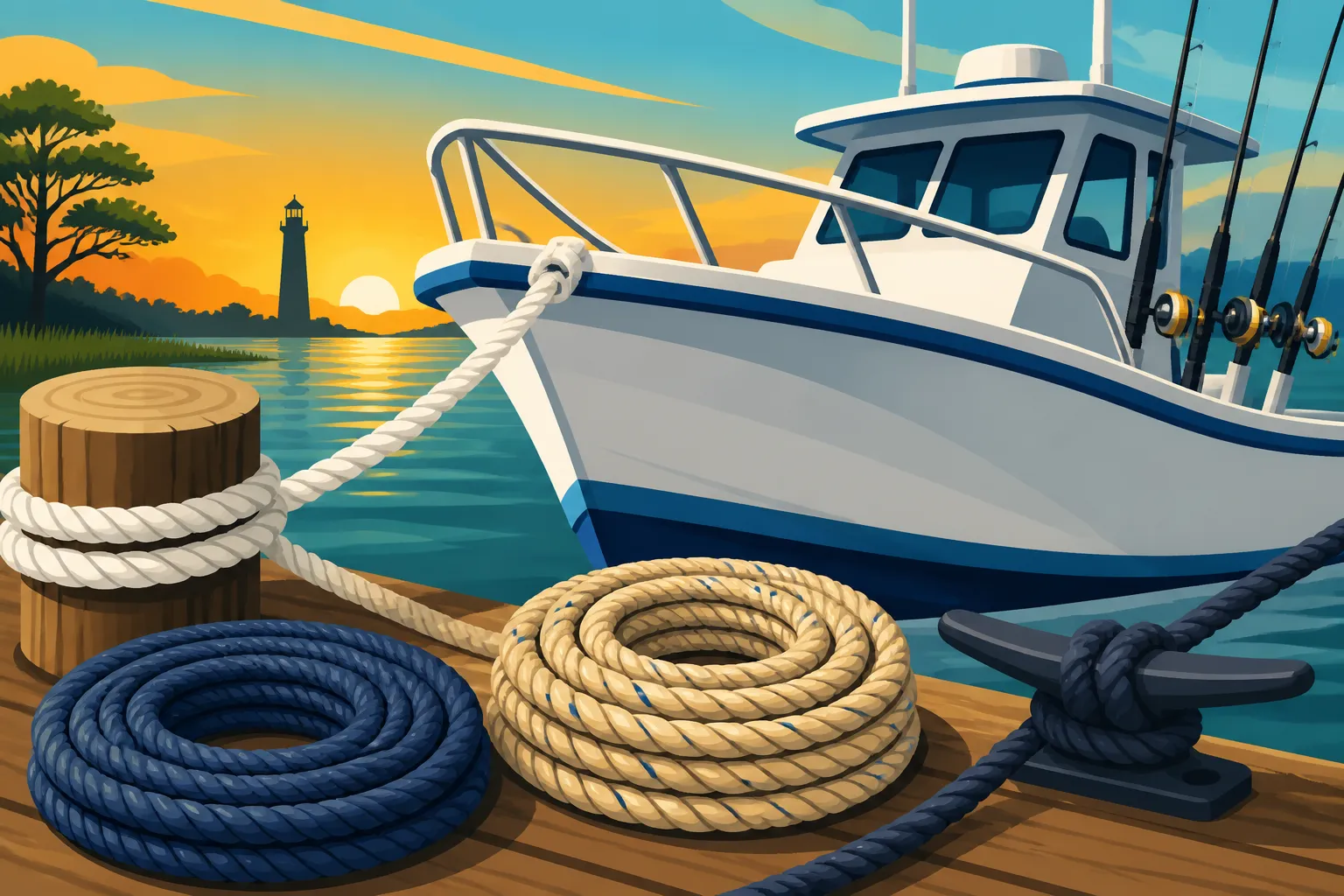
Think of your dock lines as the hands that hold your boat securely. You wouldn't use one hand to do everything, right? The same goes for dock lines. Typically, you'll need a set of lines: bow lines, stern lines, and spring lines.
- Bow Lines: These run from the bow (front) of your boat forward to the dock. Their primary job is to prevent the boat from moving backward or swinging away from the dock. If you're docking parallel to a pier, a bow line will hold the front end snug. When you're pulling up to a transient slip at a spot like the Port of Brunswick, having good bow lines ready makes all the difference in a smooth tie-up.
- Stern Lines: As the name suggests, these go from the stern (back) of your boat to the dock. They work in tandem with the bow lines to keep your boat from moving forward or swinging out. Imagine a strong current on the Savannah River; well-secured stern lines are critical to keep your boat in position.
- Spring Lines: These are often overlooked by newer boaters, but they are absolutely essential for proper docking, especially in variable conditions. Spring lines run diagonally from your boat to the dock. A "forward spring line" goes from the bow area back to the dock, preventing forward movement. A "aft spring line" goes from the stern area forward to the dock, preventing backward movement. They also help control the boat's movement parallel to the dock, keeping it from bumping into pilings. Without proper spring lines, your boat can easily surge forward or backward with waves or wind, rubbing against the dock and causing damage.
Whether you're planning a quick stop to grab some bait or preparing for a weekend stay at a lakeside cabin, having the right combination and knowing how to use them makes docking far less stressful. You'll thank yourself when an unexpected wake from a passing cruiser rolls through and your boat barely budges.
Considering Boat Size and Weight
This might seem obvious, but the bigger and heavier your boat, the more robust your ropes and dock lines need to be. A small 14-foot jon boat fishing for panfish in a quiet Georgia pond has very different requirements than a 22-foot bass boat hitting the chop on Lake Lanier or a large pontoon boat cruising with a full family.
- Small Boats (Under 16 feet): For a smaller fishing boat, like a kayak, canoe, or a compact jon boat, you can often get away with smaller diameter lines. However, don't skimp on quality. Even a light breeze can push a small boat around, and you want to ensure your lines hold. For these, a sturdy 3/8-inch nylon line is usually sufficient for most docking situations. Kayak anglers, in particular, should consider specialized anchoring and docking systems that integrate well with their lightweight craft, perhaps looking into options discussed in Kayak Fishing Gear Guide for Beginners.
- Medium Boats (16-26 feet): This category includes many popular bass boats, center consoles, and mid-sized pontoons that are common on Georgia's larger lakes and rivers. For these vessels, you'll want to step up to 1/2-inch or even 5/8-inch lines. The increased mass and surface area of these boats mean they catch more wind and are more susceptible to the force of currents or boat wakes. Imagine trying to hold your boat steady while launching it at a busy ramp; robust lines are crucial for safety and preventing accidental scrapes. Boat Ramp Tips for Launching at Lake Lanier covers some of these practical considerations.
- Larger Boats (Over 26 feet): While less common for dedicated "fishing boats" in Georgia's freshwater scene, if you happen to have a larger cruiser or a serious offshore fishing machine, your line diameter will need to increase accordingly, often to 5/8-inch, 3/4-inch, or even larger. These boats exert significant force, and their lines must be capable of handling that stress without snapping or chafing through.
Always err on the side of caution. An undersized line is a liability, not a cost-saving measure. It's an investment in the safety of your vessel and everyone on board.
Material Matters: Choosing the Right Fiber for Georgia Waters
Just like fishing line, the material your dock line is made from makes a huge difference in its performance, durability, and suitability for different tasks. In Georgia's climate, with its intense summer sun and occasional heavy storms, material choice is paramount.
Nylon: The Workhorse for Dock Lines
When you picture a classic dock line, you're probably thinking of nylon. And for good reason! Nylon has been the go-to material for boaters for decades, and it continues to be one of the best choices for most fishing boat applications in Georgia.
- Pros: Nylon is incredibly strong and, perhaps most importantly for dock lines, it has excellent elasticity. This "stretch" allows the line to absorb shock loads – like the sudden pull from a boat wake or a strong gust of wind. Instead of transferring that jarring force directly to your boat's cleats or the dock, the nylon stretches a bit, cushioning the impact. This helps prevent damage to your boat's hardware and keeps your boat more stable. It also has good abrasion resistance, meaning it can stand up to some rubbing against cleats or pilings, which is inevitable over time. You'll find a vast selection of nylon dock lines in various lengths and diameters at most marine supply stores and even general outdoor retailers like Bass Pro Shops. Their strength and durability make them suitable for the diverse conditions found on lakes like Oconee and the Altamaha River.
- Cons: While nylon handles UV exposure fairly well, it will degrade over time if left in the sun constantly. You'll notice it becoming stiff, brittle, and discolored. It's also prone to hardening if it repeatedly gets wet and dries in the sun without proper cleaning, which can make it difficult to handle and coil. Another point to remember is that nylon absorbs water, so it will sink. This isn't usually an issue for dock lines but is worth noting if you need a floating rope for other purposes.
- Suitability for Georgia: For most Georgia anglers, nylon is an excellent all-around choice. Its shock-absorbing qualities are fantastic for busy reservoirs like Lake Lanier, where boat wakes are a fact of life. It performs reliably in the range of temperatures and humidity levels we experience here, from the steamy summers to the mild winters. Just be mindful of its long-term exposure to the elements and follow good maintenance practices.
Polyester: The Low-Stretch, High-Strength Option
Polyester is another common material for marine ropes, offering a different set of characteristics compared to nylon. It’s often used where minimal stretch is desired.
- Pros: Polyester boasts fantastic UV resistance, often outperforming nylon in its ability to withstand prolonged sun exposure without significant degradation. It also has excellent abrasion resistance, making it a robust choice for lines that see a lot of rubbing. Crucially, polyester has very little stretch. This can be a huge advantage for specific applications, such as halyards on sailboats or specific mooring lines where you want a very firm hold with minimal give. For a fishing boat, you might consider polyester for permanent mooring lines if your boat is left in a slip long-term and you want less movement, or for anchor rodes where stretch isn't desired.
- Cons: The flip side of low stretch is poor shock absorption. Polyester doesn't "give" much, so any sudden force applied to the line will be transferred directly to your boat and the dock. This can lead to more jarring movements, increased stress on cleats and hardware, and potentially less comfort for anyone on board. It can also be a bit stiffer and harder to knot than nylon, especially when new. Like nylon, polyester also sinks.
- When to Use It in Georgia: While nylon is generally preferred for active dock lines due to its stretch, polyester has its place. If you have a permanent slip where your boat is always tied in the same position, and you want minimal movement, polyester spring lines could be considered. It's also a strong contender for anchor rodes, as you generally don't want stretch in your anchor line – you want it to dig in and hold firm. However, for everyday transient docking or in areas with frequent wakes, nylon typically provides a more forgiving and safer experience.
Polypropylene: For Buoyancy, Not Heavy Docking
Polypropylene is a material you'll frequently see in ropes, but it's important to understand its limitations, especially for primary dock lines.
- Pros: The biggest advantage of polypropylene rope is that it floats. This characteristic makes it extremely useful for certain applications, such as throw lines, ski ropes, or any situation where you want the rope to stay on the surface of the water. It's also generally the least expensive option. If you're looking for a simple rope to temporarily tie down a cooler or some gear within the boat, or maybe a light safety line, polypropylene can be a handy utility rope.
- Cons: Polypropylene's floating nature comes with significant drawbacks when it comes to dock lines. It has very poor UV resistance, meaning it degrades rapidly in sunlight, becoming brittle and weak. Its abrasion resistance is also quite low, so it will fray and wear out quickly if it rubs against rough surfaces. Most importantly, it has much lower strength compared to nylon or polyester for a given diameter. It offers minimal shock absorption and is simply not robust enough to reliably secure a boat, especially a fishing boat that might be exposed to wind, waves, or wakes.
- Limited Use in Georgia: While you might keep a small coil of polypropylene on your boat for utility purposes (like a marker buoy line or a light painter for a small dinghy), never use it as your primary dock lines. I've seen too many instances where a boater tried to save a few bucks on polypropylene lines, only to regret it when their boat pulled away from the dock or got damaged in a storm. It's fine for a quick, non-critical tie-down, but for securing your vessel, stick to nylon or polyester.
Here's a quick comparison of these common rope materials:
| Material | Strength | Stretch | UV Resistance | Abrasion Resistance | Floats? | Common Use for Fishing Boats |
|---|---|---|---|---|---|---|
| Nylon | Excellent | High | Good | Good | No | Primary Dock Lines |
| Polyester | Excellent | Low | Excellent | Excellent | No | Permanent Mooring, Anchor Rode |
| Polypropylene | Fair | Moderate to High | Poor | Poor | Yes | Utility, Throw Lines |
Key Features to Look for in Quality Dock Lines
Beyond the material, there are specific characteristics and construction methods that define a good dock line. Skimping on these features can lead to premature failure and costly headaches.
Strength and Stretch: Finding the Right Balance
This is where the rubber meets the road, or rather, the rope meets the cleat. Understanding the interplay of strength and stretch is crucial.
- Breaking Strength vs. Working Load: Every rope has a "breaking strength" – the maximum load it can withstand before snapping. However, you should never operate near this limit. The "working load" is the maximum recommended safe load for a rope, which is typically a fraction (e.g., 1/8 to 1/5) of its breaking strength. When choosing dock lines, look for lines with a comfortable working load well above the expected forces on your boat. Remember, static weight is one thing, but dynamic forces from wind and waves can be surprisingly powerful.
- The Importance of Controlled Stretch: For dock lines, a certain amount of stretch is your friend. As mentioned with nylon, this elasticity acts like a shock absorber, cushioning your boat against impacts from waves, wakes, and wind. Too little stretch (like with polyester) means every bump is a harsh jolt. Too much stretch (like with some cheap polypropylene) means your boat is constantly moving and bumping against the dock. The key is controlled stretch – enough to absorb shock but not so much that your boat is dancing all over the place. A good quality nylon line, typically a three-strand twist or a double-braided construction, offers this ideal balance for most fishing boats in Georgia. When tying up at popular spots on rivers like the Chattahoochee, where currents can sometimes be strong, that controlled stretch will minimize stress on your cleats and prevent your boat from getting yanked around.
Sizing Your Lines: Diameter and Length
Choosing the correct diameter and length for your dock lines is just as important as selecting the right material. It's not a one-size-fits-all situation.
- Diameter Guidelines: As a general rule of thumb, you want roughly 1/8 inch of line diameter for every 9 to 10 feet of boat length.
- Under 20 feet: Consider 3/8 inch or 1/2 inch diameter lines.
- 20 to 35 feet: Opt for 1/2 inch or 5/8 inch diameter lines.
- 35 to 50 feet: Go with 5/8 inch or 3/4 inch diameter lines.
- These are starting points. If you fish in areas with strong currents or frequent heavy boat traffic (like the main channels of Lake Allatoona), or if your boat has a particularly high freeboard that catches a lot of wind, consider going up one size. It's always better to have lines that are slightly oversized than undersized.
- Length Recommendations:
- Bow and Stern Lines: Each should be at least two-thirds the length of your boat. For example, a 20-foot boat needs bow and stern lines of about 14 feet each. This allows enough slack to tie up to different dock configurations and manage varying water levels, which can be a real factor in Georgia's reservoirs throughout the year.
- Spring Lines: These often need to be the full length of your boat or even longer, especially if you're trying to achieve a strong diagonal hold. For instance, an aft spring line running from your stern cleat forward to a mid-ship dock cleat will need significant length. I'd recommend having at least two good spring lines that are equal to your boat's length.
- General Rule: A common recommendation is to have at least two bow/stern lines that are 15-20 feet long and two spring lines that are 20-30 feet long for boats in the 18-25 foot range. This gives you plenty of flexibility for most docking scenarios, whether you're at a standard slip or rafted up with friends in a cove.
Eye Splices, Chafing Gear, and Thimbles
These small details make a big difference in the longevity and usability of your dock lines.
- Eye Splices: A professionally made eye splice (a loop created by intertwining the rope strands back into themselves) at one end of your dock line is invaluable. This eye can be quickly looped over a dock cleat or piling, saving you time and ensuring a secure connection. Trying to tie a knot every time is not only slower but can also weaken the rope at the knot point. Most quality dock lines, especially those you'd find at Bass Pro Shops or online retailers like Amazon, will come with a pre-spliced eye.
- Chafing Gear: This is simply a protective sleeve, often made of durable nylon or leather, that you slide over your dock line wherever it's likely to rub against a rough surface – be it a sharp edge on a dock, a stern cleat, or a rub rail. Chafing is the enemy of rope, and even the toughest nylon will eventually wear through if it's constantly abraded. This is particularly important if you frequently dock at older, wooden marinas or public docks with less-than-perfect surfaces. Adding chafing gear can significantly extend the life of your lines and prevent an unexpected break.
- Thimbles: A thimble is a metal (usually stainless steel) or heavy-duty plastic insert that fits inside the eye splice of a rope. Its purpose is to protect the rope from chafing when it's attached to a shackle, hook, or a permanently mounted hardware point. For most fishing boat dock lines, a spliced eye without a thimble is perfectly fine, as the eye typically goes over a smooth cleat or piling. However, for specialized mooring lines or anchor rodes where the rope is connecting directly to a metal component, a thimble is a smart addition to prevent wear.
Maintaining Your Ropes and Lines for Longevity
Even the best quality dock lines won't last forever if they're neglected. Proper care extends their lifespan, keeps them strong, and saves you money in the long run.
Cleaning and Storage Tips
Just like any other piece of critical gear, your ropes need a little TLC.
- Cleaning: Over time, dock lines accumulate dirt, salt (if you're fishing coastal Georgia waters), grime, and mildew. This not only makes them look unsightly but can also embed abrasive particles that cause internal wear on the fibers. The good news is cleaning them is pretty simple.
- Start by coiling your lines loosely.
- Soak them in a bucket of warm water with a mild detergent (like a gentle laundry soap or even a marine-specific rope cleaner). Avoid harsh chemicals or bleach, which can weaken the fibers.
- Agitate them gently to loosen dirt. For stubborn spots, a soft brush can help.
- Rinse them thoroughly with fresh water until all soap residue is gone.
- Hang them in a cool, shaded, well-ventilated area to dry completely before storing. Never dry them in direct sunlight or with heat, as this can damage the fibers.
- Storage: Proper storage prevents tangles and protects your lines from unnecessary wear.
- Coiling: Learn how to coil your lines neatly. A well-coiled line is easy to deploy quickly in an emergency and prevents frustrating knots and kinks. There are many techniques, but the goal is a consistent, manageable coil.
- Location: Store your clean, dry lines in a designated locker, bag, or bucket away from direct sunlight and excessive heat. Many anglers keep their primary dock lines neatly coiled and ready in a bow or stern compartment, while extra utility ropes might be in a tackle bag. This protects them from harmful UV rays and keeps them from getting underfoot. Given Georgia's humid climate, ensuring lines are completely dry before stowing is crucial to prevent mildew. Consider some of the tips for protecting gear in Best Boat Cover for Humid Summer Weather.
Inspecting for Wear and Tear
Regular inspection is your first line of defense against a line failure. Make it a habit to quickly check your lines before and after each outing, especially if you've been in rough conditions or docked for an extended period.
- What to Look For:
- Fraying or Cuts: Examine the entire length of the rope, paying close attention to sections that rub against cleats, chocks, or the dock itself. Look for broken strands, cuts, or areas where the outer sheath of a braided rope is compromised.
- Discoloration: Faded colors, especially on nylon, can indicate UV degradation. If the line feels unusually stiff or brittle in these discolored areas, its strength may be significantly reduced.
- Hardened Spots: If a line repeatedly gets wet and dries in the sun without being rinsed, it can become stiff and hard, especially nylon. This reduces its flexibility and shock-absorbing properties.
- Unusual Thinning: If a section of line feels noticeably thinner than the rest, it's a sign of internal wear or external abrasion that has worn away fibers.
- Stretched or Distorted Eyes: Check your eye splices to ensure they haven't stretched out or become distorted under load.
- When to Replace Lines: Don't wait until a line snaps to replace it! If you find significant fraying, cuts, excessive hardening, or obvious signs of UV damage, it's time to retire that line. A good rule of thumb is that if you have any doubt about a line's integrity, replace it. The cost of a new dock line is far less than the cost of repairing boat damage from a failed line or, worse, dealing with an accident. Think of it as investing in your Safety Gear Checklist for a Day on Lake Lanier.
Beyond Dock Lines: Other Ropes for Fishing Boats
While dock lines are paramount for securing your vessel, several other types of rope play crucial roles on a fishing boat. Having the right utility ropes on board can make your time on the water safer and more enjoyable.
Anchor Rodes and Chains
Your anchor line, or "rode," is arguably as important as your dock lines. It's what keeps you in place when you're fishing your favorite honey hole on Lake Sinclair or trying to hold position against a current on the Flint River.
- Rope Material for Anchor Rodes: While nylon is common due to its strength and stretch, many anglers prefer a combination of chain and rope for their anchor rode. Polyester is also a strong contender for the rope section due to its low stretch (which helps the anchor set firmly) and excellent abrasion resistance (important for rubbing against the bottom or your boat's bow roller).
- The Importance of Chain: A length of chain between your anchor and your rope rode is highly recommended. The weight of the chain helps the anchor dig in and keeps the pull on the anchor shank horizontal, which is how anchors are designed to hold best. The chain also provides critical abrasion resistance against rocky bottoms. For a 20-foot fishing boat, 6 to 10 feet of appropriately sized chain is usually sufficient. Remember, a reliable anchor setup is vital, as discussed in Best Anchor for Fishing Georgia Reservoirs.
- Sizing Your Anchor Rode: The length of your anchor rode depends on the depth you typically anchor in and the conditions. A good rule of thumb is to have at least 7:1 scope (ratio of rode length to water depth) in calm conditions, and more in rougher water. So, if you're anchoring in 10 feet of water, you'd want at least 70 feet of rode. Most fishing boats carry at least 100-150 feet of anchor rode.
Utility Ropes and Mooring Lines
Beyond the specialized dock and anchor lines, having a few general-purpose utility ropes on board is incredibly useful.
- Fender Lines: These are shorter ropes used to tie your boat's fenders (bumpers) to the cleats, protecting your hull from rubbing against docks or other boats. They don't need to be as robust as dock lines, but durability and UV resistance are still good. Often, polypropylene is used for fender lines because it's inexpensive, but a small diameter nylon or polyester line will last longer.
- Tie-Downs for Gear: From securing tackle boxes and coolers to tying down your Best Trolling Motor for Georgia Bass Boats during transport, a few lengths of sturdy utility rope can come in handy. These don't need to be marine-grade dock lines, but reliable knots and appropriate strength are important.
- Safety Lines: Sometimes, you might need a line for an emergency, such as a tow rope, a safety tether, or even a line to retrieve something overboard. A coil of strong, floating line (like polypropylene, in this specific case, for ease of retrieval) can be a literal lifesaver.
- Mooring Lines for Buoys: If you use temporary marker buoys for fishing, you'll need smaller lines to attach them. Again, polypropylene's floating properties can be useful here, provided you're not putting heavy stress on them.
The key takeaway here is versatility. While you don't need a huge collection of ropes for every conceivable situation, having a thoughtful selection of dedicated dock lines, a reliable anchor rode, and a few lengths of utility rope will ensure you're prepared for most scenarios on Georgia's diverse waterways.
Investing in quality ropes and lines for your fishing boat isn't just about convenience; it's about safety, protecting your investment, and truly enjoying your time on the water. Don't let a snapped line or a boat banging against a dock ruin a perfect day of chasing fish. Take the time to select the right materials, sizes, and features, and make sure you're taking care of them. A little attention to your ropes goes a long way in ensuring smooth sailing (or should I say, smooth fishing!) for years to come across Georgia.
Disclaimer
This article is for general informational purposes only and does not constitute professional advice. Laws, prices and regulations vary by location and change over time. Consult a qualified professional for guidance on your specific situation.