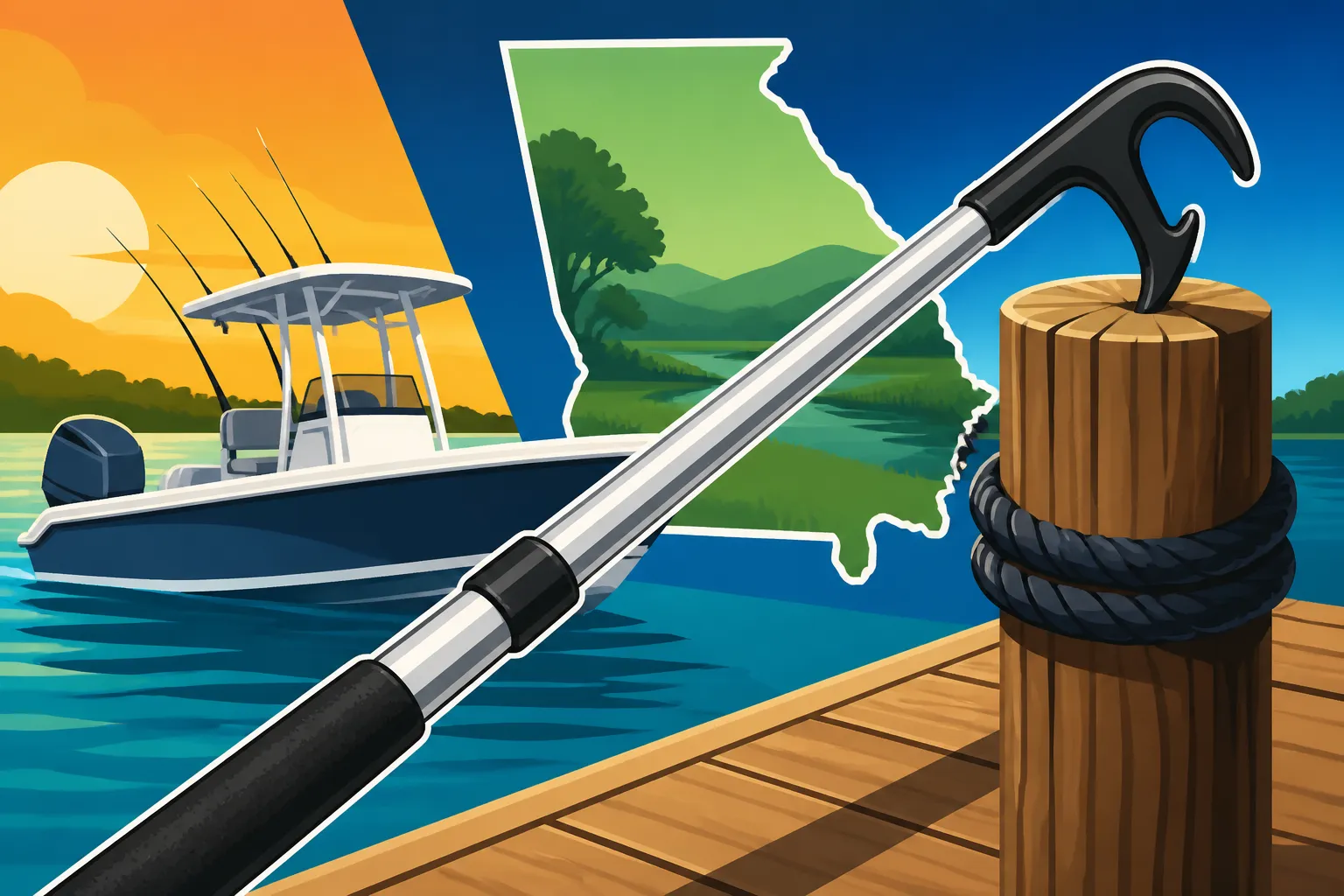
Best Boat Hook for Docking
You’ve spent all morning out on one of Georgia’s beautiful lakes, perhaps Lake Lanier or Lake Oconee, reeling in some fantastic catches. The sun is dipping, the boat is loaded, and all you want to do is smoothly glide into the dock, tie up, and head home. But then the wind picks up, the current grabs your bow, or that ever-present Georgia humidity makes the dock slippery, and suddenly, what should be a simple maneuver turns into a frustrating dance of near-misses and shouted instructions. We've all been there! This guide is here to help you understand the unsung hero of stress-free docking: the humble, yet incredibly effective, boat hook. We’ll dive deep into why this tool is essential, what features to look for, and how to use it like a seasoned pro on any Georgia waterway.
Why a Boat Hook is Your Docking MVP in Georgia Waters
Let’s face it, docking can be one of the most nerve-wracking parts of a boating trip, especially if you're dealing with tricky currents, a crowded boat ramp, or a little too much wind for comfort. A boat hook isn't just a nice-to-have accessory; it's a vital piece of equipment that can turn potential docking disasters into smooth, confident arrivals and departures. Think of it as an extension of your arm, giving you crucial extra reach and leverage when you need it most.
The Frustration of Fumbling and Missing
Picture this: You’re trying to come alongside a dock at a busy marina. The wind is pushing your boat just slightly faster than you intended, and that cleat on the dock seems miles away, just out of arm's reach. You lean, you stretch, maybe you even try to jump – all risky moves that can lead to scratches on your gel coat, a clumsy fall, or even worse, damage to the dock or another vessel. Without a boat hook, that small gap between your boat and the dock can feel like an unbridgeable chasm, leaving you awkwardly drifting and re-attempting your approach multiple times. It’s enough to make anyone’s blood pressure rise after a relaxing day on the water.
A boat hook eliminates this frustration by providing those critical extra feet. Instead of a desperate lunge, you can calmly extend your hook, snag a line, a cleat, or even a dock piling, and pull your boat precisely into position. This simple act reduces stress for everyone on board and makes you look like a docking wizard, even if you’re just a regular angler enjoying Georgia's Best Lakes for Fishing.
Safety First: Preventing Accidents
Beyond just convenience, a boat hook plays a huge role in boating safety. When you’re trying to dock, especially in less-than-ideal conditions, there’s a real risk of hands or feet getting caught between the boat and the dock. This pinch point can cause serious injuries. By using a boat hook, you can keep your body parts safely inside the boat, allowing the hook to take the brunt of the contact or provide the necessary push/pull without putting yourself in harm's way. This is particularly important on those breezy days when the boat might suddenly lurch or drift.
Furthermore, consider the safety of others. If you’re trying to maneuver in a crowded area like a busy boat ramp or a tight slip, misjudging your approach can lead to collisions with other boats or infrastructure. A boat hook allows for controlled, gentle adjustments, helping you avoid scrapes and bumps that can spoil everyone's day. It’s part of a complete Safety Gear Checklist for Georgia Boaters that every responsible boater should have on board.
Versatility Beyond Just Docking
While "boat hook" might conjure images of docking, this tool is surprisingly versatile. It's not just for bringing your boat to the dock; it's also incredibly useful for pushing off from a crowded pier without damaging your boat or others. Need to fend off another boat that’s drifting too close while you’re anchored? A boat hook is perfect for that. It gives you a safe buffer without having to get your hands directly involved.
Think about those times when something falls overboard – a hat, a fishing net, a cooler lid. Trying to retrieve it by hand, especially if you’re moving, can be dangerous or impossible. An extendable boat hook can reach out and grab floating items, saving you from a potentially risky swim or the heartbreak of losing valuable gear. It’s also handy for reaching up to clear a tangled line from a higher structure or even for picking up trash floating nearby, helping us all keep Georgia's beautiful waters clean.
Key Features to Look for in a Georgia-Ready Boat Hook
Just like choosing the right fishing rod or reel, selecting a boat hook isn't a one-size-fits-all decision. The best boat hook for your adventures on Georgia’s waterways will depend on the size of your boat, the type of fishing you do, and the conditions you typically encounter. Let’s break down the most important features.
Length and Extendability: Reaching for Success
One of the most crucial aspects of a boat hook is its length. If it’s too short, it won’t give you the reach you need to grab that distant cleat or fend off that approaching obstacle. If it’s too long, it can be unwieldy and difficult to store. Most anglers find that an extendable boat hook is the best solution for Georgia's diverse fishing environments, from wide-open reservoirs to tighter river docks.
An extendable boat hook allows you to adjust its length to suit various situations. You might need it shorter for pushing off from a crowded Boat Ramp Etiquette for Busy Weekends or longer for reaching a high dock piling or snagging a distant fishing net. Look for models that extend smoothly and lock securely into place. A typical range might be from 4-5 feet when collapsed, extending to 8-10 feet or more. Consider the freeboard (the distance from the water to your boat's deck) of your vessel, and how high your typical docking points are. You want enough length to comfortably reach without straining or overextending yourself.
Material and Durability: Standing Up to the Elements
Georgia’s weather can be unpredictable, with plenty of sunshine, rain, and humidity. Your boat hook needs to be built to withstand these conditions without rusting, bending, or degrading. The most common materials are aluminum, fiberglass, and stainless steel for the hook itself.
- Aluminum shafts are lightweight and corrosion-resistant, making them a popular choice. They’re strong enough for most tasks but can bend under extreme pressure if they're too thin.
- Fiberglass shafts offer excellent rigidity and are also corrosion-resistant. They tend to be a bit heavier than aluminum but are very durable.
- Stainless steel is usually reserved for the actual hook mechanism, offering superior strength and resistance to rust, especially important for those fishing along the Coastal Georgia Fishing Spots Guide.
Regardless of the shaft material, ensure that all fasteners and moving parts (if it’s extendable) are made from corrosion-resistant materials. A comfortable, non-slip grip is also essential, especially when your hands are wet or you’re maneuvering in rougher conditions. You want something that feels solid in your hands, not flimsy, so you can apply force confidently.
Hook Design: Grabbing and Guiding with Ease
The business end of the boat hook is, of course, the hook itself. While they might look similar, there are subtle differences in design that can impact functionality. Most boat hooks feature a robust, curved hook often made of strong nylon or stainless steel, sometimes with a softer tip to prevent scratching.
- Standard Hook: This is your classic design, excellent for snagging ropes, cleats, or dock lines. It’s strong and reliable for most general purposes.
- Combination Hook/Paddle: Some designs include a flat, paddle-like end opposite the hook. This can be useful for pushing off from flat surfaces or as a makeshift paddle in a pinch. However, the primary use remains the hook.
- Recessed Hook: A few designs integrate the hook more smoothly into the end of the pole, reducing snagging when not in use but still providing functionality.
Look for a hook that is large enough to easily grab typical dock lines and cleats but not so oversized that it becomes cumbersome. A smooth, non-abrasive tip on the hook can prevent scuffs and scratches on your boat or the dock, which is always a plus. The goal is to make contact and control your vessel, not to leave a mark.
Using Your Boat Hook Like a Pro on Georgia Lakes and Rivers
Having the right boat hook is only half the battle; knowing how to use it effectively is what truly makes a difference. With a little practice, you'll be docking and maneuvering with confidence, no matter what Georgia's waterways throw at you.
Approaching the Dock: The Art of the Grab
The most common use for a boat hook is during docking. The key is anticipation and preparation. As you make your final approach to the dock, have your boat hook ready and extended to the appropriate length. Aim to approach slowly and steadily, allowing the boat hook to be your first point of contact.
When you're within reach, use the hook to grab a dock line, a cleat, or even a sturdy piece of the dock structure itself. Once you have a secure grab, you can gently pull your boat closer, aligning it perfectly with the dock. This allows you to bring your boat in without having to over-steer or rely on last-minute engine bursts, which can often lead to overshooting or bumping the dock. Practice makes perfect, and soon you'll be able to snag your target with precision, even in a brisk wind on Lake Lanier Fishing Guide, Georgia. Remember, slow is smooth, and smooth is fast when it comes to docking.
Pushing Off and Fending Off: Gentle Control
A boat hook is just as valuable when you're leaving the dock or need to create some space. To push off, extend the hook and place the tip gently against the dock or another boat (with permission, of course!). Then, use the leverage of the pole to push your boat away, guiding it smoothly into open water. This is far safer than pushing with your hands or feet and prevents scuffs that can occur if your boat rubs directly against a rough surface.
If you find yourself drifting too close to another vessel while waiting at the ramp or in an anchorage, the boat hook acts as a handy fending tool. You can gently push the other boat away, or hold your own boat at a safe distance, without causing any damage. This is particularly useful in crowded areas, where tight quarters are common. It's also great for navigating around obstacles like submerged stumps or shallow areas when you're exploring some of the quieter coves on Fishing Lake Oconee, Georgia.
Retrieving Objects: More Than Just a Hook
Beyond docking and fending, your boat hook can be a true lifesaver for retrieving items that have gone overboard. A hat, a life jacket, a paddle, or even that lucky fishing lure – if it floats and is within reach, your boat hook can grab it. This means you don't have to risk jumping into unknown waters or performing tricky, potentially dangerous boat maneuvers to get it back.
Imagine you're out enjoying a calm afternoon on the Chattahoochee River, and suddenly your favorite wide-brimmed hat blows off. Instead of trying to circle back and net it, which can be tricky with river currents, simply extend your boat hook and gently snag the hat, pulling it back to safety. This is where the long reach of an extendable hook truly shines, saving you time, effort, and potentially a lost item. This multi-purpose utility makes it an indispensable part of your Gear & Boats collection.
Choosing the Right Boat Hook for Your Georgia Fishing Adventure
With so many options out there, how do you pick the boat hook that’s perfect for your specific needs on Georgia’s waterways? It comes down to understanding your vessel, your typical fishing locations, and prioritizing what features matter most to you.
Different Types for Different Needs
Consider the size and type of your boat. If you have a small Jon boat used primarily on calm rivers, a shorter, fixed-length boat hook might suffice. For larger bass boats or pontoons on expansive lakes like West Point or Clarks Hill, an extendable model with significant reach will be much more practical. Kayak anglers, who might need to maneuver in very tight spots or reach for branches, could also benefit from a compact, sturdy boat hook that can be easily stowed.
- Fixed-Length Boat Hooks: Simple, durable, and generally less expensive. Great for smaller boats or specific, consistent docking situations. Their main drawback is the lack of versatility in length.
- Extendable/Telescoping Boat Hooks: The most popular choice for versatility. They can adjust to various lengths, making them suitable for a wide range of boats and docking scenarios. Look for robust locking mechanisms that won’t slip under pressure.
- Combination Boat Hooks: Some come with integrated paddle ends, or even brushes for cleaning. While these can add functionality, ensure the primary hook feature isn't compromised. For most Georgia anglers, a dedicated, high-quality hook will be the most effective.
Think about the conditions you typically encounter. Do you often fish in windy conditions, or at busy ramps where quick, precise movements are essential? Then prioritize a hook that is sturdy, reliable, and extends easily. If you mostly fish alone, an extendable hook can be incredibly helpful for managing ropes and docking solo.
Where to Find Your Perfect Match
Finding the right boat hook is pretty straightforward, thanks to a variety of retailers both online and in brick-and-mortar stores. When you're ready to make a purchase, you'll want to consider where you can get the best quality and value for your needs.
Major outdoor and marine retailers are a fantastic place to start. Stores like Bass Pro Shops typically carry a wide selection of boat hooks, ranging from basic models to high-end, heavy-duty options. They often have knowledgeable staff who can help you compare features and recommend a hook that fits your specific boat type and fishing habits. Walking into a store allows you to physically feel the weight, test the extension mechanism, and judge the overall build quality, which can be really helpful.
Online retailers like Amazon also offer an immense selection, often at competitive prices. You can browse countless options, read customer reviews (which can be incredibly insightful about real-world performance), and have the product delivered right to your door. Just be sure to pay close attention to product descriptions regarding materials, extended length, and user feedback on durability and ease of use. Comparing prices and reading reviews from fellow anglers can help you make an informed decision and ensure you're getting a durable tool that will serve you well for years to come on Georgia’s waters.
| Feature Type | Fixed-Length Boat Hook | Extendable Boat Hook |
|---|---|---|
| Pros | Simple, durable, often lighter (if short), less expensive | Versatile length, compact storage, great reach |
| Cons | Limited reach, less adaptable to different situations | Locking mechanisms can wear, potentially heavier |
| Ideal For | Small boats, kayaks, consistent docking points | Most powerboats, sailboats, varying docking situations |
| Common Materials | Aluminum, Fiberglass, Stainless Steel (hook) | Aluminum (telescoping shaft), Fiberglass |
| Typical Use Cases | Pushing off, very close grabs | Docking, fending, retrieving objects, reaching high/low |
| Georgia Scenario Example | Quickly pushing off a crowded ramp at a local Georgia State Park Fishing Spots | Guiding a bass boat into a windy slip on Lake Sinclair Fishing Spots |
Practical Considerations for Your Boat Hook
Beyond the core features, think about how you'll store your boat hook when it's not in use. An extendable hook can collapse to a more manageable size, making it easier to stow in a rod locker or alongside your Best Rods and Reels for Georgia Fishing gear. Some boat hooks even come with clips or holders that allow them to be mounted securely on a gunwale or bulkhead, ensuring it's always within easy reach when you need it most.
Maintaining your boat hook is pretty simple. After use, especially in saltwater or murky freshwater, a quick rinse with fresh water will help prevent corrosion and keep the telescoping mechanism (if applicable) working smoothly. Check for any signs of wear or damage periodically, particularly around the hook and locking points. A little care goes a long way in ensuring this essential tool is ready whenever you need to confidently approach or depart from any dock in Georgia.
Disclaimer
This article is for general informational purposes only and does not constitute professional advice. Laws, prices and regulations vary by location and change over time. Consult a qualified professional for guidance on your specific situation.