Best Small Boat for North Georgia Trout Streams
Anyone who has tried to fish North Georgia's beautiful but often tricky trout streams knows the frustration of trying to navigate them. You might have found yourself wading through chest-deep water, or worse, trying to maneuver a boat that’s far too big for the narrow, rock-strewn passages. It’s enough to make you want to give up before you even cast a line! But don't despair – this guide is all about helping you find the perfect small boat to make your North Georgia trout fishing dreams a reality, opening up those hard-to-reach spots where the biggest fish hide.
Why Small Boats are Essential for North Georgia Trout Streams
North Georgia's trout streams are truly special, but they certainly aren't built for large, heavy vessels. We're talking about intimate waterways, often characterized by shallow riffles, tight bends, and plenty of submerged rocks and fallen timber. If you show up with a standard bass boat, you're going to have a bad time, plain and simple.
Navigating Shallow Waters and Obstacles
The primary challenge of North Georgia trout streams, whether it's the upper Toccoa or segments of the Chattahoochee, is their often unpredictable depth. One moment you might be drifting over a decent pool, and the next you're grinding your hull on bedrock in a foot of water. A big, heavy boat just won't cut it. You'll spend more time pulling, pushing, and getting stuck than actually fishing. Small boats, by their very nature, are designed to float in minimal depths, allowing you to skim over those notorious shallow spots that would beach larger craft. This agility also means you can react quickly to hidden snags or sudden drops, preventing costly damage to your boat and gear. The ability to easily portage around small rapids or waterfalls further expands your access, something larger boats can never offer.
Accessing Remote Fishing Spots
Let's be real, everyone wants to fish where the fish are, and often, the best trout fishing spots in North Georgia aren't right next to the paved road or boat ramp. They're tucked away, requiring a bit of an adventure to reach. Many prime trout sections, especially on designated Delayed Harvest streams, are only accessible by smaller vessels or by wading. A small boat acts as your silent partner, letting you slip into those secluded stretches of water without disturbing the fish or the peaceful ambiance. Think about those serene bends where the canopy creates perfect shade, or the deep runs beneath overhanging trees – these are the places that hold trophy trout, and they're usually unreachable for conventional boats. Having a craft that can be launched from an unpaved bank or even carried down a short trail can unlock entirely new fishing opportunities. For more ideas, check out Remote Wilderness Fishing Spots in North Georgia.
Types of Small Boats Best Suited for Trout Streams
When we talk about "small boats" for trout streams, we're really looking at a few key categories that offer the right balance of maneuverability, portability, and stability. Each has its own pros and cons, and the best choice often comes down to your personal fishing style and the specific streams you plan to frequent.
Kayaks: Maneuverable and Stealthy
Kayaks, particularly fishing kayaks, have become incredibly popular for river and stream fishing, and for good reason. They are inherently stealthy, low-profile, and incredibly maneuverable, making them ideal for slipping through tight spaces and navigating currents without spooking fish. Whether you prefer sit-on-top or sit-in models, a good fishing kayak will often come with features like rod holders, gear tracks, and ample storage for tackle. They're generally easy to paddle, and many modern designs are quite stable, allowing you to even stand and cast in calmer waters.
Consider the length and width of the kayak. Shorter, wider kayaks offer more stability and turn on a dime, which is a huge advantage in narrow, winding streams. Longer, narrower kayaks track better in straight lines and are faster, but can be a pain in tight bends. The trade-off is often between speed and agility. Another big plus is their portability; many kayaks can be loaded onto a car roof rack by a single person, meaning you don't always need a designated boat ramp. For a deeper dive into outfitting, you might want to read Kayak Fishing Gear Guide for Beginners. Brands like Perception and Old Town make excellent fishing kayaks that you can find at a Bass Pro Shops or online at Amazon.
Canoes: Classic and Versatile
Canoes are the traditional choice for river exploration, and they still hold a special place in the hearts of many stream anglers. Their open design offers a lot of space for gear, a cooler, and even a fishing buddy or a child. They're generally stable and, with practice, can be incredibly efficient to paddle, especially by two people. The ability to kneel or sit on a thwart gives you different vantage points, which can be useful when sight fishing for trout in clear water.
One of the biggest advantages of a canoe is its carrying capacity. If you're planning a multi-day trip on a larger river system like the Toccoa or need to haul a lot of gear, a canoe shines. However, in very shallow or rocky conditions, a canoe's wider beam can sometimes be more prone to scraping, and turning quickly in tight spots requires a bit more skill than with a shorter kayak. Look for canoes made of durable materials like Royalex or rotomolded polyethylene if you anticipate bumping into rocks – they can take a beating and keep going. While not quite as nimble as a short kayak, a well-handled canoe offers a fantastic, quiet experience on the water.
Small Jon Boats: Durable Workhorses
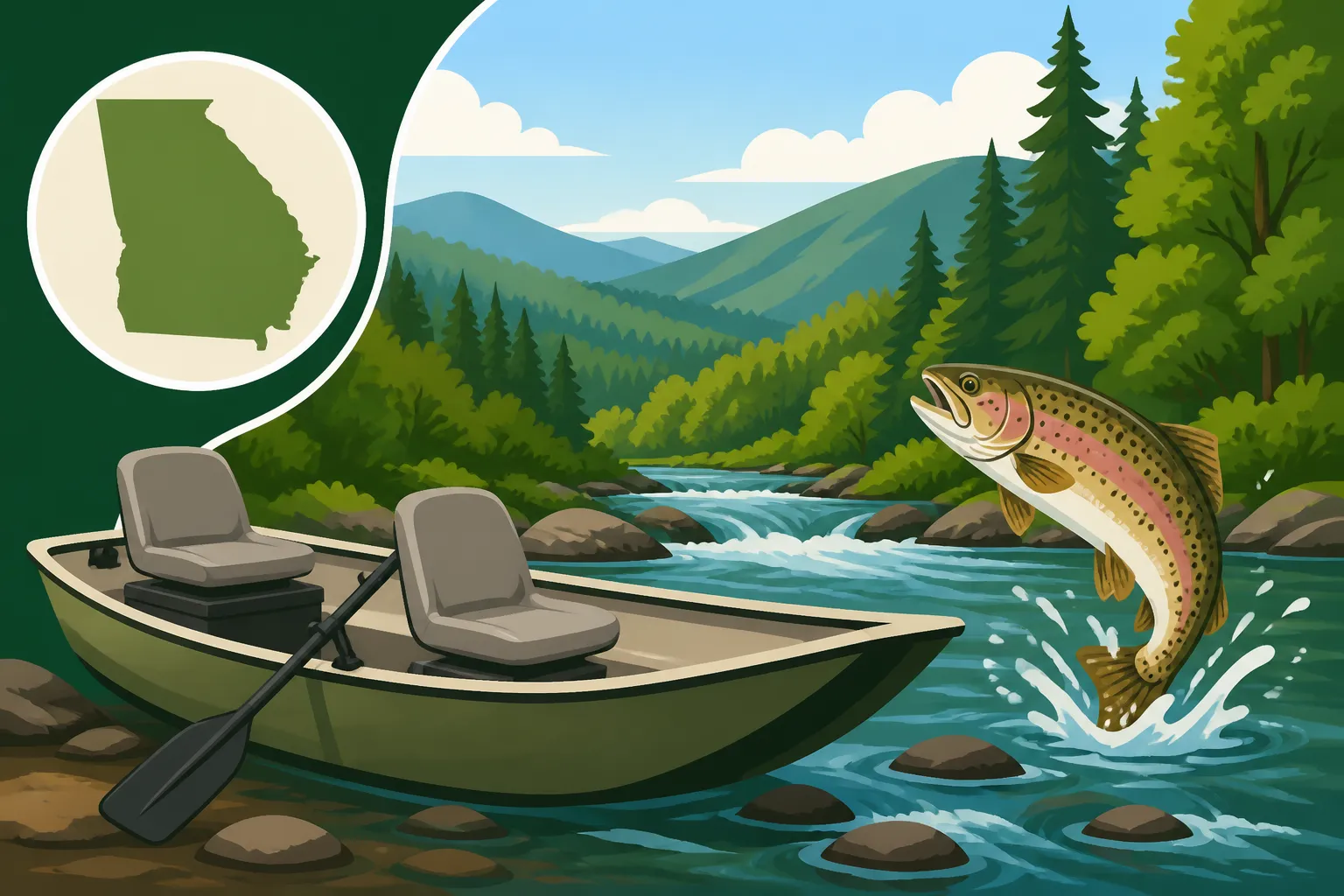
If you're looking for something with a bit more stability and the option to add a small outboard motor for faster travel between spots on wider sections of stream or river, a small jon boat might be your answer. These flat-bottomed boats are known for their rugged durability and shallow draft. They can take a serious beating from rocks and logs, which is a definite plus on unpredictable trout streams. Their open layout also provides a stable platform for standing and casting, and you can easily customize them with seats, rod holders, and small electronics.
The main drawback of a jon boat for true small trout streams is usually its weight and dependence on a motor. While some very small, lightweight jon boats exist, many are still heavier than a kayak or canoe, making portaging or launching from undeveloped banks more challenging. They're typically best suited for the slightly wider, deeper sections of rivers, or for accessing the lower stretches of larger trout streams where a small motor can cover more water efficiently. However, if you fish a combination of larger rivers and smaller streams, and value stability and power, a small jon boat (perhaps 10-12 feet) could be a great hybrid option. Keep in mind the noise factor if you do use a motor – trout are easily spooked.
Here's a quick comparison of these small boat types:
| Feature | Kayak | Canoe | Small Jon Boat |
|---|---|---|---|
| Maneuverability | Excellent in tight spots | Good, requires practice | Fair, better with motor |
| Stealth | Excellent | Excellent | Fair to Poor (with motor) |
| Portability | Very Good | Good | Fair (often needs trailer) |
| Durability | Good (material dependent) | Good (material dependent) | Excellent (aluminum) |
| Capacity | Low to Medium | Medium to High | Medium to High |
| Draft | Very Shallow | Shallow | Very Shallow |
| Stability | Good to Excellent (fishing kayaks) | Good | Excellent (flat bottom) |
| Motor Option | Limited (trolling motor) | Limited (trolling motor) | Yes (small outboard/trolling) |
Key Features to Look for in a Trout Stream Boat
Choosing the best small boat for North Georgia's trout streams isn't just about the type of vessel; it's also about the specific features that will enhance your fishing experience and ensure your safety. These streams demand a lot from your gear, so picking a boat with the right attributes is crucial.
Durability and Material Construction
North Georgia trout streams are beautiful, but they can be unforgiving. You're going to encounter rocks, fallen trees, and shallow gravel bars. A flimsy boat simply won't last. Look for materials that can withstand scrapes, bumps, and impacts.
- Rotomolded Polyethylene: This is a fantastic choice for kayaks and some canoes. It's incredibly tough, impact-resistant, and relatively inexpensive to produce. While it can get scratched, it's very difficult to puncture or crack. If you do scrape it heavily, it often just bounces off or flexes, retaining its integrity. Many popular fishing kayaks are made from this material, making them true workhorses for river environments.
- Aluminum: This is the go-to for jon boats. Aluminum boats are lightweight for their size, incredibly durable, and can handle repeated impacts with rocks and other debris without deforming permanently. They're also relatively easy to repair if you do sustain significant damage, which is a huge plus for those of us who tend to push our gear to the limit.
- Royalex (or similar composites): While less common in new canoes today, if you find an older Royalex canoe, snap it up! These composite materials offer an excellent balance of light weight and superior impact resistance, perfect for navigating rocky rivers. Modern composite substitutes are available and offer similar benefits.
Maneuverability and Tracking
These two characteristics are often at odds with each other, but for trout streams, maneuverability usually wins. You need a boat that can turn on a dime to avoid obstacles, navigate tight bends, and position yourself precisely for a cast.
- Shorter Length: Generally, shorter boats (under 12 feet for kayaks, under 14 feet for canoes) are much easier to turn and handle in confined spaces. They allow you to react quickly to the current and the ever-changing stream environment.
- Rocker: This refers to the curvature of the hull from bow to stern. More rocker (more curve) makes a boat easier to pivot, while less rocker (flatter) helps it track straight. For winding trout streams, a good amount of rocker is your friend, even if it means sacrificing a bit of straight-line speed.
- Shallow Draft: This is non-negotiable. The less water your boat needs to float, the more water you can cover. Flat-bottomed jon boats and many river-specific kayaks are designed with this in mind, allowing you to float over gravel bars that would stop deeper-keeled boats. This feature is especially crucial when fishing streams like the Amicalola or segments of the Etowah where water levels can fluctuate.
Portability and Ease of Transport
You might find the perfect stretch of trout water that requires you to carry your boat a short distance from the parking spot or around a waterfall. Or maybe you just don't want the hassle of a heavy trailer every time you go out.
- Lightweight Construction: The lighter the boat, the easier it is to carry, load, and unload. Solo kayaks and canoes made from lighter materials are often designed with carry handles specifically for this purpose. If you're often fishing alone, a lightweight boat is a game-changer.
- Car-Top Friendly: Being able to secure your boat to a roof rack on your car or truck bed means you don't need a dedicated boat trailer. This dramatically increases your flexibility, allowing you to launch from almost any accessible point, not just designated ramps. Think about fishing spots along the Toccoa River Trout Fishing in Georgia where informal access points are common.
- Ease of Assembly/Disassembly: While less common for the main boat itself, inflatable kayaks or packrafts offer extreme portability. They can be deflated, packed into a backpack, and hiked into truly remote areas. This is a niche option, but for the hardcore adventurer seeking the most secluded mountain streams, it's worth considering. You can find excellent portable options through retailers like Amazon.
Outfitting Your Small Boat for North Georgia Trout Fishing
Having the right boat is only half the battle. To truly maximize your North Georgia trout fishing experience, you need to outfit your vessel properly. This includes essential fishing gear, crucial safety items, and thoughtful accessories that make your time on the water more enjoyable and productive.
Essential Fishing Gear for Small Boats
When space is at a premium, every piece of gear needs to earn its spot. For trout fishing from a small boat, a streamlined approach is best.
- Rods and Reels: Opt for shorter, lighter rods that are easier to handle in confined spaces and under overhanging branches. A 6 to 7-foot light-to-medium action spinning rod or a 7.5 to 9-foot fly rod in a 3-5 weight is ideal for most North Georgia trout. Carrying more than two rods can quickly become cumbersome. Secure them in rod holders or with rod leashes to prevent accidental loss, especially when navigating rapids or tight turns. You can find great options for Best Rod for North Georgia Trout Streams.
- Tackle Management: Instead of a bulky tackle box, use small, soft-sided tackle bags or waterproof boxes that fit neatly under seats or in hatches. Focus on a selection of artificial lures like small inline spinners, spoons, and jerkbaits, along with popular trout baits such as powerbait, corn, or worms. If fly fishing, a small fly box with a variety of nymphs, dry flies, and streamers will be sufficient. Don't forget forceps, nippers, and a small net – a rubberized net is best for protecting fish during catch and release. For general gear, Bass Pro Shops is always a good stop.
- Anchoring System: A small anchor (grappling or folding grapnel type) with a decent length of rope can be invaluable for holding your position in a current, especially if you want to thoroughly fish a productive hole. Make sure it's easily deployable and retrievable, and that the rope is neatly stowed to prevent tangles. A small anchor trolley system on a kayak can make this much more efficient.
Safety Equipment and Apparel
Safety should always be your top priority, especially on moving water where conditions can change rapidly. Even on seemingly calm streams, unforeseen obstacles or currents can pose risks.
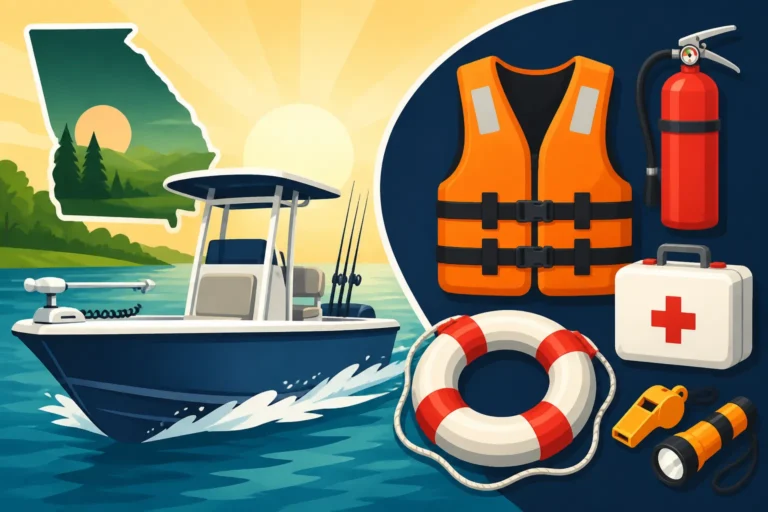
- Personal Flotation Device (PFD): This is non-negotiable. Wear a Coast Guard-approved PFD at all times, even if you're an excellent swimmer. Choose a comfortable, lightweight PFD designed for paddling or fishing, with pockets for small essentials. Remember, Georgia law requires children under 13 to wear a PFD at all times on a moving vessel. You can learn more about Georgia Life Jacket Laws for Boaters and Kids.
- Wading Boots and Waders: While you're in a boat, you'll inevitably need to get out and wade in shallower sections or to portage. Quality wading boots with good grip are essential for navigating slippery rocks. Chest waders or hip waders will keep you dry and comfortable in colder water. Be mindful of the risk of your waders filling with water if you fall in; some anglers prefer to wear a wading belt to minimize this risk.
- First-Aid Kit and Emergency Whistle: A small, waterproof first-aid kit is critical for minor scrapes, cuts, or bug bites. An emergency whistle, attached to your PFD, is a simple yet effective way to signal for help if you get into trouble. A small, bright headlamp or flashlight is also good to have, even if you plan to be off the water before dark.
- Sun Protection: Days on the water can lead to serious sun exposure. Bring sunscreen, a wide-brimmed hat, and polarized sunglasses (essential for spotting fish and protecting your eyes). Lightweight, long-sleeved shirts with UPF protection are also a great idea.
Accessories for Enhanced Comfort and Functionality
Thoughtful accessories can make a huge difference in your overall experience, allowing you to focus more on fishing and less on discomfort or inconvenience.
- Dry Bag: A waterproof dry bag is essential for protecting your valuables – phone, wallet, keys, extra layers, and snacks – from splashes or accidental capsizes. Choose one that's brightly colored so it's easy to spot if it goes overboard.
- Water Bottle/Hydration Pack: Staying hydrated is key, especially during warmer months. A reusable water bottle or a small hydration pack will keep you comfortable and focused.
- Seat Comfort: Many basic kayaks and canoes come with minimal seating. Investing in a padded seat or a backrest can dramatically improve your comfort, allowing you to spend more time fishing without aches and pains. Some fishing kayaks come with elevated, ergonomic seats that are a dream for all-day trips.
- Rod Holders: Integrated or aftermarket rod holders are a must-have for hands-free paddling, baiting hooks, or when you're taking a break. They also help keep your rods safe and organized. You can find a wide array of options for rod holders and other kayak rigging accessories on Amazon.
- Small Cooler/Lunch Bag: A compact cooler is perfect for keeping drinks, snacks, or even your catch fresh. Look for soft-sided, insulated bags that can be easily stowed.
By combining the right small boat with a well-curated selection of gear, safety equipment, and accessories, you'll be well-prepared to explore the stunning trout streams of North Georgia, opening up access to incredible fishing opportunities that many anglers only dream of. Remember to always check current regulations and stream conditions before heading out, and practice good How to Catch and Release Trout Properly techniques to preserve these precious resources for everyone.
Disclaimer
This article is for general informational purposes only and does not constitute professional advice. Laws, prices and regulations vary by location and change over time. Consult a qualified professional for guidance on your specific situation.