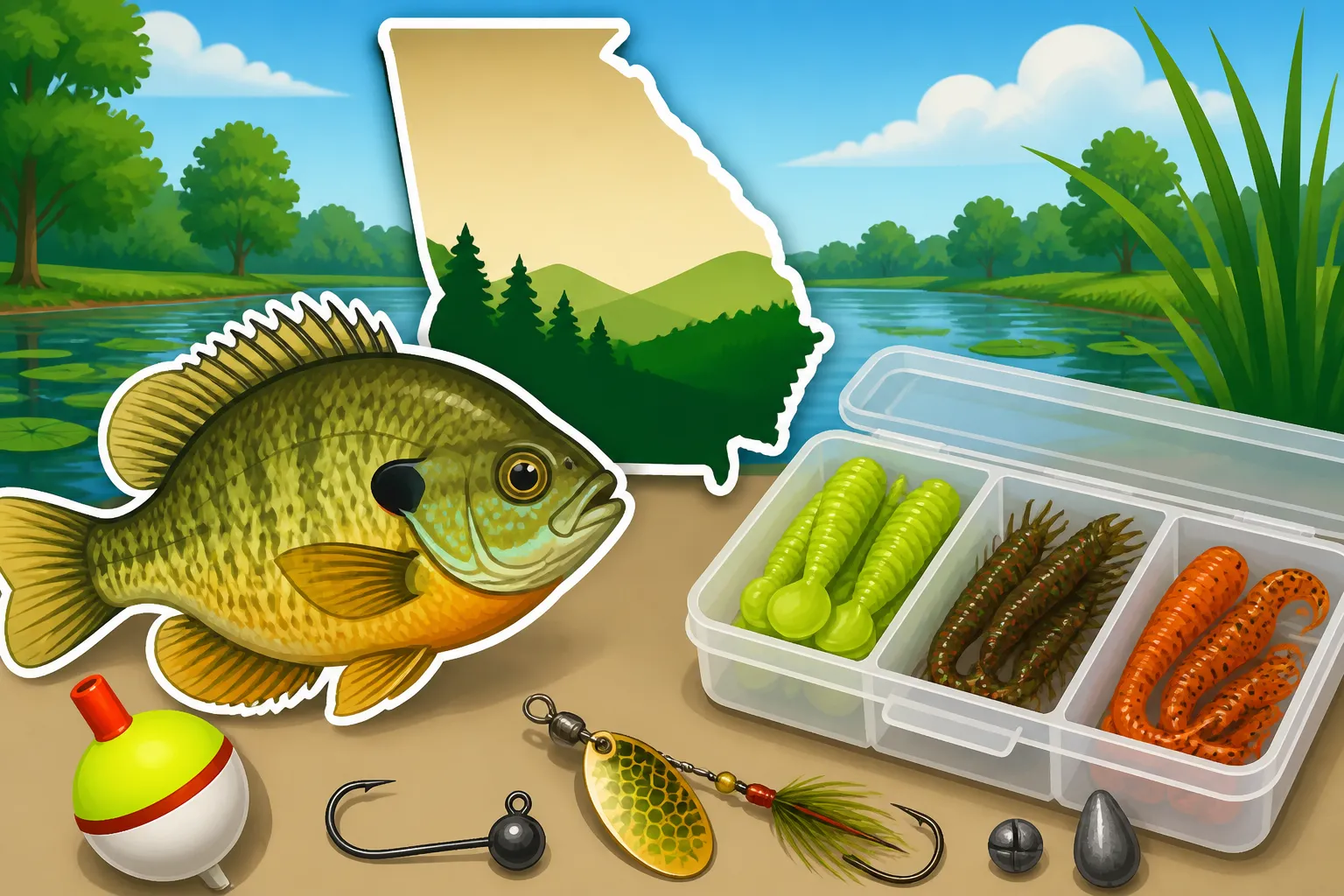
Best Tackle for Panfish in Georgia Ponds
There's nothing quite like the simple joy of fishing for panfish in one of Georgia's countless serene ponds, but if you've ever stood in an aisle at your local Bass Pro Shops, staring at rows and rows of tiny hooks and bobbers, feeling utterly overwhelmed, you're not alone. It can be surprisingly tricky to figure out the "best" tackle when there are so many options, especially when you just want to get out there and catch some bream with the family. This guide is here to cut through the confusion and help you assemble the perfect tackle setup for those eager panfish in Georgia's ponds, ensuring your next outing is filled with plenty of tugs on the line and happy memories.
Understanding Panfish in Georgia Ponds
Before we dive into the nitty-gritty of rods and reels, let's take a moment to appreciate our quarry. Panfish aren't just "small fish"; they represent some of the most accessible and enjoyable fishing opportunities in Georgia. They're widespread, often abundant, and their willingness to bite makes them fantastic targets for anglers of all ages and skill levels. Understanding their habits and preferences is the first step to choosing the right tackle to entice them.
What Makes Panfish So Popular for Georgia Anglers?
The appeal of panfish really boils down to a few key factors that resonate deeply with Georgia anglers. First, they are incredibly accessible. You don't always need a fancy boat or expensive electronics to find them. Many public fishing areas, state parks, and even private ponds across Georgia are brimming with healthy panfish populations. This accessibility makes them perfect for a spur-of-the-moment fishing trip, or for introducing newcomers to the sport without a huge investment.
Second, panfish are cooperative. Unlike some of the more finicky game fish, panfish are generally quite eager to bite. This high success rate is incredibly rewarding, especially for kids or beginners who might get discouraged if they spend hours without a nibble. There's a genuine thrill in feeling that rapid-fire tap-tap-tap on your line, signaling a hungry bluegill or crappie. Many of us started our fishing journey with a cane pole and a worm, catching our first bream, and that memory sticks with you. It’s a fantastic way to build confidence and foster a love for the outdoors. Plus, they're often found in large schools, meaning once you find one, you've likely found a whole mess of them, which can lead to fast and furious action that keeps everyone entertained.
Common Panfish Species You'll Find in Georgia Ponds
When we talk about "panfish" in Georgia, we're generally referring to a few key species that are abundant and provide excellent angling opportunities. The most common you'll encounter in ponds are bluegill, often simply called "bream" or "sunfish." These little fighters are probably the most iconic panfish, known for their vibrant colors and feisty tug on the line despite their small size. You can learn more about these fascinating fish in our Bream and Sunfish Guide for Georgia Anglers.
Beyond bluegill, you'll frequently find other sunfish species like redear sunfish (shellcrackers), known for their preference for snails and mussels, and often growing a bit larger than bluegill. You might also encounter warmouth, which look a bit like a cross between a bluegill and a bass, and are usually found in areas with heavy cover. In some ponds, especially those with good structure, you might even find crappie – both black and white crappie – which are highly prized for their delicious table fare. While crappie can grow larger, smaller crappie found in ponds definitely fall into the "panfish" category for tackle selection. Knowing what you're likely to catch helps tailor your tackle for maximum enjoyment and success. You can dive deeper into identifying these species with our How to Identify Bluegill and Other Sunfish guide.
Essential Rods and Reels for Panfish
Choosing the right rod and reel can feel like a daunting task. Walk into any sporting goods store, and you're faced with an entire wall of options. But for panfish in Georgia ponds, the goal is simplicity and sensitivity. You want gear that allows you to feel those subtle nibbles and provides a fun fight without overpowering these smaller fish.
Choosing the Right Rod Action and Length
For panfish, you're generally looking for a light to ultralight action rod. "Action" refers to where the rod bends when pressure is applied. A fast action rod bends mostly at the tip, offering excellent sensitivity for detecting light bites and quick hook sets. A moderate or slow action rod bends further down the blank, providing more "give" which can be helpful when fighting larger fish or using treble hooks, but for tiny panfish, sensitivity is key. Ultralight rods are designed specifically for small fish and light lines, making those bluegill feel like champions.
In terms of length, a rod between 5 and 6.5 feet is usually perfect for pond fishing. If you're primarily fishing from the bank in areas with overgrown bushes or trees, a shorter rod (5 to 5.5 feet) will be easier to maneuver and cast accurately in tight spots. If you have open casting lanes, a slightly longer rod (6 to 6.5 feet) can help you cast a little further, which is sometimes necessary to reach deeper water or submerged structure where panfish might be holding. The material matters too; graphite rods offer superior sensitivity compared to fiberglass, allowing you to detect even the most delicate tap. You'll find a wide array of great options in our guide to Best Rods and Reels for Georgia Fishing.
Pairing Your Rod with a Spinning Reel
Once you've got your rod picked out, it's time to find its partner: the spinning reel. For panfish, a small, lightweight spinning reel in the 500 to 1000 series size is ideal. These reels are designed for light lines and small lures, perfectly complementing an ultralight rod. The key features to look for are a smooth drag system and a decent gear ratio.
A smooth drag is crucial because you'll be using very light line, often 2 to 6-pound test. When a fish makes a run, you want the line to peel off smoothly without any jerky movements that could snap the line. A good gear ratio, typically around 5.0:1 or 5.2:1, offers a balance of retrieve speed and power, which is all you'll need for panfish. You don't need a high-speed reel for these slower-moving fish. Ensure the reel is comfortable in your hand and balances well with your chosen rod. Many reputable brands offer excellent entry-level spinning reels that are perfect for panfish. For those just starting out, check out our recommendations for the Best Spinning Reel for Beginners.
When it comes to line, monofilament is often the go-to choice for panfish. Its stretch provides a bit of forgiveness against sudden tugs, and it's generally more affordable. Go with a clear or low-visibility green line in the 2 to 6-pound test range. Braided line can be used for extra sensitivity and strength, but its lack of stretch can sometimes pull hooks out of a panfish's soft mouth, and it's generally overkill for this type of fishing.
| Rod Action | Rod Length (Feet) | Reel Size | Line Type (Test) | Ideal Use Case |
|---|---|---|---|---|
| Ultralight | 5'0" – 5'6" | 500 Series | Monofilament (2-4 lb) | Tight spots, precise casts, maximum sensitivity |
| Light | 5'6" – 6'6" | 1000 Series | Monofilament (4-6 lb) | Open banks, slightly longer casts, versatile |
| Flexible Tip (Cane Pole) | 8' – 12'+ | None (Hand-line) | Monofilament (6-8 lb) | Simplest setup, perfect for kids, close-quarters |
Terminal Tackle: Hooks, Sinkers, and Floats
This is where the fine details really matter for panfish. Their mouths are small, and their bites can be incredibly subtle. The right terminal tackle will make all the difference between a missed bite and a fish in the net.
Hook Sizes and Types for Delicate Bites
For panfish, you need small, sharp hooks. Generally, a hook size ranging from a #8 up to a #4 is perfect. A #8 hook is tiny, great for bluegill and other small sunfish using equally small baits like crickets or corn kernels. As you move to #6 or #4, you're looking at hooks that can accommodate a larger worm or a small minnow, suitable for larger bluegill, shellcrackers, or crappie.
The type of hook matters too. Most anglers prefer a simple Aberdeen hook. These hooks have a long shank, which makes them easier to remove from a fish's mouth without damaging it, and they're usually thin-wired, which helps penetrate those delicate mouths with minimal force. Some anglers also like a small, light wire circle hook, especially for catch-and-release fishing, as they tend to hook the fish in the corner of the mouth, reducing gut hooking. Regardless of type, ensure your hooks are sharp. Dull hooks lead to missed bites and frustrated anglers. You can find a huge variety of these small hooks at any Bass Pro Shops or even on Amazon.
Selecting the Perfect Sinker and Float
When fishing for panfish, your goal is to present your bait naturally and keep it at the right depth. This is where sinkers and floats come into play.
For sinkers, less is often more. Panfish are cautious, and heavy weights can make your bait look unnatural or spook them. Split shot sinkers are ideal. These small lead or non-lead weights can be easily pinched onto your line above the hook. Start with a single small split shot (size #7 or #5) about 6-12 inches above your hook. The goal is just enough weight to cast your bait and get it down to the desired depth, but not so much that it feels heavy to the fish. If you're fishing in very shallow water or with a particularly light bait like a cricket, you might not even need a sinker at all!
Floats, or bobbers, are your visual bite indicators. For panfish, stick with small, sensitive floats. A 1-inch or 1.5-inch round bobber is often too large and offers too much resistance to a subtle panfish bite. Instead, opt for a small, thin pencil float or a slip bobber. Pencil floats are highly sensitive and will dip or lay flat at the slightest disturbance. Slip bobbers are fantastic because they allow you to easily adjust your fishing depth without having to constantly re-tie or move a fixed bobber. You simply slide a bobber stop up or down your line, letting the bobber slide down to the split shot for casting, and then float up to the stop once in the water. This setup is excellent for fishing varying depths, especially when you're trying to locate fish. Getting your How to Rig a Bobber for Bream just right can make all the difference.
Baits and Lures That Panfish Can't Resist
Panfish aren't particularly picky eaters, which is another reason they're so much fun to target. However, having a few go-to options, both natural and artificial, will greatly increase your success rate in Georgia's ponds.
Natural Baits: The Tried and True Favorites
When it comes to panfish, nothing quite beats natural bait. They are opportunistic feeders, and a juicy, wiggling morsel is often irresistible.
- Worms: The classic. Earthworms, red wigglers, or even nightcrawlers (cut into smaller pieces) are universally effective for bluegill, shellcrackers, crappie, and even catfish. They're easy to find at bait shops, tackle stores, and even in your own backyard after a rain. Just thread a small piece onto your hook, ensuring the hook point is exposed.
- Crickets: Another phenomenal bait, especially for bluegill. The chirping insects are a natural food source, and panfish go wild for them. Hook a cricket gently under the collar or through the thorax to keep it lively.
- Corn: Believe it or not, a few kernels of canned sweet corn can be incredibly effective for bluegill. It's cheap, readily available, and fish seem to love the bright color and sweet taste. It's a fantastic option for kids learning to fish.
- Small Minnows: While not as common for bluegill, small minnows (often called "crappie minnows") are the absolute go-to for crappie in Georgia ponds, and even larger sunfish might take a swipe. Hook them gently through the lips or just behind the dorsal fin to keep them alive and swimming naturally.
- Mealworms/Waxworms: These are smaller than regular worms and often sold in bait shops. They're excellent for very small panfish or when you need a tiny, irresistible presentation.
The beauty of natural baits is their inherent appeal. They smell and taste like food, which is hard for a fish to ignore. You can explore more options in our Best Bait for Bluegill Fishing guide.
Artificial Lures: Tiny Temptations
Sometimes, especially if you're out of live bait or just prefer to use lures, artificial options can be incredibly productive for panfish. The key is to think small!
- Small Jigs: These are perhaps the most versatile artificial lure for panfish. Think tiny, 1/32 or 1/16 ounce jigs, often paired with a small plastic grub, tube, or curly tail. Colors like chartreuse, white, black, and pink are often very effective. You can fish them under a float, slowly retrieve them, or even gently jig them vertically. Brands like Bobby Garland or Crappie Magnet make excellent options that panfish can't resist.
- Tiny Spinners: Lures like the classic Rooster Tail or Panther Martin in very small sizes (1/32 to 1/8 ounce) can be deadly. The spinning blade creates flash and vibration that attracts panfish. Cast them out and retrieve slowly, allowing the blade to spin.
- Mini Crankbaits: While less common for typical pond panfish like bluegill, very small crankbaits (often called "micro crankbaits") can be effective for larger crappie or even aggressive sunfish. Look for those only an inch or two long, designed to dive a few feet.
- Flies (Wet and Dry): For fly fishing enthusiasts, tiny dry flies (like a size #12 or #14 ant, gnat, or stimulator) or wet flies/nymphs (like a small prince nymph or midge imitation) can be incredibly effective, especially for wary panfish. This takes a different rod setup, but it’s a rewarding way to target them.
When using artificials, experiment with retrieve speed and depth until you find what the fish are responding to. A slow, steady retrieve often works best, mimicking a small insect or baitfish. Sometimes, a stop-and-go retrieve can trigger a strike. Don't be afraid to try different colors; what works one day might not work the next!
Assembling Your Panfish Tackle Box
Beyond the rod, reel, and basic terminal tackle, having a few extra bits and bobs in your tackle box will make your panfish adventures much more enjoyable and efficient. Think about convenience and preparation.
Beyond the Basics: Essential Tools and Accessories
A well-stocked panfish tackle box isn't just about lures; it's about being prepared for whatever the pond throws at you.
- Pliers/Forceps: These are absolutely indispensable. Panfish have small mouths, and sometimes hooks get swallowed deeply. A small pair of needle-nose pliers or, even better, fishing forceps (the kind doctors use) will make hook removal much easier and safer for both you and the fish. It prevents you from jamming your fingers into a tiny, toothy mouth.
- Line Clippers: Forget trying to bite through fishing line or fumbling with scissors. A dedicated pair of line clippers (some even come on retractors you can attach to your vest) makes quick work of trimming tag ends or cutting off old line.
- Stringer or Cooler: If you plan on keeping some panfish for dinner (and they are delicious!), you'll need a way to store them. A simple stringer that you can tie to a bank stake or your person works well for a few fish. For more fish or longer trips, a small cooler with ice is ideal to keep your catch fresh.
- Small Net: While most panfish can be easily swung into hand, a small landing net can be very helpful for larger crappie or if you're fishing with kids and want to ensure the fish don't flop off the hook right at the bank.
- Sun Protection: Georgia sun can be brutal, even on cloudy days. Always include sunscreen, a wide-brimmed hat, and polarized sunglasses in your kit. Sunglasses not only protect your eyes but also help you see through the glare on the water, sometimes allowing you to spot fish or submerged structure.
- Insect Repellent: Depending on the time of year and location, mosquitoes and gnats can turn a pleasant outing into a miserable one. Always have some repellent on hand.
- First-Aid Kit: A small kit with bandages, antiseptic wipes, and pain relievers is always a good idea for minor cuts, scrapes, or hook pokes.
- Extra Spool of Line: It's always a good practice to carry an extra spool of your preferred fishing line. You never know when you might get a tangle, a huge backlash, or have to cut off a lot of line due to snags. Being able to quickly respool means you don't have to end your fishing trip early.
Having these small but mighty tools will undoubtedly enhance your time on the water, making you feel like a seasoned pro even if you're just enjoying a quiet afternoon by the pond. For more general advice on bank fishing gear, check out Best Gear for Bank Fishing at Freshwater Lakes.
Keeping Your Gear Organized and Ready
A messy tackle box is a frustrating tackle box. There's nothing worse than needing to tie on a new hook and having to dig through a tangled mess of old line, rusty hooks, and half-eaten worms. Organization is key, especially with small panfish tackle.
Consider a small, compartmentalized tackle box or bag specifically for your panfish gear. Small plastic utility boxes with adjustable dividers are perfect for keeping hooks, sinkers, swivels, and tiny lures separated. Labeling compartments can be a huge time-saver. Store your extra line, pliers, and other tools in dedicated pockets or larger compartments within your tackle bag. A good Best Tackle Bag for Bank Anglers can make a huge difference.
Take a few minutes after each trip to clean and organize your tackle. Replace rusty hooks, untangle leaders, and replenish any used baits or supplies. This small habit will ensure that your gear is always ready for your next spontaneous fishing adventure in a Georgia pond, making the experience more enjoyable and less stressful. Remember, the goal is to make fishing relaxing, not a scavenger hunt for your gear!
Disclaimer
This article is for general informational purposes only and does not constitute professional advice. Laws, prices and regulations vary by location and change over time. Consult a qualified professional for guidance on your specific situation.