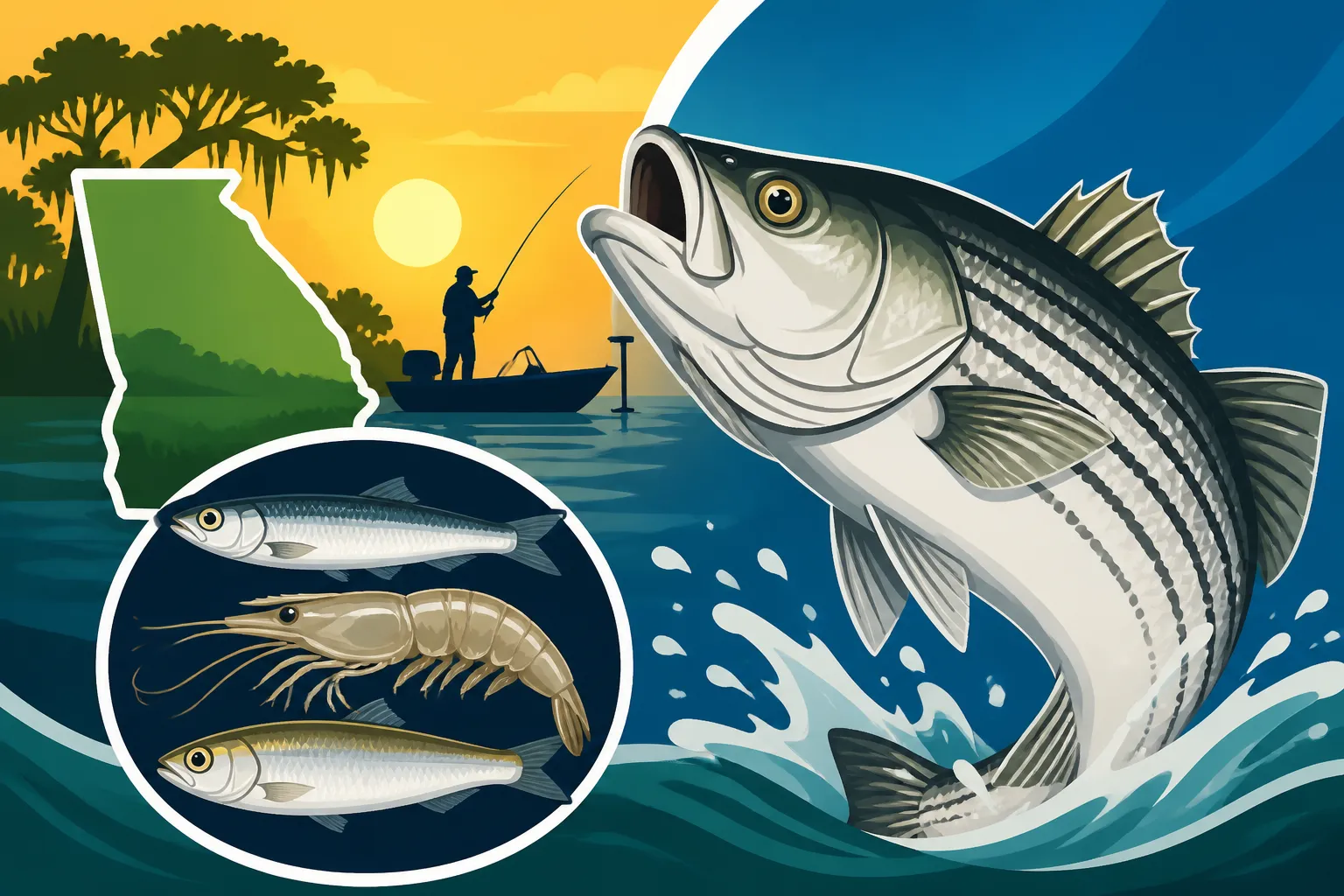
Best Live Bait for Striped Bass Fishing
There's nothing quite like the heart-stopping strike of a Georgia striped bass, but getting them to commit can sometimes feel like trying to win a staring contest with a stone wall. Many anglers, myself included, have spent hours casting artificial lures with little to show for it, leaving us wondering if we're missing some secret trick. Well, for striped bass, that "secret" often comes down to one thing: live bait. This guide will dive deep into why live bait is so effective for these powerful fish and help you choose, rig, and keep the best options for your next fishing adventure.
Why Live Bait is a Game Changer for Striped Bass
Let's be honest, we all love the thrill of an artificial lure, the perfectly executed cast, the twitch, twitch, pause, bam! But striped bass, especially the bigger, more wary ones, aren't always fooled by plastic and paint. When they're being finicky, or when the bite is just plain tough, live bait can turn a frustrating day into an unforgettable one. It's about tapping into their primal instincts in a way that artificials simply can't always replicate.
The Irresistible Appeal of Natural Movement
Think about it from a striped bass's perspective. They're predators, constantly on the hunt for food. A struggling, natural baitfish sends out vibrations and scent signals that are impossible for a hungry striper to ignore. It's not just the look; it's the erratic swimming, the panicked attempts to escape, the subtle fin movements – all of it screams "easy meal" to a lurking striper. Artificial lures, no matter how lifelike, often have a more predictable or mechanical action that a seasoned striper might have learned to avoid. This natural, distressed movement is what triggers their predatory response in a big way.
Imagine you're fishing a deep channel on Lake Lanier. You've been throwing big swimbaits for hours, and maybe you've had a few bumps, but nothing solid. Then, you drop a live gizzard shad down, and it starts darting around nervously. That natural vibration and the visual cue of a real, vulnerable fish struggling in the water column is often all it takes to convince a hesitant striper to open its mouth. It truly makes a difference, especially when these fish are holding deep or in current, like you might find when you're looking for Deep Water Techniques for Striped Bass.
The Scent Trail That Calls Them In
Fish locate food using more than just sight; their lateral line detects vibrations, and their olfactory senses pick up on scents. Live bait constantly releases natural scents and oils into the water, creating a scent trail that draws in striped bass from a wider area. This is a huge advantage, especially in stained water, low light conditions, or when fish are scattered. Artificial lures might have some scent applied, but it's rarely as potent or persistent as the real deal.
Consider fishing a vast reservoir like Lake Hartwell or even a large river system. You're trying to locate schools of stripers that might be roaming. Casting and retrieving an artificial lure is great once you're on top of them, but live bait essentially puts out a "dinner bell" for miles around. It gives you a broader strike zone and increases the chances that a passing striper will follow that scent right to your hook. This is especially true when you're trying to figure out What Depth Striped Bass Hold At and they might not be actively chasing.
Top Live Bait Choices for Georgia Stripers
Georgia's diverse waters offer an abundance of forage for striped bass, and understanding what they're naturally feeding on is key to choosing the best live bait. While a variety of baits can work, some stand head and shoulders above the rest when it comes to consistently hooking up with these hard-fighting fish.
Shad: The Undisputed King
When it comes to live bait for striped bass in Georgia, shad are king. Both gizzard shad and threadfin shad are prevalent in most of our major striper fisheries, from Lake Lanier to Lake Oconee. Stripers absolutely gorge themselves on these baitfish, making them the most natural and often most effective offering you can present.
- Gizzard Shad: These are the larger of the two common shad species, and they're excellent for targeting bigger stripers. They can range from a few inches up to over a foot long. A 6-8 inch gizzard shad is a prime bait for a trophy striper. They are tough, lively, and put out a lot of vibration. The challenge with gizzard shad is catching them yourself, as they require specialized cast netting skills and good electronics to locate schools. Many serious striper anglers consider catching their own gizzard shad part of the ritual, often spending hours before sunrise. You might even find some ready for purchase at a well-stocked Bass Pro Shops if you're lucky, but usually, it's about the hunt!
- Threadfin Shad: Smaller than gizzard shad, threadfins are perfect for catching numbers of stripers, especially when they're feeding on smaller forage. They rarely exceed 6 inches, making them a more manageable size for average-sized stripers and even hybrid striped bass. They are also easier to cast net in large numbers. While they don't last quite as long on the hook as gizzard shad, their sheer abundance and natural appeal make them incredibly effective.
Herring: A Close Second, Especially for Hybrids
Blueback herring are another fantastic option, particularly in lakes where they are abundant, like Lake Hartwell and Clarks Hill Lake (Lake Thurmond). Stripers and especially hybrid striped bass absolutely love herring. They are typically a little tougher than threadfin shad and have a distinctive oily scent that can really call in fish.
Herring are fast swimmers, and their natural frantic action on the hook is often too much for a striper to resist. They tend to be a bit more expensive and harder to come by commercially than some other baits, but if you can get your hands on them, they are worth every penny. For targeting those aggressive hybrid striped bass you might find in Lake Oconee, herring can be an absolute gold standard, giving you a serious edge in catching those hard-pulling fish.
Minnows and Shiners: Accessible & Effective
While not as robust as shad or herring, common minnows and shiners can be surprisingly effective, especially for smaller stripers or when fishing in areas where larger baitfish are scarce. They are also much easier to purchase from local bait shops, making them a convenient option for a spur-of-the-moment trip.
- Golden Shiners: These are readily available at most bait shops and are a popular choice for many freshwater species, including stripers. They are fairly hardy and have a good amount of flash. While a 3-5 inch shiner might not entice a 30-pound striper, it's perfect for juvenile stripers and hybrids.
- Fathead Minnows/Tuffies: Even smaller, these are usually best for smaller stripers or as a "backup" bait. However, sometimes a school of stripers is keying in on tiny baitfish, and a small minnow is exactly what they want. They are also incredibly easy to keep alive.
Other Options: Worms and Eels
While not typically considered "prime" live bait for large stripers, there are times and places where other live offerings can work.
- Nightcrawlers/Worms: Believe it or not, a big wad of nightcrawlers can sometimes entice a striper, especially if they are feeding near the bottom or in turbid water. This is more of a bonus catch while targeting catfish or other species, but it's good to keep in mind if you're struggling.
- Eels (Legalities vary): In some states, eels are a highly prized striper bait, particularly for monster fish. However, check local Georgia Fishing Regulations Explained carefully, as their use and availability can be restricted. Eels are incredibly tough and will stay alive on a hook for a long time, and their snake-like action can trigger violent strikes from big stripers.
Here's a quick comparison of some popular live bait options for Georgia stripers:
| Bait Type | Average Size | Durability on Hook | Scent Appeal | Best For | Availability |
|---|---|---|---|---|---|
| Gizzard Shad | 6-12+ inches | Excellent | High | Trophy Stripers | Cast Net (DIY) |
| Threadfin Shad | 3-6 inches | Good | High | All Stripers/Hybrids | Cast Net (DIY) |
| Blueback Herring | 4-8 inches | Very Good | High, Oily | Stripers/Hybrids | Limited Bait Shop/DIY |
| Golden Shiners | 3-7 inches | Good | Medium | Smaller Stripers/Hybrids | Bait Shop |
| Fathead Minnows | 1-3 inches | Fair | Low | Small Stripers/Panfish | Bait Shop |
Rigging and Presenting Live Bait Effectively
Choosing the right live bait is only half the battle; knowing how to rig it properly and present it naturally is crucial for success. The goal is always to keep the bait alive and lively while making it appear as vulnerable as possible to a hungry striped bass.
Hooking Your Bait for Maximum Action
The way you hook your live bait significantly impacts its lifespan and how naturally it swims. There are a few tried-and-true methods, each with its own advantages. Always use a sharp, appropriately sized circle hook – they're generally safer for the fish if they swallow the bait and help prevent gut hooking.
- Through the Nose/Lips: This is a very common method, especially for shad and herring. Hook the bait through both lips, or just the upper lip. This allows the bait to breathe freely and swim naturally. It's great for trolling or slow-drifting, as the bait presents horizontally. For an even more natural look, you can hook just through the lower jaw and then out the top of the snout. This allows for a wider range of motion and keeps the bait lively.
- Through the Back: Hooking the bait gently through the top of its back, just behind the dorsal fin, can be effective, especially when fishing deeper or in currents. This method keeps the bait active, as it will try to swim downwards, creating a struggling motion that stripers can't resist. Be careful not to hit the spine, as this will quickly kill or incapacitate the bait. This technique is often used when fishing near structure or the bottom.
- Through the Tail (for slower presentations): For very slow presentations or when stripers are less aggressive, hooking a baitfish through the hard cartilage at the base of the tail can make it swim erratically, mimicking a wounded fish. This isn't ideal for long periods, as it can stress the bait quickly, but it can be a last-ditch effort to trigger a strike when nothing else is working.
Essential Rigs for Live Bait Fishing
The rig you choose will depend on where and how you're fishing. Stripers can be found at all depths, from the surface to the bottom, and each situation calls for a specific approach. When rigging up, remember that stripers have excellent eyesight, so consider using fluorocarbon leaders to minimize visibility.
- Freeline Rig: This is perhaps the simplest and most natural presentation. You simply tie your hook directly to your main line (or a leader) and let the live bait swim freely. This rig is deadly when stripers are actively feeding on the surface or near the thermocline. It allows the bait to swim unimpeded, presenting the most natural action possible. It’s particularly effective during low-light conditions or when stripers are busting bait on top.
- Carolina Rig (Bottom Rig): For targeting stripers holding deep on the bottom or around submerged structure, the Carolina rig is your best friend. It consists of an egg sinker (or similar sliding weight), a bead, a swivel, and a leader (often 2-4 feet) tied to your hook. The sliding sinker allows the striper to pick up the bait without feeling the weight, leading to more confident bites. This is a go-to rig for covering deeper water or fishing ledges and humps.
- Downline Rig: Similar to the Carolina rig but often with a heavier weight, the downline rig is designed to get your live bait quickly down to specific depths, often directly into a school of stripers located with your fish finder. A heavy sinker (usually 1-3 ounces or more) is tied above a swivel, with a short leader (12-36 inches) to your hook. The goal is to keep the bait right in the strike zone. This is a prime method for summertime stripers that hold in cooler, deeper waters. Learning How to Downline for Striped Bass is a critical skill for many Georgia striper anglers.
- Planer Board/Balloon Rig (Surface/Suspended): When stripers are scattered or feeding near the surface over open water, a planer board or balloon rig can be incredibly effective. A planer board carries your bait away from the boat, covering a wider area and avoiding spooking fish. A balloon acts as a bobber, keeping your bait at a set depth and making it easier to spot bites from a distance. These rigs are excellent for covering vast stretches of water and presenting baits to wary surface feeders.
Sourcing and Keeping Your Live Bait Healthy
Live bait is only effective if it's live and lively. There's nothing worse than having a cooler full of sluggish, dying bait. Proper care and handling are paramount, from the moment you catch or buy your bait until you put it on the hook.
Catching Your Own Bait: The Cast Net Advantage
Many serious striper anglers prefer to catch their own bait, especially shad and herring, using a cast net. This ensures the freshest bait, and often the exact size and quantity you need. However, it takes practice, patience, and some specific gear.
- Gear: You'll need a good quality cast net, typically 8-12 feet in radius, with appropriate mesh size for the bait you're targeting. A finer mesh (around 3/8 inch) is good for threadfin shad, while a slightly larger mesh (around 1/2 inch) works better for gizzard shad and herring. You'll also need a quality bait tank.
- Location: Shad and herring often congregate in coves, creek mouths, or around main lake points, especially in the early morning or late evening. Look for surface activity, subtle ripples, or use your electronics to spot schools of baitfish. Knowing How to Rig Herring for Striped Bass starts with catching them!
- Technique: Learning to throw a cast net effectively takes practice. There are many videos and experienced anglers who can show you the ropes. The key is a wide, flat spread of the net over the school of bait.
- Timing: Early mornings are often the best time to find baitfish schooled up near the surface.
Buying Bait: Convenience Comes at a Price
If cast netting isn't your thing, or if you're in a pinch, many local bait shops carry live minnows and sometimes shiners. While it's convenient, be aware that these baits might not be as fresh or lively as self-caught bait. Always inspect the bait carefully before purchasing – look for active, healthy fish with no signs of disease or injury. Companies like Amazon offer bait tanks and aerators, but the actual live bait usually has to come from a local source.
Keeping Bait Alive: The Bait Tank is Key
A good bait tank is an absolute necessity for live bait fishing. It's not just a cooler; it's a miniature ecosystem designed to keep baitfish alive and frisky.
- Aeration: Oxygen is critical. A high-quality aerator or livewell pump that circulates fresh water and introduces oxygen is non-negotiable. Many bait tanks feature built-in pumps and spray bars.
- Temperature Control: Rapid temperature changes stress baitfish. Keep the water temperature as stable as possible, ideally similar to the water temperature where you caught (or will fish) the bait. In warm weather, adding a frozen water bottle (not ice cubes directly, as they can contain chlorine or other impurities) can help cool the water slowly.
- Water Quality: Baitfish release ammonia and other waste products. A good bait tank will have a filtration system to remove these toxins. Avoid overcrowding your tank, and consider using a commercial live bait additive to neutralize ammonia and reduce stress.
- Salt: Many anglers add a small amount of non-iodized salt (like rock salt or livewell salt) to their bait tank water. This helps replenish electrolytes and reduce stress on the baitfish, particularly shad, making them hardier and more active. A good starting point is about 1/2 cup per 10 gallons of water.
Handling Bait with Care
Every time you handle a live baitfish, you stress it. Minimize contact, use a soft net to scoop them, and avoid squeezing them. Wet your hands before touching them to prevent removing their protective slime coat, which makes them susceptible to disease. The less stress your bait experiences, the longer it will stay alive and the more appealing it will be to a hungry striped bass.
So, the next time you're heading out to chase those incredible Georgia stripers, don't overlook the power of live bait. Whether you're targeting Striped Bass Fishing Guide for Georgia Rivers or the big lakes, the right live bait, presented correctly, can be the difference between a slow day and a banner day on the water.
Disclaimer
This article is for general informational purposes only and does not constitute professional advice. Laws, prices and regulations vary by location and change over time. Consult a qualified professional for guidance on your specific situation.