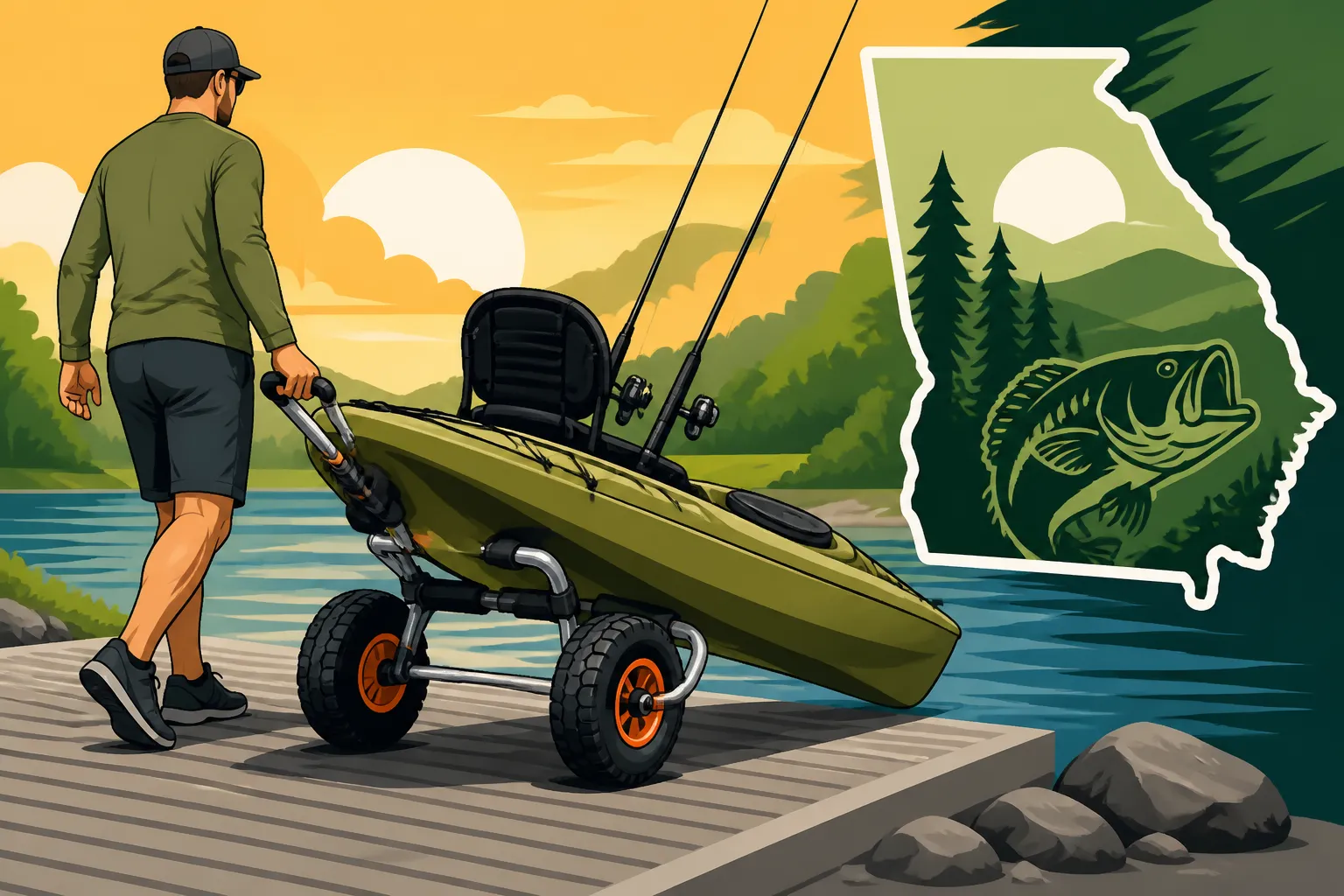
Best Kayak Cart for Boat Ramp Launches
Few things are as frustrating as wrestling a fully loaded kayak down a steep, slippery boat ramp. You’ve got all your gear, your paddle, and maybe even a cooler packed for a day on the water, and trying to haul that heavy beast from your car to the water’s edge can feel like an Olympic event. That's where a reliable kayak cart becomes your best friend, turning that back-breaking chore into a simple, smooth glide. This guide will walk you through everything you need to know about choosing the best kayak cart specifically designed for boat ramp launches in Georgia, ensuring your day starts with ease, not exhaustion.
The Unsung Hero: Why a Kayak Cart Transforms Your Boat Ramp Experience
For many kayak anglers and recreational paddlers, the boat ramp is a necessary evil. While designed for larger motorboats, these paved or gravel slopes often present unique challenges for kayaks, especially when you're going it alone. A good kayak cart doesn't just move your boat; it fundamentally changes your entire launch and retrieve process for the better.
Ditch the Drag: The Physical Benefits and Gear Protection
Let's be honest, dragging a kayak, even a lightweight recreational model, can be a real pain. Fishing kayaks, loaded down with tackle boxes, rods, and maybe a fish finder battery, can weigh upwards of 80-100 pounds, sometimes even more. Trying to muscle that down a ramp, particularly after a long day of fishing, is a recipe for a sore back and aching shoulders. The most immediate benefit of a kayak cart is the sheer physical relief it offers. It takes the weight off you and puts it on wheels, allowing you to simply push or pull your kayak with minimal effort. This is a game-changer, especially if you're frequently heading out solo.
Beyond saving your back, a kayak cart protects your investment. Constantly dragging your kayak across concrete, asphalt, gravel, or even rough dirt can lead to significant wear and tear on the hull. Those scratches, gouges, and abrasions don't just look bad; they can compromise the structural integrity of your boat over time. A cart lifts the hull off the ground, shielding it from abrasive surfaces and sharp debris. Think of it as preventative maintenance for your kayak, extending its life and keeping it looking good. Imagine navigating the busy ramp at Lake Lanier or one of the access points along the Chattahoochee River with confidence, knowing your kayak's hull is safe from scuffs.
Time Saver, Stress Reducer: Streamlining Your Launch and Retrieve
Picture this: you arrive at the ramp, eager to hit the water. Without a cart, you're juggling your paddle, PFD, tackle, and then trying to haul your kayak while cars are lining up behind you. It's stressful, frantic, and often leads to misplaced items or hurried mistakes. A kayak cart streamlines this entire process. You can load all your essential gear into your kayak while it's still on the cart, then simply roll it down to the water's edge. This not only saves you time but also reduces the stress of a busy launch area.
This efficiency is particularly valuable at popular spots like those found in Georgia State Park Fishing Spots or during peak seasons when everyone is trying to get on the water. Instead of multiple trips back and forth to your vehicle, everything goes in one smooth movement. When it's time to pack up, the process is reversed: roll your kayak onto the cart, secure it, and then easily transport it back to your vehicle for unloading. This simple addition can drastically improve your overall fishing or paddling experience, allowing you more time enjoying the water and less time struggling with logistics. If you're looking for more general tips, check out Kayak Fishing Gear Guide for Beginners.
Decoding Kayak Carts: Essential Features for Boat Ramp Performance
Not all kayak carts are created equal, and what works well for sandy beaches might not be ideal for a concrete boat ramp or a rocky river access point. When choosing a cart for boat ramp launches in Georgia, there are specific features you'll want to prioritize to ensure maximum efficiency and durability.
Wheel Wisdom: Matching Tires to Georgia's Diverse Ramps
The wheels are arguably the most critical component of any kayak cart, and their design heavily influences performance across different ramp conditions.
- Pneumatic (Air-Filled) Wheels: These are often larger and wider, resembling small bicycle tires. They excel at absorbing shocks and traversing softer terrains like gravel, sand, or muddy banks that you might encounter at less developed ramps or river access points. The air cushion also provides a smoother ride over rough patches, reducing jarring on your kayak. However, they can puncture, so carrying a small repair kit or having solid spares is a good idea. For those seeking versatility across various terrains, including occasional sandy launches, look for carts with larger pneumatic tires, often available from retailers like Bass Pro Shops or on Amazon.
- Solid (Puncture-Proof) Wheels: Made from a hard plastic or rubber, these wheels are virtually maintenance-free and impervious to punctures. They are excellent for hard, paved surfaces like concrete boat ramps, which are common across Georgia's major lakes and rivers. While they don't offer the same shock absorption as pneumatic wheels, they are incredibly reliable. If you primarily launch from well-maintained, paved ramps, solid wheels are a robust and hassle-free choice.
- "Balloon" or "Beach" Wheels: These are ultra-wide, low-pressure pneumatic wheels designed specifically for soft sand. While fantastic for coastal launches (if you're heading to St. Simons Island Inshore Fishing Guide territory), they can sometimes feel a bit cumbersome on hard-packed concrete or asphalt and may not be necessary unless sand is your primary concern at the ramp.
Consider where you'll be fishing most often. Are you hitting the concrete ramps of Lake Oconee, or are you exploring more rustic river access points on the Flint River? Your primary launch environment should dictate your wheel choice.
Built to Last: Durability and Design Considerations
A kayak cart is an investment, and you want one that can withstand the rigors of frequent use, especially in varying outdoor conditions.
- Frame Material:
- Aluminum: Lightweight and corrosion-resistant, aluminum frames are a popular choice. They won't rust, making them ideal for both freshwater and saltwater environments (perfect if you occasionally venture to the coast). Their lighter weight also makes them easier to transport and store.
- Stainless Steel: Extremely strong and durable, stainless steel carts can handle heavier kayaks and rougher treatment. While more resistant to corrosion than regular steel, they can still show signs of rust over time if not properly maintained, especially with saltwater exposure. They tend to be heavier than aluminum.
- Plastic/Composite: Some lighter-duty carts might use high-strength plastics. These are very lightweight and completely impervious to rust, often suitable for smaller, lighter kayaks.
- Weight Capacity: Always check the cart's maximum weight capacity and compare it to the weight of your fully loaded kayak. Remember to factor in your kayak's base weight plus all the gear, tackle, and anything else you typically carry. Overloading a cart can lead to structural failure or damaged wheels.
- Corrosion Resistance: This is paramount in Georgia, where you might encounter both freshwater and saltwater. Even freshwater can lead to rust on non-treated metals. Look for stainless steel hardware, aluminum frames, and rust-resistant coatings to ensure your cart holds up season after season. Rinsing your cart thoroughly after each use, especially if near saltwater, is always a good practice.
Secure and Stable: Keeping Your Kayak Firmly in Place
The last thing you want is your kayak shifting or tumbling off the cart as you're navigating a ramp.
- Attachment System:
- Straps: Most carts come with adjustable straps to cinch your kayak down. Look for sturdy, wide straps with reliable buckles that are easy to tighten and release. Some straps are permanently attached, while others are removable.
- Bunks/Cradles: Many cradling-style carts feature padded bunks or rubberized cradles that conform to your kayak's hull, providing a stable, non-slip base. This is particularly important for fishing kayaks with complex hull designs.
- Kickstands: A good kickstand is invaluable for stability when loading or unloading your kayak. It prevents the cart from tipping over, giving you both hands free to secure your boat or retrieve gear.
- Balance: A well-designed cart positions the wheels strategically to balance the kayak's weight, making it easier to maneuver. Test how your kayak sits on the cart before heading to the ramp. A balanced load means less strain on you and more control.
Portability Matters: Transport and Storage on the Go
Once your kayak is launched, you have to do something with your cart!
- Foldability: Many kayak carts are designed to fold down into a compact size, making them easy to store in your car, truck bed, or even inside the kayak itself (if space allows) once you're on the water. Quick-release wheels are a common feature that allows you to detach the wheels for even more compact storage.
- Weight: While durability is important, a lighter cart is always easier to handle and transport, especially if you plan to carry it with you in your kayak. An aluminum cart with quick-release pneumatic wheels might be a slightly heavier upfront investment, but it offers a great balance of durability, performance, and portability. You can find many options fitting this description on Amazon.
- Assembly/Disassembly: Look for carts that are easy to assemble and disassemble without requiring special tools. You don't want to spend precious fishing time fiddling with nuts and bolts at the ramp.
Choosing Your Champion: Different Kayak Cart Styles for Ramps
With so many options out there, understanding the different styles of kayak carts can help you pinpoint the best one for your specific kayak and launching needs. Each style has its strengths and considerations.
The Scupper Solution: Direct Support for Specific Kayaks
Scupper carts are unique because they utilize the scupper holes in your kayak (the self-draining holes often found on sit-on-top kayaks) for direct support. Two posts on the cart insert into these holes, cradling the kayak from within.
- Pros:
- Secure Fit: Once inserted, the kayak is very stable and secure on the cart.
- Compact Storage: Many scupper carts have removable posts and wheels, allowing them to break down very compactly.
- No Straps Needed (Often): Depending on the design and how snugly the posts fit, you might not even need to use straps for short distances on a smooth ramp.
- Cons:
- Kayak Specific: This is the biggest drawback. Scupper carts only work with sit-on-top kayaks that have appropriately sized and spaced scupper holes. They won't work for sit-inside kayaks.
- Potential Stress on Scupper Holes: If your kayak is heavy or the cart isn't used properly, there's a risk of stressing or even damaging the scupper holes over time. This is less of a concern with well-distributed weight and careful use, but something to be aware of, especially with thinner plastic hulls.
- Wheel Placement: The wheels are typically located directly under the kayak, which can make it slightly less stable on uneven terrain compared to a wider-stance cradling cart.
If you have a sit-on-top kayak and the scupper holes are robust, a scupper cart can be an incredibly convenient option for launching at paved Georgia boat ramps. Just be sure to verify the compatibility of hole size and spacing.
Cradling Comfort: Universal Fit and Weight Distribution
Cradling carts, also known as bunk carts or frame carts, support the kayak from underneath its hull, often using adjustable padded bunks or a wide, open frame. This is perhaps the most common and versatile type of kayak cart.
- Pros:
- Universal Compatibility: These carts work with virtually any type of kayak – sit-on-top, sit-inside, fishing kayaks, recreational kayaks, even canoes. They don't rely on scupper holes.
- Even Weight Distribution: By supporting the kayak's hull over a wider area, cradling carts distribute the weight more evenly, reducing stress points on the kayak itself. This is especially good for heavier fishing kayaks that might be loaded with gear.
- Stability: The wider stance of the wheels often provides excellent stability, even on slightly uneven boat ramp surfaces.
- Cons:
- Requires Straps: You will almost always need to use straps to secure your kayak to a cradling cart, as there's no inherent connection to hold it in place.
- Can Be Bulkier: While many are foldable, some cradling carts can be a bit bulkier than scupper carts due to their frame design.
For most Georgia anglers, a cradling cart is an excellent all-around choice, offering broad compatibility and robust support. They are widely available and can be customized with different wheel types depending on your preferred launching terrain. Many popular models at Bass Pro Shops fall into this category. If you're wondering how to properly outfit your kayak, check out How to Rig a Kayak for Fishing.
Plug-in and Specialty Carts: Niche Options for Unique Designs
Beyond the two main categories, there are a few other specialized cart designs you might encounter.
- Plug-in Carts (Not Scupper): Some kayaks have proprietary receptacles or mounts designed specifically for a manufacturer's own cart system. These are very secure and integrated but are, by nature, limited to that particular kayak brand and model.
- End Carts/Bow Carts: These carts attach to one end of the kayak (bow or stern) and allow you to lift the other end and walk it like a wheelbarrow. They are generally designed for lighter kayaks or very short distances and might not offer the stability needed for long, steep boat ramps, especially with a heavy load. They also transfer more weight to you, defeating some of the primary benefits of a cart.
For the most reliable and efficient use at typical Georgia boat ramps, a well-chosen scupper or cradling cart will generally serve you best.
Mastering the Ramp: Best Practices for Using Your Kayak Cart
Having the best kayak cart for boat ramp launches is only half the battle; knowing how to use it effectively is the other. A few simple steps and considerations can make your launch and retrieve even smoother, safer, and more enjoyable.
Pre-Launch Checks: Securing Your Load Like a Pro
Before you even think about pushing your kayak toward the water, take a few moments for preparation. This is where you prevent headaches later on.
- Load and Balance: Position your kayak on the cart, ensuring it's centered and balanced. If your kayak is heavier at one end (e.g., if you have a massive tackle box in the stern), try to adjust its position on the cart to distribute that weight evenly over the wheels. This makes the cart much easier to maneuver and less prone to tipping. Load all your gear into the kayak before moving it down the ramp. This means your Tackle Box Setup for Bass Fishing, cooler, PFD, and anything else you're bringing. This prevents multiple trips and makes the cart do the heavy lifting for everything.
- Secure with Straps: Always use the included straps (or high-quality aftermarket ones) to firmly secure your kayak to the cart. Cinch them down tightly, making sure there's no wiggle or play. Give the kayak a good shake; if it moves, the straps aren't tight enough. Double-check that buckles are locked and straps aren't twisted. For scupper carts, ensure the posts are fully inserted and your kayak sits flush.
- Wheel Check: If you have pneumatic tires, give them a quick squeeze to ensure they're adequately inflated. Properly inflated tires roll more easily and reduce the risk of pinch flats. For solid wheels, just a quick visual check for any debris or damage.
- Kickstand Deployment: If your cart has a kickstand, make sure it's fully deployed and stable while you're loading. This provides crucial stability, allowing you to use both hands to get your kayak and gear ready.
Taking these few extra minutes ensures that your kayak is secure, stable, and ready for a smooth journey down the ramp.
Smooth Sailing: Navigating Various Ramp Conditions
Georgia's boat ramps can range from perfectly paved concrete to gravel, dirt, or even sandy slopes near the coast. Each presents its own unique challenges.
- Paved Ramps (Concrete/Asphalt): These are generally the easiest. Maintain a slow, steady pace. Watch out for algae growth near the water's edge, which can be incredibly slippery for both you and the cart wheels. Steer around any cracks or potholes that could snag a wheel. A cart with solid or slightly deflated pneumatic wheels works great here.
- Gravel/Dirt Ramps: Pneumatic wheels shine on these surfaces. They provide better traction and absorb the bumps from loose stones. If you have solid wheels, you might need to push a bit harder and navigate slowly to avoid getting stuck in deeper patches. Keep an eye out for larger rocks or obstacles that could damage your wheels or frame.
- Steep Ramps: If the ramp has a significant incline, it's safer to pull your kayak behind you on the way down, using your body weight for control. Going up, you'll want to push from behind, again using good body mechanics to leverage your weight. Take short breaks if needed, and don't rush. This is where the initial balance check of your loaded kayak really pays off.
- Busy Ramps: Be mindful of other boaters. Keep your kayak and cart off to the side, out of the main launch lane, as much as possible. Work efficiently but don't feel rushed to the point of making mistakes. Most fellow anglers understand that kayak launching takes a moment, but courtesy goes a long way. Consider fishing the Best Boat Ramps for Fishing in Georgia during off-peak hours if possible.
| Wheel Type | Best For | Considerations |
|---|---|---|
| Pneumatic (Air) | Gravel, Sand, Mud, Uneven Terrain | Puncture risk, requires inflation, good shock absorption |
| Solid (Puncture) | Paved Concrete, Asphalt, Hard-Packed Dirt | No punctures, low maintenance, less shock absorption |
| Balloon (Beach) | Soft Sand, Very Loose Sediment | Excellent flotation, can be cumbersome on hard surfaces |
Post-Launch Strategy: What to Do with Your Cart Once Afloat
Once your kayak is in the water and you're ready to paddle, you're left with the cart. Your options depend on your cart's design and your plans for the day.
- Stow in Kayak: Many compact or foldable carts are designed to fit into your kayak's storage hatches, bungeed to the deck, or tucked into the tankwell. If your cart breaks down easily and you have the space, this is often the most convenient option, as it means you'll have it ready for retrieve no matter where you land. This is particularly useful if you're exploring Remote Wilderness Fishing Spots in North Georgia where you might not return to the exact same launch spot.
- Return to Vehicle: If your cart is too bulky for your kayak or you prefer not to carry it, you'll need to walk it back to your vehicle and secure it there. This is a common practice at busy boat ramps, but it means you're committed to returning to that specific launch point.
- Prevent Floating Away: If you're launching at a very busy ramp and planning to leave your cart at the water's edge for a few minutes while you get your kayak organized, make sure it's secured. Carts can easily float away in strong currents or be swept by boat wakes. Either anchor it or move it well away from the water. Always be respectful of other users and don't block access. If you're fishing in larger bodies of water, remember your Safety Gear Checklist for a Day on Lake Lanier.
By understanding these essential features and adopting smart usage practices, your kayak cart will quickly become an indispensable part of your Georgia fishing adventures. It's truly a tool that enhances the enjoyment of your time on the water by making the "getting there" part so much easier.
Disclaimer
This article is for general informational purposes only and does not constitute professional advice. Laws, prices and regulations vary by location and change over time. Consult a qualified professional for guidance on your specific situation.