Georgia Life Jacket Laws for Boaters and Kids
There's a common misconception out on the water, especially here in Georgia, that life jackets are only for the little ones or for folks who can't swim. But the truth is, unexpected things happen in an instant, and being properly equipped with a life jacket can literally be the difference between a minor scare and a heartbreaking tragedy. This comprehensive guide is here to untangle all the ins and outs of Georgia's life jacket laws, from who has to wear one to what kind of jacket you actually need, ensuring your next outing on a lake or river is as safe and stress-free as possible for everyone on board.
Why Life Jackets Matter: More Than Just a Law
When we talk about life jacket laws, it's easy to focus solely on the legal obligation, the fear of a fine or a citation from the Department of Natural Resources (DNR). But truly, these regulations are rooted in something far more profound: the preservation of life. They exist not to inconvenience us, but to act as a crucial layer of protection when everything else goes wrong. Think of it as an insurance policy you wear on your body, ready to deploy in those unforeseen moments of chaos that can unfold rapidly on the water. It’s about being prepared for the worst, even when you're hoping for the best.
The Hard Reality of Drowning Accidents
It's a sobering thought, but drowning can happen silently and quickly, even to experienced swimmers. A sudden fall overboard, hitting your head, being knocked unconscious, or succumbing to cold water shock can incapacitate anyone, regardless of their swimming prowess. Here in Georgia, with our vast network of lakes, rivers, and coastal waters, the potential for such incidents is ever-present. Imagine a peaceful afternoon on Lake Lanier, a sudden wake from a passing boat, and an unexpected dip into the cool water. If you're not wearing a life jacket, those few seconds of disorientation can be critical. The laws aren't just arbitrary rules; they are direct responses to real-world incidents, designed to prevent the tragic outcomes that unfortunately still occur far too often. It’s a proactive measure, a safety net deployed before you even realize you might need it.
When you're out fishing on a quiet stretch of the Ocmulgee River, enjoying the solitude, the last thing you're thinking about is an emergency. But what if you slip on a wet bank and fall into a strong current? What if your boat unexpectedly capsizes? These aren't just hypothetical scenarios; they happen every year across our state. A life jacket gives you that precious extra time to recover, to signal for help, or to simply stay afloat until assistance arrives. It eliminates the struggle to stay above water, allowing you to conserve energy and maintain your composure. This simple piece of gear can truly be the difference between life and death, turning a potentially catastrophic event into a manageable one. It's a small concession for such a significant safety benefit, a vital component of any Safety Gear Checklist for a Day on Lake Lanier or any other body of water.
Peace of Mind for Anglers and Families
Beyond the grim statistics, there's a powerful emotional component to wearing and enforcing life jacket use: peace of mind. As an angler, knowing that you and your loved ones are protected allows you to fully immerse yourselves in the joy of fishing, the tranquility of the surroundings, and the thrill of the catch. Parents especially understand this feeling. There’s a constant, underlying hum of worry when children are near water, and seeing them properly fitted in a Coast Guard-approved life jacket silences that worry, at least for a while. It lets you focus on teaching them how to cast, how to identify different fish species, or simply enjoying their laughter.
For families, a day on the water should be about creating cherished memories, not about constantly fretting over safety. When everyone on the boat, especially the little ones, is wearing their life jackets, it creates a much more relaxed and enjoyable atmosphere. It sets a positive example for younger generations, instilling good water safety habits from an early age. Imagine fishing for bream in a local pond with your grandkids, knowing they are buoyant and safe even if they lean a bit too far over the edge. This sense of security liberates you to truly connect with nature and with each other, making the experience richer and more rewarding for everyone involved. It's a small investment in safety that pays dividends in peace of mind and unforgettable moments.
The Core of Georgia's Life Jacket Laws: Who, When, Where
Navigating the specifics of Georgia's life jacket laws can sometimes feel a bit like trying to read a complicated fishing map, but once you understand the core principles, it becomes much clearer. The primary goal of these laws is to ensure that everyone on the water has access to flotation devices, and that the most vulnerable populations – our children – are actively protected. It's not just about having a life jacket somewhere on the boat; it's about having the right type, in the right condition, and often, wearing it.
Mandatory Wear for Children Under 13
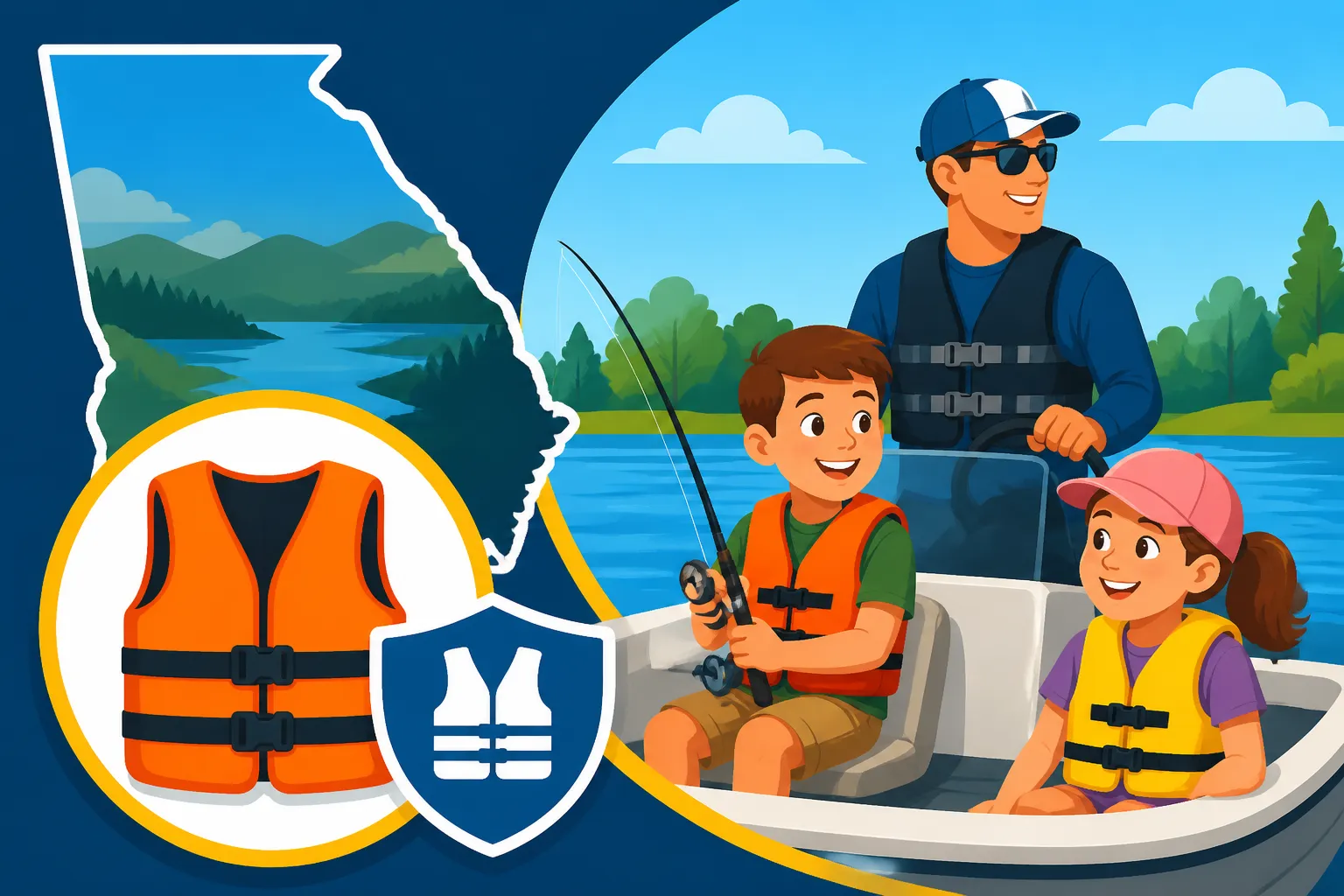
This is perhaps the most critical and non-negotiable aspect of Georgia's life jacket laws: children are a top priority. In Georgia, any child under the age of 13 must wear a Coast Guard-approved life jacket at all times while on a moving vessel. This isn't just a suggestion; it's a legal requirement. It applies to all boats, whether you're cruising on a powerful bass boat across Lake Oconee, paddling a canoe down the Toccoa River, or even just puttering around in a small jon boat on a quiet pond. The law makes no distinction based on the child's swimming ability or the depth of the water. If the boat is moving, they must be wearing it.
This rule is in place because children, even those who can swim, are often less able to react effectively to unexpected situations on the water. They might panic, be disoriented, or simply not have the strength or coordination to stay afloat in choppy water or strong currents. A properly fitted life jacket provides instant flotation, keeping their heads above water and significantly increasing their chances of survival in an emergency. It's a common sight to see kids cheerfully sporting their PFDs while fishing or tubing, and for good reason – it's the law and it's smart. Understanding Georgia Life Jacket Rules for Children Under 13 is paramount for any adult taking youngsters out on the water, ensuring their safety is the first priority.
Now, while the law specifically mandates wear on moving vessels, it's always a good practice to encourage children to keep their life jackets on even when the boat is anchored or swimming around the boat. Accidents can still happen, and it instills a lifelong habit of water safety. The only real exception to the "under 13, must wear" rule is if the child is below deck or within an enclosed cabin area where they are not exposed to the open water. However, the moment they step out onto the deck or into an open area of the boat while underway, that life jacket needs to be securely fastened. No parent wants to be in a situation where they regret not following this simple, life-saving rule.
Requirements for All Boats and Occupants
Beyond the specific rules for children, Georgia law also dictates that all vessels must carry a sufficient number of Coast Guard-approved life jackets for every person on board. This means if you have five people in your boat, you need to have five appropriately sized life jackets readily accessible. "Readily accessible" is a key phrase here; it doesn't mean stuffed in a compartment under a pile of gear that you have to dig through in an emergency. It means they should be easy to grab and put on quickly.
Furthermore, any vessel 16 feet or longer (excluding canoes and kayaks) must also carry one throwable flotation device, such as a ring buoy or a buoyant cushion. This is in addition to the wearable life jackets for each person. The throwable device is for situations where someone falls overboard and you can't reach them immediately, allowing you to toss them a flotation aid to keep them above water while you maneuver the boat for a rescue. So, whether you're navigating the sprawling waters of Clarks Hill Lake or fishing the smaller creeks, understanding How Many Life Jackets Do You Need on a Boat in Georgia is fundamental.
It's important to remember that these requirements apply to all boats, from personal watercraft (PWCs) to large cruisers. Even if you're an adult and an excellent swimmer, having a life jacket on board for yourself is not just good practice, it's often a legal necessity. While adults are not always required to wear a life jacket when the boat is moving (unless they are being towed on skis or a tube, for example), they must have one available. However, considering the unpredictable nature of the water, voluntarily wearing a life jacket as an adult is a wise decision that many experienced anglers and boaters choose to make, setting a strong example for everyone around them.
Understanding "Coast Guard Approved": What to Look For
When the law talks about life jackets, it's not just any old flotation device. It specifically refers to "Coast Guard-approved" Personal Flotation Devices (PFDs). This designation is crucial because it means the device has met rigorous safety standards for buoyancy, materials, and performance. Without this approval, a device might not provide adequate flotation or reliability in an emergency, rendering it largely ineffective. Knowing what to look for can be a bit overwhelming with all the different types and labels, but it's essential for ensuring genuine safety and compliance.
Decoding Life Jacket Types I, II, III, IV, and V
The U.S. Coast Guard classifies PFDs into five distinct types, each designed for different situations and offering varying levels of buoyancy and performance. It's not a one-size-fits-all situation, and understanding these distinctions is key to choosing the right PFD for your specific activity.
Here's a quick breakdown:
| PFD Type | Description | Buoyancy (Minimum) | Best Use |
|---|---|---|---|
| Type I | Offshore Life Jacket | 22 lbs. | Rough, remote waters where rescue may be delayed; turns unconscious wearer face up. |
| Type II | Near-Shore Buoyant Vest | 15.5 lbs. | Calm, inland waters where quick rescue is likely; may turn unconscious wearer face up. |
| Type III | Flotation Aid | 15.5 lbs. | Calm, inland waters where quick rescue is likely; designed for comfort/mobility; wearer must turn self face up. |
| Type IV | Throwable Device | 16.5 lbs. | For persons overboard; must be thrown to a person, not worn. Examples: ring buoys, buoyant cushions. |
| Type V | Special Use Device | Varies | Designed for specific activities (e.g., kayaking, waterskiing, work vests); must be worn for approved activity. |
Type I PFDs are the most robust, offering the highest buoyancy and designed to turn an unconscious person face-up in rough waters. They're bulky but are your best bet in offshore or remote environments. Type IIs are more common for near-shore use, providing decent flotation and some ability to turn a person face-up, though less reliably than a Type I. Types I and II are great for general boating, especially for those who are not strong swimmers or might be in unpredictable conditions.
Type III PFDs are often the choice for recreational boaters and anglers because they offer significant comfort and mobility, making them ideal for activities like fishing, waterskiing, or kayaking. The trade-off is that they are not designed to turn an unconscious person face-up, so the wearer must be able to help themselves. These are perfect for active use on calm waters. Lastly, Type IVs are those throwable devices, mandatory on larger boats, and Type V includes a range of specialized PFDs, like inflatable jackets, that often require specific conditions for wear or use to be considered Coast Guard approved. For a deeper dive into the nuances, check out Coast Guard-Approved Life Jacket Types for Georgia Boaters.
The Importance of Proper Fit and Condition
Having a Coast Guard-approved life jacket is only half the battle; it must also fit properly and be in good condition. A life jacket that's too big can ride up around your ears, hindering visibility and potentially slipping off in the water. One that's too small will be uncomfortably tight and may not provide adequate buoyancy. When trying on a PFD, make sure it fits snugly but allows for full range of motion. Lift your arms above your head; if the jacket rides up over your chin or ears, it’s too big. Most life jackets have adjustable straps, so take the time to cinch them down for a secure fit. This is especially true for children, where a snug fit is paramount to prevent them from slipping out of the jacket.
The condition of the life jacket is equally vital. Before every outing, take a moment to inspect all PFDs on board. Check for rips, tears, or excessive fading in the fabric, which can compromise its integrity. Ensure all zippers, buckles, and straps are in working order and not corroded or damaged. Look for waterlogging or mildew, which can indicate that the internal flotation material has deteriorated. A life jacket that is torn, punctured, or waterlogged may not provide its advertised buoyancy and could fail you when you need it most. It's also critical to ensure inflatable PFDs have a functional CO2 cartridge and are ready for deployment if they are designed for manual inflation.
Remember, a damaged or ill-fitting life jacket is almost as useless as having no life jacket at all. It's a piece of safety equipment that literally holds your life in its balance, so treating it with care and ensuring its readiness is a non-negotiable part of responsible boating here in Georgia. Taking the time to properly size and inspect everyone's PFDs ensures that when that unexpected moment arises, your life jacket will perform exactly as it's designed to. This diligence is a small price to pay for such a significant measure of safety.
Specific Scenarios: Kayaks, Canoes, Paddleboards, and PFDs
Georgia's waterways are incredibly diverse, from the wide expanses of Lake Seminole to the narrow, winding trout streams of North Georgia. With this variety comes a growing popularity in different types of watercraft, particularly non-motorized vessels like kayaks, canoes, and stand-up paddleboards. While these activities offer a peaceful and intimate way to experience our natural beauty, they are not exempt from life jacket laws. In fact, due to the inherent nature of these smaller, often less stable crafts, PFD compliance is even more critical.
Non-Motorized Vessels and Life Jacket Carriage
Many people assume that because a kayak or canoe isn't a "boat" in the traditional sense, the life jacket rules might be different, or even non-existent. This is a dangerous misconception. In Georgia, as with most states, all vessels – including kayaks, canoes, rowboats, and stand-up paddleboards – must have a Coast Guard-approved life jacket for each person on board. The key difference for these non-motorized crafts is that while you must have the life jacket, you are not always legally required to wear it as an adult (though it is highly, highly recommended).
However, if you're out on the water in a kayak, for instance, and you have a child under 13 with you, that child must be wearing their life jacket the entire time the vessel is moving. Even if it's a slow drift, that rule applies. For adults, carrying the life jacket means it must be easily accessible. Tying it to the deck rigging, having it in the cockpit, or even wearing it if it's comfortable (like a Type III fishing vest) are all acceptable ways to meet the "readily accessible" requirement. Stuffing it deep inside a dry bag or under a bungee cord where it would take precious minutes to retrieve in an emergency simply won't cut it. Beyond the life jacket, remember that for a comprehensive safe outing, a Kayak Fishing Gear Checklist for Georgia Anglers should always include additional safety items like a whistle or signaling device, a paddle leash, and potentially a bright flag for visibility, as pointed out in articles such as Do You Need a Whistle on a Kayak in Georgia?.
The rationale for the "carry, not necessarily wear" rule for adults on non-motorized vessels often comes down to comfort and mobility for activities like paddleboarding, where wearing a bulky PFD can hinder balance or movement. However, the vast majority of experienced kayakers and paddleboarders will tell you that wearing their life jacket is the smartest decision. You're much more likely to end up in the water from a kayak or SUP than from a larger powerboat, and often without warning. A life jacket that's being worn provides immediate flotation without the need to fumble for it in a chaotic moment. When considering the serene yet sometimes unpredictable waters of the Flint River or the Chattahoochee, prioritizing constant wear can save lives.
Special Considerations for Tournament Anglers
Tournament fishing, especially for bass, is a high-stakes, fast-paced world where every second counts. Anglers are often covering vast distances at high speeds, and the intensity of competition can sometimes lead to overlooking standard safety protocols. However, Georgia's life jacket laws, and often specific tournament rules, make it clear that safety remains paramount. While general laws dictate that children under 13 must wear a PFD on a moving vessel, tournament anglers themselves often have stricter requirements.
Many bass tournaments, both local and national, explicitly require all occupants to wear a Coast Guard-approved life jacket whenever the boat is on plane or traveling at high speeds. This rule is put in place by tournament organizers to protect competitors who are often pushing their boats to the limits and are more susceptible to sudden stops, collisions, or falls overboard at speed. Imagine hitting an unexpected wake on Lake Hartwell at 70 mph – being securely strapped into a life jacket could prevent serious injury or drowning in such a violent incident. Beyond life jacket rules, tournament anglers must also be aware of specific regulations such as Tournament Angler License Rules in Georgia which cover their participation in competitive events.
These special rules for tournament anglers aren't just about legal compliance; they're about acknowledging the increased risks associated with competitive boating. High-performance bass boats, while incredibly fun and efficient, demand a heightened sense of safety awareness. So, if you're gearing up for a tournament on West Point Lake or any of Georgia's prime bass fisheries, make sure your life jacket is not only present and approved but also worn during those high-speed runs. It's a crucial part of being a responsible and competitive angler, ensuring you're safe enough to fish another day.
Penalties and Enforcement: What Happens if You Don't Comply
Ignoring Georgia's life jacket laws isn't just a gamble with your safety or the safety of your passengers; it's also a gamble with the law. The Georgia Department of Natural Resources (DNR) rangers and other law enforcement agencies are vigilant on our waterways, and they take these regulations very seriously. While no one wants to get a ticket, the financial and legal consequences of non-compliance serve as a stark reminder that these aren't merely suggestions.
Fines and Citations for Violations
If a DNR ranger or other law enforcement officer discovers that you are in violation of Georgia's life jacket laws, you can expect to receive a citation. The specific fines can vary, but generally, they are designed to be substantial enough to act as a deterrent. For instance, if a child under 13 is found on your moving vessel without a properly worn life jacket, that's typically a clear and straightforward violation. Similarly, if you don't have enough Coast Guard-approved life jackets for every person on board, or if your throwable device is missing, you're likely looking at a ticket.
These fines can range depending on the specific offense and sometimes the discretion of the issuing officer. What often starts as a routine safety check can quickly escalate into a legal headache and a drain on your wallet if you're not in compliance. Beyond the initial fine, some violations might require a court appearance, leading to additional court costs, potential points on your boating record (if such a system is in place for boating offenses), and a significant loss of time. It's an unnecessary burden that can easily be avoided by simply adhering to the rules. Just like ignoring traffic laws on the road, neglecting boating regulations has tangible consequences. Even seemingly minor infractions, such as not having your registration decal displayed correctly or lacking essential safety items on board, can draw unwanted attention and potential fines.
It's far better to spend a few extra minutes ensuring your life jackets are in order and properly worn than to spend hours in court or hand over hard-earned money in fines. Boating safety laws, including those related to life jackets, are enforced to ensure that everyone can enjoy Georgia's waters responsibly. The aim isn't to punish, but to prevent accidents and promote a culture of safety.
The Human Cost of Non-Compliance
While fines and citations are certainly unpleasant, they pale in comparison to the ultimate human cost of non-compliance: injury or, tragically, death. This is the truly devastating consequence that no one ever wants to face, yet it remains a persistent reality on the water. When someone drowns because a life jacket wasn't worn or wasn't available, the ripple effect on families and communities is profound and long-lasting. There's no fine or legal penalty that can ever undo such a loss.
Imagine the scenario: a beautiful summer day on Lake Sinclair, perfect for a family outing. But in the rush to get on the water, you forgot to check the life jacket for your active 10-year-old, and it's too big, riding up around his neck. A sudden turn, he slips, and in an instant, he's in the water, struggling. The ill-fitting jacket is more of a hindrance than a help. Or perhaps you, an adult, thought you didn't need one for a quick trip across the lake, only to have an unforeseen medical emergency or collision throw you into the water, disoriented and unable to swim. These are the moments when the lack of a properly worn life jacket can turn a simple accident into a tragedy. These laws are not just about protecting you, but about protecting everyone around you. In this broader context of boating safety, remember that penalties also apply to other serious infractions, such as those related to Georgia Boating Under the Influence Laws, which carry severe legal and human costs.
Every incident where a life jacket could have made a difference reinforces the critical importance of these laws. The human cost isn't just about the person lost; it's about the grief, the guilt, and the irreversible void left behind. This is why the enforcement of life jacket laws is so vital, and why understanding and complying with them is the most fundamental responsibility of anyone operating a vessel on Georgia's waters. It's a duty we owe to ourselves, our families, and our fellow boaters.
Beyond the Law: Best Practices for Water Safety
While understanding and complying with Georgia's life jacket laws is absolutely essential, true water safety extends far beyond the minimum legal requirements. Laws provide a baseline, but adopting best practices means embracing a proactive, comprehensive approach to keeping yourself and others safe on the water. It’s about cultivating a mindset where safety is not just a rule to be followed, but a core value that guides every decision you make when planning and executing a day out fishing or boating.
Choosing the Right Life Jacket for Your Activity
The law might say you need a "Coast Guard-approved" life jacket, but within that broad category, there's a whole world of options tailored for specific activities. Choosing the right life jacket isn't just about legal compliance; it's about maximizing comfort, functionality, and ultimately, safety for your chosen pursuit. If you're going to be actively fishing, casting, and reeling, a bulky Type I offshore jacket might be legally compliant but incredibly cumbersome and hot. Instead, a Type III fishing vest, often equipped with pockets for tackle and gear, provides excellent mobility and buoyancy for calm waters, allowing you to enjoy your fishing without feeling restricted. Stores like Bass Pro Shops are fantastic places to try on different styles and get expert advice on what suits your needs best.
For those who enjoy paddling kayaks or canoes, a specialized Type V PFD designed for paddling offers larger armholes and a shorter cut that won't ride up when seated, enhancing comfort and range of motion. If you're waterskiing or tubing, look for a Type III or Type V specifically designed for watersports, offering extra padding and a secure fit to withstand the impact of high speeds. Even for casual pontoon cruising, a comfortable Type II or III PFD can make a huge difference in how readily people will wear them. Consider the conditions you'll be in: rougher waters or remote areas might warrant a more robust Type I or II, while calm, sheltered coves are fine with a Type III. Thinking about the actual activity will ensure you select a PFD that people will want to wear, not just have to wear.
Encouraging Voluntary Wear for Everyone
This is where the culture of safety truly takes root. While Georgia law mandates life jacket wear for children under 13, it doesn't generally require adults to wear them on moving vessels (unless being towed). However, advocating for and encouraging voluntary wear among all adults is one of the most impactful best practices you can adopt. Leading by example is powerful. If you, as the boat operator or an experienced angler, consistently wear your life jacket, it normalizes the behavior and subtly encourages others to do the same, especially teenagers and other adults who might otherwise forego it. It shows that even experienced individuals prioritize safety.
Make wearing a life jacket a non-negotiable part of your boat's routine, right alongside checking the fuel and grabbing the snacks. Have a conversation with your passengers before you depart, explaining why you encourage everyone to wear one – not just because of the law, but because of the unpredictable nature of the water. Emphasize comfort and choice of PFD type, making it clear that there are many options beyond the bulky orange vests of yesteryear. Pointing to resources like Do Adults Have to Wear a Life Jacket in Georgia? can help explain the nuances. For more comprehensive preparation, refer to a Safety Gear Checklist for a Day on Lake Lanier to ensure all bases are covered.
By creating an environment where life jacket wear is the norm, you increase the overall safety of everyone on board. It reduces the scramble in an emergency, ensuring immediate flotation. Think of it as a seatbelt in a car – you don't always have to wear one in certain situations, but it's universally accepted as the safest practice. The same principle applies to life jackets on the water. Making it easy, comfortable, and customary for everyone to wear a PFD is the mark of a truly responsible and safety-conscious boater, ensuring that everyone returns home safely after a fun day on Georgia's beautiful waters.
Where to Find Compliant Life Jackets: Your Options
Once you understand the laws and the importance of a proper fit, the next step is actually acquiring the right life jackets. Thankfully, there are many convenient options available, whether you prefer to shop in person or from the comfort of your home. The key is to ensure that whatever you purchase is genuinely Coast Guard-approved and suitable for the intended user and activity.
Brick-and-Mortar Stores vs. Online Retailers
When it comes to buying life jackets, you essentially have two main avenues: physical retail stores and online marketplaces. Each has its pros and cons.
Brick-and-Mortar Stores:
Stores like Bass Pro Shops, Cabela's, Academy Sports + Outdoors, and even some local sporting goods shops are excellent places to buy life jackets. The biggest advantage here is the ability to physically try on different sizes and styles. This is particularly crucial for children, as a proper fit is non-negotiable. You can feel the material, check the stitching, and get a sense of the comfort and mobility each jacket offers. Sales associates often have extensive knowledge about local regulations and product suitability, which can be invaluable, especially if you're new to boating or looking for a specialized PFD. Bass Pro Shops, for example, often has a wide selection of fishing-specific life vests that can double as tackle storage, combining safety with convenience.
- Pros: Try before you buy, expert advice, immediate purchase, easy returns for sizing issues.
- Cons: Limited selection compared to online, may require a drive, potentially higher prices.
Online Retailers:
Websites like Amazon, Walmart.com, and the online stores of the same brick-and-mortar retailers offer an incredibly vast selection of life jackets. You can compare brands, read countless reviews, and often find competitive prices. This is a great option if you know exactly what type and size you need, or if you're buying standard-issue PFDs for a larger group. Online shopping offers unparalleled convenience, allowing you to browse and purchase from anywhere, at any time. For specific recommendations, articles like Best Life Jackets for Kids Boating in Georgia often highlight options readily available online.
- Pros: Huge selection, competitive pricing, convenience, customer reviews for research.
- Cons: Cannot try on for fit, sizing can be tricky, returns might be a hassle, takes time for delivery.
Ultimately, a hybrid approach often works best. You might visit a store like Bass Pro Shops to try on different styles and get a feel for sizing, then comparison shop online for the best deal, or simply buy directly from the store if the fit and price are right. Regardless of where you buy, always prioritize the Coast Guard approval and the correct size.
Checking for Quality and Certification
Whether you're purchasing new or considering a used life jacket, always perform a thorough check for quality and certification. This means looking for the official U.S. Coast Guard approval number, which is typically printed on a label stitched inside the jacket. This label will also detail the PFD's type (I, II, III, IV, or V), its intended weight range, and sometimes specific usage instructions. If a life jacket lacks this label or it's unreadable, steer clear. It's not worth the risk.
For new jackets, inspect the material for any flaws, ensure all buckles snap securely, zippers glide smoothly, and straps are firmly attached. The stitching should be robust and even, with no loose threads. For used life jackets, these checks are even more critical. In addition to the label, look for signs of wear and tear:
- Fading or Sun Damage: UV exposure can weaken the fabric and stitching over time.
- Rips, Tears, or Abrasions: Any damage to the outer shell can compromise the flotation material inside.
- Molding or Mildew: Indicates poor storage and can degrade materials.
- Waterlogging: If the jacket feels heavier than it should or holds water, the flotation foam may be compromised.
- Corroded Hardware: Metal buckles or zippers should operate smoothly.
Remember, a life jacket is a piece of safety equipment, not just an accessory. Its primary purpose is to save a life, and a compromised or uncertified PFD cannot fulfill that role reliably. Taking a few moments to verify its integrity is a small but vital step in ensuring genuine safety on Georgia's beautiful and diverse waterways.
Disclaimer
This article is for general informational purposes only and does not constitute professional advice. Laws, prices and regulations vary by location and change over time. Consult a qualified professional for guidance on your specific situation.