Native vs Stocked Striped Bass in Georgia Waters
It's incredibly exciting to chase a striped bass in Georgia, but it can also be a bit confusing trying to figure out if that powerful fish on the end of your line is a true "native" Georgian or one of the many robust "stocked" fish that make our lakes and rivers so vibrant. This guide is here to untangle that mystery for you, diving deep into the fascinating world of striped bass, helping you understand their origins, how to spot the differences, and why each type plays a crucial role in our state's angling legacy.
The Enduring Appeal of Striped Bass in Georgia Waters
There's something undeniably captivating about a striped bass. Their sheer power, aggressive strikes, and impressive size make them a dream catch for countless anglers across Georgia. From the vast open waters of our major reservoirs to the winding currents of our coastal rivers, stripers offer a thrilling challenge. But for many, a question often arises: is the striped bass I just caught a wild, river-born native, or is it one of the millions stocked by our wildlife resources department? This isn't just a matter of curiosity; it speaks to the health of our ecosystems and the incredible success of modern fishery management.
Understanding the distinction between native and stocked striped bass helps us appreciate the diverse and robust fishing opportunities we have in Georgia. It also underscores the importance of our conservation efforts. Many anglers, myself included, have spent hours debating this very topic on the water, scrutinizing fins and body shapes, trying to decipher the subtle clues nature provides. It’s a testament to the passion we have for these magnificent fish.
Unraveling Georgia's Native Striped Bass Populations
When we talk about native striped bass in Georgia, we're primarily looking at the historical populations that naturally spawned and reproduced in our major river systems leading to the Atlantic Ocean. These fish are part of an anadromous species, meaning they live in saltwater but migrate upstream into freshwater rivers to spawn. For Georgia, this historically meant rivers like the Savannah, Altamaha, and Ogeechee.
Historical Strongholds and Natural Spawning
Imagine a time before dams and significant human development altered our waterways. Native striped bass would undertake incredible journeys from the Atlantic Ocean, pushing deep into the freshwater reaches of these major rivers to find gravel beds and suitable conditions for their eggs and fry. These fish are true survivors, adapted to the specific conditions of their ancestral spawning grounds. While dams have undoubtedly impacted their migratory routes and natural spawning success in many areas, remnants of these native populations persist in the lower stretches of some river systems. These are truly wild fish, products of natural selection and instinct.
Anglers might encounter these native fish in tidal rivers, especially closer to the coast, where they still have access to the ocean and traditional spawning areas. They tend to be leaner, often showing the grit and fight of fish that have to work harder for their existence. Catching a true native striped bass is a special experience, a tangible link to Georgia's rich ecological past. You can learn more about where these fish reside in our guide on Where to Catch Striped Bass in Georgia River Basins.
Characteristics of Wild-Spawned Stripers
Native stripers typically exhibit certain characteristics that distinguish them from their stocked cousins. They often have a more streamlined body, a bit more rugged from their life in dynamic river environments. Their stripes can appear more defined and less broken, though this isn't a hard and fast rule. The most telling sign, though, often comes from their fins. Since they aren't handled as juveniles in hatcheries, they typically have perfect, unclipped fins.
Their diet is entirely natural, consisting of whatever forage fish and invertebrates they can find in their riverine and estuarine habitats. This can lead to variations in growth rates compared to stocked fish, which might have access to abundant food sources in reservoirs. These wild fish are part of a delicate balance, and their presence indicates a healthy, functioning river ecosystem.
The Impact and Importance of Stocked Striped Bass in Georgia
While native populations are a treasured part of Georgia's natural heritage, the vast majority of striped bass fishing opportunities in our state today come from stocked fish. This stocking program is a monumental undertaking by the Georgia Department of Natural Resources (GDNR) to create and sustain world-class fisheries in our landlocked reservoirs and provide incredible angling opportunities where native spawning wouldn't be possible.
Why and Where Striped Bass Are Stocked
The decision to stock striped bass in Georgia's reservoirs was a brilliant one. Many of our large lakes, like Lake Lanier, Lake Oconee, and Clarks Hill Lake (also known as Strom Thurmond Lake), are ideal environments for stripers to thrive, even though they lack direct access to the ocean for natural spawning. The GDNR raises millions of striper fingerlings in hatcheries each year, releasing them into these impoundments. This ensures a consistent supply of fish for anglers and creates a robust predatory species that helps manage baitfish populations.
These stocked fisheries provide an immense economic and recreational benefit to the state. Imagine the joy of battling a 20-pound striper in a landlocked lake – that experience is largely thanks to these dedicated stocking efforts. They are designed to create a "put-grow-and-take" fishery, meaning the fish are stocked, grow large, and are then available for anglers to catch. For a comprehensive look at the species, check out Striped Bass and Hybrid Striped Bass in Georgia Waters.
Common Characteristics of Stocked Fish
Stocked striped bass, having grown up in the controlled environment of a hatchery before release, often present a few key identifiers. The most common and reliable indicator is the condition of their fins. Often, a small portion of a fin (usually a pectoral or ventral fin) is clipped before release. This clip, while sometimes healing over time, can often still be detected, appearing as a slightly shorter or scarred fin. This practice helps biologists track the survival and growth rates of different stocking groups.
Another characteristic can be their overall body shape. While still incredibly powerful, stocked fish in nutrient-rich reservoirs might appear a bit plumper or have a slightly different profile than their wild counterparts, reflecting a life of abundant forage without the arduous migratory demands. Their stripes might also be more prone to breaks or variations, though this is less reliable than a fin clip.
How to Distinguish Between Native and Stocked Stripers
For the keen observer, telling the difference between a native and a stocked striped bass can be a fun challenge. It's not always cut and dry, but there are some reliable indicators that can help you become a true striper detective.
The Fin Clip Clue
This is by far the most reliable method. Hatchery-raised stripers are frequently fin-clipped. This could be a tiny piece of a pectoral fin, a ventral fin, or even a caudal (tail) fin lobe. The clip is done when the fish are very small and helps biologists identify them later. While some clips can heal remarkably well over time, often a tell-tale scar or slightly misshapen fin remains. Take a moment to gently inspect the fins, particularly the paired fins on the belly and sides. If you see a healed-over or missing chunk of fin, it’s a strong indication of a stocked fish.
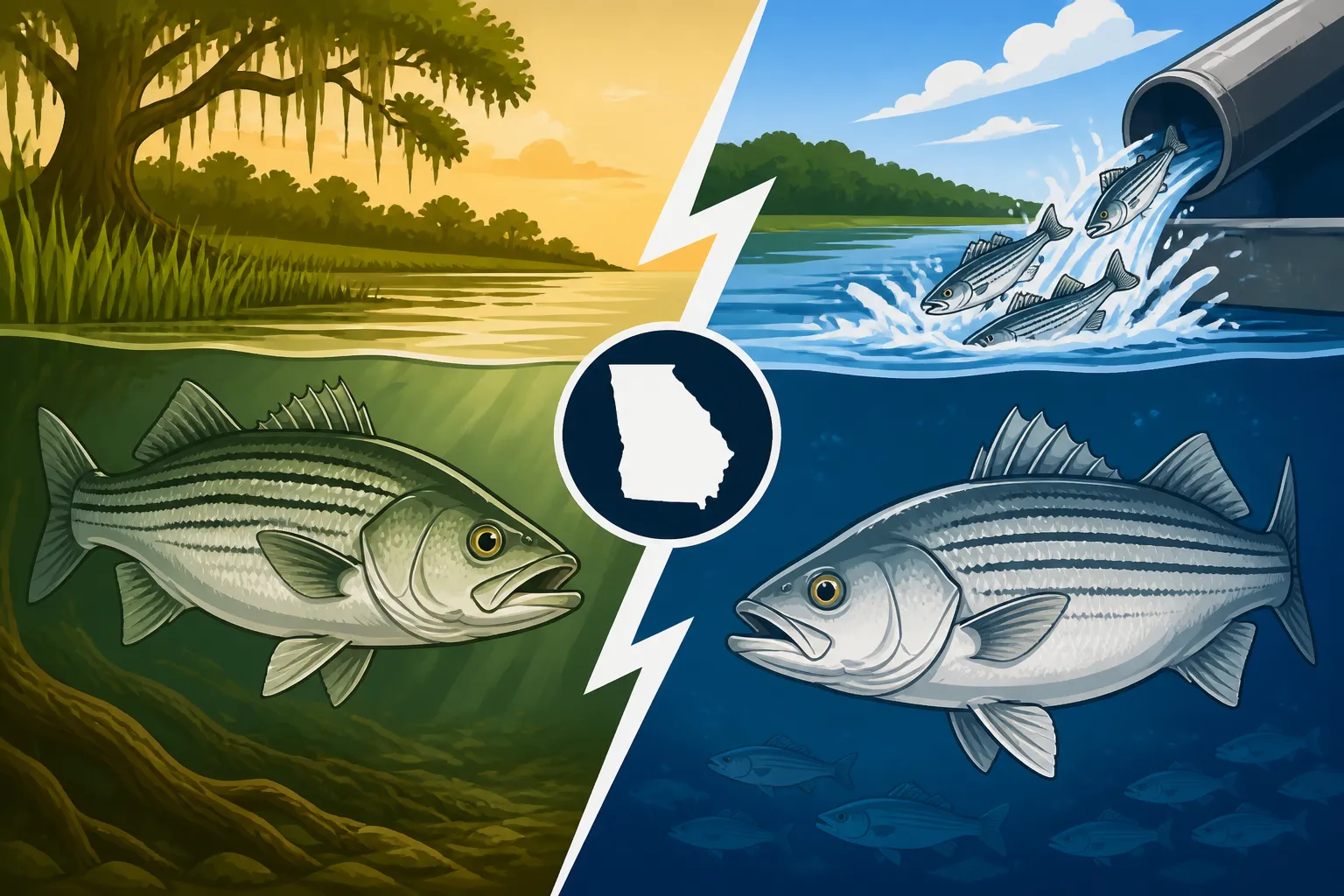
| Feature | Native Striped Bass | Stocked Striped Bass |
|---|---|---|
| Fin Condition | Typically perfect, unclipped fins. | Often show a healed-over fin clip or slight deformity. |
| Body Shape | Generally more streamlined, leaner due to migration. | Can be stockier, plumper from consistent food sources. |
| Stripe Pattern | Often distinct, unbroken lines. | Stripes can be more broken, irregular (less reliable). |
| Habitat | Primarily tidal rivers, estuaries, coastal areas. | Major freshwater reservoirs (e.g., Lanier, Oconee). |
| Origin | Wild-spawned, naturally reproduced. | Hatchery-raised, intentionally released. |
Stripe Patterns and Body Morphology
While less definitive, the appearance of the stripes can offer secondary clues. Native stripers often have very distinct, continuous, parallel lines running down their sides. Stocked fish, particularly those that have hybridized with white bass (which results in "hybrid striped bass" or "wipers"), tend to have more broken or irregular stripes. However, even pure-strain stocked stripers can sometimes have broken stripes, so this shouldn't be your primary indicator. When in doubt, always default to checking for a fin clip. For more detailed identification, consider our guide on How to Identify a Striped Bass.
The overall body shape can also hint at their origin. A wild, ocean-run or river-dwelling native striper that has navigated strong currents and migrated long distances might feel more robust and sculpted, while a reservoir-dwelling stocked fish might carry a bit more girth from a life of easier forage. However, this is highly subjective and depends on the specific fish and its environment.
Differentiating from Hybrid Striped Bass
It's also crucial not to confuse pure-strain striped bass (native or stocked) with hybrid striped bass. Hybrids are a cross between a striped bass and a white bass, created in hatcheries and stocked into many Georgia lakes. They are incredibly popular for their fight and growth rate, but they are a different fish altogether. Hybrid stripers always have broken or interrupted stripes, especially below the lateral line, and often have a stockier build than a pure striper. If you're fishing on Lake Oconee, for instance, you're likely to encounter a lot of Hybrid Striped Bass Fishing at Lake Oconee. Learning to tell Striped Bass vs Hybrid Striped Bass: What's the Difference? will be incredibly helpful.
Fishing Strategies and Conservation for Striped Bass in Georgia
No matter whether you're targeting a native river striper or a hard-fighting stocked reservoir fish, the thrill of the chase is undeniable. Understanding their distinct behaviors and habitats can significantly improve your success and help you contribute to their conservation.
Targeting Native River Stripers
If your goal is to land a true native striped bass, your best bet is to focus on the lower reaches of Georgia's coastal rivers and estuaries. These fish will be following migratory patterns and feeding opportunistically. Live bait, such as shad, herring, or mullet, fished on a Live Bait Rigs for Striped Bass in tidal creeks and river channels can be incredibly effective. Look for areas with strong current, submerged structure, and baitfish schools. Trolling with large plugs or bucktail jigs can also produce strikes, particularly during low light conditions or periods of active migration. These fish are often found in relatively shallow water, especially during feeding windows.
Gear for these powerful fish should be robust. A medium-heavy to heavy action rod paired with a durable spinning or baitcasting reel spooled with strong braided line is a must. You can find a wide array of suitable rods, reels, and lines on platforms like Amazon, ensuring you have the right tools for the job.
Catching Stocked Reservoir Stripers
For most Georgia anglers, stocked striped bass in our major reservoirs are the primary target. These fish exhibit different patterns than their river-dwelling cousins. They tend to follow baitfish (like threadfin and gizzard shad) schools in open water, often suspending at specific depths. During the summer, they'll seek out cooler, deeper water, making techniques like downlining with live bait or Deep Water Techniques for Striped Bass crucial. Large spoons, bucktail jigs, and heavy swimbaits are also popular artificial lure choices.
In cooler months, especially spring and fall, stripers will often move shallower, chasing baitfish into coves and along main lake points. Topwater lures can provide explosive action during these times, particularly at dawn and dusk. Night fishing can also be highly productive, especially for larger fish, as they move up to feed under the cover of darkness. Many anglers rely on fish finders to locate schools of bait and the stripers lurking beneath them. Consider checking out Best Bait for Striped Bass in Georgia for more ideas.
Conservation and Responsible Angling
Regardless of whether you're after native or stocked stripers, responsible angling practices are paramount. Native populations are often more vulnerable due to habitat changes, so practicing catch-and-release with these fish is highly encouraged to protect their genetic lineage. For stocked fish, while they are part of a managed "take" fishery, knowing local creel and size limits is essential.
Always handle stripers with care, especially if you plan to release them. Use appropriate tackle to minimize fight time, revive fish gently before release, and avoid unnecessary handling out of the water. Consider using circle hooks with live bait to reduce gut-hooking. By being mindful and respectful anglers, we ensure that the incredible sport of striped bass fishing in Georgia remains vibrant for generations to come. Oh, and if you're wondering if you should keep it, we have an article on Is Striped Bass Good to Eat?.
Disclaimer
This article is for general informational purposes only and does not constitute professional advice. Laws, prices and regulations vary by location and change over time. Consult a qualified professional for guidance on your specific situation.