Best Bait and Lures for Shoal Bass Fishing
It can be incredibly frustrating to hit a prime river spot, knowing that hard-fighting shoal bass lurk among the rocks and currents, only to come up empty-handed because you're using the wrong bait or technique. These incredible fish aren't like their lake-dwelling cousins; they demand a different approach. This guide is dedicated to helping you unlock the secrets of catching shoal bass by detailing the best baits and lures, tailored to their unique river habitats and behaviors, so you can spend less time guessing and more time reeling in those thrilling strikes.
Understanding Shoal Bass Behavior and Habitat
Shoal bass are true river warriors, perfectly adapted to the dynamic environment of Georgia's moving waters. Unlike largemouth or spotted bass that thrive in reservoirs, shoal bass prefer the strong currents, rocky bottoms, and clear water of rivers. This preference fundamentally dictates what kind of baits and lures will be most effective. If you try to fish for them like you would a typical lake bass, you'll likely be disappointed. They're often found hugging structure in the current, waiting to ambush prey, and their diet primarily consists of smaller baitfish and, perhaps most importantly, crawfish.
Key Characteristics of Shoal Bass
Shoal bass are, for lack of a better word, feisty. They are known for their powerful, drag-screaming runs and aggressive strikes, especially when they feel threatened or are feeding actively. They typically have a more streamlined body than a largemouth, built for navigating strong currents, and often display a beautiful bronzy color that helps them blend into their rocky surroundings. You'll primarily find them in rivers like the Flint River, where they earned their name from the "shoals"—shallow, rocky sections of the riverbed where the current runs fastest. Understanding these key traits is crucial because it informs every decision you make about your tackle box. For a deeper dive, check out Shoal Bass: Georgia's Flint River Specialist.
Their preference for clear, flowing water also means they can be more easily spooked by heavy footsteps on the bank or an intrusive boat approach. Stealth and precise casting often play a much larger role in shoal bass fishing than they might in a murky lake. They're looking for an easy meal that drifts by or hides among the rocks, not something that crashes down from above. This makes presentation just as important as the lure itself.
Seasonal Considerations for Shoal Bass Fishing
Just like any fish, shoal bass behavior changes with the seasons, largely influenced by water temperature, water levels, and spawning cycles. What works in the spring might not be as effective in the heat of summer or the chill of winter.
In spring, as water temperatures rise, shoal bass become incredibly active. This is their spawning season, and they'll often move into shallower areas with gravel or rocky bottoms to create nests. They become very protective, making them susceptible to reaction strikes from lures that invade their territory. This is a prime time for aggressive presentations.
During the summer, when water temperatures are at their highest, shoal bass will often seek out deeper pools, shaded areas, or strong current breaks where the water is cooler and oxygen levels are higher. They'll still feed aggressively, but you might need to present baits deeper and closer to cover. Early mornings and late evenings are often the most productive times as the sun isn't as intense.
Fall sees a resurgence of activity as water temperatures begin to cool, and the fish start to feed heavily in preparation for winter. They'll often school up and actively chase baitfish, making this a fantastic time for covering water with moving baits. This period can be incredibly rewarding, with fish often putting on weight and fighting even harder.
In winter, shoal bass slow down considerably. They'll typically retreat to deeper, slower-moving holes and eddies, conserving energy. While not impossible to catch, a much slower, more deliberate presentation with finesse baits or live bait is usually required. Bites can be subtle, so sensitivity in your rod and line becomes paramount.
Top Lures for Targeting Shoal Bass
When it comes to lures for shoal bass, you're looking for options that mimic their natural prey (crawfish and baitfish) and can navigate the rocky, current-rich environments they call home. The goal is to either trigger an aggressive reaction strike or offer a subtle, irresistible meal.
Hard Baits for Aggressive Strikes
Hard baits are fantastic for covering water and eliciting powerful reaction strikes, especially when the fish are active. The key is choosing designs that can handle contact with rocks without immediately getting snagged.
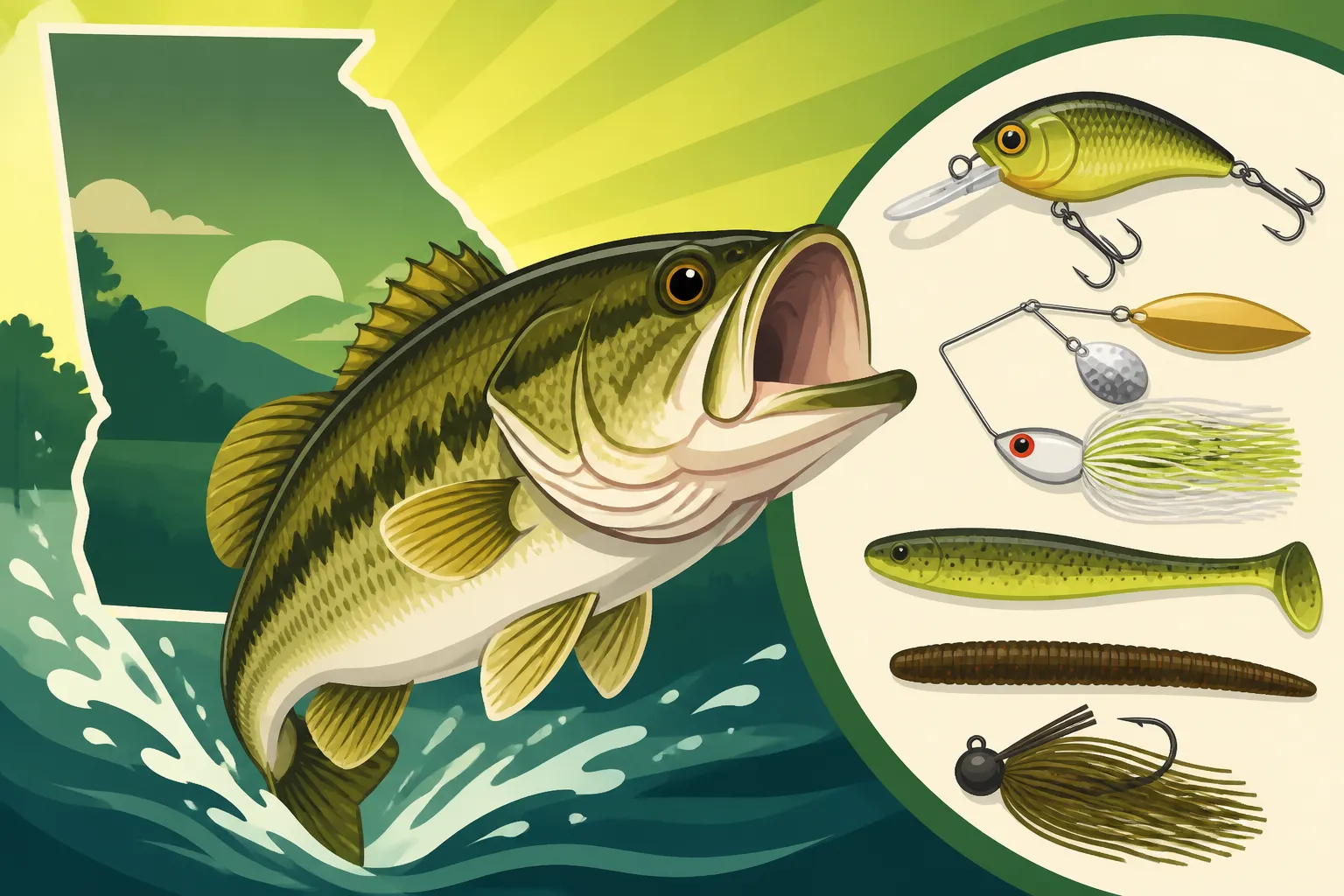
Crankbaits, particularly square-bill crankbaits, are absolute shoal bass magnets. Their shallow diving depth and aggressive wobble make them perfect for bouncing off rocks and deflecting off submerged timber without hanging up as easily as a lipped crankbait. The deflection often triggers an instinctive strike from an ambushing bass. Look for crawfish patterns or natural baitfish colors. You can find excellent options like the Strike King KVD Square Bill or the SPRO Little John on Amazon, offering a wide range of colors and sizes. Retrieve them with a steady, moderate pace, occasionally pausing or bumping them into structure.
Jerkbaits excel when fish are suspended in deeper pools or around current breaks. These lures are designed to be retrieved with a series of jerks and pauses, mimicking a dying or disoriented baitfish. The key is the pause; many strikes occur when the bait is suspended motionlessly. Clearer water often calls for more natural baitfish patterns. Brands like Rapala and Lucky Craft offer excellent jerkbaits that perform beautifully in river conditions, many of which are readily available through Amazon.
Topwater lures, like poppers, walking baits, and buzzbaits (though we'll cover buzzbaits in their own section), offer some of the most exciting strikes in all of fishing. Shoal bass will absolutely explode on a topwater lure, especially during low-light conditions in the early morning or late evening, or on overcast days. These lures are fantastic for covering shallower shoals and eddies. A Heddon Zara Spook or a Rebel Pop-R can be deadly. The thrill of watching a bronze back rise and smash a surface lure is truly unmatched. Experiment with retrieve speeds and pauses to find what the fish prefer on any given day.
Soft Plastics for Finesse and Structure Fishing
Sometimes, the situation calls for a more subtle approach, or you need a bait that can be worked precisely through heavy cover. That's where soft plastics shine.
Jigs, especially those with a bulky profile like football jigs or Arkie-style jigs, are phenomenal for imitating crawfish, which are a primary food source for shoal bass. Pair them with a crawfish-imitating trailer in greens, browns, or oranges. Fish these by dragging or hopping them along the bottom, allowing the jig to bounce off rocks. This triggers strikes from bass that are actively rooting around for crawfish. The heavy weed guards on many jigs also help them navigate rocky snags. You can easily stock up on a variety of jig heads and trailers from brands like Zoom and Strike King on Amazon, ensuring you have the right weight and color for various conditions. For more on this, check out How to Jig for Largemouth Bass.
Creature baits and soft plastic worms rigged Texas-style or on a shaky head are perfect for working specific pieces of structure or when the fish are less aggressive. A Texas-rigged creature bait can be pitched into tight pockets, around submerged logs, or between rocks, offering a weedless presentation that can entice wary bass. Shaky heads provide a subtle, quivering action that can be irresistible to finicky fish. Natural colors, mimicking crawfish or small fish, tend to work best in the clear waters favored by shoal bass. These baits are excellent for targeting those deeper, slower-moving holes where shoal bass might be holding.
Swim Jigs and Small Swimbaits can also be very effective, especially when trying to imitate small baitfish fleeing current. A swim jig, dressed with a grub or small paddle tail swimbait, can be reeled steadily through cover or along current seams. Small, realistic swimbaits, either weighted or rigged on a jig head, can be worked similarly or slow-rolled through deeper pockets. The subtle flash and natural swimming action can be just what a shoal bass needs to commit.
Spinnerbaits and Buzzbaits for Covering Water
When you need to cover a lot of water quickly, or if the water has a bit of stain, spinnerbaits and buzzbaits are your go-to options. They create a lot of vibration and flash, which can draw fish out of cover.
Spinnerbaits are incredibly versatile. The spinning blades create a flash and vibration that can be felt by fish even in murky water or strong currents, making them excellent search baits. Tandem blade configurations (like a Colorado blade paired with a willow leaf) offer a good balance of flash and vibration. Use chartreuse, white, or natural baitfish colors. Retrieve them with a steady pace, allowing them to tick off submerged rocks or logs. They're also great for fishing around current breaks and eddy lines. A wide array of spinnerbaits from reputable brands can be found on Amazon, allowing you to easily experiment with different blade combinations and skirt colors.
Buzzbaits are topwater lures that create a loud commotion on the surface with their spinning prop. They are fantastic for enticing aggressive strikes from shoal bass in shallow water, especially in low light. The key is a relatively fast, steady retrieve that keeps the prop churning just on the surface. They're excellent for covering expansive shallow shoals or flats with scattered cover. Again, the visual of a bass exploding on a buzzbait is unforgettable.
Best Natural Baits for Shoal Bass
While lures are incredibly popular and effective, sometimes nothing beats the real thing. Natural baits can be especially potent for shoal bass, particularly when they are finicky or when you're targeting less aggressive fish.
Live Bait Options
Live bait appeals to a bass's most basic instincts, often leading to more committed bites. For shoal bass, there are a few standouts.
Live crawfish are arguably the most effective natural bait for shoal bass. These crustaceans are a staple of their diet, and a live crawfish presented naturally is almost impossible for a hungry shoal bass to resist. Rig them with a small Kahle hook through the tail, and use just enough weight (or none at all) to get them to the bottom or drift naturally in the current. Allowing the crawfish to scurry naturally among the rocks where shoal bass are hiding is incredibly effective. You'll often find bait shops near major rivers carrying live crawfish.
Minnows or shiners can also be very productive, especially if shoal bass in your particular river system are keying in on baitfish. Rig them through the lips or dorsal fin, again with minimal weight, and allow them to drift through deeper pools or along current seams. A small bobber can help keep them at the desired depth in flowing water. The natural movement of a distressed baitfish is a powerful attractant. Remember that baitfish availability and regulations can vary, so always check local guidelines.
Worms, particularly larger nightcrawlers, are a classic and often overlooked option for black bass species. While not their primary forage, the scent and wriggling action of a live worm can entice a bite when nothing else will. Rig them on a simple hook and let them drift or settle in calm pockets. This can be a great option for kids or beginners looking to simply get a bite.
Choosing the Right Gear and Presentation
Having the best baits and lures is only half the battle; knowing how to present them effectively and having the right gear to do so is just as crucial. Shoal bass fishing demands a balance of finesse and power.
Rod, Reel, and Line Selection
The right setup will enhance your ability to cast accurately, detect subtle bites, and most importantly, muscle those powerful shoal bass away from treacherous rocky snags.
For most lure presentations, a medium-heavy power rod with a fast action is ideal. The medium-heavy power provides the backbone needed to cast heavier lures, set the hook firmly, and control a hard-fighting fish in current. The fast action means the tip is sensitive enough to detect light bites and provides good feedback as your lure bumps along the bottom, but the rod quickly transitions to power for solid hooksets. A rod in the 6'6" to 7'2" range is usually versatile enough for various river scenarios.
Your choice between a baitcasting reel and a spinning reel largely depends on your preference and the types of lures you're throwing. Baitcasting setups offer more power and precision for heavier jigs and crankbaits, while spinning reels are excellent for lighter finesse presentations or live bait. Ensure your reel has a smooth, reliable drag system, as shoal bass will test it.
Line selection is critical in rocky river environments. A fluorocarbon main line or at least a fluorocarbon leader is highly recommended. Fluorocarbon is nearly invisible underwater, which is a huge advantage in the clear waters preferred by shoal bass. More importantly, it has excellent abrasion resistance, which is vital when your line is constantly rubbing against sharp rocks. For braided main lines, which offer superior sensitivity and casting distance, always tie on a fluorocarbon leader (10-15 lb test) to mitigate visibility issues and provide that crucial abrasion resistance. Consider a monofilament line for topwater applications, as its buoyancy can help keep the lure on the surface.
Mastering Presentation Techniques
Even with the perfect bait and gear, if your presentation is off, you might struggle. Shoal bass are incredibly sensitive to their environment and often require a thoughtful approach.
Reading the river is paramount. Look for current seams, where fast water meets slower water. These are ambush points where bass can wait without expending too much energy. Eddies, which are pockets of calm water behind obstacles, are also prime locations. Submerged rock piles, logs, and undercut banks offer cover and current breaks. Learning to identify these spots will dramatically increase your success. Spend time observing the water before you even cast.
Casting accuracy cannot be overstated. Often, a shoal bass will be holding in a very specific spot, and a cast that lands just inches off target can mean the difference between a bite and nothing. Practice pitching and flipping to hit tight windows around cover. When drifting live bait, understanding how the current will carry your offering is key to getting it into the strike zone.
Retrieve speed should always match the mood of the fish and the conditions. In colder water or when fish are sluggish, a slow, deliberate retrieve is often best. During active feeding periods, a faster, more erratic retrieve can trigger aggressive reaction strikes. Don't be afraid to experiment! Varying your retrieve with pauses, twitches, and sudden bursts can make your lure look like easy prey. Remember to maintain constant contact with your lure so you can feel even the most subtle bites.
Finally, stealth is crucial, especially in clear water. Minimize noise, approach spots carefully, and use longer casts to avoid spooking fish. If you're wading, move slowly and deliberately. If you're in a boat, use your trolling motor sparingly and avoid bumping things. Shoal bass are wild fish, and they've survived by being wary of predators, including us. By being mindful of your presence, you significantly increase your chances of success.
Here's a quick comparison of popular lure types for shoal bass fishing:
| Lure Type | Best Conditions | Retrieve Style | Pros | Cons |
|---|---|---|---|---|
| Squarebill Crankbait | Shallow, rocky shoals, active fish | Steady, deflect off cover | Triggers reaction, covers water quickly | Can get snagged in thick cover |
| Jigs (Crawfish) | Deeper holes, current breaks, wary fish | Hop, drag along bottom | Mimics natural prey, versatile | Slower presentation, can get snagged |
| Soft Plastic (Worm/Creature) | Finesse, clear water, picky fish | Slow drag, twitch, shake | Natural presentation, weedless | Slower action, less flash |
| Spinnerbait | Stained water, wind, active fish | Steady retrieve, slow roll | Vibration, flash, good in cover | Less natural action, can spook in clear water |
| Topwater | Low light, calm water, aggressive fish | Pop, walk, buzz | Exciting strikes, covers surface quickly | Limited conditions, can be ignored |
When it comes to learning more about these fascinating fish, you might find articles like How to Identify a Shoal Bass or Shoal Bass Size: What to Expect on the Flint River quite helpful. For specifics on where to find them, Flint River Shoal Bass Fishing Guide is an excellent resource, especially when considering Shoal Bass Rules Below Warwick Dam or Best Fishing Access Points on the Flint River. Understanding the regulations around Shoal Bass Minimum Length in Georgia is also paramount for responsible angling.
Disclaimer
This article is for general informational purposes only and does not constitute professional advice. Laws, prices and regulations vary by location and change over time. Consult a qualified professional for guidance on your specific situation.