Black Crappie Identification: Spots vs Stripes
There’s nothing quite like the thrill of feeling that subtle tap on your line, setting the hook, and reeling in a feisty crappie. But for many Georgia anglers, a common head-scratcher quickly follows: "Is this a black crappie or a white crappie?" It’s a question that can sometimes stump even seasoned veterans, especially since their appearance can vary so much from one lake to another. This guide is here to unravel that mystery, providing you with clear, definitive markers to help you distinguish between the two most popular crappie species gracing our waters.
Understanding the Crappie Family in Georgia
Crappie are undeniably one of Georgia's most beloved panfish. They're fun to catch, put up a decent fight on light tackle, and are absolutely delicious on the dinner table. Yet, despite their widespread popularity, many anglers struggle with confidently identifying black crappie versus white crappie. It's not just about bragging rights; sometimes, understanding which species you're targeting can even inform your fishing strategy.
The Elusive Nature of Crappie Identification
The truth is, crappie can be a little chameleon-like. Their colors can change dramatically based on the water clarity, the diet they've been eating, and even the spawning season. A black crappie from a dark, tannic river might look very different from one caught in a clear, rocky reservoir like Lake Lanier. This variability is often what makes identification tricky, leading to anglers shrugging and just calling them "slab crappie" or "specks," which, while endearing, doesn't quite get to the root of the species. Sometimes, you’ll catch two fish from the same school that seem to have slightly different markings, adding to the confusion. It can feel like trying to solve a riddle every time you pull one in, which is part of the fun, but also a source of mild frustration for those who really want to know what they're catching.
Why Identification Matters for Anglers
Beyond just curiosity, knowing whether you've caught a black crappie or a white crappie can be genuinely helpful for your fishing endeavors. While Georgia's general fishing regulations often lump them together, there could be subtle differences in their preferred habitats or behaviors that might make one species more prevalent in certain areas or at certain times. For instance, if you're consistently catching one type, you might adjust your approach to target more of that specific species. It might also influence how you talk about your catches with other anglers, offering more precise details about your fishing spot and techniques. Understanding the nuances of each species can contribute to becoming a more knowledgeable and successful angler overall, helping you decode patterns and predict where the next bite might come from. Our Crappie Compared: Black vs White in Georgia Waters guide delves deeper into these distinctions.
To get started, here's a quick overview of the primary differences we’ll explore:
| Feature | Black Crappie | White Crappie |
|---|---|---|
| Body Markings | Irregular dark spots, mottled | 7-9 distinct vertical bars or stripes |
| Dorsal Spines | 7 to 8 (typically 7 or 8) | 5 to 6 (typically 6) |
| Body Shape | More rounded, disc-like | More elongated, slender |
| Mouth | Upper jaw extends to middle of eye | Upper jaw extends only to front of eye |
| Habitat Incl. | Clearer water, heavy cover | More tolerant of turbid water, open areas |
Black Crappie: The Spotted Contender
When most folks picture a crappie, they're probably imagining a black crappie without even realizing it. These beautiful fish are widely distributed across Georgia and are often the target of enthusiastic anglers. Getting to know their specific traits will help you confidently identify them.
Key Physical Characteristics of Black Crappie
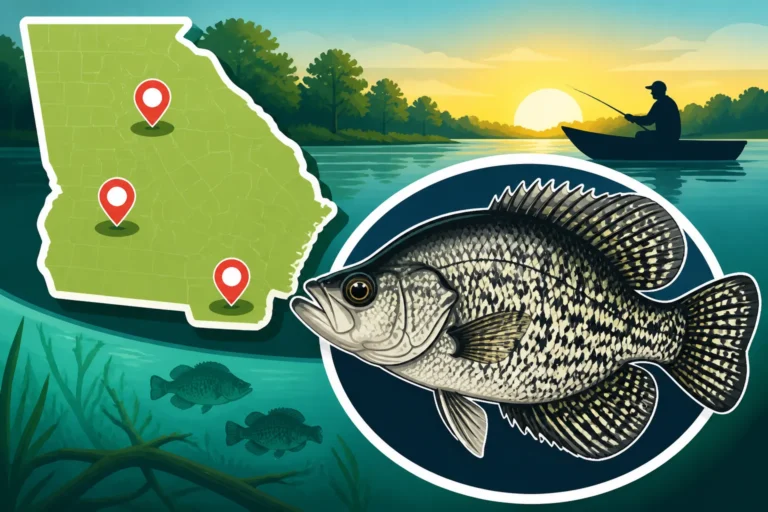
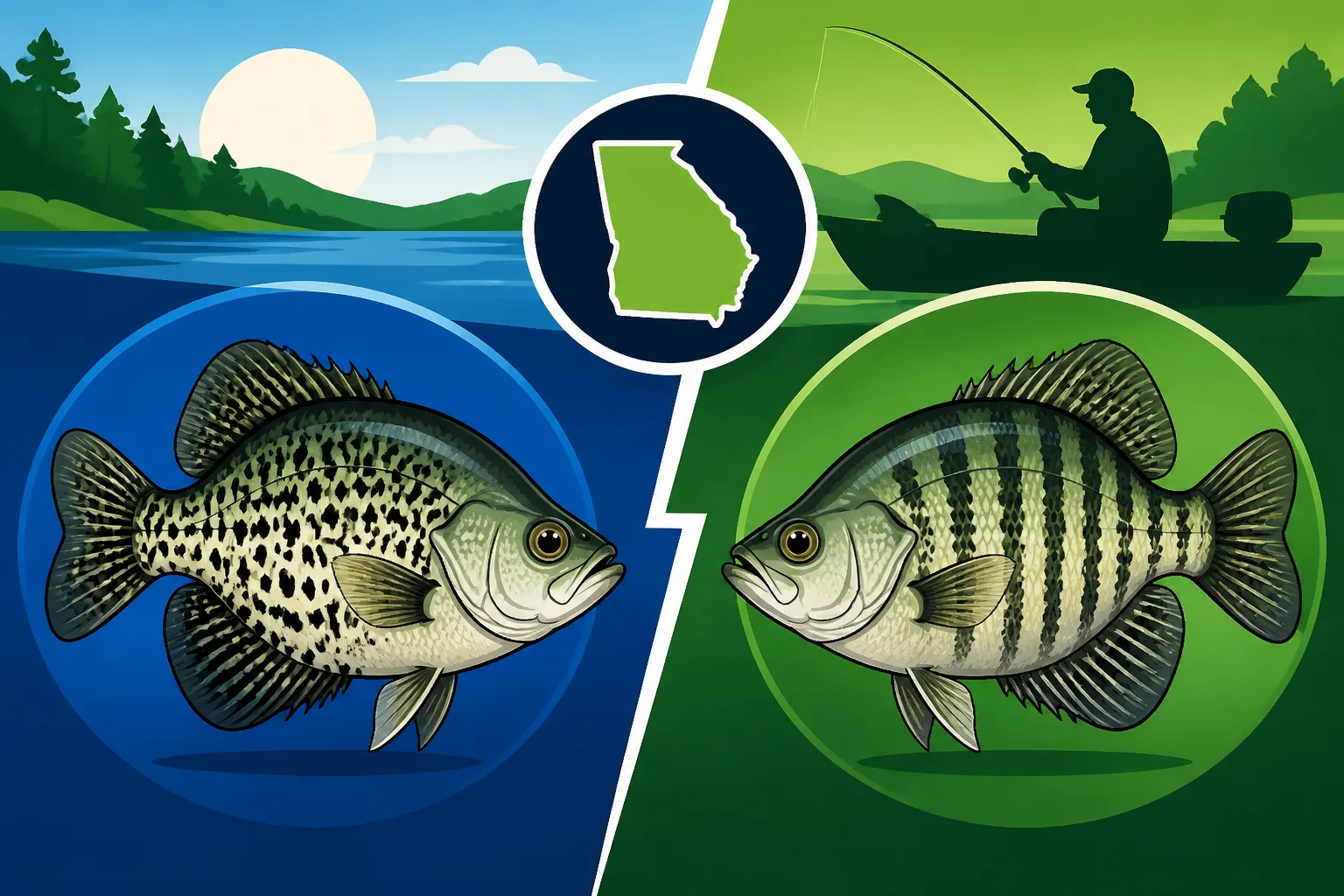
The most prominent feature of a black crappie, and where it gets its name, is the presence of numerous irregular dark spots scattered across its body. These spots aren't typically arranged in any kind of pattern or line; instead, they give the fish a mottled, almost "peppered" appearance. You'll see these spots on their sides, fins, and even their tails, creating a kind of camouflage that helps them blend into their preferred structured habitats. The intensity of these spots can vary, sometimes appearing very dark and distinct, while other times they might be fainter, blending into a darker overall body color, especially in tannin-stained waters. However, even when faint, their irregular distribution remains a key identifier.
Beyond the spots, take a closer look at their dorsal fin—the fin on their back. Black crappie almost invariably have 7 or 8 sharp, spiny rays in their dorsal fin. This is perhaps the most reliable physical trait for identification, as it's far less prone to environmental variation than color or spot intensity. Count those spines carefully! Their body shape also tends to be a bit more rounded or "disc-like" when compared to their white crappie cousins. Imagine a plate – they're a bit more circular. Finally, their mouth is relatively large, and if you draw an imaginary line from the back of their upper jaw down, it would typically extend to at least the middle of their eye, if not a bit beyond. For a deep dive into distinguishing them, check out Black Crappie Identification: Spots vs Stripes.
Habitat and Behavior Notes for Black Crappie
Black crappie tend to be habitat specialists. They prefer clearer water with abundant submerged vegetation, brush piles, fallen trees, and docks – anything that provides dense cover for ambush and protection. You'll often find them suspended around these structures, waiting patiently for an unsuspecting minnow or insect to swim by. This preference for cover makes them a favorite target for anglers who enjoy fishing structure, whether it's by jigging small plastics or using minnows under a bobber right up against a sunken cedar tree. Lakes with clear water and plenty of hiding spots, like parts of Lake Lanier or Lake Hartwell, are often prime black crappie territory. They are less tolerant of turbidity (cloudy water) compared to white crappie, which often means you'll find them in different parts of a large reservoir or even different types of lakes altogether. Understanding their preferred hangouts can significantly improve your chances of a successful outing.
White Crappie: The Striped Sibling
While black crappie might get a lot of attention, white crappie are equally abundant and popular throughout Georgia, especially in many of our large impoundments and river systems. They offer excellent sport and make for a fantastic meal, just like their speckled relatives.
Key Physical Characteristics of White Crappie
The defining characteristic of a white crappie, setting it apart from its spotted kin, is the presence of distinct vertical bars or stripes running down its sides. While not always perfectly uniform, these stripes are generally arranged in a series of 7 to 9 dark bands, which give the fish a "tiger-striped" appearance. Unlike the irregular spots of the black crappie, these markings are more organized and linear, especially noticeable from the lateral line upwards. These bars can be quite pronounced in some individuals, particularly during spawning season, while in others they might be somewhat faded, but the underlying pattern of vertical bands remains. Looking for these distinct bars is your primary visual cue.
Switching our focus back to the dorsal fin, white crappie have a reliably different spine count. They typically possess 5 or 6 spiny rays in their dorsal fin, almost always 6. This is a crucial difference from the 7 or 8 spines found on black crappie, making it an excellent, foolproof method for identification when visual markings are ambiguous. Their body shape is also generally more elongated and slender, sometimes described as having a more "football" or "oval" shape, rather than the rounder profile of a black crappie. If you look at their mouth, the upper jaw of a white crappie typically extends only to the front edge of its eye, or perhaps just slightly past, which is a bit shorter than that of a black crappie. Our White Crappie Identification Guide offers even more detail.
Habitat and Behavior Notes for White Crappie
White crappie tend to be more adaptable than black crappie, thriving in a wider range of environments. They are often found in larger, more turbid (cloudy) river systems and reservoirs, and are also more tolerant of open water, though they still appreciate some structure. You might find them in areas with less vegetation or cover than black crappie prefer, often congregating around submerged creek channels, deep brush piles, stump fields, or even open water humps and ledges. Lakes like Lake Oconee or Lake Sinclair, which have abundant open water and often experience higher degrees of stained water, are excellent spots to find healthy populations of white crappie. Their ability to thrive in a variety of water conditions makes them incredibly widespread and accessible to many anglers. They are just as aggressive feeders as black crappie, making them a blast to target with jigs or live minnows.
Beyond Spots and Stripes: Other Identifying Factors
While spots and stripes offer the most obvious visual clues, and the dorsal fin count is the most reliable, there are a few other subtle distinctions that can help solidify your crappie identification in Georgia. Experienced anglers often combine several of these factors to make a confident call.
Dorsal Fin Spines: The Unmistakable Count
If you take only one piece of identification advice from this guide, let it be this: count the dorsal fin spines. This is, by far, the most accurate and consistent way to tell black crappie and white crappie apart. It’s an anatomical difference that doesn't change with water conditions, diet, or mood.
- Black Crappie: Will have 7 to 8 distinct, sharp spines in their dorsal fin. You can usually feel them easily by gently running your finger along the front edge of the dorsal fin.
- White Crappie: Will have 5 to 6 distinct, sharp spines in their dorsal fin, most often 6.
This count is your ultimate tie-breaker. If you're ever in doubt about the markings, a quick, careful count of the dorsal spines will give you the definitive answer. It's a method that professional biologists and fish managers rely on, and it's something every serious crappie angler should master. Many anglers even carry a small pocket guide or refer to their phone to quickly verify the count, especially when they're just starting out or fishing a new body of water where crappie might look a little different than what they're used to.
Body Shape and Mouth Size
While less definitive than the spine count, the overall body shape and mouth size can offer supporting clues. As mentioned earlier, black crappie tend to have a more "perpendicular" or rounded body profile, almost like a dinner plate when viewed from the side. White crappie, on the other hand, often appear a bit more elongated and streamlined, like a football that's been slightly flattened.
Regarding their mouths, if you look at the upper jaw, the black crappie's mouth typically extends further back, often reaching to the middle or even past the back edge of its eye. The white crappie's mouth is usually a bit smaller, with its upper jaw generally extending only to the front edge of its eye. These are subtle differences, and not always easy to judge on a squirming fish, but when combined with the other factors, they can help create a clearer picture. It's like putting together pieces of a puzzle – the more pieces you have, the more confident you are in the final image.
Environmental Influences on Appearance
It's important to remember that environmental factors play a significant role in how any fish species looks. Water clarity, depth, available forage, and even the pH of the water can influence a crappie's overall coloration and the intensity of its markings. Crappie caught from dark, tannin-stained waters might appear much darker and their spots or stripes less distinct, simply because their bodies adapt to blend into their surroundings. Conversely, fish from very clear, sandy-bottomed lakes might be lighter in color.
Because of this variability, relying solely on spots or stripes can sometimes be misleading. That's why the dorsal spine count is so critical. It's the immutable biological fact that cuts through all the environmental noise. So, while you're admiring those beautiful spots or stripes, always remember to give those dorsal fin spines a quick tally to be absolutely sure! This variability is why it's so helpful to see photos of both Black Crappie vs White Crappie: How to Tell Them Apart from various Georgia waters.
Gear Up for Crappie Success (and Identification!)
Now that you're armed with the knowledge to identify your crappie, let's talk briefly about getting out there and catching them! Having the right tools can make both the fishing experience and the identification process much smoother.
Visual Aids and Reference Guides
Even with all this information, it's perfectly normal to second-guess yourself, especially when you're just starting out. That's why carrying a small, waterproof field guide or having a reliable fish identification app on your phone can be incredibly helpful. Many reputable fishing guides specifically for Georgia or the Southeast will have detailed illustrations or photos of both black and white crappie, often pointing out the key identification features we've discussed. You can find excellent options on online retailers like Amazon, from compact field guides that fit in your tackle box to more comprehensive reference books. These physical aids can be invaluable when you're on the water and need a quick refresher. Some apps even allow you to upload a photo and get a suggested identification, which can be a fun way to learn!
Photography for Post-Catch Identification
One of the best ways to learn and confirm your crappie identification is to take clear photos of your catches. A good photo, especially one that clearly shows the dorsal fin and the side of the fish, can be reviewed later at home when you have more time to study and compare. Don't be afraid to take a few different angles! If you're really struggling, you can even gently spread the dorsal fin to count the spines more easily in the picture. Sharing these photos with experienced angler friends or online fishing communities can also be a fantastic learning tool, as others can offer their insights and help you solidify your identification skills. Plus, who doesn't love showing off a beautiful crappie catch?
Recommended Gear for Crappie Fishing
To truly enjoy your crappie pursuit, having the right gear is key. Crappie have soft mouths, so light tackle is generally preferred. A sensitive rod, typically in the ultralight or light action range, paired with a small spinning reel, is ideal for detecting those subtle bites. You'll want to spool it with light monofilament or fluorocarbon line, usually 4 to 6 pound test, which allows for good feel and stealth.
As for lures, small jigs (1/32 to 1/8 ounce) with soft plastic bodies in various colors are incredibly effective. Tiny tubes, grubs, and shad-imitating plastics are all great choices. Live minnows, fished under a bobber or on a small jig head, are often irresistible to crappie. You can find a huge variety of crappie jigs, soft plastics, and even specific crappie rods and reels on Amazon, making it easy to stock up on all your essentials before your next trip. Consider exploring Best Rods for Crappie Fishing in Georgia for more specific recommendations on tackle. And don't forget to pack a good pair of pliers for hook removal and a measuring tape to ensure your catch meets any potential size regulations. Learning How to Jig for Crappie is another great skill to add to your repertoire.
So, the next time you're out on a Georgia lake or river, and that familiar crappie tugs at your line, take a moment to really look at your catch. Are those irregular spots or distinct vertical stripes? How many spines on that dorsal fin? With a little practice, you'll be identifying black and white crappie with confidence, making you a more skilled and knowledgeable angler. Good luck out there, and tight lines!
Disclaimer
This article is for general informational purposes only and does not constitute professional advice. Laws, prices and regulations vary by location and change over time. Consult a qualified professional for guidance on your specific situation.