Shoal Bass: Georgia’s Flint River Specialist
Many anglers, especially those new to Georgia's diverse waters, might cast their line into a swift-moving river and mistakenly identify a robust, dark-spotted fish as a largemouth or even a spotted bass. But if you're fishing Georgia's magnificent Flint River, chances are you've encountered one of our state's true native treasures: the shoal bass. This guide is here to unravel the mystery of this unique species, focusing on what makes it tick, where to find it, and how to successfully hook into one while respecting its vital role in our river ecosystems.
What Makes Shoal Bass So Special in Georgia?
When you talk about black bass in Georgia, most folks immediately picture the classic largemouth, perhaps the sleek spotted bass. But the shoal bass, with its fierce fight and preference for moving water, stands in a league of its own. It's a fish that truly embodies the wild spirit of Georgia's rivers.
How to Identify a Shoal Bass
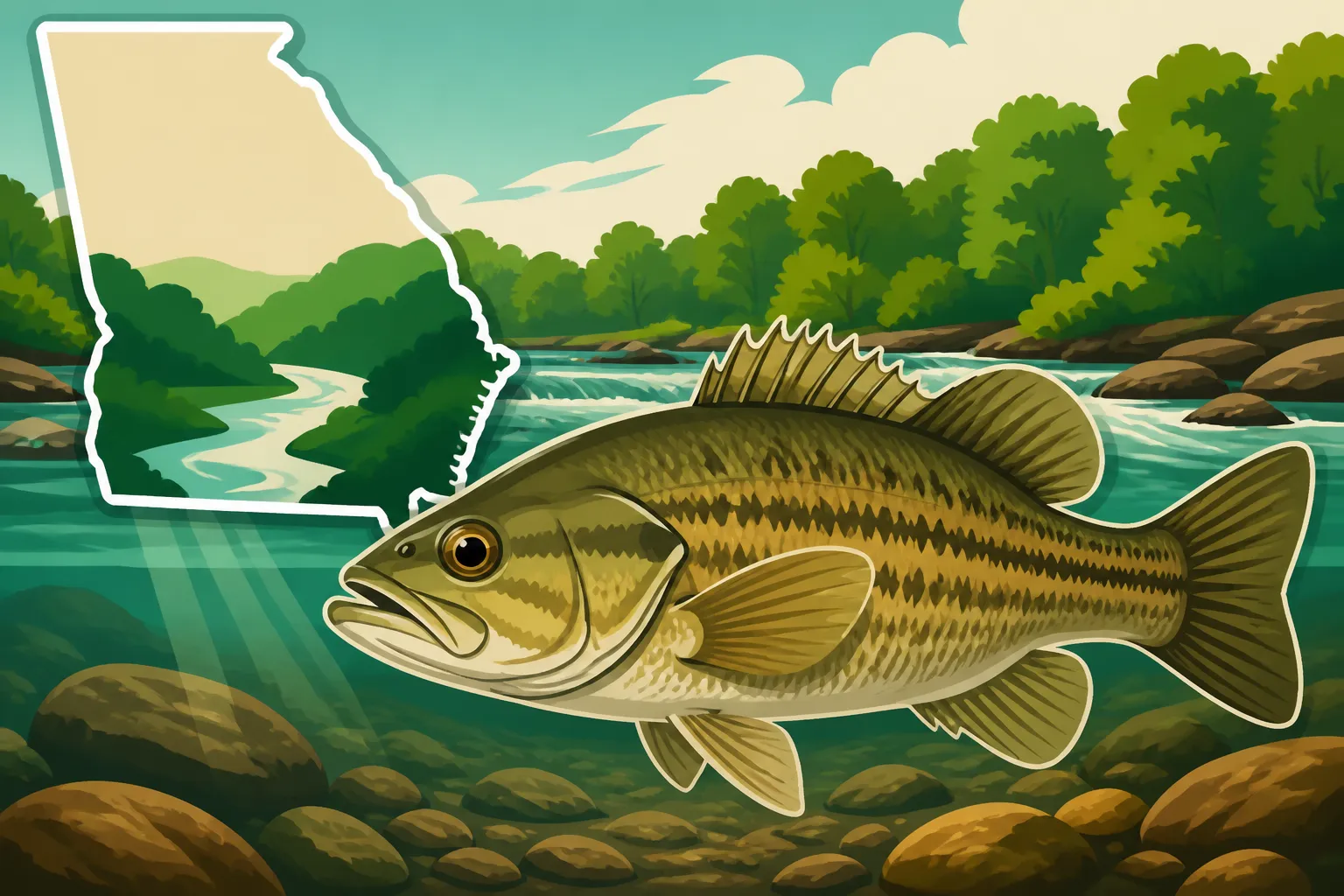
Distinguishing a shoal bass from its cousins, especially the spotted bass, can be a real head-scratcher for many anglers. They share some similar characteristics, but there are distinct features to look for once you get them in hand. First off, shoal bass tend to have a more streamlined, torpedo-shaped body, perfectly built for cutting through strong currents. Their coloration is usually darker, often a deep olive green to almost black on the back, fading to lighter sides with prominent vertical bars or blotches, which can sometimes look like chain links. Unlike largemouth, their jaw typically doesn't extend beyond the rear edge of the eye, and they usually lack the distinct horizontal band found on largemouths.
The most critical feature to look for, especially when comparing to spotted bass, is the patch of teeth on the tongue. If you gently feel the tongue of a true shoal bass, it will feel smooth. A spotted bass, on the other hand, will have a noticeable patch of teeth on its tongue. This is a tell-tale sign that many experienced anglers use in the field. Also, pay attention to the dorsal fin; while it appears continuous, there's often a noticeable dip between the spiny and soft-rayed parts, more so than in a largemouth. They also tend to have smaller scales than a largemouth, giving them a slightly different texture. Learning these identification tips is key, as Largemouth Bass vs Spotted Bass: How to Tell Them Apart in Georgia can also be quite challenging.
Shoal Bass's Unique Habitat Needs
Unlike the largemouth bass that loves the lazy, still waters of lakes and ponds, shoal bass are creatures of current. They thrive in flowing river environments, especially those characterized by rocky shoals, rapids, and areas with plenty of current breaks. Think about fast-moving sections of a river where the water tumbles over rocks, creating oxygen-rich pockets and diverse underwater structures. This is precisely where you'll find shoal bass hunkered down, waiting for prey to drift by.
Their preferred habitat includes clear, unpolluted water with rocky bottoms, gravel, and submerged timber. They'll often station themselves behind a large boulder, in an eddy just out of the main flow, or along the edges of swift current where they can ambush unsuspecting baitfish or crayfish. This adaptation to moving water is why they have such muscular, powerful bodies, allowing them to hold their position and strike with incredible force. Losing a fish in heavy current can be frustrating, but understanding their preference for these challenging spots is the first step to success. You won't typically find healthy populations of shoal bass in large, open lake environments unless those lakes have significant riverine influences with strong current.
Behavior and Diet of a River Predator
Shoal bass are aggressive, opportunistic predators. They're not shy, and they'll strike with conviction when the opportunity arises. Their diet largely consists of what the river current brings them. Crayfish are a top menu item, making any lure or bait that mimics a crayfish a strong contender. They also feed heavily on various baitfish, such as minnows and darters, along with aquatic insects and even small frogs that venture too close to the water's edge.
They are ambush predators by nature, using the structure of the river – rocks, logs, current seams – to hide and wait for their meal. They have excellent eyesight and will quickly dart out from cover to intercept prey. Their feeding activity can be particularly intense during periods of stable water levels and temperatures, or right before a significant weather change. Early mornings and late evenings, or overcast days, are often prime times to find them actively feeding in shallower, faster water. During the heat of the day or in colder periods, they might retreat to deeper holes or under heavy cover, still positioned to strike anything that passes within reach.
Where to Find Shoal Bass: The Flint River Connection
When anglers in Georgia talk about shoal bass, one river invariably comes up first and foremost: the Flint. This incredible waterway is a true gem for native fish species, and its unimpounded stretches provide the perfect home for the shoal bass.
The Flint River's Importance for Shoal Bass
The Flint River is renowned as the stronghold for shoal bass in Georgia, and for good reason. From its headwaters near Atlanta, the Flint flows largely unimpeded for hundreds of miles, particularly its lower and middle sections, which offer extensive stretches of the rocky, clear, flowing habitat that shoal bass crave. Unlike many other rivers that have been dammed, creating large reservoirs, much of the Flint maintains its natural riverine character. This means a continuous flow, natural oxygenation from rapids, and a substrate of rock and gravel that provides perfect cover and spawning grounds.
Anglers often focus on the central and lower Flint River, particularly downstream of Albany, where the river truly shows its wild side. Here, you'll find long runs of river interspersed with shallow, rocky shoals and deeper pools. These dynamic environments provide everything a shoal bass needs: plentiful food, protective cover, and strong current. It's a challenging river to navigate in places, often requiring canoes, kayaks, or smaller jet boats, but the reward is access to some of the best shoal bass fishing anywhere. For a broader overview, check out our Flint River Fishing Guide, Georgia.
Identifying Prime Shoal Bass Structure
Knowing which river to fish is only half the battle; the other half is understanding where within that river to focus your efforts. Shoal bass are structure-oriented fish, but their "structure" is defined by current more than anything else.
Look for:
- Rocky Shoals and Rapids: These are obvious hotspots. The turbulent water creates oxygen, disorients prey, and provides endless nooks and crannies for bass to hide. Target the seams where fast water meets slower water, or the calmer pockets directly behind large rocks.
- Current Breaks: Any object that disrupts the main flow of the river can hold a shoal bass. This includes large boulders, downed trees (snags or log jams), bridge pilings, or even subtle changes in the river bottom. Fish will sit just out of the strongest current, conserving energy, waiting for food to wash past.
- Eddies: These are swirling pockets of calmer water, often found downstream of a large obstruction or on the inside bends of the river. Baitfish and insects get trapped in eddies, making them prime feeding stations.
- Deeper Holes and Channels: While they love current, shoal bass will retreat to deeper water during periods of bright sun, cold weather, or low water levels. Look for these deeper spots adjacent to shoals or current breaks.
- Undercut Banks: Erosion can create overhangs along the riverbanks, providing excellent overhead cover and shade. These can be prime spots, especially if there's a good current flow along the bank.
Successfully finding these areas often requires navigating the river itself, either by wading, floating in a small craft, or using a boat designed for shallow, rocky waters. It's a hands-on experience that many find incredibly rewarding, connecting them directly with Georgia's wild river systems. For specific regulations about these areas, refer to Shoal Bass Size Limit Rules, Georgia.
Top Techniques and Baits for Catching Shoal Bass
Fishing for shoal bass is an active pursuit, requiring a different approach than sitting on a dock waiting for a bluegill. These fish are fighters, and hooking into one in moving water is an experience unlike any other.
Lures That Get Their Attention
Shoal bass are aggressive and will hit a wide variety of lures, but some stand out as consistent producers due to their ability to imitate natural prey or provoke a reaction strike in current.
- Crankbaits: Medium-diving crankbaits in natural colors (especially crayfish patterns like brown, orange, or green pumpkin) are absolutely deadly. Cast them upstream or up-current and retrieve them in a way that allows them to bump and deflect off rocks, mimicking a crayfish fleeing the current. Lipless crankbaits can also be effective in deeper, faster runs.
- Spinnerbaits: Chartreuse and white, or firetiger patterns, in ½ to ¾ ounce sizes are excellent, particularly around submerged logs and along current seams. The flash and vibration of a spinnerbait can be irresistible to an aggressive shoal bass. Cast them across or slightly upstream of current and retrieve just fast enough to keep the blades spinning.
- Jigs: Flipping and pitching jigs (½ to ¾ ounce) with plastic trailers (crawfish or creature baits) into current breaks, undercuts, and around timber is highly effective. Black and blue, green pumpkin, or brown are go-to colors. The key is to get the jig down quickly and work it with short hops, simulating a crayfish on the bottom.
- Soft Plastics: Texas-rigged worms or creature baits, shaky head jigs, or even senko-style baits can work well when fished slowly through deeper pools or behind current breaks. Natural colors are usually best. The key is to present them naturally with the current.
- Topwater Lures: During low light conditions (dawn, dusk, or overcast days), or when the water is warmer, topwater baits like poppers, walking baits, or prop baits can trigger explosive strikes. Target calmer pockets near current or around shoreline cover. The excitement of a topwater bite from a shoal bass is truly something to behold!
When selecting lures, remember that reputable brands offer a wide variety, and often you can find great deals and options on platforms like Amazon, whether you're stocking up on your favorites or experimenting with new presentations. For more ideas on lures, you might find inspiration in Best Lures for Georgia Largemouth Bass, adapting some of those principles to current.
The Art of Presentation in Current
Fishing in moving water requires a different mindset than still water. The current is your friend, but it can also be your enemy if you're not using it correctly.
- Casting Upstream: Often, the most effective approach is to cast your lure upstream or up-current, allowing it to drift naturally into the strike zone. This gives the fish a natural presentation and more time to react. As it drifts downstream, begin your retrieve, working the lure against or perpendicular to the current.
- Working Current Seams: Pay close attention to where fast water meets slower water. These "seams" are highways for baitfish and prime ambush points for shoal bass. Cast your lure so it works along these seams.
- Reading the Water: Learn to identify eddies, current breaks, and underwater structure. Look for changes in water color, ripples, or disturbances that indicate submerged features. A subtle boil or a flash can indicate a feeding fish.
- Controlling Your Drift: If wading or floating, positioning your craft to maintain a good angle for casting and retrieving is crucial. You want to present your bait as naturally as possible, without your line dragging the lure unnaturally through the water. A heavier lure might be necessary to get down in strong current.
Live Bait Options
While lures are incredibly fun, sometimes live bait is simply irresistible to shoal bass, especially when they're being finicky or when targeting larger, less aggressive fish.
- Crayfish: Without a doubt, the king of shoal bass baits. Shoal bass absolutely gorge themselves on crayfish. You can catch them with a small trap or purchase them where available. Rigging them either through the tail or the horn of the carapace allows them to move naturally on the bottom. A simple slip-sinker rig works wonders, letting the crayfish crawl freely.
- Minnows/Shiners: Larger shiners or robust minnows can be effective, especially in deeper holes or slower pools. Rig them through the lips or just behind the dorsal fin with a small hook and let them drift naturally with the current or under a bobber in calmer water.
- Worms: While not always the top choice, a nightcrawler or large redworm can still tempt a shoal bass, especially in areas with a lot of insect activity. Present them on a small hook with minimal weight to allow for a natural drift.
Using live bait is often about patience and letting the bait do the work, moving naturally in the current. Always check local regulations, as Georgia Freshwater Fishing Rules can specify rules regarding live bait usage.
Conservation and Regulations for Shoal Bass
As a native species and a prized game fish, the shoal bass holds a special place in the hearts of Georgia anglers. Protecting this unique fishery is paramount to ensuring future generations can experience the thrill of catching these river warriors.
Protecting a Native Gem
The shoal bass, particularly in its stronghold like the Flint River, represents a vital part of Georgia's natural heritage. Unlike stocked fish, native species are perfectly adapted to their environment and play a crucial role in the river's ecosystem. Overfishing, habitat degradation, and pollution can have severe impacts on their populations. Therefore, responsible angling practices are not just good etiquette; they are essential for the survival of the species.
Many anglers who pursue shoal bass are strong advocates for catch-and-release, especially for the larger, older fish that are critical for successful spawning. These larger fish have proven their ability to survive and reproduce, passing on strong genetics. While it's certainly rewarding to keep a fish for the table now and then, considering the long-term health of the fishery is a responsibility we all share. Learning proper fish handling techniques – minimizing air exposure, supporting the fish horizontally, and using de-barbed hooks – can significantly increase a released fish's chances of survival. For a good read on conservation efforts, you can often find books and articles on native fish conservation on platforms like Amazon.
Georgia's Specific Rules for Shoal Bass
To manage and protect shoal bass populations, the state of Georgia has specific regulations in place that anglers must adhere to. These regulations can include size limits, which dictate the minimum or maximum length of a fish you can legally keep, and creel limits, which specify the maximum number of fish you can retain per day. It's incredibly important to always check the most current regulations before you head out, as these can change. You'll find these details on the Georgia Department of Natural Resources website.
For shoal bass, the regulations are often tailored to specific rivers or even sections of rivers, reflecting the unique ecological conditions of those areas. For instance, you'll want to be aware of Flint River shoal bass size limit exception and how it might differ from general statewide rules. A good rule of thumb is to always measure your catch accurately and release any fish that don't meet the legal requirements. Keep a small measuring tape or bump board on hand for quick and accurate assessment. Ignorance of the law is never an excuse, and penalties for violations can be significant, as detailed in articles like Georgia Fish Size and Creel Limits.
| Feature / Aspect | Shoal Bass | Largemouth Bass | Spotted Bass |
|---|---|---|---|
| Body Shape | Streamlined, torpedo-like | Robust, deeper body | More slender than largemouth, stockier than shoal |
| Habitat Preference | Clear, flowing rivers; rocky shoals | Still water; lakes, ponds, slow rivers | Rivers, reservoirs; often deeper areas than largemouth |
| Jaw Extension | Does not extend past rear of eye | Extends past rear of eye | Does not extend past rear of eye |
| Tongue Tooth Patch | Absent (smooth) | Absent (smooth) | Present (rough) |
| Dorsal Fin | Distinct dip between spiny and soft sections | Appears more continuous, less distinct dip | Appears more continuous, less distinct dip |
| Coloration | Dark olive/black with distinct vertical bars/blotches | Dark green to lighter, prominent horizontal band | Dark olive with diamond-shaped spots below lateral line |
| Fight | Powerful, current-driven, aggressive | Strong, acrobatic jumps, good head shakes | Hard fighting, deep dives |
| Key ID Tip | No tooth patch on tongue | Jaw extends past eye, strong lateral line | Tooth patch on tongue, diamond spots |
The Future of Shoal Bass Fishing
The future of shoal bass fishing in Georgia, particularly on the Flint River, relies heavily on a combination of continued conservation efforts, smart management, and responsible angler behavior. Protecting the river's natural flow and water quality from pollution and habitat alteration is absolutely critical. Initiatives aimed at preserving riverine habitats and mitigating impacts from development are crucial for maintaining healthy shoal bass populations.
As anglers, our role extends beyond simply following regulations. It means advocating for healthy rivers, participating in cleanup efforts, and educating others about the importance of these unique fish. It also means choosing sustainable fishing practices, such as selective harvest (keeping only what you'll eat and releasing the rest), especially for native species. If we all do our part, the thrill of catching a magnificent shoal bass on the Flint River will remain a cherished experience for generations to come. For more on the specific rules for fishing this native species, check out Georgia shoal bass fishing regulations.
Disclaimer
This article is for general informational purposes only and does not constitute professional advice. Laws, prices and regulations vary by location and change over time. Consult a qualified professional for guidance on your specific situation.