Bream and Panfish: Georgia’s Everyday Catch
Many folks get into fishing with dreams of battling giant bass or reeling in monster catfish, only to feel a little defeated when those elusive trophies don't materialize. It can be discouraging, especially if you're trying to introduce kids to the sport. But what if I told you that some of the most consistent, fun, and downright delicious fishing opportunities in Georgia come from smaller, feistier fish? This guide is all about celebrating bream and panfish – Georgia's everyday heroes of the angling world – and showing you how to find and catch them reliably.
Why Bream and Panfish are the Perfect Catch in Georgia
Let's be honest, not every fishing trip needs to be an epic quest for a state record. Sometimes, the most enjoyable days on the water are those filled with steady bites, smiling faces, and a cooler full of tasty fish. That's exactly what bream and panfish offer, making them incredibly popular with anglers of all ages and skill levels across Georgia. They're a fantastic entry point into the world of fishing, providing immediate gratification and building confidence.
The Joy of Easy Success, Especially for New Anglers
There's nothing quite like the excitement of a bobber dipping under the water, signaling a bite. For new anglers, especially children, this consistent action is crucial. Unlike species that can be finicky or require specialized techniques, bream and panfish are often eager to bite, making learning the ropes a joy rather than a frustration. This immediate success fosters a love for the outdoors and the sport, turning hesitant beginners into enthusiastic participants.
Think about it: who wants to sit for hours staring at a still line when you're just starting out? The quick, frequent bites from bream and panfish keep everyone engaged. It teaches patience in short bursts, the thrill of the hookset, and the satisfaction of reeling in a catch. These early experiences are foundational, building the skills and passion that can last a lifetime, whether they stick with panfish or move on to bigger challenges.
Accessible Fishing for Everyone
One of the greatest advantages of bream and panfish is how incredibly accessible they are. You don't necessarily need a fancy boat or expensive electronics to find them. They thrive in a wide variety of waters, from small farm ponds and local creeks to vast reservoirs and public fishing areas. This means you can often find great panfishing spots just a short drive from home, minimizing travel time and maximizing fishing time.
Whether you prefer to fish from the bank, a pier, a canoe, or even a kayak, panfish are within reach. This makes it a perfect activity for families, individuals with limited mobility, or anyone looking for a low-barrier-to-entry outdoor experience. The simplicity of the gear and the widespread availability of these fish mean that almost anyone can grab a rod and reel and head out for a productive day of fishing without much fuss. If you're looking for Best Family-Friendly Fishing Spots in Georgia or Best Kid-Friendly Fishing Ponds in Georgia, you'll find bream and panfish in abundance there.
Delicious and Abundant
Beyond the fun of catching them, bream and panfish are a truly underrated table fare. Their white, flaky meat is mild and delicious, perfect for frying, baking, or grilling. Many anglers consider a fresh catch of panfish to be among the finest eating fish in freshwater. Plus, because they reproduce readily and are often found in large numbers, you can typically keep a good mess for dinner without impacting the population.
There's a deep satisfaction that comes from catching your own food, and panfish provide that experience in spades. A day spent fishing for bream often culminates in a wonderful meal shared with family and friends, completing the outdoor experience. It's a fantastic way to introduce sustainable harvesting and the farm-to-table concept to younger generations, right from the water to the dinner plate.
Key Bream and Panfish Species You'll Find in Georgia
Georgia's waters are teeming with a variety of bream and panfish, each with its own charm and characteristics. While they share some common traits – generally smaller size, pan-shaped bodies, and delicious meat – knowing the differences can help you target them more effectively and appreciate the diversity of our aquatic ecosystems.
Bluegill: The Ubiquitous Panfish
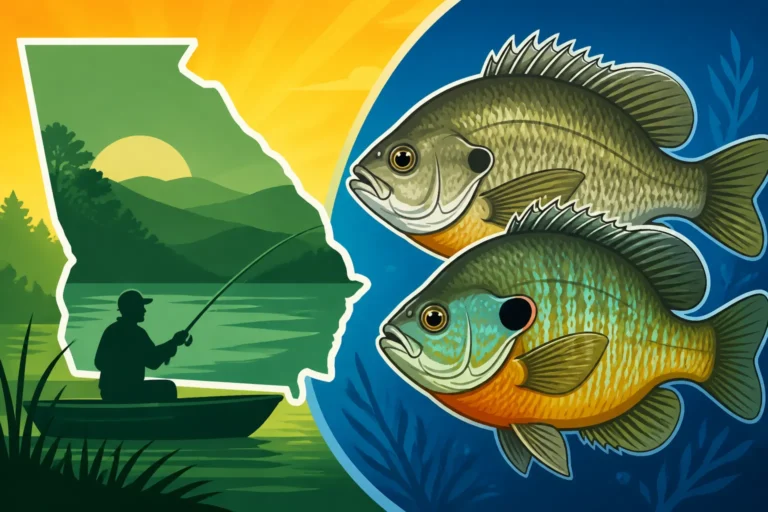
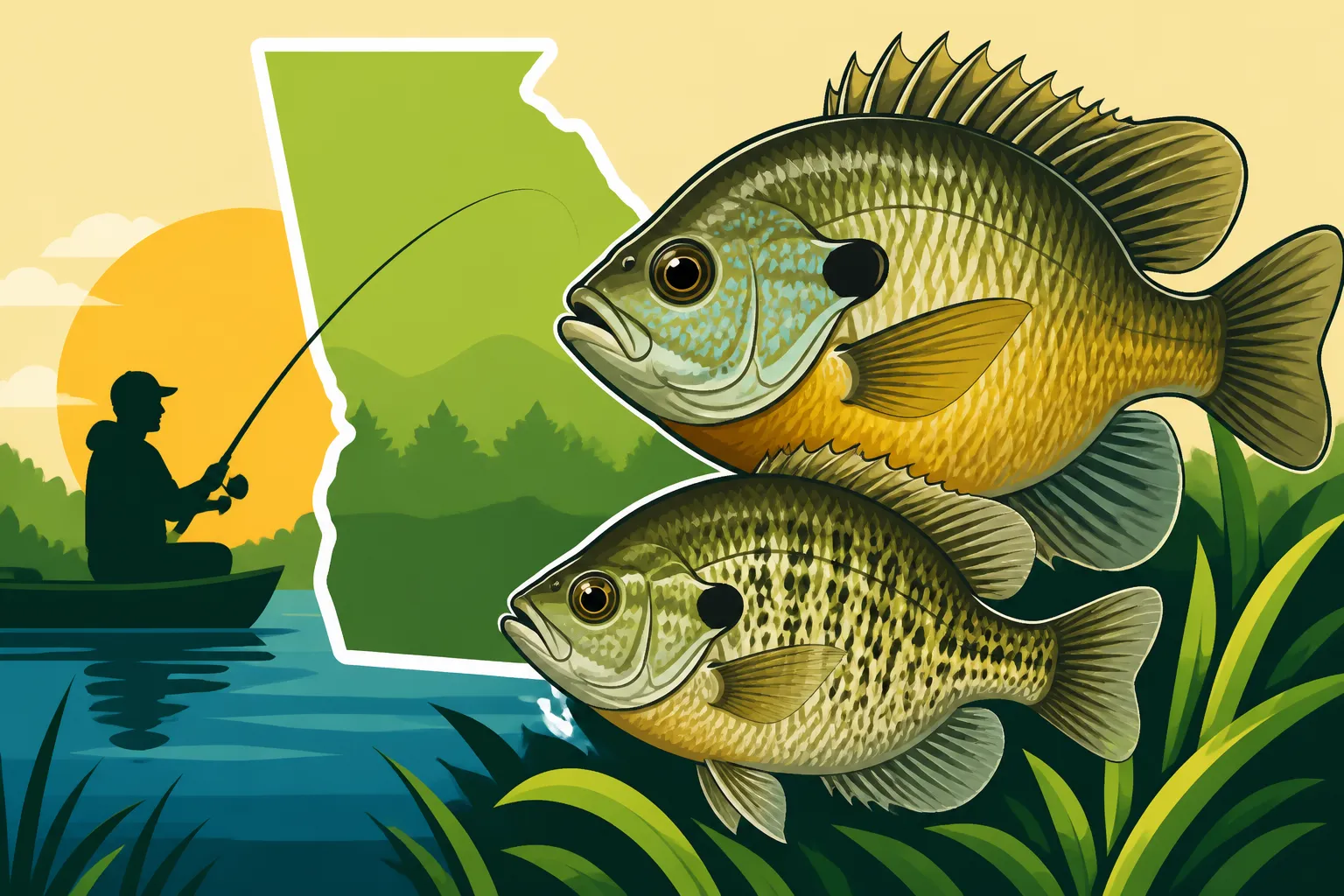
The bluegill ( Lepomis macrochirus ) is arguably the most common and recognizable panfish in Georgia, and for good reason! They are found everywhere, from tiny backyard ponds to massive impoundments, and are known for their feisty fight despite their small size. Identifying them is usually pretty straightforward: look for the distinct dark blue or black "ear" flap (operculum) and vertical bars on their sides, often with a vibrant blue-green sheen, especially on the males during spawning.
Bluegill are often the first fish many children catch, making them a sentimental favorite for countless anglers. They're not picky eaters, which contributes to their widespread appeal and catchability. You can usually find them around structure like docks, submerged timber, weed lines, and lily pads, eagerly waiting for an easy meal. If you're keen to introduce a youngster to fishing, teaching them the basics of Bluegill Fishing: A Beginner's Guide for Georgia Kids is always a winning strategy.
Redear Sunfish (Shellcracker): A Delicious Delicacy
The redear sunfish ( Lepomis microlophus ), affectionately known as "shellcrackers" by many Georgia anglers, gets its nickname from its preferred diet: snails and other mollusks. They have specialized crushing plates in their throats that allow them to crack the shells of their prey. You can identify a redear by the reddish-orange trim on the edge of its gill flap, which is often more prominent in males. They tend to have a slightly more subdued, silvery-olive coloration compared to the vibrant bluegill.
Shellcrackers are highly sought after for their excellent table quality and often grow larger than bluegill, offering a more substantial fight and fillet. While they might not be as abundant as bluegill, finding a good population of shellcrackers can lead to some truly memorable fishing. They prefer cleaner, clearer waters and are often found deeper than bluegill, especially during the warmer months, but will move shallower during their spawn.
Crappie: Georgia's Prized Panfish (Black and White)
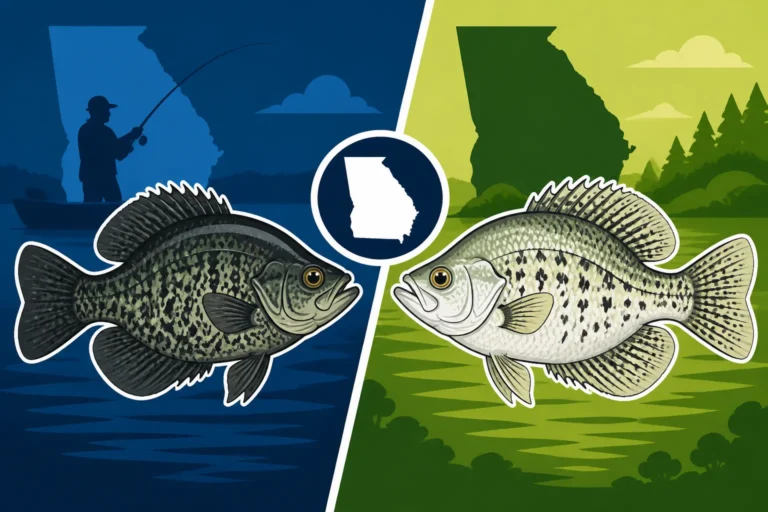
When it comes to panfish, crappie stand in a league of their own for many Georgia anglers. We have both black crappie (Pomoxis nigromaculatus) and white crappie (Pomoxis annularis) in our waters, and both are highly prized for their delicate, delicious meat. While often lumped together, there are subtle differences in their appearance and preferred habitats. Knowing these distinctions can help you adjust your approach.
Black crappie typically have irregular black speckles scattered over their silvery-gold bodies and seven or eight dorsal spines. They tend to prefer clearer water with more vegetation. Black Crappie Identification: Spots vs Stripes can help you differentiate them more easily. White crappie, on the other hand, usually have distinct vertical bars on their sides and six dorsal spines, often tolerating murkier water conditions a bit better. For a deeper dive into their appearance, check out our White Crappie Identification Guide. Both species are known for schooling, meaning if you find one, you're likely to find many more!
Other Notable Sunfish
Beyond the big three, Georgia is home to several other fantastic sunfish species that fall under the "bream" or "panfish" umbrella. These might not get as much attention, but they certainly add to the diversity and fun of panfishing.
For instance, the warmouth (Lepomis gulosus) is a fascinating little fish often found in sluggish, vegetated waters. They have a stout body, a large mouth (hence "warmouth"), and prominent teeth, often sporting mottled brown and olive patterns. They're aggressive eaters and a blast to catch on light tackle. Then there's the green sunfish (Lepomis cyanellus), which has a slightly more elongated body, a larger mouth than a bluegill, and iridescent green or blue spots. They are incredibly hardy and can survive in less-than-ideal water conditions, making them a common catch in many smaller ponds and creeks. These species, while not always specifically targeted, are delightful surprises that add variety to any panfish angler's day.
Essential Gear for Bream and Panfish Success
One of the beautiful things about fishing for bream and panfish is that you don't need a boatload of specialized, expensive gear. In fact, some of the most effective setups are incredibly simple and budget-friendly, making it an ideal entry point for beginners or a relaxing change of pace for seasoned anglers. The key is to keep things light and sensitive to feel those subtle bites.
Simple Rods, Reels, and Lines
For bream and panfish, a lightweight spinning rod and reel combo is perfect. You're looking for something that's easy to handle, responsive, and allows you to cast light baits or lures accurately. A rod in the 5 to 6.5-foot range with a light or ultralight action is ideal, paired with a small spinning reel (like a 1000 or 2000 series) spooled with thin line. Many anglers find great basic combos readily available from retailers like Amazon, offering excellent value for money.
When it comes to fishing line, going light is crucial. Monofilament line in 4 to 6-pound test is usually perfect. It's thin enough to be nearly invisible in the water, yet strong enough to handle even a feisty crappie. The lighter line also allows for better casting distance with small baits and more sensitivity to detect those delicate panfish nibbles. Plus, it's more forgiving if you snag your line, reducing the chances of breaking off an expensive lure.
Bait and Lure Choices for Panfish
Panfish aren't usually picky, which is great news for your tackle box! Natural baits are often king, especially when you're just starting out. Live worms, crickets, and small minnows are consistently effective. A simple piece of nightcrawler on a small hook under a bobber is a classic and proven method for bluegill and redear. For crappie, small minnows suspended under a bobber are a perennial favorite. For specific ideas, our guide on Best Bait for Black Crappie in Georgia can offer some excellent suggestions.
If you prefer artificials, there's a huge world of tiny lures designed just for panfish. Small jigs (1/32 to 1/16 ounce) tipped with soft plastic bodies, tiny spinners, and micro-crankbaits can be incredibly effective, especially for crappie and larger bluegill. Colors like chartreuse, white, and black are often go-tos. Experimentation is key, but you really can't go wrong with a variety of these small offerings. A well-stocked small tackle box, easily found on Amazon, can hold a great selection of these.
The Importance of a Good Tackle Box
While you don't need a massive amount of gear, having a well-organized tackle box is a game-changer. It keeps your hooks, weights, bobbers, and lures neatly separated and easily accessible. For panfishing, a smaller, compartmentalized box is often better than a large, unwieldy one. You want something that you can grab and go, whether you're heading to a nearby pond or a larger lake.
Inside your tackle box, make sure you have a variety of small hooks (sizes 6-10), an assortment of split shot weights, and a few different bobbers – both slip bobbers and fixed clip-on bobbers are useful. A pair of small pliers or forceps for hook removal and a pair of line clippers are also essential. Having these basic items readily available ensures that you're prepared for whatever the day brings, from changing baits to getting untangled.
Best Techniques for Catching Bream and Panfish
Getting a bite from bream and panfish is often easier than with some of the more elusive species, but employing the right techniques can significantly increase your success and make the experience even more rewarding. It's all about presenting your bait naturally and being sensitive to those subtle takes.
Bobber Fishing for Beginners
For many, bobber fishing is the quintessential panfish technique, and it’s especially fantastic for beginners and kids. It's visually engaging, signaling a bite with that satisfying dip or disappearance of the bobber. To set up, simply attach a small bobber to your line, add a split shot weight a foot or so above a small hook, and bait it with a worm or cricket. Cast it out near structure or cover, and wait for the magic to happen. Our guide on How to Rig a Bobber for Bream goes into more detail.
The depth at which you set your bait can make a huge difference. Panfish often suspend at various depths, especially crappie. If you're not getting bites, try adjusting the depth by sliding your bobber up or down the line. Fixed bobbers are great for shallower water, while slip bobbers are perfect for getting your bait down deeper while still being able to cast easily. This simple yet effective method provides constant entertainment and teaches the fundamental skill of detecting a bite.
Bottom Fishing for Bigger Bites
While bobber fishing excels, sometimes the biggest panfish, especially redear sunfish or larger crappie, are hugging the bottom. This is where a simple bottom fishing rig comes into play. Instead of a bobber, you'll use a slightly heavier weight (like an egg sinker or a heavier split shot) that sits on the bottom, with a leader extending to your hook. This keeps your bait directly in the strike zone for fish feeding along the lakebed or river bottom.
To rig this, you can use a slip sinker above a swivel, then tie a leader (a separate piece of line, usually about 12-18 inches long) with your hook to the other end of the swivel. This allows the fish to pick up the bait without feeling the weight of the sinker immediately, leading to a more natural presentation and fewer dropped bites. This technique is particularly effective in deeper water or when fishing for species like shellcrackers who forage for snails on the bottom.
Light Tackle and Small Lures
For anglers looking to up their game or specifically target crappie, transitioning to light tackle with small artificial lures can be incredibly effective. This method offers a more active and engaging style of fishing, allowing you to cover more water and mimic natural prey. A small ultralight spinning combo, as discussed earlier, is perfect for this.
Small jigs, often 1/32 to 1/16 ounce, paired with tiny soft plastic grub bodies or hair jigs, are irresistible to crappie. You can cast them out and retrieve them with a slow, steady retrieve, or jig them vertically around brush piles, docks, or submerged timber. Tiny inline spinners and micro-crankbaits also work wonders for aggressive panfish. The key is to keep the presentation subtle and natural, making these small offerings look like an easy meal. This method can also be fantastic for catching Best Crappie Fishing Spots on Lake Sinclair or Best Crappie Lakes in Georgia.
Where to Find Bream and Panfish in Georgia
One of the beautiful aspects of panfish is their sheer abundance and adaptability. You don't have to venture to remote wilderness areas to find them; they're often right under your nose! Understanding their preferred habitats will significantly boost your chances of a successful outing.
Ponds, Lakes, and Public Fishing Areas
Georgia is dotted with countless ponds, lakes, and fantastic Public Fishing Areas (PFAs) that are absolute goldmines for bream and panfish. These smaller, often managed bodies of water are designed to provide accessible and productive fishing experiences. PFA lakes, for example, are regularly stocked and managed to ensure healthy fish populations, including bluegill, redear, and crappie.
When approaching a pond or smaller lake, look for areas with submerged vegetation, lily pads, fallen trees, or docks. These structures provide cover, shade, and ambush points for panfish. Even the smallest pond can hold a surprising number of fish, making them perfect for a quick trip or introducing kids to fishing. Don't overlook these smaller waters; they often provide some of the best and most consistent action you'll find anywhere in Georgia. If you are looking for specific locations, check out Georgia State Park Fishing Spots for some excellent options.
Rivers and Streams
While lakes and ponds get a lot of attention, Georgia's rivers and streams also hold excellent populations of bream and various sunfish species. Larger rivers like the Altamaha, Ocmulgee, and Flint are home to healthy populations, especially in slower-moving sections, backwaters, and oxbow lakes. You might find different species here, including warmouth and green sunfish, alongside your typical bluegill.
In streams, look for slower pools, eddies behind rocks or fallen trees, and deeper pockets along the banks. These areas provide refuge from strong currents and offer feeding opportunities. Fishing from the bank is often very effective in these environments, allowing you to quietly approach and present your bait. Remember that river systems often change, so being observant of the current conditions and water levels is key to finding active fish. For those who enjoy fishing from the bank, exploring Best Bank Fishing Spots in Georgia could lead you to some fantastic panfish opportunities.
Look for Cover and Structure
This is perhaps the most critical piece of advice for panfish anglers: always look for cover and structure. Bream and panfish are prey species, and they naturally seek out places where they can hide from larger predators, ambush smaller prey, and find shade from the sun.
Examples of prime panfish habitat include:
- Submerged Timber: Fallen trees, brush piles, and old stump fields are magnets for crappie, bluegill, and other sunfish. These offer protection and attract baitfish.
- Vegetation: Lily pads, cattails, hydrilla, and other aquatic plants create dense cover. Panfish will hang out in the edges of these weed lines or within pockets in the vegetation.
- Docks and Piers: The shaded areas and submerged pilings of docks and piers provide excellent cover and concentrate fish. This is a particularly good spot for bank anglers.
- Rock Piles and Riprap: Rocky bottoms or riprap banks (rocky shorelines) offer crevices for small invertebrates and baitfish, attracting panfish.
- Depth Changes: Anywhere the bottom contour changes, like a drop-off or a hump, can concentrate fish as they move between shallow feeding areas and deeper refuge.
By focusing your efforts around these types of features, whether you're casting from shore or fishing from a boat, you dramatically increase your chances of connecting with a hungry panfish.
Panfish Fishing Through the Seasons in Georgia
Just like with any fish species, the behavior and location of bream and panfish change with the seasons in Georgia. Understanding these patterns can help you tailor your approach and ensure consistent success year-round, making every trip a productive one.
Springtime Spawning Frenzy
Spring is arguably the best time of year for panfishing in Georgia, especially for bream. As water temperatures rise, bluegill and redear sunfish move into shallow water to spawn, often creating visible "beds" – circular depressions in the bottom. These beds can be found in coves, along sandy points, or in protected pockets with firm bottoms, often in just a few feet of water. Once you find a bed, you're likely to find dozens, if not hundreds, of fish!
During the spawn, these fish become highly aggressive and protective, making them incredibly easy to catch. Small worms, crickets, or even tiny jigs cast into or around these beds can result in non-stop action. This is an absolutely fantastic time to introduce kids to fishing, as the bites are frequent and exciting. Crappie also spawn in the spring, moving into shallower brush piles, cypress trees, and vegetated areas, often in early spring before the bream fully get started. This active period means a full cooler is almost guaranteed if you hit it right.
Summer's Consistent Action
As Georgia summers heat up, many anglers shift their focus to deeper, cooler waters for species like bass or catfish. However, panfish can still provide incredibly consistent action if you know where to look. While the shallow spawning frenzy might subside, panfish don't disappear; they simply adjust their locations to find more comfortable temperatures and abundant food sources.
During summer, bluegill and other sunfish will often retreat to deeper weed lines, the shaded side of docks, or submerged timber in slightly deeper water during the heat of the day. Early mornings and late evenings can still find them feeding actively in shallower areas. Crappie, in particular, will often suspend over deeper brush piles, river channels, or under bridge pilings in the main lake basins. Vertical jigging or slow trolling with small jigs or minnows can be very effective in these situations. Don't let the heat deter you; summer panfishing can be just as rewarding, requiring just a slight adjustment in your strategy.
Fall and Winter Opportunities
Many anglers put their panfish gear away as fall colors arrive, but that would be a mistake! Fall fishing for bream and crappie can be fantastic, offering a serene experience on the water with less crowded conditions. As water temperatures begin to cool, crappie especially become very active, feeding heavily to bulk up for winter. They often move from deep summer haunts to structure in slightly shallower (but not necessarily "shallow") water, such as submerged timber or channel bends in 10-20 feet of water.
Winter panfishing might be slower, but it's far from impossible. In milder Georgia winters, crappie will often congregate in very deep brush piles, channels, or around thermals near power plants (like those on Lake Sinclair). Vertical jigging or slowly presenting a minnow can still coax bites. While bluegill activity slows down significantly in winter, they can sometimes be found schooled up in deeper pockets, especially during warmer spells. Don't write off the colder months; with a bit of patience and the right gear, like perhaps a good thermal suit from Amazon, you can still find plenty of panfish action in Georgia.
| Species | Typical Habitat (General) | Primary Diet (General) | Best Bait/Lure (Common) | Average Size (Georgia) |
|---|---|---|---|---|
| Bluegill | Ponds, lakes, slow rivers; around structure & vegetation | Insects, larvae, small crustaceans, algae | Worms, crickets, small jigs | 6-8 inches |
| Redear Sunfish | Cleaner lakes, ponds; near bottom | Snails, mollusks, insects | Worms, small jigs (bottom) | 8-10 inches |
| Black Crappie | Clearer lakes, rivers; heavy cover, vegetation | Minnows, insects, crustaceans | Small minnows, jigs, spinners | 9-12 inches |
| White Crappie | Murkier lakes, rivers; open water, brush piles | Minnows, insects, crustaceans | Small minnows, jigs, spinners | 9-12 inches |
| Warmouth | Slow rivers, swamps, vegetated ponds | Insects, small fish, crustaceans | Worms, crickets, small jigs | 5-8 inches |
| Green Sunfish | Ponds, creeks, rivers; tolerant of poor water | Insects, small fish, larvae | Worms, crickets, small jigs | 4-7 inches |
Disclaimer
This article is for general informational purposes only and does not constitute professional advice. Laws, prices and regulations vary by location and change over time. Consult a qualified professional for guidance on your specific situation.