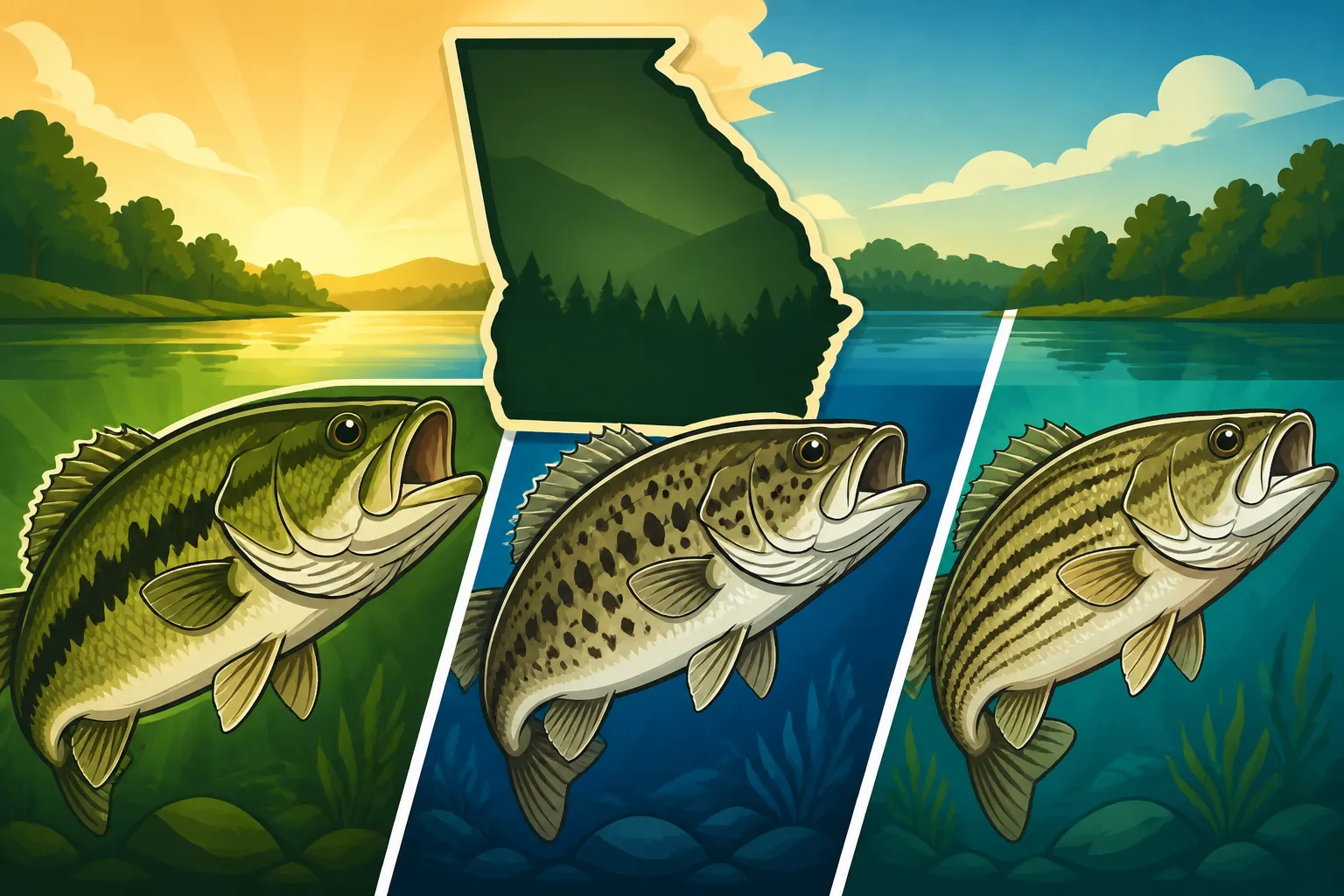
Bass Species Compared: Largemouth vs Spotted vs Shoal in Georgia
It's a familiar scenario for so many of us who love to cast a line in Georgia's abundant waters: you feel that tell-tale tug, reel in your catch, and then scratch your head, wondering "Is this a largemouth, a spotted bass, or a shoal bass?" The truth is, these three magnificent black bass species often share the same waters and can look incredibly similar at first glance, leading to confusion among even seasoned anglers. This comprehensive guide will clear up the mystery, breaking down the distinct characteristics, preferred habitats, and best fishing strategies for each, so you can confidently identify and target Georgia's prized bass.
The Big Three: Understanding Georgia's Popular Black Bass Species
Georgia is a true haven for bass anglers, boasting a fantastic array of black bass species that offer diverse challenges and rewards. While many people simply refer to them all as "bass," understanding the subtle yet crucial differences between largemouth, spotted, and shoal bass is key to becoming a more effective and knowledgeable angler. It's not just about bragging rights; knowing your species can inform your choice of bait, your approach to a particular body of water, and even ensure you're compliant with specific regulations.
Why Distinguishing Bass Matters
Imagine you're out on Lake Lanier, and you've got a hot bite going. If you're consistently catching spotted bass, your presentation and location might need to be tweaked differently than if you were after largemouth. Spotted bass, for example, often prefer deeper, clearer water and smaller baits, while largemouth tend to hug cover in shallower, warmer areas. Knowing which species you're engaging with allows you to refine your techniques, select the most effective lures, and truly dial into their behavior. It's like having a secret playbook for each fish! Moreover, regulations can vary, with some reservoirs having different size and creel limits for certain bass species. To stay on the right side of the law and help conserve these valuable fish populations, accurate identification is absolutely essential. You can learn more about specific rules in the Georgia Fish Size and Creel Limits guide.
Common Misconceptions and Initial Confusion
It's completely understandable why anglers often mix up these species. All three share a similar body shape, greenish coloration, and black markings, especially when pulled from similar environments. Many folks, for instance, might mistake a spotted bass for a largemouth, particularly smaller ones, because they both have a prominent dark lateral line. Or they might think a shoal bass is just a river-dwelling largemouth. The confusion is compounded by the fact that their coloration can change based on water clarity, diet, and even stress levels, making field identification challenging. It's not always as simple as looking at a picture in a book when you've got a thrashing fish in your hands! We've all been there, wondering if we truly identified our catch correctly.
Largemouth Bass: The Classic Georgia Trophy
When most people think of bass fishing in Georgia, they're probably picturing the largemouth bass. This iconic species is the most widespread and arguably the most popular game fish in the state, inhabiting nearly every lake, pond, and slow-moving river. Known for its aggressive strikes and impressive fighting power, the largemouth is a true powerhouse that consistently draws anglers to our waters.
Key Identification Features
The largemouth bass is characterized by several distinct features that, once you know them, make identification much easier. The most obvious, and the one that gives it its name, is its mouth. The jaw of a largemouth extends well past the rear edge of its eye when closed. They typically have a prominent dark, irregular lateral line running down their side, which can sometimes appear broken or faded depending on the individual fish and its environment. Another crucial detail is the deep notch that separates its two dorsal fins, making them look almost like two separate fins rather than one continuous one. How to Identify a Largemouth Bass provides even more detailed tips for anglers.
Beyond these primary markers, largemouth bass generally have a deeper, more robust body shape compared to spotted or shoal bass. Their coloration varies widely but usually features a green back fading to lighter sides, often with blotchy patterns rather than distinct spots below the lateral line. When you gently run your finger over their scales, you'll notice they feel quite smooth, and they lack the small tooth patch on the tongue that spotted bass possess.
Preferred Habitats and Behavior
Largemouth bass are masters of ambush, preferring environments where they can hide and dart out to surprise their prey. They thrive in warmer, often stained or murky waters found in many of Georgia's large reservoirs like Lake Lanier, Lake Oconee, and Lake Sinclair. You'll find them holding tight to all sorts of cover: submerged timber, thick hydrilla beds, lily pads, docks, brush piles, and even flooded creek channels. They love structure and vegetation that offers both shade and a place to lurk.
Their behavior changes seasonally, but generally, largemouth are less tolerant of strong currents than shoal bass and less inclined to suspend in open, deep water like spotted bass. During spawning season in spring, they move into shallow protected coves. In summer, they might retreat to slightly deeper, cooler water but will still relate to cover. They're opportunistic eaters, consuming everything from baitfish and crawfish to frogs and even small birds or mammals if the opportunity arises.
Fishing Strategies and Gear
Fishing for largemouth bass is a passion for many, and there's a vast array of techniques and gear designed to tempt them. Given their preference for cover, flipping and pitching jigs or soft plastics into dense vegetation or around docks is highly effective. Topwater lures like poppers, frogs, and buzzbaits shine during low-light conditions or when bass are active in shallow water. Crankbaits and spinnerbaits are excellent for covering water and eliciting reaction strikes, especially when bass are scattered along points or creek channels.
For those who love soft plastics, Texas rigs, Carolina rigs, and weightless wacky worms are all tried-and-true methods. Best Lures for Georgia Largemouth Bass dives deeper into specific lure choices. Rods and reels for largemouth are typically medium-heavy to heavy power, allowing you to pull fish out of thick cover. Braided line or fluorocarbon are popular choices, depending on the presentation. You can find a huge selection of these specific rods, reels, and lure types on Amazon, often at competitive prices.
Spotted Bass: The Energetic, Deep-Water Fighter
Often overlooked and sometimes mistaken for its larger cousin, the spotted bass is a formidable game fish in its own right. While not growing to the colossal sizes of largemouth, spotted bass are renowned for their aggressive fights, pulling hard and never giving up. They're a favorite among anglers who enjoy fast action and a strong challenge on the line.
Key Identification Features
The spotted bass has a few tell-tale signs that set it apart. Its mouth is smaller than a largemouth's, with the jaw typically extending only to the middle of the eye, or just slightly beyond, when closed. Unlike the distinct blotches of a largemouth, the spotted bass has rows of small, dark spots running below its lateral line. These spots are often more pronounced towards the belly. The lateral line itself is usually more continuous and less broken than on a largemouth.
Perhaps the most definitive characteristic, and one that requires a bit more hands-on inspection, is the "patch" of small teeth on its tongue. If you can safely handle the fish and feel its tongue, you'll easily distinguish this from a largemouth, which has a smooth tongue. Furthermore, the two dorsal fins on a spotted bass are joined, creating a much less pronounced notch than seen on a largemouth. Spotted Bass Identification Tips for Georgia Anglers provides excellent visual aids to help confirm your catch.
Preferred Habitats and Behavior
Spotted bass generally prefer clearer, cooler, and deeper waters than largemouth. You'll often find them in the main lake basins of Georgia's larger reservoirs, particularly those with rocky bottoms, bluff walls, and deep-water structures. They are less dependent on shallow, heavy cover and are often found suspending over submerged points, humps, and ledges. Lakes like Lanier, Allatoona, and Carters Lake are prime spotted bass fisheries in Georgia.
These fish are known for schooling, especially during the colder months, making it possible to catch multiple fish once you locate a school. They're highly predatory, feeding on shad, alewives, and crawfish, and are less shy than largemouth, often hitting baits with a powerful, almost violent strike. Their preference for deeper, open water means they don't get hung up in thick vegetation as often, leading to clean, hard-fighting battles.
Fishing Strategies and Gear
Spotted bass often require different tactics than largemouth due to their habitat preferences. Finesse techniques are incredibly effective, especially when fishing for schooled fish in clear water. Drop shot rigs, shaky heads, and small jig heads paired with soft plastics are go-to choices. Deep-diving crankbaits and swimbaits are excellent for targeting them on submerged structures or when they're actively feeding on baitfish.
Vertical jigging spoons or small metal baits can be deadly when spotted bass are suspended in deep water, particularly during colder times of the year. Light to medium-light spinning gear is often preferred to handle the lighter lines and baits used for finesse presentations. Fluorocarbon line is a popular choice due to its low visibility and sensitivity. If you're looking for specialized spotted bass tackle, Amazon has a wide selection of finesse lures and lighter-action rods perfect for these energetic fighters. Check out Best Bait for Spotted Bass for specific recommendations.
Shoal Bass: Georgia's Unique River Dweller
For many anglers, the shoal bass represents the ultimate challenge and reward. This incredible black bass species is truly a gem of Georgia's rivers, a powerful and spirited fighter perfectly adapted to its unique environment. Shoal bass are native to the Apalachicola River Basin, including prominent Georgia rivers like the Flint, Chattahoochee, and Ocmulgee, and offer a completely different fishing experience than their lake-dwelling cousins.
Key Identification Features
The shoal bass has a very distinctive appearance that sets it apart from both largemouth and spotted bass, particularly once you've seen a few. Its mouth is also smaller than a largemouth's, similar in size to a spotted bass, typically not extending beyond the eye. Instead of a solid or broken lateral line, shoal bass usually exhibit very distinct, often vertical, bars or blotches along their sides, especially when in prime riverine habitat. The overall body shape is more torpedo-like and streamlined, perfectly built for fighting current.
Their coloration is often a striking dark olive to golden brown, with a creamy white belly, a camouflage that blends beautifully with rocky riverbeds. Unlike largemouth, the two dorsal fins on a shoal bass are either completely joined or have a very shallow notch. They also lack the tooth patch on the tongue found on spotted bass. For a deeper dive, read How to Identify a Shoal Bass.
Preferred Habitats and Behavior
True to their name, shoal bass are intimately tied to rocky shoals and areas of significant current in clear, flowing rivers. They thrive in environments with gravel beds, bedrock formations, and submerged boulders, using these features to ambush prey. They are not typically found in the slow, stagnant backwaters or heavy vegetation that largemouth prefer. Instead, look for them behind current breaks, in eddies, and along the seams where fast water meets slow. The Flint River Shoal Bass Fishing Guide offers specific insights into targeting this species in its native waters.
Their diet primarily consists of crawfish, baitfish like minnows and darters, and aquatic insects. They are incredibly powerful swimmers, using the strong current to their advantage during a fight. Catching a shoal bass often involves making precise casts and understanding how current affects lure presentation, making it a highly engaging and active form of bass fishing. They are truly a marvel of natural adaptation, a testament to the unique ecosystems of Georgia's rivers.
Fishing Strategies and Gear
Fishing for shoal bass is an art form that demands precision and respect for the river environment. Topwater baits like prop baits and walking baits can produce explosive strikes when fished over rocky shoals and eddies. Spinnerbaits and buzzbaits are excellent for covering water and triggering aggressive reaction bites, particularly in stained water or during overcast conditions. Crankbaits that mimic crawfish or small baitfish are also highly effective, especially when bounced off rocks.
Soft plastics rigged on jig heads or weightless worms can be deadly in slower pools or when bass are finicky, allowing for a more subtle presentation. Fly fishing for shoal bass is also incredibly popular and rewarding, using streamers that imitate baitfish or crawfish. Medium-heavy casting rods with good backbone are often preferred to handle the strong currents and powerful fish. Fluorocarbon or monofilament lines are common. Due to the specific gear often needed for river fishing, many anglers will search Amazon for durable, specialized tackle for this unique species. For more specialized recommendations, see Best Bait and Lures for Shoal Bass Fishing.
Side-by-Side Comparison: Spotting the Differences in the Field
When you've got a bass in your hands, trying to quickly figure out which species it is can be tricky, especially if you're excited! But with a few key features in mind, you can become adept at distinguishing between largemouth, spotted, and shoal bass. It truly makes a difference in how you approach your fishing and how you handle your catch.
Visual Cues and Practical Tips
Let's break down the most reliable visual cues for each species. Remember these when you land your next fish:
- Mouth Size: This is often the easiest differentiator.
- Largemouth: Jaw extends beyond the back of the eye.
- Spotted Bass: Jaw extends to or just slightly past the middle of the eye.
- Shoal Bass: Jaw extends to or just slightly past the middle of the eye (similar to spotted).
- Lateral Line Markings:
- Largemouth: A prominent, often broken or blotchy, dark horizontal stripe.
- Spotted Bass: A more continuous, solid horizontal stripe, with distinct rows of small spots below it (like polka dots).
- Shoal Bass: Usually features distinct, often vertical or diamond-shaped, bars or blotches, no strong horizontal lateral line of spots like the spotted.
- Dorsal Fin Separation:
- Largemouth: Deep, obvious notch separating the spiny and soft-rayed dorsal fins.
- Spotted Bass: Dorsal fins are connected, with a shallow or absent notch.
- Shoal Bass: Dorsal fins are connected, with a shallow or absent notch (similar to spotted).
- Tongue Patch:
- Largemouth: Smooth tongue.
- Spotted Bass: Small, rough patch of teeth on the tongue.
- Shoal Bass: Smooth tongue.
- Body Shape:
- Largemouth: Deeper, more robust body, often thicker.
- Spotted Bass: More slender than a largemouth, but still has a typical bass profile.
- Shoal Bass: Very streamlined, torpedo-shaped body, built for current.
Here's a handy table to help you compare them at a glance:
| Feature | Largemouth Bass | Spotted Bass | Shoal Bass |
|---|---|---|---|
| Jaw Extension | Past the eye | To or slightly past middle of eye | To or slightly past middle of eye |
| Lateral Line | Dark, often broken/blotchy | Continuous, with distinct rows of spots below | Vertical bars/blotches, no distinct spot rows |
| Dorsal Fins | Deeply notched, almost separated | Connected, shallow or no notch | Connected, shallow or no notch |
| Tongue | Smooth | Rough tooth patch | Smooth |
| Body Shape | Robust, deeper body | More slender than largemouth | Streamlined, torpedo-like |
| Primary Habitat | Lakes, ponds, slow rivers, heavy cover | Clearer, deeper lakes, rocky structure, open water | Fast-flowing rivers, rocky shoals, strong current |
Habitat Overlap and Where to Expect Each Species
While each species has its preferred haunts, there can definitely be some overlap, especially in large reservoir systems that are fed by rivers. For instance, a lake like Lake Lanier has both thriving largemouth and spotted bass populations. You might catch a largemouth in a shallow cove and a spotted bass off a deep point just minutes later.
However, you'd be hard-pressed to find a true shoal bass in the middle of Lake Lanier's main basin; they need that moving water. Conversely, while largemouth can be found in some slower river sections, they typically won't hold up in the fast, rocky shoals where shoal bass reign supreme. Knowing the general geography of the species is a huge advantage. If you're fishing a clear, rocky, fast-flowing river like the Flint, your chances of a shoal bass are high. If you're on a vast, murky reservoir with lots of timber, largemouth are likely to be the dominant species. And if you're on a deep, clear reservoir, especially in the northern parts of the state, be ready for some serious spotted bass action!
Why Accurate Identification Enhances Your Fishing Experience
Beyond just satisfying your curiosity, truly knowing the difference between Georgia's bass species offers tangible benefits that can dramatically improve your success on the water and your overall enjoyment of the sport. It transforms your fishing from a guessing game into a more strategic and rewarding pursuit.
Tailoring Your Approach
When you can confidently identify which bass species you're catching or which one you expect to catch in a given area, you can then fine-tune your entire fishing strategy. Let's say you're consistently catching smaller spotted bass on a deep point with a drop shot. If you really want to target a trophy largemouth, you'll know to move into shallower, heavier cover and switch to a larger, more aggressive presentation like a jig or a heavy spinnerbait.
Conversely, if you're in a clear-water lake known for its spotted bass, throwing a huge, shallow-running crankbait might not be the most effective approach. Instead, downsizing your lures, fishing deeper, and employing finesse techniques will likely yield better results. This species-specific knowledge helps you choose the right fishing line, rod action, leader material, and retrieve speed. It's about being efficient and understanding the nuances of how each bass interacts with its environment and its food.
Conservation and Regulation Compliance
One of the most critical reasons for accurate bass identification is ensuring you're fishing responsibly and legally. Georgia has specific regulations for different fish species, and sometimes even for the same species in different bodies of water. For example, some reservoirs might have a 14-inch minimum size limit for largemouth bass but no specific size limit for spotted bass, or vice-versa. Catch limits (creel limits) can also vary. You don't want to accidentally keep a fish that's out of season or under the legal size limit for its species in that particular water body.
By knowing your bass, you contribute to better conservation efforts. Releasing a fish properly is vital, and understanding the species can sometimes inform how you handle it, especially if it's a rare or protected species. It's all part of being a good steward of our natural resources and ensuring that future generations can enjoy the incredible bass fishing opportunities that Georgia offers. Make sure to review Georgia Fishing Regulations Explained before you head out, and if you're targeting trout, don't forget the Georgia Trout Fishing License Requirements.
Disclaimer
This article is for general informational purposes only and does not constitute professional advice. Laws, prices and regulations vary by location and change over time. Consult a qualified professional for guidance on your specific situation.