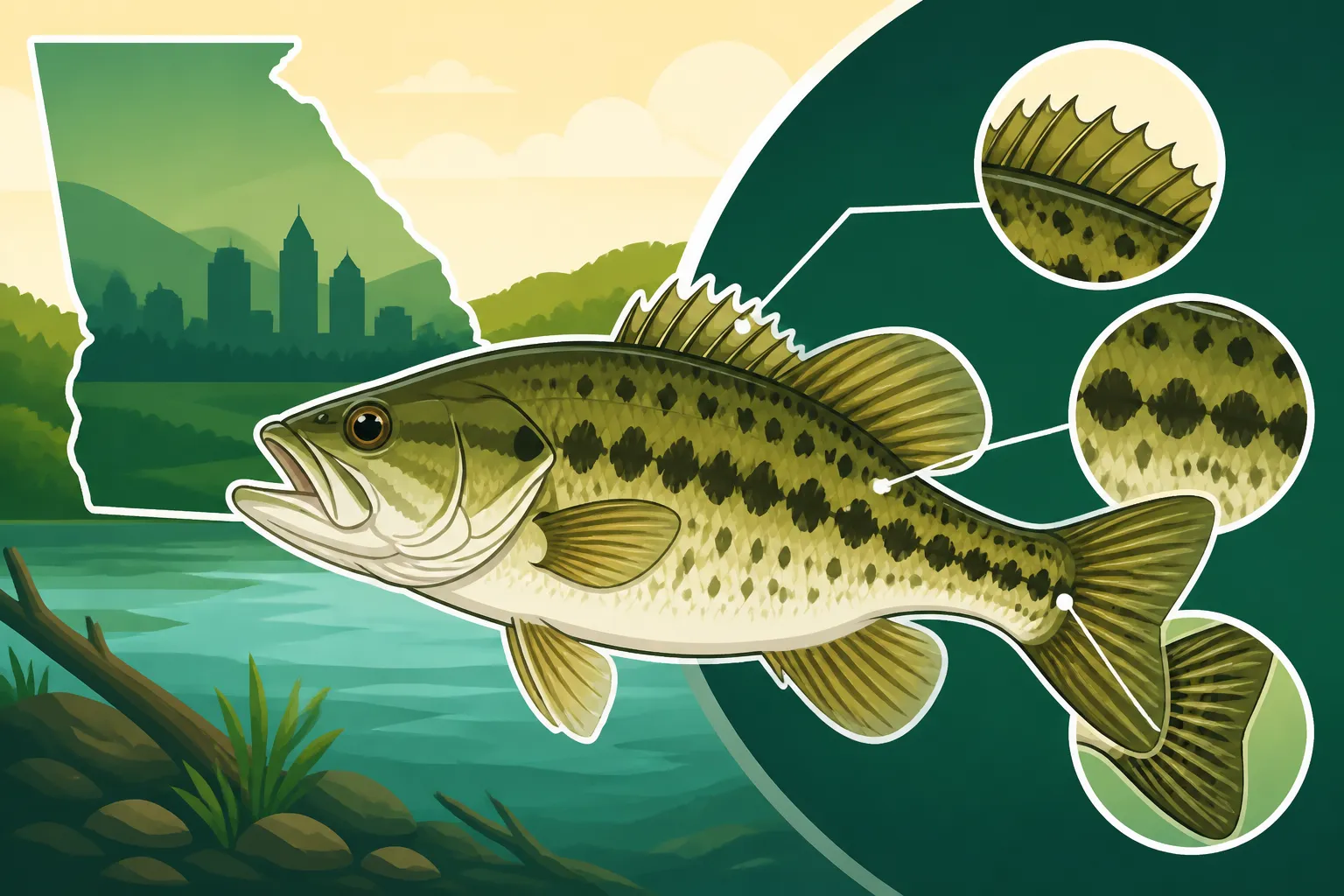
Spotted Bass Identification: What Makes It Different
It can be incredibly frustrating to reel in a beautiful bass here in Georgia, only to scratch your head and wonder, "Is this a largemouth, a spotted bass, or something else entirely?" Distinguishing between Georgia's various bass species, especially the sometimes-tricky spotted bass, is a common challenge for anglers. This comprehensive guide is here to clear up that confusion, offering clear identification tips so you can confidently know what you've caught, understand the regulations, and improve your fishing strategies.
Why Spotted Bass Identification Matters for Georgia Anglers
You might be thinking, "A bass is a bass, right? Why does it matter if I know the exact species?" Well, my friend, in the world of Georgia fishing, knowing your species can make all the difference. It impacts everything from following fishing regulations to understanding fish behavior and even how you approach a specific body of water.
The Confusion with Largemouth Bass
Let's be honest, the spotted bass often gets mistaken for its more famous cousin, the largemouth. They share a similar overall shape and color palette, especially to the untrained eye. Many an angler has pulled in what they thought was a small largemouth, only to later learn it was a chunky spotted bass. This common misidentification can lead to incorrect assumptions about the health of a fishery or even inadvertently violating size and creel limits. Understanding the subtle yet definitive differences between these two popular species is the first step to becoming a more informed and successful angler. We've got a whole article dedicated to this specific challenge: Largemouth Bass vs Spotted Bass: How to Tell Them Apart in Georgia.
Regulations and Management
Georgia has specific regulations that can vary by species, especially when it comes to size and creel limits. Imagine catching a bass, measuring it against the largemouth limit, and then finding out it was a spotted bass with a completely different set of rules. This isn't just a minor inconvenience; it could lead to penalties if you're not careful. Wildlife resources agencies use these regulations to manage fish populations, ensuring healthy fisheries for future generations. Accurate identification helps anglers comply with these rules and supports conservation efforts. Whether you're fishing a major reservoir or a smaller river, knowing your fish helps you stay on the right side of the law.
Tailoring Your Approach
Beyond regulations, proper identification helps you tailor your fishing techniques. Spotted bass, largemouth, and even shoal bass have different preferred habitats and feeding behaviors. If you're consistently catching "small largemouth" that are actually spotted bass, you might be missing out on opportunities to specifically target larger spots or even different species. Understanding that you're in a prime spotted bass area might lead you to switch to different lures, adjust your retrieve speed, or explore different depths. It’s all about putting together the puzzle pieces to become a more effective angler. For general information about where these fish reside, check out Spotted Bass Fishing in Georgia Lakes and Rivers.
Key Physical Characteristics of Spotted Bass
Alright, let's get down to brass tacks. How do you actually tell a spotted bass apart from the other black bass species swimming in Georgia waters? While some distinctions are subtle, there are a few tell-tale signs that, once you know them, will make identification much easier. You’ll want to pay close attention to the mouth, body markings, and even the fins.
The Jawline Test
This is often the first and most reliable method for distinguishing a spotted bass from a largemouth, especially for visual identification in the field. Carefully hold the bass with its mouth closed. Now, look at the corner of its jaw relative to its eye.
- For a Spotted Bass: The corner of the jaw will not extend past the back of the eye. It usually lines up right under the middle or front of the eye.
- For a Largemouth Bass: The corner of the jaw will visibly extend past the back of the eye. This gives the largemouth its characteristic "large" mouth.
This difference is quite pronounced once you know what to look for. It's a quick and easy visual check you can perform right on the boat or bank, and it's particularly helpful for those times when you're trying to figure out if you've landed a young largemouth or a mature spotted bass. Get yourself a good, clear measuring tape from Amazon if you want to be precise!
Lateral Line and Body Markings
While both spotted bass and largemouth have a prominent dark lateral line running down their sides, the markings around it can be quite different.
- For a Spotted Bass: You'll typically find a series of distinct dark spots or blotches below the lateral line. These spots are often arranged in rows, almost like little smudges. The overall appearance of the lateral line itself can also appear more broken or patchy than the usually solid stripe of a largemouth.
- For a Largemouth Bass: While they have a lateral line, the area below it is usually much cleaner, without these defined rows of spots. Largemouth often have a more continuous, dark horizontal stripe along their lateral line, with a relatively uniform color below it.
The overall coloration of a spotted bass can also lean towards a slightly more bronze or olive hue compared to the darker green often seen in largemouth. It's these tiny details, like the pattern of spots, that give you the clues you need.
The Tooth Patch: A Definitive Clue
This characteristic is a true game-changer for identification, though it requires a bit more hands-on inspection. Spotted bass possess a small, rough patch of teeth on their tongue, also known as a glossohyal tooth patch.
To check for this:
- Carefully open the fish's mouth.
- Gently depress the tongue.
- Feel for a small, rough patch of teeth on the very top-middle of the tongue with your finger. It will feel like sandpaper.
- For a Spotted Bass: This tooth patch will be present and easily felt.
- For a Largemouth Bass: They do not have this tooth patch. Their tongue will be smooth.
- For a Shoal Bass: Like spotted bass, shoal bass do also have this tooth patch, so while it differentiates from largemouth, it won't distinguish between spotted and shoal bass.
This tooth patch is one of the most reliable ways to confirm you have a spotted bass, especially if you're still unsure after the jawline test. It's a unique anatomical feature that truly sets them apart from the largemouth.
Fin Peculiarities
Even the fins can offer some clues, though these are often less pronounced and harder to discern than the jawline or tooth patch.
- Dorsal Fin: Spotted bass typically have a dorsal fin that is deeply notched, almost appearing as two separate fins connected by a very low membrane. While largemouth also have a notched dorsal fin, the connection is generally less pronounced, making it appear more continuous.
- Pectoral Fin: Some anglers notice that the pectoral fins (the pair of fins behind the gill cover) of spotted bass can appear slightly larger or more rounded than those of a largemouth. This is a subtle characteristic and might require a keen eye or comparison side-by-side.
These fin characteristics are more like supporting evidence rather than primary identifiers, but they can contribute to the overall picture when you're trying to make a positive identification.
Spotted Bass vs. Largemouth Bass: A Detailed Comparison
The rivalry is legendary, but the confusion is real. Many Georgia anglers struggle to distinguish between a spotted bass and a largemouth bass, especially when the fish are young or in certain water conditions. Let's really break down the differences that will help you tell them apart every time. Knowing these distinctions is crucial for understanding Spotted Bass Size Compared to Largemouth Bass and managing your expectations.
Head and Mouth Differences
We touched on the jawline test, but let's dive a bit deeper into the subtleties of their heads and mouths.
- Jaw Extension: This is your primary indicator. As we discussed, the spotted bass has a smaller mouth where the jaw doesn't extend beyond the eye. Think of it like a neatly trimmed beard that stops short of the ear. The largemouth, on the other hand, boasts a more generous jawline that clearly extends past the back of the eye, giving it that familiar "bucketmouth" appearance. This difference in jaw size directly impacts the size of prey each species can comfortably consume.
- Tongue Tooth Patch: This is the internal differentiator. Open that mouth gently! The spotted bass will have that rough, sandpaper-like patch of teeth on its tongue. Run your finger over it gently; you'll feel it. The largemouth's tongue will be smooth. This single feature, often missed by beginners, is an absolute giveaway. It’s like a secret handshake that only spotted bass know.
These two features alone are usually enough to make a positive identification, making them invaluable tools in your angler's toolkit.
Body Shape and Coloration
While both are "black bass," their body shapes and specific markings offer further clues.
- Body Shape: Spotted bass tend to have a more slender, torpedo-like body compared to the largemouth, which can often appear thicker and more robust, especially in the mid-section. Spotted bass often look more streamlined, built for chasing prey in current. Their overall profile can be described as slightly less "bulky" than a largemouth of similar length.
- Lateral Line Markings: Both have a lateral line, but the markings below it are key. Spotted bass display distinct dark spots or rows of spots below their lateral line. These spots are usually quite visible and can be a strong visual cue. Largemouth, while they might have some mottled patterns, generally lack these distinct rows of spots below their lateral line, often appearing more uniformly colored or with less defined blotches.
- Dorsal Fin Notching: Look at the dorsal fin (the one on its back). A spotted bass typically has a more pronounced, deeper notch between the spiny front section and the soft-rayed back section, making it look almost like two separate fins. The largemouth's notch is present but usually less severe, appearing more as a continuous fin.
These visual differences become clearer with practice. When you catch your next bass, take a moment to really examine it before releasing it. You'll be amazed at how quickly you start to pick up on these cues.
Habitat and Behavior
Beyond physical appearance, where and how these fish behave can also help you narrow down the species.
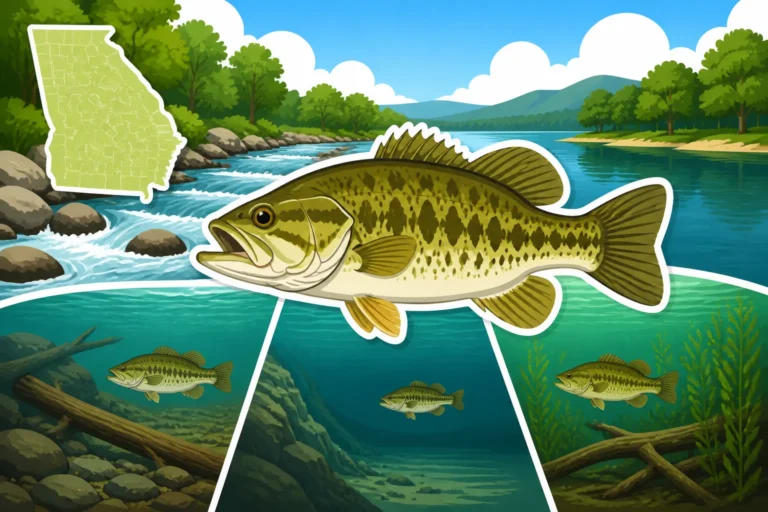
- Preferred Habitat: Largemouth bass are notorious for their love of heavy cover: thick weed beds, lily pads, submerged timber, and brush piles. They are ambush predators, often lurking in the shadows, waiting for unsuspecting prey. Spotted bass, while they will use cover, are often found in areas with more current or rocky structure. They thrive in deeper, clearer water and are frequently associated with main lake points, humps, ledges, and rocky bottom areas. This makes them a common catch in many of Georgia's larger, clearer reservoirs.
- Feeding Habits: Largemouth are opportunistic feeders, eating anything from baitfish to frogs, mice, and even small birds. Their large mouth allows them to engulf bigger meals. Spotted bass, with their smaller mouths, tend to feed more on crayfish, insects, and smaller baitfish. This difference in diet often translates to different preferred lures and presentations. When you're trying to target them, you might find that Best Bait for Spotted Bass articles recommend smaller presentations than for largemouth.
- Fight Style: While subjective, many anglers report that spotted bass have a more aggressive, hard-fighting nature for their size. They tend to make powerful runs and often dive deep, whereas largemouth might make more surface jumps or try to bury themselves in cover.
Understanding these behavioral differences, along with the physical traits, completes your identification profile for the spotted bass. For a complete overview of the black bass species, refer to Bass Species Compared: Largemouth vs Spotted vs Shoal in Georgia.
Spotted Bass vs. Shoal Bass: Unraveling the River Dwellers
Now, here's where things get a little more challenging, even for seasoned anglers. The shoal bass, another native Georgia black bass, can look remarkably similar to a spotted bass. Both are river specialists, thrive in current, and, crucially, both possess that glossohyal tooth patch on their tongue. So, how do you tell these two apart? It often comes down to very specific geographic locations and subtle morphological details.
Geographic Distribution and Preferred Habitat
This is often your first and best clue when distinguishing between a spotted bass and a shoal bass. Their natural ranges and preferred river systems are quite distinct.
- Shoal Bass: These are truly Georgia's river-dwelling specialists. They are primarily found in clear, flowing rivers with rocky bottoms, shoals, and swift currents – hence their name! In Georgia, you'll find them predominantly in the Apalachicola River basin, including the Flint River, the Chattahoochee River (above the Fall Line), and the Ocmulgee River system. They are incredibly adapted to these moving water environments. To learn more about this specific species, check out Shoal Bass: Georgia's River-Specialist Black Bass.
- Spotted Bass: While spotted bass also appreciate current and rocky areas, they have a broader distribution and can be found in both rivers and many of Georgia's large reservoirs. They are often stocked in impoundments and can thrive where largemouth bass struggle in deeper, clearer water. If you're fishing a large lake like Lanier or Allatoona, you're far more likely to encounter a spotted bass than a shoal bass. If you're deep in a rocky, swift-flowing section of the Flint River, the odds shift dramatically towards a shoal bass.
Knowing which river basin or body of water you're fishing can immediately help you narrow down the possibilities.
Distinguishing Markings and Patterns
Even with their similar appearances, there are some visual cues that can help separate shoal bass from spotted bass.
- Overall Coloration: Shoal bass tend to have a more prominent, distinct dark lateral stripe that runs down their side, often composed of blotches that are more rectangular or diamond-shaped. Their backs are usually a darker olive or greenish-brown, and their bellies are typically white. The overall appearance can be quite striking, almost like a tiger-stripe pattern in some individuals. Spotted bass can also have a lateral stripe, but the spots below it are usually rounder and more scattered, and the overall color might be a bit more mottled or bronze.
- Fins: Pay close attention to the caudal (tail) fin and the pelvic fins (the pair of fins on the belly, under the pectoral fins). Shoal bass often have a distinct reddish-orange tint to their caudal and pelvic fins, especially when they are actively spawning or in pristine river conditions. This reddish hue is generally absent or much less pronounced in spotted bass. It's a subtle but often reliable indicator if you get a good look.
- Scales on the Cheek: This is a more technical, but definitive, characteristic. Shoal bass typically have smaller, less organized scales on their cheeks compared to spotted bass, which often have larger, more uniform scales. You might need to gently rub your finger across the cheek to feel the difference or examine it closely.
These visual cues, combined with the location you're fishing, are crucial for making an accurate identification between these two close relatives.
Size and Growth Expectations
While not an identification method for an individual fish, understanding the general size and growth patterns can contribute to your overall knowledge and appreciation of these species.
- Shoal Bass: These fish can grow quite large, especially in healthy river systems with abundant food. They are known for their strong, powerful builds, adapted to fighting current. A trophy shoal bass can easily exceed five pounds, and they are highly sought after by anglers for their fighting prowess and beauty.
- Spotted Bass: While spotted bass can also reach impressive sizes, especially in prime reservoir habitats, their average size is often considered slightly smaller than that of largemouth bass, and perhaps a bit less massive than a true trophy shoal bass from a robust river system. However, they are still capable of reaching several pounds and offer an excellent fight.
Both species provide incredible angling experiences, and knowing which one you've hooked only adds to the enjoyment and satisfaction of your catch.
Where to Find Spotted Bass in Georgia
Georgia is a fantastic state for spotted bass fishing, with these hard-fighting fish populating many of our diverse waterways. If you're looking to target spotted bass, understanding their preferred habitats is key. They aren't hiding in every lily pad patch like their largemouth cousins; instead, they have specific preferences that once understood, can lead you to some incredible fishing action.
Preferred Habitats: Lakes and Rivers
Spotted bass are adaptable, but they certainly have their favorite hangouts. You'll find them thriving in environments that offer specific characteristics.
- Deeper, Clearer Lakes and Reservoirs: Unlike largemouth bass that love shallow, murky water and dense cover, spotted bass prefer deeper, clearer impoundments. They thrive in environments with good water quality and are often found relating to offshore structure. Think main lake points, submerged humps, deep ledges, and rocky bluffs. They're comfortable suspending in open water or hugging bottom contours, especially when baitfish are schooling. Lakes with a strong alewife or blueback herring population are often prime spotted bass waters, as these baitfish tend to roam open, deeper areas.
- Rivers with Current and Rock Structure: While often associated with reservoirs, spotted bass are also at home in rivers, particularly those with noticeable current. They gravitate towards areas with rocky bottoms, gravel beds, and swift flows. You'll find them behind current breaks, around boulders, and in the deeper pools that form after rapids. These riverine spots offer them both ambush points for prey and refuge from strong currents. They often coexist with shoal bass in these environments, though typically in different sections or concentrations.
Understanding these habitat preferences is crucial for effective targeting. Don't waste your time flipping jigs into shallow grass for spots; instead, focus your efforts on those deeper, rockier zones.
Common Georgia Hotspots
Georgia boasts several premier spotted bass fisheries that consistently produce quality fish. If you're looking to put your identification skills to the test and hook into some excellent spotted bass, these are some places you'll definitely want to explore.
- Lake Lanier: Without a doubt, Lake Lanier is perhaps the most famous spotted bass lake in Georgia, if not the entire Southeast. Its clear, deep waters and abundant rocky structure make it a perfect home for robust populations of spotted bass. Anglers here often target them on main lake points, brush piles, and humps, especially during colder months. The spotted bass grow large here and offer a fantastic fight. Best Spots for Bass Fishing on Lake Lanier will guide you to some prime locations.
- Lake Allatoona: Another excellent spotted bass fishery, Lake Allatoona, located northwest of Atlanta, also features clear waters and plenty of rock and timber. The spotted bass here can be feisty and are often found schooling on deep breaks and points. Many anglers find success using finesse techniques or targeting schooling fish with topwater lures or swimbaits when they're actively feeding.
- Lake Acworth and Lake Altoona: These smaller impoundments, while less famous than Lanier, still hold healthy populations of spotted bass and can offer a more relaxed fishing experience. They often feature similar deep, clear water characteristics that spotted bass prefer.
- Certain River Systems: While specific to shoal bass, it's worth noting that some stretches of the Chattahoochee River, especially its upper sections, can hold spotted bass. However, the prevalence of shoal bass in certain river systems means you need to be extra vigilant with your identification in these areas.
Before heading out, always check the Georgia Department of Natural Resources (DNR) website for the latest stocking reports and fishing forecasts for these lakes. This will give you the most current information on where the fish are biting and what conditions to expect.
Fishing for Spotted Bass: Tailoring Your Techniques
Once you've mastered spotted bass identification and pinpointed their preferred haunts, the next step is to refine your fishing techniques. Spotted bass, with their particular feeding habits and habitat preferences, often respond best to specific lures and presentations. Adapting your approach can dramatically increase your success rate and lead to some thrilling battles with these hard-fighting fish.
Lure and Bait Recommendations
Spotted bass are aggressive predators, but their preference for smaller prey and different structures means you'll want to adjust your tackle box accordingly.
- Finesse Lures: Because spotted bass often feed on smaller baitfish and crayfish, finesse presentations are incredibly effective. Drop shot rigs, shaky head jigs, and small, lightweight Carolina rigs are staples for spotted bass anglers. These allow for subtle presentations in deeper water, mimicking the natural movements of their prey. Many anglers swear by green pumpkin or watermelon red colors for soft plastics, especially when mimicking crayfish. You can find a vast selection of these finesse baits on Amazon, ready for your next trip.
- Jigs and Grubs: Small football jigs, spider jigs, and grub tails worked along rocky bottoms or submerged timber are also highly productive. The key is to match the hatch – use colors that resemble local baitfish or crayfish. A slow, steady retrieve with occasional pauses often triggers a strike. For fishing around brush piles, a smaller jig is often more effective than the larger ones used for largemouth.
- Swimbaits and Underspins: When spotted bass are actively schooling and chasing baitfish, especially blueback herring or alewife, swimbaits and underspins can be deadly. Cast these out into open water or over deep structure where you see baitfish or bass on your sonar, and retrieve them steadily. The flash and vibration can draw strikes from aggressive fish. These are fantastic for covering water quickly to locate active schools.
- Topwater (Seasonal): Don't count out topwater lures! During certain times of the year, particularly dawn and dusk or on cloudy days, spotted bass will aggressively hit walking baits, poppers, and prop baits. This is especially true when they are schooling near the surface, feeding on baitfish. The explosive strikes on topwater can be some of the most exciting moments in bass fishing.
- Live Bait: If regulations allow and you prefer live bait, live shad, shiners, or blueback herring can be incredibly effective for larger spotted bass, especially when fished on a downline or free-lined near deep structure. Be sure to check Georgia Fishing Regulations Explained for rules on live bait use in specific areas.
Always observe the water and fish activity. If fish are blowing up on small baitfish, a tiny swimbait or a light jig might be the ticket. If they're hugging the bottom on a hot afternoon, a finesse worm on a drop shot will likely be more productive.
Seasonal Considerations
Just like with any fish, spotted bass behavior and where you find them will shift with the seasons and changing water temperatures.
- Spring (Pre-Spawn/Spawn): As water temperatures rise into the 50s and 60s, spotted bass move shallower, though often still holding to hard bottoms or rocky points rather than dense vegetation. During the spawn, they'll seek out gravel or rocky bottoms to build nests. Slow-moving jigs, shaky heads, or even small crankbaits can be effective. This is a great time to target them, but be mindful of protecting spawning fish.
- Summer: In the heat of summer, spotted bass will often retreat to deeper, cooler water. They'll relate to main lake points, humps, deep ledges, and submerged timber. Early morning and late evening can bring them shallower, but during the day, expect to fish deep. Vertical jigging, drop shotting, or slow-trolling spoons and deep-diving crankbaits are effective techniques. This is also when you're most likely to find them schooling on the surface chasing baitfish in open water.
- Fall: As water temperatures begin to drop, spotted bass become incredibly active, feeding heavily to prepare for winter. They'll follow schooling baitfish into creeks and coves, often suspending over structure. This is a prime time for using topwater lures, jerkbaits, and swimbaits to mimic fleeing baitfish. Search for areas where baitfish are abundant, often indicated by bird activity.
- Winter: During the coldest months, spotted bass will typically hold in deep water, often near dam structures, main lake channels, or deep humps. They become less active, but can still be caught with slow, finesse presentations. Vertical jigging spoons, slow-rolled Alabama rigs, or painstakingly slow retrieves with a drop shot or shaky head can entice bites. Pay close attention to your fish finder to locate schools of bass and bait.
By combining your identification skills with a deep understanding of spotted bass behavior and seasonal movements, you'll be well on your way to becoming a highly successful Georgia spotted bass angler.
Spotted Bass vs. Other Black Bass Species: Quick Reference Guide
To help consolidate all this information, here's a quick reference table comparing the key identification features of Georgia's three most commonly encountered black bass species: Largemouth, Spotted, and Shoal Bass. This table will be a handy guide for your next fishing trip!
| Feature | Largemouth Bass | Spotted Bass | Shoal Bass |
|---|---|---|---|
| Jaw Extension | Extends past the back of the eye | Does NOT extend past the back of the eye | Does NOT extend past the back of the eye |
| Tongue Tooth Patch | ABSENT (tongue is smooth) | PRESENT (rough patch of teeth) | PRESENT (rough patch of teeth) |
| Lateral Line | Solid, often dark, distinct | Often broken, with distinct spots below it | Often distinct blotches, sometimes diamond-shaped |
| Body Markings | Generally clean below lateral line, mottled green | Distinct rows of spots below lateral line | More distinct, often rectangular blotches below lateral line |
| Dorsal Fin Notch | Present, but less pronounced (more continuous) | Deeply notched (appears almost like two fins) | Deeply notched |
| Caudal/Pelvic Fins | Typically green/gray | Typically green/gray | Often has reddish-orange tint, especially caudal |
| Preferred Habitat | Heavy cover, shallow, often murky water | Clear, deeper lakes, rocky structure, current in rivers | Swift, rocky rivers and shoals (river specialist) |
| Max Size | Largest of the black bass species | Intermediate, can grow large in prime waters | Intermediate to large, robust river fish |
Being able to quickly consult a guide like this, perhaps even printing it out to keep with your fishing gear purchased from Amazon, can be invaluable when you're out on the water and trying to make that critical identification.
Disclaimer
This article is for general informational purposes only and does not constitute professional advice. Laws, prices and regulations vary by location and change over time. Consult a qualified professional for guidance on your specific situation.