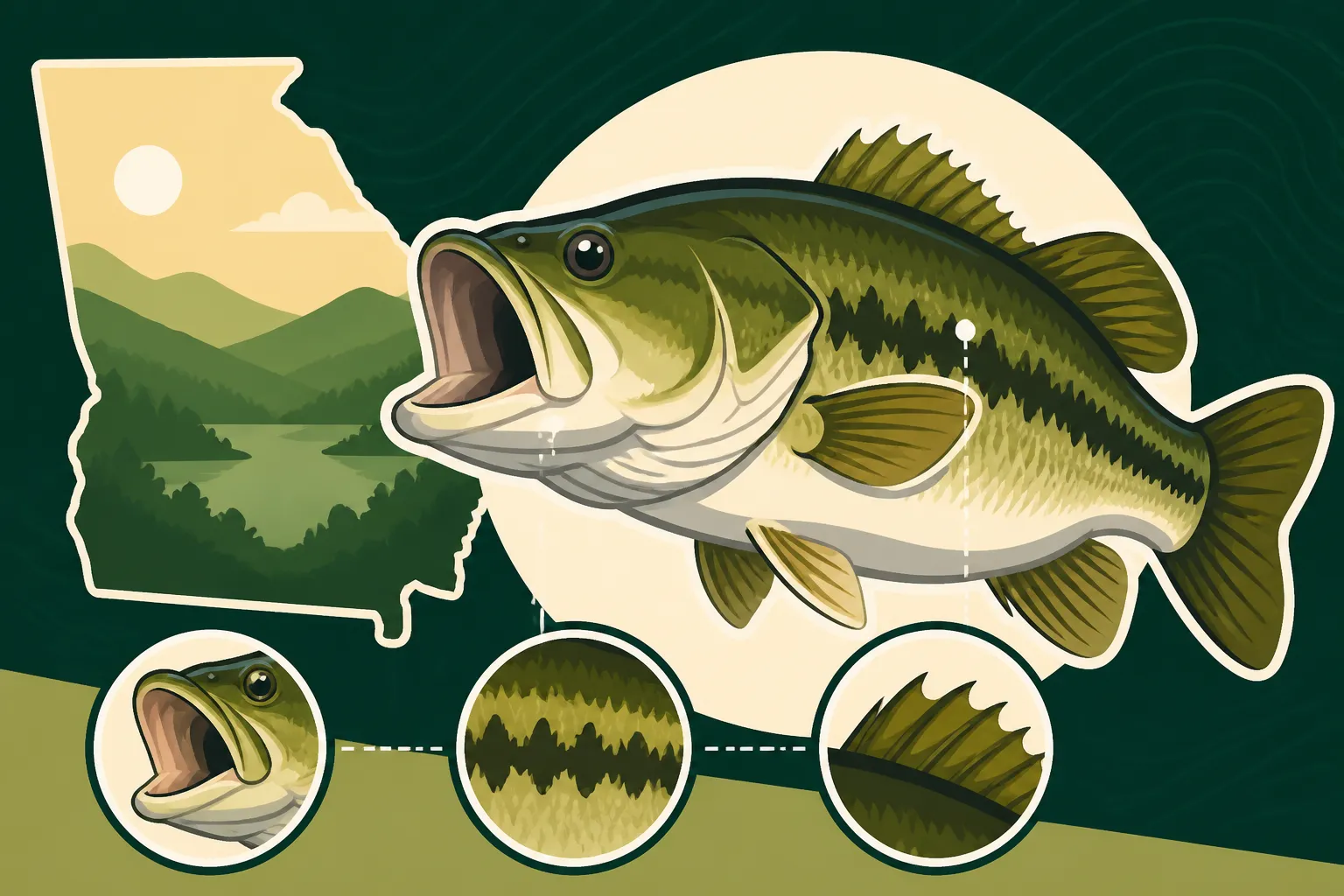
How to Identify a Georgia Largemouth Bass
It can be incredibly frustrating to reel in a beautiful bass, only to stare at it, scratching your head, wondering if it's a largemouth, a spotted bass, or even a shoal bass. These feisty fish can look so similar at first glance, especially when you're just learning the ropes or fishing a new body of water. But knowing exactly what you've caught isn't just about bragging rights; it's crucial for understanding regulations, ensuring you're within the legal limits, and truly appreciating the incredible diversity of our Georgia waters. This comprehensive guide is going to walk you through all the tell-tale signs to confidently identify a Georgia largemouth bass, ensuring you know your catch inside and out.
The Distinctive Anatomy of a Largemouth Bass
When you're trying to identify any fish, especially within the black bass family, it really pays to be a bit of a detective. The devil, as they say, is in the details, and with largemouth bass, there are a few anatomical features that stand out. These aren't just subtle hints; they're often the most reliable markers that set them apart from their cousins. Think of it as learning the secret handshake of the largemouth bass!
The Tell-Tale Jawline Test: Beyond the Eye
The most iconic and often cited characteristic of a largemouth bass is its mouth. Specifically, how far back its jaw extends. When you look at a largemouth, you'll notice that the corner of its mouth, or maxillary, extends well past the rear edge of its eye. This isn't just a little bit past; it's usually quite noticeably so. Picture an exaggerated grin that reaches all the way back. This is your primary diagnostic tool when you're holding a fish and trying to figure out what it is.
Imagine you've just landed a decent bass on Lake Lanier. You cradle it carefully, and the first thing you do is gently open its mouth a touch. You trace an imaginary line straight down from the back of its eye. If that jaw hinge goes behind that line, congratulations, you're almost certainly looking at a largemouth. This feature is consistent across all sizes, from a small "fry" largemouth to a true lunker. It's truly one of the simplest and most effective ways to tell you've got a largemouth on your hands, especially when compared to other species where the jaw is much shorter. If you want to dive deeper into the species you might encounter, check out our Georgia Fish Species: A Complete Guide to What's Swimming in Your Lakes.
The Lateral Line: A Series of Patches, Not a Solid Stripe
Another critical feature to examine is the lateral line, which is that horizontal line of specialized scales running along the side of most fish. For a largemouth bass, this line isn't a solid, uninterrupted band. Instead, it's typically a series of distinct, often somewhat broken or splotchy dark patches that form a horizontal stripe from the gill plate to the tail. It can sometimes appear continuous from a distance or in certain lighting, but upon closer inspection, you'll notice the individual, often diamond-shaped or irregular blotches that make it up.
This irregular lateral line is a key identifier. It's like a fingerprint for the largemouth. Sometimes, these blotches might even extend upwards or downwards, creating a somewhat mottled appearance above and below the main line. The intensity of these markings can vary significantly depending on the fish's environment and overall health, but the segmented nature is usually there. It’s a great piece of evidence to combine with the jawline test.
The Deep Notch in the Dorsal Fin
The dorsal fin, which is the fin on the fish's back, also provides a strong clue for identifying a largemouth bass. Largemouths have two distinct dorsal fins that are almost completely separated by a very deep notch. One part is spiny, and the other is soft-rayed. Think of it like a valley between two peaks. This deep separation is much more pronounced in a largemouth than in some other bass species, where the two dorsal fins might be connected by a lower membrane, appearing more as a single, continuous fin.
When you're looking at your catch, gently spread the dorsal fins. You'll see a clear, deep indentation that almost divides the fin into two halves. This isn't a mere dip; it's a significant break. This characteristic is particularly helpful when the fish might be stressed or its colors are faded, making other markings less clear. It's a structural detail that doesn't change with mood or habitat. It's just there.
Understanding Largemouth Body Shape and Coloration
Beyond the specific anatomical markers, the overall body shape and the myriad of colors a largemouth bass can display also play a significant role in identification. They're not just pretty faces; their form and hue tell a story about where they live and what makes them tick. Getting a feel for these broader traits can make you a more confident identifier on the water.
Classic Largemouth Build: Stocky and Deep-Bodied
When you picture a largemouth bass, you're probably envisioning a fish with a rather stout, robust, and laterally compressed (flattened side-to-side) body. They tend to be deeper-bodied than some of their river-dwelling cousins, giving them a more "chunky" or "football" appearance, especially as they grow larger. This stocky build is perfectly adapted for ambushing prey in thick cover, providing power for explosive strikes. The depth of their body contributes to their overall size and weight, making them feel substantial in your hands.
Think about a largemouth you've seen in pictures or perhaps caught yourself. They don't look sleek and torpedo-like; instead, they have a powerful, muscular appearance with a relatively high back. This body shape helps them navigate through submerged vegetation and timber, where they often hide and hunt. While individual fish can vary, especially based on their diet and age, the general tendency toward a deeper, more compressed body is a hallmark of the species. For more on how these fish develop, check out Largemouth Bass Size and Growth in Georgia Lakes.
Chameleon of the Waters: Environmental Color Changes
One of the most fascinating aspects of largemouth bass is their incredible ability to adapt their coloration to their surroundings. They are true chameleons of the water! A largemouth caught from a clear, rocky reservoir like Lake Burton might have a lighter, almost silvery-green hue with very distinct dark markings. In contrast, a largemouth from a dark, tannic stained pond with heavy vegetation in South Georgia could be almost black, with muted patterns that help it blend seamlessly into the shadowy waters. The dorsal side (top) is usually dark green to olive, fading to lighter green or gold on the sides, and a white or cream belly.
The intensity of the lateral stripe, the dark blotches, and even the overall brightness of the fish's skin can vary dramatically. Water clarity, bottom composition, vegetation density, and even the fish's mood can influence its color. A stressed fish might be very pale, while an aggressive fish in prime hunting mode might display incredibly vibrant and defined patterns. So, don't let a slightly different shade throw you off; always rely on those hard anatomical features first, and then consider coloration as a helpful, but variable, secondary clue.
Spotting the Difference: Largemouth vs. Other Georgia Bass
This is where things can get truly tricky for anglers in Georgia, as we are blessed with several species of black bass that call our waters home. It's easy to confuse them, and honestly, even experienced anglers sometimes do! But once you know what to look for, these distinctions become much clearer. Understanding these differences is absolutely essential, not just for proper identification, but also because regulations can vary significantly between species. If you're looking for an even broader perspective, check out Georgia's Native Bass Species: Largemouth, Spotted, and Shoal Bass.
The Perplexing Spotted Bass: Jaw and Tongue Patches
The spotted bass is probably the most commonly confused species with the largemouth in Georgia. They share many similarities, but there are critical differences. Remember that jaw test for the largemouth? For a spotted bass, the corner of its mouth does not extend past the back of its eye. It typically aligns with or falls slightly short of the back of the eye. This is your number one differentiator. Beyond the jaw, feel for a patch of small teeth on the spotted bass's tongue. Run your finger gently across the center of its tongue; if it feels rough like sandpaper, it's a spotted bass. A largemouth's tongue will be smooth.
Furthermore, spotted bass often have more distinct, regular rows of dark spots below their lateral line, which give them their name. While largemouths might have some faint blotches, spotted bass's spots are usually much clearer. Their body shape also tends to be a bit more streamlined than a largemouth, lacking that characteristic deep body. Knowing these distinctions is vital, especially since Largemouth Bass vs Spotted Bass: How to Tell Them Apart in Georgia is a common challenge for anglers.
The Elusive Shoal Bass: Streamlined and River-Ready
Shoal bass are true river fish, and while they are a black bass, they look quite different from largemouths once you know what to observe. Like spotted bass, their jaw typically does not extend past the rear margin of the eye. Their body is much more torpedo-shaped and streamlined, perfectly built for fighting strong river currents. They also tend to have very prominent vertical bars or tiger stripes along their sides, which are usually much more distinct and dark than any markings you'd see on a largemouth.
You'll also notice a general lack of the deep, stocky body of a largemouth. Shoal bass are built for speed and agility in moving water, not for hiding in dense vegetation. They also have a tongue patch of teeth, similar to a spotted bass. If you're fishing on a river like the Flint or Chattahoochee, and you catch a bass with tiger stripes and a streamlined body, you're likely looking at a shoal bass. These fish are a true gem of our river systems, and you can learn even more about them in Shoal Bass: Georgia's River-Specialist Black Bass.
Briefly Mentioning Smallmouth Bass's Absence in Most Georgia Waters
While smallmouth bass are a fantastic sport fish found in many parts of the country, they are generally not a common species in most of Georgia's major fishing waters. There are some very limited populations in certain cold-water mountain streams, typically in the extreme northern parts of the state, but you are highly unlikely to encounter one in the big reservoirs or warm-water rivers where largemouth, spotted, and shoal bass thrive.
Smallmouth bass, when found, are easily identified by their bronze-brown coloration, vertical bars or blotches (not a horizontal stripe), and a jaw that never extends beyond the eye. They also have a very shallow notch in their dorsal fin, making it appear more continuous than a largemouth's. So, while it's good to know they exist, for the vast majority of Georgia anglers, differentiating between largemouth, spotted, and shoal bass will be your primary identification challenge. You can find a comprehensive comparison of these species in Bass Species Compared: Largemouth vs Spotted vs Shoal in Georgia.
Where Largemouth Bass Live and How It Affects Them
Understanding the preferred habitat of the largemouth bass can provide another layer of identification clues. Fish are products of their environment, and where they live often influences their behavior, size, and even subtle aspects of their appearance. Knowing what kind of water you're fishing can sometimes give you a strong hint about what type of bass you're likely to encounter.
Preferred Haunts: Weeds, Wood, and Warm Water
Largemouth bass are kings of cover. They absolutely love dense aquatic vegetation, submerged timber, brush piles, docks, and any other structure that provides them with an ambush point and protection. They are warm-water fish, thriving in temperatures that might send trout running for cooler springs. You'll find them in lakes, ponds, slow-moving rivers, and backwater sloughs throughout Georgia, from the vast reservoirs like Lake Oconee and Lake Seminole to countless farm ponds.
Their affinity for heavy cover means they often develop that deeper, stockier body shape discussed earlier, perfectly suited for maneuvering through dense weeds or around sunken trees. When you're fishing a thick lily pad field or pitching a jig into a brush pile, you're in prime largemouth territory. If you're looking for the best places to target these fish, our guide to Best Georgia Lakes for Largemouth Bass is an excellent resource. This habitat preference helps distinguish them from, say, shoal bass, which are more common in faster, rocky river currents.
How Environment Affects Appearance
The largemouth's environment doesn't just dictate its preferred hangouts; it can subtly influence its appearance. Fish from very clear, sandy-bottomed lakes might be lighter in color, with more pronounced lateral line blotches, making them almost camouflaged against the bright background. Conversely, bass living in murky, muddy water or heavily vegetated areas with dark bottoms tend to be much darker, sometimes almost black, with less defined patterns, blending into the shadows.
Even the fish's overall health and diet, which are directly tied to its environment, can affect its appearance. A well-fed largemouth from a fertile lake will likely be robust and deep-bodied, while a fish from a less productive system might be leaner. These environmental factors explain why a largemouth caught from a small pond near Valdosta might look quite different in overall hue from one caught in the foothills of the Appalachian Mountains. Always remember to consider the "home" of the fish when evaluating its colors and patterns.
Why Knowing Your Bass Matters: Regulations and Respect
Beyond the satisfaction of correctly identifying your catch, there are very real and important reasons why accurate bass identification is crucial for every angler in Georgia. It’s not just about what kind of fish you have; it’s about how you interact with the fishery, comply with the law, and contribute to conservation.
Navigating Georgia's Diverse Fishing Regulations
Georgia has a fantastic and diverse fishery, but with that diversity comes a set of regulations that can vary depending on the species and even the specific body of water. For instance, the size and creel limits for largemouth bass might be different from those for spotted bass or shoal bass, especially in certain lakes or rivers. You absolutely need to know which species you’ve caught to ensure you’re adhering to the legal requirements. Unintentional violations can lead to fines and penalties, and nobody wants that.
Imagine you're fishing a reservoir that has a 14-inch minimum size limit for largemouth bass but no minimum for spotted bass. If you catch a 13-inch bass, thinking it's a spotted bass when it's actually a largemouth, and you keep it, you're breaking the law. This is a common scenario where correct identification prevents problems. It's always best to carry a copy of the current fishing regulations or have them readily accessible on your phone, and be familiar with them for the specific waters you're fishing. Being prepared and informed about Georgia Fishing Regulations Explained can save you a lot of grief.
Protecting Our Fisheries: Conservation Through Identification
Every angler has a responsibility to help conserve our natural resources. Knowing how to identify different bass species plays a direct role in these conservation efforts. By correctly identifying and, when necessary, releasing fish that don't meet specific regulations or those that are part of a targeted conservation effort, you contribute to the sustainability of the fishery. Catch-and-release practices, especially for larger breeding fish, are vital for maintaining healthy populations.
For example, some rivers have very specific limits on shoal bass to protect their unique populations. If you mistakenly identify a shoal bass as a largemouth and keep it, you might be impacting a more vulnerable species. Accurate identification also helps wildlife agencies monitor fish populations more effectively. When anglers report their catches accurately, it provides valuable data that can inform stocking programs, habitat management, and future regulation changes. It’s all part of being a responsible steward of Georgia’s beautiful outdoors. Understanding Statewide Largemouth Bass Size Limits in Georgia is a good start.
Tools and Techniques for Accurate On-the-Water Identification
Even with all the knowledge in your head, sometimes a fish will just throw you for a loop! That's why having a few practical tools and techniques up your sleeve for on-the-water identification can be a real game-changer. These aren't just for beginners; even seasoned pros sometimes need a quick double-check.
Quick Field Checks and Memory Aids
When you've just landed a fish and you're in the moment, you need quick, repeatable checks. The jawline test is your fastest friend. As soon as you unhook the fish, gently open its mouth and check if the corner of the jaw extends past the eye. Next, feel the tongue for that rough patch of teeth (absent on largemouth). Then, quickly glance at the dorsal fin for the deep notch. These three steps, performed in rapid succession, will give you a very high degree of accuracy.
It can also be helpful to create a mental checklist or even a small laminated card with these key identification points. Some anglers even keep a short measuring tape (you can find affordable ones on Amazon) with key species lengths marked, not just for regulations, but as a visual reference for how big typical fish of each species tend to be. Repetition is key here; the more you practice these quick checks, the more ingrained they'll become, and the faster you'll be able to identify your catch.
Photography and Reference Guides
In today's world, your smartphone can be an incredibly powerful identification tool. If you're unsure, snap a few clear photos of the fish, focusing on the jaw, the lateral line, and the dorsal fin. Make sure to get shots from different angles. You can then compare these photos to online guides or a physical fish identification book. There are many excellent, compact field guides available that can fit right into your tackle box or boat console. A good waterproof guide from a reputable publisher can be a real lifesaver.
Many apps are also available that can help with fish identification, often using image recognition. While these aren't always 100% accurate, they can provide a good starting point. Just remember that no app replaces hands-on observation and knowing the key physical characteristics. When in doubt, take those pictures, release the fish if you're not planning to keep it, and consult your resources. Having a small, portable guide (you can often find a great selection on Amazon) can be incredibly reassuring when you're faced with an unfamiliar catch. Our general Largemouth Bass Fishing in Georgia: The Complete Species Guide can also be a helpful tool.
Bass Identification Features Comparison Table
To help bring all these points together, here's a quick comparison table summarizing the key identification features for the largemouth bass, compared to its most commonly confused cousins in Georgia: the spotted bass and the shoal bass. This table is a great quick-reference guide to keep in mind when you're on the water.
| Feature | Largemouth Bass | Spotted Bass | Shoal Bass |
|---|---|---|---|
| Maxillary (Jaw) | Extends noticeably past the rear of the eye | Does not extend past the rear of the eye | Does not extend past the rear of the eye |
| Tongue Patch | Smooth | Rough patch of teeth present | Rough patch of teeth present |
| Lateral Line | Series of distinct, often broken, dark blotches | More continuous row of clear, distinct spots | Distinct vertical bars/tiger stripes; less spotty |
| Dorsal Fin Notch | Very deep notch, almost two separate fins | Moderate notch, fins more connected | Moderate notch, fins more connected |
| Body Shape | Stocky, deep-bodied, laterally compressed | More streamlined than largemouth, less deep | Very streamlined, torpedo-shaped |
| General Habitat | Weeds, timber, warm still/slow-moving water | Clear lakes, moderate currents, often deeper | Fast-moving rivers, rocky shoals |
Remember, mastering fish identification takes practice, but with these key features in mind, you’ll be able to confidently identify that Georgia largemouth bass every time!
Disclaimer
This article is for general informational purposes only and does not constitute professional advice. Laws, prices and regulations vary by location and change over time. Consult a qualified professional for guidance on your specific situation.