Largemouth Bass Fishing in Georgia: The Complete Species Guide
Georgia's expansive waterways hold some truly incredible fishing opportunities, but for many anglers, consistently hooking into those elusive largemouth bass – especially the trophy-sized giants – can feel like a perpetual mystery. It's easy to get frustrated when you see others pulling in big fish while your own efforts seem to fall short. This comprehensive guide will aim to unravel the secrets of largemouth bass fishing in Georgia, meticulously covering everything from accurate identification and preferred habitat to the most effective techniques, seasonal patterns, and essential gear, helping you to not only understand these powerful fish but also become a significantly more successful and confident bass angler on our home waters.
Understanding the Largemouth Bass: Georgia's Prized Game Fish
The largemouth bass (scientific name: Micropterus salmoides) holds a special place in the hearts of Georgia anglers, and indeed, across North America. It's not just a fish; it's an icon, renowned for its aggressive strikes, powerful fights, and often, its impressive size. In Georgia, the largemouth isn't just a popular target; it's a critical part of our aquatic ecosystems and a driving force behind our vibrant recreational fishing scene. Understanding this species is the first step to consistently catching them.
What Makes a Largemouth a Largemouth? Identification
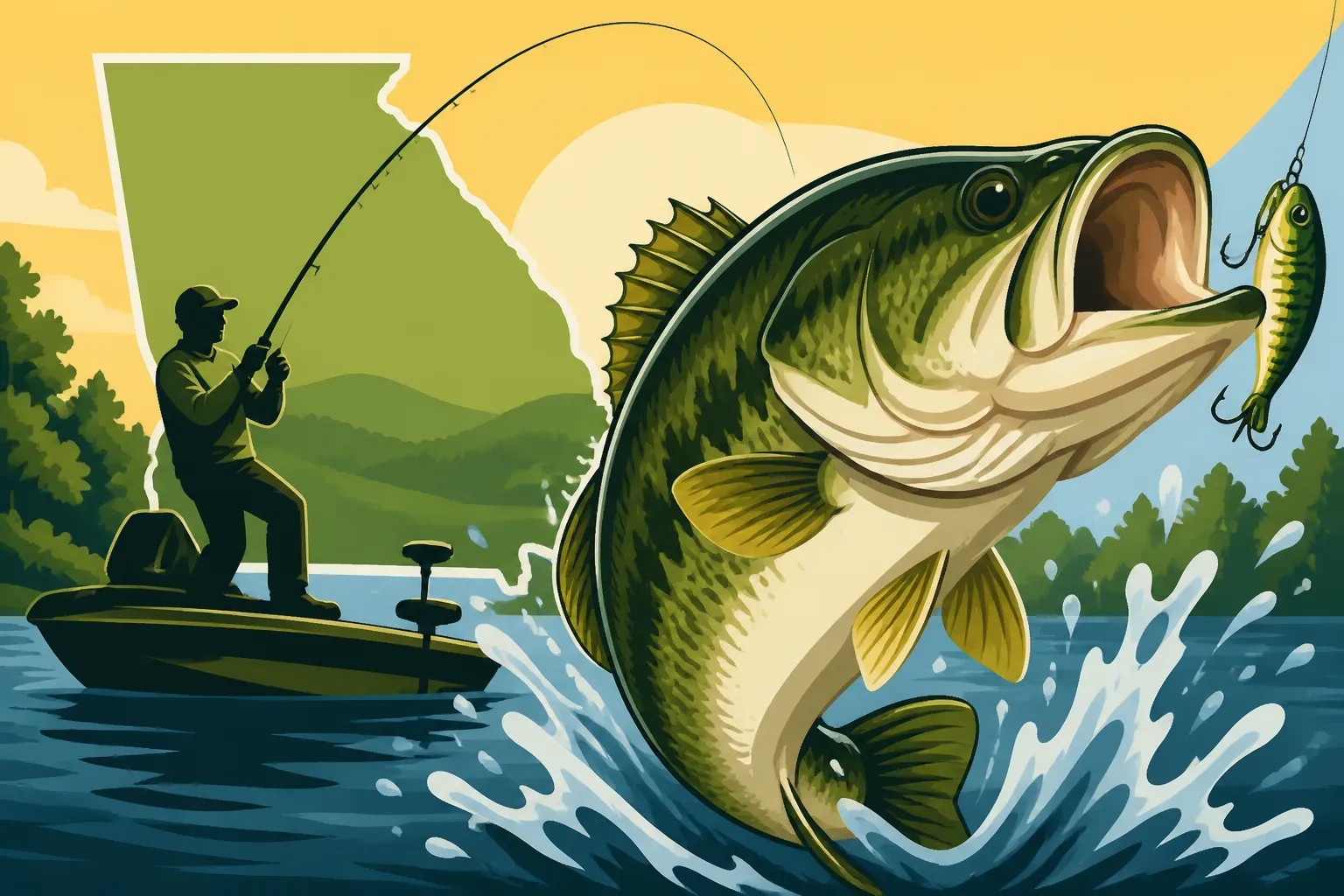
When you're out on the water, especially in Georgia where you might encounter other black bass species like spotted bass or even shoal bass, knowing how to correctly identify a largemouth is incredibly important. The most defining characteristic, as its name suggests, is its mouth. If you hold the fish horizontally, the corner of the mouth extends past the rear edge of its eye. This is the clearest visual cue. Compare this to a spotted bass, where the jaw typically doesn't extend beyond the eye. For more detailed identification, you might be interested in our guide on Largemouth Bass vs Spotted Bass: How to Tell Them Apart in Georgia.
Beyond the mouth, largemouth bass typically have a distinctive dark, horizontal stripe or a series of blotches running along their flanks, which can sometimes appear as a broken, irregular band. Their body color can vary greatly depending on the water clarity and habitat – from bright green in clear, vegetated lakes to a darker, almost blackish-green in murky, tannin-stained rivers. They usually have a deeply notched dorsal fin, appearing almost like two separate fins. Their scales are typically larger and more prominent than those of a spotted bass, offering another subtle clue for identification. Being able to quickly and accurately identify your catch is crucial for adhering to local regulations and ensuring you're targeting the right species.
The Largemouth's Natural Habitat in Georgia
Largemouth bass are incredibly adaptable fish, which is one of the reasons they thrive across such a diverse range of water bodies in Georgia. They are masters of ambush, preferring areas where they can hide and dart out to intercept prey. This usually means they're drawn to structure and cover – anything that provides shade, concealment, or a break in current. Think about it: a submerged tree, a thick bed of hydrilla, a rocky point, a dock, or even a sudden drop-off. These are all prime locations where a largemouth will set up shop, waiting for an unsuspecting baitfish or crawfish to swim by.
In Georgia, you'll find largemouth bass in almost every type of freshwater environment. Our massive impoundments like Lake Lanier, Lake Oconee, and West Point Lake are famous for their populations, offering vast expanses of deep and shallow water, numerous coves, and varying forms of structure. Rivers, too, like the Ocmulgee or Flint, hold robust populations, especially in slower-moving sections, oxbows, and around log jams. Even smaller ponds and farm lakes scattered across the state can be absolute goldmines, often harboring surprisingly large bass due to less fishing pressure and abundant forage. Their preference for these diverse environments means anglers have a multitude of options when it comes to finding their next trophy.
Largemouth Bass Behavior and Seasonal Patterns
Understanding the behavior of largemouth bass throughout the year is perhaps the most critical component of becoming a consistently successful angler. These fish are highly influenced by environmental factors, particularly water temperature, daylight hours, and available forage. Their entire life cycle, from feeding habits to spawning, revolves around these external cues. Ignoring these patterns is like trying to navigate without a compass – you might get lucky, but you're probably going to be lost more often than not.
During the spring, as water temperatures rise, bass move from their deeper winter haunts into shallower waters for the pre-spawn and spawning phases. This is often when they are most aggressive and concentrated, making them easier targets. Post-spawn, they might be a bit lethargic but soon resume feeding heavily to recover. Summer sees them move to deeper, cooler water during the day, often relating to thermoclines or deep cover, only to push shallow again at dawn and dusk to feed. Fall is a fantastic time, as cooling water temperatures trigger a major feeding binge as they fatten up for winter. And in winter, while their metabolism slows, they can still be caught, often tightly grouped in deeper structure. Our comprehensive guide on Seasonal Bass Fishing Patterns in Georgia delves much deeper into these fascinating annual cycles, providing invaluable insights for planning your trips.
Where to Find Largemouth Bass in Georgia
Georgia is truly a bass angler's paradise, offering an incredibly diverse range of fishing environments, from vast reservoirs to meandering rivers and tranquil ponds. Knowing where to start looking for largemouth bass is half the battle, and luckily, the state is teeming with prime locations. It's not just about showing up at a popular lake; it's about understanding the nuances of different bodies of water and how bass relate to their specific features.
Top Lakes for Trophy Largemouth in Georgia
When it comes to pursuing trophy largemouth bass, Georgia's major reservoirs are legendary. These large impoundments offer the perfect combination of abundant forage, varied structure, and the sheer volume of water needed for bass to grow to impressive sizes. Lakes like Lanier, Oconee, Sinclair, Hartwell, and West Point are consistently producing big fish and are often featured in national fishing publications. For example, Lake Lanier Fishing Guide, Georgia provides a deep dive into one of our most popular bass destinations.
Each of these lakes has its own unique character and challenges. Lake Lanier, for instance, is a deep, clear impoundment in North Georgia known for its massive schools of baitfish and extensive timber. Lake Oconee, on the other hand, is a shallower, fertile lake in the central part of the state, famous for its hydrilla beds and man-made structures. Anglers who consistently catch big bass on these waters spend time understanding the specific contours, forage base, and seasonal movements of fish within each individual lake. It's not a one-size-fits-all approach; what works on Lake Sinclair might not be as effective on Clarks Hill. Understanding these differences, coupled with local knowledge, is key to success on these big waters.
River Systems and Their Bass Populations
While lakes often get the most attention, Georgia's extensive river systems are absolute treasures for largemouth bass fishing, offering a different kind of angling experience. Rivers like the Flint, Ocmulgee, Altamaha, and portions of the Chattahoochee hold robust populations of largemouth, often alongside their river-dwelling cousins like the shoal bass and spotted bass. River bass tend to be leaner and incredibly powerful due to constantly fighting current, making for exhilarating battles.
Fishing rivers requires a slightly different approach than lake fishing. Current becomes a major factor, and bass will orient themselves to minimize energy expenditure while maximizing ambush opportunities. Look for largemouth in eddies, behind log jams, in deep holes, along cut banks, and near feeder creeks where slower water provides refuge. They are also masters at using submerged rock piles and fallen trees as current breaks. Kayak or small boat fishing is often ideal for navigating these waters, allowing access to stretches that are difficult to reach from the bank. The challenge and reward of river fishing are immense, offering a more wild and often less pressured environment compared to some of the busier lakes.
Public Fishing Areas (PFAs) and Ponds
For anglers seeking a more accessible or family-friendly experience, or those without a boat, Georgia's Public Fishing Areas (PFAs) and countless smaller ponds are fantastic options for largemouth bass. The Georgia Department of Natural Resources manages over a dozen PFAs across the state, specifically designed to provide quality fishing opportunities. These areas are often well-maintained, offer amenities like boat ramps, fishing piers, and sometimes even rental boats, and are regularly managed for fish populations.
PFAs and smaller ponds often provide an excellent learning environment, as they can be less intimidating than massive reservoirs. Bass in these smaller, more confined waters are often easier to locate, though they can also be highly pressured. Look for obvious cover such as lily pads, standing timber, or brush piles. Many of these ponds are stocked and managed for healthy bass populations. Remember that even small neighborhood ponds can hold surprisingly large bass, especially if they are well-managed and have a good forage base. These spots are perfect for honing your skills, trying new techniques, or simply enjoying a relaxing day of bank fishing with the family.
Essential Gear for Largemouth Bass Fishing
Stepping into the world of largemouth bass fishing can feel overwhelming when you look at the sheer volume of gear available. Tackle shops and online retailers like Amazon are brimming with options, from rods and reels designed for specific techniques to an endless array of lures. But you don't need every single item on the shelf to be successful. The key is to understand the purpose of each piece of equipment and build a versatile arsenal that suits the conditions you'll be fishing in here in Georgia.
Rods, Reels, and Line Selection
Choosing the right rod and reel combo is fundamental to effective bass fishing. For largemouth, most anglers will opt for either baitcasting or spinning gear, or a combination of both. Baitcasting setups are generally preferred for heavier lures, thicker line, and techniques requiring accuracy and power, like flipping jigs into dense cover or throwing large crankbaits. Spinning gear, on the other hand, excels with lighter lures, smaller lines, and finesse presentations, making it ideal for skipping wacky rigs under docks or working a small shaky head. A medium-heavy power, fast-action baitcasting rod (around 7 feet long) and a medium power, fast-action spinning rod (around 6'6" to 7 feet) will cover a vast majority of bass fishing scenarios in Georgia. For more in-depth advice, check out Best Rods and Reels for Georgia Largemouth Bass.
Line selection is equally critical. Monofilament, fluorocarbon, and braided lines each have their distinct advantages. Monofilament is forgiving, has good knot strength, and floats, making it suitable for topwater lures. Fluorocarbon is nearly invisible underwater, sinks, and offers excellent sensitivity, making it a top choice for Texas rigs, drop shots, and crankbaits. Braided line has incredible strength, no stretch, and is fantastic for fishing heavy cover or punching through mats of vegetation. Often, anglers will combine lines, using braided mainline with a fluorocarbon leader for a stealthy yet strong setup. Matching your line to your technique, lure, and the cover you're fishing is paramount to success. Don't be afraid to have multiple reels spooled with different line types or strengths to quickly adapt to changing conditions.
Lure and Bait Arsenal for Georgia Bass
The world of bass lures is vast and exciting, and knowing which ones to tie on can be daunting. However, most successful bass anglers rely on a core set of lure categories that consistently produce fish in various conditions. Soft plastics like Texas-rigged worms, Senkos, and creature baits are incredibly versatile and can mimic crawfish or baitfish effectively. Crankbaits, both shallow and deep-diving, are excellent for covering water and triggering reaction strikes, especially when bass are actively feeding. Spinnerbaits and chatterbaits are workhorses for covering shallow to medium depths, particularly around vegetation or wood. Jigs, especially football jigs and flipping jigs, are essential for targeting bass around specific cover and structure.
Topwater lures like poppers, walking baits, and frogs provide some of the most exciting bites, especially during low light conditions or when bass are feeding actively near the surface. The key isn't to own every single lure, but rather to have a selection within each category that you have confidence in. Consider colors that mimic common Georgia forage like shad, bluegill, or crawfish, and always have some natural colors (greens, browns) and some brighter "attractor" colors (chartreuse, white). Experimentation is part of the fun, but starting with these proven categories will put you in a strong position.
| Lure Type | Best Season | Primary Technique | Common Target Depth | Notes |
|---|---|---|---|---|
| Plastic Worm | All Year | Texas Rig, Carolina Rig, Wacky | Shallow to Deep | Versatile, mimics worms/eels, great for slow presentations. |
| Crankbait | Spring, Fall | Cranking, Deflecting | Shallow to Deep | Covers water quickly, triggers reaction strikes, good for imitating baitfish. |
| Spinnerbait | Spring, Fall | Slow rolling, Ripping | Shallow to Mid | Excellent for covering water around cover, good vibration and flash. |
| Jig | All Year | Flipping, Pitching, Dragging | Shallow to Deep | Mimics crawfish, great for heavy cover, slow presentations, big fish. |
| Topwater | Summer, Spring | Popping, Walking, Frogging | Surface | Exciting strikes, best in low light or calm conditions, ideal over vegetation. |
| Swimbait | All Year | Slow retrieve, Jigging | Mid to Deep | Realistic baitfish imitation, effective for larger, less active fish. |
| Bladed Jig (Chatterbait) | Spring, Fall, Summer | Steady retrieve, Rip-pause | Shallow to Mid | High vibration, good flash, effective around grass and wood, versatile. |
Terminal Tackle and Accessories
Beyond rods, reels, and lures, a well-organized tackle box or bag of terminal tackle and accessories can make or break a fishing trip. Hooks are paramount – ensure you have a variety of sizes and styles (e.g., worm hooks, treble hooks, jig heads) to match your lures and bait. Weights, such as bullet weights for Texas rigs or drop shot weights, are crucial for getting your bait to the desired depth and through cover. Swivels and snaps can help prevent line twist and allow for quick lure changes, although many bass anglers prefer to tie directly to the lure for maximum sensitivity and strength.
Other essential accessories include pliers for hook removal, line cutters (a good pair of braid scissors is a game-changer), a fishing scale and measuring tape for weighing and documenting your catches (especially important for Georgia Fish Size and Creel Limits), a good pair of polarized sunglasses to help spot fish and structure underwater, and a reliable headlamp for early morning or late evening fishing. Don't forget a first-aid kit, insect repellent, and plenty of hydration. Having these small but vital items readily accessible will save you time and frustration on the water, allowing you to focus on what you're there to do: catch bass. For instance, a reliable pair of fishing pliers is often easily found on Amazon.
Master the Techniques: Catching Largemouth Bass Year-Round
Understanding how to fish for largemouth bass is where the real art of angling comes into play. It's not just about having the right gear; it's about knowing when and how to present your lures effectively, adapting to the bass's mood and location. Throughout the year, bass patterns shift dramatically with the seasons, requiring anglers to adjust their strategies accordingly. A successful bass angler in Georgia is a versatile angler.
Spring: The Spawn and Post-Spawn Blitz
Spring is arguably the most anticipated season for bass anglers in Georgia, heralded by rising water temperatures that kickstart the bass's annual migration from deeper waters to the shallows. This period is broadly divided into pre-spawn, spawn, and post-spawn, each demanding distinct approaches. During pre-spawn, as water temperatures climb into the 50s and low 60s, bass are hungry and aggressive, gorging themselves to build energy for the rigors of spawning. They'll often stage on points, humps, and secondary breaks leading into spawning coves. This is a prime time for throwing lipless crankbaits, spinnerbaits, and medium-diving crankbaits to cover water quickly and locate active fish. Jigs and Texas-rigged plastics are also highly effective when bass are holding tighter to cover. You can learn more about this critical time of year in our guide on Spring Bass Spawn Timing on Georgia's Lakes.
As water temperatures hit the mid-60s, the spawn begins. Largemouth bass move onto shallow flats, protected coves, and pockets to build their nests (beds). While some anglers enjoy sight fishing for bedding bass, many prefer to leave them undisturbed to ensure successful reproduction. Bass guarding beds can be defensive, striking at anything that approaches. Soft plastics like lizards, tubes, or senkos twitched near the bed can often provoke a strike. Post-spawn, the bass are recovering, often retreating to slightly deeper cover near the spawning areas, but they soon resume feeding heavily. Topwater baits, swim jigs, and shaky heads can be incredibly productive during this phase as bass regain their energy and become more active.
Summer: Deep Water and Topwater Action
Summer in Georgia brings long, hot days, and this drastically changes how and where largemouth bass behave. As water temperatures soar, especially in the shallower areas, bass will often seek refuge in deeper, cooler water. They'll relate to structure like submerged humps, deep points, ledges, and the thermocline (the layer where water temperature changes rapidly) in our larger reservoirs. During the brightest parts of the day, anglers often turn to deep-diving crankbaits, drop shots, football jigs, and heavy Carolina rigs to target these deeper fish. Electronics, such as fish finders and side-imaging, become invaluable tools for locating these offshore schools.
However, summer also offers some of the most exciting surface action. During low-light periods – dawn, dusk, and even into the night – bass will push up into shallower water to feed on baitfish and insects. This is prime time for topwater lures. Walking baits, poppers, hollow-body frogs fished over mats of lily pads or hydrilla, and buzzing toad baits can produce explosive strikes that will get your heart pounding. Night fishing, especially for larger bass and catfish, can also be highly productive in the summer, as the cooler air and water temperatures bring fish out of their deep-water sanctuaries. Consider experimenting with these techniques in various parts of the lake for maximum success.
Fall: Feeding Frenzy and Preparation for Winter
As autumn arrives and cooler air temperatures begin to drop the water temperature, largemouth bass in Georgia enter a "feeding frenzy." This is a fantastic time to be on the water, as bass are actively trying to fatten up for the leaner winter months. They become very aggressive and predictable, often following schools of baitfish into shallower creeks, coves, and main lake points. The cooling water triggers their metabolism, making them more willing to chase and strike a variety of lures.
During the fall, anglers can have success with a wide array of baits. Crankbaits, both shallow and medium-diving, are excellent for covering water and mimicking baitfish. Spinnerbaits and bladed jigs are also highly effective around cover like docks and fallen trees. Topwater action can still be good, especially on warmer days, as bass herd baitfish to the surface. As the fall progresses and water temperatures continue to drop, bass may start to transition towards deeper structure, similar to their winter patterns, but they remain much more active than in the coldest months. This is truly a season of abundance for the dedicated bass angler.
Winter: Slow and Steady Tactics
Winter fishing for largemouth bass in Georgia can be challenging, but also incredibly rewarding for those who are patient and willing to adapt. As water temperatures dip into the 40s and low 50s, the bass's metabolism slows significantly. They become less active, their feeding windows are shorter, and they tend to congregate in deeper, more stable water where temperatures are slightly warmer. Look for them on deep creek channel bends, main lake points that drop into deep water, and around standing timber or rock piles in 20-40 feet of water, sometimes even deeper depending on the lake.
The key to winter bass fishing is a slow, methodical approach. Finesse techniques shine during this time. Drop shots, shaky heads, small jigs, and slowly retrieved suspending jerkbaits are often the most productive. The retrieve should be agonizingly slow, mimicking a lethargic or dying baitfish. Small swimbait presentations can also be effective. The bites might be subtle – a slight tick, a mushy feeling, or just added weight on your line – so pay close attention. While you might not catch as many fish as in the spring or fall, the bass you do catch in winter are often larger, healthier specimens that have survived the colder months, making the effort worthwhile.
Largemouth Bass Regulations and Conservation in Georgia
Being a responsible angler means not only understanding how to catch fish but also adhering to the rules and doing your part to conserve the resource for future generations. Georgia has specific regulations in place for largemouth bass, and knowing these limits and best practices is essential for legal and ethical fishing. Ignoring these rules can lead to significant penalties, and more importantly, it can negatively impact our precious fisheries. You can find comprehensive details in our Georgia Fishing Regulations Explained guide.
Size and Creel Limits: What You Need to Know
For largemouth bass in Georgia, there is a statewide daily creel limit (the number of fish you can keep) of 10 fish. However, the critical detail to remember is the statewide length limit: there is generally no minimum length limit for largemouth bass caught in most public waters across Georgia. This means that if you catch a bass, regardless of its size, it counts towards your 10-fish limit. This "no minimum" rule is designed to encourage anglers to harvest smaller, more abundant bass, which can help reduce competition and allow the remaining bass to grow larger.
It is absolutely crucial, however, to be aware that many specific lakes and reservoirs in Georgia have special regulations that supersede the statewide rule. For example, some lakes might have a 14-inch minimum length limit for largemouth bass, or even protective slot limits where bass within a certain size range must be released. These special regulations are put in place by the Georgia Department of Natural Resources (DNR) to manage fisheries for specific goals, often to grow larger fish or to address unique population dynamics. Always check the current Georgia Sport Fishing Regulations book or the DNR website for the specific rules pertaining to the body of water you plan to fish before you cast a line. For instance, you should be aware of the Statewide Largemouth Bass Size Limits in Georgia and any regional variations.
Catch and Release Best Practices
While harvesting some largemouth bass is perfectly acceptable and often encouraged for population management, many anglers practice catch and release, especially for larger, trophy-sized fish. Releasing these fish ensures they can continue to grow and contribute to future spawning cycles, maintaining a healthy fishery. However, proper catch and release techniques are paramount to the fish's survival. Simply tossing a fish back isn't enough; thoughtful handling significantly increases its chances.
When you catch a bass you intend to release, try to minimize its time out of the water. Handle the fish gently with wet hands to avoid removing its protective slime coat. Use de-hooking tools or pliers to remove hooks quickly and cleanly. If the fish is deeply hooked, especially in the gills, it might be best to cut the line as close to the hook as possible rather than tearing vital organs. Support the fish horizontally, never vertically by the jaw alone, as this can damage its spine and internal organs. If the fish appears stressed or is slow to swim off, gently hold it in the water, facing into any current, until it regains its strength and can swim away on its own. These small actions make a big difference in conservation efforts.
The Importance of Habitat Preservation
Beyond individual catch and release practices, the long-term health of Georgia's largemouth bass populations relies heavily on habitat preservation and responsible environmental stewardship. Bass, like all aquatic life, depend on clean water, healthy shorelines, and diverse underwater structures for spawning, feeding, and protection. Pollution, erosion, and habitat destruction can severely impact fish populations and the overall quality of our fishing experiences.
Anglers have a vital role to play in this. Always pack out what you pack in, ensuring no trash is left behind on shorelines or in the water. Avoid introducing invasive species, either intentionally or accidentally (e.g., by releasing live bait from one body of water into another). Support organizations and initiatives that work to protect and restore aquatic habitats in Georgia. By being mindful of our impact on the environment and advocating for clean water, we ensure that Georgia's largemouth bass fisheries remain vibrant and productive for generations of anglers to enjoy. It's a collective responsibility that yields incredible rewards.
Advanced Tips and Tricks for Big Bass
While mastering the basics of largemouth bass fishing will get you many bites, consistently landing those true trophy-class fish often requires a deeper understanding and application of more advanced strategies. These aren't necessarily complicated, but they involve paying closer attention to subtle details and thinking beyond the obvious. For many seasoned anglers, this is where the true challenge and satisfaction of bass fishing lie.
Reading the Water and Interpreting Structure
One of the most valuable skills a bass angler can develop is the ability to "read the water." This means more than just looking for obvious signs of fish activity; it involves understanding how currents, wind, sunlight, and underwater topography influence where bass will be and how they'll behave. For instance, understanding how a strong wind can push baitfish into a specific cove, or how a sunny day will drive bass deep into heavy cover, allows you to anticipate their movements. Pay attention to changes in water color, the presence of baitfish, or the subtle ripples on the surface that might indicate hidden submerged structure.
Interpreting structure takes this a step further. Bass are inherently structure-oriented, using cover for ambush points, shade, and protection. Structure can be natural, like submerged rock piles, humps, creek channel bends, ledges, or standing timber. It can also be man-made, such as docks, bridge pilings, or rip-rap. The key is to not just find the structure but to understand how the bass are relating to it. Are they on top of a hump, along the edge, or tucked into the deepest part of a brush pile? A good fish finder can be invaluable here, helping you map out contours and locate subtle differences on the bottom that might hold fish. For some anglers, this becomes an obsession, like a treasure hunt, piecing together the underwater puzzle.
Understanding Forage and Matching the Hatch
Largemouth bass are opportunistic predators, but they are also incredibly efficient. They will naturally gravitate towards areas with abundant forage, and they often develop a preference for certain prey items. Understanding what the bass are eating in a particular body of water at a particular time of year is a game-changer. Is it threadfin shad? Gizzard shad? Bluegill? Crawfish? Frogs? Once you identify the primary forage, you can then "match the hatch" by selecting lures that mimic the size, shape, color, and action of that prey.
This isn't just about throwing a shad-colored crankbait when shad are present. It's about paying attention to details: are the shad schooling near the surface, or are they holding deep? Are the crawfish active on the bottom, or are they molting and vulnerable? If bass are feeding on small bluegill, a squarebill crankbait or a bluegill-patterned swimbait might be more effective than a traditional worm. Sometimes, a "reaction strike" bait that doesn't perfectly match the forage can still trigger a bite, but often, a realistic imitation is key. Keep an eye out for regurgitated baitfish in your livewell, or watch for fish actively feeding on the surface, as these are direct clues about what's on the menu.
The Role of Electronics in Modern Bass Fishing
In today's bass fishing world, marine electronics have become indispensable tools for serious anglers. Modern fish finders, with their sophisticated sonar capabilities, allow you to see what's happening beneath the surface with incredible clarity. Technologies like down imaging and side imaging can reveal submerged timber, brush piles, rock formations, ledges, and even individual fish that you would never detect with traditional sonar. This allows anglers to efficiently locate productive structure and identify potential fish-holding areas before even making a cast.
GPS mapping systems, often integrated into fish finders, are equally critical. They allow you to mark waypoints for productive spots, navigate safely through unfamiliar waters, and follow specific contours or creek channels. Being able to return to a precise spot where you caught fish, or to follow a subtle depth change for miles, gives you a significant advantage. Even budget-friendly models available on platforms like Amazon can provide substantial benefits. While electronics won't catch the fish for you, they provide a powerful visual aid that helps you interpret the underwater world, making you a much more efficient and effective angler, especially when targeting suspended fish or offshore structure that isn't visible from the surface.
Common Challenges and Troubleshooting for Bass Anglers
Even the most experienced bass anglers face days where the fish seem to have lockjaw, or conditions take an unexpected turn. It's part of the challenge and allure of the sport. Rather than getting frustrated, learning to troubleshoot and adapt to these common challenges is what separates a good angler from a great one. Every tough day on the water is a learning opportunity, a chance to refine your approach and expand your toolkit.
Dealing with Tough Bites and Lockjaw
We've all been there: you're on a lake that's supposed to be teeming with bass, but you can't buy a bite. This "lockjaw" situation is one of the most frustrating challenges. When bass aren't aggressively striking, it's usually a sign that their metabolism has slowed, or they're highly pressured. The first step is to slow down your presentation. If you're throwing a fast-moving crankbait, switch to a slow-moving jig or a finesse worm on a shaky head. Reduce the size of your lure – sometimes a smaller, more subtle offering is all it takes.
Another common reason for tough bites is fishing too fast or covering water too quickly. Instead, pick apart promising cover thoroughly with multiple casts from different angles. Consider changing your line to a lighter fluorocarbon for increased stealth. Sometimes, a change in color or even a slight modification to your retrieve can trigger a reluctant bite. And don't be afraid to try areas you might typically overlook – highly pressured fish will often move to less obvious cover to escape the crowds. Patience and persistence are key here; keep experimenting until you crack the code.
Adjusting to Weather Changes and Cold Fronts
Weather changes, particularly the arrival of a cold front, can completely shut down a bass bite. A sudden drop in temperature, especially following a warm spell, or clear, blue skies after a period of cloudiness, can send bass into a funk. They often become lethargic and move deeper or bury themselves in the thickest cover available. Understanding how Fishing After a Cold Front affects fish behavior is crucial for adapting.
When a cold front hits, the best strategy is often to slow down and focus on deep, stable areas. Bass might move to the deepest parts of creek channels, steep ledges, or isolated brush piles where water temperatures are more consistent. Use small, subtle baits like drop shots, small jigs, or shaky heads. Finesse worms or creature baits worked incredibly slowly on the bottom are often effective. Fishing with lighter line and reducing your retrieve speed dramatically can entice a sluggish bass to bite. Also, consider fishing around midday when the sun has had a chance to warm the water slightly. It's not usually a day for numbers, but you can still catch quality fish if you adjust your approach.
Overcoming Fishing Pressure in Popular Spots
Georgia's best bass fishing lakes and rivers, like Lake Lanier or Lake Oconee, can experience significant fishing pressure, especially on weekends or during peak seasons. Highly pressured bass become warier, more easily spooked, and less likely to strike obvious presentations. This is a common challenge that requires anglers to be more creative and often, more patient.
One strategy is to target less obvious cover or areas that are harder to reach. While everyone is pounding the main lake points, try deep secondary pockets, isolated stumps in open water, or subtle depth changes away from the crowds. Another approach is to use finesse techniques – lighter line, smaller baits, and slower, more subtle presentations – even in situations where you might normally use power fishing tactics. Bass that have seen every crankbait and spinnerbait imaginable might be fooled by a weightless Senko or a tiny jig. Consider fishing during off-peak hours, like weekdays, or very early mornings and late evenings, to avoid the heaviest pressure. Learning to fish effectively under pressure is a testament to an angler's skill and adaptability.
Disclaimer
This article is for general informational purposes only and does not constitute professional advice. Laws, prices and regulations vary by location and change over time. Consult a qualified professional for guidance on your specific situation.