Is Spotted Bass Good Eating?
For many Georgia anglers, the spotted bass is a fantastic fight on the line, but a lingering question often follows the catch: is this feisty fish truly good eating? We've all been there, wondering if that hard-fighting spotted bass will make a delicious dinner or if it's best released. This guide will dive deep into the culinary appeal of spotted bass, helping you decide whether to keep or release your next catch for the dinner table.
Understanding Spotted Bass: More Than Just a Game Fish
Before we talk about putting them on the plate, let's chat a bit about the spotted bass itself. These fish are absolute warriors on the end of a line, known for their aggressive strikes and spirited fights. They might not always reach the trophy sizes of a largemouth, but what they lack in sheer weight, they more than make up for in tenacity. You'll often find them in clear-water reservoirs and rivers across Georgia, preferring rocky structures, points, and humps where they can ambush prey. They're opportunistic feeders, munching on everything from shad and crawfish to insects and smaller fish.
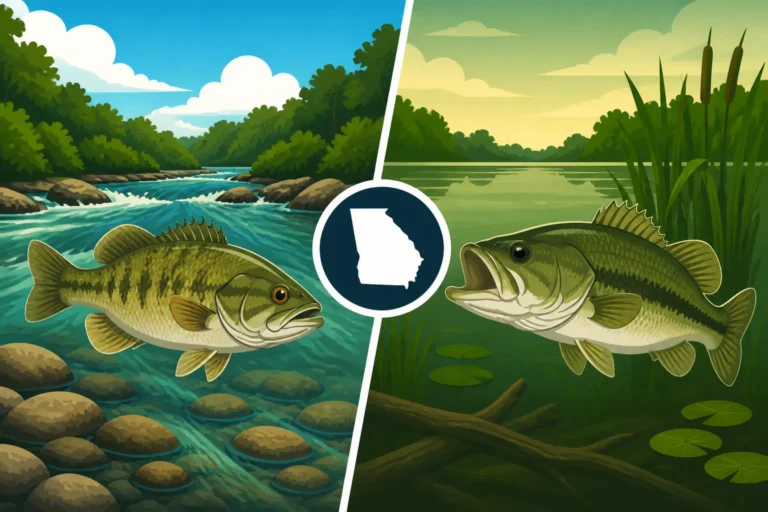
Many anglers initially confuse spotted bass with their larger cousin, the largemouth. While they share some similarities, a closer look reveals key differences, especially that tell-tale rough patch of teeth on the tongue, which is absent in largemouth. If you're curious about identifying them, check out our guide on Spotted Bass Identification Tips for Georgia Anglers. Their energetic nature and willingness to bite make them a favorite among both seasoned pros and newer anglers. They're a fantastic species to target, providing consistent action when other fish might be playing hard to get.
The spotted bass has carved out a significant niche in Georgia's fishing scene. While largemouth bass often steal the spotlight for their sheer size potential, spotted bass are incredibly abundant in many of our impoundments, such as Lake Lanier and Lake Allatoona. They thrive in deeper, clearer water conditions than largemouth, and their aggressive feeding habits mean they can be caught on a wide variety of lures and techniques. This makes them an exciting and accessible target for many, and their prevalence naturally leads to questions about their value beyond just sport – namely, how do they taste?
The Culinary Question: What Makes a Fish "Good Eating"?
When someone asks if a fish is "good eating," it's not always a straightforward answer, is it? So much of it comes down to personal preference, but there are definitely some general factors that influence how we perceive the taste and quality of fish. Things like the fish's diet, the water quality it lives in, its size, and even how quickly and properly it's handled after being caught can all play a huge role.
For example, a fish living in clean, cold water, feeding primarily on baitfish, will often have a much milder, cleaner flavor than one from warm, murky water that dines mostly on bottom-dwelling insects and mud worms. The "muddy" taste often associated with some freshwater species is usually a direct result of their environment and diet. Texture is another big one. Do you prefer flaky and delicate, or firm and meaty? Some fish are known for one, while others lean towards the other. When comparing them to other popular freshwater species, like perhaps a bluegill or even a largemouth, you'll find that each has its own distinct characteristics. For a deeper dive into another popular species, you might be interested in Is Largemouth Bass Good to Eat?.
Generally, we tend to favor fish that have white, firm, and flaky flesh with a mild, non-fishy flavor. Overly oily or strong-tasting fish can be an acquired taste for some. Size also matters—smaller fish sometimes have more delicate flavors, while larger, older fish can occasionally develop a stronger taste or tougher texture. It's truly a multi-faceted question, and what one angler considers a gourmet meal, another might consider just passable. But let's get specific about the spotted bass.
Spotted Bass on the Plate: Flavor, Texture, and Preparation
Now, for the main event: how does the spotted bass actually stack up when it's time to cook? This is where many anglers have differing opinions, but I'm here to tell you that these fish can absolutely be a delicious meal if handled and prepared correctly.
Flavor Profile
The flavor of spotted bass is often described as mild and clean, usually less "gamey" or "muddy" than some largemouth bass you might catch, especially those from warmer, shallower waters. This cleaner taste is often attributed to the spotted bass's preference for deeper, clearer water, and a diet rich in baitfish like threadfin shad or blueback herring, rather than exclusively bottom-dwelling organisms. Think of it as a subtle, freshwater flavor that readily absorbs marinades and seasonings without being overpowering. It's certainly not as robust as a salmon or as delicate as a flounder, but it holds its own very well in the pan.
Texture
In terms of texture, spotted bass generally offer firm, white, and flaky flesh. It tends to be firmer than a largemouth bass of comparable size, which many people appreciate. This firmness helps it hold up well to various cooking methods without falling apart. You won't find it mushy or excessively soft; instead, it has a satisfying bite that is neither tough nor overly delicate. This makes it quite versatile, whether you're looking to pan-fry a fillet or bake it whole.
Best Preparation Methods
Given its mild flavor and firm, flaky texture, spotted bass shines in a variety of cooking applications. Here are a few favorites:
- Pan-Frying: This is a classic for a reason! Dredge fillets in seasoned cornmeal or a simple flour mixture and fry until golden brown and flaky. The crisp crust complements the tender interior perfectly. It's quick, easy, and undeniably delicious.
- Baking: For a lighter option, baking fillets with a little butter, lemon, and your favorite herbs (dill, parsley, or thyme work wonderfully) is fantastic. Wrap them in foil with some veggies for an easy, healthy meal.
- Grilling: Whole small- to medium-sized spotted bass, or thicker fillets, can be excellent on the grill. Brush them with olive oil and a dry rub, then cook until the flesh is opaque. The slight char from the grill adds a lovely smoky dimension.
- Fish Tacos: The mild flavor and firm texture make spotted bass an ideal candidate for fish tacos. Flake the cooked fish into warm tortillas with your favorite slaw and sauce for a fresh, vibrant meal.
The key to a good-tasting spotted bass is quick and proper handling immediately after the catch. Get it on ice, and fillet it as soon as possible to preserve that clean flavor. The longer a fish sits unchilled, the more its quality can degrade.
Catch-and-Release vs. Keeping Spotted Bass for Dinner
The decision to keep a fish for dinner or release it is a personal one, often influenced by regulations, the health of the fishery, and your own desire for a meal. When it comes to spotted bass, both options are perfectly viable, but it's important to consider a few things.
First and foremost, always adhere to Georgia's Georgia Fish Size and Creel Limits. These regulations are in place to ensure healthy fish populations for future generations of anglers. If you're keeping fish for the table, knowing these limits is crucial. Generally, spotted bass are abundant in many Georgia lakes, and keeping a few legal-sized fish for a meal typically doesn't negatively impact the overall population. In some cases, harvesting certain sizes can even help manage the population, particularly if smaller fish are overabundant.
From a culinary perspective, smaller to medium-sized spotted bass (say, 12-16 inches) are often considered the best for eating. Their flesh tends to be more tender and milder than much larger, older fish. Larger fish, while impressive, can sometimes have a tougher texture or a slightly stronger flavor. This isn't to say a big one isn't edible, but the sweet spot for table fare is often in that mid-range. For those wondering about the growth and dimensions of this species, we have a helpful comparison in Spotted Bass Size Compared to Largemouth Bass.
Many anglers also practice selective harvest, keeping only what they intend to eat and releasing the rest. This is a great way to enjoy your catch while still being conservation-minded. If you're out specifically for a fresh fish dinner, targeting spotted bass that fall within the preferred eating size range is a smart move. They are, after all, an excellent source of lean protein. Consider where you're fishing as well; some water bodies are known for exceptionally clean and tasty fish, while others might yield fish with less desirable qualities due to environmental factors. For those who love to pursue spotted bass for the sheer thrill of the catch, knowing where to find them is key. Our guide on Spotted Bass Fishing in Georgia Lakes and Rivers offers some excellent insights.
Ultimately, whether you keep or release your spotted bass depends on your goals for the day. If you're after a delicious, fresh meal, a few legal-sized spotted bass can certainly provide it. If you're focused purely on sport or prefer to let larger fish go to breed, that's a perfectly admirable choice too. Just make sure you're informed about the regulations and mindful of the fishery's health.
Spotted Bass vs. Other Popular Freshwater Fish as Table Fare
To really understand where spotted bass stands on the dinner table, let's stack it up against some other common freshwater catches in Georgia. This table highlights some general characteristics, but remember, individual fish and personal taste can always vary!
| Feature | Spotted Bass | Largemouth Bass | Crappie (Black/White) | Bluegill/Bream | Catfish (Channel/Blue) |
|---|---|---|---|---|---|
| Flavor Profile | Mild, clean, slightly sweet | Mild to moderate, can be "earthy" in warm water | Very mild, sweet, delicate | Mild, very sweet, delicate | Moderate to strong, earthy, can be "muddy" |
| Texture | Firm, white, flaky | Medium-firm, white, flaky | Very tender, fine flakes | Tender, fine flakes | Firm, sometimes a bit coarse, dense |
| Color of Cooked Flesh | White | White | White | White | White to off-white |
| Oiliness | Low to medium | Low to medium | Low | Low | Medium to high |
| Common Preparation | Frying, baking, grilling, tacos | Frying, baking, grilling | Frying (especially whole), baking | Frying (especially whole), pan-searing | Frying, grilling, stewing |
| Bones (Fillet) | Relatively few, easy to remove | Relatively few, easy to remove | Can be bony if not filleted carefully or cooked whole | Small bones can be challenging unless very small | Large bones, easy to fillet |
As you can see, spotted bass holds its own quite well, often ranking higher than largemouth in terms of consistency of flavor and firmness, and definitely offering a cleaner taste than many catfish, which can be a bit polarizing. It's in the same ballpark as crappie and bluegill for its mildness, but with a bit more substance in its flesh.
Practical Tips for Preparing Your Spotted Bass Catch
Alright, so you've decided to bring a few spotted bass home for dinner – excellent choice! Now comes the crucial part: ensuring that beautiful fish makes it to your plate tasting as fresh and delicious as possible. Proper handling and preparation are key, and trust me, it doesn't have to be complicated.
Field Dressing and Filleting for Optimal Freshness
The moment that spotted bass hits the deck, the clock starts ticking for freshness. The absolute best thing you can do is get it on ice immediately. A cooler full of ice or an aerated livewell will dramatically improve the taste. Once you're off the water, it's time to get to work.
Field dressing, which is simply removing the guts, can be done right away if you plan on keeping the fish whole or won't be filleting it for a few hours. This stops the digestive enzymes from affecting the flesh. However, for most anglers, filleting is the way to go. Spotted bass fillet nicely, yielding clean, boneless pieces of white meat. Use a sharp, flexible fillet knife – you can find some great options, along with cutting boards and other essential tools, on Amazon. A good sharp knife makes the job infinitely easier and safer.
Start by laying the fish flat, making a cut behind the gill plate down to the spine. Then, turn the blade and run it along the backbone, from head to tail, to separate the fillet. Flip the fillet skin-side down and carefully slide your knife between the skin and the meat. You'll be left with a beautiful, boneless, skinless fillet ready for cooking. Rinse the fillets quickly in cold water, pat them dry, and they're good to go.
Storage: Keeping Your Catch Fresh
Once filleted, you want to keep those precious pieces of fish as fresh as possible until cooking time. If you're planning to cook them within a day or two, simply place the fillets in an airtight container or a resealable bag with as much air removed as possible, then store them in the coldest part of your refrigerator.
For longer storage, freezing is your friend. There are a few ways to do it, but my personal favorite for preserving quality is the "water bath" method. Place your fillets in a freezer-safe, resealable bag, then fill the bag with water until the fillets are completely submerged. Seal the bag, ensuring no air pockets, and lay it flat in your freezer. The ice block created will protect the fish from freezer burn, keeping it fresh for several months. Vacuum sealers are also fantastic if you have one; they remove all the air, which is the enemy of frozen fish quality. You can find durable vacuum sealer bags and even entire vacuum sealer systems on Amazon to upgrade your fish preservation game.
Simple Recipe Ideas for Your Spotted Bass
You don't need a gourmet chef's cookbook to make spotted bass shine. Here are a couple of super simple, yet incredibly tasty, ways to prepare them:
Classic Pan-Fried Spotted Bass:
- Ingredients: Spotted bass fillets, 1 cup cornmeal, 1/4 cup all-purpose flour, 1 tbsp Old Bay seasoning (or your favorite fish seasoning), salt and pepper to taste, cooking oil (canola, vegetable, or peanut) for frying.
- Instructions:
- Pat fillets dry with paper towels.
- In a shallow dish, combine cornmeal, flour, Old Bay, salt, and pepper.
- Dredge each fillet in the mixture, ensuring it's fully coated.
- Heat about 1/2 inch of oil in a heavy skillet over medium-high heat until shimmering.
- Carefully place fillets in the hot oil, ensuring not to overcrowd the pan.
- Fry for 3-5 minutes per side, or until golden brown and the fish flakes easily with a fork.
- Remove to a wire rack lined with paper towels to drain excess oil. Serve with lemon wedges!
Lemon Herb Baked Spotted Bass:
- Ingredients: Spotted bass fillets, 2 tbsp butter (melted), 1 lemon (half sliced, half juiced), 1 tbsp fresh chopped parsley, 1/2 tsp dried dill, salt and pepper to taste.
- Instructions:
- Preheat oven to 375°F (190°C).
- Lightly grease a baking dish or line with parchment paper.
- Place fillets in the baking dish.
- In a small bowl, combine melted butter, lemon juice, parsley, dill, salt, and pepper.
- Spoon the butter mixture over the fillets.
- Top each fillet with a slice of lemon.
- Bake for 12-18 minutes, or until the fish is opaque and flakes easily. Cooking time will vary with fillet thickness.
These simple methods truly highlight the clean, delicious flavor of the spotted bass. Don't be afraid to experiment with your favorite seasonings and techniques, but always remember that the fresher the fish, the better the meal! You can find a wide range of spices and kitchen gadgets to aid your culinary adventures on Amazon, making sure you're well-equipped for any recipe.
Disclaimer
This article is for general informational purposes only and does not constitute professional advice. Laws, prices and regulations vary by location and change over time. Consult a qualified professional for guidance on your specific situation.