Flooded Timber Crappie Spots on Lake Thurmond
Trying to find crappie in the vast, timber-filled waters of Lake Thurmond (also known as Clarks Hill Lake) can feel like searching for a needle in a haystack – often leading to snagged lines and frustration. Many anglers know the fish are there, holding tight to cover, but struggle to locate and extract them from the labyrinth of submerged trees. This comprehensive guide will illuminate the strategies, specific spots, and essential gear you need to consistently catch crappie from the flooded timber of Lake Thurmond.
Understanding Lake Thurmond's Unique Timber Challenges
Lake Thurmond, a massive reservoir spanning across Georgia and South Carolina, is renowned for its excellent crappie fishing. However, its history and unique characteristics present both opportunities and significant challenges, particularly when targeting crappie in flooded timber.
The History and Formation of Flooded Timber
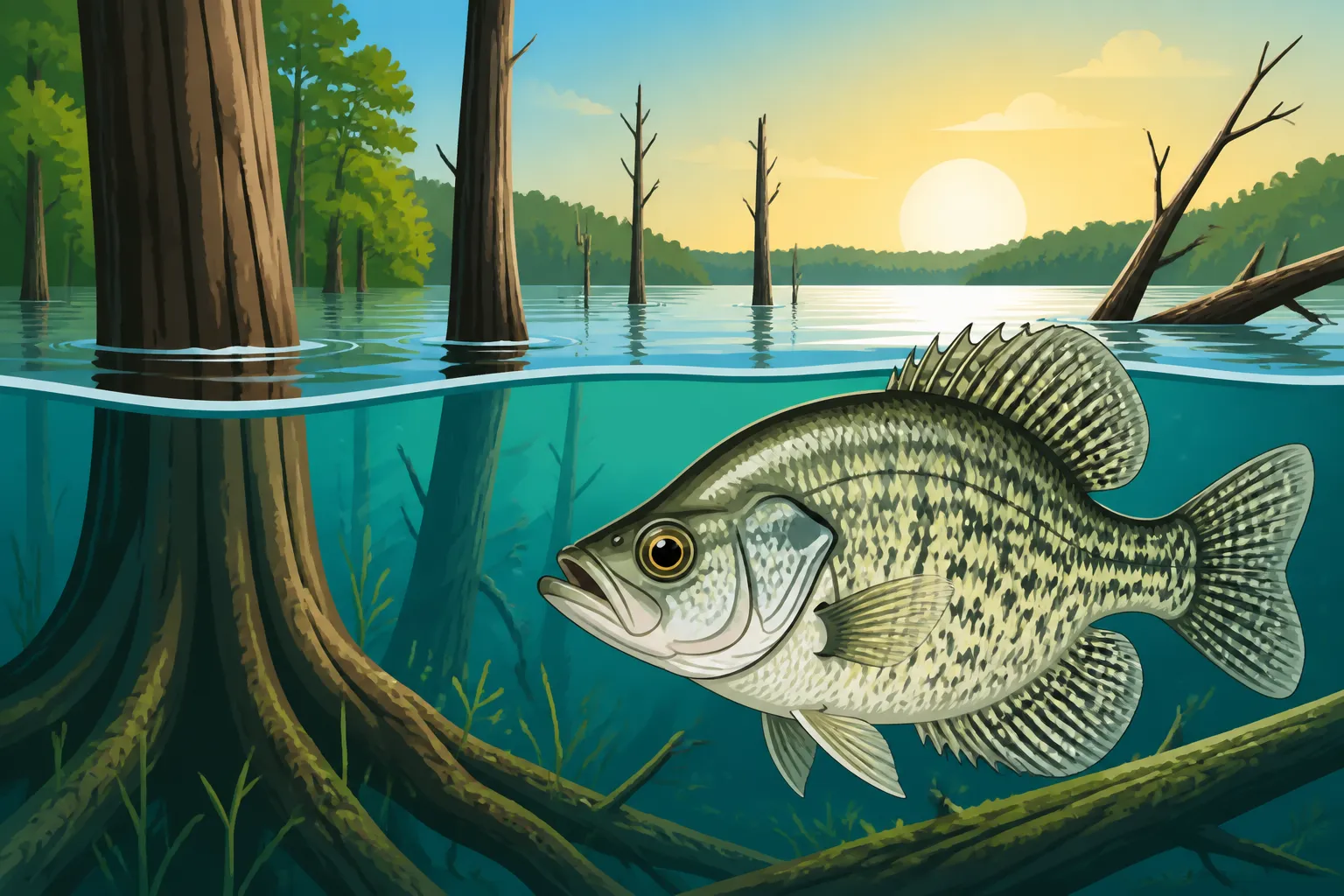
Lake Thurmond, originally named Clarks Hill Lake, was impounded in the early 1950s by the U.S. Army Corps of Engineers. As with many large reservoirs built during that era, vast tracts of land were flooded without extensive timber removal. This foresight, or perhaps oversight, created an incredible underwater forest that, decades later, still stands as prime habitat for a multitude of fish species, especially crappie. These submerged trees, ranging from towering hardwoods to dense thickets of smaller brush, provide crappie with essential cover for ambush points, protection from predators, and shade from intense sunlight.
The presence of this ancient timber means that understanding its structure is paramount. Not all timber is created equal; some areas might have scattered stumps, while others boast dense stands that rise many feet off the bottom, creating a vertical maze. The age of the timber also plays a role, with older, harder wood often resisting decay longer, maintaining its structural integrity and fish-holding capabilities. Knowing that you're fishing a lake with such extensive, long-standing timber helps set realistic expectations and informs your tactical choices.
How Crappie Utilize Timber for Survival
Crappie are masters of cover. They thrive in environments where they can ambush prey, hide from larger predators like bass and stripers, and find comfortable water temperatures and light conditions. Flooded timber provides all of these in spades. These fish will orient themselves vertically within the timber, often suspending at specific depths within the branches, making them a challenge to locate for the uninitiated. They use the trunks and branches as natural highways and hiding spots.
During different seasons, crappie will adjust their position within the timber. In cooler months, they might hold tighter to the densest parts of the timber, deeper down, seeking stable temperatures. As waters warm, they might move shallower or suspend higher in the water column, often relating to the tops of submerged trees or the edges of timber lines where they can dart out to feed. Understanding these subtle movements and how they relate to the cover is key to unlocking consistent success. It's not just about finding "timber," but finding the right kind of timber, at the right depth, for the right season.
Strategic Approaches to Timber Crappie Fishing
Successfully fishing flooded timber on Lake Thurmond requires more than just dropping a bait. It demands a strategic approach, blending modern technology with tried-and-true angling instincts.
Interpreting Your Electronics in Heavy Cover
In the dense, underwater forests of Lake Thurmond, your fish finder is your best friend. However, effectively using it in flooded timber requires practice and a keen eye. Standard 2D sonar can show you the trunks and larger branches, often appearing as vertical lines or dense clusters on your screen. You’ll also see crappie, often suspended as small arches or dots, relating directly to this structure. Don’t mistake a large tree trunk for a school of fish; instead, look for the fish around or within the timber.
Side imaging and down imaging technologies are incredibly valuable here. Side imaging can reveal entire stands of timber extending hundreds of feet to either side of your boat, allowing you to scout vast areas quickly without running over the fish. Look for "gaps" or "lanes" within the timber, or isolated clumps that might hold fish. Down imaging provides a photographic-like view directly beneath your boat, helping you discern the density of the cover and the exact relationship of fish to branches. If you're seeing fish suspended at, say, 15 feet in 25 feet of water, that tells you precisely where to present your bait. Brands like Humminbird and Garmin offer excellent units that excel in these situations, allowing anglers to visualize the underwater landscape like never before. Many anglers even consult platforms like FishingBooker to find local guides who are experts at interpreting these complex sonar readings on Lake Thurmond.
Targeting Depths and Seasonal Movements
Crappie depth preference is heavily influenced by water temperature, available light, and the presence of baitfish. In the winter months, when the water is cold, crappie often school tightly and hold deep within the densest timber, seeking thermal refuge. They might be found near the bottom in 25-40 feet of water, but still suspended among the branches. During the spring spawn, they push shallower, often to depths of 5-15 feet, seeking hard bottom or woody cover in protected coves or creek channels to lay their eggs. This is a prime time for targeting them near the tops of the flooded timber.
As summer arrives, crappie tend to go deeper again, often suspending in the mid-water column over deeper timber, especially during the brighter parts of the day. They'll follow baitfish schools, which also relate to cover. In the fall, as temperatures cool, they might become more active and scattered, but still heavily reliant on timber. Understanding these seasonal shifts and adjusting your target depth accordingly is crucial. For example, knowing when to fish deep for winter crappie versus targeting shallower wood during the spring will drastically improve your catch rates. If you're looking for more general knowledge, our comprehensive guide on Georgia Fishing Seasons by Month can give you a broader overview of seasonal patterns.
Prime Flooded Timber Locations on Lake Thurmond
Lake Thurmond is vast, and its timber is widespread. Knowing where to start can save you hours of aimless searching and countless snagged lures. The crappie here are often found in specific types of flooded timber areas that provide optimal conditions.
Major Creek Arms and Their Tributaries
The major creek arms feeding into Lake Thurmond are absolute goldmines for crappie, especially where they contain extensive flooded timber. The Little River arm and the Savannah River arm are prime examples. These areas are vast and often hold their own distinct ecosystems, with abundant baitfish, varying depths, and extensive woody cover. Within these major arms, look for the smaller tributary creeks or even just prominent bends that narrow and concentrate fish.
For instance, on the Little River arm, you'll find countless coves and submerged creek channels lined with timber. Crappie will often move into these areas during the spring spawn, but they also use the deeper timber in the main channel of the Little River during colder months. The Savannah River arm, particularly towards the upper reaches where it's narrower and riverine, also presents excellent timber opportunities. These areas are characterized by old river and creek beds that are now choked with standing timber. Checking a detailed map, perhaps one you acquire from a local tackle shop or an online resource like FishingBooker, can help you identify these intricate networks of submerged structure. For a more general overview of this lake, check out our Clarks Hill Lake Fishing Guide, Georgia.
Specific Coves and Old Creek Channels
Beyond the major arms, specific coves and old creek channels throughout the lake are well-known crappie hotspots, particularly those with significant flooded timber. Soap Creek, Germany Creek, and Parksville Creek are often mentioned by local anglers as productive crappie waters. These coves tend to offer more protected water, which can be advantageous during windy conditions, and often have a mixture of different timber types, from dense stands to more scattered trees.
Within these coves, focus your efforts on the old creek channels that wind through them. These channels, now submerged, act as natural highways and depth contours that crappie relate to. The timber along the edges of these channels, or timber that grows directly out of them, is particularly attractive to fish. Look for points within these coves that extend into the main channel, as crappie will often stage on these points, especially during transitional periods. Remember, crappie often prefer vertical structure, so tall, standing timber in these old channels provides exactly what they’re looking for. Finding these specific spots requires patience and good sonar, but the rewards can be incredible. You might even find some hidden gems that aren't widely known, providing a fantastic fishing experience away from the crowds.
Essential Gear and Techniques for Timber Success
Fishing flooded timber for crappie on Lake Thurmond isn't like open-water trolling. It requires specialized gear and refined techniques to minimize snags and maximize your chances of boating those elusive slabs.
Rods, Reels, and Line for Timber Angling
When you’re fishing around dense timber, your gear needs to be up to the task. Light tackle is usually the name of the game for crappie, but in timber, you need a balance of sensitivity and backbone. A sensitive, fast-action spinning rod, typically 6 to 7 feet long, is ideal. This length provides enough leverage for casting and fighting fish, while also allowing for precise jigging around cover. Look for rods with a medium-light power that can handle a bit of stress when a fish tries to wrap you around a tree trunk. We've got a detailed breakdown on Best Rods for Crappie Fishing in Georgia that could help you pick the perfect one.
Pair your rod with a lightweight spinning reel, size 1000 or 2000, spooled with 6 to 10-pound test monofilament or fluorocarbon line. While braided line offers superior sensitivity and strength, its lack of stretch can be a disadvantage in timber, as it transmits shock directly to the hook, potentially tearing out of a crappie's papermouth, and it also tends to dig into timber more. Monofilament offers a good compromise with its forgiving stretch and abrasion resistance against rough wood. Some anglers prefer a fluorocarbon leader for its invisibility and abrasion resistance, tied to a slightly heavier main line. A robust Tackle Box Setup for Crappie Fishing should always include these essentials.
Effective Baits and Lure Presentations
When it comes to baits for timber crappie, jigs are king, often tipped with live minnows or soft plastics. A 1/16 to 1/8 ounce jig head is a common starting point, with heavier jigs used for deeper water or windy conditions. The color of your jig can make a huge difference, so having a variety is wise. Chartreuse, white, black/chartreuse, and pink are often top producers on Lake Thurmond. You can find more specific advice in our guide on Best Jig Colors for Crappie Fishing.
There are several effective presentations for working jigs in timber:
- Vertical Jigging: This is perhaps the most common and effective method. Position your boat directly over or very close to the timber you've identified with your electronics. Drop your jig straight down, watching your sonar to ensure you're at the same depth as the fish. Gently lift and drop the jig, giving it subtle twitches. This direct approach minimizes snags and allows you to pinpoint exact depths. Our guide on How to Jig for Crappie provides excellent tips for this.
- Pitching and Flipping: For denser cover or when approaching from a distance, pitching or flipping a jig into pockets within the timber can be effective. This requires precision but allows you to reach fish that might be spooked by a boat overhead.
- Bobber Fishing: For shallower timber (5-15 feet), especially during the spawn, a slip bobber rig can be deadly. Set your bobber stop to the desired depth and cast your jig or minnow rig near the timber. The bobber keeps your bait suspended at the perfect depth and is a visual indicator of a bite. Our guide on How to Rig a Minnow for Crappie details how to set up such rigs.
- Spider Rigging: While traditionally used in more open water or along brush piles, a modified spider rigging approach with shorter rods can be effective for covering the edges of large timber stands, presenting multiple baits at varying depths simultaneously. This can be especially good when fish are more scattered or when you're trying to quickly locate the productive depth. For general crappie fishing, our article on Tightlining Techniques for Crappie provides insights into this versatile method.
| Technique | Description | Pros | Cons | Best Scenario |
|---|---|---|---|---|
| Vertical Jigging | Dropping a single jig straight down into or alongside timber. | Precise depth targeting, minimal snags, direct contact with fish. | Requires boat positioning, covers less area, can spook shallow fish. | Fish tightly schooled, pinpointed on sonar, in deep or dense timber. |
| Pitching/Flipping | Accurately casting or "flipping" a jig into small openings within dense timber. | Reaches fish in impenetrable cover, less boat-spooking. | Requires practice and accuracy, higher risk of snags, slower coverage. | Shallow to mid-depth dense timber, shy fish, targeting specific pockets. |
| Slip Bobber Rig | Suspending a jig or minnow at a set depth with a bobber. | Keeps bait in strike zone, visual bite indicator, effective for beginners. | Less precise depth changes, harder in windy conditions, limited depth range. | Shallow to mid-depth timber (5-15ft), especially during spring or early fall. |
| Modified Spider Rigging | Using multiple shorter rods to present baits around the boat's perimeter. | Covers wider area, presents multiple bait options, finds active fish faster. | More gear to manage, higher snag potential in very dense timber. | Edges of timber lines, scattered fish, searching for depth and activity. |
Crappie are notoriously finicky, so having a variety of jig types, colors, and tipping options (like a live minnow, or a soft plastic like a Bobby Garland Baby Shad or a Panfish Assassin Tiny Shad) is crucial. Experiment until you find what they're hitting on that day. Don't be afraid to change colors or sizes frequently.
Disclaimer
Always remember to check the latest Georgia Department of Natural Resources (GA DNR) fishing regulations before heading out on Lake Thurmond. Rules regarding fishing licenses, creel limits, and size limits can change, and it's your responsibility to stay informed and comply with all state laws.