How to Cast Farther When Bank Fishing
There’s nothing quite as frustrating as standing on the bank of a beautiful Georgia lake or river, seeing those fish just teasingly out of reach. You cast with all your might, but your lure splashes down frustratingly short of that promising submerged timber or far-off weed line where you just know the big ones are lurking. It's a common struggle for bank anglers, but you don't have to be stuck watching fish jump in the distance anymore. This guide is here to equip you with the knowledge, techniques, and gear adjustments you need to significantly increase your casting distance and reach those elusive honey holes from shore.
Understanding the Physics Behind Longer Casts
Before we dive into specific tips, let’s quickly touch on the basic principles that govern how far your lure flies. It's not just about brute strength; it's a delicate dance between your gear, your technique, and a bit of physics. Getting a solid grasp on these fundamentals will make all the difference in understanding why certain adjustments work.
The Role of Aerodynamics and Weight Distribution
Think about a football versus a frisbee. One is designed to be thrown far and straight, the other to float and curve. The same concept applies to your fishing lure. A compact, dense lure with a streamlined shape will cut through the air with less resistance than a bulky, irregularly shaped bait. When you're trying to cast for maximum distance, especially with lighter setups common in bank fishing, the aerodynamics of your lure become incredibly important.
Beyond the shape, the weight distribution of your lure or rig plays a huge role. Lures that have their weight concentrated towards the back or are balanced to fly true will perform better. Even small adjustments, like adding a small casting weight a foot or so above a Texas-rigged worm, can help stabilize its flight and prevent it from tumbling, which saps energy and shortens your cast. Sometimes, adding just a little extra weight can make a world of difference, but you have to be mindful not to overpower your rod, which brings us to our next point.
The Impact of Line Diameter and Material
It might seem like a minor detail, but your fishing line is a huge factor in casting distance. Imagine trying to cast a thin string versus a thick rope. The thick rope creates more drag in the air as it leaves your reel, and even more importantly, it creates more friction as it peels off the spool. This is why line diameter matters so much. Thinner lines encounter less air resistance and less friction, allowing them to fly further.
The material of your line also plays a part. Braided lines, for example, are known for their incredibly thin diameter relative to their strength, which makes them fantastic for distance casting. They also have minimal stretch, meaning more of your casting energy is transferred directly to the lure. Monofilament lines, while having more stretch and generally thicker diameters for the same breaking strength, can still be good for distance if you choose a thinner gauge. Fluorocarbon, while having excellent sensitivity and invisibility underwater, can be a bit stiffer and heavier than braid, sometimes impacting casting distance slightly if not managed correctly. For many bank anglers, a good quality braided line with a fluorocarbon leader is the go-all setup for achieving both distance and stealth. You can find a huge variety of quality lines on Amazon, suitable for almost any fishing scenario.
Harnessing and Counteracting Wind Conditions
Wind is either your best friend or your worst enemy when it comes to casting distance from the bank. A strong tailwind can propel your lure an extra 20-30 feet, carrying it effortlessly across the water. Conversely, a headwind can feel like casting into a brick wall, severely shortening your cast and making accuracy a nightmare. Crosswinds are equally challenging, causing your line to bow and your lure to drift off course.
The trick is to learn how to work with the wind. If you have a tailwind, use it! Angle your cast slightly higher to let the wind catch your lure and carry it. If you're facing a headwind, try to cast lower and more powerfully, keeping your lure's flight path as flat as possible to minimize wind resistance. Sometimes, a sidearm cast can cut through a crosswind more effectively than an overhead cast. Being aware of the wind and adjusting your technique accordingly can turn a frustrating situation into an advantage, or at least minimize its negative impact.
Gear Up for Longer Casts from the Bank
You can have the best casting technique in the world, but if your gear isn't optimized for distance, you'll still fall short. Think of it like trying to hit a home run with a wiffle ball bat. Having the right tools makes a tremendous difference. Let's break down how to pick and set up your rod, reel, and line for maximum casting range when you're fishing from shore.
Choosing the Right Rod Length and Action
When you're confined to the bank, every inch of casting distance counts, and your rod is your primary weapon. Generally, longer rods will allow for greater casting distance because they can store and release more potential energy during the cast. A longer rod creates a longer arc, which translates to higher tip speed and more leverage to propel your lure further. For bank fishing, a rod in the 7 to 8-foot range is often ideal. Anything much longer can become unwieldy in tight quarters with trees or overhead obstructions, which are common when you're bank fishing in Georgia.
The "action" of your rod is also crucial. A "fast" or "extra-fast" action rod bends mostly in the tip, providing excellent sensitivity and quick hook sets, but it might not load as smoothly for long casts with lighter lures. A "moderate" or "medium" action rod, on the other hand, bends further down into the blank, allowing it to "load" more effectively and smoothly slingshot your lure. This parabolic bend stores more energy and can be a real game-changer for distance casting, especially with crankbaits or spinnerbaits. Look for a rod that offers a good balance of power (to handle the lure weight) and a moderate action for that smooth, long-distance whip. Many anglers swear by a 7'3" medium-heavy, moderate-fast action rod for versatile bank fishing situations. When choosing a rod, remember that finding the Best Rod for Shore Fishing Without a Boat means considering both length for distance and action for lure propulsion.
Selecting the Ideal Reel and Spool Design
Your reel plays a crucial supporting role in casting distance. For most bank fishing scenarios, a spinning reel is often preferred over a baitcasting reel for pure distance with a wider range of lure weights, especially lighter ones. The open-face design allows line to peel off the spool with minimal friction.
When choosing a spinning reel, look for:
- Larger Spool Diameter: A wider spool allows the line to come off in larger coils, reducing friction as it exits the spool. This is why some long-cast specific spinning reels have very tall, wide spools.
- Slow Oscillation: This feature lays the line onto the spool in a very neat, parallel fashion. When the line is neatly stacked, it comes off the spool more smoothly and with less resistance, preventing "digging in" or tangles that kill distance.
- Smooth Drag System: While not directly related to casting distance, a smooth drag is essential for fighting fish, especially if you're using lighter lines to achieve those longer casts.
For baitcasting reels, the magnetic or centrifugal braking system needs to be finely tuned to minimize resistance while still preventing backlashes. Too much resistance, and your cast will be shortened; too little, and you'll have a bird's nest. A properly spooled and tuned baitcaster can cast an impressive distance, especially with heavier, more aerodynamic lures. Regardless of whether you prefer a spinning or baitcasting reel, make sure it’s in good working order, clean, and properly lubricated for optimal performance.
Optimizing Your Line for Casting Distance
As mentioned earlier, line choice is paramount. For maximum casting distance from the bank, braided line is king. Its thin diameter, incredible strength-to-diameter ratio, and lack of stretch make it fly off the spool with minimal friction and air resistance.
Here's a breakdown of how to optimize your line:
- Braided Main Line: Opt for a good quality braided line like PowerPro or Spiderwire. For most freshwater bank fishing in Georgia, 10 to 20-pound test braid is sufficient. The smaller the number (thinner the line), the further it will cast. For instance, 10lb braid will cast further than 20lb braid, all else being equal. You can find excellent selections of braided line on Amazon.
- Fluorocarbon Leader: While braid casts incredibly well, it's highly visible in clear water and doesn't have the abrasion resistance of fluorocarbon. Tie a fluorocarbon leader (4-8 feet long) to your braid using a strong knot like an FG knot or an Albright knot. The leader provides invisibility to the fish and protection against snags and rough cover. The leader's strength should match your target species and lure weight, usually 8-15 pound test for most bass and panfish scenarios.
- Spooling Your Reel: Do not overfill your spool! This can lead to tangles and backlashes. Fill your spool to about 1/8 inch from the lip. Too little line can also reduce casting distance, as the line has to pull harder against the spool edge. Using the right amount of line, laid on properly, can make a significant difference.
| Line Type | Pros for Distance | Cons for Distance | Best Use for Bank Fishing |
|---|---|---|---|
| Braided Line | Thinnest diameter for strength, minimal friction, no stretch | Highly visible, can be difficult to manage for beginners | Main line for maximum distance, paired with a leader |
| Monofilament | Smooth, good knot strength, floats, inexpensive | Thicker diameter, more stretch, more friction on spool | Good for topwater, budget-friendly options, some specific situations |
| Fluorocarbon | Invisible underwater, abrasion resistant, sinks | Stiffer, heavier, more coil memory, can reduce distance if used as main line | Leader material for braid, specific lure presentations |
Lure Weight and Aerodynamics for Distance
The weight and shape of your lure directly impact how far it can be cast. Heavier lures inherently cast further than lighter ones, assuming your rod is rated for that weight. However, it's not just about raw weight; it's about how that weight interacts with the air.
- Aerodynamic Shapes: Lures that are compact and dense, like spoons, jigging spoons, certain lipless crankbaits, and bullet-shaped sinkers on Texas rigs, will cut through the air more efficiently. Think about how a bullet flies compared to a crumpled piece of paper.
- Internal Weight Transfer Systems: Some lures, particularly hard baits like jerkbaits and crankbaits, incorporate internal weight transfer systems. These often involve small ball bearings that shift to the tail of the lure during the cast, aiding in distance, and then roll forward once the lure hits the water for proper action. Brands like Rapala and Strike King often feature these technologies.
- Casting Weights/Bombarda Floats: For very light baits like small flies or tiny jigs, you might consider using a casting weight or a Bombarda float. These add castable weight to your line, allowing you to throw those otherwise uncastable lures a much greater distance. The Bombarda float is particularly popular for trout fishing with light presentations on larger bodies of water, or for those tricky scenarios where you need to present a tiny bait way out from the bank. It helps get those tiny baits to distant fish, especially in places where you want to fish for trout from shore in areas like the Toccoa River.
Mastering Your Casting Technique
Even with the best gear, a poor casting technique will limit your distance. Think of your body as part of the casting system. Every movement, from how you hold the rod to your follow-through, contributes to the final outcome. Refining your technique is often the cheapest and most effective way to gain significant casting distance from the bank.
The Overhead Cast: Power and Precision
The overhead cast is the bread and butter of distance casting. It's the most common and generally most efficient way to propel your lure a long way. However, there's a difference between just flinging your arm and executing a powerful, efficient overhead cast.
- Grip and Stance: Hold the rod comfortably with your dominant hand, fingers wrapped firmly. Stand with your feet shoulder-width apart, perhaps one foot slightly forward, facing your target.
- Loading the Rod: Point the rod tip towards the water, let out enough line (usually 6-12 inches of leader beyond the rod tip for most lures), and then smoothly bring the rod straight back over your shoulder. Don't just stop it; let the weight of the lure bend the rod tip. You should feel the rod "load" or flex under the weight of the lure. This is crucial—it's like drawing back a bow. The rod does the work, not just your arm.
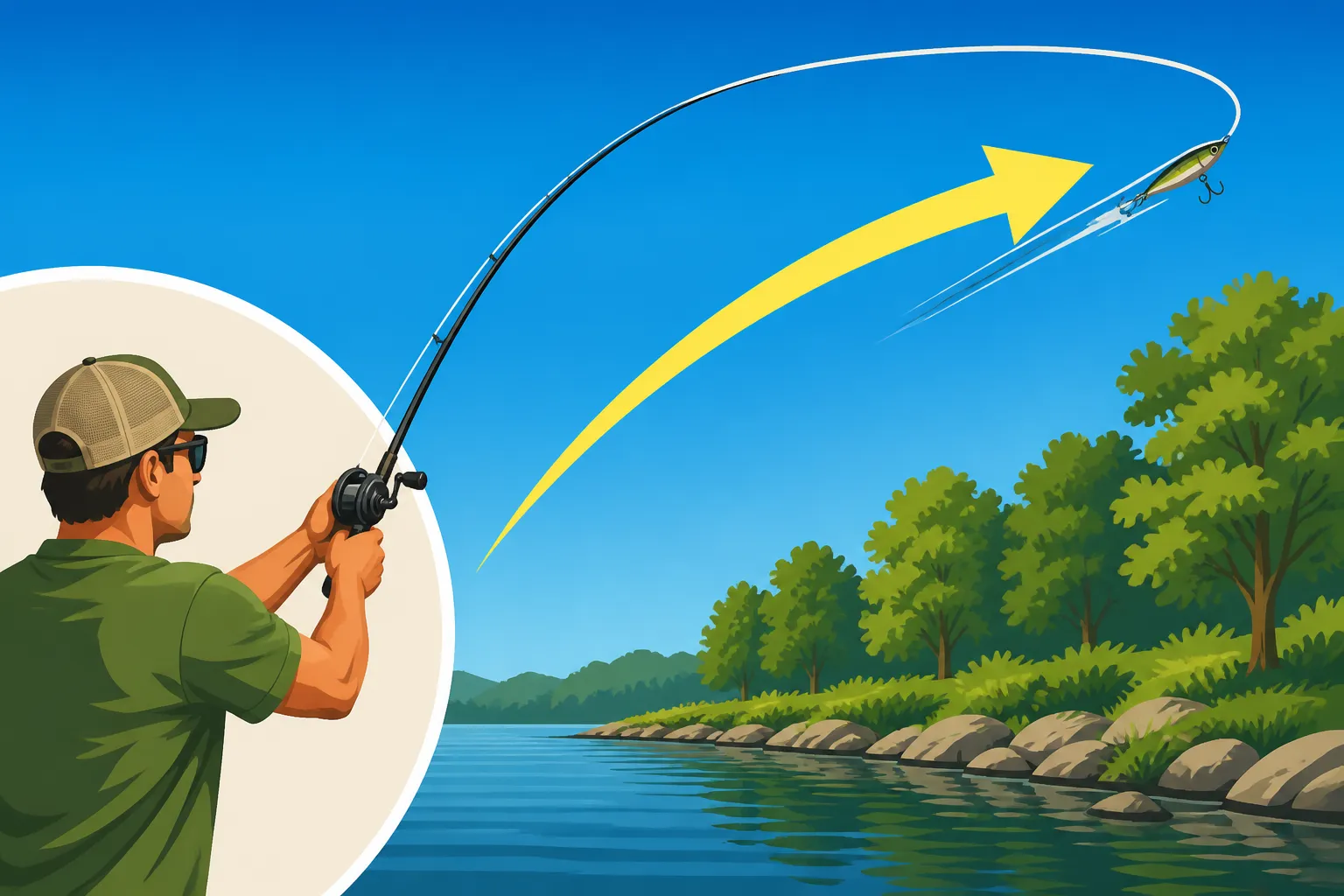
- The Forward Motion: As the rod reaches its peak backward bend, immediately, in one fluid motion, bring it forward with a strong, accelerating snap of your wrist and forearm. It's not a heave; it's a whip. Aim for a trajectory that sends your lure out at about a 45-degree angle.
- Releasing the Line: This is critical for distance. With a spinning reel, your index finger should be holding the line against the rod. Release the line just as the rod tip reaches the 10 or 11 o'clock position (imagine a clock face). Releasing too early sends the lure high and short; too late, and it’ll smack the water in front of you. For a baitcaster, you release your thumb from the spool at this same point, carefully feathering the spool with your thumb to prevent backlash as the lure flies.
- Follow Through: Don't stop your motion abruptly. Your rod tip should follow the path of your lure, pointing directly at your target as the lure sails through the air. This smooth follow-through ensures all the energy stored in the rod is transferred to the lure. Practicing this motion repeatedly is key to consistent, long casts.
Adapting with Sidearm and Roll Casts for Obstacles
Sometimes, that perfect overhead cast just isn't possible from the bank. Overhanging trees, bushes, or even other anglers can make a full overhead motion dangerous or impossible. That's where alternative casting techniques come into play.
- Sidearm Cast: This cast keeps your lure lower to the water, making it ideal for clearing overhead obstructions. Instead of bringing the rod straight back, bring it horizontally to your side. The motion is similar to skipping a stone across the water. It still requires a good "load" on the rod and a powerful snap, but the trajectory is flatter. While not always as powerful as a full overhead cast, a well-executed sidearm can still send a lure a surprising distance and is often your best bet when faced with low-hanging branches common on the banks of the Altamaha River or other wooded areas.
- Roll Cast: The roll cast is fantastic for extremely tight situations where you have no room for a backcast at all. It uses the water's surface tension to load the rod. With your lure in the water or hanging just above it, lift the rod tip sharply and quickly forward. The line "rolls" out in front of you. This cast won't give you extreme distance, but it's invaluable for presenting a lure quietly and accurately in tight spots, such as under docks or overhanging brush, where a longer cast is less important than a clean, unobtrusive presentation. While not a distance cast in itself, it's a technique worth mastering for versatility in bank fishing.
The Importance of a Smooth Release and Follow-Through
We touched on this briefly with the overhead cast, but it bears repeating: the release and follow-through are critical. Many anglers put a lot of power into the initial part of the cast but then stop abruptly, killing their momentum.
- The Release Point: This is probably the most common mistake for anglers trying to cast further. Releasing too early sends your lure straight up, losing all forward momentum. Releasing too late means the lure slams into the water (or worse, the bank!) right in front of you. Finding that sweet spot where the rod tip is between 10 and 11 o'clock (for an overhead cast) is key. It requires practice and feeling the rod’s action. Your finger (spinning reel) or thumb (baitcaster) timing needs to be impeccable.
- The Follow-Through: After releasing, don't jerk the rod back. Let it continue its forward motion, pointing towards where you want your lure to land. This smooth, fluid motion allows the line to unspool freely and reduces any sudden jolts that can shorten the cast or cause tangles. It's about letting the energy flow through the rod, line, and lure without interruption. Think of it like throwing a baseball – you don’t stop your arm mid-throw. The smoother and more complete your follow-through, the better your distance and accuracy will be. This principle is vital when applying any Bank Fishing Techniques.
Overcoming Common Bank Fishing Obstacles
Bank fishing isn't always open fields and clear skies. More often than not, you're battling with nature, and sometimes, other people. Learning to adapt your casting strategy to these real-world challenges is essential for consistent long-distance success.
Dealing with Overhead and Side Obstructions
The beauty of Georgia’s natural fishing spots, like those found when Fishing the Savannah River, Georgia or in many state parks, often means a canopy of trees, thick brush, or even power lines. These can severely limit your casting options.
- Scouting Your Spot: Before you even make your first cast, take a moment to look around. Identify any potential snags or areas where an overhead cast isn't feasible. This little bit of foresight can save you a lot of frustration and lost lures.
- Sidearm and Roll Cast Mastery: As discussed, this is where your sidearm and roll casts become invaluable. Practice them until they feel natural. A low, powerful sidearm cast can snake a lure under overhanging branches, while a roll cast can get you out of a truly tight spot.
- Changing Your Angle: Sometimes, simply moving a few feet down the bank can open up a clearer casting lane. If the trees are too dense directly in front, try casting slightly upstream or downstream along the bank, utilizing a different angle to reach your target. It might not be a perfectly straight shot, but it's better than no shot at all.
- Shorter Rod for Tight Quarters: While longer rods generally cast further, in extremely tight, brush-heavy spots, a slightly shorter rod (like a 6'6" or 7' rod) might give you the maneuverability needed to cast effectively without constantly snagging on the backcast. It’s a trade-off, but sometimes reach is less important than simply being able to get a lure in the water.
Managing Limited Backcast Space
One of the biggest limitations of bank fishing is the often-restricted space behind you. You don't have the luxury of open water that a boat provides. This can make "loading the rod" properly for a long cast extremely difficult.
- Shorten Your Leader/Drop: Reduce the amount of line hanging from your rod tip before the cast. Instead of a foot, try 6 inches, or even less for some situations. This reduces the arc your lure makes on the backswing, allowing you to cast without hitting obstacles behind you.
- Utilize the Water's Surface: If you have absolutely no backcast room, the roll cast is your savior. It uses the surface tension of the water to load the rod, eliminating the need for a traditional backcast. It’s a fundamental technique for navigating tricky spots and is well worth mastering for any bank angler.
- The Pendulum Cast (Advanced): For experienced anglers, a pendulum cast can generate incredible distance in tight spaces. This involves swinging the lure forward like a pendulum before initiating the casting motion. It's tricky to master and requires precise timing, but it can be incredibly effective where a traditional backcast isn't possible.
- Practice, Practice, Practice: There’s no substitute for practice when it comes to mastering casts in limited spaces. Head to a local park or an open field and practice various casts with a casting plug (a weight without hooks) to get a feel for how your rod loads and releases in different scenarios.
Adapting to Uneven or Treacherous Banks
Georgia's diverse fishing environments mean you might be casting from a flat, sandy beach, a steep, rocky bluff, or a muddy, overgrown riverbank. Each presents its own challenges to a stable, powerful cast.
- Footing and Balance: A stable base is fundamental for a powerful cast. If you're on an uneven bank, find the most stable footing you can. Plant your feet firmly, perhaps wider than usual, to maintain balance. A slip during a cast can not only ruin your distance but also send you tumbling.
- Adjusting Your Stance: On a steep bank, you might need to lean into the cast more, or adjust your stance to cast slightly downhill. On a slick, muddy bank, wear appropriate footwear with good grip.
- Safety First: Never compromise your safety for a long cast. If the bank is too treacherous, it's better to find a safer spot, even if it means sacrificing a few feet of distance. Losing your footing can lead to serious injury or losing your expensive gear. Always prioritize personal safety, especially when exploring more remote spots like Remote Wilderness Fishing Spots in North Georgia.
- Bank Structure and Retrieval: Consider the retrieval as well. If you cast far but can't safely navigate the bank to land a fish, what's the point? Plan your cast and retrieval with the bank structure in mind. Look for clear landing spots for your catch, especially when targeting larger species.
By understanding these principles, optimizing your gear, honing your technique, and adapting to your environment, you'll be well on your way to casting further and reaching those previously inaccessible fish from the bank. Happy casting, and tight lines!
Disclaimer
This article is for general informational purposes only and does not constitute professional advice. Laws, prices and regulations vary by location and change over time. Consult a qualified professional for guidance on your specific situation.