How to Use a Spinner for Trout
There's nothing quite like the thrill of a feisty trout hitting your line, especially in Georgia's beautiful mountain streams. But let's be honest, sometimes getting those finicky fish to bite can feel like a guessing game, leaving you frustrated with an empty creel. This guide is all about simplifying one of the most effective and exciting ways to catch trout: using spinners, giving you the clear, actionable steps you need to consistently hook into those stunning native and stocked trout.
Why Spinners Are a Trout Angler's Best Friend
When you're out on the water, whether it's a bustling stocked stream or a quiet, wild creek, you want tackle that performs. Spinners, with their unique flash and vibration, are often the unsung heroes in a trout angler's box. They’re relatively simple to use, yet incredibly effective at drawing strikes, even from hesitant fish. It’s no wonder they’ve been a staple for generations of trout enthusiasts.
The Irresistible Flash and Vibration
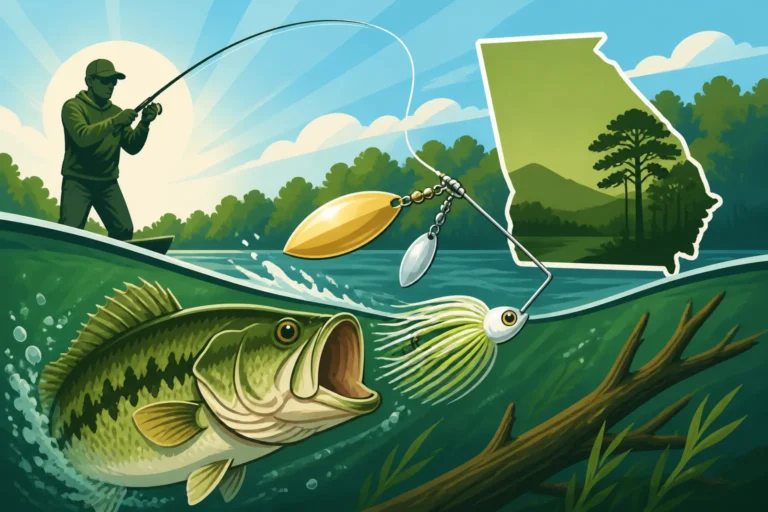
Imagine a small, shiny baitfish darting through the water, frantically trying to escape. That's essentially the illusion a well-presented spinner creates. The rotating blade sends out both visual cues (flash) and pressure waves (vibration) that mimic a fleeing prey item. Trout, being opportunistic predators, are naturally drawn to this commotion. This is particularly potent in murky water or during low-light conditions when visual cues are diminished. The vibration acts like a beacon, helping trout locate the lure even if they can't see it clearly from a distance. It taps into their lateral line system, a sensory organ that detects movement and pressure changes in the water.
This mimicry isn't just about escaping prey, either. Sometimes, trout hit spinners purely out of aggression or territorial instinct. That sudden flash and vibration invading their space can trigger a strike, even if they aren't actively feeding. It’s a powerful combination that often outperforms other lures, especially for active trout in moving water.
Versatility in Diverse Water Conditions
One of the greatest advantages of spinners is their adaptability. You can throw them in fast-moving riffles, slow-moving pools, or even larger river sections. Their design allows them to cut through current effectively without getting washed out too quickly, giving you better control and a more natural presentation. While many lures struggle in varying current speeds, a spinner’s blade is designed to rotate consistently, no matter the flow, maintaining its enticing action.
They're also fantastic for covering a lot of water quickly. If you're exploring a new section of a stream or trying to locate active fish, casting a spinner allows you to fan your casts and probe different depths and current seams efficiently. This makes them an excellent choice for anglers who prefer to keep moving and actively hunt for fish, rather than waiting in one spot. This versatility is a huge time-saver and can significantly increase your chances of finding where the trout are holding.
Choosing the Right Spinner for Georgia Trout
Walking into a tackle shop or browsing online platforms like Amazon, you'll see a dizzying array of spinners. It can feel overwhelming, but don't fret! Selecting the right spinner for trout in Georgia boils down to understanding a few key factors: size, color, and blade type. The choices you make here can significantly impact your success, so let's break it down.
Spinner Sizes: Matching the Hatch and Water Conditions
Generally speaking, trout spinners typically range from size #0 to #3. The "size" often refers to the blade size, with #0 being very small and #3 being larger.
- Smaller Sizes (#0 & #1): These are your go-to for small, clear mountain streams, especially when targeting wild or wary trout. Smaller trout often prefer smaller meals, and a tiny spinner looks like a perfect morsel. They're also excellent in low-flow conditions or when trout are being particularly finicky. Think of those crystal-clear North Georgia creeks where the fish can be easily spooked; a subtle presentation is key. If you’re fishing for Brook Trout: Georgia's Native Trout Species, smaller sizes are often your best bet, mimicking the tiny aquatic insects and minnows they feed on.
- Medium Sizes (#1 & #2): These are your workhorses for most general trout fishing scenarios in Georgia. They're versatile enough for larger streams, small rivers, and even the edges of bigger lakes where trout might congregate. If you're targeting stocked Rainbow Trout Fishing in North Georgia Streams or Brown Trout Fishing on the Chattahoochee River, these sizes often get the job done. They offer a good balance of flash and profile, appealing to a wide range of trout sizes without being overly intimidating.
- Larger Sizes (#2 & #3): While not always necessary for stream trout, these can be effective in larger rivers with strong currents, deep pools, or when targeting particularly large, aggressive trout (like holdover stockers or brown trout that grow quite big). They create more vibration and flash, which can be crucial for attracting fish from a greater distance or in stained water. However, using too large a spinner in small water can actually spook fish, so choose wisely.
Spinner Colors: Adapt to Water Clarity and Light
Spinner color isn't just about aesthetics; it plays a critical role in visibility and attraction.
- Natural/Subtle Colors (Silver, Gold, Copper, Black): These are your bread and butter. Silver and gold are classic choices, mimicking minnows and baitfish. Silver is fantastic on bright, sunny days or in clear water, reflecting sunlight beautifully. Gold shines in slightly stained water or on overcast days, offering a more subdued, yet still eye-catching, flash. Copper is excellent for tannin-stained waters, where it provides a natural, earthy glow. Black, often overlooked, can be surprisingly effective in very clear water or at dawn/dusk, appearing as a strong silhouette against the sky. These natural tones are often what trout are accustomed to seeing.
- Bright/Vibrant Colors (Chartreuse, Orange, Pink, Fire Tiger): When the water is murky, stained, or on dark, overcast days, these colors can be incredibly effective. Their high visibility helps trout spot them from a distance. Chartreuse and orange are particularly popular for stocked trout, which are often less wary and more aggressive towards bright, fast-moving targets. Sometimes, even in clear water, a flash of a vibrant color can trigger an aggressive reaction strike from an otherwise neutral fish. Don't be afraid to experiment, especially when fishing areas with a lot of pressure where trout might ignore more natural offerings.
- Painted Blades: Many spinners feature painted blades with spots, stripes, or patterns like "fire tiger" (green, yellow, orange stripes). These can add another layer of attraction, breaking up the silhouette and creating unique visual cues that predatory trout find hard to resist. Sometimes, a subtle pattern on a natural colored blade can be the perfect combination.
Blade Types: French, Willow, and Indiana
The shape of the spinner blade dictates its action and vibration.
- French Blades (e.g., Mepps Aglia, Rooster Tail): These are teardrop or oval-shaped and spin very easily, even at slow retrieve speeds. They create a wide wobble and significant vibration, making them highly visible and attractive. They are incredibly versatile and arguably the most popular blade type for trout. If you're just starting, a French-bladed spinner is an excellent choice as it's forgiving and effective in a wide range of conditions. They are fantastic when you need that consistent, thumping vibration to call fish in.
- Willowleaf Blades: Longer and narrower than French blades, willowleaf blades offer less resistance and spin closer to the body of the lure. They create less flash and vibration but are excellent for fishing in strong currents or deeper water because they resist lift and allow for faster retrieves without "blowing out" (spinning inefficiently). They mimic slender baitfish well and can be very effective for more finicky trout that prefer a subtle presentation.
- Indiana Blades: A hybrid between French and willowleaf, Indiana blades are broader than willowleaf but narrower than French. They offer a good balance of flash, vibration, and ease of retrieve. They're a solid all-around choice if you can't decide between a French or willowleaf, performing well in moderate currents and depths. Many anglers keep a variety in their tackle box, often purchased in multi-packs from places like Amazon to experiment with what works best on a given day.
Here's a quick comparison table to help you decide:
| Blade Type | Shape | Action/Vibration | Best For | Retrieve Speed | Notes |
|---|---|---|---|---|---|
| French | Round/Teardrop | Wide wobble, strong thump | All-around, slow retrieves, stained water | Slow to Moderate | Most popular, easy to start spinning, great visibility. |
| Willowleaf | Long, narrow | Tight flash, subtle | Strong currents, deep water, fast retrieves | Moderate to Fast | Less resistance, good for subtle presentations, mimics slender baitfish. |
| Indiana | Oval/Hybrid | Balanced flash & thump | Moderate currents, versatile, good compromise | Moderate | Good all-rounder, slightly more lift than willowleaf. |
Mastering the Art of Spinner Retrieval
Simply casting a spinner out and reeling it straight back in can work, but to consistently catch trout, you'll want to master a few retrieval techniques. It's about making that spinner come alive, mimicking something the trout really want to eat.
The Basic Steady Retrieve
The foundation of spinner fishing is the steady retrieve. Cast your spinner slightly upstream and across the current. As soon as it hits the water, begin reeling at a consistent pace. The goal is to get the blade spinning immediately and keep it spinning smoothly throughout the retrieve.
- Current Dictates Speed: The speed of your retrieve should be dictated by the current. In faster water, a slower retrieve might be all you need to keep the blade turning and the lure in the strike zone. In slower pools or still water, you'll need to reel faster to ensure the blade is engaging. Pay attention to your line – you should feel a subtle thrumming or vibration when the blade is spinning correctly. If you don't feel it, speed up your retrieve slightly.
- Downstream Presentation: Casting upstream allows the spinner to drift naturally with the current for a moment before you begin your retrieve, giving it a very natural presentation as it swings downstream. This often makes it appear like a helpless baitfish being carried by the flow, triggering an instinctual strike. Try to aim for seams where faster current meets slower water, as these are prime ambush points for trout.
Adding Twitches, Pauses, and Surges
Trout aren't always looking for a perfectly consistent meal. Sometimes, a little erratic action is what it takes to trigger a strike. This is where twitches, pauses, and surges come into play.
- The Twitch: As you're reeling steadily, give your rod tip a quick, sharp twitch every few seconds. This causes the spinner to dart erratically, simulating a struggling or panicked baitfish. This can be incredibly effective when trout are following but not committing to the strike. It's that sudden change in behavior that often seals the deal.
- The Pause: Briefly stop your retrieve for a second or two. The spinner will flutter or drop slightly, mimicking an injured fish. Often, trout will hit the lure as it falls, as this is when it appears most vulnerable. Be ready, though, because strikes on the pause can be subtle! This technique works particularly well in deeper pools or when fish are holding tight to cover.
- The Surge: Instead of a full stop, give a short, quick burst of reeling, then return to your steady retrieve. This "surge" can make the spinner appear to be trying to escape, again triggering a chase response. Think of it like a quick burst of adrenaline from a small fish trying to get away.
Experiment with combinations of these techniques. One cast might be a steady retrieve, the next might have two twitches and a short pause. The key is to find what the trout are responding to on any given day. Remember, variety is the spice of life, even for a trout!
Adjusting Depth and Angle
Trout don't always hang out in the same part of the water column. Being able to present your spinner at different depths is crucial.
- Casting Angle: A cast directly across the current will present the spinner at a relatively consistent depth. Casting more upstream allows the spinner to sink deeper before the retrieve pulls it up, while casting more downstream will keep it higher in the water column during the retrieve.
- Retrieve Speed and Rod Tip: To fish deeper, slow down your retrieve and keep your rod tip low to the water. This minimizes drag on the line and allows the spinner to sink. To fish shallower, speed up your retrieve and raise your rod tip. Sometimes, even a slight change in angle or depth can make all the difference, putting your lure directly in front of a hungry trout. Pay attention to where the trout are biting—are they hitting it right after it lands, or closer to the bank? This can give you clues about their preferred depth.
For an even deeper dive into how to retrieve different lures, check out articles like How to Spin Fish for Trout.
Prime Locations and Times for Spinner Success
Knowing how to fish a spinner is only half the battle; knowing where and when to fish it is just as important. Georgia offers a diverse range of trout waters, from tiny headwater creeks to larger rivers, each with its own nuances.
Reading the Water: Where Trout Hide
Trout, regardless of species, are creatures of current and cover. They instinctively position themselves in places where they can ambush prey while expending minimal energy fighting the current.
- Current Seams: These are goldmines. Look for areas where fast water meets slower water, such as behind large rocks, fallen logs, or at the edge of deeper pools. Trout often sit in the calmer water, waiting for food to be swept by in the faster current. Cast your spinner into the faster water upstream and allow it to drift into the seam before starting your retrieve.
- Eddies and Backcurrents: Similar to current seams, eddies are swirls of water behind obstructions where the current reverses or slows significantly. These are prime resting and feeding zones. A well-placed spinner cast into an eddy and retrieved slowly can be irresistible.
- Deep Pools: Larger, deeper pools offer trout refuge from predators and strong currents. They're especially important during warmer months when oxygen levels are higher in deeper water. Let your spinner sink for a few seconds before starting your retrieve to ensure it reaches the trout's holding depth.
- Overhanging Vegetation and Undercut Banks: Trout love cover. Trees or bushes along the bank provide shade and hide them from aerial predators. Undercut banks offer a literal roof over their heads. Cast your spinner as close to this cover as possible, without getting snagged, of course! A good lure for these spots is one you're confident you can control, and spinners often fit the bill.
- Riffles and Runs: These shallower, faster-moving sections can hold actively feeding trout, especially in cooler water. Cast upstream and retrieve quickly enough to keep your spinner from snagging on the bottom, but slow enough for the blade to spin effectively.
Understanding Georgia's diverse trout habitats, from the smallest streams to the bigger rivers, is key. Our Georgia Trout Fishing: Rainbow, Brown, and Brook Trout Explained guide offers more details on these species and their preferred environments.
Seasonal and Daily Considerations
Trout activity, and therefore spinner effectiveness, can vary significantly with the seasons and even the time of day.
- Spring: This is prime time! As water temperatures rise, trout become very active and aggressive after a long winter. This is when Georgia's Trout Stocking Schedule Explained really ramps up, so newly stocked fish are often eager to hit a flashy spinner. Fish seem to be active throughout the day, but early morning and late afternoon are usually best.
- Summer: Summer can be challenging, especially in lower elevation streams, due to warmer water and lower oxygen. Focus on early mornings, late evenings, or even night fishing. Target deeper pools, shaded areas, and higher elevation streams where water temperatures remain cooler. Smaller, subtle spinners might be more effective.
- Fall: Another fantastic season! As temperatures cool, trout (especially wild browns) become more aggressive as they prepare for spawning. The fish are often fat and feisty, making for exciting spinner action. Water levels are often stable, and the fish are spread out across the system.
- Winter: Fishing can be slow, but it's not impossible. Focus on the warmest parts of the day, usually midday. Trout will be holding in deeper, slower pools, conserving energy. A very slow retrieve, with pauses, can tempt lethargic fish. Remember that Delayed Harvest Trout Streams in Georgia operate under special catch-and-release regulations during winter, and spinners are a great way to enjoy them.
On a daily basis, dawn and dusk are almost always peak feeding times for trout. The low light offers them cover from predators, and many insect hatches occur during these periods. However, don't rule out overcast days, which can keep trout active throughout the day, or even fishing just after a rain, which can stir up insects and wash food into the stream. For more on what to use at specific times, check out Best Lures for Stocked Trout and Best Bait for Stocked Trout.
Common Spinner Mistakes and Troubleshooting
Even with the right gear and knowledge, every angler faces challenges. Spinners are effective, but like any lure, there are common pitfalls that can lead to frustration. Let's look at how to avoid them and troubleshoot when the bite is off.
Line Twist: The Spinner's Arch-Nemesis
The very action that makes spinners so effective – the rotating blade – can also lead to their biggest headache: line twist. A twisted line will cause tangles, hinder casting distance, and eventually lead to frustrating knots and break-offs.
- Causes of Line Twist: Line twist occurs when the spinner blade doesn't spin freely, or when you retrieve too quickly and the entire lure (and thus your line) begins to twist. Poor quality swivels or forgetting to use a swivel altogether are also major culprits.
- Prevention is Key:
- Use a Swivel: Always, always use a high-quality ball-bearing swivel between your main line and a short leader (18-24 inches of fluorocarbon or monofilament). This small piece of hardware is crucial for allowing the spinner to spin independently without twisting your main line.
- Check Blade Spin: Before every cast, give your spinner a gentle tug in the water near your rod tip to ensure the blade is spinning freely and immediately. If it's not, check for debris, a bent wire, or a knot affecting its rotation.
- Vary Retrieve Speed: Avoid constant, extremely fast retrieves which can cause the lure to "helicopter" and twist the line.
- Occasional De-twisting: If you notice your line starting to twist (it will look curly or kinked), cut off your spinner, let out a long length of line (as much as you can), and let it trail behind the boat or drift in the current for a few minutes. The current will help untwist it. Or, simply reel in a bare line without a lure and clip it to a fence post for a few minutes as you fish with another rod.
Not Getting to the Fish
Sometimes you have the perfect spinner, the perfect retrieve, but still no bites. The problem might be that your lure isn't reaching the fish. Trout often hold tight to the bottom or behind cover, especially in stronger currents.
-
Depth Adjustment:
- Go Heavier: If your spinner isn't getting deep enough, try a slightly heavier spinner. Many popular brands offer different weight options for the same blade size.
- Longer Casts Upstream: Casting further upstream allows your spinner more time to sink before it swings into the prime holding water.
- Slower Retrieve, Lower Rod Tip: As discussed, a slower retrieve with a low rod tip minimizes upward lift from the current and allows the spinner to "dig" deeper.
- Add a Split Shot: In very deep or fast water, you can add one or two small split shot weights about 12-18 inches above your spinner. Be careful not to add too much weight, as it can kill the spinner's action.
-
Casting Accuracy: Trout in mountain streams often hold in small pockets. If your cast is consistently 5 feet off the mark, you'll miss the fish. Practice pinpoint casting to hit those crucial eddies, current seams, and pockets right at the edge of cover. Remember that How to Fish for Trout in a Mountain Stream requires precision and a subtle approach.
Not Matching the Conditions
One spinner size or color won't work every day. Trout can be incredibly selective, and what worked yesterday might not work today.
- Experiment with Size and Color: If you're not getting bites, don't be afraid to change your spinner. Go up or down a size, or switch from silver to gold, or a natural color to a bright one. Keep a small selection of different colors and sizes readily available in your tackle box. This is where those multi-packs from Amazon come in handy.
- Observe the Water and Light:
- Clear, Sunny Days: Opt for smaller, natural colors like silver or black.
- Overcast, Stained Water: Brighter colors like chartreuse or gold, and slightly larger spinners, often perform better.
- Water Level and Flow: After heavy rains, the water might be higher and murkier; a larger, brighter spinner can cut through the murk. In low, clear summer flows, go smaller and more subtle.
- Match the Hatch (Loosely): While spinners aren't perfect insect imitations, if you see small minnows in the stream, a silver or natural-colored spinner might be a good choice. If you're fishing a stream that's predominantly stocked, bright colors often work well as these fish are less wary.
By understanding these common issues and actively troubleshooting, you'll greatly increase your chances of success with spinners for trout. It's all about paying attention to what the fish are telling you and being willing to adapt.
Disclaimer
This article is for general informational purposes only and does not constitute professional advice. Laws, prices and regulations vary by location and change over time. Consult a qualified professional for guidance on your specific situation.