How to Fly Fish for Trout as a Beginner
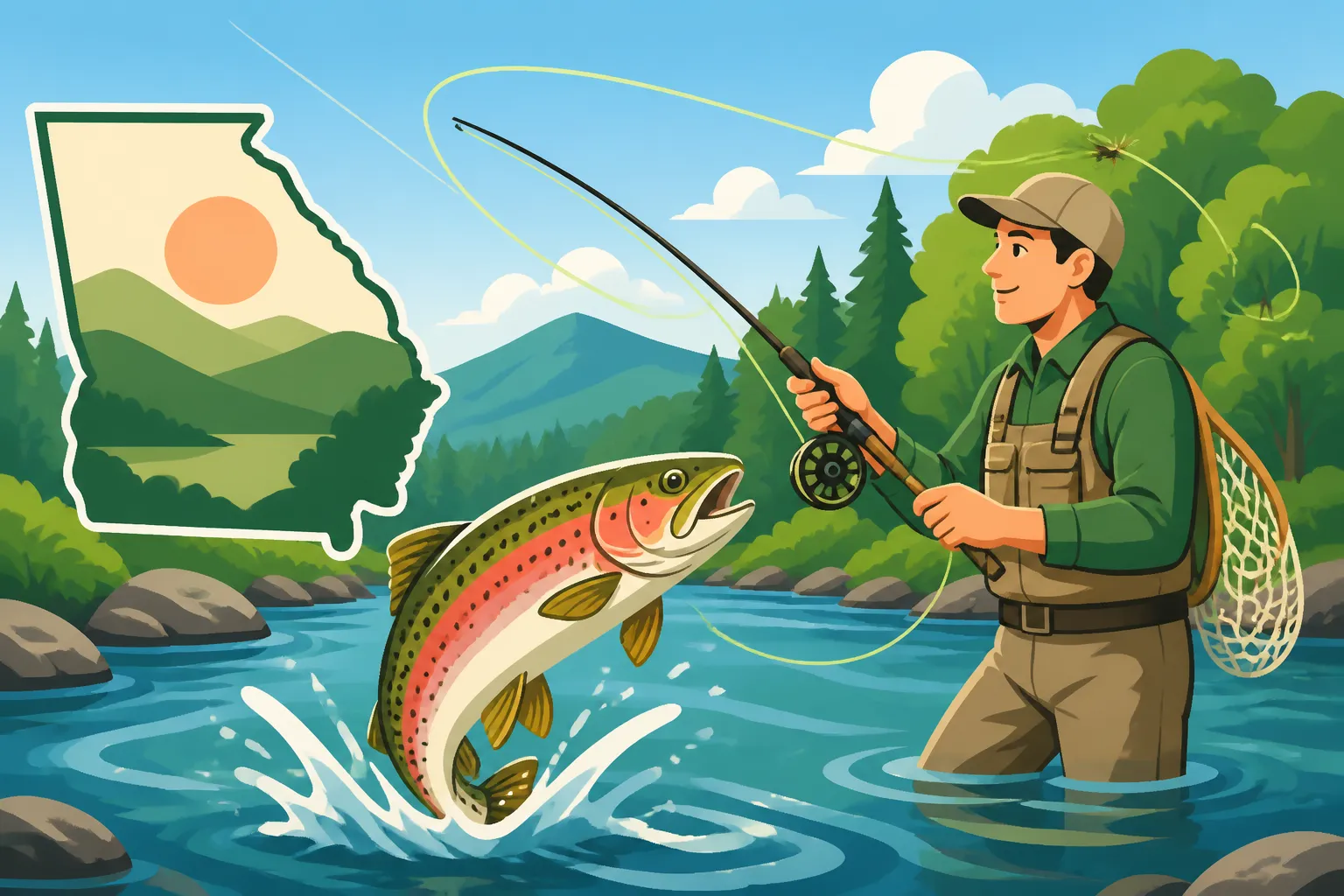
So, you've been watching those graceful fly anglers on North Georgia's pristine trout streams, making it look absolutely effortless, and thought to yourself, "I could never do that." It's a common feeling, trust me! The world of fly fishing can appear daunting with all its specialized gear, peculiar terminology, and seemingly complex casting techniques. But don't you worry one bit; this guide is here to unravel the mystery and provide a clear, encouraging path for anyone looking to cast their first fly into Georgia's beautiful trout waters.
Demystifying Fly Fishing: The Foundation for Beginners
Let's face it, fly fishing has a reputation for being a bit exclusive, maybe even intimidating. But at its heart, it's just another way to fish, and it's built on a few fundamental principles that are easy to grasp once you break them down. The biggest difference from conventional spinning or baitcasting is that in fly fishing, you're not casting the weight of the lure; you're casting the weight of the line itself. This might sound like a subtle distinction, but it's what gives fly casting its unique rhythm and grace.
Understanding the Basics of Fly Line and Flies
The fly line is your engine. Unlike monofilament or braided lines used in conventional fishing, fly lines are weighted and tapered, designed to carry your nearly weightless "fly" to its target. Think of it like a whip: the heavy part does the work, and the light end goes where it's directed. There are different types of fly lines – floating, sinking, and sink-tip – each serving a specific purpose depending on where the trout are feeding in the water column. For beginners, a floating line is almost always the way to go, especially when you're starting out on the gentle currents of a trout stream.
Then there are the flies themselves. These aren't just pretty little things; they're meticulously crafted imitations of insects, baitfish, or other aquatic life that trout feed on. You'll hear terms like "dry flies," "nymphs," and "streamers." Dry flies float on the surface, mimicking adult insects that have fallen into the water. Nymphs, on the other hand, imitate the aquatic larval stage of insects and are fished subsurface. Streamers are generally larger, meant to imitate small baitfish, crayfish, or leeches. Don't feel like you need to know every fly pattern in existence right away. For North Georgia trout streams, starting with a few reliable nymph patterns like a Pheasant Tail or a Copper John, and maybe a Parachute Adams dry fly, will get you a long way. You can often find starter packs of flies on sites like Amazon, which is a great way to build up a small, versatile collection without breaking the bank.
The Essential Role of the Leader and Tippet
Connecting your weighted fly line to your tiny, almost weightless fly are two crucial, yet often overlooked, components: the leader and the tippet. The leader is a tapered piece of monofilament or fluorocarbon line that gradually decreases in diameter from the thick butt section (which connects to your fly line) down to a finer point. This tapering helps transfer the casting energy smoothly from the heavy fly line to the delicate fly, allowing it to land softly and naturally.
The tippet is a short, fine section of line that you tie directly to the end of your leader, and then to your fly. Its primary purpose is to allow you to tie on flies without constantly shortening your expensive tapered leader. As you change flies or break off, you simply replace a short section of tippet. Tippet comes in different "X" sizes, with higher numbers (e.g., 6X, 7X) being thinner and less visible, ideal for spooky trout in clear water, while lower numbers (e.g., 3X, 4X) are stronger for larger flies or bigger fish. Getting comfortable with tying simple knots to connect your tippet to your leader and your fly to your tippet is one of the first rites of passage for any new fly angler. It might seem fiddly at first, but with a little practice, it becomes second nature.
Essential Gear for Your First Georgia Fly Fishing Trip
Alright, let's talk gear! It’s easy to get overwhelmed by all the options out there, but for a beginner, keeping it simple is key. You don't need the most expensive, top-of-the-line equipment to start catching trout. What you need is a functional, balanced setup that will help you learn the ropes without too much frustration. Think of it as investing in your learning curve.
Choosing Your First Fly Rod and Reel
For trout fishing in Georgia, especially on our smaller mountain streams, a medium-action fly rod in a 4-weight or 5-weight is a fantastic starting point. A 4-weight is great for delicate presentations and smaller fish, while a 5-weight is a bit more versatile, handling slightly larger flies and fish with more ease. The "action" of the rod refers to how much it bends and where it bends. A medium-action rod is forgiving, making it easier to learn the timing of the cast and providing good feel. You want a rod that's around 8 to 9 feet long, which offers a good balance of reach and maneuverability for typical stream conditions.
When it comes to the fly reel, for trout, its main job is to hold your line and provide a smooth drag if you hook a larger fish. Unlike spin reels, you don't typically cast with the reel in fly fishing. A simple, reliable single-action reel that matches your rod's weight (e.g., a 4/5 weight reel for a 4-weight rod) is perfectly adequate. You don't need a fancy, expensive large-arbor reel with a super-sealed drag system just yet. Many reputable brands offer excellent beginner combos that include a rod, reel, line, and sometimes even a leader, which can be a great value and take the guesswork out of pairing components. Searching for "beginner fly fishing combos" on Amazon is a good way to see what's available and read reviews.
Waders, Boots, and Other Important Accessories
Unless you plan on sticking strictly to bank fishing (which is absolutely possible on some streams!), you'll likely want to invest in waders and wading boots. Waders allow you to step into the stream, access prime fishing spots, and stay dry and comfortable. Breathable stockingfoot waders are the most popular choice as they are comfortable in various temperatures when layered properly, and they require separate wading boots for traction. Neoprene waders are warmer but can be too hot in Georgia's milder seasons. Make sure your wading boots have felt or rubber soles with good grip to prevent slips on slick rocks.
Beyond the rod, reel, and waders, a few accessories will make your life much easier:
- Net: A small, lightweight landing net with a rubberized mesh is invaluable for safely landing and releasing trout.
- Forceps or Hemostats: These are critical for safely removing flies from a fish's mouth without causing harm, especially if the fly is swallowed deeply.
- Nippers: Small clippers for cutting line and tippet.
- Floatant: A liquid or gel applied to dry flies to help them float.
- Leader Straightener: A small rubber tool to help remove memory coils from your leader.
- Fly Box: To organize and protect your flies.
- Polarized Sunglasses: Absolutely essential for seeing into the water, spotting fish, and protecting your eyes from stray hooks.
- Hat: For sun protection and another layer of eye protection.
These items don't have to be expensive. Many of them can be found as part of beginner kits or individually on platforms like Amazon. Having the right tools at hand truly makes a difference in enjoyment and efficiency on the water.
Mastering Basic Fly Casting Techniques
This is often where beginners get hung up, picturing those long, graceful casts that seem impossible. But here's the secret: fly casting isn't about brute force; it's about timing and finesse. You'll be amazed at how quickly you can pick up the fundamentals with just a little practice. Forget trying to cast across the entire river on your first day; focus on short, accurate presentations.
The Fundamental Overhead Cast
The overhead cast is the bread and butter of fly fishing. It’s what most people envision when they think of fly casting. It's essentially a back-and-forth motion that loads the rod, sending the line out in front of you.
Here's a simplified breakdown for beginners:
- Start with Line Out: Strip about 20-30 feet of fly line off your reel and lay it out straight in front of you on grass (or in water if you're practicing on a stream). Keep your rod tip low, just above the water.
- The Pick-Up: With a smooth, accelerating motion, lift the rod tip straight up, stopping sharply at about 1 o'clock (or a bit past vertical). This "picks up" the line from the water. Don't go too far back! Think of it like a quick flick of your wrist and forearm. The goal is to send the line directly behind you in a tight loop.
- The Pause: As the line unfurls behind you, pause briefly. This pause is crucial – it allows the line to fully extend before you begin your forward cast. The length of the pause depends on how much line you have out; more line means a longer pause. This is where timing comes in.
- The Forward Cast: Once the line is fully extended behind you, begin your forward stroke. Accelerate the rod forward, stopping sharply again at about 10 o'clock (or just above horizontal). This propels the line forward. Again, it's a wrist and forearm movement, not a full arm swing.
- The Lay-Down: As the line unfurls in front of you, follow through with your rod tip, allowing it to drop gently towards the water. This helps the leader and fly land softly.
Practice this motion repeatedly. Focus on smooth acceleration and abrupt stops. Imagine you're trying to throw a dart, not swing a baseball bat. Many beginners struggle with stopping the rod too late on the back cast (creating a "tailing loop" or making the line crash behind them) or too early on the forward cast (making the line crash in front). Consistency is key. You can find excellent instructional videos and guides online, and even on services like Amazon, there are books dedicated to teaching fly casting.
Roll Cast: A Stream-Friendly Alternative
While the overhead cast is fundamental, you'll quickly realize that not every fishing situation allows for a big, open back cast. Overhanging trees, dense brush, or steep banks are common obstacles on North Georgia's trout streams. This is where the roll cast becomes your best friend. It’s a hugely important technique for anglers fishing in tight quarters.
The roll cast allows you to cast your line forward without ever needing a back cast. It works by forming a D-loop (a loop of line shaped like the letter 'D') behind your rod tip, which you then unroll forward.
Here’s how to do it:
- Line on Water: Let your fly line (and fly) lay completely on the water in front of you.
- Lift and Position: Slowly lift your rod tip, bringing the line up off the water and positioning it so that the fly line creates that "D-loop" behind your rod tip. Your rod tip should be relatively high, pointing slightly upstream, with some line still touching the water in front of you.
- The Forward Stroke: With a smooth, accelerating motion, push the rod tip forward and slightly down, stopping abruptly at around 10 o'clock, just as you would with an overhead cast. The energy from this forward movement will unroll the D-loop over itself and propel the fly forward.
- Follow Through: As the line straightens, let your rod tip follow the line down towards the water for a gentle presentation.
The beauty of the roll cast is its efficiency and ability to get your fly out with minimal fuss in challenging environments. It takes a little practice to get the D-loop just right, but once you do, it opens up a whole new world of accessible water. Remember, mastering these two casts will set you up for success on almost any trout stream in Georgia.
Finding the Fish: Where to Start in Georgia's Trout Streams
Now that you've got a grasp of the basic casting, let's talk about the most exciting part: actually finding and catching trout! Trout are creatures of habit and prefer certain types of water features. Learning to "read the water" is perhaps the most critical skill a fly angler can develop, and it's something you'll continue to refine over years of fishing.
Reading the Water: Where Trout Hide
Trout, whether it's the beautiful native Brook Trout, the feisty Rainbow Trout, or the cunning Brown Trout often found in Georgia waters, are always looking for three things: food, cover, and comfortable water temperature. Understanding where these intersect is key.
Look for areas where the current breaks or slows down. These "seams" are goldmines. Trout will often sit in the slower water, conserving energy, while waiting for food to drift by in the faster current.
Prime spots include:
- Pocket Water: This is common in smaller, steeper mountain streams like those found in the Blue Ridge WMA. Look for small, calm pockets of water behind rocks, logs, or other obstructions. Trout love to hold in these pockets, darting out to snatch food.
- Current Seams: Where fast water meets slow water, you'll find a seam. Fish the slower side of the seam, as trout will face into the current and pick off insects as they drift by.
- Runs and Riffles: These are typically shallower, faster-moving sections of the stream where the water tumbles over rocks. While sometimes too shallow for larger fish, smaller trout will often feed aggressively in these oxygenated areas, especially early and late in the day.
- Pools: Deeper, slower-moving sections of a stream. These often hold larger, more cautious trout. Fish the edges, the tail-outs (where the water speeds up before flowing out of the pool), and any structure within the pool.
- Under Overhangs and Undercuts: Any overhanging branches, fallen trees, or undercut banks provide excellent cover from predators and strong currents. Trout will often be tucked tight against these features.
Familiarizing yourself with the nuances of Georgia's Best Trout Streams will help you identify these features more easily. Don't be afraid to explore different types of water and pay attention to where you see or catch fish.
Common Trout Species in Georgia and Their Habits
Georgia is home to three primary trout species that fly anglers pursue:
- Rainbow Trout: These are by far the most commonly stocked trout in Georgia's public waters. They're often eager biters, making them a great target for beginners. They thrive in colder, well-oxygenated water and can be found in a wide variety of stream types, from small mountain creeks to larger rivers like the Chattahoochee below Buford Dam.
- Brown Trout: Known for their wary nature and often larger size, Brown Trout are a prized catch. They prefer slightly slower, deeper water and often hug cover like fallen logs, undercut banks, or large rocks. They're primarily insect eaters but will readily strike at streamers mimicking baitfish, especially larger ones. You can often find Brown Trout in systems like the Toccoa River Trout Fishing in Georgia.
- Brook Trout: Georgia's only native trout species, Brook Trout are typically smaller but incredibly beautiful, with intricate patterns. They inhabit the coldest, purest headwater streams in the highest elevations of North Georgia. They are often less selective than other trout but require a delicate approach due to their small, pristine habitats. Their size limits are often stricter in these delicate ecosystems, so it's good to check specific Georgia Trout Stream Size Limits by Creek before heading out.
Knowing which species you're likely to encounter can help you tailor your fly choice and approach. For example, a small dry fly or a subtle nymph might be perfect for Brook Trout in a tiny creek, while a larger streamer might entice a big Brown Trout from a deep pool. You might even consider a Mountain Trout License Add-On in Georgia depending on where you plan to fish.
Your First Steps on the Water: Putting It All Together
So, you've got your gear, you know a bit about casting, and you have an idea of where to look. Now it's time to actually get on the water! This is where the magic happens, and every trip is a learning experience. Don't expect perfection on your first outing; celebrate the small victories and enjoy the process.
Practicing Your Cast and Presentation
Before you even tie on a fly, take some time to practice your casting. Find an open area of the stream where you won't get hung up immediately, and just work on your overhead and roll casts. Focus on accuracy and presentation. Remember, a delicate "lay-down" of the fly is often more important than distance. Trout are easily spooked by a fly line slapping down on the water.
Once you're feeling a bit more confident, tie on your first fly. For beginners, nymphs are often easier to start with because you don't need a perfect dry fly presentation. You'll often fish nymphs under a small strike indicator (like a tiny bobber) that helps you detect subtle bites. This is a fantastic way to learn how to detect strikes, which are often just a slight pause or twitch of the indicator. You might find a good selection of strike indicators, along with various flies and tippet, on Amazon.
When fishing, try to cast slightly upstream and allow your fly to drift naturally downstream, matching the speed of the current. This is called a "dead drift," and it's what often fools wary trout. Avoid "drag," where your fly line pulls your fly unnaturally across the current. Mend your line (throw a small curve in it upstream) to achieve a longer, drag-free drift. This skill takes time, but it's central to effective fly fishing.
Handling and Releasing Trout Responsibly
Catching your first trout on a fly rod is an unforgettable moment, but it's crucial to handle the fish with care, especially if you plan to release it. Trout are delicate creatures, and proper handling ensures their survival.
Here are some best practices:
- Minimize Fight Time: Try to land the fish as quickly as possible without "horsing" it in. A prolonged fight exhausts the fish and reduces its chances of survival.
- Wet Your Hands: Always wet your hands thoroughly before touching a trout. Dry hands remove the protective slime layer from their skin, making them susceptible to disease.
- Keep the Fish in Water: Whenever possible, keep the fish in the water while unhooking it. A rubberized landing net helps immensely with this. If you must lift it for a quick photo, do so gently and support its full body weight, keeping it out of the water for the absolute minimum time.
- Use Barbless Hooks: Consider crimping down the barbs on your hooks or buying barbless flies. They cause less damage and are much easier to remove.
- Use Forceps: As mentioned earlier, forceps or hemostats are essential for quickly and safely removing the fly.
- Revive the Fish: If the fish seems sluggish, hold it gently upright in the current, facing upstream, until it regains its strength and swims away on its own.
Responsible catch and release practices are vital for maintaining healthy trout populations in Georgia's streams. Remember, a healthy fishery means more enjoyable days on the water for everyone. Learning How to Catch and Release Trout Properly is a fundamental skill for any conservation-minded angler.
| Gear Category | Recommended for Beginners | Key Considerations |
|---|---|---|
| Rod | 4-weight or 5-weight, 8-9 ft, medium action | Forgiving, versatile for typical Georgia trout streams |
| Reel | Matching weight to rod, simple single-action | Holds line, smooth drag; doesn't need to be expensive for starting |
| Fly Line | Weight-forward (WF) floating line, matched to rod weight | Easiest to cast, ideal for dry flies and nymphs near surface |
| Leader & Tippet | Tapered 9ft 4X-6X leader; 4X-7X tippet | Connects fly line to fly, helps delicate presentation, replaceable tippet saves leaders |
| Waders & Boots | Breathable stockingfoot waders, felt/rubber sole wading boots | Stay dry, access more water, good traction on slippery rocks |
| Flies (Starter) | Assortment of nymphs (e.g., Pheasant Tail, Copper John), dry flies (e.g., Parachute Adams) | Imitate common trout food sources, versatile for different conditions |
| Accessories | Net, forceps, nippers, floatant, polarized sunglasses, hat, fly box | Essential for safety, efficiency, and fish care on the water |
Taking your first steps into fly fishing for trout in Georgia is an incredibly rewarding journey. It connects you to nature in a profound way, challenges you with new skills, and offers the immense satisfaction of outsmarting a beautiful wild creature. It might seem like a lot to take in right now, but remember, every seasoned fly angler started exactly where you are. Get out there, be patient with yourself, and embrace the learning process. The crisp mountain air, the peaceful rush of the water, and the thrill of that first tug on the line are waiting for you! Happy fishing, fellow angler!
Disclaimer
This article is for general informational purposes only and does not constitute professional advice. Laws, prices and regulations vary by location and change over time. Consult a qualified professional for guidance on your specific situation.